Search results
Search for "hybrid structures" in Full Text gives 60 result(s) in Beilstein Journal of Nanotechnology.
Fast vortex dynamics and relaxation times in NbRe-based heterostructures
Beilstein J. Nanotechnol. 2026, 17, 292–302, doi:10.3762/bjnano.17.20
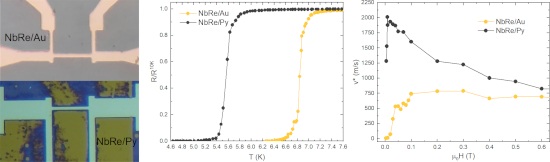
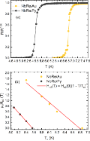
- NbRe/Py bilayer, where the superconductivity is more suppressed by the proximity to the F layer. Notably, the magnitude of the Tc suppression observed in the NbRe/Py bilayer is comparable to that reported for NbRe/CuNi hybrid structures ( = 5.86 K) reported in [22], supporting the conclusion that



Competitive helical bands and highly efficient diode effect in F/S/TI/S/F hybrid structures
Beilstein J. Nanotechnol. 2026, 17, 15–23, doi:10.3762/bjnano.17.2
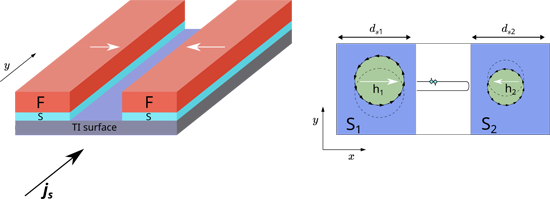
- the diode efficiency is due to competing contributions of the two superconducting islands to the supercurrent with single helical bands linked through the topological insulator surface. Keywords: hybrid structures; proximity effect; superconducting diode effect; superconductivity; topological
- numerous theoretical propositions demonstrating the possibility of the superconducting diode effect such as bulk superconducting materials [22][23][24][25][26][27][28][29][30][31][32][33][34], proximity-effect hybrid structures [35][36][37][38][39][40][41][42][43][44][45], Josephson structures [46][47][48
- based on topological insulators (TIs) are interesting since they offer strongest SOC rendering linear spin-polarized dispersion for the surface states [73]. The diode effect in TI-based structures has been reported in Josephson junctions, as well as in hybrid structures. In practice, when producing


![[Graphic 16]](/bjnano/content/inline/2190-4286-17-2-i31.svg?max-width=637&scale=1.18182)
![[Graphic 17]](/bjnano/content/inline/2190-4286-17-2-i32.svg?max-width=637&scale=1.18182)


Geometry-controlled engineering of the low-temperature proximity effect in normal metal–superconductor junctions
Beilstein J. Nanotechnol. 2025, 16, 2265–2273, doi:10.3762/bjnano.16.155
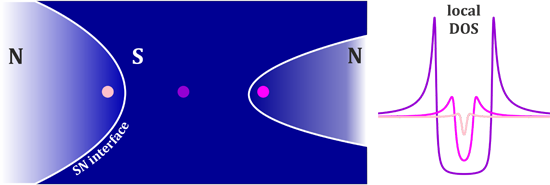
- factors. These results demonstrate that the NS boundary geometry appears not merely to be a passive feature of the device but an active design parameter that can significantly alter the strength and spatial extent of superconducting correlations in hybrid structures. Our findings have important


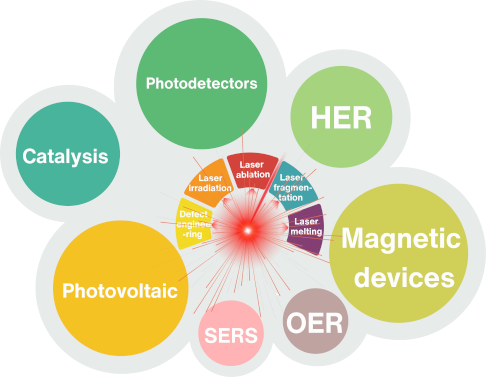
Laser processing in liquids: insights into nanocolloid generation and thin film integration for energy, photonic, and sensing applications
Beilstein J. Nanotechnol. 2025, 16, 1428–1498, doi:10.3762/bjnano.16.104


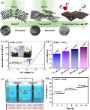


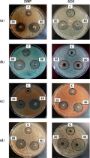


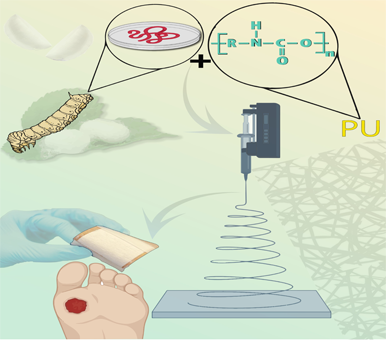
Polyurethane/silk fibroin-based electrospun membranes for wound healing and skin substitute applications
Beilstein J. Nanotechnol. 2025, 16, 591–612, doi:10.3762/bjnano.16.46





Polymer lipid hybrid nanoparticles for phytochemical delivery: challenges, progress, and future prospects
Beilstein J. Nanotechnol. 2024, 15, 1473–1497, doi:10.3762/bjnano.15.118
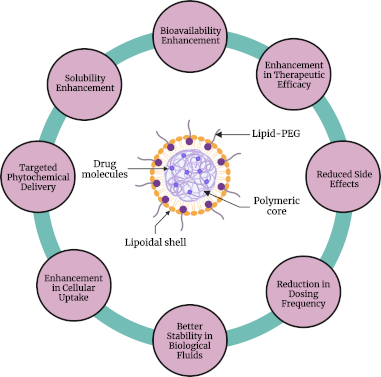
- show therapeutic potential. Types of PLHNPs Generally, PLHNPs are classified based on the arrangement of polymers and lipids within the hybrid system. In the hybrid structures, polymers enhance overall particle stability and modulate the release of encapsulated drugs from the hybrid matrix. However


Facile synthesis of Fe-based metal–organic frameworks from Fe2O3 nanoparticles and their application for CO2/N2 separation
Beilstein J. Nanotechnol. 2024, 15, 897–908, doi:10.3762/bjnano.15.74
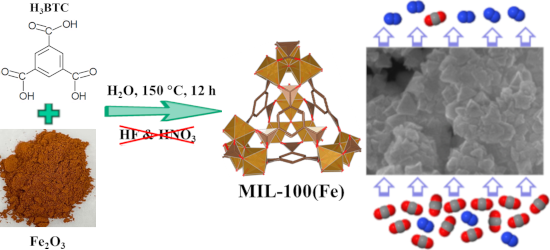
- -organic frameworks (MOFs) are well-ordered porous hybrid structures assembled from the fundamental components of metal ion clusters and organic linkers. MOFs are well known as multipurpose materials that serve a broad range of applications because of their unique construction variants, enormous surface
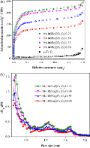
- supertetrahedral structure. Following that, the hybrid structures self-assemble in a certain sequence to form a topology resembling the MTN-type of zeolite seen in Zeolite Socony Mobil Thirty-Nine (ZSM-39) [11]. The MIL-100(Fe) structure has a cubic series containing two types of large chambers with average





Unveiling the nature of atomic defects in graphene on a metal surface
Beilstein J. Nanotechnol. 2024, 15, 416–425, doi:10.3762/bjnano.15.37
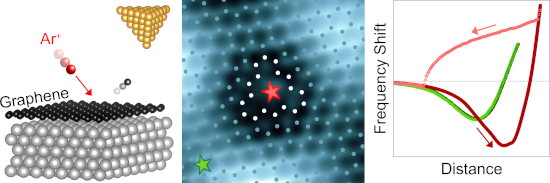
- due to an increased graphene–metal interaction compared with Pt(111), although both graphene–metal hybrid structures belong to the weak-hybridization regime [43]. Another rationale is the deviation of the observed defects 1 and 2 from a monatomic vacancy site, which will further be explored in the


Quercetin- and caffeic acid-functionalized chitosan-capped colloidal silver nanoparticles: one-pot synthesis, characterization, and anticancer and antibacterial activities
Beilstein J. Nanotechnol. 2023, 14, 362–376, doi:10.3762/bjnano.14.31
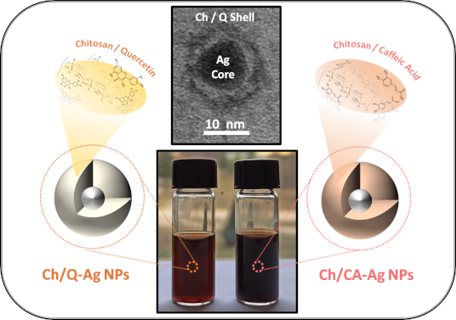
- unique properties, low cost, and low cytotoxicity [37][38][39]. Hybrid structures containing silver played an important role in the development of strong antibacterial agents and do not cause drug resistance problems due to their broad-spectrum antibacterial action [40]. These features led to a wide


Spin dynamics in superconductor/ferromagnetic insulator hybrid structures with precessing magnetization
Beilstein J. Nanotechnol. 2023, 14, 233–239, doi:10.3762/bjnano.14.22
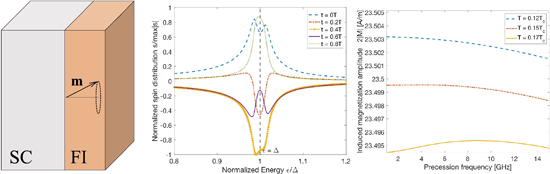
- ways of spin current injection into a superconductor, for example, the spin Hall effect [5], the spin Seebek effect [6], and ferromagnetic resonance spin pumping [7][8]. The spin pumping technique in hybrid structures consisting of a ferromagnetic insulator and a superconductor is considered to be the
- the magnetic excitation spectrum inside the ferromagnetic insulator [15]. Despite the large number of discussions in experimental works, there is no clear understanding of the interplay between superconducting and magnetic excitations inside proximity-coupled hybrid structures. That is why developing
- ][19] frameworks. However, the main subject of these works is the magnetic excitation spectrum in hybrid structures. Most of the works ignore the dynamics of nonuniform distributions of induced magnetization and spin current inside the superconducting film, which can be called the “dynamic inverse


Cooper pair splitting controlled by a temperature gradient
Beilstein J. Nanotechnol. 2023, 14, 61–67, doi:10.3762/bjnano.14.7
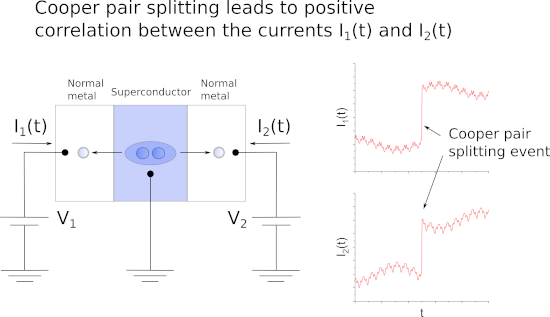
- reflection (CAR): A Cooper pair may split into two electrons [2] (see Figure 1a), thereby generating pairs of entangled electrons in different metallic electrodes [3]. This phenomenon and its effect on electron transport in normal metal–superconductor–normal metal (NSN) hybrid structures were intensively


Density of states in the presence of spin-dependent scattering in SF bilayers: a numerical and analytical approach
Beilstein J. Nanotechnol. 2022, 13, 1418–1431, doi:10.3762/bjnano.13.117
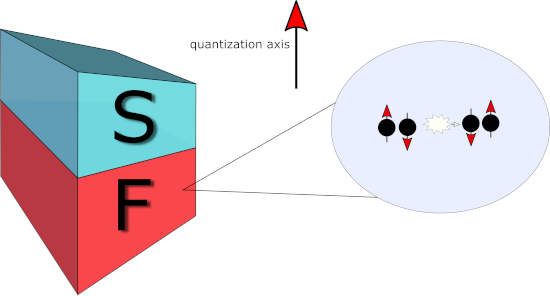
- -superconducting metal in hybrid structures due to the proximity effect [1][2][3][4][5][6][7]. For instance, in NS bilayers (where N denotes a normal metal and S denotes a superconductor), the superconducting correlations penetrate into the normal metal layer over a characteristic decay length ξn = where Dn is
- ][10][11]. The scientific community has been examining the proximity effect in SF hybrid structures already for a long while. It has been found that the oscillatory behavior of the superconducting wave function can lead to various interesting phenomena that can be observed experimentally [1][2]. For
- superconducting hybrid structures. For example, the DOS calculation is essential for the quasiparticle current computation in SIFS (where I denotes an insulating layer) [29][51][53][54][55][56][57] or SFIFS tunneling Josephson junctions [58]. Therefore, computation of the DOS is also needed for many actively


Efficiency of electron cooling in cold-electron bolometers with traps
Beilstein J. Nanotechnol. 2022, 13, 896–901, doi:10.3762/bjnano.13.80
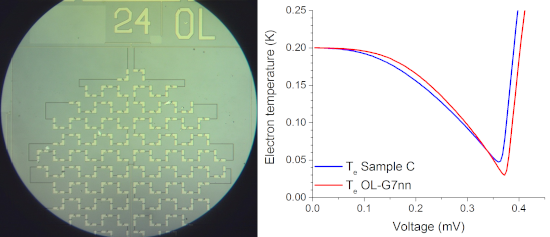
- hybrid structures with graphene [13]. However, all these experiments were made without useful power load and could not be used for real experiments with detectors. The only experiments with optical power load, demonstrating background-limited operation, were carried out in [5][6][14]. Typical electron


Zinc oxide nanostructures for fluorescence and Raman signal enhancement: a review
Beilstein J. Nanotechnol. 2022, 13, 472–490, doi:10.3762/bjnano.13.40
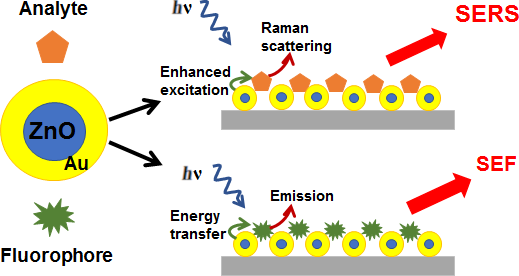
- occurred from Ag and Au NPs to ZnO NRs. The 3D hybrid structures improve the surface-to-volume ratio, yielding a higher SERS activity. Moreover, the formation of “hotspots” and the Shottky barrier at the interface between ZnO NRs and the decorated Au NPs increases the SERS activity. Furthermore, limits of





Tunable superconducting neurons for networks based on radial basis functions
Beilstein J. Nanotechnol. 2022, 13, 444–454, doi:10.3762/bjnano.13.37
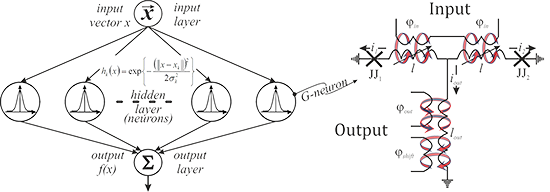
- the multilayer hybrid structures in the frame of Usadel equations [59]: with Kupriyanov–Lukichev boundary conditions [60], at the S/FM interfaces. Here G and F are normal and anomalous Green's functions, Δ is a pair potential (superconducting order parameter), ω = πkBT (2n + 1), where n is a natural
- demonstrate direction and localization of the supercurrent IS. Spatial distribution of the pair amplitude F in the hybrid structures (a) S–FM1–s–FM2–s–FM1–s–FM2–N without additional s1 layer and (b) S–FM1–s–FM2–s–FM1–s–FM2–s1–N with an additional superconducting layer for parallel (blue solid line) and
- antiparallel (red dashed line) mutual orientations of magnetization between FM1 and FM2 layers. Kinetic inductance of the hybrid structures S–FM1–s–FM2–s–FM1–s–FM2–s–N and S–FM1–n–FM2–n–FM1–n–FM2–s1–N for parallel (dark blue solid line and long dashed green line) and antiparallel (red dashed line and orange


A chemiresistive sensor array based on polyaniline nanocomposites and machine learning classification
Beilstein J. Nanotechnol. 2022, 13, 411–423, doi:10.3762/bjnano.13.34
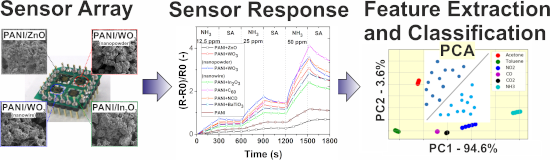
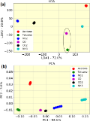
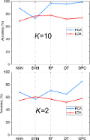
- resistance due to the decrease of hole density within the p-type film [18]. In the case of the hybrid structures, a p–n heterojunction is formed between polyaniline and n-type nanostructures such as ZnO, WO3, In2O3, or fullerene [19]. The protons from polyaniline are transferred to the NH3 molecules. This




Exploring the fabrication and transfer mechanism of metallic nanostructures on carbon nanomembranes via focused electron beam induced processing
Beilstein J. Nanotechnol. 2021, 12, 319–329, doi:10.3762/bjnano.12.26
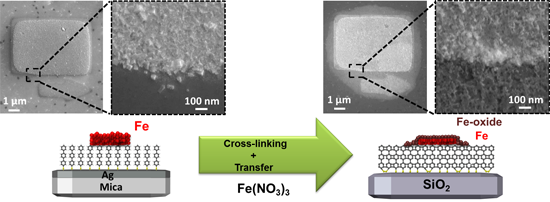
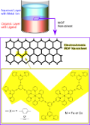
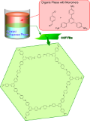
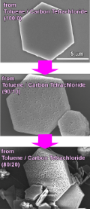
- effects caused by secondary or backscattered electrons have minor influence on size and shape of the deposit. Recently, it could be demonstrated that FEBIP can be used to fabricate functional hybrid structures consisting of metallic nanostructures on top of organic 2D materials. The prototype of organic
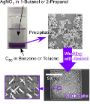
- , the Ag substrate is dissolved by a solution of Fe(NO3)3. It is important to study the effect of the underlying substrate and the associated effect on the resulting transferred hybrid structures as, for example, SAMs with carboxylic anchor groups can be fabricated on Ag [28][29]. In order to fabricate
- deactivation via interaction of active sites with residual gas molecules. At this point, it should be noted that a mixture of both effects appears to be most likely. However, the quantitative contribution is not known. As it was reported that free-standing hybrid structures consisting of metallic


Molecular dynamics modeling of the influence forming process parameters on the structure and morphology of a superconducting spin valve
Beilstein J. Nanotechnol. 2020, 11, 1776–1788, doi:10.3762/bjnano.11.160
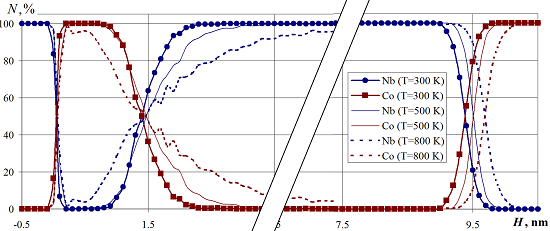
- that smooths the potential after x exceeds the cutoff distance rc. Problem Statement and Software The influence of the process parameters on the formation of spin system S/F hybrid structures is studied for a multilayer nanosystem based on cobalt and niobium. This system is a functional material that


Functional nanostructures for electronics, spintronics and sensors
Beilstein J. Nanotechnol. 2020, 11, 1704–1706, doi:10.3762/bjnano.11.152

- international SPINTECH conference “NANO-2019: Limits of Nanoscience and Nanotechnologies” and the summer school it followed, “S/F Hybrid Structures for Spintronics”, that took place in September 2019 in Chisinau, Moldova. Presented by many of the participants of the conference and lecturers of the summer school
Controlling the proximity effect in a Co/Nb multilayer: the properties of electronic transport
Beilstein J. Nanotechnol. 2020, 11, 1336–1345, doi:10.3762/bjnano.11.118
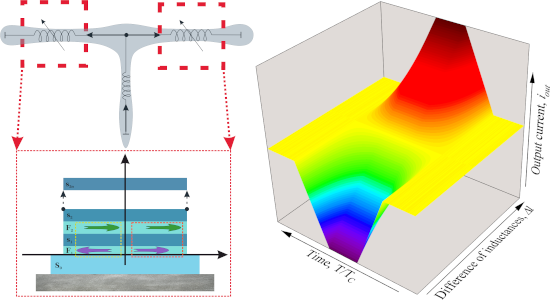
- /F structure. To test the concept of the magnetically tunable kinetic inductor, we calculated the superconducting order parameter in S/[F1/s/F2/s]n superlattices, as presented in Figure 1. We studied the proximity effect and electronic transport in the multilayer hybrid structures in the frame of
- changes in the temperature or in the applied magnetic field [9] can significantly change (from zero to relatively large values) the kinetic inductance of thin s-layers in the hybrid structures studied in this work. Experimental results The next step was to experimentally verify the significant changes



Anomalous current–voltage characteristics of SFIFS Josephson junctions with weak ferromagnetic interlayers
Beilstein J. Nanotechnol. 2020, 11, 252–262, doi:10.3762/bjnano.11.19
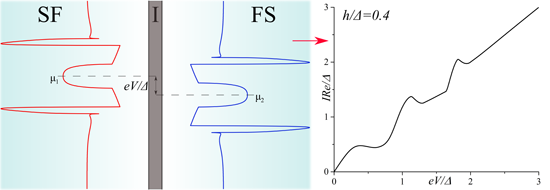
- dependence [8][9][10][11][12], Josephson critical current oscillations [13][14][15][16][17][18][19][20][21][22][23][24][25][26][27][28][29][30][31][32][33][34][35][36][37][38][39][40][41], and density of states (DOS) oscillations [42][43][44][45]. S/F hybrid structures have many promising applications in


Materials nanoarchitectonics at two-dimensional liquid interfaces
Beilstein J. Nanotechnol. 2019, 10, 1559–1587, doi:10.3762/bjnano.10.153
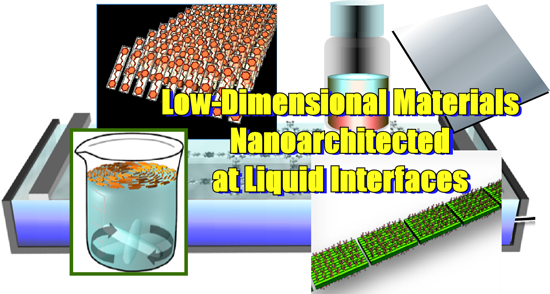
- sophisticated strategy to realize chemotherapy targeting at cancer cells using the controlled assembly and disassembly of layer-by-layer hybrid structures made of two dimensional MoS2 nanosheets with DNA [87]. The preparation of functional low-dimensional materials requires preservation of nanoscale features in













Outstanding chain-extension effect and high UV resistance of polybutylene succinate containing amino-acid-modified layered double hydroxides
Beilstein J. Nanotechnol. 2019, 10, 684–695, doi:10.3762/bjnano.10.68
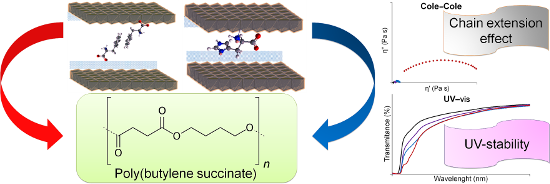
- manner and partially interpenetrating at the aromatic rings, allowing for the structurally beneficial π–π interaction. FTIR spectroscopy was applied to confirm the intercalation of HIS and PHE in the hybrid structures. The FTIR spectra of LDH/HIS and LDH/PHE in comparison to pristine amino acids are


Metal–dielectric hybrid nanoantennas for efficient frequency conversion at the anapole mode
Beilstein J. Nanotechnol. 2018, 9, 2306–2314, doi:10.3762/bjnano.9.215
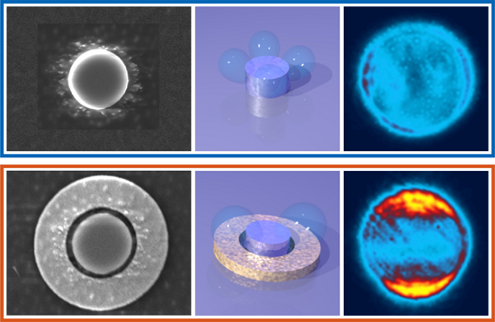
- ultrashort pump pulses (140 fs) centered at 1554 nm and focused down to the diffraction limit by a 0.85 NA objective. The pump peak intensity is kept below a few gigawatts per square centimeter. We measured 10 × 10 arrays of individual pillars, individual Au rings, and the hybrid structures, where the former
- to a dipole-like strongly directional emission in the presence of the plasmonic antenna element. The highest conversion efficiency achieved by the type-2 hybrid structures is about 5 × 10⁻⁶, at a pump intensity of about 1.6 GW·cm−2. This value is comparable to that of nanopillars of the same material
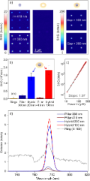
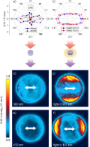
- array) and hybrid structures (2 × 2 sub-array). (b) Histogram showing the emission statistics for each array. (c) Log–log plot of the emission as a function of the power of structures with a gap of 200 nm, superimposed with a line of slope = 1.97. (d) Nonlinear emission spectra from the different




Photoluminescence of CdSe/ZnS quantum dots in nematic liquid crystals in electric fields
Beilstein J. Nanotechnol. 2018, 9, 1544–1549, doi:10.3762/bjnano.9.145
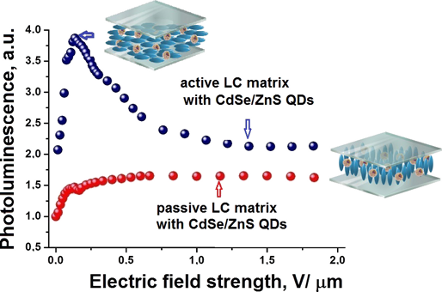
- nanocrystals. These nanoparticles (NPs) of spherical shape are unique luminophores due to the dimensional dependence of the optical properties. The small dimensions of QDs (of the order of 1–10 nm) make it possible to integrate QDs relatively easily into hybrid structures and composite materials. Quantum dots