


Search results
Search for "low resolution" in Full Text gives 28 result(s) in Beilstein Journal of Nanotechnology.
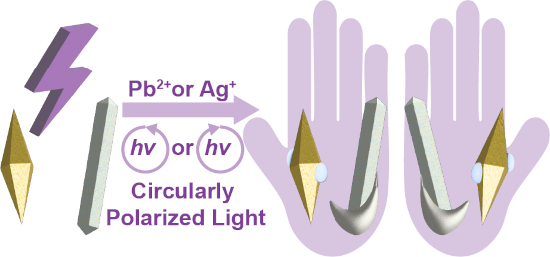
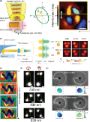
Chiral plasmonic nanostructures fabricated with circularly polarized light
Beilstein J. Nanotechnol. 2025, 16, 2245–2264, doi:10.3762/bjnano.16.154


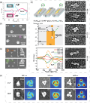
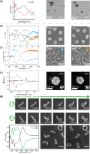


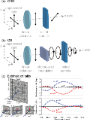

Deep learning for enhancement of low-resolution and noisy scanning probe microscopy images
Beilstein J. Nanotechnol. 2025, 16, 1129–1140, doi:10.3762/bjnano.16.83
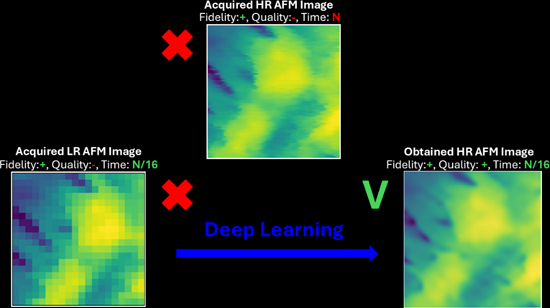
- deep learning models to improve resolution and quality of low-resolution AFM images made under standard ambient scanning. Both traditional methods and deep learning models were benchmarked and quantified regarding fidelity, quality, and a survey taken by AFM experts. The deep learning models outperform
- ; low resolution; super resolution; Introduction The capability of atomic force microscopy (AFM) to achieve high resolution at the nanometer level in plane (xy) and at the angstrom level in height (z), on a variety of surfaces, is one of its major advantages. AFM topographical imaging enables high
- approach to obtain high-resolution images and overcome the slow scanning times is to apply image manipulation techniques to upscale low-resolution images to high (pixel) resolution. In a set of studies [16][17][18][19], traditional methods and deep learning models were successfully used to reconstruct high


Heat-induced transformation of nickel-coated polycrystalline diamond film studied in situ by XPS and NEXAFS
Beilstein J. Nanotechnol. 2025, 16, 887–898, doi:10.3762/bjnano.16.67
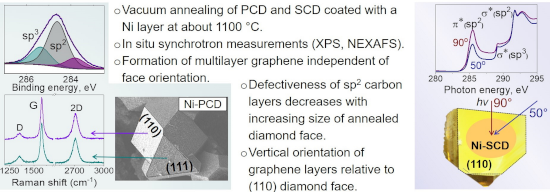
- . Element mapping analysis based on energy-dispersive X-ray (EDX) spectroscopy revealed a uniform distribution of nickel particles in the top layers of all diamond faces after annealing (Supporting Information File 1, Figure S4). The low resolution of the EDX instrument used did not allow the detection of


Enhancing mechanical properties of chitosan/PVA electrospun nanofibers: a comprehensive review
Beilstein J. Nanotechnol. 2025, 16, 286–307, doi:10.3762/bjnano.16.22

- viscoelastic deformation and sliding. Morphological properties and structure Mechanical properties can often be correlated with the morphology and structure of the nanofibers [143]. The use of optical microscopes in obtaining nanofiber images is quite rare because of the relatively low resolution, but it is


Cross-sectional Kelvin probe force microscopy on III–V epitaxial multilayer stacks: challenges and perspectives
Beilstein J. Nanotechnol. 2023, 14, 725–737, doi:10.3762/bjnano.14.59
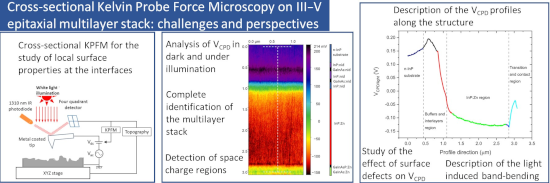
- 0.61 and 0.91 μm, respectively. The low resolution of the interlayers can be attributed either to their narrowness or to the experimental conditions since the two GaInAs:nid layers are well resolved in the topography image. Certainly, the width of these layers is narrower than the radius of the tip


The role of convolutional neural networks in scanning probe microscopy: a review
Beilstein J. Nanotechnol. 2021, 12, 878–901, doi:10.3762/bjnano.12.66
- localization microscopy and wide-field images. High-quality, super-resolution images of microtubules, nuclear pores, and mitochondria can be reconstructed from low-resolution images with two orders of magnitude fewer frames than usual. This shortens acquisition time and reduces sample irradiation [119]. Deep
- method was applied to low-resolution AFM images, resulting directly in higher resolution results [122]. The main obstacle to effective implementation of this method for AFM studies is the dissimilarity of different samples, making the choice of training sets critical. In this case, two sets, consisting
- larger than the monomaterial set. High-resolution images were then computed in a test set starting from a low resolution image of 32 × 32 pixels, resulting in “high resolution” images of 64 × 64, 128 × 128, and 256 × 256. These were directly compared to the AFM images taken at these higher resolutions







Reducing molecular simulation time for AFM images based on super-resolution methods
Beilstein J. Nanotechnol. 2021, 12, 775–785, doi:10.3762/bjnano.12.61
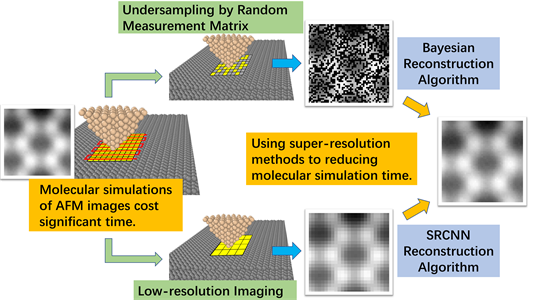
- in computer vision. Super-resolution methods could be used to reconstruct a high-resolution image from a low-resolution image. There are a variety of methods in the field of super resolution. Compressed sensing (CS) and deep learning methods are two typical methods with excellent imaging performance
- convolution. After that, the high-dimensional vectors are nonlinearly mapped to each other and comprise another set of feature maps. Finally, they are aggregated into patches to obtain a reconstructed high-resolution image. A SRCNN is constructed to obtain a super-resolution image from a low-resolution
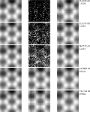
- simulated image [35]. Filters of spatial sizes of 9 × 9, 5 × 5, and 5 × 5 were used. The flow chart of the proposed SRCNN reconstruction method is shown in Figure 4. First, we use molecular dynamics simulation to obtain energy maps of the tip–sample interaction with low-resolution. Different from the full




Optimization and performance of nitrogen-doped carbon dots as a color conversion layer for white-LED applications
Beilstein J. Nanotechnol. 2019, 10, 2004–2013, doi:10.3762/bjnano.10.197
- grid had a very low particle density and we could not obtain any statistical data on the particle size from the low-resolution TEM micrographs. The nanoparticles are mainly of between ≈4 nm and ≈10 nm in diameter, with an occasional presence of nanoparticles as large as 30 nm. The TEM micrograph


CuInSe2 quantum dots grown by molecular beam epitaxy on amorphous SiO2 surfaces
Beilstein J. Nanotechnol. 2019, 10, 1103–1111, doi:10.3762/bjnano.10.110
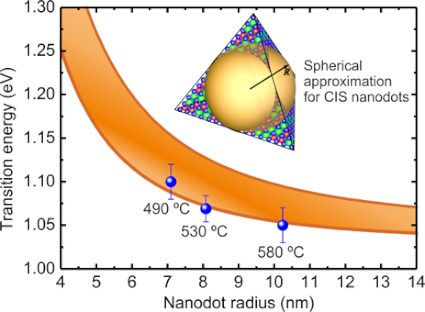
- amorphous layer as evidenced by the STEM analysis. Energy-dispersive X-ray spectroscopy (EDS) mapping was carried out in the 530 °C sample in order to determine the chemical composition of the nanodots. Figure 3a–f, shows a low-resolution cross-section HAADF image of the sample, as well as the EDS chemical
- ) and Si substrate (red). Chemical analysis of the sample grown at 530 °C. (a) Low-resolution cross-section STEM HAADF image of a region of the 530 °C sample studied by EDS. (b–f) EDS mapping of Se, Cu, In, Si, and O. (g) EDS line profile across a nanodot (blue rectangle in (a)). (h) EDS line profile


Temperature-dependent Raman spectroscopy and sensor applications of PtSe2 nanosheets synthesized by wet chemistry
Beilstein J. Nanotechnol. 2019, 10, 467–474, doi:10.3762/bjnano.10.46
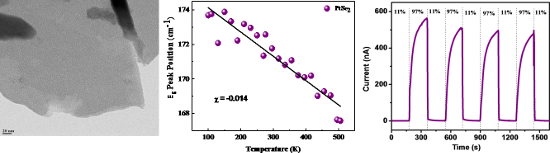
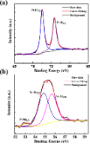
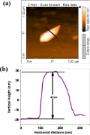
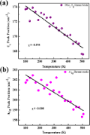
- few-layer PtSe2 with typical overlapping of multiple sheets on each other. Figure 2d shows an SEM image indicating a more transparent thin layer of PtSe2 stacked on each other, exhibiting the few-layer nature of the as-synthesized PtSe2 sample. Figure 3a–c shows the low-resolution TEM images of the as



Site-specific growth of oriented ZnO nanocrystal arrays
Beilstein J. Nanotechnol. 2019, 10, 274–280, doi:10.3762/bjnano.10.26
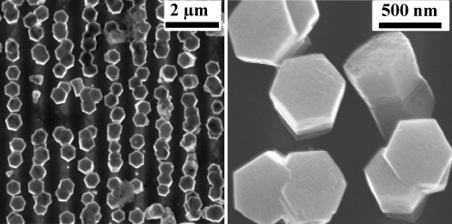
- Figure 4. Figure 4a,b shows the low-resolution bright-field TEM images of the hexagonal-shaped twinned S600 ZnO NCs. The figures reveal a smooth and clean surface with flat hexagonal terraces at the top of ZnO NCs having width/diagonal D ≈ 600 nm, which is consistent with the observed FESEM in Figure 2d
- S600 sample. (a, b) Low-resolution TEM image, (c) high-resolution TEM image, and (d) selected area electron diffraction pattern. Acknowledgements S.C. and D.K.P. acknowledge the financial support from DST under the Indo-Finland Project [INT/FIN/P-12]. V.D. and H.L. acknowledge support from the Academy


New micro/mesoporous nanocomposite material from low-cost sources for the efficient removal of aromatic and pathogenic pollutants from water
Beilstein J. Nanotechnol. 2019, 10, 119–131, doi:10.3762/bjnano.10.11
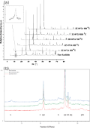
- , indicating the presence of sp2-bonded carbon environments, specifically CH=CH2 moieties [35]. The weak bands at ≈215 and ≈35 ppm are rotation sidebands [36]. The 29Si MAS-NMR spectrum shows a set of low-resolution signals. The bands at −89, −100 and −126 ppm correspond to Q3 (1Al) [37], isolated silanol




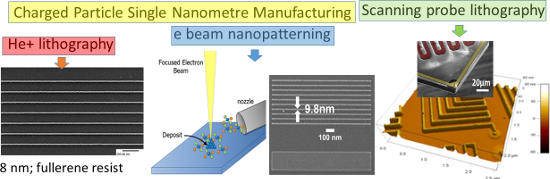
Charged particle single nanometre manufacturing
Beilstein J. Nanotechnol. 2018, 9, 2855–2882, doi:10.3762/bjnano.9.266


Nanoscale characterization of the temporary adhesive of the sea urchin Paracentrotus lividus
Beilstein J. Nanotechnol. 2018, 9, 2277–2286, doi:10.3762/bjnano.9.212
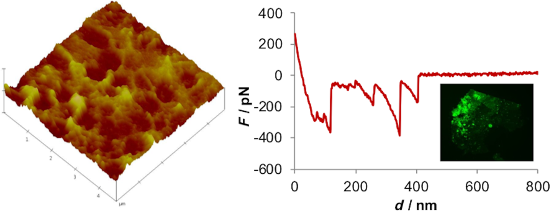
- tested conditions, the adhesive material consisted of a meshwork formed by aggregated globular nanostructures. At low resolution, the meshwork has a honeycomb-like appearance (Figure 3a,b), but at higher resolution, it was possible to distinguish globular nanostructures with diameters ranging from 20 to


Electrospun one-dimensional nanostructures: a new horizon for gas sensing materials
Beilstein J. Nanotechnol. 2018, 9, 2128–2170, doi:10.3762/bjnano.9.202
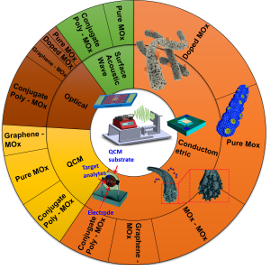


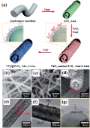


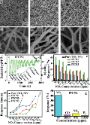


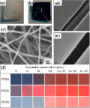
Electron interaction with copper(II) carboxylate compounds
Beilstein J. Nanotechnol. 2018, 9, 384–398, doi:10.3762/bjnano.9.38
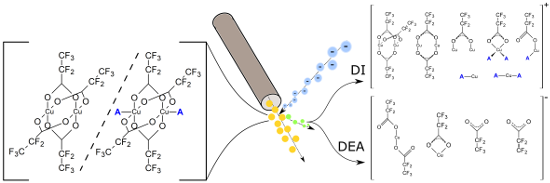
- intensity. Some of the peaks obtained at low resolution but with satisfying intensity were re-measured with higher resolution again. The parent ion Cu2(µ-O2CC2F5)4+• has been detected at m/z 788. Its electron induced dissociation can be characterized by several fragmentation patterns. The first is the
- . High resolution measurements presented in the paper represent a peak FWHM ≈0.6 amu and for medium resolution ≈1.6 amu. Measurements with low and very low resolution yield FWHM of peaks ≈4.5 both, however with higher transmittance for the second one. (Regular m/Δm ratio can be hardly evaluated due to


Preparation and characterization of polycarbonate/multiwalled carbon nanotube nanocomposites
Beilstein J. Nanotechnol. 2017, 8, 2026–2031, doi:10.3762/bjnano.8.203
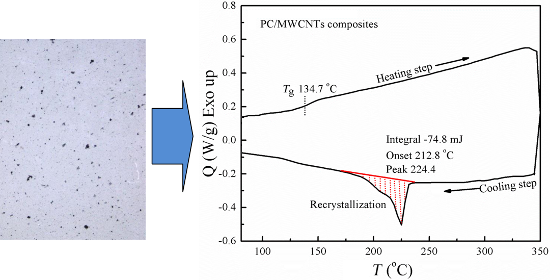
- Spectroscopic analysis The typical quality of the nanocomposite films investigated in the present study is demonstrated by the low-resolution optical micrographs presented in Figure 1. The presence of occasional micrometer-scale aggregates upon drying is evident, especially at higher MWCNT loading, yet the


Bi-layer sandwich film for antibacterial catheters
Beilstein J. Nanotechnol. 2017, 8, 1982–2001, doi:10.3762/bjnano.8.199


Intercalation and structural aspects of macroRAFT agents into MgAl layered double hydroxides
Beilstein J. Nanotechnol. 2016, 7, 2000–2012, doi:10.3762/bjnano.7.191
- longer mixing time (5 ms) in Figure 7b is used to establish proximities between more distant 1H and 13C pairs (several Å to ca. 1 nm). The moderate spinning frequency (12 kHz) at which these spectra were collected should in principle yield very low resolution in the 1H dimension due to line broadening


Case studies on the formation of chalcogenide self-assembled monolayers on surfaces and dissociative processes
Beilstein J. Nanotechnol. 2016, 7, 263–277, doi:10.3762/bjnano.7.24
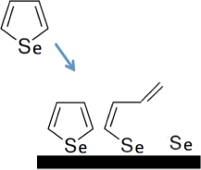
- to previous reports [46][47][88] in a low resolution study on polycrystalline Pd with components at 162.1 eV (or 162.3 eV) and 162.9 eV (or 163.2 eV). It was suggested [88] that the thiolate CLBE has the higher binding energy, whereas the lower one corresponds to the sulfide phase; although in many


Growth and morphological analysis of segmented AuAg alloy nanowires created by pulsed electrodeposition in ion-track etched membranes
Beilstein J. Nanotechnol. 2015, 6, 1272–1280, doi:10.3762/bjnano.6.131
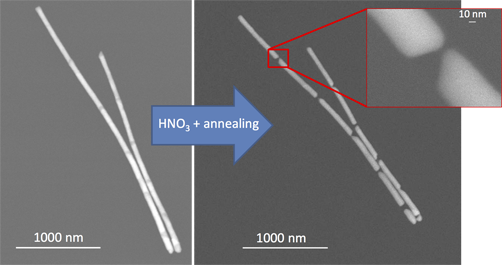
- diameter of the resulting pores. Here, the irradiated foils were etched for 5 min in a 6 M NaOH solution at 50 °C to fabricate channels with diameters of about 110 nm. A low resolution and a high resolution SEM image of such an ion-track etched membrane are depicted in Figure S1 of Supporting Information

Nanoporous Ge thin film production combining Ge sputtering and dopant implantation
Beilstein J. Nanotechnol. 2015, 6, 336–342, doi:10.3762/bjnano.6.32
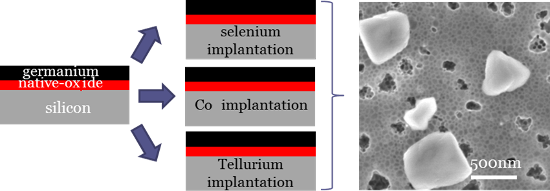
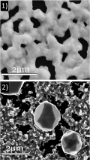
- straight lines on the right axis and the vacancies distributions are shown using dashed lines on the left axis. SEM plan-view images of the as-implanted Se sample: (1) low resolution view showing the different types of defects; (2) a single GeOx cluster; (3) the structure of holes; and (4) the nanoporous


Liquid-phase exfoliated graphene: functionalization, characterization, and applications
Beilstein J. Nanotechnol. 2014, 5, 2328–2338, doi:10.3762/bjnano.5.242
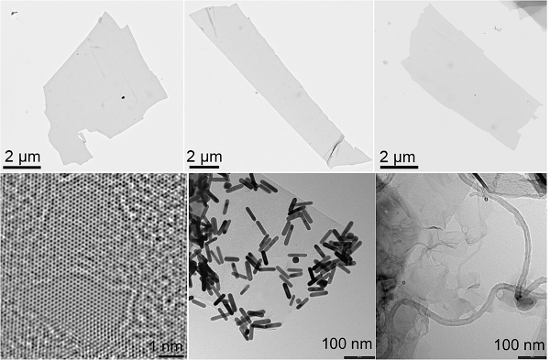
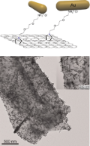
- cycloaddition, performed on graphene by employing an aldehyde and an α-amino acid as precursors, attacks both graphene faces and edges. This reactivity was observed by introducing protonated terminal amino groups that selectively bind gold nanorods allowing the recognition of the reactive sites by low
- resolution TEM (Figure 6). The HR-XPS analysis allowed for the determination of the concentration of functional groups [41]. In order to acquire more knowledge related to the organic chemistry of exfoliated graphene by ultrasonication, carboxylic groups where introduced on the graphene sheets by applying the




UHV deposition and characterization of a mononuclear iron(III) β-diketonate complex on Au(111)
Beilstein J. Nanotechnol. 2014, 5, 2139–2148, doi:10.3762/bjnano.5.223
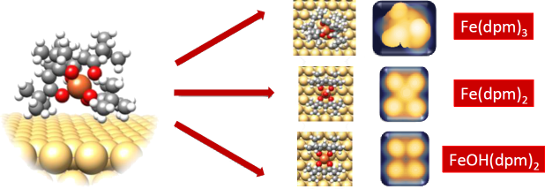
- calculated (see Figure 7a). A reasonable agreement between the calculated image and the round features of Figure 6 was found. However, the limited experimental resolution and the approximation in the calculation approach do not allow for an unambiguous conclusion. Because of the low resolution, it is much



Single-asperity contact mechanics with positive and negative work of adhesion: Influence of finite-range interactions and a continuum description for the squeeze-out of wetting fluids
Beilstein J. Nanotechnol. 2014, 5, 419–437, doi:10.3762/bjnano.5.50
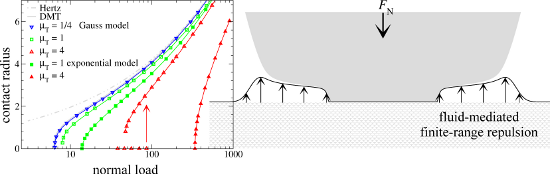
- a discontinuity in its first derivative. This is shown in Figure 8, from where it becomes clear that it is difficult to define good measures for the contact radius. In a linear representation (at low resolution), it seems as if the contact closes with the typical adhesive neck, i.e., in part (a) of
- ≈ 0.1 to an almost constant value of order 1/μT for r ≥ ac, as if one had a single confined layer of liquid. For radii r > , the gap assumes the “macroscopic” behavior. Here, ≈ 4 is the contact radius that one would ascertain from the analysis of the gap with low resolution, e.g., via graphical





