


Search results
Search for "mass spectrometry" in Full Text gives 163 result(s) in Beilstein Journal of Nanotechnology.
Environmental applications of silver nanoparticles: state-of-the-art review and emerging trends
Beilstein J. Nanotechnol. 2026, 17, 697–736, doi:10.3762/bjnano.17.49
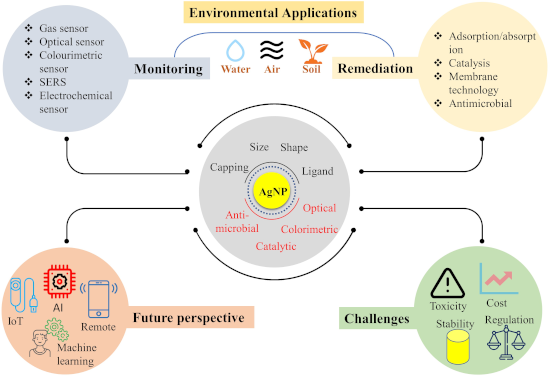
- technique can detect environmental contaminants using AgNPs as the probe. The ICPMS (Inductively Coupled Plasma Mass Spectrometry) and AAS (Atomic Absorption Spectroscopy ) were used to measure unknown metal (Ag) content by plotting linear curves using the known Ag standard [49]. Electrochemical techniques


Decontamination from water pollutants and pathogens by electrospun nanofibers doped with heavy-atom-free borafluorene-BODIPY photosensitizers
Beilstein J. Nanotechnol. 2026, 17, 668–682, doi:10.3762/bjnano.17.46
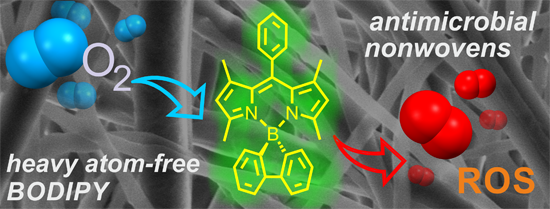
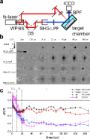
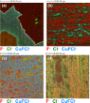
- , and p indicates the porosity. Photocatalyst distribution in the mats The presence of BODIPY in the PCL, PMMA, and PS matrices was verified using energy-dispersive X-ray spectroscopy (EDS) as well as time-of-flight secondary ion mass spectrometry (ToF SIMS) measurements performed on a Helios 5 Dual
- of the BODIPY photocatalyst in PCL (Figure 7a). The distribution of boron in the sample was further verified using secondary ion mass spectrometry. The ion map of the main boron isotope with m/z = 11 is depicted in Figure 7b along with the total ion count map, confirming the isotropic distribution of



Electrochemical determination of ciprofloxacin using a MIL-101/reduced graphene oxide-modified electrode
Beilstein J. Nanotechnol. 2026, 17, 541–554, doi:10.3762/bjnano.17.35
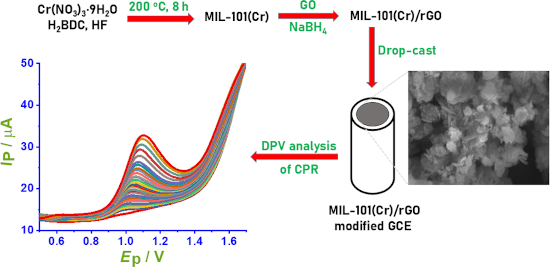
- extraction based on carbon quantum dots/zeolite imidazolate framework-90/polyvinyl pyrrolidone/iron(II,III) oxide with high-performance liquid chromatography [6][7] or chromatography–tandem mass spectrometry [8] offer high accuracy and reliability. However, these techniques often need expensive equipment


Beam shaping techniques for pulsed laser ablation in liquids: Unlocking tunable control of nanoparticle synthesis in liquids
Beilstein J. Nanotechnol. 2026, 17, 309–342, doi:10.3762/bjnano.17.22
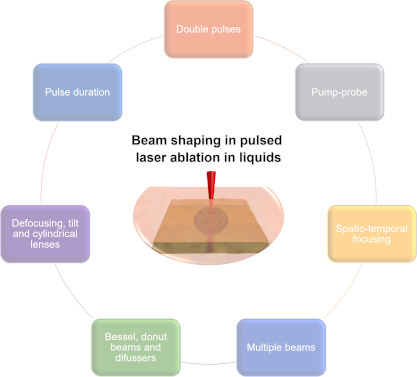
- inductively coupled plasma-based (ICP) techniques (ICP mass spectrometry or ICP optical emission spectroscopy) and atomic absorption spectroscopy, particularly for metallic targets, as they determine the concentration in a representative colloidal aliquot. Complementary methods include UV–vis spectroscopy







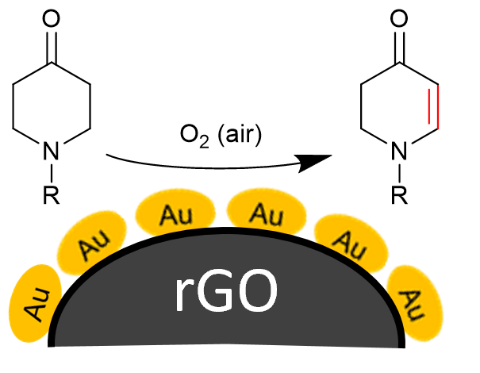
Gold nanoparticle-decorated reduced graphene oxide as a highly effective catalyst for the selective α,β-dehydrogenation of N-alkyl-4-piperidones
Beilstein J. Nanotechnol. 2026, 17, 218–238, doi:10.3762/bjnano.17.15


Time of flight secondary ion mass spectrometry imaging of contaminant species in chemical vapour deposited graphene on copper
Beilstein J. Nanotechnol. 2026, 17, 200–213, doi:10.3762/bjnano.17.13
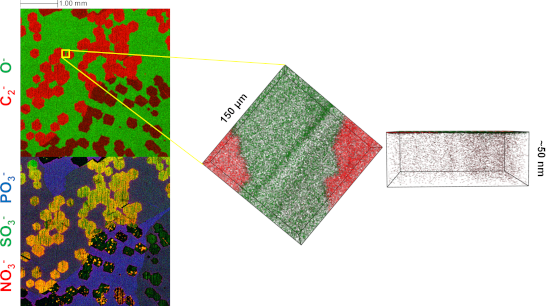
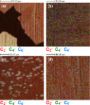
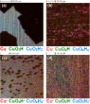
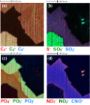
- Cambridge, Cambridge CB3 0FA, United Kingdom 10.3762/bjnano.17.13 Abstract Time of flight secondary ion mass spectrometry (ToF-SIMS) was used to probe the chemistry of graphene grown on copper foil substrates by chemical vapour deposition (CVD) under various growth conditions. The surface sensitivity, mass
- characterisation techniques with the ability to distinguish different chemical species present, combined with surface sensitivity and suitably high spatial resolution. We here focus on time-of-flight secondary ion mass spectrometry (ToF-SIMS) imaging of Cu-catalysed graphene CVD samples. ToF-SIMS offers high





Influence of surface characteristics on the in vitro stability and cell uptake of nanoliposomes for brain delivery
Beilstein J. Nanotechnol. 2026, 17, 139–158, doi:10.3762/bjnano.17.9
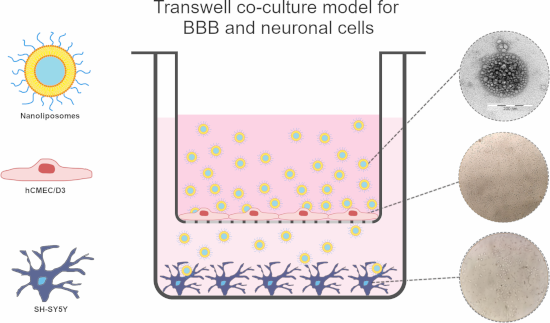
- [32]. In addition, weak bands from other proteins can be observed in all three formulations, but more detailed analysis by mass spectrometry is required. Cell uptake assessment of nanoliposomes As previously discussed, one of the prerequisites for achieving a therapeutic effect in the brain is the




Optical bio/chemical sensors for vitamin B12 analysis in food and pharmaceuticals: state of the art, challenges, and future outlooks
Beilstein J. Nanotechnol. 2025, 16, 2207–2244, doi:10.3762/bjnano.16.153
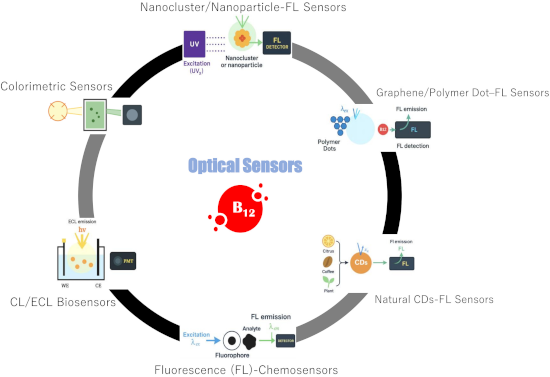
- different food and pharma formulations include high-performance liquid chromatography (HPLC) [14], HPLC coupled with inductively coupled plasma-mass spectrometry (ICP-MS) [15], and a diode array detector [16], atomic absorption spectroscopy [17], surface-enhanced Raman spectroscopy [18][19], capillary
- produce inaccurately normal readings due to interference from anti-intrinsic factor (IF-Ab) or variables like heterophilic antibodies [72][73]. However, Zhang et al. have recently collected VB12 through solid-phase extraction and analyzed it using an LC tandem mass spectrometry (LC-MS/MS) method. They
- cases (particularly with PA) might misleadingly appear normal [26][71]. Looking back, techniques like paper chromatography, thin-layer chromatography, spectrophotometry, and ELISA were employed to measure MMA concentrations. However, mass spectrometry methods, particularly LC-MS/MS, have gradually


Microplastic pollution in Himalayan lakes: assessment, risks, and sustainable remediation strategies
Beilstein J. Nanotechnol. 2025, 16, 2144–2167, doi:10.3762/bjnano.16.148
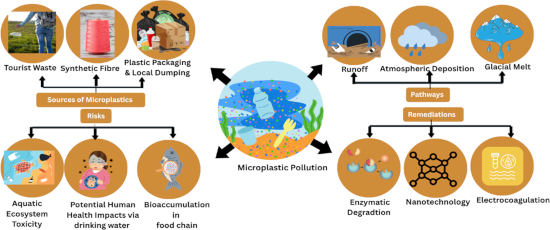
- samples from the environment makes nanoscale plastics yet another challenge. Sophisticated methods such as thermal extraction desorption (TED) and gas chromatography-mass spectrometry (GC-MS) are now routinely used to detect these particles. But these methods involve a lot of expertise and equipment. The


Quality by design optimization of microemulsions for topical delivery of Passiflora setacea seed oil
Beilstein J. Nanotechnol. 2025, 16, 2116–2131, doi:10.3762/bjnano.16.146
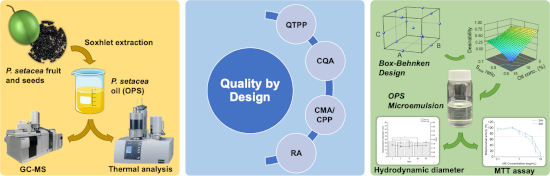
- chromatography–mass spectrometry and thermal analysis. A full factorial design, followed by a Box–Behnken design, was employed to optimize the formulation based on critical quality attributes and the defined quality target product profile. The optimized ME presented a hydrodynamic diameter of approximately 22 nm


Evaluating metal-organic precursors for focused ion beam-induced deposition through solid-layer decomposition analysis
Beilstein J. Nanotechnol. 2025, 16, 1942–1951, doi:10.3762/bjnano.16.135
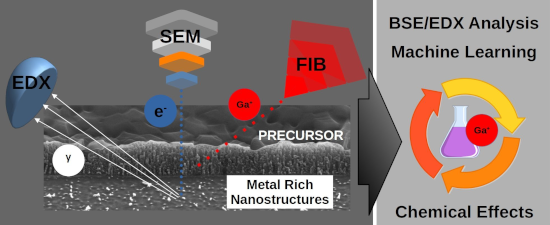
- tested in FEBID processes. Preliminary studies of new or potential FEBID precursors employ electron ionization mass spectrometry and gas-phase cross-beam experiments (dissociative ionization and dissociative electron attachment), but more informative are investigations into the interactions of molecules
- adsorbed on the surface, such as electron-stimulated desorption, high-resolution electron energy loss spectroscopy, and focused electron beam secondary ion mass spectrometry [5]. To characterize compounds in terms of their applicability in the FIBID process, comparisons are made with the FEBID process, and
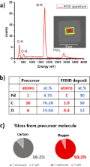
- study was conducted (pressure and cleanliness) differ significantly from those of a typical FIBID process [14]. To guide the development of more effective precursors for FEBID, a pre-screening strategy combining electron ionization mass spectrometry (EIMS) and volatility testing is typically applied


Advances of aptamers in esophageal cancer diagnosis, treatment and drug delivery
Beilstein J. Nanotechnol. 2025, 16, 1734–1750, doi:10.3762/bjnano.16.121
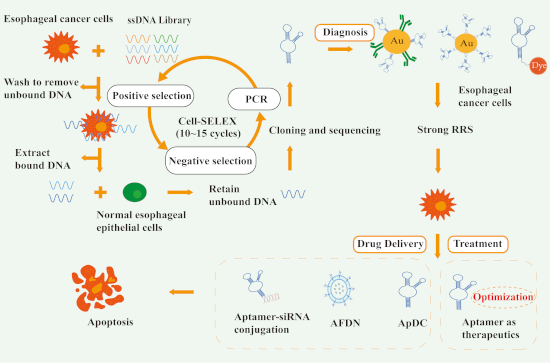
- development as a cost-effective, yet highly specific, molecular probe. Mass spectrometry analysis confirmed its target as a membrane-associated protein. Another study [57] showed that EpCAM was overexpressed in esophageal cancer samples, and the expression level of EpCAM was detected using antibodies or


Ambient pressure XPS at MAX IV
Beilstein J. Nanotechnol. 2025, 16, 1677–1694, doi:10.3762/bjnano.16.118
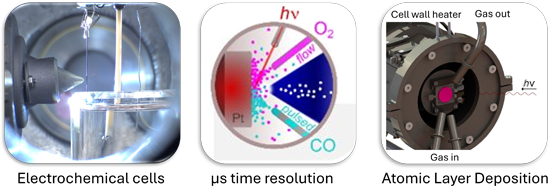
- direction for the future lies in the multimodal integration of APXPS with complementary surface-sensitive and bulk-sensitive techniques. Combining APXPS with vibrational spectroscopies (such as IRRAS and Raman), structural probes (such as X-ray absorption spectroscopy or X-ray diffraction), and mass
- spectrometry will enable a more holistic understanding of structure–function relationships at working interfaces. Additionally, the development of correlated, spatially resolved measurements, potentially via photoemission electron microscopy (PEEM) or scanning probe methods, could further bridge the gap





Nanotechnology-based approaches for the removal of microplastics from wastewater: a comprehensive review
Beilstein J. Nanotechnol. 2025, 16, 1607–1632, doi:10.3762/bjnano.16.114
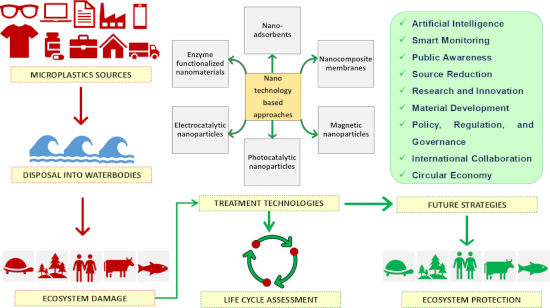
- calorimetry, pyrolysis gas chromatography mass spectrometry, and thermal extraction desorption gas chromatography are useful in identifying the chemical composition of MPs but are destructive analytical techniques [132][133]. Spectroscopic analysis like Raman spectroscopy often suffers from a poor signal-to


Focused ion and electron beams for synthesis and characterization of nanomaterials
Beilstein J. Nanotechnol. 2025, 16, 613–616, doi:10.3762/bjnano.16.47

- tetracarbonyl methyl acrylate (Fe(CO)4MA)) is studied in the gas phase using mass spectrometry and during electron-induced processes [7][8]. This issue also presents insights from initial studies using the novel (hfac)AgPMe3 precursor [9], which notably demonstrates a high level of purity at the interface with

Electron beam-based direct writing of nanostructures using a palladium β-ketoesterate complex
Beilstein J. Nanotechnol. 2025, 16, 530–539, doi:10.3762/bjnano.16.41
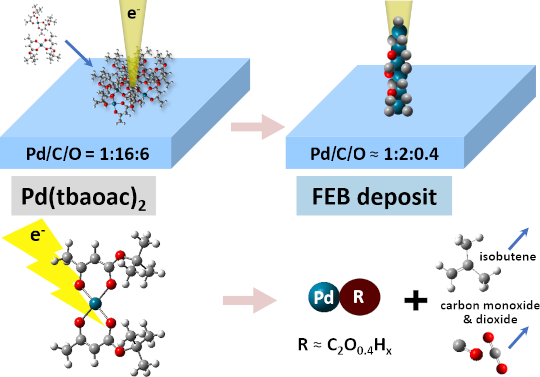
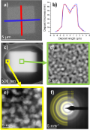
- to about 3.3 atoms in the FEB deposit. Mass spectrometry studies of gas-phase electron-impact dissociation of [Pd(tbaoac)2] [42] showed the loss of tert-butyl (t-Bu) as (CH3)2CCH2 by dehydrogenation. Furthermore, the chelating ring collapse happens through the formation of O-containing molecular
- dissociated by the following incoming electrons. The composition observed in FEBID was 30 atom % Pd, see Figure 3b. Looking at the 70 eV electron-impact gas-phase mass-spectrometry experiments [42] and assuming that the heavier Pd-containing fragments would remain on the surface during FEBID, the expected
- ) and BSEs (multiple electron excitation) interacting with the molecule for efficient dissociation. Gas-phase mass-spectrometry experiments conducted using the same electron and molecular fluxes could provide further valuable insights to the role of surface processes when compared to FEBID experiments


Quantification of lead through rod-shaped silver-doped zinc oxide nanoparticles using an electrochemical approach
Beilstein J. Nanotechnol. 2025, 16, 422–434, doi:10.3762/bjnano.16.33
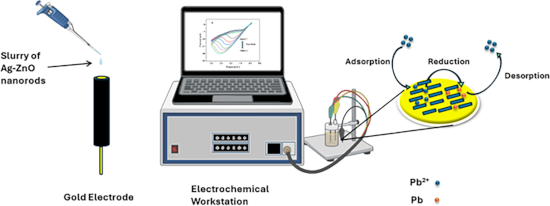
- sources of lead exposure [4]. Through contaminated food or drink or through mouth-to-mouth contact, lead can enter the body. Standard techniques for determining lead content involve the use of atomic absorption spectroscopy (AAS) [5] and inductively coupled plasma–mass spectrometry (ICP–MS) [6]. Although





ReactorAFM/STM – dynamic reactions on surfaces at elevated temperature and atmospheric pressure
Beilstein J. Nanotechnol. 2025, 16, 397–406, doi:10.3762/bjnano.16.30
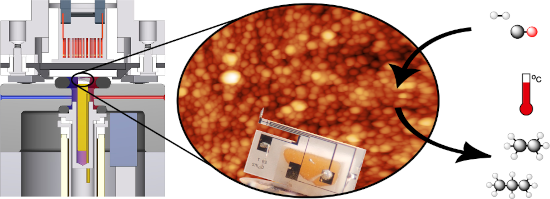
- before and after reaction at high temperature and pressure. Quadrupole mass spectrometry data of H2O as byproduct and the hydrocarbons ethane (m/z 30), propane (m/z 44), and hexane (m/z 86), confirmed that Fischer–Tropsch synthesis has occurred and demonstrated the abilities of the setup. Further
- cobalt nanoparticle catalysts on an aluminum oxide support, industrially relevant in the Fischer–Tropsch synthesis. The catalysts are imaged before and after reaction at 430 K as the current maximum temperature of the qPlus sensor used falls just below the reaction temperature. Quadrupole mass
- spectrometry data show the reaction taking place by monitoring product gases during heating and cooling of the sample under CO and H2 gas pressures of 2 bar. The monitored gases include H2O as byproduct and the hydrocarbons ethane (m/z = 30), propane (m/z = 44), and hexane (m/z = 86), which all show increases


Pulsed laser in liquid grafting of gold nanoparticle–carbon support composites
Beilstein J. Nanotechnol. 2025, 16, 349–361, doi:10.3762/bjnano.16.26
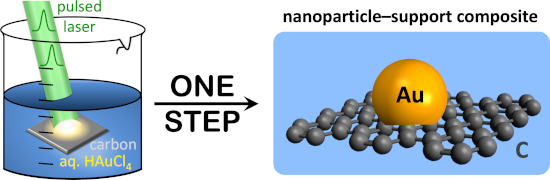
- normalized to the geometric area of the cathode and the mass of gold, which we obtained from digesting the electrodes in aqua regia and collecting inductively coupled plasma mass spectrometry data. We note that only gold was quantified, as carbon has a Z number that is too low for ICP-MS detection [68
- . Inductively coupled plasma mass spectrometry measurements were conducted at the University of Rochester Medical Center. A Perkin Elmer NexION 2000 system featuring multielement detection and parts per billion/parts per trillion sensitivity was used. The gold nanoparticle–carbon fiber paper composites were


Precursor sticking coefficient determination from indented deposits fabricated by electron beam induced deposition
Beilstein J. Nanotechnol. 2025, 16, 35–43, doi:10.3762/bjnano.16.4

- ]. A molecular beam gun equipped with a shutter was used in conjunction with mass spectrometry. The sticking coefficient was deduced from the measured drop in the spectrometer signal upon opening the shutter. In [17][19] the sticking coefficient was determined at different substrate temperatures and a


Facile synthesis of size-tunable L-carnosine-capped silver nanoparticles and their role in metal ion sensing and catalytic degradation of p-nitrophenol
Beilstein J. Nanotechnol. 2024, 15, 1576–1592, doi:10.3762/bjnano.15.124
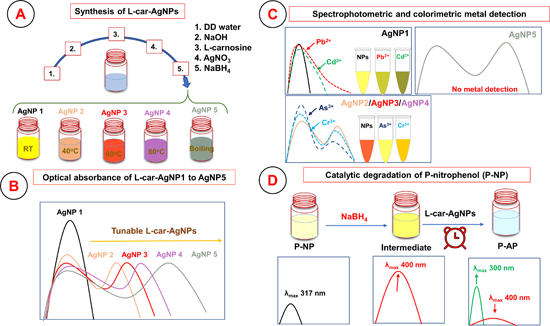
- heavy metal ion monitoring in environmental samples involve complex analytical instrumental techniques such as atomic absorption spectroscopy, inductively coupled plasma mass spectrometry, and high-performance liquid chromatography [8][9]. Environmental remediation of P-NP requires processes such as




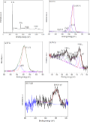
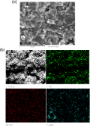
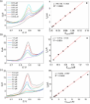
Electrochemical nanostructured CuBTC/FeBTC MOF composite sensor for enrofloxacin detection
Beilstein J. Nanotechnol. 2024, 15, 1522–1535, doi:10.3762/bjnano.15.120
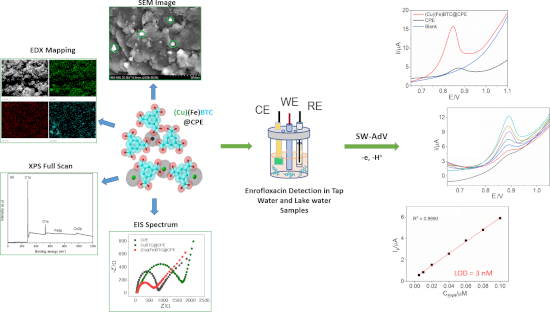
- developed to detect ENR, including microbiological methods, such as enzyme-linked immunosorbent assay (ELISA) [6], chromatography-mass spectrometry (LC-MS), chromatography (HPLC, UPLC), [3][7][8], flow immunochromatographic assays [9], and fluorescence measurements [10]. However, these methods have high





Ion-induced surface reactions and deposition from Pt(CO)2Cl2 and Pt(CO)2Br2
Beilstein J. Nanotechnol. 2024, 15, 1427–1439, doi:10.3762/bjnano.15.115

- under steady-state conditions. X-ray photoelectron spectroscopy (XPS) and mass spectrometry data from monolayer thick films of Pt(CO)2Cl2 and Pt(CO)2Br2 exposed to 3 keV Ar+, He+, and H2+ ions indicate that deposition is initiated by the desorption of both CO ligands, a process ascribed to momentum
- , and mass spectrometry to identify the volatile species produced by ion beam irradiation. Insights from these studies have been used to rationalize the composition of thin films formed by ion-induced deposition of Pt(CO)2Cl2 in the presence of Ar+ irradiation under steady-state deposition conditions
- monitor changes in the Pt oxidation state. Peak fitting for the Pt 4f and Br 3d peaks was performed with 60/40 Gaussian/Lorentzian line shapes, GL(40), in CasaXPS [21][57][58]. Mass spectrometry, using a Pfeiffer QMS 200 mass analyzer, was used to identify the evolved species resulting from ion



Dual-functionalized architecture enables stable and tumor cell-specific SiO2NPs in complex biological fluids
Beilstein J. Nanotechnol. 2024, 15, 1238–1252, doi:10.3762/bjnano.15.100
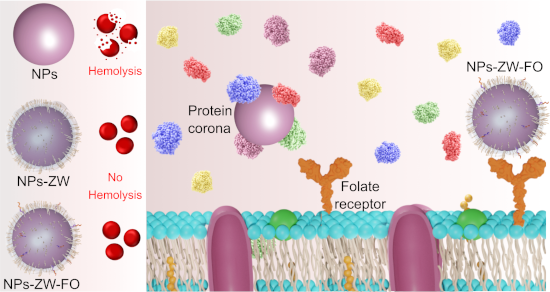
- adsorbed on the SiO2NPs, liquid chromatography coupled with mass spectrometry (LC-MS/MS) was used. The proteins were separated in SDS-PAGE as described limiting the protein run to only enter in the beginning of the resolving gel. Then, the gel was stained with Coomassie brilliant blue, and the unique bands


Direct electron beam writing of silver using a β-diketonate precursor: first insights
Beilstein J. Nanotechnol. 2024, 15, 1117–1124, doi:10.3762/bjnano.15.90

- the formation mechanism of the interfacial silver layer deserves further in-depth studies, which are beyond the scope of this article. These studies would involve surface science approaches using mass spectrometry and/or other spectroscopic techniques, such as X-ray photoelectron spectroscopy, and





