Search results
Search for "mechanisms" in Full Text gives 880 result(s) in Beilstein Journal of Nanotechnology. Showing first 200.
Nanoglasses: a trail towards uncharted regions of vitreous materials and their properties?
Beilstein J. Nanotechnol. 2026, 17, 1047–1062, doi:10.3762/bjnano.17.72

- volume observed in nanoglasses, suggests that a detailed examination of local structural configurations and bonding characteristics and their dependence on (relaxation) time is necessary, but still lacking, to fully understand the underlying mechanisms. The results on atomic diffusion, together with the


Vibration-induced dynamic structural superlubricity on MoS2/Au(111) under ultrahigh vacuum
Beilstein J. Nanotechnol. 2026, 17, 1039–1046, doi:10.3762/bjnano.17.71

- of the interfacial energy landscape, we demonstrate the ability to switch between distinct frictional states, including a superlubric regime. This approach avoids limitations imposed by material properties and provides a platform to study fundamental friction mechanisms in low-dimensional systems


Influence of an external electric field on the catalytic CO oxidation of nanoscaled CeO2 and its La3+ and Gd3+ congeners
Beilstein J. Nanotechnol. 2026, 17, 1028–1038, doi:10.3762/bjnano.17.70
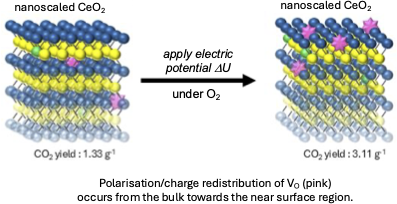
- . It induces interfacial polarization in ceria based catalysts and boosts CO oxidation under noble-metal-free conditions. The magnitude of the enhancement depends critically on dopant-controlled defect interactions, ion mobility, and electronic polaron transport mechanisms. Undoped nCeO2 shows the


Synthesis and characterization of RF-sputtered ZnTe/Cu2−xTe thin films for solar cell applications
Beilstein J. Nanotechnol. 2026, 17, 1016–1027, doi:10.3762/bjnano.17.69
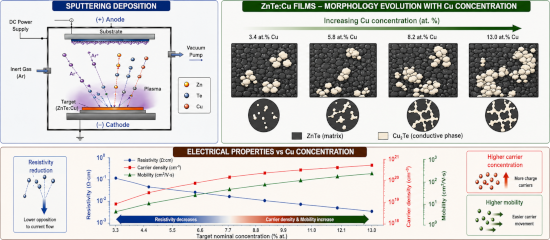
- evolution, microstructural changes, and the resulting optical and electrical properties, as well as to determine whether simultaneous Cu and O incorporation leads to the formation of a homogeneous quaternary phase or to phase segregation phenomena. This strategy provides insight into the mechanisms
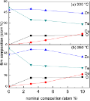
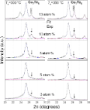
- are primarily incorporated through substitutional mechanisms at Zn and Te lattice sites, respectively, rather than forming independent secondary phases at low concentrations. The substitution of O at Te sites is expected to occur when the oxygen concentration is relatively low (typically below 1 atom



Ultrasonic irradiation in the synthesis of nanohydroxyapatite: a chemically friendly technique for improving hemocompatibility and antibiofilm applications
Beilstein J. Nanotechnol. 2026, 17, 991–1015, doi:10.3762/bjnano.17.68
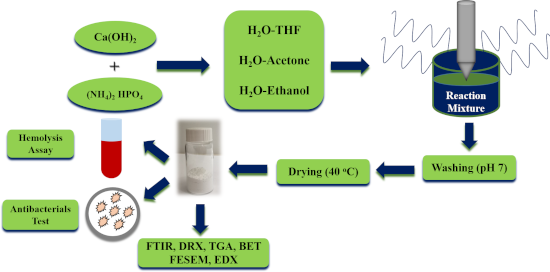
- replicates is needed to bolster the statistical robustness and to better understand the key mechanisms involved in the antibiofilm activity of these composites. This will allow for subsequent advancement in the prevention and control measures of bacterial colonization on hydroxyapatite prostheses and
- to determine the concentrations of Ca2+ and PO43− ions, as well as the pH effect, in order to elucidate the specific interaction mechanisms between the nHA variants (15 and 60 min) and bacterial cells. Experimental Synthesis of nanohydroxyapatite Ca(OH)2 (MW: 74.10 g/mol, 96% purity) and (NH4)2HPO4




Development of Protium heptaphyllum essential oil-loaded nanocapsules: experimental design and biological activity
Beilstein J. Nanotechnol. 2026, 17, 974–990, doi:10.3762/bjnano.17.67
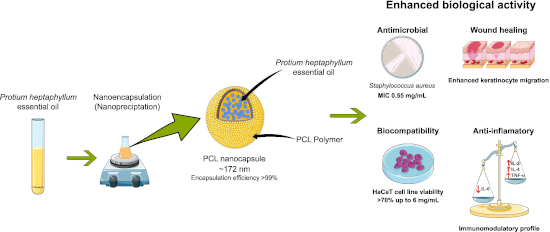
- attributed to the essential oil (EO). Studies have demonstrated that p-cymene modulates opioid pathways and calcium channels, mechanisms associated with inflammatory and neuropathic pain [21], and inhibits the growth of Aspergillus flavus at concentrations as low as 80 mg/L [22]. Other major monoterpenes
- , potentially favoring droplet growth and particle enlargement. Analysis of the response surface plots (Figure 1) further suggests that the combined increase in PCL and EO may reduce the efficiency of mass transport during nanoprecipitation, consistent with diffusion-controlled mechanisms described by the
- modulating surface charge through steric and electrostatic stabilization mechanisms. Significant interaction terms (PCL * EO and EO * Tween 80) further suggest that surface organization depends on the balance between polymer matrix composition and surfactant coverage [38]. In contrast, the PDI model




Materials challenges in solid-state sensors for continuous monitoring of ions in water
Beilstein J. Nanotechnol. 2026, 17, 935–973, doi:10.3762/bjnano.17.66
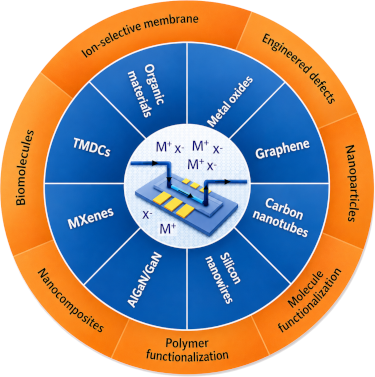
- -selective membranes further expand the design space, enabling customized performance for specific applications. This review systematically examines the materials employed in solid-state ion sensors, their transduction mechanisms, and analyte interactions with sensing media, while critically evaluating
- -ISEs convert the ionic potential formed at the membrane–sample interface into an electronic signal through one of three principal mechanisms: (1) Capacitive (electrostatic) transduction relies on high double-layer or pseudocapacitive charge storage at the solid contact; carbon nanotubes (CNTs) are a
- mechanisms enable SC-ISEs to achieve stable, Nernstian ion detection without an internal liquid junction. These sensors are cost-effective and energy-efficient for continuous field operation, although potential drift and water-layer formation can affect long-term stability [79]. The requirement for a



Nanocarrier strategies to overcome P-glycoprotein-mediated drug resistance in cancer therapy
Beilstein J. Nanotechnol. 2026, 17, 882–921, doi:10.3762/bjnano.17.64
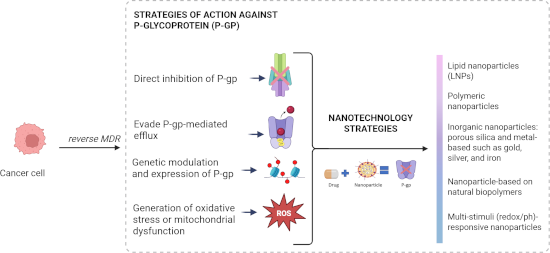
- City of Buenos Aires, Argentina 10.3762/bjnano.17.64 Abstract Multidrug resistance (MDR) remains a major barrier to successful cancer chemotherapy, frequently resulting in therapeutic failure, tumor relapses, and poor clinical outcomes. Among the diverse mechanisms underlying MDR, the overexpression
- critically examine recent nanocarrier-based strategies developed to overcome P-gp-mediated resistance across major malignancies, including breast, lung, colorectal, gastric, and prostate cancers. These approaches are categorized according to their principal mechanisms of action: (i) direct functional
- compromised by multidrug resistance (MDR), a phenomenon in which cancer cells evade the cytotoxic effects of drugs through various mechanisms. Overexpression of efflux transporters, particularly P-glycoprotein (P-gp), is a well-documented contributor to this phenotype, although it is not the sole mechanism


Light-driven ammonia electrooxidation via carbon nitride–ruthenium molecular interfaces
Beilstein J. Nanotechnol. 2026, 17, 854–862, doi:10.3762/bjnano.17.61
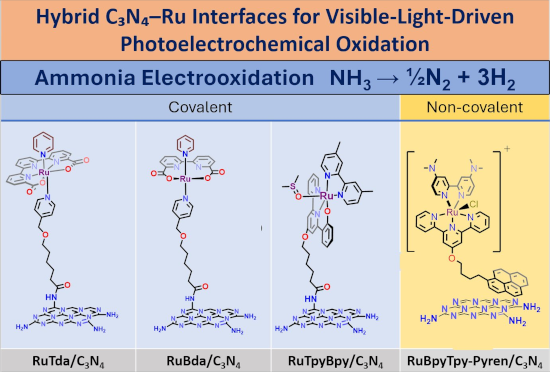
- precision with heterogeneous scalability. Homogeneous catalysts (molecular complexes in solution) operate with exquisite precision, that is, well-defined active sites, traceable mechanisms, and selective tunability achievable atom by atom via ligand design. Heterogeneous catalysts (metal oxides


Nanoparticle delivery systems for HIV pre-exposure prophylaxis (PrEP): advances and challenges
Beilstein J. Nanotechnol. 2026, 17, 839–853, doi:10.3762/bjnano.17.60
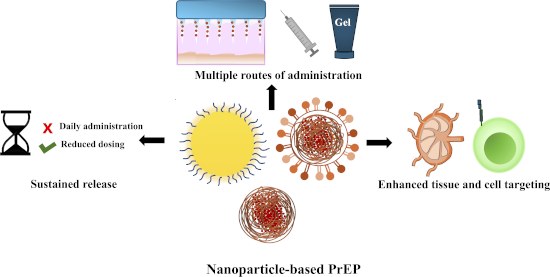
- intracellular viral reservoirs, and the long-term in vivo biodistribution and clearance of silicon nanoparticles, as well as the underlying mechanisms, still need to be investigated further. Another promising direction in inorganic nanoparticles research is their application in vaccine immunogen delivery


Tuning the electronic properties of defect-rich MoS2
Beilstein J. Nanotechnol. 2026, 17, 796–805, doi:10.3762/bjnano.17.56
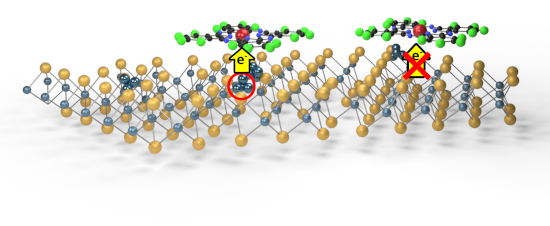
- TMDC layers [15]. Since interaction mechanisms depend strongly on the central metal atom and the ionization potential of the phthalocyanine, we focus specifically on CoPcF16 and vary the properties of the substrate. In general, electronic defects play a crucial role in novel optoelectronic devices, as
- and the precise sputtering conditions, the mechanisms are somewhat different and the results not always comparable. It was reported that Ar sputtering at high energies (10 keV) yields a p-doped substrate accompanied by the formation of Mo0 islands [19]. For Ne-sputtered MoS2, the literature is much


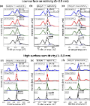
Restorative potential of laser-synthesized silver nanoparticles with Salvia officinalis for periodontal disease treatment: an in vitro study
Beilstein J. Nanotechnol. 2026, 17, 781–795, doi:10.3762/bjnano.17.55
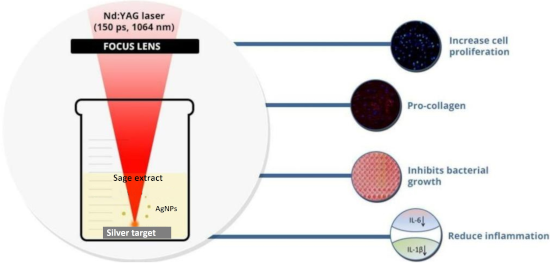
- nanoparticles. The superior antibacterial efficacy of SageAgNPs6mJ against the tested bacterial strains can be attributed to several mechanisms. Sage’s phenolic compounds, especially rosmarinic and caffeic acids, increase the antimicrobial activity through bacterial cell membrane damage and interaction with
- bacterial metabolic processes [39][40]. These compounds contribute to the antimicrobial mechanisms of AgNPs, including disruption of bacterial cell wall synthesis, interference with DNA replication, and generation of reactive oxygen species (ROS) [36]. The same MIC and MBC values observed for SageAgNPs6mJ
- ; internalized AgNPs induce high levels of ROS, damaging essential biomolecules [48]. In contrast, eukaryotic cells internalize nanoparticles primarily via endocytosis, enabling partial localization in endo-lysosomal compartments, which, together with more efficient repair mechanisms, contribute to the selective


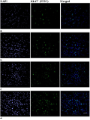
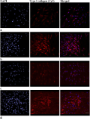

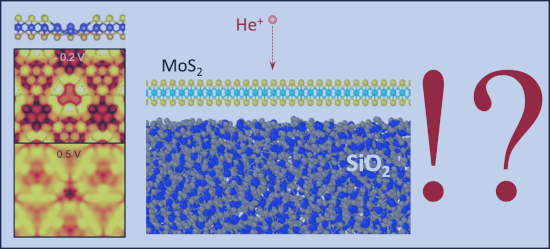
Substrate-dependent pore formation in molybdenum disulfide monolayers under ion irradiation
Beilstein J. Nanotechnol. 2026, 17, 769–780, doi:10.3762/bjnano.17.54
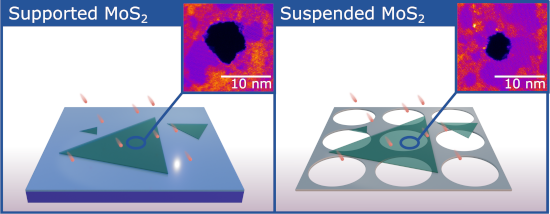
- this coupling has been attributed to Fermi-level pinning arising from interface–dipole formation and the appearance of Mo d-orbital gap states due to metal–S interactions at the interface [61][65]. Whether these equilibrium coupling mechanisms directly govern the efficiency of transient charge transfer


Environmental applications of silver nanoparticles: state-of-the-art review and emerging trends
Beilstein J. Nanotechnol. 2026, 17, 697–736, doi:10.3762/bjnano.17.49
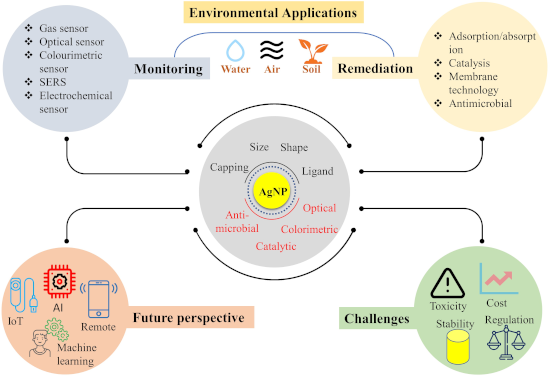
- pseudo-first-order reaction kinetics [25]. The addition of AgNPs to a matrix may improve their efficiency in removing various contaminants via adsorption mechanisms, which can be ionic or covalent, depending on the nanocomposite surface chemistry [26]. In a study, Ag-decorated reduced graphene oxide was
- safety and the risks associated with environmental applications, in particular regarding the cytotoxicity of Ag+ ions [31]. The mechanisms underlying the toxicity of AgNPs towards various organisms, including humans, must be elucidated to inform risk assessment and mitigation strategies [32]. The AgNPs
- enhancement or quenching mechanisms. A study reported that carbon dot/AgNP-based nanosystems selectively detected Hg2+ ions with a detection limit of 2.22 × 10⁻⁸ M via a turn-on mechanism [57]. In addition, the environmental application of AgNPs can be affected by various factors, such as surface composition


Molecular engineering of individual dye-based nanoparticle photostability for ultrabright two-photon fluorescence
Beilstein J. Nanotechnol. 2026, 17, 688–696, doi:10.3762/bjnano.17.48
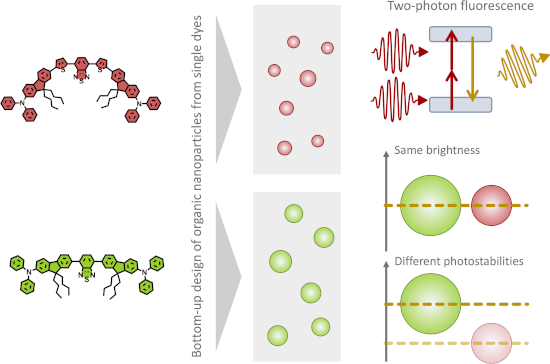
- inorganic nanocrystals [22], remains their limited photostability. Repeated excitation inevitably leads organic molecules to undergo photobleaching, an irreversible process through which they lose their ability to fluoresce. This can occur through various mechanisms, including the cleavage of covalent bonds


Decontamination from water pollutants and pathogens by electrospun nanofibers doped with heavy-atom-free borafluorene-BODIPY photosensitizers
Beilstein J. Nanotechnol. 2026, 17, 668–682, doi:10.3762/bjnano.17.46
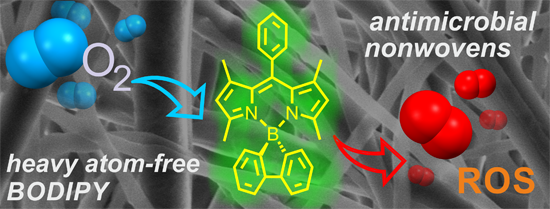
- various cytotoxic biologically active compounds flushed to water bodies from the pharmaceutical industry and farms developed resistance mechanisms, becoming more harmful to humans, animals, and cultivations. One promising method for wastewater treatment employs photochemical processes that utilize



afspm: A framework for manufacturer-agnostic automation in scanning probe microscopy
Beilstein J. Nanotechnol. 2026, 17, 653–667, doi:10.3762/bjnano.17.45
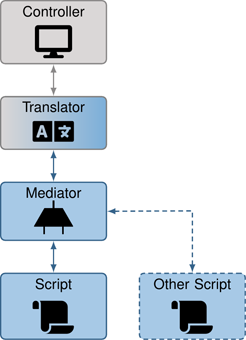
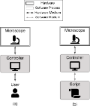
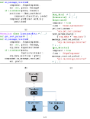
- classify the various interfacing mechanisms and show how one may implement translators for each. As we will see, the proposed solutions allow instruction set and programming language differences to be circumvented. The various scripting mechanisms are visualized in Figure 4a–c along with translator
- are also explicited (“[translator]” and “[experiment]”). When a configuration file is loaded on startup, afspm will instantiate a new process for each indicated script and set up their communication mechanisms as defined by the configuration. Note that the communication mechanisms are hidden in this




Two-step laser synthesis of Ag@TiO2 nanomaterials for the photocatalytic degradation of rhodamine B
Beilstein J. Nanotechnol. 2026, 17, 622–634, doi:10.3762/bjnano.17.43
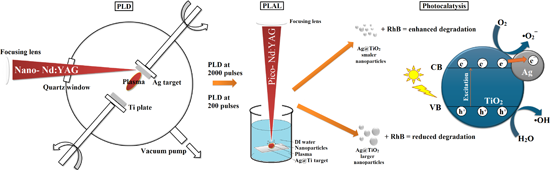
- evidence of distinct mechanisms [30]. Similar trends, where particle size and silver loading influence the kinetic model of the reaction, have also been reported for Ag-TiO2 composites in recent studies [16]. Comparation of current research with literature data The photocatalytic efficiency of the


Recent progress in enhancing built-in electric fields of perovskite solar cells via junction engineering
Beilstein J. Nanotechnol. 2026, 17, 602–621, doi:10.3762/bjnano.17.42
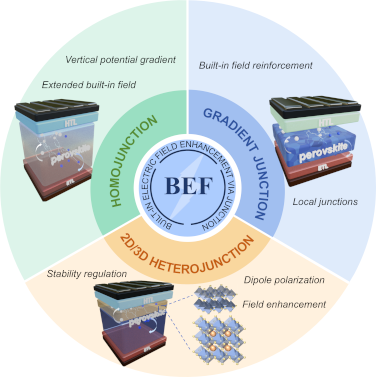
- profile. Thus, clarifying the degradation mechanisms enables the design of suppression strategies that are precisely matched to the spatially coupled nature of graded junctions. 2D/3D heterojunctions Interface stabilization for BEF continuity Unlike homojunctions and graded junctions, 2D/3D heterojunction
- introduce additional internal potential gradients within the material, thereby increasing the driving force for charge carrier separation and transport [87]. They also help mitigate common failure mechanisms such as nonradiative recombination and ion migration. However, the practical impact of polarization



Towards targeted drugs and next generation of nanomedicines
Beilstein J. Nanotechnol. 2026, 17, 598–601, doi:10.3762/bjnano.17.41
- size in a "big" human. At the same time, recent findings suggested that nanoparticles may be able to reach tumor tissue also via active mechanisms of uptake and transport across tumor endothelial cells, potentially opening up new ways to reach tumors with drugs [20][21][22]. Next to passive targeting
Probing tribological evolution in atomically thin MoS2 at different scales
Beilstein J. Nanotechnol. 2026, 17, 586–597, doi:10.3762/bjnano.17.40
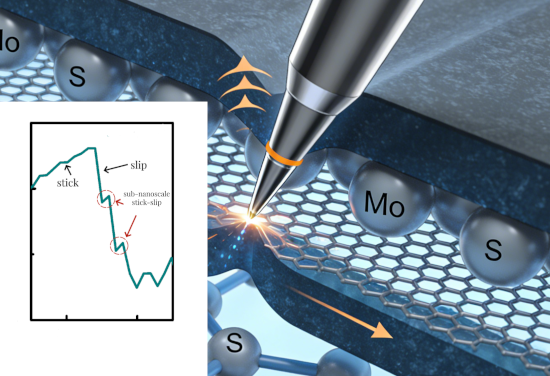
- load-dependent transition, remaining nearly constant under low loads before increasing with higher loads, and ultimately decreasing at ultrahigh loads. This transition arises from two competing mechanisms: under low loads, the evolution of interfacial contact quality dominates the strengthening effect
- loads. We experimentally determined the sub-nanoscale stick–slip motion and quantified its dependence on load and layer thickness. The corresponding mechanisms were proposed to explain the friction behaviors. This work bridges the gap between MD simulations and experiments, advancing 2D material
- MoS2 under the same load: The interlayer stick–slip events in 4L MoS2 are restricted by the interlayer van der Waals force, leading to a smaller cumulative displacement. Mechanisms underlying the nanoscale and sub-nanoscale stick–slip friction behaviors have been systematically discussed. For the


Impacts of annealing on structural and photophysical properties of zinc phthalocyanine adsorbed on graphene
Beilstein J. Nanotechnol. 2026, 17, 576–585, doi:10.3762/bjnano.17.39
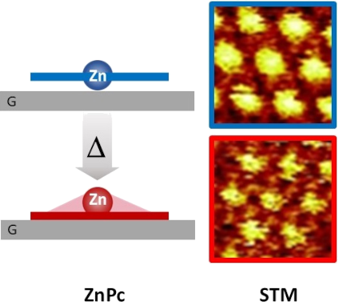
- particular, ZnPc has been shown to present such 2D phase transitions on various substrates such as TiO2 [32], Au(111) [33][34], InSb [35], or ZnS [36]. These studies have emphasized the diversity of mechanisms involved in the relative stability of 2D phases, including intermolecular versus molecule–substrate
- forces, face-on versus edge-on molecule orientation, and planar-square versus shuttlecock molecule shape. Although the importance of thermal treatment on the interfacial structure of H2Pc [37] and ZnPc [38] on highly oriented pyrolytic graphite (HOPG) and graphene has been demonstrated, its mechanisms


Laser–material interactions in liquids for the synthesis of nanomaterials: current status and perspectives
Beilstein J. Nanotechnol. 2026, 17, 571–575, doi:10.3762/bjnano.17.38
- photothermal mechanisms [17]. Laser melting in liquids (LML) employs lower pulse intensities to increase particle size [18] and/or modify crystallinity and morphology through melting and resolidification [19]. At moderate laser fluences, close to or even below the melting threshold, irradiation can induce
- the underlying processes, motivating computational and experimental studies focused on the mechanisms governing nanoparticle synthesis. Theoretical and computational studies of LSPC have provided important insights into the emergence of cavitation bubble and nanoparticle formation mechanisms in LAL
- requires input from computational modeling [33][36]. At longer timescales, shadowgraphy offers valuable information on bubble evolution [37], although processes occurring within the bubble remain largely inaccessible and necessitate the use of X-ray probing to elucidate nanoparticle growth mechanisms [38
Electrochemical determination of ciprofloxacin using a MIL-101/reduced graphene oxide-modified electrode
Beilstein J. Nanotechnol. 2026, 17, 541–554, doi:10.3762/bjnano.17.35
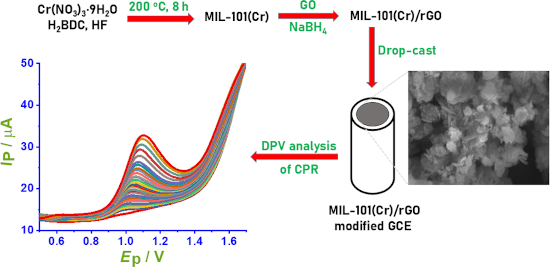
- electrochemical oxidation of CPR at the modified electrode likely involves a two-electron, two-proton transfer process, aligning with previously reported electrochemical oxidation mechanisms of CPR [31]. The proposed oxidation pathway of CPR is schematically illustrated in Scheme 1. Optimization of DPV parameters


Defects and defect-mediated engineering of two-dimensional materials: challenges and open questions
Beilstein J. Nanotechnol. 2026, 17, 454–488, doi:10.3762/bjnano.17.31
- and the mechanisms of defect formation. This indicates that defects can also be created deliberately during exposure to the electron beam, which can be used for engineering structure and properties of materials with potentially atomic resolution [34][35][36][37]. It should be pointed out that many
- beyond a “trial and error” approach. What are the oxidation mechanisms and kinetics of defective surfaces in 2D materials? Substitutional oxygen defects are present in 2D materials synthesized via chemical vapor deposition (CVD) [51]. This can be a result of oxide precursors, which are frequently used
- ], which can propagate further the formation of larger vacancy clusters. It is expected that the mechanisms of oxidation will be similar for multilayer films and defective monolayers and driven by the effective charges of W atoms exposed by S vacancy clusters. However, changes in the positions of the