


Search results
Search for "nanostructures" in Full Text gives 852 result(s) in Beilstein Journal of Nanotechnology. Showing first 200.
Nanocarrier strategies to overcome P-glycoprotein-mediated drug resistance in cancer therapy
Beilstein J. Nanotechnol. 2026, 17, 882–921, doi:10.3762/bjnano.17.64
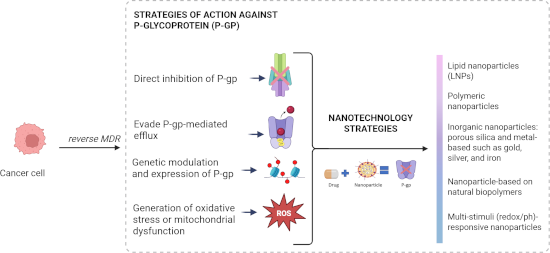
- nanostructures as modular platforms for reengineering traditional anticancer medicines and enhancing their therapeutic effectiveness against resistant malignancies. 3.2.2 Polymeric nanoparticles. Polymeric nanoparticles are nanoscale pharmaceutical systems primarily composed of biocompatible and biodegradable


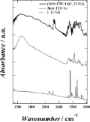
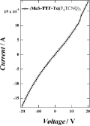
Supramolecular one-dimensional conducting nanofibers from a C3-symmetric tetrathiafulvalene derivative
Beilstein J. Nanotechnol. 2026, 17, 872–881, doi:10.3762/bjnano.17.63
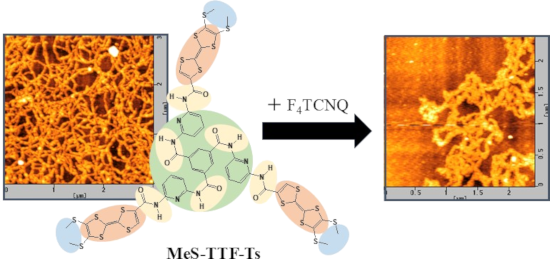
- Tokyo, 4-6-1 Komaba, Meguro-ku, Tokyo 153-8505, Japan 10.3762/bjnano.17.63 Abstract This study reports the design and synthesis of a C3-symmetric discotic tetrathiafulvalene (TTF) derivative, MeS-TTF-Ts, as a molecular platform for the self-assembly of one-dimensional conductive nanostructures. The
- S·cm−1. These findings demonstrate that rational molecular design combined with controlled supramolecular self-assembly provides an effective strategy for constructing one-dimensional conductive nanostructures based on organic charge-transfer systems. Keywords: charge-transfer complex; conducting
- nanofibers; one-dimensional nanostructures; supramolecular self-assembly; tetrathiafulvalene; Introduction Supramolecular gels have been developed as organized soft materials that form anisotropic nanostructures such as ribbons and fibers within their networks [1][2]. These materials have attracted


He+ FIBID-fabricated 3D AFM tip architectures: an exploratory study of hollow pillars, helices, and spirals
Beilstein J. Nanotechnol. 2026, 17, 863–871, doi:10.3762/bjnano.17.62
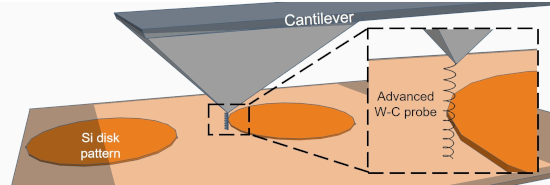
- the vacuum system. Such methods have enabled the direct fabrication of functional nanostructures on a range of substrates, including AFM cantilevers. FEBID and FIBID have already been used to fabricate AFM nanopillar-type tips, most commonly from carbon- [12], cobalt- [13], iron- [14], platinum- [15
- nanostructures, their implementation in AFM tips must balance improvements in material properties with the preservation of the original nanoscale geometry. For high-aspect-ratio AFM imaging, carbon nanotube (CNT) tips remain an important benchmark because of their small effective radii, flexibility, and long
- nanostructures because of the small beam diameter and the growth conditions that favour narrow, high-aspect-ratio deposits [18][21]. Previous studies have shown that He+ FIBID can produce W–C nanoarchitectures with relatively high metal content, crystalline character, and conductive behaviour, including hollow


Cross-scale design of chemosensor arrays: from molecular self-assembly in water to paper-based devices for metal ion detection
Beilstein J. Nanotechnol. 2026, 17, 828–838, doi:10.3762/bjnano.17.59
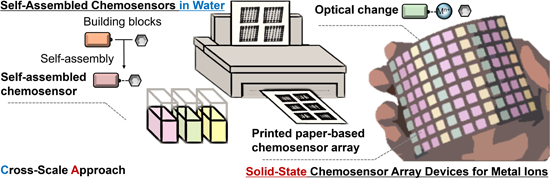
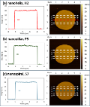
- devices, such fiber-like nanostructures contribute to the homogeneous dispersion of chemosensor molecules through office printing technologies [28][29]. The printed chemosensor arrays on a paper substrate exhibit optical changes upon analyte capture, which are detected using portable recording apparatuses


Tailoring Ag–Pt nanoalloys through solid-state dewetting: structural and optical insights
Beilstein J. Nanotechnol. 2026, 17, 748–759, doi:10.3762/bjnano.17.52

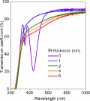
- -electron contribution of platinum, which suppresses plasmonic oscillations. The obtained results demonstrate that thermally activated dewetting enables the synthesis of homogeneous Ag–Pt nanoalloys at the nanoscale, both in volume and on the surface of nanostructures, overcoming miscibility limitations of
- the bulk Ag–Pt system, and provide insight into their structure–property relationships relevant for catalytic and plasmonic applications. Keywords: Ag–Pt alloy; dewetting; nanoalloys; plasmon resonance; thin films; Introduction Nanoalloys in the form of nanostructures exhibit novel and intriguing
- disintegration can be used to fabricate single-metal nanostructures, nanoalloys, and nanocomposites on various substrates [23][24][25][26]. In this paper, we present a method for manufacturing Ag–Pt nanoalloys by thermal disintegration of thin metallic films. This nanoalloy system is particularly significant due




Superconducting artificial neural networks and quantum circuits
Beilstein J. Nanotechnol. 2026, 17, 744–747, doi:10.3762/bjnano.17.51

- superconducting neural networks, to develop advanced fabrication techniques for functional nanostructures, and to propose engineering solutions enabling the practical realisation of neuromorphic computing systems. This thematic issue presents contributions from leading experts – theoreticians, experimentalists
- Josephson diode introduced in this work enforces unidirectional pulse propagation, prevents backward influence between connected neurons, and enables compact circuit designs with increased integration density. The development of advanced technologies for the fabrication of layered functional nanostructures
- the RM project (G.A. No. O2.02.01) “Nanostructures and advanced materials for applications in spintronics, thermoelectricity and optoelectronics” is gratefully acknowledged. Anatolie S. Sidorenko Chisinau, February 2026
Environmental applications of silver nanoparticles: state-of-the-art review and emerging trends
Beilstein J. Nanotechnol. 2026, 17, 697–736, doi:10.3762/bjnano.17.49


Protein-based custom-designed molecular nanotraps for biomedical applications
Beilstein J. Nanotechnol. 2026, 17, 683–687, doi:10.3762/bjnano.17.47
- protein building blocks and employing the molecular imprinting technique to confer selectivity toward specific molecular targets. With a portfolio of protein-based units that includes cross-linkable silk fibroin and gelatin, the approach enables tailored nanostructures capable of efficient and selective
- -defined three-dimensional structures, with prominent examples including monoclonal antibodies that exert their therapeutic activity through specific binding to the target molecule [9]. Only recently, research has begun to explore proteins as components for the fabrication of nanostructures, such as
- molecularly selective meta-biomaterials. This innovative approach opens the way for developing next-generation biocompatible and biointegrable recognition materials, expanding towards nanodevices and nanostructures for targeted molecular recognition in nanomedicine and personalized therapy. The specific

Cellulose as a photocatalyst support material: extraction, structural features, and environmental applications
Beilstein J. Nanotechnol. 2026, 17, 635–652, doi:10.3762/bjnano.17.44


Two-step laser synthesis of Ag@TiO2 nanomaterials for the photocatalytic degradation of rhodamine B
Beilstein J. Nanotechnol. 2026, 17, 622–634, doi:10.3762/bjnano.17.43
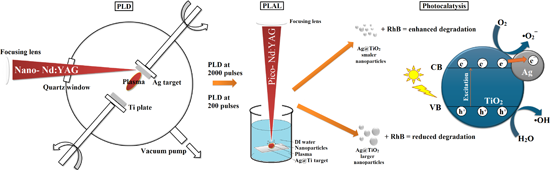
- suppression of electron–hole recombination, allowing for more effective utilization of the solar spectrum. Accordingly, Ag@TiO2 nanostructures, especially those obtained through controlled synthesis, represent highly promising candidates for photocatalytic environmental remediation processes induced by
- the morphology, composition, and crystallinity of the resulting nanostructures with high precision. The absence of organic contaminants or residual reagents maximizes the catalytic surface area, while the presence of silver can influence the optical response of TiO2 through plasmon-related effects
- higher concentration of this metal on Ag@TiO2 2000p affected the ablation rate of the Ti plate and induced a growth of titanium oxide nanostructures on the surface. Morphology and size of Ag@TiO2 (200p and 2000p) Morphology and structure of the obtained samples were analyzed using TEM, HRTEM, and SAED


Towards targeted drugs and next generation of nanomedicines
Beilstein J. Nanotechnol. 2026, 17, 598–601, doi:10.3762/bjnano.17.41
- Anna Salvati Silvia Giordani Wolfgang J. Parak University of Groningen, Groningen Research Institute of Pharmacy, Groningen, The Netherlands School of Chemical Sciences, Dublin City University, Glasnevin, Dublin, Ireland Center for Hybrid Nanostructures (CHyN), University of Hamburg, Hamburg
Laser–material interactions in liquids for the synthesis of nanomaterials: current status and perspectives
Beilstein J. Nanotechnol. 2026, 17, 571–575, doi:10.3762/bjnano.17.38
- ]. Alternatively, employing organic solvents instead of water provides opportunities to produce carbon-encapsulated core−shell nanostructures [49] and enables control over oxidation [50], surface chemistry [51], and transferability between solvents [52]. The versatility of LSPC in terms of materials, solvents, and
Advances in nanotechnology applied to natural products
Beilstein J. Nanotechnol. 2026, 17, 555–558, doi:10.3762/bjnano.17.36
- , hybrid, and inorganic platforms, reflecting the interdisciplinarity of the field, from nanosystem synthesis and physicochemical characterization to biomedical, pharmaceutical, cosmetic, and environmental applications. Among the nanostructures, lipid-based carriers, including nanoemulsions, microemulsions
Fractional shot noise of an SU(N) Kondo system
Beilstein J. Nanotechnol. 2026, 17, 515–540, doi:10.3762/bjnano.17.34
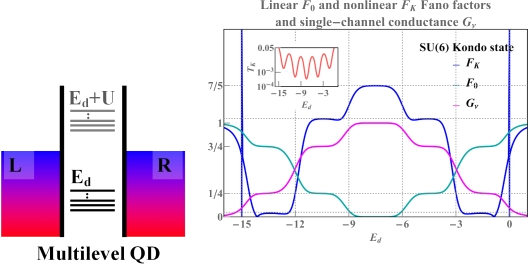
- Damian Krychowski Stanislaw Lipinski Department of Theory of Nanostructures and Quantum Materials, Institute of Molecular Physics, Polish Academy of Sciences, M. Smoluchowskiego 17, 60-179 Poznań, Poland 10.3762/bjnano.17.34 Abstract We consider transport through a multilevel interacting quantum
- -symmetry Kondo effects in nanostructures is the fact that Kondo temperatures dramatically increase with degeneracy and take on values that are experimentally accessible [15]. At the same time, the Kondo resonance peak remains narrower than Coulomb resonances. This makes SU(N) Kondo systems attractive for


![[Graphic 127]](/bjnano/content/inline/2190-4286-17-34-i187.svg?max-width=637&scale=1.18182)

Defects and defect-mediated engineering of two-dimensional materials: challenges and open questions
Beilstein J. Nanotechnol. 2026, 17, 454–488, doi:10.3762/bjnano.17.31





Biomimetic nanoparticles in cancer photodynamic therapy: a review of targeted delivery systems and therapeutic outcomes
Beilstein J. Nanotechnol. 2026, 17, 396–422, doi:10.3762/bjnano.17.27
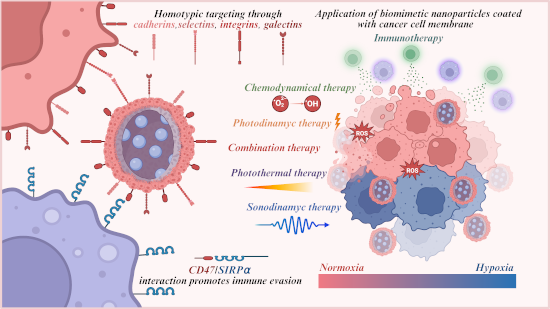
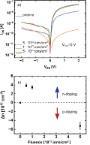
- . Beyond delivery, BNPs address hypoxia [5], a critical barrier to PDT efficacy, through oxygen-carrying systems like hemoglobin-based nanostructures, which retain the oxygen-binding capacity of hemoglobin and can effectively transport and release oxygen within the hypoxic tumor microenvironment (TME


Ferroelectric nanodot reservoir for neuromorphic computing
Beilstein J. Nanotechnol. 2026, 17, 352–364, doi:10.3762/bjnano.17.24
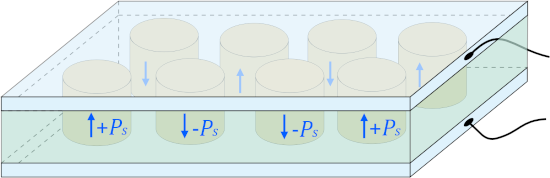
- . Harnessing the emergent behavior of ferroelectric interconnected nanostructures as physical reservoirs thus represents a largely underexplored yet potentially transformative direction for neuromorphic computing. In this work, we present a ferroelectric-based data reservoir concept grounded in the collective
- (Zr,Ti)O3 or BiFeO3 nanostructures [16][17]. In addition to their bistable switching behavior, ferroelectric nanodots can exhibit negative capacitance under specific conditions, particularly during polarization reversal processes. This regime, where an increase in voltage leads to a decrease in charge


Beam shaping techniques for pulsed laser ablation in liquids: Unlocking tunable control of nanoparticle synthesis in liquids
Beilstein J. Nanotechnol. 2026, 17, 309–342, doi:10.3762/bjnano.17.22
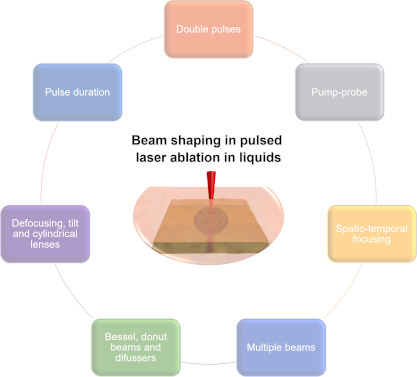
- , particularly when attempting to synthesise complex nanostructures at industrial volumes, as well as the reproducibility and precise control over NP properties such as shape. As discussed by Jendrzej et al. [14], when scaling up PLAL, the cost of the laser becomes a negligible factor compared to process
- elongated nanostructures observed under cylindrical focusing. The PLAL experiments with cylindrical lens were performed with a 2 ps laser and a cylindrical lens of 45 mm focal length, using pulse energies between sensing and filtration of 1.0 and 1.4 mJ at 800 nm wavelength [140]. It was observed that at
- vortex beams is shown in Figure 10a [151]. The material ablated with such a beam has been shown to form twisted nanostructures on metal surfaces with controlled chirality [151][152]. They are formed due to the involvement of ablated/molten material in a spiral motion of the vector vortex beam as








Advancing nanolithography: a comprehensive review of materials for local anodic oxidation with AFM
Beilstein J. Nanotechnol. 2026, 17, 275–291, doi:10.3762/bjnano.17.19
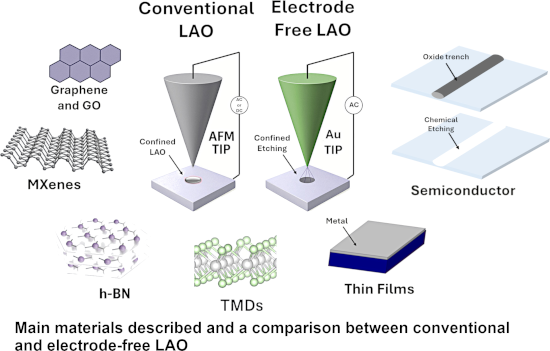
- patterns through a biased conductive tip. The process relies on the formation of a nanoscale water meniscus [14] at the tip–sample interface, enabling electrochemical reactions that oxidize the substrate, creating protruding nanostructures mainly composed of oxide. Unlike other techniques requiring complex
- the oxide features are governed mainly by the applied voltage, pulse duration, and tip movement speed. This controlled oxidation process is highly effective for fabricating high-resolution patterns, with numerous examples demonstrating the successful creation of silicon oxide nanostructures featuring
- facilitate effective LAO. A study by Tominov et al. [18] introduced forming-free titanium oxide-based memristive nanostructures created through AFM-assisted local oxidation. This work demonstrates the fabrication of nanoscale resistive switching devices while eliminating the need for the electroforming step


Multilayered hyperbolic Au/TiO2 nanostructures for enhancing the nonlinear response around the epsilon-near-zero point
Beilstein J. Nanotechnol. 2026, 17, 251–261, doi:10.3762/bjnano.17.17


Micro- and nanoscale effects in biological and bioinspired materials and surfaces
Beilstein J. Nanotechnol. 2026, 17, 214–217, doi:10.3762/bjnano.17.14
- Chimica, Biologia e Biotecnologie, University of Perugia, Via Elce di Sotto 8, 06121 Perugia, Italy 10.3762/bjnano.17.14 Keywords: adhesion; bioengineering; functional morphology; material properties; medical coatings; microstructures; nanostructures; optics; structure–function relationships; Micro- and
- nanostructures play a crucial role in shaping the physical and functional properties of living organisms. They are the basis of key biological phenomena, such as coloration, adhesion, and mechanical stability, and influence the way how organisms interact with light, fluids, and forces at different scales. The
- nanostructures aiding in efficient cleaning of the eyes and antennae of this insect to maintain sensory functions. Another insect study by Lopez et al. [13] investigated the ultrablack cuticle of a velvet ant using a range of microscopy methods and optical spectrometry providing structural and spectrometric
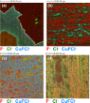
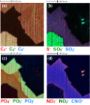
Time of flight secondary ion mass spectrometry imaging of contaminant species in chemical vapour deposited graphene on copper
Beilstein J. Nanotechnol. 2026, 17, 200–213, doi:10.3762/bjnano.17.13
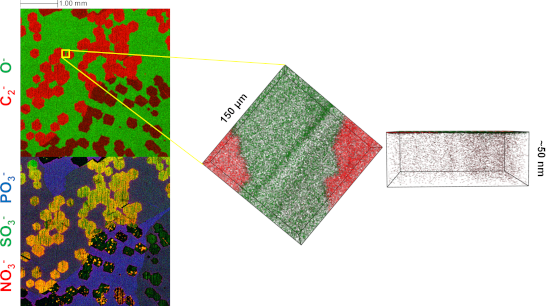
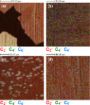
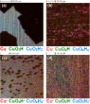
- Information File 6: Additional figures. Acknowledgements BB, VV and AJP would like to acknowledge Rasmus Havelund for useful discussions. Funding BB, VV and AJP would like to acknowledge the U.K. Department for Business, Energy and Industrial Strategy for funding (NPL Project number 121452: Nanostructures





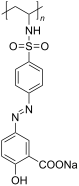
Structure-dependent thermochromism of PAZO thin films: theory and experiment
Beilstein J. Nanotechnol. 2026, 17, 186–199, doi:10.3762/bjnano.17.12
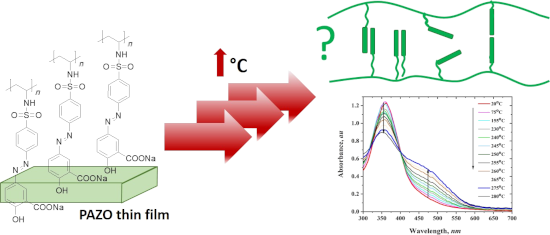
- exist in two isomeric forms: a stable trans (E) form and a metastable cis (Z) form (Figure 6B). The self-assembly of PAZO polymers into various nanostructures is mainly driven by the noncovalent interactions, such as π–π stacking between azobenzene groups. Azobenzene groups are photosensitive and can


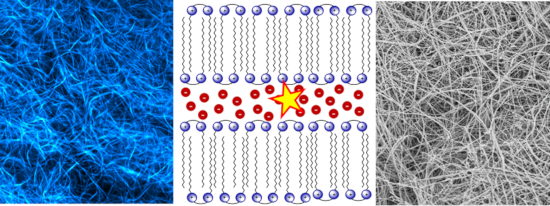
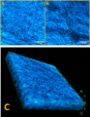
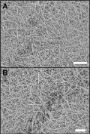
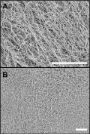
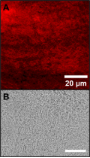
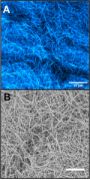
Visualizing nanostructures in supramolecular hydrogels: a correlative study using confocal and cryogenic scanning electron microscopy
Beilstein J. Nanotechnol. 2025, 16, 2274–2284, doi:10.3762/bjnano.16.156



Geometry-controlled engineering of the low-temperature proximity effect in normal metal–superconductor junctions
Beilstein J. Nanotechnol. 2025, 16, 2265–2273, doi:10.3762/bjnano.16.155
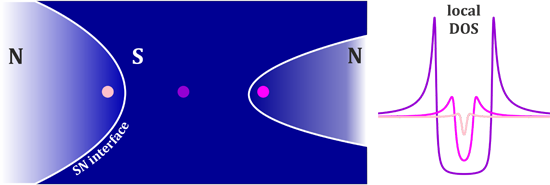
- , and magnetic fields, which are known to interact with geometry in nontrivial ways. Furthermore, comparison with experimental data from hybrid nanostructures with engineered NS boundaries, such as those reported in [40], shows good quantitative agreement with our predictions. In summary, we have shown





