


Search results
Search for "spin" in Full Text gives 583 result(s) in Beilstein Journal of Nanotechnology. Showing first 200.
Glycerol photoelectrochemical oxidation reaction at carbon nitrides/BiVO4 materials
Beilstein J. Nanotechnol. 2026, 17, 806–817, doi:10.3762/bjnano.17.57
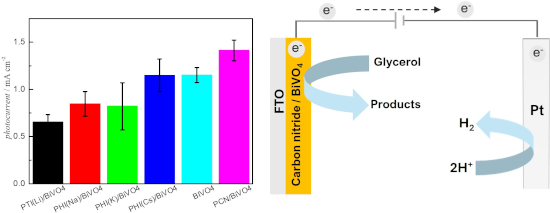
- nitride (PCN), crystalline poly(heptazine imides) (PHI-Cat, in which Cat = Na, K, or Cs), and poly(triazine imide) (PTI-Li). The CN materials were spin-coated onto fluorine-doped tin oxide (FTO) substrates, followed by the Bi electrodeposition step and conversion to BiVO4 in the presence of vanadyl
- protocol described by Malviya et al. [31][32]. The system was spun at 2000 rpm for 30 s in a spin coater device (WS-650Hz-23NPPB). Finally, the C3N4/FTO layer was placed in a drying oven at a temperature of 300 °C for 1 h. Synthesis of heterojunctions Initially, bismuth was electrodeposited from a bismuth




Substrate-dependent pore formation in molybdenum disulfide monolayers under ion irradiation
Beilstein J. Nanotechnol. 2026, 17, 769–780, doi:10.3762/bjnano.17.54
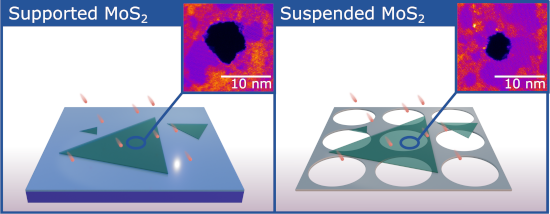
- . Substrates are prepared by placing a micro-droplet of saturated ammonium heptamolybdate onto a 300 nm SiO2/Si substrate. The substrate is then spin-coated with a 1% sodium cholate solution that acts as a growth promoter. Such prepared substrates are then placed into the second zone of a three-zone furnace
- Au, the monolayers have to be transferred onto TEM grids for STEM characterization. For this purpose, a thin polystyrene (PS) layer is spin-coated onto the sample. The sample is then immersed in a preheated KI/I2 etching solution (4 g KI, 1 g I2, 150 mL H2O) at 40 °C. After approximately 1 h, the Au


Tailoring Ag–Pt nanoalloys through solid-state dewetting: structural and optical insights
Beilstein J. Nanotechnol. 2026, 17, 748–759, doi:10.3762/bjnano.17.52

- characteristic doublet with a splitting energy equal to 3.3 eV is consistent with metallic Pt [54][55]. The Ag 3d5/2 and Ag 3d3/2 photoelectron peaks were detected at ca. 368.2 eV and 374.2 eV, respectively, and the spin–orbit splitting was equal to 6 eV, which is characteristic of silver. However




Superconducting artificial neural networks and quantum circuits
Beilstein J. Nanotechnol. 2026, 17, 744–747, doi:10.3762/bjnano.17.51

- [20]. A theoretical study of the energy spectrum of a coupled single spin interacting with an infinitely coordinated Ising chain reveals a first-order phase transition between two stable phase-symmetric states, resulting in a splitting of the energy minima of the Ising chain. This phenomenon may be
Environmental applications of silver nanoparticles: state-of-the-art review and emerging trends
Beilstein J. Nanotechnol. 2026, 17, 697–736, doi:10.3762/bjnano.17.49
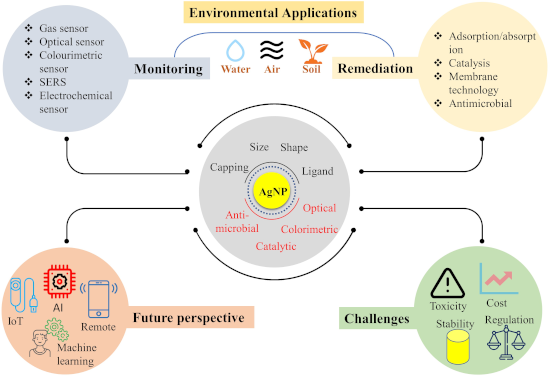
- mineralisation; their identity and relative contributions must be verified experimentally using EPR spin-trapping (DMPO adducts for •OH/•O2−) and selective scavenger assays rather than inferred solely from degradation percentages [128][129]. Finally, the apparent quantum efficiency should be reported normalised


Decontamination from water pollutants and pathogens by electrospun nanofibers doped with heavy-atom-free borafluorene-BODIPY photosensitizers
Beilstein J. Nanotechnol. 2026, 17, 668–682, doi:10.3762/bjnano.17.46
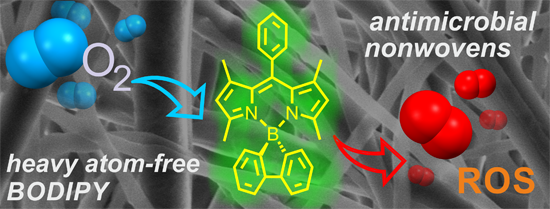
- heavy atoms (e.g., I, Ru, Pt, and Au) [17][18][19][20], which enhance intersystem crossing induced by spin–orbit coupling (SOC-ISC), but also increase dark toxicity, shorten the triplet lifetime, and decrease photostability [21][22][23]. For these reasons, heavy-atom-free BODIPY photosensitizers have
- ) and acceptor (dipyrromethene ligand) sites (Figure 1a) [32][33][34][35]. Importantly, the proposed systems produce triplet states via an alternative to the SOC-ISC mechanism, that is, through a spin–orbit charge transfer intersystem crossing (SOCT-ISC, Figure 1b) resulting from the electron hopping



Recent progress in enhancing built-in electric fields of perovskite solar cells via junction engineering
Beilstein J. Nanotechnol. 2026, 17, 602–621, doi:10.3762/bjnano.17.42
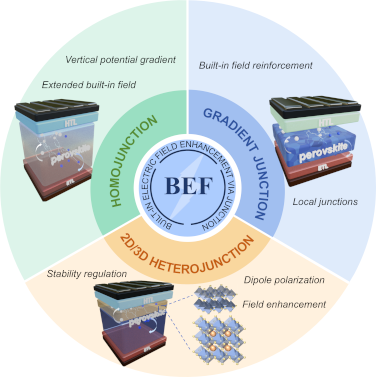
- introducing a “reassembly process” (RP) strategy. Using a pyridine/isopropanol mixed solvent, insulating long-chain ligands were replaced with formamidinium iodide short-chain ions, enabling close-packed quantum dot assembly and vertical growth orientation. Simultaneously, layered spin-coating of nanocrystals
- bidirectional interface optimization strategy: Seed layers of BAMAPbI (n = 3, 4, 5) were spin-coated onto the hole transport layer (MeO-2PACz) to form a bottom 2D induction layer, promoting the epitaxial crystallization of the overlying 3D perovskite and improving interfacial contact, thereby enhancing hole




Impacts of annealing on structural and photophysical properties of zinc phthalocyanine adsorbed on graphene
Beilstein J. Nanotechnol. 2026, 17, 576–585, doi:10.3762/bjnano.17.39
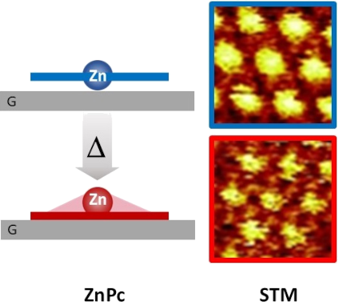
- fundamental research on organic semiconductors. The flexibility offered by the choice of the coordinated central metal cation permits to vary their electronic, photonic, and spin-related properties. It also influences their stacking geometry, in particular as a result of the change in relative stability of


Electrochemical determination of ciprofloxacin using a MIL-101/reduced graphene oxide-modified electrode
Beilstein J. Nanotechnol. 2026, 17, 541–554, doi:10.3762/bjnano.17.35
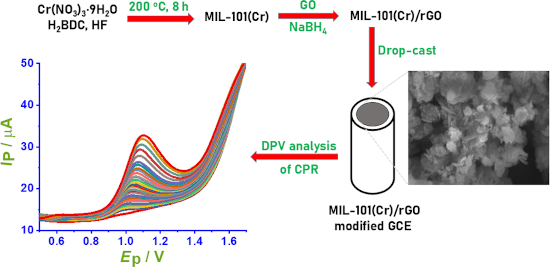
- , suggesting that the synthesized composite is predominantly composed of the expected elements within the detection limit of XPS. The high-resolution Cr 2p spectrum (Figure 3b) shows two prominent peaks at approximately 577.9 and 589.0 eV, representing the Cr 2p3/2 and Cr 2p1/2 spin–orbit components


Fractional shot noise of an SU(N) Kondo system
Beilstein J. Nanotechnol. 2026, 17, 515–540, doi:10.3762/bjnano.17.34
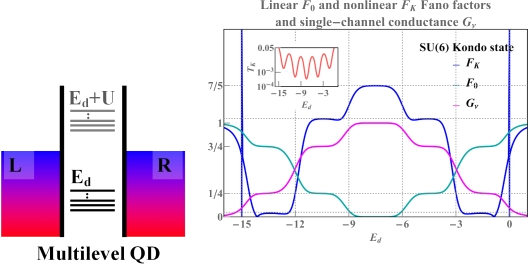
- molecular structures [12][13]. In this phenomenon, an entangled state is formed as a result of screening of the localized spin by conduction electrons [14][15][16]. The growing interest in the Kondo effect in nanoscopic systems is motivated primarily by cognitive purposes as this phenomenon is a basis for
- the generation of spin-polarized currents [19][20][21][22][23]. A continuing present goal is to test fundamental correlations between different degrees of freedom and to examine their role in quantum transport. The principal aim is to understand how dot or multidot structures with internal spin
- , orbital, or charge isospin may lead to variants of the high-symmetry Kondo effect involving different degrees of freedom [24][25][26][27][28][29][30][31][32]. Spin and orbital degeneracies can occur simultaneously, leading to a Kondo ground state of SU(4) symmetry with orbital–spin entanglement. The


![[Graphic 127]](/bjnano/content/inline/2190-4286-17-34-i187.svg?max-width=637&scale=1.18182)

Defects and defect-mediated engineering of two-dimensional materials: challenges and open questions
Beilstein J. Nanotechnol. 2026, 17, 454–488, doi:10.3762/bjnano.17.31
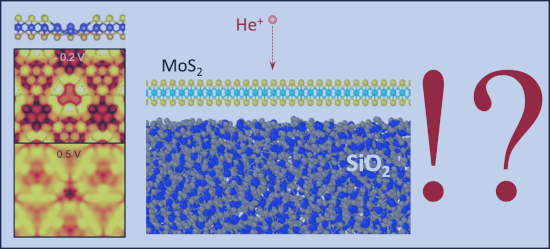
- vacancies exhibit reduced effective charges and are more chemically active. This enables barrier-less reactions of O2, explaining the rapid oxidation at larger vacancy clusters. Additional uncertainty in modelling oxidation kinetics arises from the possibility of changes in the spin state of the O2 molecule
- them to be deep acceptors. In addition, chalcogen vacancies in TMDs are readily passivated by oxygen in air [51][140]. Can magnetic moments of individual defects be measured? Solid-state spin defects have emerged as essential building blocks for quantum communication and sensing applications [141]. In
- 2D materials, numerous spin-active defects have been predicted and an increasing number have been experimentally confirmed [119][142][143] using optical spectroscopy, STM, and other techniques. STM is an ideal tool to measure magnetic moments of atomic-scale defects. Inelastic excitations of the spin





Ferroelectric nanodot reservoir for neuromorphic computing
Beilstein J. Nanotechnol. 2026, 17, 352–364, doi:10.3762/bjnano.17.24
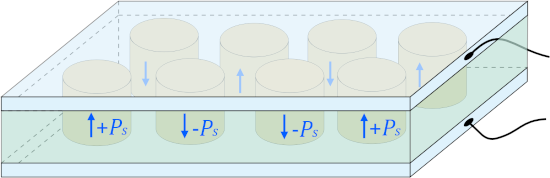
- node within a predefined circuit. However, such approaches often neglect the rich collective dynamics emerging from ensembles of interacting nonlinear elements, an aspect especially compelling when analyzed through the lens of statistical physics models such as the Ising spin system with disorder
- neuromorphic purposes using abstract or spin-based physical systems [43][44], the ferroelectric platform described here uniquely combines analog configurability, scalability, and low-energy operation due to the intrinsic dielectric polarization physics. In contrast to spintronic or CMOS-based implementations


Fast vortex dynamics and relaxation times in NbRe-based heterostructures
Beilstein J. Nanotechnol. 2026, 17, 292–302, doi:10.3762/bjnano.17.20
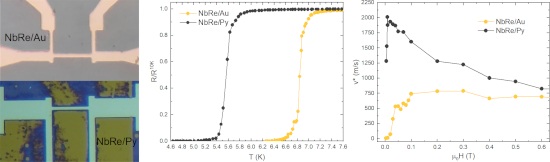
- Electrical Engineering, Technische Universität Braunschweig, D-38106 Braunschweig, Germany CNR-SPIN, c/o Università degli Studi di Salerno, I-84084 Fisciano (Sa), Italy Centro NANO_MATES, c/o Università degli Studi di Salerno, I-84084 Fisciano, Salerno, Italy 10.3762/bjnano.17.20 Abstract An in-depth
- relaxation channel, promoting faster quasiparticle recombination. However, this effect competes with additional spin-related relaxation channels due to the splitting of the electronic band, which can lead to a slower recovery of the superconducting condensate. Therefore, in general, the net effect of a


Structure-dependent thermochromism of PAZO thin films: theory and experiment
Beilstein J. Nanotechnol. 2026, 17, 186–199, doi:10.3762/bjnano.17.12
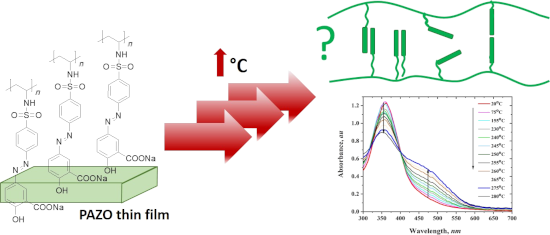
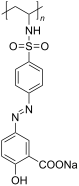
- based on PAZO polymer. Preparation of thin-film samples All thin films used in this work were fabricated using spin-coating technique. Methanol was used as solvent for all samples, and a magnetic stirrer ensured complete dissolution. The solution was then poured onto the substrate (quartz or glass) and


Functional surface engineering for cultural heritage protection: the role of superhydrophobic and superoleophobic coatings – a comprehensive review
Beilstein J. Nanotechnol. 2026, 17, 63–96, doi:10.3762/bjnano.17.6





Microscopic study of the intermediate mixed state in intertype superconductors
Beilstein J. Nanotechnol. 2026, 17, 57–62, doi:10.3762/bjnano.17.5
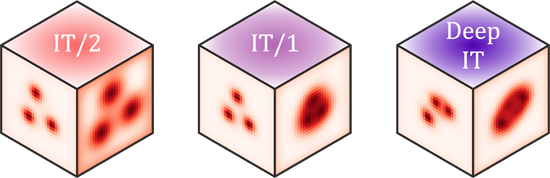
- method The vortex configurations are analyzed within a microscopic lattice model of a superconductor described by the attractive Hubbard Hamiltonian: where () are the annihilation (creation) operator for an electron with spin σ at site i, is the electron number operator, tij = −t is the nearest


Competitive helical bands and highly efficient diode effect in F/S/TI/S/F hybrid structures
Beilstein J. Nanotechnol. 2026, 17, 15–23, doi:10.3762/bjnano.17.2
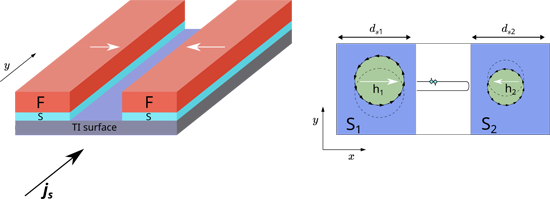
- employed as a way to detect the spin–orbital coupling (SOC) type of the material [72]. Typically, such devices require three ingredients for achieving the nonreciprocity of the critical current, including lack of inversion and time-reversal symmetries and the presence of the superconducting order parameter
- based on topological insulators (TIs) are interesting since they offer strongest SOC rendering linear spin-polarized dispersion for the surface states [73]. The diode effect in TI-based structures has been reported in Josephson junctions, as well as in hybrid structures. In practice, when producing
- superconducting regions with a proximity-induced in-plane exchange field on top of the TI. The Fermi contour of the TI surface states is usually represented by the Dirac spectrum, that is, a single helical band, which is characterized by the strongest spin-momentum locking effect. Here, we consider the F/S/TI/S/F


![[Graphic 16]](/bjnano/content/inline/2190-4286-17-2-i31.svg?max-width=637&scale=1.18182)
![[Graphic 17]](/bjnano/content/inline/2190-4286-17-2-i32.svg?max-width=637&scale=1.18182)


Improving magnetic properties of Mn- and Zn-doped core–shell iron oxide nanoparticles by tuning their size
Beilstein J. Nanotechnol. 2025, 16, 2285–2295, doi:10.3762/bjnano.16.157
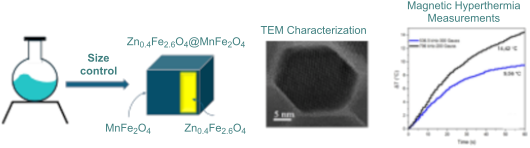
- magnetic performance due to their reduced surface spin disorder [7]. Polyhedral NPs exhibit higher magnetic saturation, less spin canting, and higher SAR values than spherical NPs. For instance, Kasparis et al. demonstrated that polyhedral Zn0.4Fe2.6O4 NPs exhibited SAR values more than double those of
- ± 1.7, and 45.0 ± 1.2 nm exhibited Ms values of 0.012, 0.031, 0.12, and 7 A·m2·kg−1, respectively (Table 3). Similar trends have been reported in the literature, where larger particle sizes lead to higher Ms values due to the reduction of surface spin canting and the improved alignment of magnetic



Geometry-controlled engineering of the low-temperature proximity effect in normal metal–superconductor junctions
Beilstein J. Nanotechnol. 2025, 16, 2265–2273, doi:10.3762/bjnano.16.155
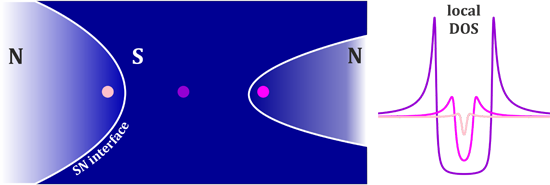
- following lattice Hamiltonian [44]: with where () represent electron creation (annihilation) operators for spin σ at site i on the lattice. The tunneling amplitude tij is non-zero only between nearest neighbors (tij = −t), g > 0 is the superconducting pairing constant on the superconducting side of the
- performance in superconducting quantum circuits, Josephson junctions, or topological superconducting platforms, where the strength and range of the induced pairing correlations are critical. Future work could extend our analysis to incorporate the effects of disorder, finite temperature, spin–orbit coupling


Chiral plasmonic nanostructures fabricated with circularly polarized light
Beilstein J. Nanotechnol. 2025, 16, 2245–2264, doi:10.3762/bjnano.16.154
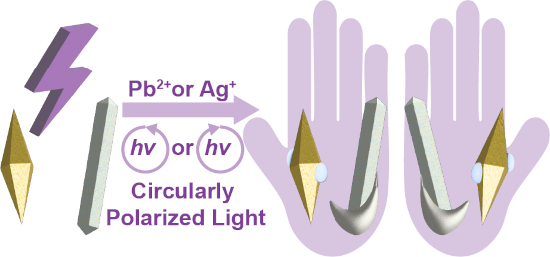
- enantioselectivity induced by cPNSs has primarily been attributed to their geometrical chirality, which structurally favors interactions with chiral molecules [21][22]. However, chiral-induced spin selectivity through cPNSs can potentially promote enantioselective catalytic reactions [23]. Furthermore, the chiral





Hartree–Fock interaction in superconducting condensate fractals
Beilstein J. Nanotechnol. 2025, 16, 2177–2182, doi:10.3762/bjnano.16.150
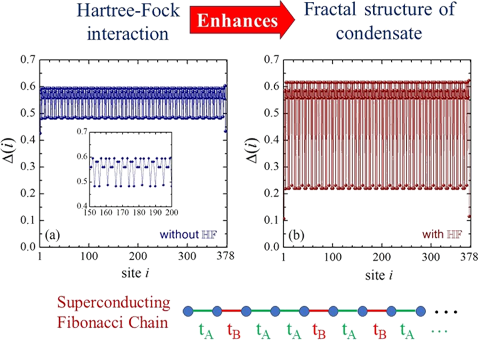
- creation operators of an electron with the spin projection σ = (↑,↓) at sites i = 1,…,N, t⟨ij⟩ is the hopping amplitude between the nearest neighboring sites, , and g > 0 is the on-site attractive electron–electron interaction. Within the mean-field approximation, the Hamiltonian in Equation 1 is reduced
- [4] to the effective BCS–Bogoliubov Hamiltonian in the form (for the s-wave pairing): where with δij the Kronecker delta, and Δ(i) and UHF(i) the superconducting order parameter and the HF interaction potential, respectively. The latter obey the self-consistency relations here, we exclude spin


Stereodiscrimination of guests in chiral organosilica aerogels studied by ESR spectroscopy
Beilstein J. Nanotechnol. 2025, 16, 2034–2054, doi:10.3762/bjnano.16.140
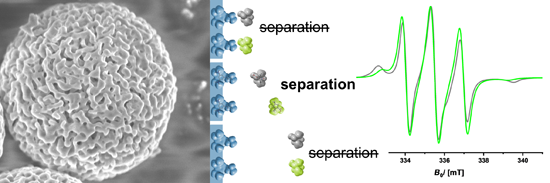
- necessary to reach separation is an important point. We have employed the two enantiomers of a chiral, nitroxide-based spin probe as guests in organo-modified macroporous host materials and applied ESR spectroscopy as a tool to investigate their rotational mobility. Using a well-established and commercially
- enantiomers (+) and (−) experience a different chemical environment is key. Otherwise, there might be a dynamic equilibrium between surface-adsorbed and mobile spin probes without stereodifferentiation. With this knowledge, it was possible to reach higher selectivity values than for the commercial material. A
- access the sub-10 nm domain and to obtain information about the dynamics of guests confined to the porous system on short timescales below milliseconds. Here, electron spin resonance (ESR) has some advantages. Because of the temporal dimension of these rotational dynamics at the microseconds timescale




Energy spectrum and quantum phase transition of the coupled single spin and an infinitely coordinated Ising chain
Beilstein J. Nanotechnol. 2025, 16, 1668–1676, doi:10.3762/bjnano.16.117
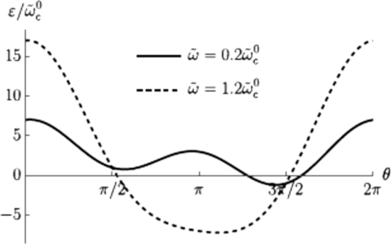
- .16.117 Abstract In this work we consider a spin model composed of a single spin and connected to an infinitely coordinated Ising chain. Theoretical models of this type arise from various fields of theoretical physics, such as theory of open systems, quantum control, and quantum computations. In the
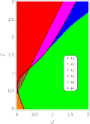
- we obtain the spectrum of the whole system and study the properties of the ground-state quantum phase transition. Keywords: Ising chain; Lipkin–Meshkov–Glick model; quantum phase transitions; Introduction In the present manuscript, we consider a single spin connected to an infinitely coordinated
- Ising chain. From a purely theoretical point of view, this model arises when studying the physics of open systems [1][2]. In this case, the chain is modelling the external environment to which the single spin is connected. In such models, it is convenient to study not only Markovian dynamics of the

![[Graphic 39]](/bjnano/content/inline/2190-4286-16-117-i63.svg?max-width=637&scale=1.18182)


![[Graphic 51]](/bjnano/content/inline/2190-4286-16-117-i75.svg?max-width=637&scale=1.18182)
Photocatalytic degradation of ofloxacin in water assisted by TiO2 nanowires on carbon cloth: contributions of H2O2 addition and substrate absorbability
Beilstein J. Nanotechnol. 2025, 16, 1567–1579, doi:10.3762/bjnano.16.111
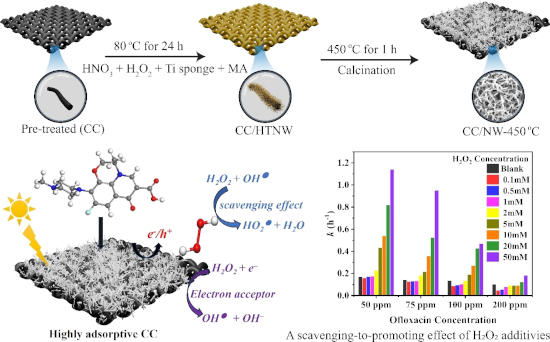
- of the carbon surface. The Ti 2p spectra (Figure 4d) show characteristic peaks for CC/HTNW, with Ti 2p3/2 and Ti 2p1/2 peaks appearing at 458 and 463 eV, respectively, while for CC/NW-450 °C, these peaks slightly shift to 459 and 464 eV, respectively. The spin–orbit splitting remains ≈5.4 eV


Modeling magnetic properties of cobalt nanofilms used as a component of spin hybrid superconductor–ferromagnetic structures
Beilstein J. Nanotechnol. 2025, 16, 1557–1566, doi:10.3762/bjnano.16.110
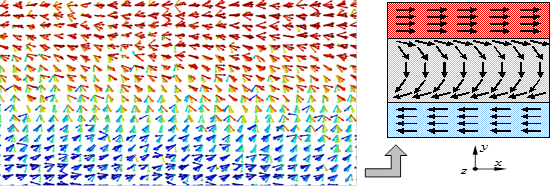
- ., Dolgoprudny, 141701, Russia 10.3762/bjnano.16.110 Abstract The paper presents a mathematical model for studying the magnetic behavior of atoms, which takes into account spin and interatomic interactions. Two problems were solved by means of mathematical modeling. At the first stage, the problem of modeling a
- thin films and the formation of Neel domain walls. Keywords: ferromagnetic properties; LAMMPS; mathematical modeling; MEAM; molecular dynamics; spin dynamics; Introduction Thin film structures [1][2] are increasingly employed each year in a wide range of applications, serving as functional [3][4
- Studying the Magnetic Behavior of Atoms To conduct computational experiments, we used a mathematical model describing the coordinated motion of atoms and the change of their spin vectors. The spin vector of an atom in this case was understood as the intrinsic magnetic moment associated with the momentum of





