Search results
Search for "thermal noise" in Full Text gives 68 result(s) in Beilstein Journal of Nanotechnology.
Terahertz-range on-chip local oscillator based on Josephson junction arrays for superconducting quantum-limited receivers
Beilstein J. Nanotechnol. 2025, 16, 2296–2305, doi:10.3762/bjnano.16.158
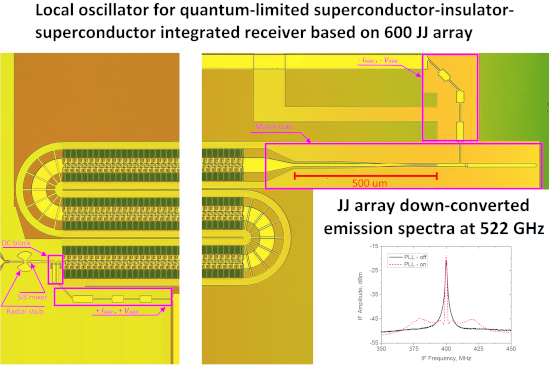
- ][41] formula with the differential resistance normalized to a single junction yields the value of approx. 0.1 MHz. This is somewhat lower than the experimental value, probably due to the presence of the thermal noise arising from the current flowing through the shunts and other low-frequency
- IVC of the JJ array when the PLL mode is active is shown in Figure 10. The current step induced by the PLL system is approx. 0.5 mA, which is three orders of magnitude higher than the characteristic noise level in the current bias system (≈0.5 μA) and thermal noise. This shows the robust nature of the


Mechanical property measurements enabled by short-term Fourier-transform of atomic force microscopy thermal deflection analysis
Beilstein J. Nanotechnol. 2025, 16, 1952–1962, doi:10.3762/bjnano.16.136
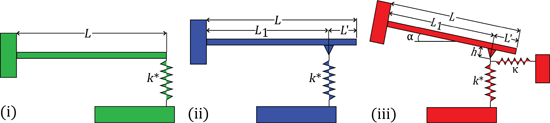
- dimensions in the determination of the Sader spring constant or other calculations of the normal spring constant are important. Finally, it has been demonstrated that the Sader method can consistently show a difference compared with the thermal noise method used above, particularly for soft cantilevers as




Quantum circuits with SINIS structures
Beilstein J. Nanotechnol. 2025, 16, 1931–1941, doi:10.3762/bjnano.16.134
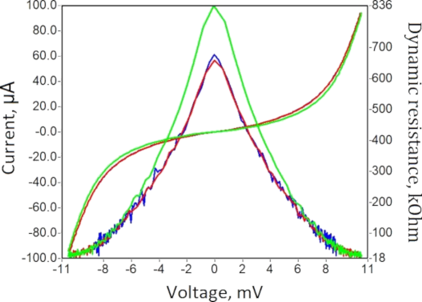
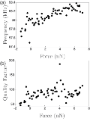
- the charge transfer by electrons during tunneling through the tunnel SIN junction and the thermal noise of these same electrons as heat carriers: δIω2 is the power spectral density (PSD) of current fluctuations due to shot noise, δPω2 is the PSD of thermal fluctuations, and ⟨δPωδIω⟩ is the correlation


Low-temperature AFM with a microwave cavity optomechanical transducer
Beilstein J. Nanotechnol. 2025, 16, 1873–1882, doi:10.3762/bjnano.16.130
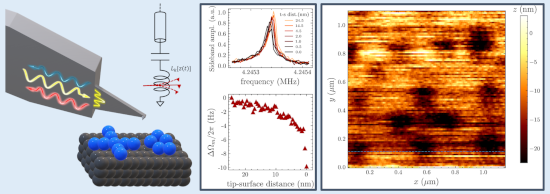
- noise, pointing to its crucial role in the context of force sensitivity. Through analysis of noise measurements we determine the effective temperature of the cantilever eigenmode and we determine the region of detector operation in which the sensor is thermal-noise-limited. Our analysis shows that the


Mechanical stability of individual bacterial cells under different osmotic pressure conditions: a nanoindentation study of Pseudomonas aeruginosa
Beilstein J. Nanotechnol. 2025, 16, 1171–1183, doi:10.3762/bjnano.16.86
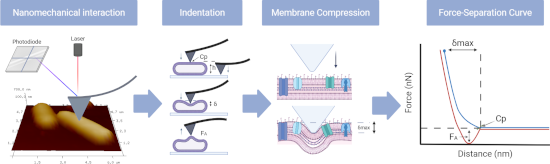
- minimum damage to the mechanical integrity of the cell membrane. Before each experiment in FV mode, the cantilever was calibrated using the thermal-noise method which is integrated in the multimode AFM software and is briefly described next. First, the optical-lever sensitivity (OLS) of the cantilever was


Advanced atomic force microscopy techniques V
Beilstein J. Nanotechnol. 2025, 16, 54–56, doi:10.3762/bjnano.16.6

- accurate knowledge of the quartz cantilever stiffness, the authors develop a method to quantify the stiffness based on thermal noise measurements and numerical simulation. Calibrated measurements of conductivity and resistivity are the focus of the contribution by Piquemal et al. [3]. A particular
Stiffness calibration of qPlus sensors at low temperature through thermal noise measurements
Beilstein J. Nanotechnol. 2024, 15, 580–602, doi:10.3762/bjnano.15.50
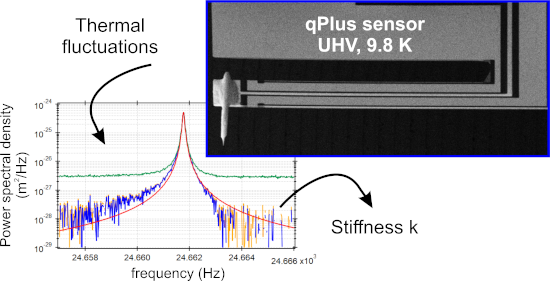
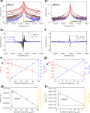
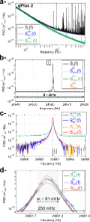
- stiffness calibration of a particular type of qPlus sensor in UHV and at 9.8 K by means of thermal noise measurements. The stiffness calibration of such high-k sensors, featuring high quality factors (Q) as well, requires to master both the acquisition parameters and the data post-processing. Our approach
- relies both on numerical simulations and experimental results. A thorough analysis of the thermal noise power spectral density of the qPlus fluctuations leads to an estimated stiffness of the first flexural eigenmode of ≃2000 N/m, with a maximum uncertainty of 10%, whereas the static stiffness of the
- ; thermal noise; ultrahigh vacuum; Introduction Since the 2000s, non-contact atomic force microscopy (nc-AFM) has established itself as a scanning probe method for the topographical, chemical, and electrical mapping of the surface of a sample down to the atomic scale [1][2][3]. When used in an ultrahigh

Design, fabrication, and characterization of kinetic-inductive force sensors for scanning probe applications
Beilstein J. Nanotechnol. 2024, 15, 242–255, doi:10.3762/bjnano.15.23
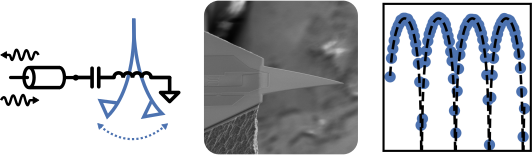
- interferometric and beam-deflection detectors of motion are sufficient to resolve the thermal noise force determined by the damping of the cantilever eigenmode in thermal equilibrium with its environment. Operation in high vacuum and at cryogenic temperatures reduces this force noise, improving sensitivity to the
- electromechanical coupling. The coupling of the microwave resonator to a transmission line is also an important design consideration. Our primary goal is high sensitivity to tip–surface forces, given the constraints of the AFM application. If the detector is limited by thermal noise, the sensitivity is given by the
- sidebands in the measured output microwave field SVV(ω). The thermal noise force is detected at these sidebands [8], where is the added noise of the detector, nc is the number of circulating intra-cavity photons in the microwave resonator, g0 is the single-photon electromechanical coupling rate, and α is a



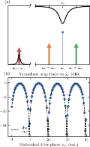
Intermodal coupling spectroscopy of mechanical modes in microcantilevers
Beilstein J. Nanotechnol. 2023, 14, 123–132, doi:10.3762/bjnano.14.13
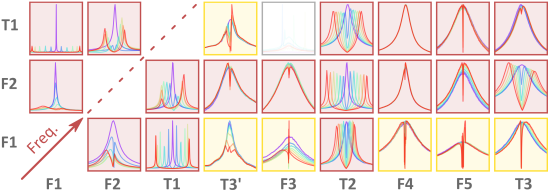
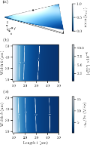
- , these improvements have yet to find a practical way to AFM. As a solution, we investigate here a mechanism in which individual mechanical eigenmodes of a microcantilever couple to one another, mimicking optomechanical techniques to reduce thermal noise. We have a look at the most commonly used modes in
- , which would activate intermodal coupling between two or more eigenmodes. With this geometric nonlinearity, we can circumvent the use of tip–sample forces and apply techniques from optomechanics. Sideband cooling will reduce thermal noise of the fundamental mode. Parametric amplification relies on
- and mode splitting. Applying the sum, referred to as blue sideband pump, will cause either mode squeezing or parametric amplification [22], provided that the amplitude is optimally chosen. We will focus on the red sideband, as sideband cooling is useful for reducing thermal noise in standard AFM and


Studies of probe tip materials by atomic force microscopy: a review
Beilstein J. Nanotechnol. 2022, 13, 1256–1267, doi:10.3762/bjnano.13.104
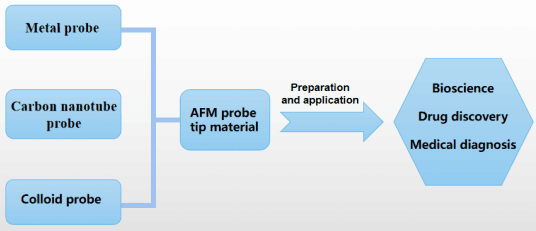
- the thermal noise method when prepared in the chamber, after which FC is obtained on the substrate to measure the deflection sensitivity, and the position of the loading point is measured by optical microscopy when the sphere is attached. The process of calibrating the kTL into the manifold is shown
A cantilever-based, ultrahigh-vacuum, low-temperature scanning probe instrument for multidimensional scanning force microscopy
Beilstein J. Nanotechnol. 2022, 13, 1120–1140, doi:10.3762/bjnano.13.95
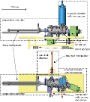
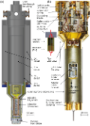
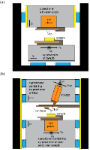
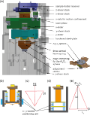
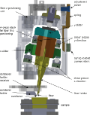
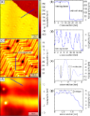
- al. [59], the measurement noise arises from three different noise sources, that is, thermal noise of the cantilever (thermal noise), noise of the deflection sensor (deflection noise) and noise arising from fluctuations of the oscillator circuitry driving the cantilever oscillation (oscillator noise
- from the measured first mode flexural resonance frequency f1 using: The expressions for the minimally measurable force derivative (Equation 1 and Equation 2) arising from thermal and deflection sensor noise, respectively, reveal that a high quality factor (for a low thermal noise) and a low modal
- cantilever, the deflection noise obtained with typical deflection sensors is negligible such that thermal noise is dominant. Recently, Feng et al. [29] have demonstrated that at room temperature a force derivative of 78 nN/m is detectable in a bandwidth of 1 Hz, which is of particular importance for the





Comparing the performance of single and multifrequency Kelvin probe force microscopy techniques in air and water
Beilstein J. Nanotechnol. 2022, 13, 922–943, doi:10.3762/bjnano.13.82
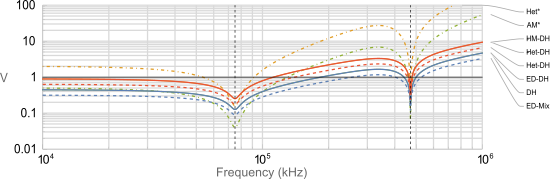
- forces in KPFM is generally expressed as the minimum detectable CPD [53], and is directly limited by the geometry of the interaction, thermal noise of the cantilever, and the detection noise limits of the AFM [36][54]. Cantilevers have a number of eigenmodes, ωn, where there is a mechanical enhancement
- cantilever. Under small amplitude conditions the tip can be positioned very close to the surface and as such there is an advantage in increasing the spatial resolution. The trade-off here is that the SNR will be small as the mechanical amplitude approaches the thermal noise limits of the cantilever. In
Temperature and chemical effects on the interfacial energy between a Ga–In–Sn eutectic liquid alloy and nanoscopic asperities
Beilstein J. Nanotechnol. 2022, 13, 817–827, doi:10.3762/bjnano.13.72
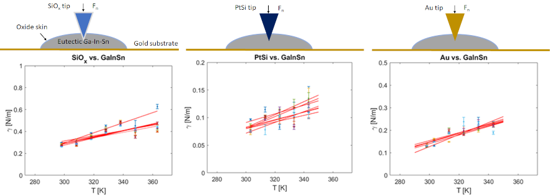
- force–distance curve with each cantilever on a quartz glass sample (manufactured by Goodfellow, United Kingdom) and extracting its slope in the range of repulsive forces. Subsequently, we determined the bending stiffness Cn of each cantilever by analyzing its thermal noise vibration [18]. After



Gelatin nanoparticles with tunable mechanical properties: effect of crosslinking time and loading
Beilstein J. Nanotechnol. 2022, 13, 778–787, doi:10.3762/bjnano.13.68
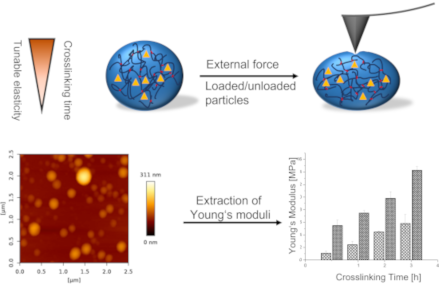
- actual sensitivity and the spring constant of the used cantilever were calibrated on a cleaned silica wafer by the thermal noise method by Hutter et al. [27] using a correction factor of 0.251. The data was acquired using the quantitative imaging mode (QI™) with image sizes of 5 × 5 µm and a resolution


Direct measurement of surface photovoltage by AC bias Kelvin probe force microscopy
Beilstein J. Nanotechnol. 2022, 13, 712–720, doi:10.3762/bjnano.13.63
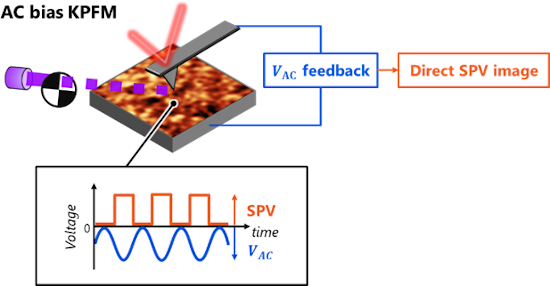
- density nFM is described as [74] where ntherm is the thermal noise density, ndetect is the detector noise density, nosc is the oscillator noise density, and nds is the deflection sensor noise density. The frequency noise δf measured with a bandwidth of B at a center of fm is described as When fm ≫ B, δf


Effects of substrate stiffness on the viscoelasticity and migration of prostate cancer cells examined by atomic force microscopy
Beilstein J. Nanotechnol. 2022, 13, 560–569, doi:10.3762/bjnano.13.47
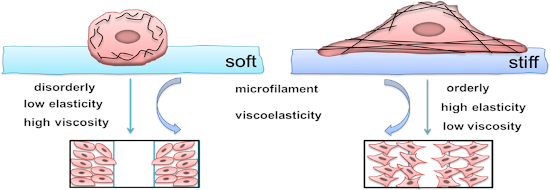
- Germany) for 2 h to prevent damage to the cells. Before the experiment, the thermal noise method was used to adjust the cantilever spring constant, and then the experiment was carried out in contact mode. The AFM probe (MLCT probe, Bruker, USA) slightly contacted the cell surface and a constant force was



Nonmonotonous temperature dependence of Shapiro steps in YBCO grain boundary junctions
Beilstein J. Nanotechnol. 2021, 12, 1279–1285, doi:10.3762/bjnano.12.95
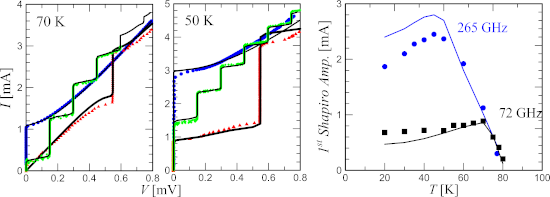
- by the resistively–capacitively shunted-junction (RCSJ) model [25][26], especially for measurements obtained at high temperatures. However, taking into account the effect of the YBCO junction resistance thermal noise [16] makes it possible to neutralize this difference and obtain a good agreement
- detection regime is optimal for the junction. This issue is discussed in more details below. The third important parameter is the thermal noise magnitude, kBT, which affects the smearing of the Shapiro steps, and, accordingly, the decrease in the step size in the region of low radiation power. It is not
- important. For low ωmw, the change in the response of the Josephson junction will be small with the temperature [16] since at these frequencies the detection is not optimal. At the same time, at high temperatures, thermal noise will blur the step more than at low temperatures, and with increasing Ic the


A new method for obtaining model-free viscoelastic material properties from atomic force microscopy experiments using discrete integral transform techniques
Beilstein J. Nanotechnol. 2021, 12, 1063–1077, doi:10.3762/bjnano.12.79
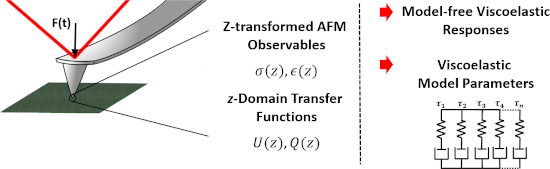
- material and its relationship to the modified harmonic components should also be investigated further. One final area of future work concerns the effect of electronic or thermal noise on the quality of the viscoelastic analysis. Generally speaking, analyses in the complex domain can handle noise more


Bulk chemical composition contrast from attractive forces in AFM force spectroscopy
Beilstein J. Nanotechnol. 2021, 12, 58–71, doi:10.3762/bjnano.12.5
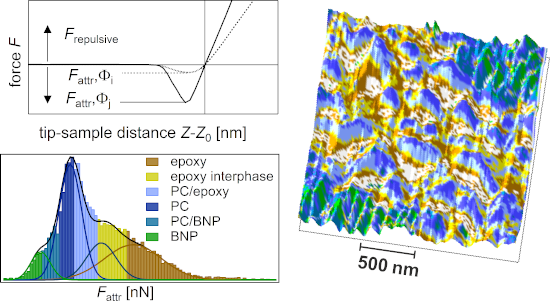
- recorded with a frequency of 1 Hz. The spring constant of the cantilever was determined by a noninvasive thermal noise method. In the case of FDC experiments, the tip radius was estimated by fitting the reference measurements of glass and by applying the Hertz theory, as described in Supporting Information


Application of contact-resonance AFM methods to polymer samples
Beilstein J. Nanotechnol. 2020, 11, 1714–1727, doi:10.3762/bjnano.11.154
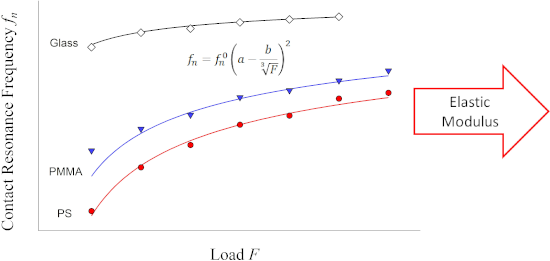
- curves on an uncompliant substrate, such as a silicon wafer. The spring constant could then be determined from the thermal noise spectrum [42]. Tip radii have been obtained through scanning a TGT1 test grating (NT-MDT Spectrum Instruments, Moscow, Russia) consisting of an array of sharp tips. The


Thermophoretic tweezers for single nanoparticle manipulation
Beilstein J. Nanotechnol. 2020, 11, 1126–1133, doi:10.3762/bjnano.11.97
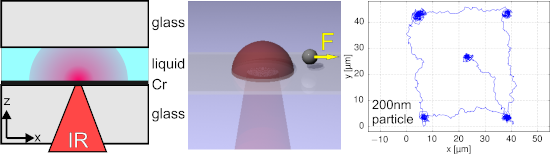
- heating. While it is also possible to trap atoms and molecules in vacuum using electromagnetic traps, thermal noise is a governing factor when particles are under biological conditions, namely at room temperature in an aqueous medium. Laser tweezers [1][2][3], invented long ago and recognized with the


Microwave photon detection by an Al Josephson junction
Beilstein J. Nanotechnol. 2020, 11, 960–965, doi:10.3762/bjnano.11.80
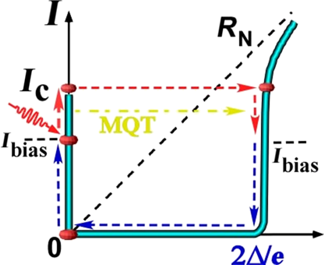
- layered high-temperature superconductors [27]. The significance of this effect depends on the ratio of thermal fluctuations kBT, the damping parameter α and the Josephson energy EJ. Here we will consider a small tunnel junction with the thermal noise intensity of γ = kBT/EJ ≥ 2 × 10⁻² and α > 0.1, and
- excitation caused by a rapid decrease in the barrier, and remained constant until the appearance of a gap voltage due to thermal noise or quantum tunneling. The lifetime measurements were repeated at least 200 times for each value of the bias current. For a high-frequency experiment, a microwave signal was


Extracting viscoelastic material parameters using an atomic force microscope and static force spectroscopy
Beilstein J. Nanotechnol. 2020, 11, 922–937, doi:10.3762/bjnano.11.77
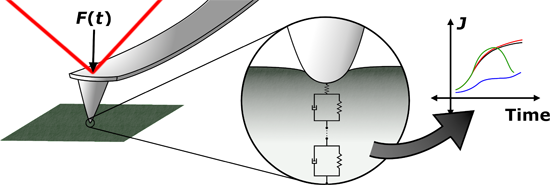
- velocities were selected in a logarithmic distribution: 10, 100, and 1000 nm/s. The probe utilized was an OLYMPUS AC 240TS-R3, featuring a tip radius of roughly 10 nm. Before measurement, the tip was calibrated using the thermal noise method [29] in which a hard silicon sample was used after sonicating using


Measurement of electrostatic tip–sample interactions by time-domain Kelvin probe force microscopy
Beilstein J. Nanotechnol. 2020, 11, 911–921, doi:10.3762/bjnano.11.76
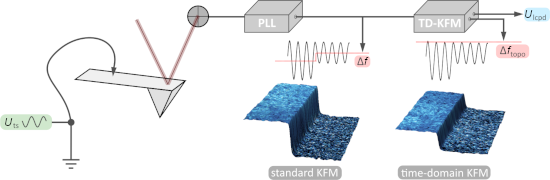
- measurement noise is assumed to be Gaussian white noise and is defined by . This is the case for measurements where thermal noise is the dominating noise source, i.e., when the modulation frequency is below the crossover of thermal white noise and (with increasing frequency) detection noise [29]. The power
- spectral density (PSD) of the thermal noise can be calculated as For detection-noise-limited measurements, an additional state has to be introduced to keep track of the dynamics of the apparent noise. The approximation in Equation 17 contains the system output matrix . It depends on the current tip–sample
- transition noise matrix of the detection system QD is the zero matrix with the PSD of the thermal noise Rth at its top-left position. The covariance matrix QK contains the assumed PSD of the sample properties. The values of QK are design parameters and determine how much change may be expected between two


Examination of the relationship between viscoelastic properties and the invasion of ovarian cancer cells by atomic force microscopy
Beilstein J. Nanotechnol. 2020, 11, 568–582, doi:10.3762/bjnano.11.45
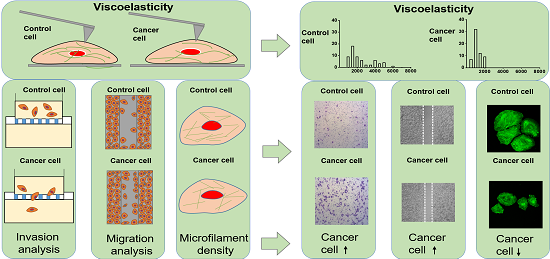
- . Force–distance curve-based AFM measurements were carried out to calculate the optical photodiode deflection sensitivity and the cantilever spring constant was verified by the thermal noise method before experiments. MLCT cantilevers (Bruker, USA) made of silicon nitride with approximate spring constant