


Search results
Search for "2D materials" in Full Text gives 107 result(s) in Beilstein Journal of Nanotechnology.
Ni, Co, Zn, and Cu metal-organic framework-based nanomaterials for electrochemical reduction of CO2: A review
Beilstein J. Nanotechnol. 2023, 14, 904–911, doi:10.3762/bjnano.14.74
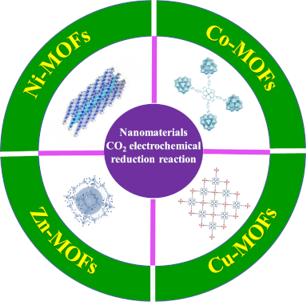
- (2D) MOFs represent a novel addition to the family of 2D materials. Particularly, 2D MOF nanolayers with several outstanding characteristics, such as high surface area and abundant exposed active sites, have been studied for CO2RR. As a case in point, Wu et al. prepared 2D Ni-based zeolitic imidazole


Transferability of interatomic potentials for silicene
Beilstein J. Nanotechnol. 2023, 14, 574–585, doi:10.3762/bjnano.14.48
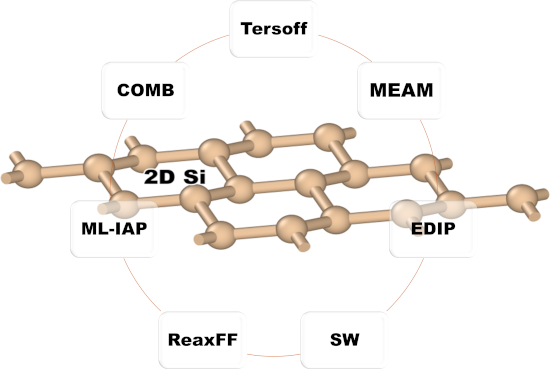
- –Weber, EDIP, ReaxFF, COMB, and machine-learning-based interatomic potentials. A quantitative systematic comparison and a discussion of the results obtained are reported. Keywords: 2D materials; DFT; force fields; interatomic potentials; mechanical properties; silicene; Introduction We are living in
- graphene has also sparked interest in other non-carbon 2D materials [1][2]. One of such materials is 2D silicon, called silicene [3][4]. Using first-principles methods with current computer resources enables us to model structures up to about a few hundred atoms. For larger systems, approximate methods are
- quantify the potentials under examination. For 2D materials, directional 2D Young’s moduli, 2D Poisson’s ratios, and the 2D shear modulus, are often used instead of elastic constants Cij. Because of the symmetry of hexagonal lattices, these reduce to one 2D Young’s modulus E and one 2D Poisson’s ratio ν
![[Graphic 3]](/bjnano/content/inline/2190-4286-14-48-i7.svg?max-width=637&scale=1.18182)

Carbon nanotube-cellulose ink for rapid solvent identification
Beilstein J. Nanotechnol. 2023, 14, 535–543, doi:10.3762/bjnano.14.44
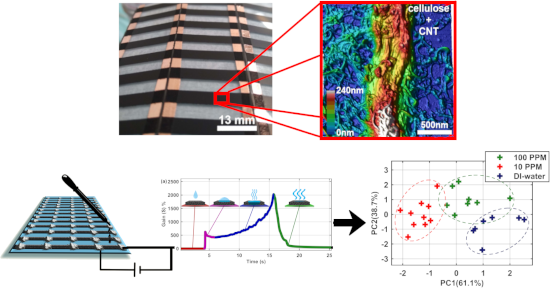
- and other 1D/2D materials have been employed as ink components with great potential for a broad range of applications, for example, in flexible electronics, photoconductors, transparent conductors, and gas sensors [44][45][46][47]. Carbon nanotube ink films have been reported as field-effect


On the use of Raman spectroscopy to characterize mass-produced graphene nanoplatelets
Beilstein J. Nanotechnol. 2023, 14, 509–521, doi:10.3762/bjnano.14.42
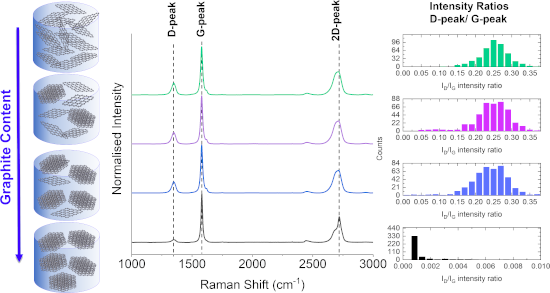
- .14.42 Abstract Raman spectroscopy is one of the most common methods to characterize graphene-related 2D materials, providing information on a wide range of physical and chemical properties. Because of typical sample inhomogeneity, Raman spectra are acquired from several locations across a sample, and
- , although quantification of the amount remains approximate. We therefore recommend this approach as a robust methodology for reliable characterization of mass-produced graphene-related 2D materials using confocal Raman spectroscopy. Keywords: few-layer graphene; graphene; metrology; quality control; Raman
- spectroscopy; Introduction Graphene and related 2D materials (GR2Ms) are now well established with commercial products available across a range of sectors, from sports and leisure products [1][2], through mobile phones [3] to automotive applications [4]. There are also a large number of producers of these


Liquid phase exfoliation of talc: effect of the medium on flake size and shape
Beilstein J. Nanotechnol. 2023, 14, 68–78, doi:10.3762/bjnano.14.8
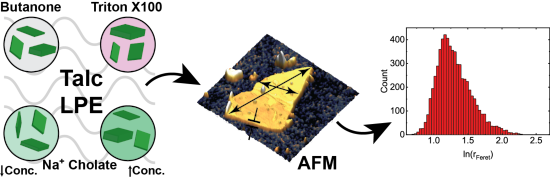
- applications that have specific requirements. Keywords: 2D materials; atomic force microscopy; liquid phase exfoliation; nanomaterials; talc; Introduction Two-dimensional (2D) materials have attracted a lot of interest due to their outstanding properties [1]. However, large-scale production is still a
- challenge that needs to be addressed to integrate 2D materials into industrial applications. One approach to producing large quantities of few-layer flakes of a broad range of exfoliatable materials is liquid-phase exfoliation (LPE) [2][3][4][5]. This method relies on mechanical energy to exfoliate



Photoelectrochemical water oxidation over TiO2 nanotubes modified with MoS2 and g-C3N4
Beilstein J. Nanotechnol. 2022, 13, 1541–1550, doi:10.3762/bjnano.13.127
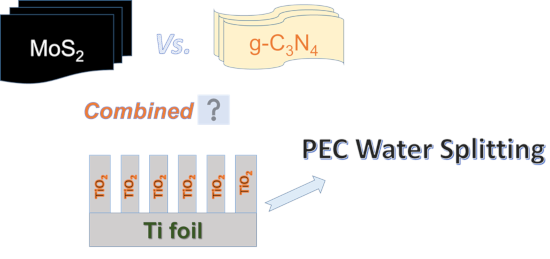
- expensive synthesis equipment [29][36][37][38]. In this study, we compare properties and PEC water splitting efficiency of TNAs combined with the typical 2D materials MoS2 and g-C3N4 obtained with the same synthesis procedure. Insightful studies about optical and electronic properties have been conducted to
- materials (Figure 1b). This agrees with the results of previous publications in which hydrothermal methods were applied [24][25][26]. The SEM image of the g-C3N4 material shows the uniform nanosheets that were fabricated by the melamine pyrolysis method (Figure 1c). After the deposition of 2D materials MoS2
- filter cutting at 380 nm. Results and Discussion Characterizations of materials Figure 1a displays the morphology of TNAs, which have a uniform distribution of nanotubes with average diameters ranging from 80–100 nm and a length of 500 nm (Figure 1b). The MoS2 material exhibits the stacked layers of 2D


Analytical and numerical design of a hybrid Fabry–Perot plano-concave microcavity for hexagonal boron nitride
Beilstein J. Nanotechnol. 2022, 13, 1030–1037, doi:10.3762/bjnano.13.90
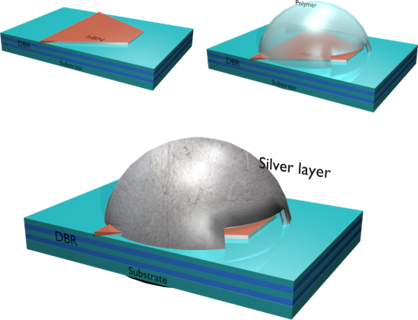
- hBN where its value falls between experimentally achievable thicknesses of multilayer 2D materials [6]. A 3D concave shape polymer then could be fabricated on top of the 2D material (Figure 2b) by a direct laser writing system (e.g., Photonic Professional, Nanoscribe GmbH) by use of a 2PP process


Optimizing PMMA solutions to suppress contamination in the transfer of CVD graphene for batch production
Beilstein J. Nanotechnol. 2022, 13, 796–806, doi:10.3762/bjnano.13.70
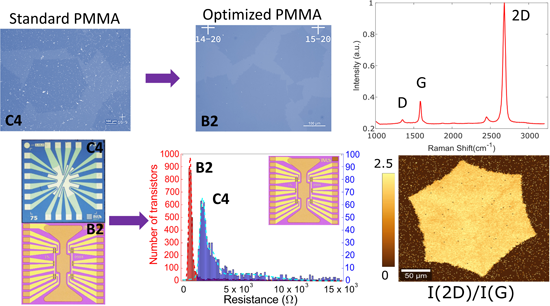
- . Keywords: 2D materials; graphene transfer process; large-scale fabrication; microelectronics; poly(methyl methacrylate); Introduction Graphene and two-dimensional (2D) transition metal dichalcogenides (TMDCs) have been the focus of an intense research effort aimed at developing a new class of innovative




Efficient liquid exfoliation of KP15 nanowires aided by Hansen's empirical theory
Beilstein J. Nanotechnol. 2022, 13, 788–795, doi:10.3762/bjnano.13.69
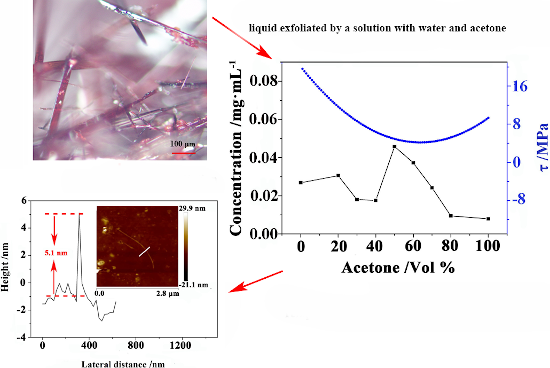
- nanoparticles as anode materials to promote the rapid diffusion and electron transfer of lithium, and Rongjun Zhao prepared n-butanol gas sensors with one-dimensional In2O3 nanorods [1][2]. Different from 2D materials, 1D materials generally have a chain-like crystal structure and are easily exfoliated due to a


Reliable fabrication of transparent conducting films by cascade centrifugation and Langmuir–Blodgett deposition of electrochemically exfoliated graphene
Beilstein J. Nanotechnol. 2022, 13, 666–674, doi:10.3762/bjnano.13.58
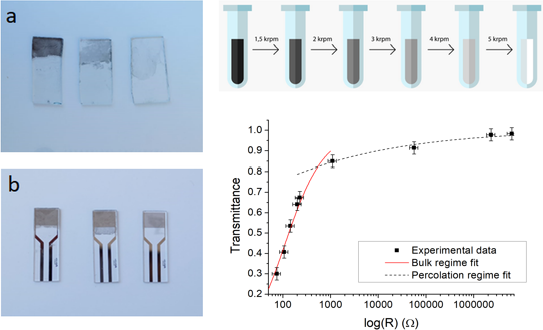
- no exfoliation experience to make use of widely available graphene materials. Keywords: 2D materials; cascade centrifugation; graphene; Langmuir–Blodgett deposition; transparent conductors; Introduction The interest in graphene and other 2D materials keeps growing, especially since the initial
- delve into fundamental properties was augmented with an outlook towards potential applications [1]. Over the past decades, a great number of different methods for the synthesis of graphene and other 2D materials has been proposed, including micromechanical cleavage [2], chemical vapor deposition (CVD
- then break up the bulk 2D materials into mono- and few-layer nanosheets [15][16]. The choice of solvent for LPE is made based on surface energy considerations, compatible solvents include NMP, dimethylformamide (DMF), N,N-dimethylacetamide (DMA), γ-butyrolactone (GBL), 1,3-dimethyl-2-imidazolidinone


Revealing local structural properties of an atomically thin MoSe2 surface using optical microscopy
Beilstein J. Nanotechnol. 2022, 13, 572–581, doi:10.3762/bjnano.13.49
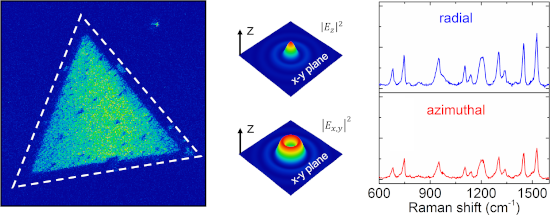
- dichalcogenide. Keywords: copper phthalocyanine; local structure; molybdenum diselenide; optical spectroscopy; surface-enhanced Raman spectroscopy; Introduction Two-dimensional (2D) materials have garnered interest for the next generation of optoelectronic and electrochemical devices, mainly owing to their
- single-molecule detection level [18][19]. The Raman enhancement originates from an electromagnetic mechanism, provided by the excitation of surface plasmons, and a chemical mechanism which is related to the modification of Raman polarizability of molecules [20]. It has been reported that 2D materials
- orientation and molecular energy levels in the vicinity of the Fermi level of graphene, the charge-transfer effect can become more pronounced [24][25]. In summary, the structural irregularities in 2D materials and molecular probe both can impact the strength of molecule–substrate interactions and then modify


Electrostatic pull-in application in flexible devices: A review
Beilstein J. Nanotechnol. 2022, 13, 390–403, doi:10.3762/bjnano.13.32
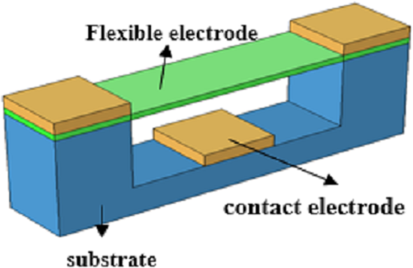
- [61]. Schematic diagram of a flexible microvalve structure. Figure 8 was redrawn from [77]. Schematic diagram of a GR pump. Figure 9 was republished from [78] (D. Davidovikj et al., “Graphene gas pumps”, 2D Materials, vol. 5, article no. 031009, published on 11 May 2018; https://doi.org/10.1088/2053


Theoretical understanding of electronic and mechanical properties of 1T′ transition metal dichalcogenide crystals
Beilstein J. Nanotechnol. 2022, 13, 160–171, doi:10.3762/bjnano.13.11
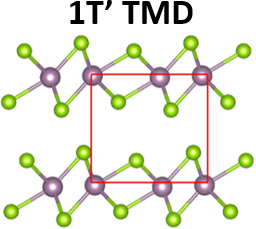
- to their composition and structural polytypes. However, experimental measurements of the electronic and mechanical properties of 2D materials face the challenge of synthesizing high-quality pristine crystals. Thus, numerical simulations have become a promising alternative due to the relatively good




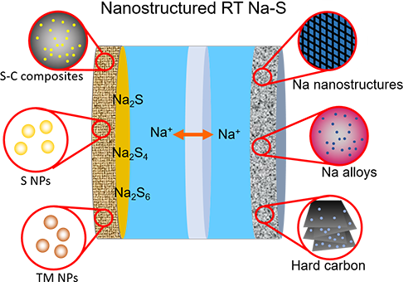
Progress and innovation of nanostructured sulfur cathodes and metal-free anodes for room-temperature Na–S batteries
Beilstein J. Nanotechnol. 2021, 12, 995–1020, doi:10.3762/bjnano.12.75
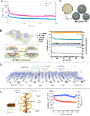
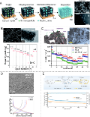
- phosphorous/graphene anode delivered 1095 mAh·g−1 after 200 cycles at 1C [81]. It has also triggered research in a wider range of 2D materials as suitable and low-expansion anodes, starting with layered black phosphorous [73][76]. From there, exfoliated sheets of 2D allotropes came to scrutiny, such as




Molecular assemblies on surfaces: towards physical and electronic decoupling of organic molecules
Beilstein J. Nanotechnol. 2021, 12, 950–956, doi:10.3762/bjnano.12.71

- substrate and the organic building blocks. Recently, two-dimensional (2D) materials, including hexagonal boron nitride (hBN) [22][23], graphene [24][25][26][27], and MoS2 [28], have emerged as monatomically thin decoupling layers. Van der Waals 2D materials are generally well suited due to their chemical
- changing chemical environment. Next, we outline articles that use 2D materials and ultrathin dielectric layers as decoupling layers. While on the one hand, molecular functionalization is a powerful approach to tune the electronic and optical properties of 2D materials, in particular for many practical
- applications [78], 2D materials, on the other hand, offer an alternative way for decoupling molecular structures from metal substrates [24]. 2D van der Waals materials are generally inert and therefore, are potentially well suited for physical decoupling of molecular structures. However, moiré patterns present
The role of convolutional neural networks in scanning probe microscopy: a review
Beilstein J. Nanotechnol. 2021, 12, 878–901, doi:10.3762/bjnano.12.66
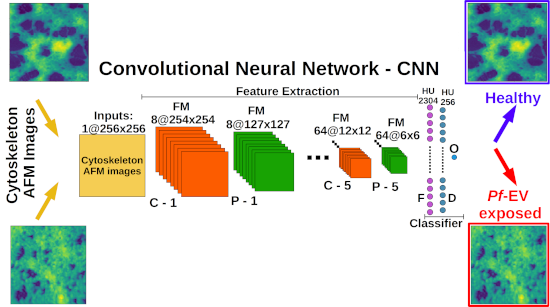
- crystals (van der Waals heterostructures, graphene, hBN, MoS2, and WTe2) was demonstrated. The detection algorithm enables real-time detection of the 2D materials (running for 200 ms on a 1024 × 1024 optical image) and is insensitive to variations in microscopy conditions such as illumination and color







Prediction of Co and Ru nanocluster morphology on 2D MoS2 from interaction energies
Beilstein J. Nanotechnol. 2021, 12, 704–724, doi:10.3762/bjnano.12.56
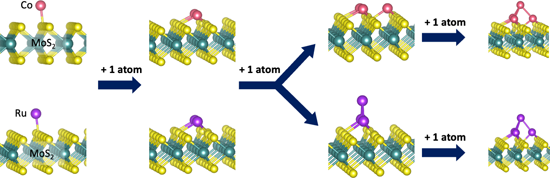
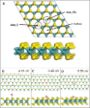
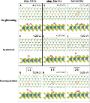
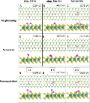
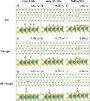
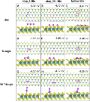
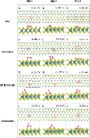
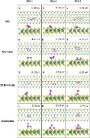
- gap in understanding thin film nucleation on 2D materials. In this paper, we present a density functional theory (DFT) study of the adsorption of small Co and Ru structures, with up to four atoms, on a monolayer of MoS2. We explore how the metal–substrate and metal–metal interactions contribute to the
- . Based on this understanding, we propose Co on MoS2 as a suitable candidate for advanced interconnects, while Ru on MoS2 is more suited to catalysis applications. Keywords: cobalt (Co); 2D materials; molybdenum disulfide (MoS2); ruthenium (Ru); thin film nucleation; Introduction Layered materials that
- or doping with transition metals [4][5][18][19][20][21][22], alkali and alkali earth metals [23][24][25], and non-metals [25] on MoS2 and other 2D materials. While experimental studies can be used to probe the performance of the 2D material in a device or some of the interfacial interactions between



A review of defect engineering, ion implantation, and nanofabrication using the helium ion microscope
Beilstein J. Nanotechnol. 2021, 12, 633–664, doi:10.3762/bjnano.12.52
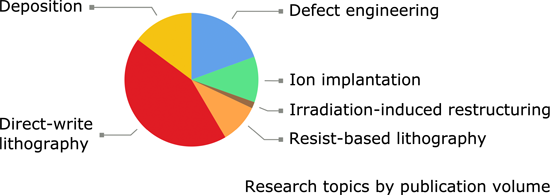
- function [30]. In several of these works, high-resolution scanning TEM (STEM) imaging has been performed to enable the analysis of the defects created on the atomic scale [26][29][30] (see, e.g., Figure 2c). Apart from 2D materials, thin-film samples have also been the subject of electronic property tuning


Properties of graphene deposited on GaN nanowires: influence of nanowire roughness, self-induced nanogating and defects
Beilstein J. Nanotechnol. 2021, 12, 566–577, doi:10.3762/bjnano.12.47
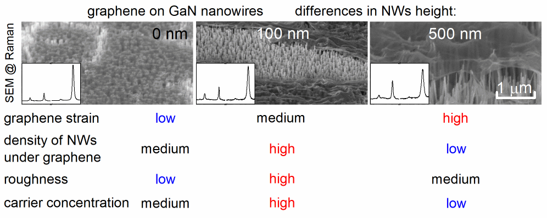
- impacted graphene carrier concentration and strain. It is, therefore, possible to consider the use of NW substrates for defect engineering in graphene and probably in other 2D materials. SEM images of graphene on GaN NWs with different variations in height in N0 (a,d), N100 (b,e), and N500 (c,f) samples




Reconstruction of a 2D layer of KBr on Ir(111) and electromechanical alteration by graphene
Beilstein J. Nanotechnol. 2021, 12, 432–439, doi:10.3762/bjnano.12.35
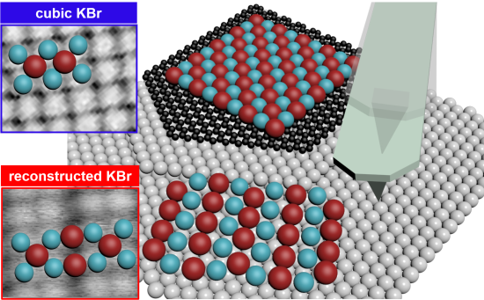
- reduced by the decoupling effect of graphene, thus yielding different electrical and mechanical properties of the top KBr layer. Keywords: DFT; graphene; Ir(111); KBr; KPFM; nc-AFM; surface reconstruction; Introduction Many two-dimensional (2D) materials have excellent optical, mechanical


Exploring the fabrication and transfer mechanism of metallic nanostructures on carbon nanomembranes via focused electron beam induced processing
Beilstein J. Nanotechnol. 2021, 12, 319–329, doi:10.3762/bjnano.12.26
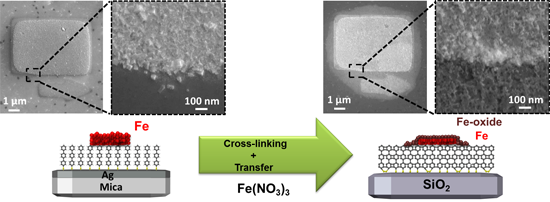
- reduction of the iron structures. These results demonstrate that the fabrication of hybrids of metallic nanostructures onto organic 2D materials is an intrinsically complex procedure. The interactions among the metallic deposits, the substrate for the growth of the SAM, and the associated etching/dissolving
- agent need to be considered and further studied. Keywords: 2D materials; carbon nanomembranes (CNMs); focused electron beam-induced processing; metallic nanostructures; self-assembled monolayers; Introduction Focused electron beam-induced processing (FEBIP) is a powerful maskless “direct-write
- effects caused by secondary or backscattered electrons have minor influence on size and shape of the deposit. Recently, it could be demonstrated that FEBIP can be used to fabricate functional hybrid structures consisting of metallic nanostructures on top of organic 2D materials. The prototype of organic


The patterning toolbox FIB-o-mat: Exploiting the full potential of focused helium ions for nanofabrication
Beilstein J. Nanotechnol. 2021, 12, 304–318, doi:10.3762/bjnano.12.25
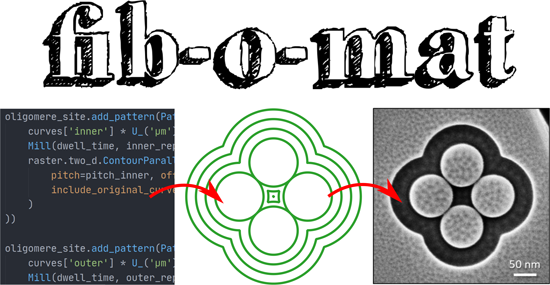
- devices by design, that is, to tailor both material properties and device geometries according to a sophisticated blueprint. Thin layers and two-dimensional (2D) materials are especially interesting candidates for designer materials [1] as they are compatible with planar device geometries and may be
- , other challenges such as small sputter rates and large interaction volumes persist. Therefore, 2D materials are an ideal platform for ion beam machining with light ions. The lack (or non-relevance) of the interaction volume allows for a high spatial resolution, enabling the fabrication of structural
- features in the single-digit nanometer range where small sputter rates play a minor role. This holds true not only for monolayer 2D materials, such as graphene, but also for thin films forming quasi 2D geometries. The versatility of the corresponding materials opens a wide field of exciting applications


ZnO and MXenes as electrode materials for supercapacitor devices
Beilstein J. Nanotechnol. 2021, 12, 49–57, doi:10.3762/bjnano.12.4
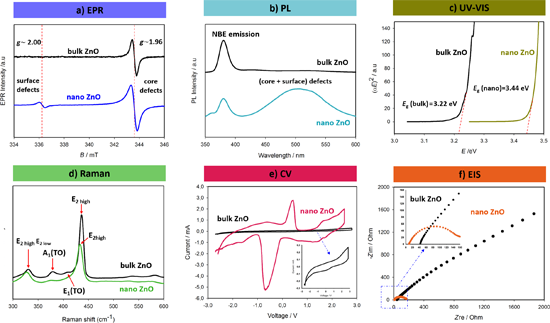
- supercapacitor device are important factors in this scenario. Nowadays, ZnO as metal oxide and MXene as 2D materials are the rising stars of electrode materials in supercapacitors due to their highly controllable properties. Therefore, we review the findings about ZnO and MXene in terms of defect structures and
- because of its unique properties, such as ultrathin structure and heterojunction behavior [15]. In the search of other 2D materials, MXenes, which are a novel class of 2D metal carbides, were discovered at Drexel University in 2011 during research in which MAX phases were used as electrode materials in
- potential to be used as an electrode material in supercapacitors. The techniques of structural defect characterization in metal oxides can be applied to 2D materials such as MXenes. We are indeed aiming to transfer the knowledge about semiconductors to 2D materials using the two prototype materials ZnO and
Nanomechanics of few-layer materials: do individual layers slide upon folding?
Beilstein J. Nanotechnol. 2020, 11, 1801–1808, doi:10.3762/bjnano.11.162
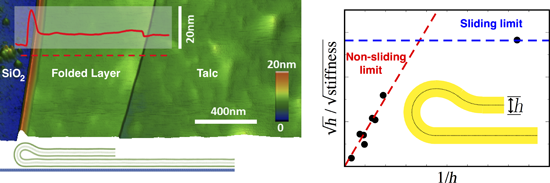
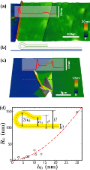
- materials, also called “2D materials”, after exfoliation, eventually creating folded edges across the resulting flakes. We investigate the adhesion and flexural properties of single-layered and multilayered 2D materials upon folding in the present work. This is accomplished by measuring and modeling
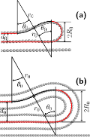
- mechanical properties of folded edges, which allows for the experimental determination of the bending stiffness (κ) of multilayered 2D materials as a function of the number of layers (n). In the case of talc, we obtain κ ∝ n3 for n ≥ 5, indicating no interlayer sliding upon folding, at least in this
- interlayer interactions, have been the primary source of 2D materials [1]. These 2D materials exhibit unusual behavior associated regarding their flexural and adhesive properties [2][3][4][5][6][7][8]. For instance, self-assembled folded flaps and nanoribbons of graphene form by spontaneous folding, sliding

![[Graphic 5]](/bjnano/content/inline/2190-4286-11-162-i8.svg?max-width=637&scale=1.18182) =
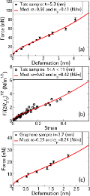
= ![[Graphic 6]](/bjnano/content/inline/2190-4286-11-162-i9.svg?max-width=637&scale=1.18182) as a function of 1/h for the nine measured talc samples. h is a directly measured ...
as a function of 1/h for the nine measured talc samples. h is a directly measured ...
Mapping of integrated PIN diodes with a 3D architecture by scanning microwave impedance microscopy and dynamic spectroscopy
Beilstein J. Nanotechnol. 2020, 11, 1764–1775, doi:10.3762/bjnano.11.159
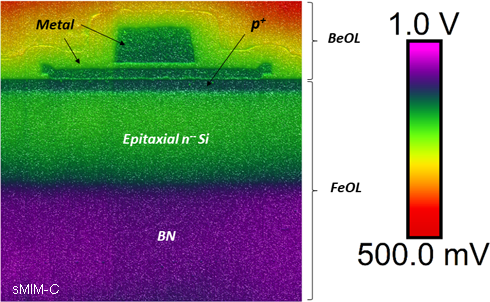
- local electrical properties of the scanned material are determined without the need of an applied voltage. Some studies reported sMIM measurements performed in doped semiconductors [22] deposited onto FEOL layers, ferroelectrics [23], or 2D materials [22][24]. Here, sMIM was employed to analyse a





