


Search results
Search for "Fe2O3" in Full Text gives 115 result(s) in Beilstein Journal of Nanotechnology.
Micro- and nanotechnology in biomedical engineering for cartilage tissue regeneration in osteoarthritis
Beilstein J. Nanotechnol. 2022, 13, 363–389, doi:10.3762/bjnano.13.31
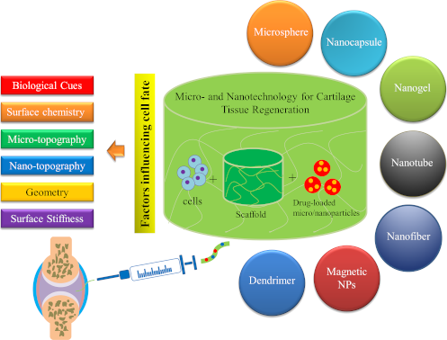
- alcohol) (PVA), nanoscale hydroxyapatite, and magnetic NPs (Fe2O3) has also shown that the incorporation of NPs enhances the mechanical properties of the scaffold and regulates the behavior of cells seeded in the nanocomposites [61]. A magnetic hydrogel-based nanocomposite can provide a promising scaffold


A comprehensive review on electrospun nanohybrid membranes for wastewater treatment
Beilstein J. Nanotechnol. 2022, 13, 137–159, doi:10.3762/bjnano.13.10
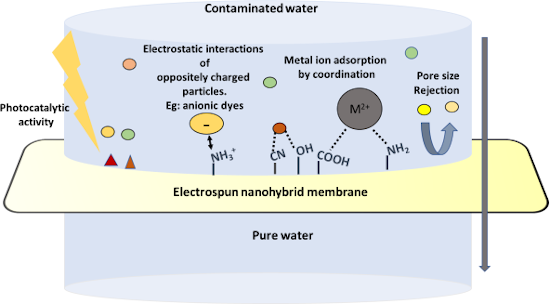
- membranes due to the high surface area for particle adsorption. The hybridization of the electrospun membranes with additives improved the properties compared to pristine polymer membranes. GO, Fe2O3 and other metal oxides, HNTs, activated carbons, and zeolite are some of the frequently used additives for





Theranostic potential of self-luminescent branched polyethyleneimine-coated superparamagnetic iron oxide nanoparticles
Beilstein J. Nanotechnol. 2022, 13, 82–95, doi:10.3762/bjnano.13.6
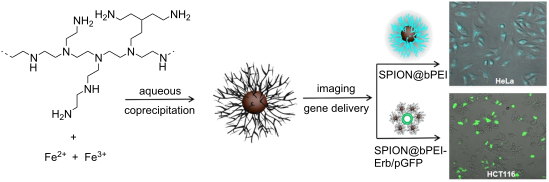
- sensitivity the results obtained from TEM are usually more reliable [52]. The XRD pattern of SPION@bPEI synthesized in situ indicates a crystalline magnetite structure composed of both magnetite (Fe3O4) and maghemite (Fe2O3), including nanoparticles (Figure 1c). Considering only XRD patterns it would be




Measurement of polarization effects in dual-phase ceria-based oxygen permeation membranes using Kelvin probe force microscopy
Beilstein J. Nanotechnol. 2021, 12, 1380–1391, doi:10.3762/bjnano.12.102
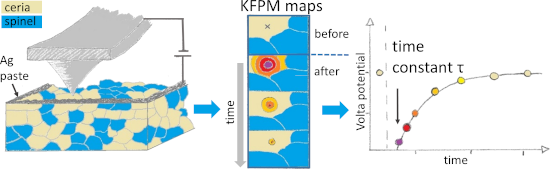
- Commercial powders of Ce0.8Sm0.2O2−δ (CSO, Kceracell, Korea), Fe2O3 and Co3O4 (Sigma-Aldrich, Germany) were used for solid-state reactive sintering. Respective amounts of powders were weighed for nominal CSO-FeCo2O4 compositions with a weight percent ratio of 60:40. The powder mixture was ball milled in


Morphology-driven gas sensing by fabricated fractals: A review
Beilstein J. Nanotechnol. 2021, 12, 1187–1208, doi:10.3762/bjnano.12.88
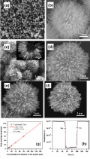
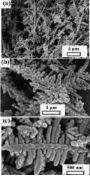
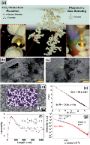
- -Fe2O3 fractal crystals by a cost-effective and eco-friendly microwave method [74]. Figure 13 shows SEM images of different hematite crystals obtained by varying precursor concentrations and additives. A dendritic particle structure with a middle stem of 3.5 µm and secondary branches of ca. 1 µm to 250
- permission from Elsevier. This content is not subject to CC BY 4.0. Hematite fractals. SEM images of (a) dendrites, (b) nanocubes, (c) rhombohedra, and (d) spindles of α-Fe2O3. Figure 13a–d was reprinted from [74], Procedia Engineering, vol. 120, by G. Bailly; J. Rossignol; B. de Fonseca; P. Pribetich; D










ZnO and MXenes as electrode materials for supercapacitor devices
Beilstein J. Nanotechnol. 2021, 12, 49–57, doi:10.3762/bjnano.12.4
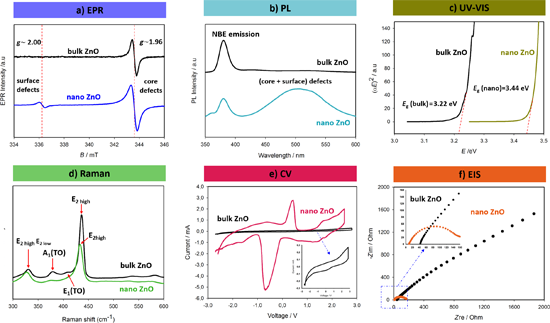
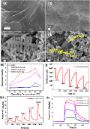
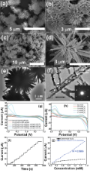
- ) oxide (Fe2O3), may be used to increase the layer spacing, which directly increases the ion transfer rate [16][17][18]. In other words, the intercalation or modification of MXenes helps to prevent the possibility of stacking, increases ion adsorption sites, and enhances electrochemical properties [19][22
Nanocasting synthesis of BiFeO3 nanoparticles with enhanced visible-light photocatalytic activity
Beilstein J. Nanotechnol. 2020, 11, 1822–1833, doi:10.3762/bjnano.11.164
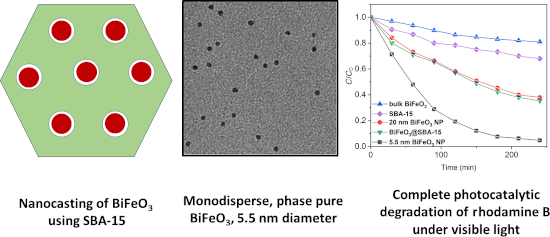
- particles tend to have lower bandgaps than larger particles [28][29][30]. The synthesis of pure single-phase BiFeO3 is very challenging, due to the volatile character of bismuth at temperatures higher than 400 °C, which leads to the formation of undesired phases such as α-Fe2O3, α- and β-Bi2O3 or Bi2Fe4O9




Antimicrobial metal-based nanoparticles: a review on their synthesis, types and antimicrobial action
Beilstein J. Nanotechnol. 2020, 11, 1450–1469, doi:10.3762/bjnano.11.129
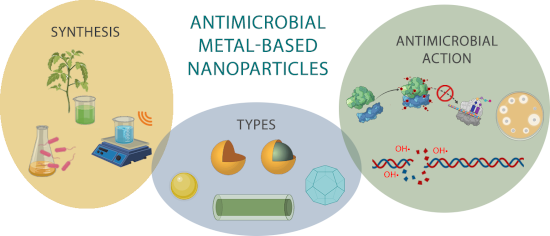
- modification, intrinsic properties and the type of targeted microorganism [18]. A special category of metallic NPs is superparamagnetic iron-oxide nanoparticles (SPIONs) (e.g., magnetite (Fe3O4) and maghemite (γ-Fe2O3) NPs) whose antimicrobial activity increases upon the application of an external magnetic
- most known and studied SPIONs. Magnetite (Fe3O4) and maghemite (γ-Fe2O3) are two crystalline phases of iron oxide that present superparamagnetic properties at the nanoscale (<20 nm). This superparamagnetism is generated due to the reduced size of these nanoparticles which allow for a higher surface-to


Transient coating of γ-Fe2O3 nanoparticles with glutamate for its delivery to and removal from brain nerve terminals
Beilstein J. Nanotechnol. 2020, 11, 1381–1393, doi:10.3762/bjnano.11.122
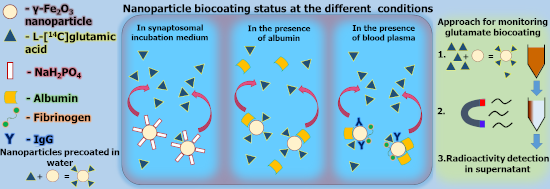
- trauma, and epilepsy. Also, glutamate is a potential tumor growth factor. Using radiolabeled ʟ-[14C]glutamate and magnetic fields, we developed an approach for monitoring the biomolecular coating (biocoating) with glutamate of the surface of maghemite (γ-Fe2O3) nanoparticles. The nanoparticles decreased
- , that is, 4-(2-hydroxyethyl)-1-piperazineethanesulfonic acid (HEPES) and NaH2PO4, decreased the ability of γ-Fe2O3 nanoparticles to form a glutamate biocoating by about 50% and 90%, respectively. Only 15% of the amount of glutamate biocoating obtained in water was obtained in blood plasma. Albumin did
- not prevent the formation of a glutamate biocoating. It was shown that the glutamate biocoating is a temporal dynamic structure at the surface of γ-Fe2O3 nanoparticles. Also, components of the nerve terminal incubation medium and physiological fluids responsible for the desorption of glutamate were


Magnetic-field-assisted synthesis of anisotropic iron oxide particles: Effect of pH
Beilstein J. Nanotechnol. 2020, 11, 1230–1241, doi:10.3762/bjnano.11.107
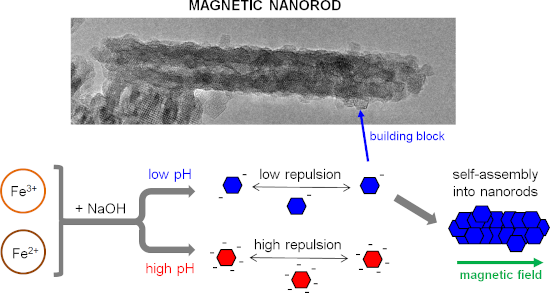
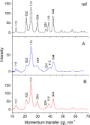
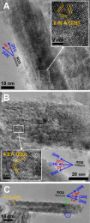
- reference sample (20–50 nm). It is well known that distinguishing between magnetite (Fe3O4) and maghemite (γ-Fe2O3) only using the diffraction technique is not straightforward. However, these samples can be easily distinguished by Raman scattering, since Fe3O4, γ-Fe2O3 and other iron oxides and hydroxides





Influence of the magnetic nanoparticle coating on the magnetic relaxation time
Beilstein J. Nanotechnol. 2020, 11, 1207–1216, doi:10.3762/bjnano.11.105
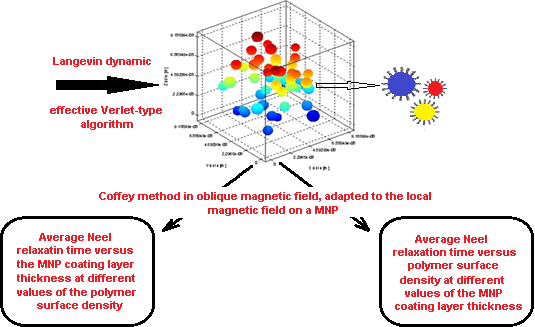
- generating heat. This heat increases the tumour cell temperature which leads to cell death [1][2][3][4]. Iron-oxide magnetic nanoparticles, in particular magnetite (Fe3O4) and maghemite (γ-Fe2O3), have been intensely studied in the context of magnetic hyperthermia applications. These nanoparticles can be


Applications of superparamagnetic iron oxide nanoparticles in drug and therapeutic delivery, and biotechnological advancements
Beilstein J. Nanotechnol. 2020, 11, 1092–1109, doi:10.3762/bjnano.11.94
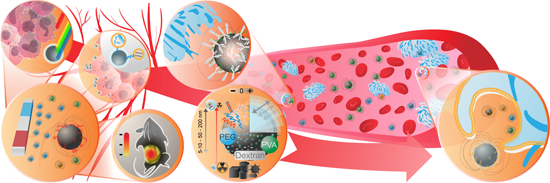
- of iron oxides in the form of magnetite (Fe3O4) or maghemite (Fe2O3) and are easy to produce through a few well-documented synthesis methods yielding different forms and structures (e.g., round, cubic, hexagonal, clusters, core–shell with gold, silica, polymers, or surfactants). A lot of research is
- magnetite (Fe3O4), maghemite (γ-Fe2O3) or hematite (α-Fe2O3) [60]. There are various geometric forms of SPIONs, which depend on the synthesis. The most extensively studied form are spherical SPIONs, followed by cubic, hexagonal, rod-like, octagonal, nanoworm, and octopod (star-shaped) SPIONs [61][62]. Non


Key for crossing the BBB with nanoparticles: the rational design
Beilstein J. Nanotechnol. 2020, 11, 866–883, doi:10.3762/bjnano.11.72
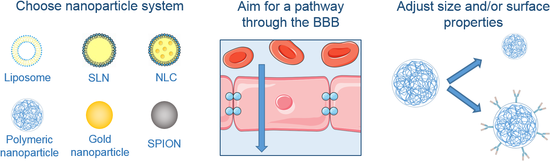
- ) are based on magnetite (Fe3O4) or maghemite (γ-Fe2O3) molecules encapsulated in polysaccharides, synthetic polymers or monomer coatings and have a size range from 1 to 100 nm [21][182]. SPIONs possess interesting magnetic properties and some formulations have already been approved as MRI contrast


Synthesis and enhanced photocatalytic performance of 0D/2D CuO/tourmaline composite photocatalysts
Beilstein J. Nanotechnol. 2020, 11, 407–416, doi:10.3762/bjnano.11.31
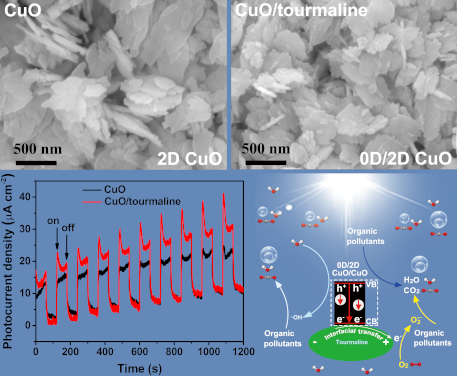
- the treatment of organic contaminants in wastewater is in urgent need owing to the deterioration of the ecological environment [1]. Metal oxides, such as ZnO [2], TiO2 [3], Fe2O3 [4], and CuO [5], have been demonstrated to be promising photocatalysts. In particular, the band gap energy (Eg) of the p
- construction of CuO-based heterostructures (e.g., 0D/2D CuO/TiO2, 0D/3D CuO/ZnO, 2D/2D CuO/Fe2O3, 0D/2D CuO/C3N4, 2D/0D CuO/Ag3PO4) [6][12][15][16][17] and the dispersion of CuO on supporting materials (e.g., graphene, carbon nanotube) [7][18] are considered to be the most effective ways to address these


Synthesis of amorphous and graphitized porous nitrogen-doped carbon spheres as oxygen reduction reaction catalysts
Beilstein J. Nanotechnol. 2020, 11, 1–15, doi:10.3762/bjnano.11.1
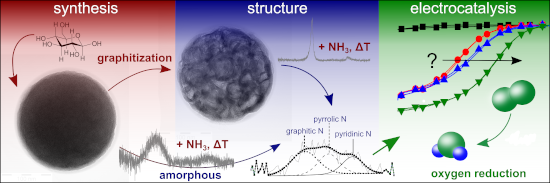
- 150 °C). The as-synthesized carbon particles show a well-defined spherical shape with diameters of 330 ± 50 nm and a smooth surface (see also the scanning electron microscopy (SEM) image in Figure 2a). Fe2O3 particles, as graphitization catalyst, are loaded successfully on pre-carbonized carbon
- et al. [32]: The catalyst particles carve themselves into the underlying carbon atom structure by a redox reaction, leading to a partial gasification and rearrangement of the carbon atoms. Due to the inhomogeneous distribution of the Fe2O3 catalyst particles (Figure 2a), g-NCS-850 and g-NCS-1000
- - and H-based functional groups [39]. Subsequent N-doping of the carbon lattice results in multiple nitrogen bonding configurations (Table 2). Possible Fe contaminations of the g-NCS samples originating from the Fe2O3 graphitization catalyst are below the detection limit of the EDX and XPS measurements

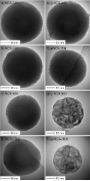

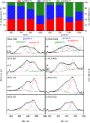


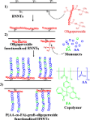
pH-Controlled fluorescence switching in water-dispersed polymer brushes grafted to modified boron nitride nanotubes for cellular imaging
Beilstein J. Nanotechnol. 2019, 10, 2428–2439, doi:10.3762/bjnano.10.233
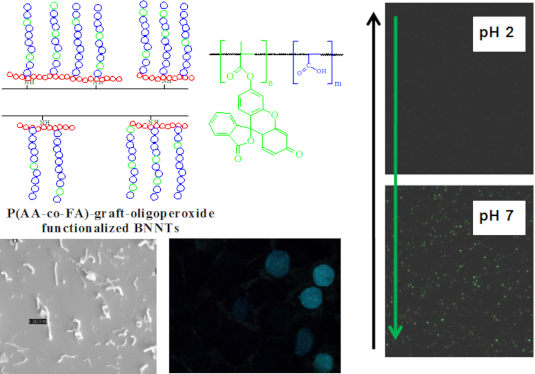
- ) and Fe2O3 (0.166 g) [25]. Briefly, the precursor mixture was transferred to an alumina boat and preheated at 180 °C for 15 min and then the alumina boat was placed into the center of the tubular furnace (Protherm, Furnaces PTF 14/50/450). The BNNT synthesis was performed under saturated NH3 atmosphere



Magnetic properties of biofunctionalized iron oxide nanoparticles as magnetic resonance imaging contrast agents
Beilstein J. Nanotechnol. 2019, 10, 1964–1972, doi:10.3762/bjnano.10.193
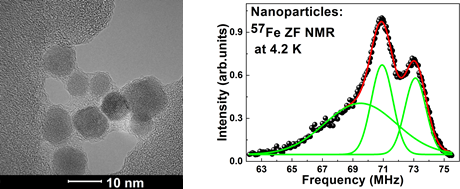
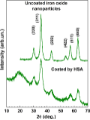
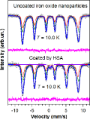
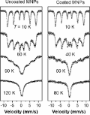
- a spherical shape of the nanoparticles with an average diameter of 5–8 nm and a cubic spinel-type crystal structure of space group Fd−3m. Raman, Mössbauer and NMR spectroscopy clearly indicate the presence of the maghemite γ-Fe2O3 phase. Moreover, a difference in the magnetic behavior of uncoated
- nanoparticles located inside and outside of each capsule [11] and integration of the nanoparticles in the matrix of HSA threads, as will be discussed in this paper. The problem of distinguishing between magnetite Fe3O4 and maghemite γ-Fe2O3, both of which usually appear as synthesis products of iron oxide
- of the structure due to the presence of both magnetite Fe3O4 and maghemite γ-Fe2O3. Another method to distinguish between Fe2+ and Fe3+ and their positions in the crystal structure is Mössbauer spectroscopy. However, the use of ionizing radiation and radioactive sources in this method limits the




Facile synthesis of carbon nanotube-supported NiO//Fe2O3 for all-solid-state supercapacitors
Beilstein J. Nanotechnol. 2019, 10, 1923–1932, doi:10.3762/bjnano.10.188
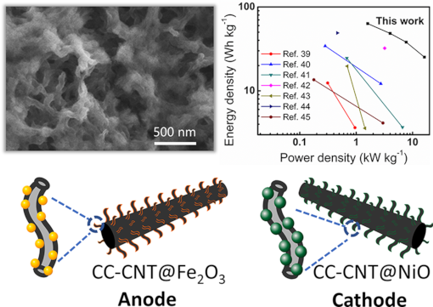
- carbon cloth–carbon nanotube@metal oxide (CC-CNT@MO) three-dimensional structures combine the high specific capacitance and rich redox sites of metal oxides with the large specific area and high electrical conductivity of carbon nanotubes. The prepared CC-CNT@Fe2O3 anode reaches a high capacity of 226
- are widely used in commercial supercapacitors [6][7][8][9]. Although they have a higher capacity than the conventional capacitors, their average energy density is low to about 10 Wh·kg−1 whereas batteries reach 200 Wh·kg−1. Transition metal oxides such as RuO2, MnO2, NiO, and Fe2O3 [10][11][12][13][14
- materials with metal oxides [17]. Among them, carbon nanotubes combined with Fe2O3 have attracted considerable attention. Fe2O3 is attractive for its low cost, abundance, nontoxicity, and eco-friendliness [18][19][20]. Some great results on CNT@Fe2O3 composites have been achieved. For example, Guan et al


Playing with covalent triazine framework tiles for improved CO2 adsorption properties and catalytic performance
Beilstein J. Nanotechnol. 2019, 10, 1217–1227, doi:10.3762/bjnano.10.121

- from the literature [30] along with state-of-the-art carbon-based catalysts (N–C/CNT foam and NDs taken from [34]). The K–Fe2O3 catalyst is reported for the sake of comparison. All values of λ and ST selectivity are measured under steady-state conditions, after 30 h on stream except for CTF5 the λ


Scavenging of reactive oxygen species by phenolic compound-modified maghemite nanoparticles
Beilstein J. Nanotechnol. 2019, 10, 1073–1088, doi:10.3762/bjnano.10.108
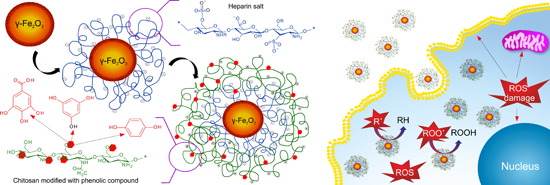
- Abstract Maghemite (γ-Fe2O3) nanoparticles obtained through co-precipitation and oxidation were coated with heparin (Hep) to yield γ-Fe2O3@Hep, and subsequently with chitosan that was modified with different phenolic compounds, including gallic acid (CS-G), hydroquinone (CS-H), and phloroglucinol (CS-P
- ), to yield γ-Fe2O3@Hep-CS-G, γ-Fe2O3@Hep-CS-H, and γ-Fe2O3@Hep-CS-P particles, respectively. Surface modification of the particles was analyzed by transmission electron microscopy, dynamic light scattering, attenuated total reflection Fourier transform infrared spectroscopy, and thermogravimetric
- oxygen species (ROS) levels to 35–56%, which was associated with a 6–8-times higher cellular uptake in L-929 cells and a 21–31-times higher cellular uptake in LN-229 cells. In contrast, γ-Fe2O3@Hep particles induced a 3.8-times and 14.9-times higher cellular uptake without inducing antioxidant activity





Synthesis of MnO2–CuO–Fe2O3/CNTs catalysts: low-temperature SCR activity and formation mechanism
Beilstein J. Nanotechnol. 2019, 10, 848–855, doi:10.3762/bjnano.10.85
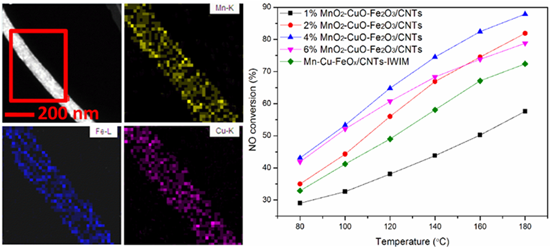
- Coal Salt Resources, Pingdingshan 467000, People′s Republic of China 10.3762/bjnano.10.85 Abstract MnO2–CuO–Fe2O3/CNTs catalysts, as a low-dimensional material, were fabricated by a mild redox strategy and used in denitration reactions. A formation mechanism of the catalysts was proposed. NO
- conversions of 4% MnO2–CuO–Fe2O3/CNTs catalyst of 43.1–87.9% at 80–180 °C were achieved, which was ascribed to the generation of amorphous MnO2, CuO and Fe2O3, and a high surface-oxygen (Os) content. Keywords: amorphous materials; carbon nanotubes; low-dimensional materials; low-temperature catalysis; SCR
- uneconomic and unsafe. Our previous studies, including MnO2–Fe2O3–CeO2–Ce2O3/CNTs [16] and Ce2O3–CeO2–CuO–MnO2/CNTs [17] catalysts, have reported a simple and mild redox method for the preparation of ternary and quaternary catalysts, and the resultant catalysts show outstanding denitration activity at 80–180




Nanoporous water oxidation electrodes with a low loading of laser-deposited Ru/C exhibit enhanced corrosion stability
Beilstein J. Nanotechnol. 2019, 10, 157–167, doi:10.3762/bjnano.10.15
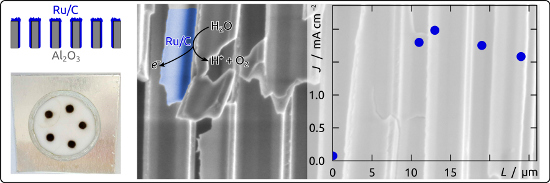
- > 13 μm. The current density loss is even more pronounced for η = 0.20 V than for 0.10 V, which can be attributed to transport limitation, since diffusion becomes more limiting at faster catalytic turnover. A similar observation was already made for Fe2O3-coated Al2O3 nanopores in the oxygen evolution




Wet chemistry route for the decoration of carbon nanotubes with iron oxide nanoparticles for gas sensing
Beilstein J. Nanotechnol. 2019, 10, 105–118, doi:10.3762/bjnano.10.10
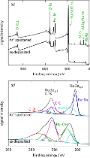
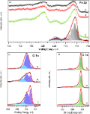
- Fe2O3 and oxide-hydroxide. It is reported that the typical value for the satellite peak of Fe2+ (FeO) is 715.5 eV [30] and main 2p peak centered at 708 eV [31], while metallic iron has the main peak at much lower binding energy (706.7 eV). The O 1s core level spectra, shown in Figure 5b, was reproduced
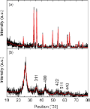
- that the functionalization of the CNTs (with COOH) is still present after the decoration process. The fact that the nanoparticles consisted of Fe2O3 was further confirmed by XRD characterization. For this purpose, pure iron oxide nanoparticles were prepared following the procedure described above
- . Figure 6 shows the spectra of the iron oxide nanoparticles and iron oxide nanoparticle-decorated nanotubes. These last results correspond to the sample with a 1:1 decoration ratio and calcined for 30 min. As it can be seen, the pattern of the Fe2O3 nanoparticles corresponds to a cubic crystalline




Graphene-enhanced metal oxide gas sensors at room temperature: a review
Beilstein J. Nanotechnol. 2018, 9, 2832–2844, doi:10.3762/bjnano.9.264
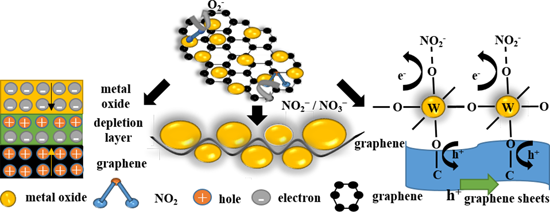
- achieved at all [19][20]. Metal-oxide semiconductors (MOS), including tin oxide (SnO2), titanium dioxide (TiO2), zinc oxide (ZnO), copper oxide (CuO), tungsten oxide (WO3), indium oxide (In2O3), ferric oxide (Fe2O3) and cobalt oxide (Co3O4) are important materials for gas sensors [21][22][23][24][25][26
- heterojunctions are responsible for the exceptional NO2 sensing performance of CeO2–rGO sensor. Zhang et al. [59] added GO suspension to a Fe(NO3)3·9H2O solution, then synthesized α-Fe2O3–rGO hybrids via hydrothermal method. During the process of testing, the authors found that the doping amount of graphene
- significantly affected the sensing properties of the α-Fe2O3–rGO sensor. The α-Fe2O3–rGO sensor with the optimal doping amount of 12.2% showed the highest sensitivity and rapid response time to NO2 at room temperature. In addition, the sensor exhibited excellent selectivity to NO2 because other interference



Size-selected Fe3O4–Au hybrid nanoparticles for improved magnetism-based theranostics
Beilstein J. Nanotechnol. 2018, 9, 2684–2699, doi:10.3762/bjnano.9.251
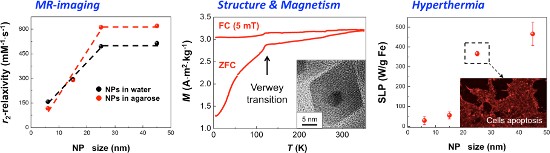
- -Fe2O3 and magnetite, to high-quality stoichiometric Fe3O4. We find a size-dependent transition from superparamagnetic to a stable ferrimagnetic response, a bulk-like saturation magnetization, and observe the Verwey transition at 123 K – all of which result in the superior magnetic properties for a
- . Since magnetite (Fe3O4) and maghemite (γ-Fe2O3) are structurally similar, XRD alone does not provide an accurate discrimination between the two phases. As listed in Table 1, the lattice parameter approaches bulk Fe3O4 (a = 0.8397 nm) rather than bulk γ-Fe2O3 (a = 0.8347 nm) with increasing NP size [31
- as partial oxidation to γ-Fe2O3, e.g., at the grain boundaries. The decrease of MS for small particles has been ascribed to these features [40][41][42] and considering the bulk MS values at 5 K (96.4 A·m2·kg−1 for magnetite) and 300 K (92.0 A·m2·kg−1 for magnetite and 76.0 A·m2·kg−1 for maghemite





