Search results
Search for "agglomeration" in Full Text gives 284 result(s) in Beilstein Journal of Nanotechnology. Showing first 200.
The round-robin approach applied to nanoinformatics: consensus prediction of nanomaterials zeta potential
Beilstein J. Nanotechnol. 2024, 15, 1536–1553, doi:10.3762/bjnano.15.121
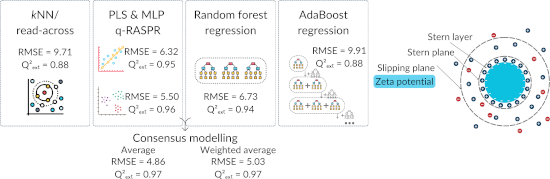
- attractive forces, while a negative value suggests repulsive interactions between the NPs, preventing aggregation or agglomeration. These calculations were performed considering spherical and uncoated NMs. The balance between the Hamaker constants (expressing van der Waals attraction between particles) and


Effect of wavelength and liquid on formation of Ag, Au, Ag/Au nanoparticles via picosecond laser ablation and SERS-based detection of DMMP
Beilstein J. Nanotechnol. 2024, 15, 1054–1069, doi:10.3762/bjnano.15.86

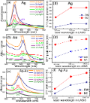
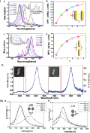
- ablation. This phenomenon led to lower NP production at 355 nm compared to that at 532 and 1064 nm laser wavelengths, this was also reflected in the absorption spectra. Consequently, there is a tendency for NP agglomeration and chain formation, which is evident from the TEM pictures depicted in Figure 3


Intermixing of MoS2 and WS2 photocatalysts toward methylene blue photodegradation
Beilstein J. Nanotechnol. 2024, 15, 817–829, doi:10.3762/bjnano.15.68
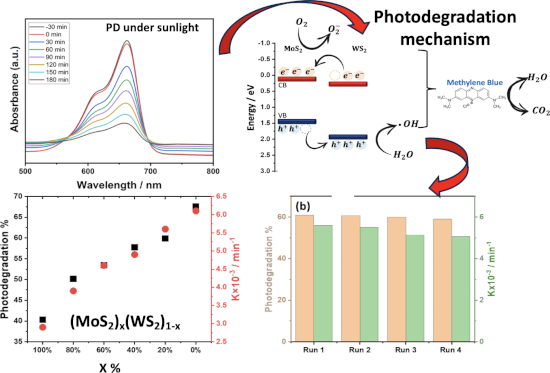
- considered samples. The specimens were prepared by drop casting a solution of the exfoliated samples on lacey carbon transmission electron microscopy (TEM) grids. Additionally, agglomeration of the flakes can be usually observed as well, which could be due to the effect of the solvent used for drop casting


Photocatalytic degradation of methylene blue under visible light by cobalt ferrite nanoparticles/graphene quantum dots
Beilstein J. Nanotechnol. 2024, 15, 475–489, doi:10.3762/bjnano.15.43
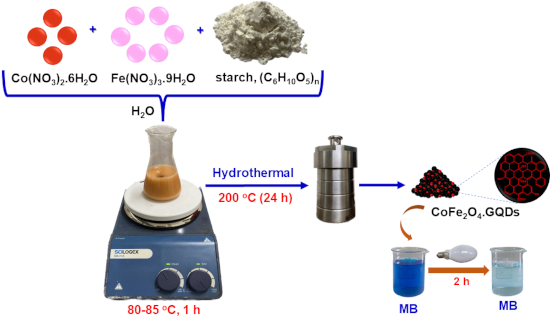
- hydrothermal method was reported [7]. The effect of oleylamine concentration on the physicochemical properties of CF synthesized via a solvothermal process has been presented [8]. However, ferrites exhibit self-agglomeration due to their magnetic nature. Combining different functional materials to prepare
- multiple-component photocatalysts is a common way to overcome the issues of single-phase photocatalysts [9]. Stacking GQDs sheets onto CF nanoparticles not only prevents CF from agglomeration but also forms heterojunction contacts, which possibly reduce the recombination of the photo-induced electron–hole
- of CoFe2O4 and CF/GQDs. All isotherm curves belong to type V according to IUPAC. At a high relative pressure (above 0.8), the hysteresis sloop indicates that the materials have micro-meso structures. The surface area of CoFe2O4 is small because of heavy agglomeration (21.0 m2·g−1). However, CF/GQDs




Potential of a deep eutectic solvent in silver nanoparticle fabrication for antibiotic residue detection
Beilstein J. Nanotechnol. 2024, 15, 426–434, doi:10.3762/bjnano.15.38
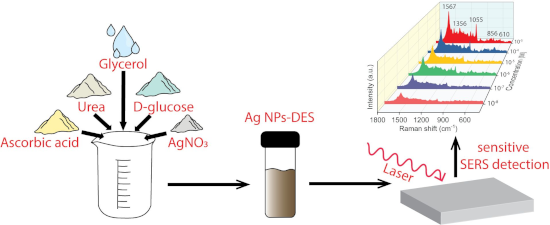
- best LSPR properties among the noble metals [18]. One of the decisive factors regarding the SERS performance of Ag NP-based platforms is the agglomeration state of the nanoparticles [19], which directly affects the “hot spots”. There have been many studies in which agglomeration of Ag NPs was adjusted


Comparative electron microscopy particle sizing of TiO2 pigments: sample preparation and measurement
Beilstein J. Nanotechnol. 2024, 15, 317–332, doi:10.3762/bjnano.15.29
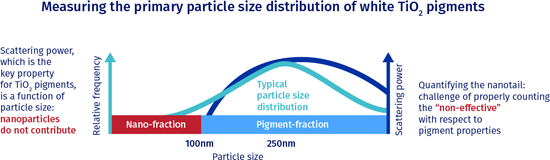
- constraints imply that the spICP-MS method has limited applicability for measuring primary particle sizes, especially when dealing with materials that may have a broad particle size distribution and exhibit significant agglomeration. The EM images of the five E171 samples show that all samples are nearly


Exploring the relationships between physiochemical properties of nanoparticles and cell damage to combat cancer growth using simple periodic table-based descriptors
Beilstein J. Nanotechnol. 2024, 15, 297–309, doi:10.3762/bjnano.15.27
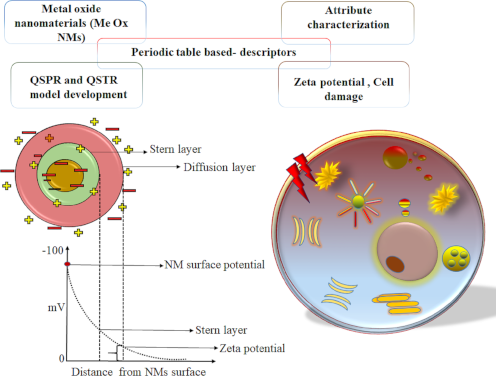
- stabilize and prevent agglomeration of NPs. As no experimental techniques are available to measure the surface charge directly, its value is measured through the zeta potential (ζ) in a given medium [9]. Zeta potential is the electrostatic potential at the electrical double layer surrounding the NPs in


Assessing phytotoxicity and tolerance levels of ZnO nanoparticles on Raphanus sativus: implications for widespread adoptions
Beilstein J. Nanotechnol. 2024, 15, 115–125, doi:10.3762/bjnano.15.11
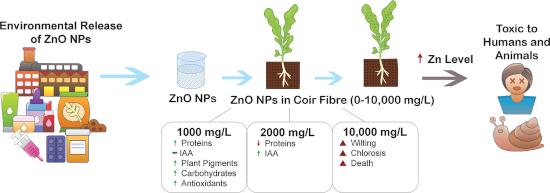
- could be linked to the agglomeration of nanoparticles caused by the rapid addition rate of NaOH during the synthesis process, as evidenced by the presence of agglomerated particles visible in the SEM images [33]. Further, the light scattering technique results are biased toward the larger particles in


Sulfur nanocomposites with insecticidal effect for the control of Bactericera cockerelli
Beilstein J. Nanotechnol. 2023, 14, 1106–1115, doi:10.3762/bjnano.14.91
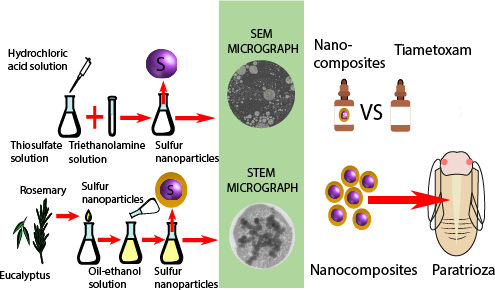
- particles and an oily phase made up of eucalyptus or rosemary essential oils with concentrations of 0.25%, 0.5%, and 0.75%. The increase in size of the nanocomposites is related to agglomeration and effects such as Ostwald ripening, or the increase in essential oil concentration. In addition, the


Experimental investigation of usage of POE lubricants with Al2O3, graphene or CNT nanoparticles in a refrigeration compressor
Beilstein J. Nanotechnol. 2023, 14, 1041–1058, doi:10.3762/bjnano.14.86
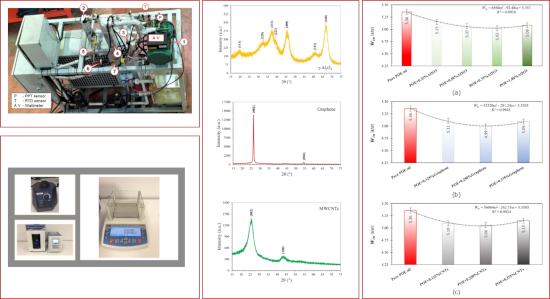
- to add nanoparticles to the lubricant. Elimination of precipitation and agglomeration problems of nanoparticles is crucial for nanolubricant applications. On this critical issue in the nanolubricant preparation process, the authors benefited from their previous study [21], which included the basic





Recognition mechanisms of hemoglobin particles by monocytes – CD163 may just be one
Beilstein J. Nanotechnol. 2023, 14, 1028–1040, doi:10.3762/bjnano.14.85
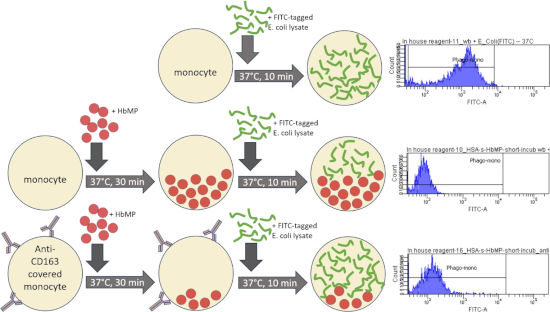
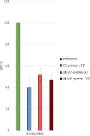
- that Hb is not necessarily the key factor that triggers uptake into cells and, in any case, CD163 does not appear to be the single key protein for this either. Xiong et al. observed agglomeration of HBOCs in the liver of a rat model after intravenous injection of a HBOC solution, which became visible




Isolation of cubic Si3P4 in the form of nanocrystals
Beilstein J. Nanotechnol. 2023, 14, 971–979, doi:10.3762/bjnano.14.80
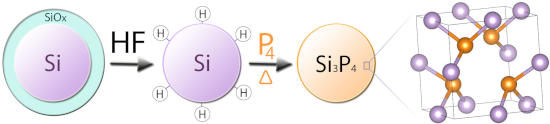
- agglomeration for at least a month. The synthesized samples were brown powders that formed brown sols in acetonitrile, quite similar in appearance to those of Si NPs. Upon examination of the UV–vis absorption spectra, a bandgap of 1.25 eV was established using Tauc plot (Figure 5). A simpler approach for a
- Si3P4 decomposition, sample SP670 as well as the freshly prepared sample SP550 were selected for the TEM studies. A typical TEM bright-field image is shown in Figure 6a. The particles show a profound tendency to agglomerate, not unlike the parent oxidized Si NPs [38]. The agglomeration obstructs size
- significant variation and closely resemble the HAADF-STEM images of the corresponding sample regions (Figure 7b). The two elements are, thereby, viewed as strongly associated and distributed rather homogeneously in the NPs. When the particle agglomeration is not as severe (border regions of Figure 7e), the O


Carboxylic acids and light interact to affect nanoceria stability and dissolution in acidic aqueous environments
Beilstein J. Nanotechnol. 2023, 14, 762–780, doi:10.3762/bjnano.14.63
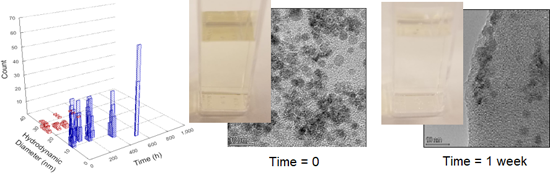
- carboxylates are found in underground and aerial plant parts. To further test nanoceria stability, suspensions were exposed to light and dark conditions, simulating plant environments and biological systems. Light induced nanoceria agglomeration in the presence of some carboxylic acids. Nanoceria agglomeration
- formation of cerium coordination complexes on the ceria nanoparticle surface that inhibit agglomeration. Key functional groups of carboxylic acids that prevented nanoceria agglomeration were identified. A long carbon chain backbone containing a carboxylic acid group geminal to a hydroxy group in addition to
- acid coating to the particle surface [22]. Nanoceria partially dissolved in the presence of organic acids in radish root exudates [23]. Nanoceria agglomeration was reported in algae growth medium beyond 28 h of exposure [24]. Collin et al. [25] urged future studies to look into environmental exposures
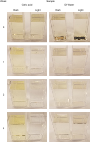
Control of morphology and crystallinity of CNTs in flame synthesis with one-dimensional reaction zone
Beilstein J. Nanotechnol. 2023, 14, 741–750, doi:10.3762/bjnano.14.61
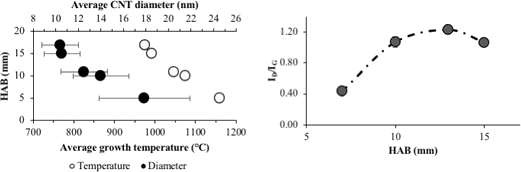
- observed, revealing the agglomeration and sintering of particles during high-temperature growth in the flame. The energy dispersive X-ray (EDX) analysis results in Table 1 indicate a high fraction of nickel. A previous study showed that nickel particles of 5 nm and above can be reactive towards CH4, which
- temperatures and lower HAB values, the particles can combine, sinter, and increase in size either due to Ostwald ripening or particle migration and coalescence [26]. The agglomeration occurs because of the high temperature, creating conditions similar to annealing. At higher HAB values, where the temperature


Nanoarchitectonics to entrap living cells in silica-based systems: encapsulations with yolk–shell and sepiolite nanomaterials
Beilstein J. Nanotechnol. 2023, 14, 522–534, doi:10.3762/bjnano.14.43
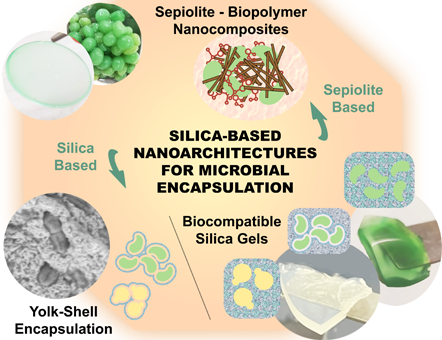
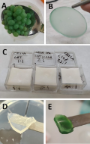
- leads to a more biocompatible local environment for individual cells, while providing a more homogeneous and better encapsulation system. Additionally, in Figure 2E a detail of an isolated yolk–shell structure and an agglomeration of several cyanobacteria encapsulated in yolk–shell microstructures are


Evaluation of electrosynthesized reduced graphene oxide–Ni/Fe/Co-based (oxy)hydroxide catalysts towards the oxygen evolution reaction
Beilstein J. Nanotechnol. 2023, 14, 420–433, doi:10.3762/bjnano.14.34
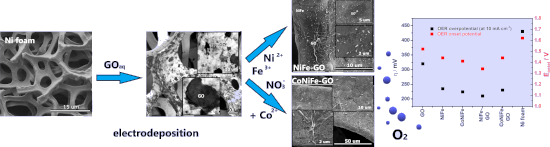
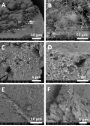
- plate-like structure remained for NiFe and CoNiFe catalysts. However, in each case, some material agglomeration occurred randomly on the surface of the electrodes. No detachment of the catalyst from the surface of the nickel foam was observed. Discussion The studies showed that the addition of GO to




Plasmonic nanotechnology for photothermal applications – an evaluation
Beilstein J. Nanotechnol. 2023, 14, 380–419, doi:10.3762/bjnano.14.33
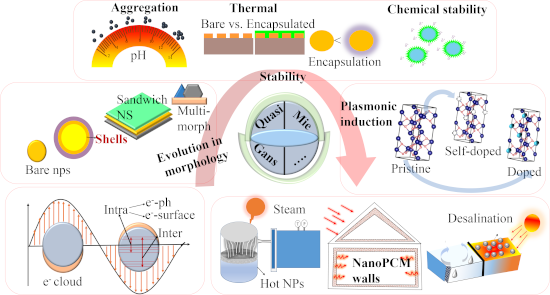
- , specifically in the UV–vis range (as infrared is already applied for heating), efficient of conversion of the absorbed energy into heat (in contrast to scattering), chemical and physical stability of the nanoparticles (e.g., against agglomeration), ease of synthesis, and low cost. Coinage metals, such as Au




Bismuth-based nanostructured photocatalysts for the remediation of antibiotics and organic dyes
Beilstein J. Nanotechnol. 2023, 14, 291–321, doi:10.3762/bjnano.14.26
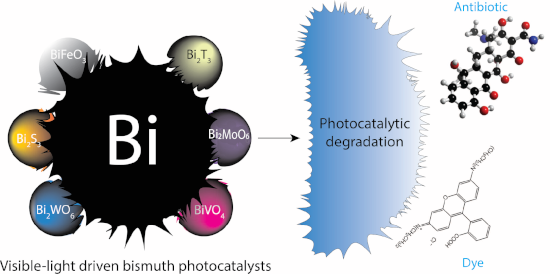
- at a lower cost. The most frequently used wet-chemical techniques are hydrothermal and co-precipitation techniques. Morphology, particle size, and composition can be easily adjusted using hydrothermal methods, whereas agglomeration and particle size can be controlled using the co-precipitation method


A novel approach to pulsed laser deposition of platinum catalyst on carbon particles for use in polymer electrolyte membrane fuel cells
Beilstein J. Nanotechnol. 2023, 14, 190–204, doi:10.3762/bjnano.14.19
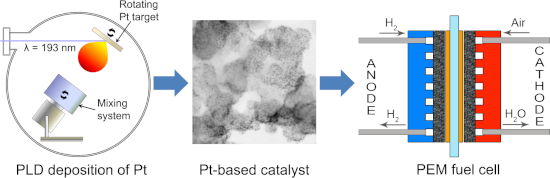
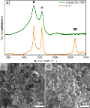
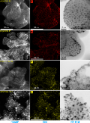
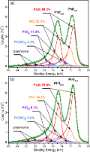
- PtNPs on the carbon support surface. Additionally, the EDX studies show that in the area of the edge of the carbon particles, the Pt signal is more intense, likely due to PtNPs overlapping, which looks like an agglomeration. XPS spectra in a wide binding energy range (Supporting Information File 1



Batch preparation of nanofibers containing nanoparticles by an electrospinning device with multiple air inlets
Beilstein J. Nanotechnol. 2023, 14, 141–150, doi:10.3762/bjnano.14.15
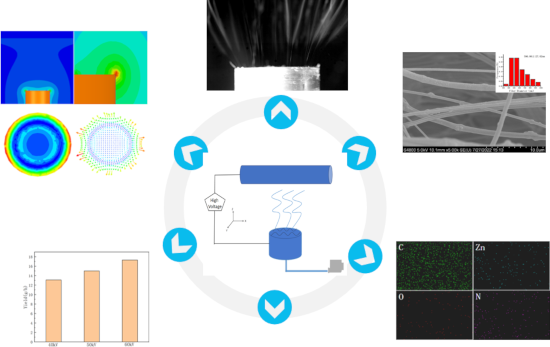
- enabled the ZnO nanoparticles contained in the spinning solution to maintain uniform dispersion in the batch preparation process of nanofibers by means of air flow produced through multiple pores. The airflow reduces the agglomeration of nanoparticles, thus yielding nanofibers with uniform ZnO loading. In
- of nanofibers obtained at different air flow rates. When the air flow rate was 150 m3/h (Figure 3a), due to the excessive air flow, the fibers easily adhered to each other, making the average diameter of the fibers larger (746.86 ± 129.12 nm) and leading to serious agglomeration of nanoparticles in
- the fibers. When the air flow rate was 100 m3/h (Figure 3b), the adhesion between fibers was weakened, resulting in the decrease of average fiber diameter (719.28 ± 108.43 nm) and a reduction of nanoparticle agglomeration in the fibers. When the air flow rate was 50 m3/h (Figure 3c), there was almost


A TiO2@MWCNTs nanocomposite photoanode for solar-driven water splitting
Beilstein J. Nanotechnol. 2022, 13, 1520–1530, doi:10.3762/bjnano.13.125
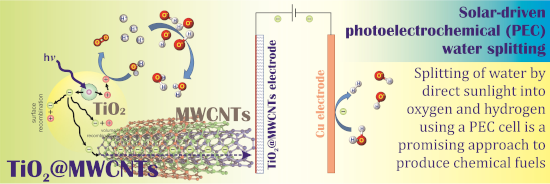
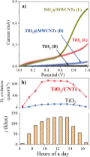
- conjunctional bridges. TiO2 particles deposit only on the outside wall surface of the MWCNTs. Additionally, an agglomeration of TiO2 particles is only observed at the branching points, zigzag regions, and the end of MWCNTs where the defects are identified. However, the observation differs from previous studies



Recent advances in green carbon dots (2015–2022): synthesis, metal ion sensing, and biological applications
Beilstein J. Nanotechnol. 2022, 13, 1068–1107, doi:10.3762/bjnano.13.93
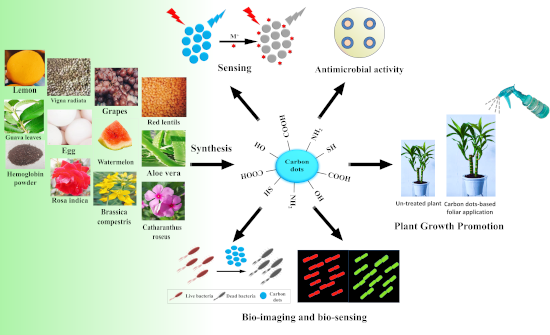
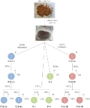
- surface of CDs. They observed the change in PL characteristics of CDs during a period of one to four weeks and concluded that when amino-rich CDs come in contact with oxygen in the air, agglomeration of CDs is induced, and, hence, luminescence changes slowly from red to green color (Figure 5) [102]. A




Electrocatalytic oxygen reduction activity of AgCoCu oxides on reduced graphene oxide in alkaline media
Beilstein J. Nanotechnol. 2022, 13, 1020–1029, doi:10.3762/bjnano.13.89
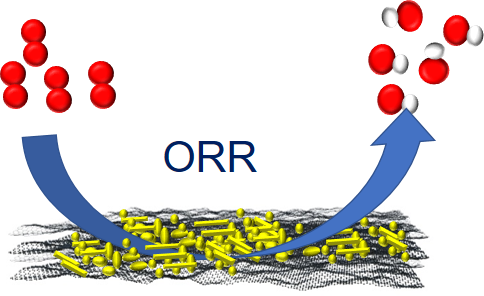
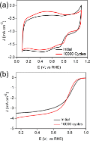
- electrocatalysts [14][18][19]. Oxophilicity, agglomeration, and poor chemical stability of Ag require the amalgamation of Ag with other metals for a better optical and catalytic activity [20]. Chen et al. synthesised Ag nanoscale alloys containing metals such as copper, cobalt, iron, and indium via pulse film
- , wherein we notice irregular morphologies besides agglomeration of the particles (Figure S3f, Supporting Information File 1). The increasing silver fraction in the trimetallic assemblies was observed from EDX analysis as shown in Figure S4, Supporting Information File 1. After examining the composition of


Gelatin nanoparticles with tunable mechanical properties: effect of crosslinking time and loading
Beilstein J. Nanotechnol. 2022, 13, 778–787, doi:10.3762/bjnano.13.68
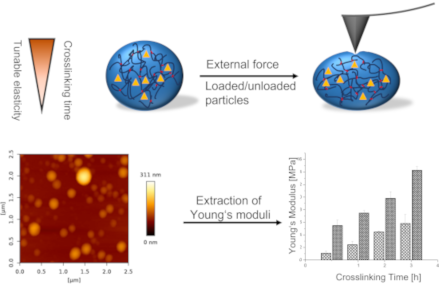
- extract the height image from the force–distance curves acquired at each pixel. Particles were well distributed on substrates showing no agglomeration and a narrow size distribution. GNPs occur with a smooth surface and are spherically shaped when measured under liquid conditions. Particles crosslinked


Antibacterial activity of a berberine nanoformulation
Beilstein J. Nanotechnol. 2022, 13, 641–652, doi:10.3762/bjnano.13.56
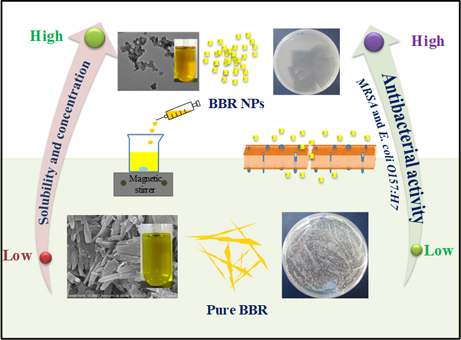
- the particles, polydispersity, and the agglomeration of particles during DLS analysis [39]. The BBR NPs prepared at a concentration of 2.0 mg/mL showed a narrow size distribution by intensity (Figure 3c). The z-average diameter of BBR NPs was 530.6 nm (Supporting Information File 1). In addition, its