


Search results
Search for "charge transport" in Full Text gives 137 result(s) in Beilstein Journal of Nanotechnology.
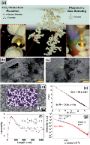
Morphology-driven gas sensing by fabricated fractals: A review
Beilstein J. Nanotechnol. 2021, 12, 1187–1208, doi:10.3762/bjnano.12.88
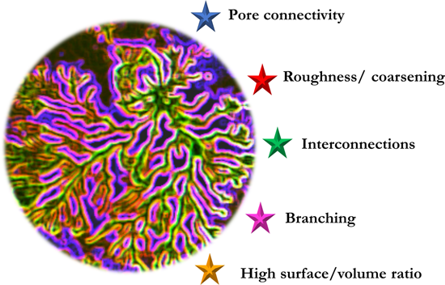
- sensitization mechanisms [26]. The mechanisms focusing on a macroscopic perspective deal with adsorption/desorption of surface atomic/molecular species or discuss how the bulk resistance and gas diffusion control mechanisms affect the charge transport [26][87][89]. The changes in electrical resistance of the
- this could be due to grain boundary resistance, which controls the charge transport and thereby nullifies the effect of fractal morphology. Further, the possibility of gas molecules to diffuse in the material via surface diffusion, Knudsen diffusion (radius of pores in the range of 1–100 nm) and
- reaction canals, and centers for adsorptions [57][69]. For larger pore sizes, rapid gas diffusion rates are observed leading to higher values of sensitivity [26][89]. Thus, while the porous continuous network provides a backbone for better and faster charge transport, the unique morphology of fab-fracs










Assessment of the optical and electrical properties of light-emitting diodes containing carbon-based nanostructures and plasmonic nanoparticles: a review
Beilstein J. Nanotechnol. 2021, 12, 1078–1092, doi:10.3762/bjnano.12.80
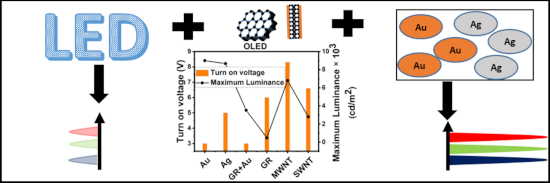
- doping-free and cost-effective, it can be operated using a single bias, and it emanates a narrow EL spectrum of ≈30 meV. Similarly, white light LED can also consist of CQD at the EML along with metal oxides in the charge transport layers [94]. In addition, a maximum EQE of 0.083% has been obtained from


Molecular assemblies on surfaces: towards physical and electronic decoupling of organic molecules
Beilstein J. Nanotechnol. 2021, 12, 950–956, doi:10.3762/bjnano.12.71

- these ultrathin interfacial layers significantly reduce both the molecular adsorption energy and the hybridization of molecular states with the electronic bands in metals and semiconductors. However, charge transport is not completely inhibited, and electrons can still tunnel from the metal through
Nanoporous and nonporous conjugated donor–acceptor polymer semiconductors for photocatalytic hydrogen production
Beilstein J. Nanotechnol. 2021, 12, 607–623, doi:10.3762/bjnano.12.50
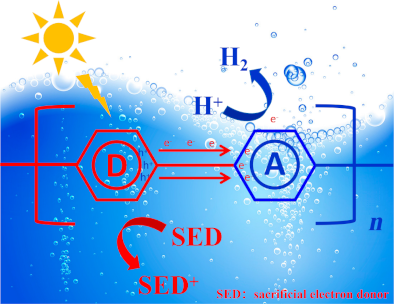
- units, among which the pyrene–pyrimidine-based P32 (Figure 4) with the lowest nitrogen content showed the highest HER. Nitrogen heterocycles within polymers could optimize wettability, bandgap, charge transport, and separation. Motivated by the planar configuration and strong electron-acceptor
- -assembling pristine polymers (P52 and P53) and hydrophilic PEG45-b-PMMA103 (Figure 5). The hyperbranched Pdots yielded higher HERs (as high as 16.8 μmol·h−1 (20 mg) for P53) than the linear Pdot P52, due to the shortened charge transport pathway, 3D transport, and more negative reduction potentials of the




Boosting of photocatalytic hydrogen evolution via chlorine doping of polymeric carbon nitride
Beilstein J. Nanotechnol. 2021, 12, 473–484, doi:10.3762/bjnano.12.38
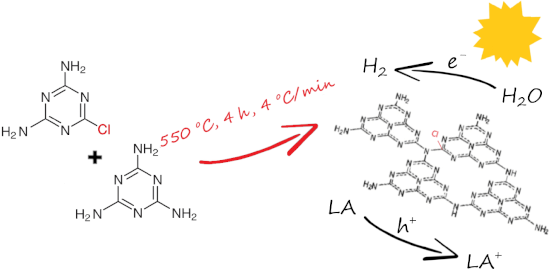
- pairs, (iv) improved photogenerated charge transport and separation, and (v) higher reducing ability of the photogenerated electrons. The above factors affected the 4.4-fold enhancement of the photocatalytic efficiency in hydrogen evolution in comparison to the pristine catalyst. Keywords: chlorine
- hydrogen evolution reaction from water compared to pristine PCN. The investigation showed that the enhanced photocatalytic activity was attributed to an improved photogenerated charge transport and separation. Here, chlorine atoms could act as a charge carrier transport bridge between the carbon nitride
- planes, (ii) a non-reduction in the bandgap energy, (iii) a lower recombination rate of the electron–hole pairs, (iv) improved photogenerated charge transport and separation, and (v) an enhanced reducing ability of the photogenerated electrons. Therefore, it is believed that heteroatom doping of pristine


Kondo effects in small-bandgap carbon nanotube quantum dots
Beilstein J. Nanotechnol. 2020, 11, 1873–1890, doi:10.3762/bjnano.11.169
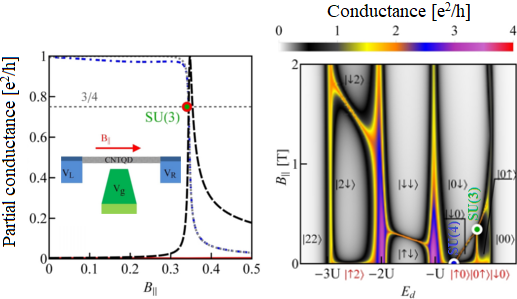
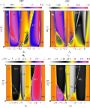
- nanoscopic system. The storage capacity of three-state or four-state qudits is obviously higher than the capacity of a qubit. In the present paper, we are interested in transport properties. The regime of charge transport depends on the ratio between tunnel-induced broadening of dot energy levels and



![[Graphic 37]](/bjnano/content/inline/2190-4286-11-169-i52.svg?max-width=637&scale=1.18182) as a functio...
as a functio...


Unravelling the interfacial interaction in mesoporous SiO2@nickel phyllosilicate/TiO2 core–shell nanostructures for photocatalytic activity
Beilstein J. Nanotechnol. 2020, 11, 1834–1846, doi:10.3762/bjnano.11.165
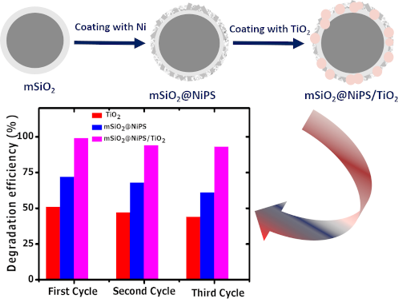
- recombination, leading to faster charge transport and photodegradation. Typically, the photocatalytic degradation efficacy of TiO2 depends on the surface area and metal-ion doping on the surface. Metal-ion doping of TiO2 influences its interfacial charge-transfer properties [51]. Differences in


Effect of localized helium ion irradiation on the performance of synthetic monolayer MoS2 field-effect transistors
Beilstein J. Nanotechnol. 2020, 11, 1329–1335, doi:10.3762/bjnano.11.117
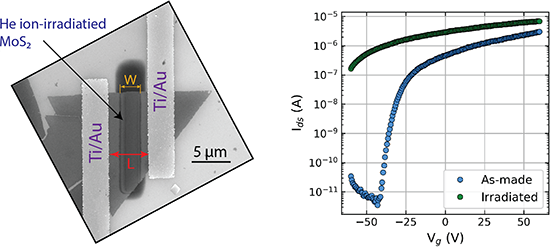
- , we find that irradiating the electrode–channel interface has a deleterious impact on charge transport when contrasted with irradiations confined only to the transistor channel. Keywords: 2D materials; contacts; defect engineering; helium ion microscope; ion beam doping; vacancies; two-dimensional
- creation of defects in TMD FETs may serve to improve charge transport and tune the device performance [10][20][28], while the effective donor concentration and the introduced scattering potentials need to be tailored accordingly [29][30]. Thus far, these studies have focused either on spatially confined
- repeatedly by adjacent line scans, increasing the effective delivered dose and shifting that region to a more acceptor-rich area. This leads to the observed ambipolar gate response for large IR values. The formation of these back-to-back heterojunctions may result in unconventional charge transport phenomena


Templating effect of single-layer graphene supported by an insulating substrate on the molecular orientation of lead phthalocyanine
Beilstein J. Nanotechnol. 2020, 11, 814–820, doi:10.3762/bjnano.11.66
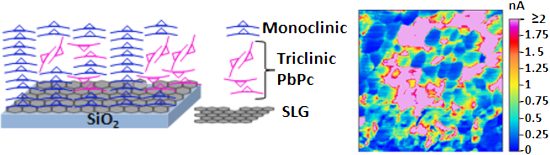
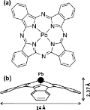
- monoclinic moieties along the qz direction indicates that the PbPc molecules exhibit ordered stacking, normal to the substrate plane. This type of vertical ordering known as cofacial arrangement can promote charge transport in the vertical direction [6][9][26]. Further, a small fraction of the (320
- ). The conducting domains may arise as a result of face-on monoclinic fractions that are vertically stacked. Such stacked molecules can give rise to more energy states near the bandgap aiding charge transport [9]. The less conductive regions may have triclinic moieties or other crystallite arrangements
- that do not facilitate charge transport. Figure 6d is the I–V curve acquired from one of the conducting domains in the vertical configuration. The curve is non-linear as expected for PbPc and higher current values are observed. The obtained I–V plot can be fitted to a generalized Simmons equation


Current measurements in the intermittent-contact mode of atomic force microscopy using the Fourier method: a feasibility analysis
Beilstein J. Nanotechnol. 2020, 11, 453–465, doi:10.3762/bjnano.11.37
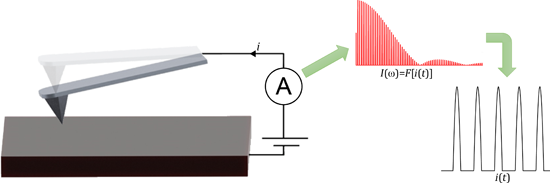
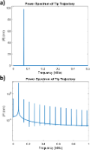
- ][10], and metals [11][12][13]. C-AFM has been used to characterize local charge transport characteristics [4][6] and to obtain detailed information about local charge mobility [5][7]. However, contact-mode AFM techniques, where the probe continuously interacts with the surface in a repulsive manner




Recent progress in perovskite solar cells: the perovskite layer
Beilstein J. Nanotechnol. 2020, 11, 51–60, doi:10.3762/bjnano.11.5

- can effectively improve the charge transport efficiency by eliminating the defect and trap density in the perovskite film. The resulting planar PSCs doped with 5 mol % FAAc achieved a PCE of 18.90%, which corresponds to an enhancement of the PCE of over 20% compared to those fabricated by doping with


Mobility of charge carriers in self-assembled monolayers
Beilstein J. Nanotechnol. 2019, 10, 2449–2458, doi:10.3762/bjnano.10.235
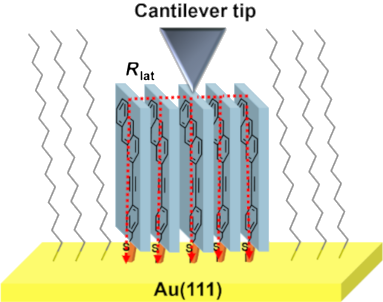
- study charge transport within 2D layers of organic semi-conductors (OSCs) using atomic force microscopy (AFM)-based lithography applied to self-assembled monolayers (SAMs), fabricated from appropriate organothiols. The extent of lateral charge transport was investigated by insulating pre-defined patches
- a top electrode. We were able to determine a relationship between island size and electrical conductivity, and from this dependence, we could obtain information on the lateral charge transport and charge carrier mobility within the thin OSC layers. Our study demonstrates that AFM nanografting of
- the determination of mobilities in macroscopic samples. Keywords: conducting atomic force microscopy; lateral charge transport; nanografting; organic semiconductor; self-assembled monolayer; Introduction Charge transport in organic semiconductors plays a central role in the field of molecular


Nontoxic pyrite iron sulfide nanocrystals as second electron acceptor in PTB7:PC71BM-based organic photovoltaic cells
Beilstein J. Nanotechnol. 2019, 10, 2238–2250, doi:10.3762/bjnano.10.216
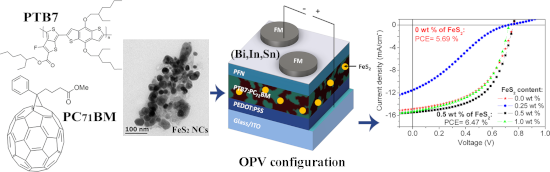
- OPV active layer, the harvesting solar energy is usually enhanced as well as the charge transport and the charge collection behavior at the electrodes, and in some cases, also the lifetime stability is increased. However, such effects depend on the type of the third compound and its concentration in
- reference device with a PCE of 2.32%. Hence, FeS2 NCs have widely been used to enhance the efficiency of solar cells by improving dissociation and charge transport. In our previous work [48], we reported the noncytotoxicity of cube-like FeS2 NCs by studying mouse fibroblast cells at different reaction
- characteristics could facilitate exciton dissociation, charge transport and collection processes, and thus increase the overall PCE value. Figure 5a shows the UV–vis absorption spectra of the OPV active layer at different concentrations of FeS2 as well as that of the pure FeS2 film. The spectrum of the PTB7


Prestress-loading effect on the current–voltage characteristics of a piezoelectric p–n junction together with the corresponding mechanical tuning laws
Beilstein J. Nanotechnol. 2019, 10, 1833–1843, doi:10.3762/bjnano.10.178
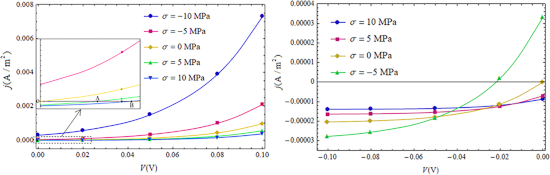
- ][7][8][9][10][11][12][13], MOSFETs [1][14], and acoustic charge transport devices [15][16][17]. For piezoelectric semiconductor devices, analyses on the static, time-harmonic and transient behaviors seem particularly important regarding their applications and development [18]. Zhang et al. [19




Flexible freestanding MoS2-based composite paper for energy conversion and storage
Beilstein J. Nanotechnol. 2019, 10, 1488–1496, doi:10.3762/bjnano.10.147
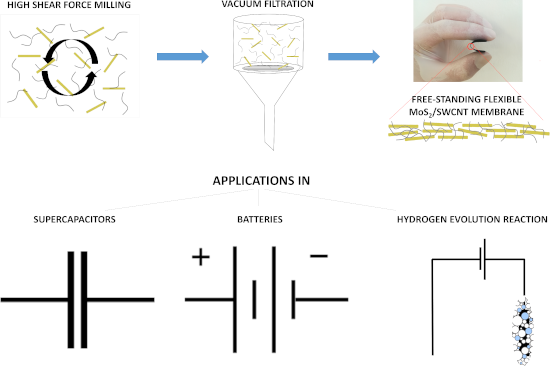
- ][34]. However, MoS2 possesses only a low intrinsic conductivity, which hinders the charge transport [35]. Using MoS2 together with conducting support materials, such as multiwalled carbon nanotubes (MWCNTs) has already been demonstrated to improve the catalytic properties [35]. Herein, we report on


Electroluminescence and current–voltage measurements of single-(In,Ga)N/GaN-nanowire light-emitting diodes in a nanowire ensemble
Beilstein J. Nanotechnol. 2019, 10, 1177–1187, doi:10.3762/bjnano.10.117
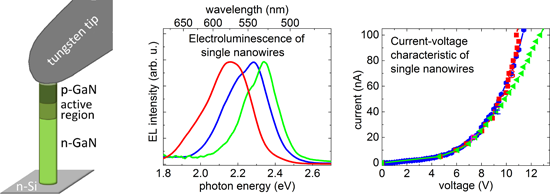
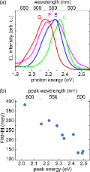
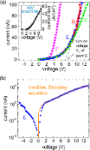
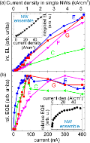
- a slight decrease. However, the decisive difference is that for the ensemble measurement the fraction of NWs participating in charge transport and emitting EL can only be roughly estimated, essentially because the NWs in the dense ensemble cannot be optically resolved [12]. Furthermore, from the


An efficient electrode material for high performance solid-state hybrid supercapacitors based on a Cu/CuO/porous carbon nanofiber/TiO2 hybrid composite
Beilstein J. Nanotechnol. 2019, 10, 781–793, doi:10.3762/bjnano.10.78
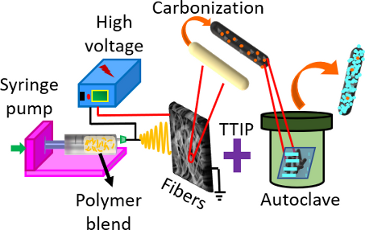
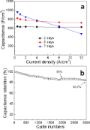
- channels for faster ionic charge transport to enhance the capacitance performance of the Cu/CuO/PCNF/TiO2 composite material. To study the internal resistance of the electrode and the electrode/electrolyte resistance of supercapacitors based on polymer gel electrolyte, electrochemical impedance
- diffusion and adsorption onto the electrode surface. (ii) A high number mesopores allows effective access to the electrolyte to the electrode surface due to easier ionic charge transport through the number of channels, thus improving the electrochemical properties of composite electrode material. (iii) The


Hydrophilicity and carbon chain length effects on the gas sensing properties of chemoresistive, self-assembled monolayer carbon nanotube sensors
Beilstein J. Nanotechnol. 2019, 10, 565–577, doi:10.3762/bjnano.10.58
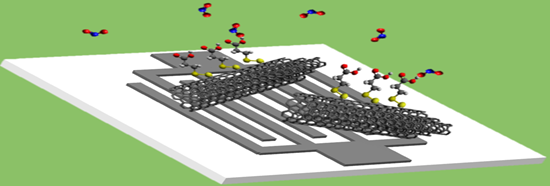
- approach, carbon nanotubes act as support and charge transport transducing elements while the recognition function is performed by grafted molecules. Two examples of this have consisted of obtaining thiol-functionalized carbon nanotube buckypapers [27] or self-assembled monolayers (SAMs) of thiol molecules
- S1, Supporting Information File 1). While thiol molecules behave as a chemoselective material responsible for the recognition of gas species, carbon nanotubes act as efficient charge transport networks, enabling the implementation of a chemoresistive transduction. Different thiols were attached to
- principle, behave as a chemoselective material responsible for the recognition of gas species. In contrast, carbon nanotubes should not play a major role as receptors for target gas molecules, but instead act as efficient charge transport networks, enabling the efficient implementation of chemoresistive


Advanced scanning probe lithography using anatase-to-rutile transition to create localized TiO2 nanorods
Beilstein J. Nanotechnol. 2019, 10, 412–418, doi:10.3762/bjnano.10.40
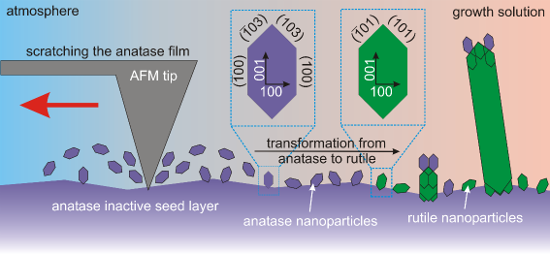
- and might charge the film locally. The charges are likely trapped in defect states generated by the scratching process. Furthermore, the native silicon oxide layer prevents a quick charge transport into the conductive boron-doped silicon substrate. A charged film might attract the precursor more


A Ni(OH)2 nanopetals network for high-performance supercapacitors synthesized by immersing Ni nanofoam in water
Beilstein J. Nanotechnol. 2019, 10, 281–293, doi:10.3762/bjnano.10.27
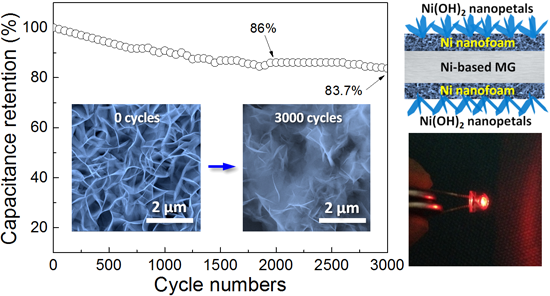
- peaks, which is related to the poor conductivity (larger ohmic resistance) of Ni(OH)2 nanopetals [21][43]. Larger ohmic resistance leads to slow kinetics of charge transport and interfacial charge transfer of the material. Thus, the electrode reaction rate slows down, resulting in a reduced




Interaction of Te and Se interlayers with Ag or Au nanofilms in sandwich structures
Beilstein J. Nanotechnol. 2019, 10, 238–246, doi:10.3762/bjnano.10.22
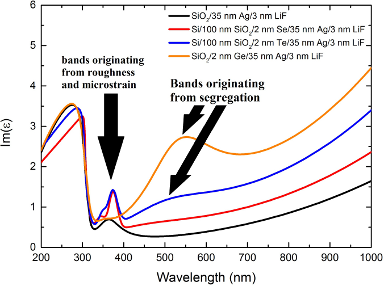
- ], enhanced abrasive properties of metal films [9] as well as effects like charge transport anisotropy [10] and giant magneto-optical Kerr response [11]. We have recently shown that depositing silver with an ultrathin germanium interlayer alters the density profile of the silver film [12]. Among the most


Amorphous NixCoyP-supported TiO2 nanotube arrays as an efficient hydrogen evolution reaction electrocatalyst in acidic solution
Beilstein J. Nanotechnol. 2019, 10, 62–70, doi:10.3762/bjnano.10.6
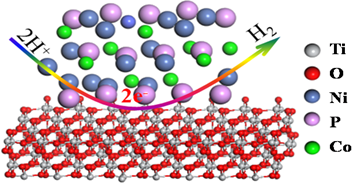
- -frequency area correspond to the impedance of charge transport inside the electrode [15][42][43][44]. In Figure 8a, the Nyquist curves are shown as two arcs with different radius in the high and low frequency, suggesting that the catalytic reaction was limited by the charge transfer step. The arc radii of




Lead-free hybrid perovskites for photovoltaics
Beilstein J. Nanotechnol. 2018, 9, 2209–2235, doi:10.3762/bjnano.9.207
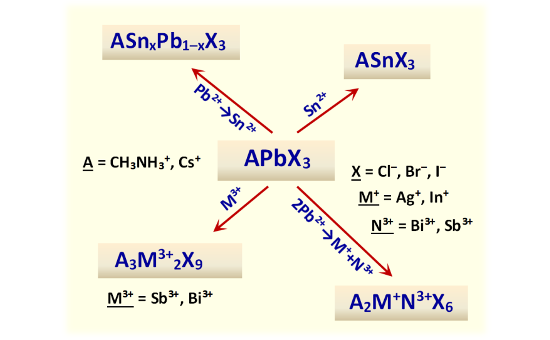
- open-circuit voltage of up to 1.19 V and fill factor (FF) of almost 90% when introduced into inverted solar cells with PEDOT:PSS and PCBM charge transport layers [101]. Despite the high Voc and FF values, the cells showed quite a low efficiency of ≈0.3% indicating huge recombinational losses and
- (Figure 13a). As this modification has a relatively low charge transport efficiency, various approaches are developed to forward the HP formation to other modifications, including the above-discussed introduction of Cl− ions as well as the replacement of bulky cations with smaller ones, for example, with
- nanocrystals (NCs) [16][24][28][29][30][43][50][53][54][55][56]. Recently, broad recognition was gained by 1D and 2D layered hybrid perovskite materials with strong anisotropy of electron properties. Such materials are currently treated as very promising light harvesters with highly tunable optical and charge


Electrospun one-dimensional nanostructures: a new horizon for gas sensing materials
Beilstein J. Nanotechnol. 2018, 9, 2128–2170, doi:10.3762/bjnano.9.202






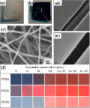
Spin-coated planar Sb2S3 hybrid solar cells approaching 5% efficiency
Beilstein J. Nanotechnol. 2018, 9, 2114–2124, doi:10.3762/bjnano.9.200
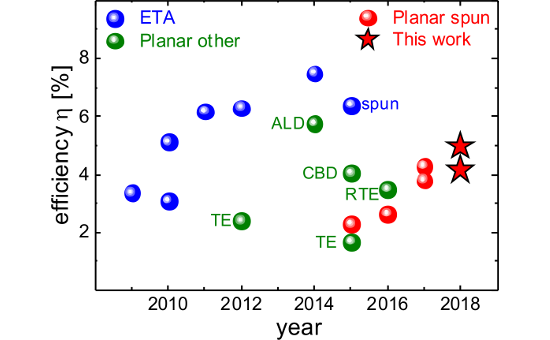
- [32] or liquid [6] sulfur sources might reduce the density of electronic defects in Sb2S3 for certain deposition methods that leave sulfur deficient films [29][72]. Another aim in terms of fabrication is to exploit the anisotropic nature of Sb2S3 by aligning the 1D ribbons with the direction of charge
- transport between the contacts. A beneficial effect was demonstrated for the structurally identical Sb2Se3 [9]. A proper substrate choice or embedding a seed layer might be the key to directed growth in Sb2S3. Experimental Chemicals: All chemicals were purchased from Sigma-Aldrich except for KP115 which was





