Search results
Search for "complexation" in Full Text gives 78 result(s) in Beilstein Journal of Nanotechnology.
Modification of a SERS-active Ag surface to promote adsorption of charged analytes: effect of Cu2+ ions
Beilstein J. Nanotechnol. 2021, 12, 902–912, doi:10.3762/bjnano.12.67
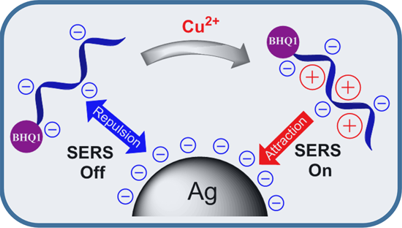
- same conditions, the CuTSPP4 SERS spectrum was absent (Figure 7, number 5). We suggest that Cu2+ ions are weakly adsorbed at the Ag surface and were mostly removed during the washing stage. Copper complexation with PEI and positive charging of the glass surface is expected in this case. This could also
- complex. Additionally, it was confirmed in experiments with Mg2+ ions, instead of Cu2+ ions, which are much less capable of complexation with nucleobases. Moreover, Mg2+ cations have been shown [35] to have the lowest affinity to DNA molecules among doubly charged ions (Mg2+ < Co2+ < Ni2+ < Mn2+ < Zn2
- not always easily predictable from basic considerations regarding complexation. Conclusion Effects of electrostatic interaction between analyte molecules and plasmonic surfaces on the SERS enhancement was investigated by using Ag NPs immobilized on a glass support. Two oppositely charged porphyrins


Fate and transformation of silver nanoparticles in different biological conditions
Beilstein J. Nanotechnol. 2021, 12, 665–679, doi:10.3762/bjnano.12.53
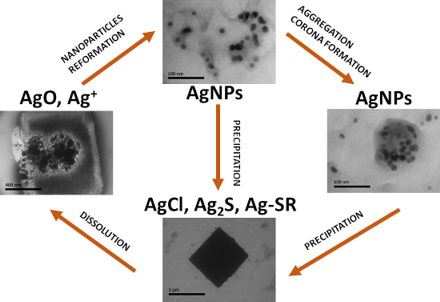
- behaviour can be attributed to the loss of electrostatic repulsion between particles due to the complexation with counter ions present in media with high ionic strength [8][47]. The presence of proteins prevented AgNP agglomeration in m(CCM+BSA), m(CYS+BSA), m(GSH+BSA) due to the formation of protein corona
- induce a significant agglomeration of PLL-AgNPs (Figure 5) probably due to the supportive complexation of negatively charged GSH to the positively charged PLL, which was evident at a much lower ζ potential value of PLL-AgNPs in mGSH (Figure 6) compared to UPW (Table 2). Obviously, the complexation power
- complexation of particles with counter ions present in media and loss of electrostatic repulsion between particles. However, the formation of protein corona prevented such agglomeration even in media with high ionic strength and low pH. Negatively charged AgNPs agglomerated less in CYS-containing media




The preparation temperature influences the physicochemical nature and activity of nanoceria
Beilstein J. Nanotechnol. 2021, 12, 525–540, doi:10.3762/bjnano.12.43
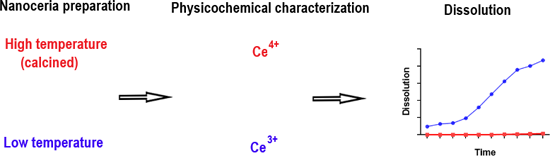
- dissolution rate (Table 2), as previously reported [39][40]. The rate of NM-212 dissolution was much slower (Figure 8 and Table 2). High-temperature exposure greatly decreased the dissolution of the solvothermally synthesized nanoceria (Figure 9). Cerium ion complexation and nanoceria dissolution in the
- nanoceria would create a sink for released cerium ions and increase the nanoceria dissolution rate. The results do not support the hypothesis. However, while Ce forms a strong complex with orthophosphate anions as indicated by the above Ksp values, it is possible that the complexation constants for the
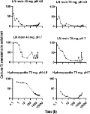
- two observations. Dependency on the pH value of the complexation of cerium ions with LN resin and HPT. Results are the mean of two observations. Addition of LN resin and HTP to the dialysis bath did not affect nanoceria dissolution. Solid circles: with HTP at pH 7.4, open circles: without HTP at pH




Straightforward synthesis of gold nanoparticles by adding water to an engineered small dendrimer
Beilstein J. Nanotechnol. 2020, 11, 1110–1118, doi:10.3762/bjnano.11.95
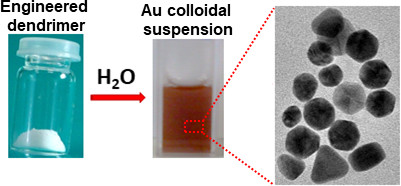
- 7314, 33 rue St Leu, 80039 Amiens cedex 1, France 10.3762/bjnano.11.95 Abstract A small water-soluble phosphorus-containing dendrimer was engineered for the complexation of gold(I) and for its reduction under mild conditions. Gold nanoparticles were obtained as colloidal suspensions simply and only
- the growth and stabilization of isolated gold nanoparticles. Thus, an unprecedented method for the synthesis of colloidal suspensions of water-soluble gold nanoparticles was proposed in this work. Keywords: colloidal suspension; complexation; dendrimer; gold nanoparticle; phosphorus; Introduction
- 13C NMR spectra by the presence of two signals for each carbon atom present in this linkage. The complexation of the dendritic compound 3 with AuCl(tht), yielding compound 4 as a white powder, was carried out following the same procedure used to obtain compound 2 from compound 1. Compound 4 was


Poly(1-vinylimidazole) polyplexes as novel therapeutic gene carriers for lung cancer therapy
Beilstein J. Nanotechnol. 2020, 11, 354–369, doi:10.3762/bjnano.11.26
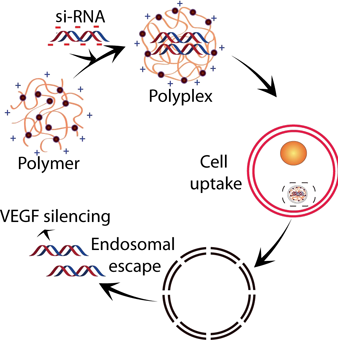
- efficiency of the formed complexes in A549 lung cancer cells. The polyplex formed was found to exhibit 66% complexation efficiency. The complexation was confirmed by gel retardation assays, FTIR and thermal analysis. The blank PVI polymer was not toxic to cells. The polyplex was found to exhibit excellent
- efficiency enabled by a pH-responsive endo-lysosomal escape [15]. It was therefore expected that poly(vinylimidazole) side chains will show a higher transfection efficiency. Alkylated poly(1-vinylimidazole) with different chain lengths has been investigated for DNA complexation and transfection in HepG2
- liver cancer cells. Butylated PVI was found to be nontoxic and the most effective when compared to other alkyl derivatives regarding DNA complexation [16]. Carboxymethyl poly(1-vinylimidazole) has also been investigated for DNA complexation and was found to exert no toxicity to cells [17]. Poly(1


Rational design of block copolymer self-assemblies in photodynamic therapy
Beilstein J. Nanotechnol. 2020, 11, 180–212, doi:10.3762/bjnano.11.15
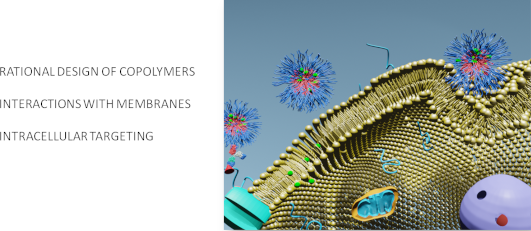
- the formation of H aggregates between photosensitizer molecules, which hampers the production of singlet oxygen [50][51]. Hence, a careful choice of the hydrophobic block of the copolymer–photosensitizer couple for electrostatic interactions is needed. Interestingly, host–guest complexation of






Molecular architectonics of DNA for functional nanoarchitectures
Beilstein J. Nanotechnol. 2020, 11, 124–140, doi:10.3762/bjnano.11.11
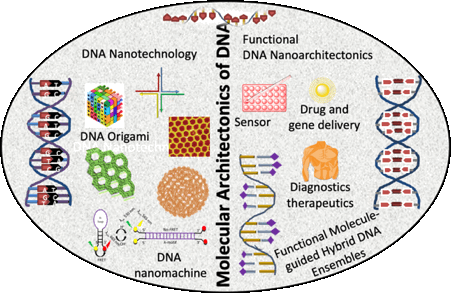
- of the advantages of this system was that the DNA–multichromophore organization could be aligned vertically over the gold electrode, which facilitated exothermic charge separation and suppressesed the ground-state charge transfer (CT) complexation between DPP and NDI, followed by the generation of a
- photocurrent (Figure 7b). However, the randomly assembled array of DPPNDI–dT40 immobilized across the gold electrode was unable to generate any photocurrent response owing to ground-state CT complexation of DPP with NDI in their random arrangement (Figure 7c). Tanaka, Ono, and co-workers reported the


The different ways to chitosan/hyaluronic acid nanoparticles: templated vs direct complexation. Influence of particle preparation on morphology, cell uptake and silencing efficiency
Beilstein J. Nanotechnol. 2019, 10, 2594–2608, doi:10.3762/bjnano.10.250
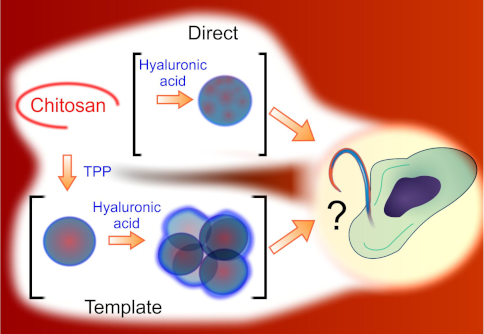
- two-step process based on intermediate (template) particles produced via ionotropic gelation of chitosan with triphosphate (TPP), which are then incubated with HA, or B) through direct polyelectrolyte complexation of chitosan and HA. Here we demonstrate that HA is capable to quantitatively replace TPP
- chitosan-based nanoparticles [5][6][7][8], the most popular being ionotropic gelation and polyelectrolyte complexation. The distinction between the two is subtle, since they are based on a common driving force, i.e., the electrostatic attraction between protonated amines on chitosan and multiply charged
- anions, which effectively act as cross-linkers. Electrostatic complexation allows for very mild preparative processes, carried out in water under mild and almost physiological conditions and without the use of chemical reactions. Additionally, electrostatic interactions may not only be used to hold



Advanced hybrid nanomaterials
Beilstein J. Nanotechnol. 2019, 10, 2563–2567, doi:10.3762/bjnano.10.247

- synthesize clusters, so-called colloidal molecules [21]. Nanospherical satellites were covalently bonded via amide groups within the dimples of valence-endowed patchy nanoparticles, allowing the tuning of their topology and self-assembling ability. Polyion complex micelles formed by complexation between poly
Design of a nanostructured mucoadhesive system containing curcumin for buccal application: from physicochemical to biological aspects
Beilstein J. Nanotechnol. 2019, 10, 2304–2328, doi:10.3762/bjnano.10.222
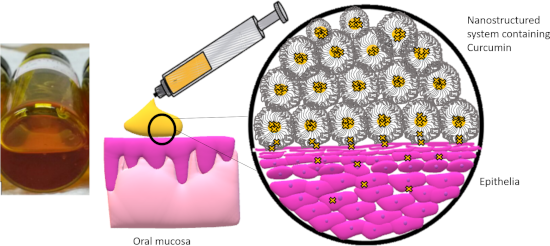
- located, with accessibility for complexation with iodide. Conversely, low Ksv values suggest an internal location, and consequently, no accessibility to the suppressor molecule. The system evaluated at 37 °C displayed lower Ksv values (Ksv = 1.3403 mol/L), whereas formulations evaluated at 25 °C showed


Synthesis of highly active ETS-10-based titanosilicate for heterogeneously catalyzed transesterification of triglycerides
Beilstein J. Nanotechnol. 2019, 10, 2039–2061, doi:10.3762/bjnano.10.200






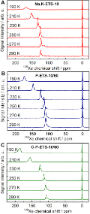


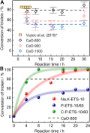
Processing nanoporous organic polymers in liquid amines
Beilstein J. Nanotechnol. 2019, 10, 1844–1850, doi:10.3762/bjnano.10.179
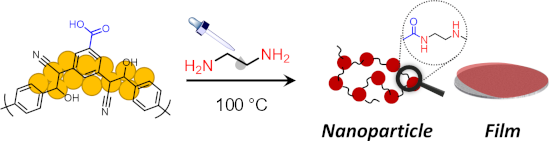
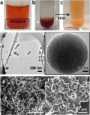
- polymerization [14], ionic complexation [15], and electrochemical polymerization [16], which require sophisticated techniques. There are only a few reports that show the processing of nanoporous polymers into the desired morphologies, for instance, the nanoporous polymers were directly processed into



Photoactive nanoarchitectures based on clays incorporating TiO2 and ZnO nanoparticles
Beilstein J. Nanotechnol. 2019, 10, 1140–1156, doi:10.3762/bjnano.10.114
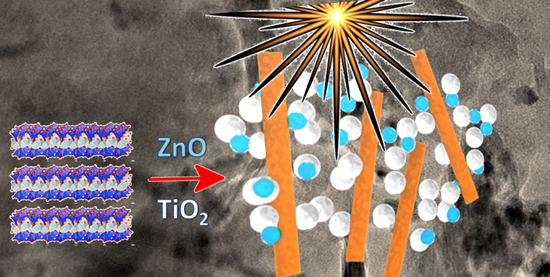
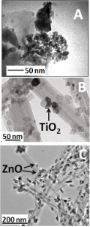
- modified catalytic activity of titanium dioxide in aqueous clay suspensions [170]. In addition, mechanochemical methods [171] seem to be applicable to the complexation of TiO2 with clays and clay minerals as alternative synthetic route. Doping of TiO2@clay and ZnO@clay photocatalysts with different metals



Tailoring the stability/aggregation of one-dimensional TiO2(B)/titanate nanowires using surfactants
Beilstein J. Nanotechnol. 2019, 10, 1024–1037, doi:10.3762/bjnano.10.103
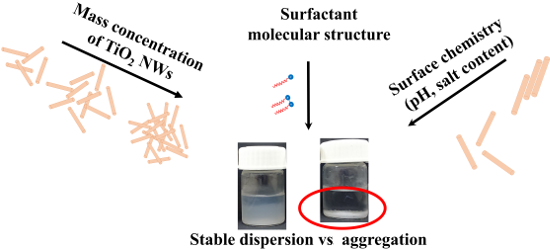
- behavior. In order to gain more insight into changes in the surface properties after surfactant adsorption on the TNW surface, a surface complexation model was employed. With this first attempt to quantify the contribution of the surfactant structure on the adsorption equilibrium according to the observed
- . Keywords: 1D nanomaterials; cationic surfactants; stability; surface complexation model; titanate nanowires; Introduction Among the extensive variety of metal oxide nanomaterials, titanium dioxide nanomaterials (TNMs) (e.g., anatase, rutile, TiO2(B) and titanate) have attracted considerable attention
- micelles) on the stability of TNWs was assessed in two media, water and aqueous electrolyte solution of sodium bromide, thus increasing the complexity of the investigated systems. The observed effects were quantified by surface complexation modeling (SCM) in order to describe the TNW behavior when


Removal of toxic heavy metals from river water samples using a porous silica surface modified with a new β-ketoenolic host
Beilstein J. Nanotechnol. 2019, 10, 262–273, doi:10.3762/bjnano.10.25
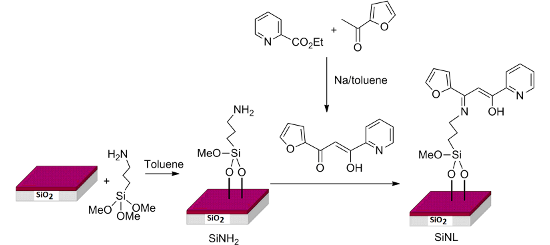
- [61][62][63], a phenomenon which could be attributed to the complexation reaction. Effect of initial concentration in metal and isotherm modeling. A detailed concentration study was conducted, and isotherm studies were carried out to interpret the metal retention by our system. Figure 8 highlights the


pH-mediated control over the mesostructure of ordered mesoporous materials templated by polyion complex micelles
Beilstein J. Nanotechnol. 2019, 10, 144–156, doi:10.3762/bjnano.10.14
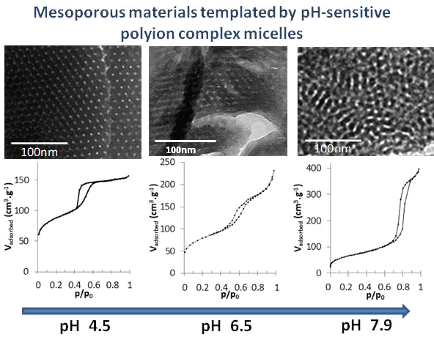
- . PIC micelles were formed by complexation between a weak polyacid-containing double-hydrophilic block copolymer, poly(ethylene oxide)-b-poly(acrylic acid) (PEO-b-PAA), and a weak polybase, oligochitosan-type polyamine. As both the micellization process and the rate of silica condensation are highly
- ; hybrid organic–inorganic interface; mesoporous materials; nanostructured materials; polyion complex micelles; polyion electrostatic complexation; Introduction Due to their unique physicochemical properties originating from their uniform pore size and periodically arranged network at the mesoscale
- how a simple synthesis parameter, such as the pH of the reaction medium, which governs not only the extent of the polyion electrostatic complexation but also the silica condensation rate, influences the macrophase separation of the hybrid material and the nature of the mesostructures which are


Non-agglomerated silicon–organic nanoparticles and their nanocomplexes with oligonucleotides: synthesis and properties
Beilstein J. Nanotechnol. 2018, 9, 2516–2525, doi:10.3762/bjnano.9.234
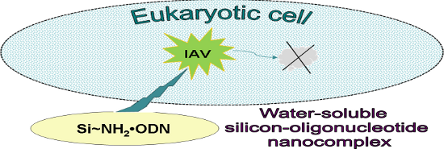
- groups in an oligonucleotide (NH2/p ≈ 10) when preparing the Si–NH2·ODN nanocomplexes (Figure 1a). A similar result was obtained when the mixture of ODN and Si–NH2 was analyzed by electrophoresis in agarose gel (Figure 1b). The higher the NH2/p ratio, the higher complexation occurred; at the ratio of 11
- adjusted to 100 µL with water in each vial. After vigorous stirring for 1 min, the mixture was left at room temperature for 30 min to facilitate complexation. The formed Si–NH2·ODN(1) complex was precipitated by acetone (precipitate 1). Supernatants from each vial were separated, and the unbound ODN in


SERS active Ag–SiO2 nanoparticles obtained by laser ablation of silver in colloidal silica
Beilstein J. Nanotechnol. 2018, 9, 2396–2404, doi:10.3762/bjnano.9.224
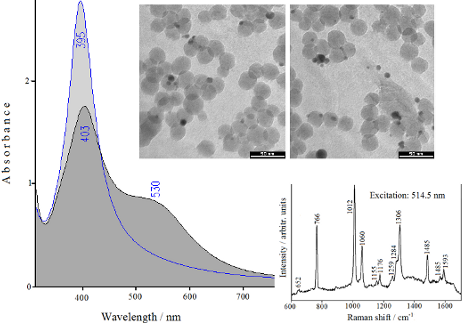
- Table 1, along with the experimental ones. These calculations allow a comparison between observed and calculated frequencies, as well as the stability of the two proposed complexes by considering bpy–Ag bond distances and complexation energies. As one can note, the Ag0(bpy) complex model is unable to
- molecule → metal electronic charge-transfer and the long N–Ag bond distance, reported in Table 2. Moreover, the large difference between the complexation energies of the two proposed complexes indicates that the molecule by far prefers to bind to the positively charged silver atom than to a neutral one
- distances in Ag+(bpy) and Ag0(bpy) complexes and relative complexation energies. e* = proton charge. Supporting Information Supporting Information File 240: Supporting Information. Acknowledgements The post-doctoral position of F. M-M at UniMORE was supported during 2013–2017 by the Italian “Ministero


Nanoconjugates of a calixresorcinarene derivative with methoxy poly(ethylene glycol) fragments for drug encapsulation
Beilstein J. Nanotechnol. 2018, 9, 2057–2070, doi:10.3762/bjnano.9.195
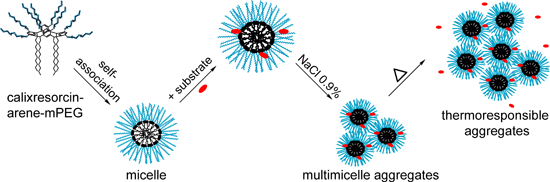
- micelles were determined by through absorption measurements in water/ethanol 1:1 solutions of micelles to avoid the influence of macrocycle–substrate complexation on the absorbance intensity of substrate. QC was quantified by measuring the absorbance at 374 nm using ε = 28400 М−1·cm−1 [42], Оrange OT at 490


Self-assembled quasi-hexagonal arrays of gold nanoparticles with small gaps for surface-enhanced Raman spectroscopy
Beilstein J. Nanotechnol. 2018, 9, 1977–1985, doi:10.3762/bjnano.9.188
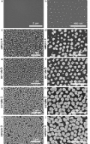
- block [23]. The hydrophobic PS forms the shell, and the hydrophilic P2VP the core of the spherically shaped micelles [24]. Within their core gold salt can be assembled, which is bonded by protonization or complexation [25]. The loaded spherical micelles form a hexagonal array when being deposited on a



Cr(VI) remediation from aqueous environment through modified-TiO2-mediated photocatalytic reduction
Beilstein J. Nanotechnol. 2018, 9, 1448–1470, doi:10.3762/bjnano.9.137
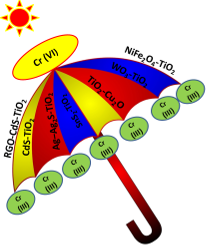
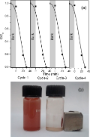
- (pH 2) exhibited higher photoreduction due to the interfacial charge transfer by RGO [135]. A maximum of 96% Cr(VI) reduction was achieved. An RGO–TiO2 composite photocatalyst was prepared by a wet impregnation route followed by surface complexation with a simple glucose molecule. The prepared


Atomic-level characterization and cilostazol affinity of poly(lactic acid) nanoparticles conjugated with differentially charged hydrophilic molecules
Beilstein J. Nanotechnol. 2018, 9, 1328–1338, doi:10.3762/bjnano.9.126
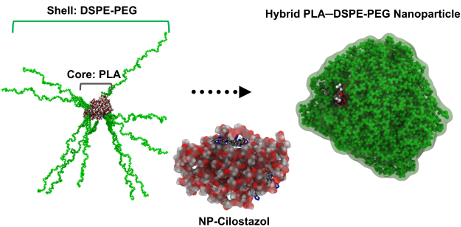
- differentially charged polymeric NPs PEGylated with DSPE–PEG(2000) (1,2-distearoyl-sn-glycero-3-phosphoethanolamine-N-[poly(ethylene glycol)-2000]) carboxylic acid-, methoxy- and amino-terminated NPs prepared by the nanoprecipitation method and to study the NP–drug complexation for a model antiaggregant compound


Surface characterization of nanoparticles using near-field light scattering
Beilstein J. Nanotechnol. 2018, 9, 1228–1238, doi:10.3762/bjnano.9.114
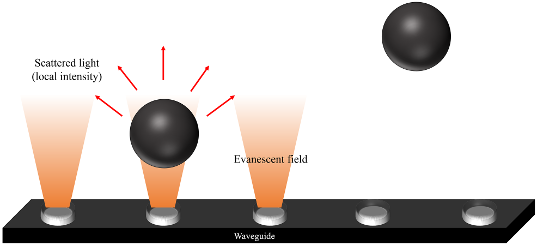
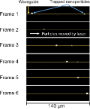
- )-coated superparamagnetic iron oxide nanoparticles (PEG-SPIOs) with the synthetic pseudotannin polygallol via interpolymer complexation (IPC). Changes in particle size and zeta potential were indirectly assessed via differences between PEG-SPIOs and IPC-SPIOs in particle velocity and scattering intensity
- . (Figure 1). We hypothesized that the complexation of PEG-SPIOs and pseudotannin would greatly change the surface properties of the particles, and we used nanophotonic force microscopy to observe this change (Figure 2). Furthermore, recent work by Kong et al. demonstrated the combination of nanophotonic
- nanoparticles Dynamic light scattering (DLS) was used to measure the hydrodynamic diameter, polydispersity index, and zeta potential (ζ). The mean hydrodynamic diameter of the samples increased with the addition of PEG and polygallol to the complexation. The polydispersity index of uncoated SPIOs was 0.16




Ester formation at the liquid–solid interface
Beilstein J. Nanotechnol. 2017, 8, 2139–2150, doi:10.3762/bjnano.8.213
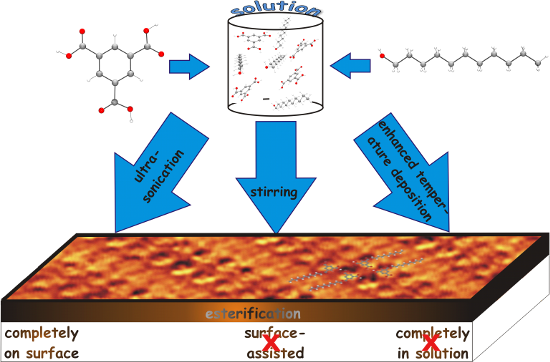
- ambient conditions [27]. Molecular mixture at solid−liquid interfaces could possibly initiate chemical reactions and be monitored in situ with scanning tunneling microscopy (STM). Metal complexation reactions, polymerizations [28][29][30] and photochemical dimerization [31] are shown to be initiated at


A nanocomplex of C60 fullerene with cisplatin: design, characterization and toxicity
Beilstein J. Nanotechnol. 2017, 8, 1494–1501, doi:10.3762/bjnano.8.149
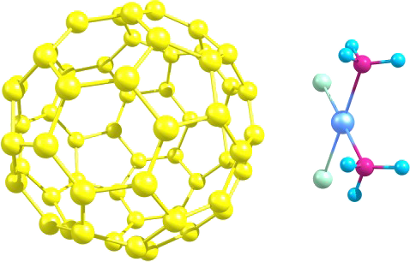
- ., 25, 98693 Ilmenau, Germany 10.3762/bjnano.8.149 Abstract The self-organization of C60 fullerene and cisplatin in aqueous solution was investigated using the computer simulation, dynamic light scattering and atomic force microscopy techniques. The results evidence the complexation between the two
- complexation could induce biological synergy for other drugs administered together with C60 fullerene as well [19][23]. Taking into account the importance of Cis in chemotherapy of cancer, this drug could be a candidate molecule for study. A recent extended physico-chemical study has confirmed the formation of
- previous study of C60+Cis complexation [39]. The zeta potential of the C60+Cis mixture measured in this work equals to −16.8 mV at room temperature. It is known from previous studies that C60 fullerene clusters not containing any guest molecules have a zeta potential equal to −23 mV in water solution [41