Search results
Search for "drop casting" in Full Text gives 66 result(s) in Beilstein Journal of Nanotechnology.
The effect of heat treatment on the morphology and mobility of Au nanoparticles
Beilstein J. Nanotechnol. 2020, 11, 61–67, doi:10.3762/bjnano.11.6
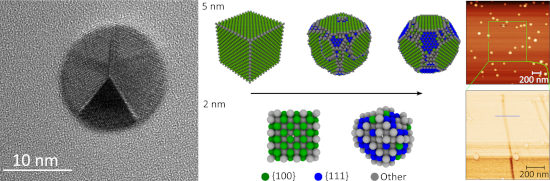
- ]. The solution was stirred for 5 min and then stored at 4 °C until needed [10]. Annealing The silicon wafers (100, n/phosphorus-doped, 3–6 ohm·cm, Mat-Technology) were cleaned with ethanol and the NPs were deposited by drop-casting. The drops were dried at ambient conditions. Five samples of Au NPs on


Self-assembly of a terbium(III) 1D coordination polymer on mica
Beilstein J. Nanotechnol. 2019, 10, 2440–2448, doi:10.3762/bjnano.10.234
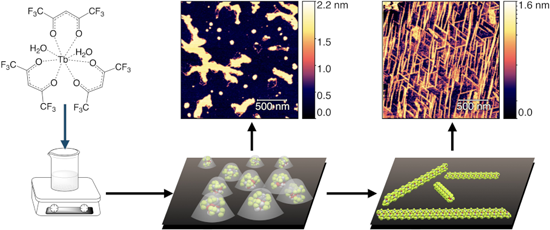
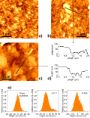
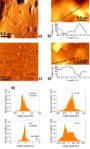
- the observed objects. Results Coordination polymer growth on mica The [Tb(hfac)3·2H2O]n molecular nanochains have been grown via drop casting of a dilute cyclohexane solution on a freshly air-cleaved mica substrate. The mica substrate was chosen because of its low roughness [23] making it particularly
- deposition (Figure 1) was carried out at room temperature by drop casting of a 0.35 mM cyclohexane solution of [Tb(hfac)3·2H2O]n onto the mica surface. Key parameters were the 24-hour aging of the samples at room temperature and the relative humidity of 90%. AFM was used to study the deposited material




Nontoxic pyrite iron sulfide nanocrystals as second electron acceptor in PTB7:PC71BM-based organic photovoltaic cells
Beilstein J. Nanotechnol. 2019, 10, 2238–2250, doi:10.3762/bjnano.10.216
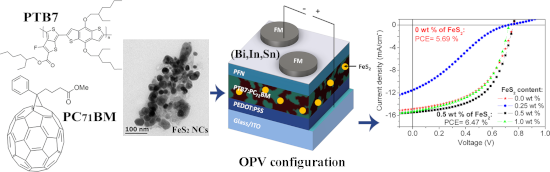
- an alternative top electrode, which we attached by free vacuum deposition. The FM is composed of 32.5% Bi, 51% In and 16.5% Sn and is characterized by a melting point of around 62 °C. It was deposited on the active layer/PFN by drop casting (or doctor blade) at low temperature (≈95 °C) and
- . The active area (0.07 cm2) was delimited with Scotch tape. The FM top electrode was deposited (after melting it at 95 °C in a hot plate) on top of the PFN layer by drop casting, using the previously reported procedure [34]. The final device structure is as follows: glass (1.1 mm)/ITO (≈165 nm
- by drop casting. Mechanically cut Pt–Ir wires were used as STM tips. Before the deposition of each film, HOPG substrates were cleaved by using the adhesive tape technique to obtain an atomically clean surface. Cyclic voltammetry (CV) measurements were carried out using a PARSTAT 2273 potentiostat in


Optimization and performance of nitrogen-doped carbon dots as a color conversion layer for white-LED applications
Beilstein J. Nanotechnol. 2019, 10, 2004–2013, doi:10.3762/bjnano.10.197
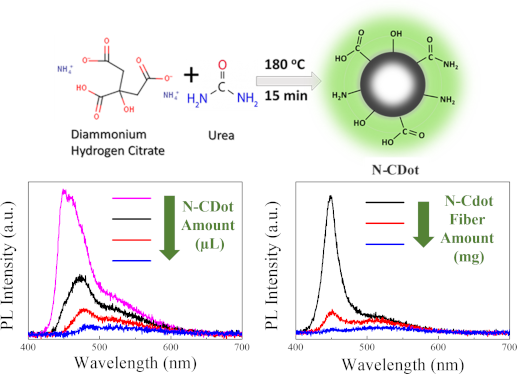
- these samples can, in principle, be considered as a good approach to produce white light. So far, we have investigated the white-light properties of WLEDs comprised of drop-cast PVP/N-CDot composite films with and without red phosphor. In addition to preparing PVP/N-CDot composite films via drop-casting
- obtained from one single electrospinning process. In contrast, only a single layer is obtained at a time via the drop-casting approach. Furthermore, instead of directly varying the amount of N-CDots (µL) contained in the color conversion layers, as it was done in the previous measurements, one can adjust


Synthesis of nickel/gallium nanoalloys using a dual-source approach in 1-alkyl-3-methylimidazole ionic liquids
Beilstein J. Nanotechnol. 2019, 10, 1754–1767, doi:10.3762/bjnano.10.171
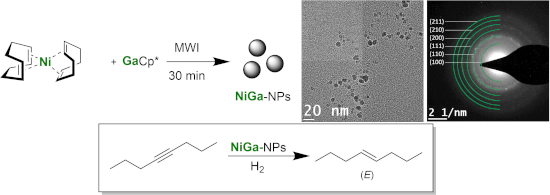
- several points with a spatial resolution of 1 nm2 (acquisition time of 30 s at each point). The instrumental errors of this high-resolution EDX scan led to an estimated standard deviation of 10–15% relative error. TEM samples were prepared by drop-casting the diluted material on 200 µm carbon-coated




Materials nanoarchitectonics at two-dimensional liquid interfaces
Beilstein J. Nanotechnol. 2019, 10, 1559–1587, doi:10.3762/bjnano.10.153
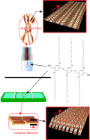
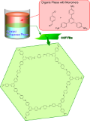
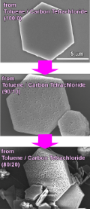
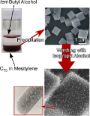
- drop-casting, the long axis of oligo(p-phenylenevinylene) molecules is arranged perpendicularly to the substrate. Intra-fiber energy transfer efficiently occurs in the entangled nanofibers. Long-range excitation energy transfers are advantageous for excitation energy transfer. In contrast, the oligo(p













Tailoring the magnetic properties of cobalt ferrite nanoparticles using the polyol process
Beilstein J. Nanotechnol. 2019, 10, 1166–1176, doi:10.3762/bjnano.10.116
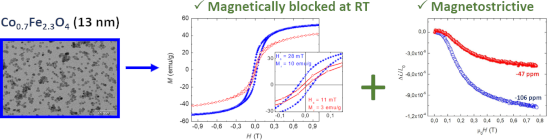
- . This observation has been made after syntheses with TetEG and TriEG, and after drop casting the same quantity of NPs under the same conditions. In the sub-stoichiometric series, Co-0.67-TriEG-3 NPs exhibit the highest degree of aggregation. Magnetic properties Standard magnetometry has been carried out




Self-assembly and wetting properties of gold nanorod–CTAB molecules on HOPG
Beilstein J. Nanotechnol. 2019, 10, 696–705, doi:10.3762/bjnano.10.69
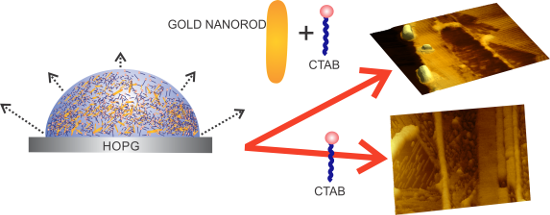
- probes (Mikromasch) with a nominal spring constant of 5–16 N/m and a resonance frequency 150–300 kHz. Drop casting A 5 μL droplet of gold nanorod suspension was deposited on a freshly cleaved HOPG surface and the solvent was left to evaporate at room temperature. After 2 h, the solvent was completely


Wearable, stable, highly sensitive hydrogel–graphene strain sensors
Beilstein J. Nanotechnol. 2019, 10, 475–480, doi:10.3762/bjnano.10.47
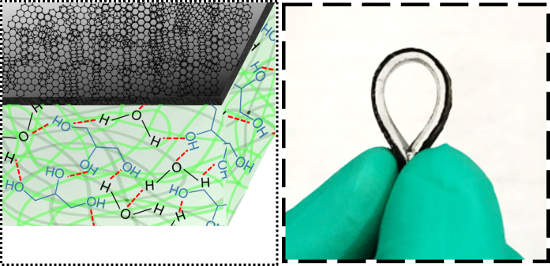
- cast onto the hydrogel through drop casting and drying. Although the bare hydrogel already shows resistance changes with respect to strain, the graphene film was used to further increase the sensitivity. The graphene/WG-hydrogel strain sensor can be used to sense human finger movements. This stable
- hydrogel film using a drop casting and drying process. 5 mL of the 2 mg/mL graphene dispersion was drop casted onto the hydrogel and put in the oven at 35 °C until the graphene was fully dried. Assembly of the strain sensor: The strain sensor was fabricated by connecting the graphene/hydrogel to a copper
- , and the formation of ice at low temperature is restricted and the evaporation of water at high temperature is prohibited [11]. The graphene layer was formed on the hydrogel by directly drop casting the graphene solution onto the hydrogel and drying in an oven at 35 °C. The drying process removes the


Raman study of flash-lamp annealed aqueous Cu2ZnSnS4 nanocrystals
Beilstein J. Nanotechnol. 2019, 10, 222–227, doi:10.3762/bjnano.10.20
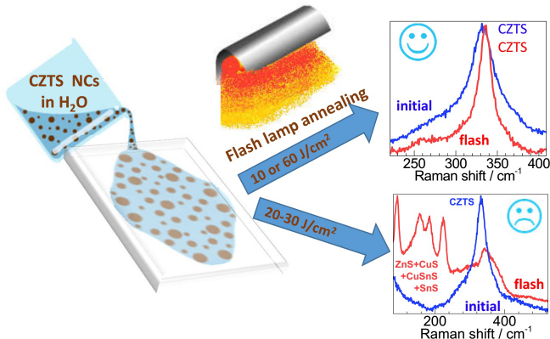
- , up to 60 J/cm2, on NC films deposited on a glass substrate by drop-casting. The influence of film thickness and crystallinity of the initial NCs (before FLA) was also studied. Raman scattering was chosen as a main characterization method in this work, because it has already proved to be very
- FLA treatment, CZTS samples were deposited on a glass substrate by drop-casting. In order to investigate the effect of flash annealing at various energy densities, a series of samples was prepared from 0 up to 60 J/cm2 in steps of 5 J/cm2 with a pulse duration of 17.8 ms. Raman spectra were excited


Surface plasmon resonance enhancement of photoluminescence intensity and bioimaging application of gold nanorod@CdSe/ZnS quantum dots
Beilstein J. Nanotechnol. 2019, 10, 22–31, doi:10.3762/bjnano.10.3
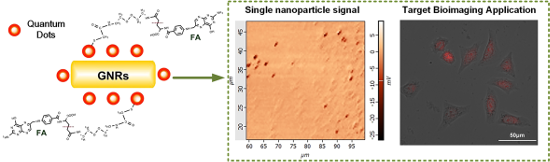
- prepared by drop casting the sample dispersion onto an amorphous carbon-coated 300 mesh copper grid. Synthesis of GNRs To synthesize the GNRs, the seed-mediated growth method in CTAB solution was applied, as previously discussed [30][31]. The seed solution was prepared using 5 mL of a 0.2 M CTAB solution


Synthesis of rare-earth metal and rare-earth metal-fluoride nanoparticles in ionic liquids and propylene carbonate
Beilstein J. Nanotechnol. 2018, 9, 1881–1894, doi:10.3762/bjnano.9.180
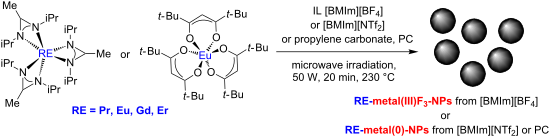
- images were recorded with a Gatan UltraScan 1000P detector. High-angle annular dark-field scanning transmission electron microscopy (HAADF-STEM) as shown in Figure S4a (Supporting Information File 1) was also performed with this microscope. TEM samples were prepared by drop-casting the diluted material


Tuning adhesion forces between functionalized gold colloidal nanoparticles and silicon AFM tips: role of ligands and capillary forces
Beilstein J. Nanotechnol. 2018, 9, 660–670, doi:10.3762/bjnano.9.61
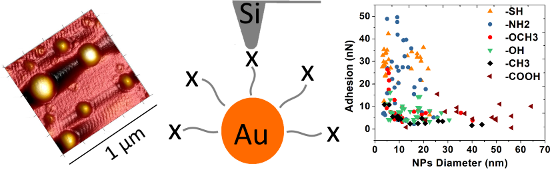
- obtained chemical end groups is presented in Table 2. NPs were characterized by transmission electron microscopy (TEM, ARM200 from JEOL). Drop casting of colloidal solution and drying process The experimental protocol of drop casting was the following: a microliter drop of gold colloidal solution was
- drop-casting. Adhesion was measured by a Bruker Multimode 8 AFM with the Peakforce Quantitative Nanomechanics (PeakForce QNM) mode. PeakForce QNM mode is a recent advancement in AFM method providing quantitative nanomechanical mapping mode with the simultaneous measurement of the sample’s adhesion


Enhanced photoelectrochemical water splitting performance using morphology-controlled BiVO4 with W doping
Beilstein J. Nanotechnol. 2017, 8, 2640–2647, doi:10.3762/bjnano.8.264
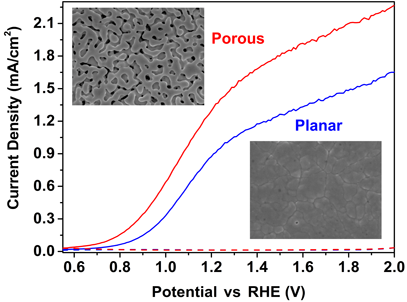
- by drop-casting of metal organic precursors with different volume ratios of water to ethylene glycol (EG). The morphologies of the obtained films are shown in Figure 1. An overview of the synthesis conditions and the corresponding sample labels can be found in Table 1. A detailed description of the


The role of ligands in coinage-metal nanoparticles for electronics
Beilstein J. Nanotechnol. 2017, 8, 2625–2639, doi:10.3762/bjnano.8.263
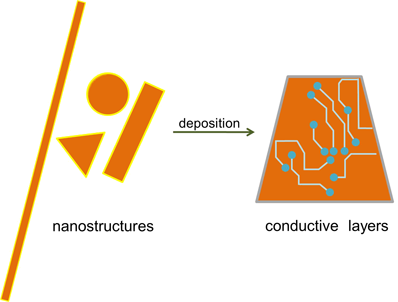
- reached a conductivity of 2000 S/cm [132]. Conventional drop casting of one size of gold nanoparticles functionalized by a π-conjugated terthiophene resulted in films of hexagonally packed particles. The terthiophene ligands aligned around the assembled particles, enabled face-to-face π–π interactions


Synthesis and characterization of noble metal–titania core–shell nanostructures with tunable shell thickness
Beilstein J. Nanotechnol. 2017, 8, 2083–2093, doi:10.3762/bjnano.8.208
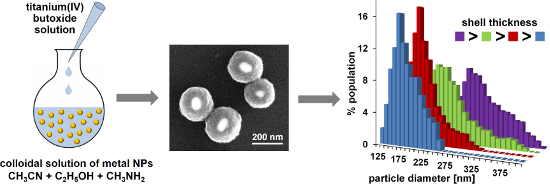
- . The samples for SEM were prepared by drop-casting suspensions of the core–shell nanostructures on a silicon wafer and drying in air. SEM images and TRPS size histograms of Au@TiO2 (Samples A–D) structures with various titania shell thicknesses (see Table 1). SEM images and TRPS size histograms of Ag


Uptake and intracellular accumulation of diamond nanoparticles – a metabolic and cytotoxic study
Beilstein J. Nanotechnol. 2017, 8, 1649–1657, doi:10.3762/bjnano.8.165
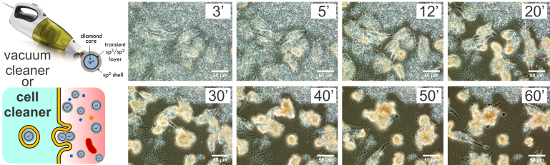
- measurements to eliminate sample cross contamination. A Nicolet 8700 FTIR spectrometer (Thermo Scientific, USA) was equipped with N2 purging, a KBr beamsplitter and an MCT detector cooled by liquid nitrogen. 50 µL of the water suspension with NDs was applied on the Au mirror by the drop-casting method just


AgCl-doped CdSe quantum dots with near-IR photoluminescence
Beilstein J. Nanotechnol. 2017, 8, 1156–1166, doi:10.3762/bjnano.8.117
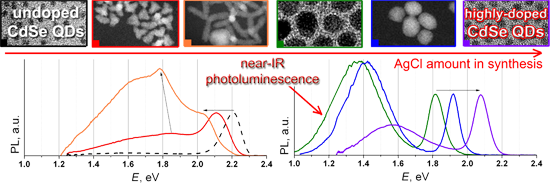
- with a large solid-angle CENTURIO EDX detector and Quantum EELS spectrometer. TEM samples were obtained by drop-casting QD/hexane sols on Cu holey and formvar carbon grids. Size distributions were obtained from TEM images. XRD measurements were performed with the use of a Rigaku D/MAX 2500 (Cu Kα


Adsorption characteristics of Er3N@C80on W(110) and Au(111) studied via scanning tunneling microscopy and spectroscopy
Beilstein J. Nanotechnol. 2017, 8, 1127–1134, doi:10.3762/bjnano.8.114
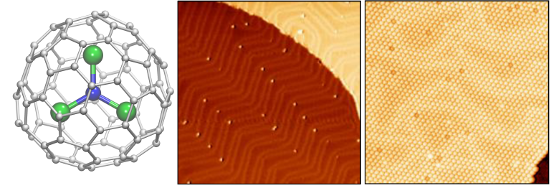
- was purchased from SES Research. For STM measurements, the samples was purified by high-pressure liquid chromatography (HPLC) with Buckyprep-M column and toluene as a solvent, washed with acetone and hexane, and then transferred to the crucible of the Knudsen cell by drop-casting from toluene. To


Study of the correlation between sensing performance and surface morphology of inkjet-printed aqueous graphene-based chemiresistors for NO2 detection
Beilstein J. Nanotechnol. 2017, 8, 1023–1031, doi:10.3762/bjnano.8.103
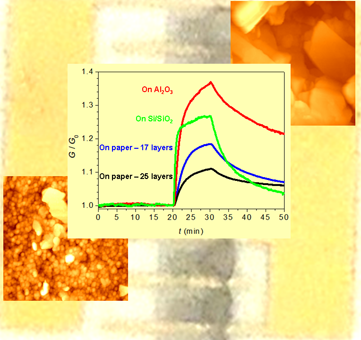
- in depositing LPE graphene-based ink in a controlled manner so as to produce sensor devices with reproducible performances in terms of electrical responses upon gas exposures [11]. This is not guaranteed by other conventional liquid-phase processes like drop-casting [12]. Hence, a LPE graphene
- rather unexpected and it deserves to be further investigated in a future work since, according to our experience, devices prepared with the same type of graphene dispersion onto Al2O3 and Si/SiO2 by drop-casting are stable and show better sensing performances over much longer times [16]. In order to
- fabrication in comparison to other techniques commonly used, e.g., drop-casting deposition. Overall, the main drawback in paper-based devices is the surface morphology of the sensing film, induced by the granular surface of the substrate. The Al2O3-based device, which shows a surface characterized by planar


Nanoantenna-assisted plasmonic enhancement of IR absorption of vibrational modes of organic molecules
Beilstein J. Nanotechnol. 2017, 8, 975–981, doi:10.3762/bjnano.8.99
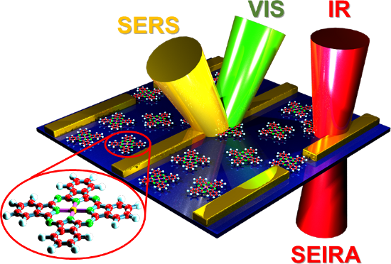
- energy of the most pronounced vibrational modes in cortisol. The deposition of cortisol on a solid substrate implies, as a general rule, the use of the drop-casting method, which results in inhomogeneous coverage. The dielectric function of the media surrounding the nanoantennas is changed after
- )-11,17,21-trihydroxypregn-4-ene-3,20-dione) was purchased from Calbiochem (USA) and was used without further purification. Cortisol dissolved in ethanol at concentration of 10 ng/mL (27.6 μM) was deposited onto arrays of Au nanoantennas by drop-casting. The drop volume was 2 μL. The LSPR energy on Au



Methods for preparing polymer-decorated single exchange-biased magnetic nanoparticles for application in flexible polymer-based films
Beilstein J. Nanotechnol. 2017, 8, 408–417, doi:10.3762/bjnano.8.43
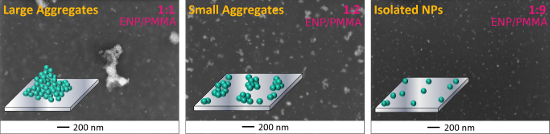
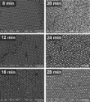
- the ligand exchange procedure and dispersed in THF. Thin films were prepared by drop casting on silicon wafers and SEM images were recorded. Interestingly, Figure 9 depicts an incomplete monolayer of ENPs (with a scheme presented in the insert). Then, ENP-PMMA was introduced in a solution of PMMA in
- ATRP initiator after 3 h polymerization; (c,d) ENP-Br obtained by ligand exchange (oleic acid/ATRP initiator) under the same conditions. Thin films prepared by drop casting of a suspension of ENP-PMMA in THF. SEM images of various assemblies of ENP-PMMA, obtained by drop casting from THF suspension


Effect of Anderson localization on light emission from gold nanoparticle aggregates
Beilstein J. Nanotechnol. 2016, 7, 2013–2022, doi:10.3762/bjnano.7.192
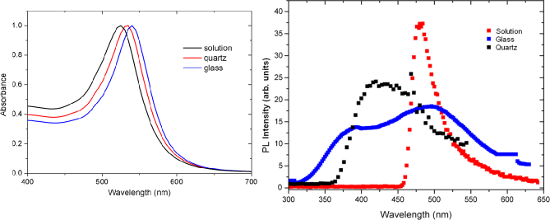
- size and shape of the nanostructured system. In this work, we studied the photoluminescence dependence of aggregates of 14 nm diameter gold nanoparticles (AuNPs) synthesized by drop-casting a liquid suspension on two different substrates of glass and quartz. The AuNP aggregates were characterized by
- AuNPs was then drop cast on the substrates in ambient conditions in order to obtain the films of AuNP aggregates. The substrates were cleaned by sonication for 20 min in a 1:1 mixture of ethanol/milli-Q water, prior to drop casting. Sample characterization The AuNP absorbance was characterized by a


Graphene-enhanced plasmonic nanohole arrays for environmental sensing in aqueous samples
Beilstein J. Nanotechnol. 2016, 7, 1564–1573, doi:10.3762/bjnano.7.150
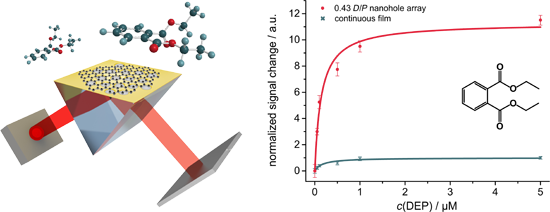
- method described by Masson et al. [39][40]. Drop casting of the polystyrene particles on a clean glass slide leads to a densely packed monolayer on the substrate (Figure 2). The sphere mask consists of ordered areas of several square millimetres covering more than the optical spot size of the SPR device




Optical absorption signature of a self-assembled dye monolayer on graphene
Beilstein J. Nanotechnol. 2016, 7, 862–868, doi:10.3762/bjnano.7.78
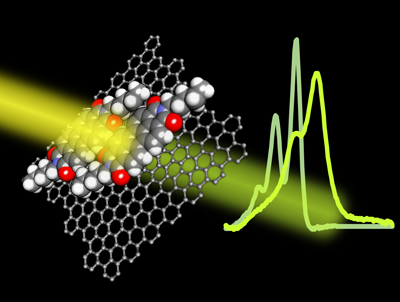
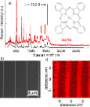
- types of depositions are reported: (i) drop casting of a droplet of a toluene solution containing the exact amount of molecules needed for a coverage of 0.45 molecule per nm2 (SAM 1) and (ii) dip-coating in a ca. 10−5 M solution in toluene followed by rinsing in toluene and ethanol (SAM 2). The
- transmission spectra of SAM1 and SAM2 are nearly identical and correspond to a rigid bathochromic shift of 0.14 eV (1130 cm−1) of the whole vibronic system. This quantitative similarity further supports the homogeneous formation of one monolayer by dip coating, as was shown in the case of drop casting. At the
- drop casting is very similar to the one reported in the literature for PTCDI microcrystalline films [36] (µC, solid and dotted lines). Moreover, micro-spectroscopy has shown a high inhomogeneity of the absorption strength, whereas the measured spectra acquired at different places remain homothetic