


Search results
Search for "enthalpy" in Full Text gives 87 result(s) in Beilstein Journal of Nanotechnology.
ZnO and MXenes as electrode materials for supercapacitor devices
Beilstein J. Nanotechnol. 2021, 12, 49–57, doi:10.3762/bjnano.12.4
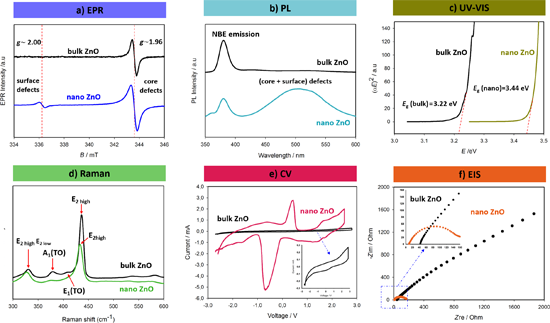
- abundant raw materials. Also, it is less harmful to the environment [19]. Miao et al. fabricated 3D porous MXene-rGO films by using a self-propagating approach, which involves great enthalpy change, chain reactions, and drastically propagates onto the entire film in seconds. As a result, a specific
Magnetohydrodynamic stagnation point on a Casson nanofluid flow over a radially stretching sheet
Beilstein J. Nanotechnol. 2020, 11, 1303–1315, doi:10.3762/bjnano.11.114
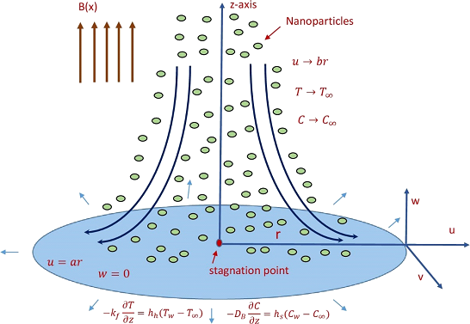
- enthalpy. The kinetic energy of the fluid particles increases for higher values of Ec. Hence, the temperature of the fluid rises marginally and therefore, the associated momentum and thermal boundary layer thickness are enhanced. Figure 14 and Figure 15 elucidate the effect of the radiation parameter, R


Growth of a self-assembled monolayer decoupled from the substrate: nucleation on-command using buffer layers
Beilstein J. Nanotechnol. 2020, 11, 1291–1302, doi:10.3762/bjnano.11.113
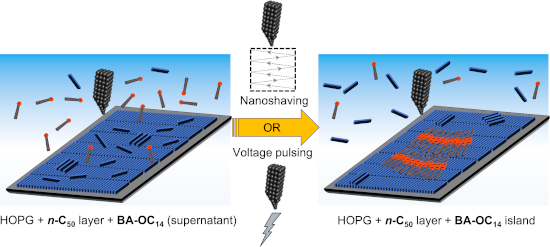
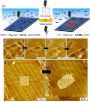
- following major avenues: (1) The buffer layers, in principle, offer a new substrate with a different, often lower, symmetry. (2) The buffer layer has a different lattice constant compared to the solid substrate. (3) The adsorption enthalpy of the assembling moiety on the buffer layer is often different


Agglomerates of nanoparticles
Beilstein J. Nanotechnol. 2020, 11, 854–857, doi:10.3762/bjnano.11.70
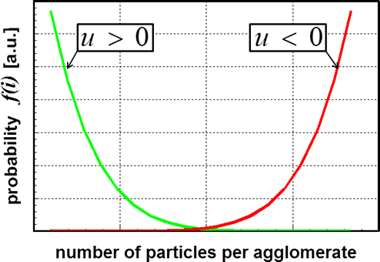
- Dieter Vollath NanoConsulting, Primelweg 3, Stutensee 76297, Germany 10.3762/bjnano.11.70 Abstract Nanoparticles tend to agglomerate. The process of agglomeration is ruled by thermodynamics. Depending on the sign of the enthalpy of interaction, ensembles consist of (repelling) poorly agglomerated
- . The exact determination of the size distribution of the agglomerates also gives the maximum size of the agglomerates. These considerations lead to an improved understanding of ensembles of agglomerated nanoparticles. Keywords: agglomeration; enthalpy; entropy; Gibbs entropy; nanoparticles; size
- experimental results, assuming that not all the particles of an ensemble are equal in size. The free enthalpy G of an ensemble with N particles showing interaction is given by The quantity U = N*u is the enthalpy of interaction. In an ensemble only N* particles having interaction partners are bound with the


BergaCare SmartLipids: commercial lipophilic active concentrates for improved performance of dermal products
Beilstein J. Nanotechnol. 2019, 10, 2152–2162, doi:10.3762/bjnano.10.208
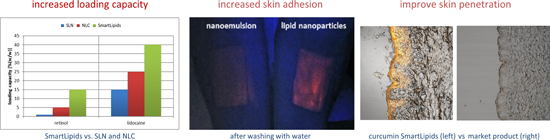
- is very easy by measuring the melting enthalpy using differential scanning calorimetry (DSC). The melting enthalpy of a SmartLipids suspension can be determined before addition to the product, after addition to a gel or a cream and after storage. In case the particles dissolve, e.g., in an oil of a
- cream, the melting enthalpy will decrease. Thus, the physical stability of SmartLipids is easy to analyze and to prove. Chemical stabilization of active agents Classical fluid carriers such as nanoemulsion and liposomes have a limited ability to protect labile lipophilic active agents. Due to the


Energy distribution in an ensemble of nanoparticles and its consequences
Beilstein J. Nanotechnol. 2019, 10, 1452–1457, doi:10.3762/bjnano.10.143
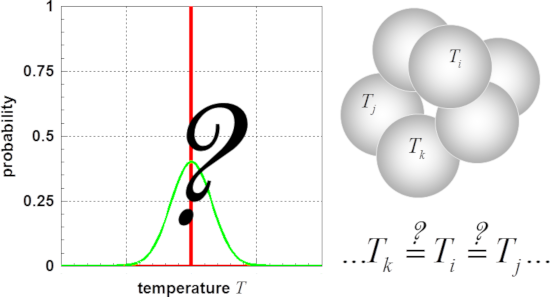
- . The energies ei and are given by The quantity u stands for the enthalpy, and cp for the heat capacity. As within one ensemble, only one average temperature is possible for the whole ensemble, only one characteristic temperature Tchar is assumed. The characteristic temperature Tchar may be interpreted
- quantities gi−1 and gi−2 stand for the free enthalpy of the particle i in the phases 1 and 2, and |Δgi| stands for the difference of the free enthalpy of the two phases at the temperature Ti. Equation 5 gives the boundary condition for fluctuation, but does not give any information about the probability
- . Therefore, the description of fluctuations has to be expanded. This necessary extension is demonstrated using as an example of melting gold particles at different particle sizes. Figure 1 displays the free enthalpy of the solid and the liquid phase of a 2 nm gold particle in the vicinity of the melting


Gas sensing properties of individual SnO2 nanowires and SnO2 sol–gel nanocomposites
Beilstein J. Nanotechnol. 2019, 10, 1380–1390, doi:10.3762/bjnano.10.136
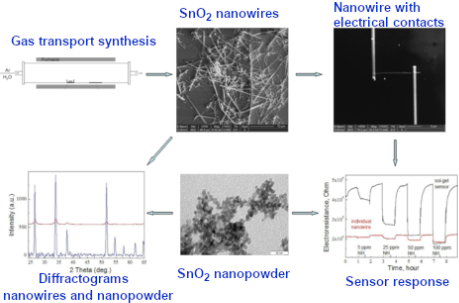
- phenomenon can be explained by two factors. The first one is the single crystal character of the nanowires. Uniform adsorption enthalpy of all the centers is typical of Langmuir-type adsorption, which is characterized by low power factors in the power-law approximation. Vice versa, the small size of




Serum type and concentration both affect the protein-corona composition of PLGA nanoparticles
Beilstein J. Nanotechnol. 2019, 10, 1002–1015, doi:10.3762/bjnano.10.101
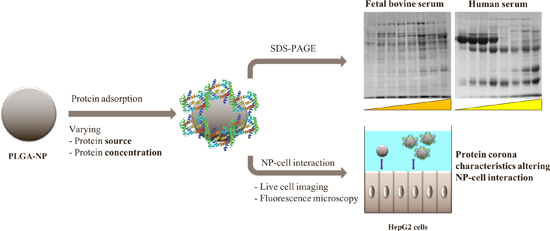
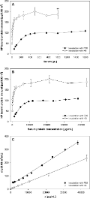
- protein) adsorbed per weight of adsorbent (PLGA NPs), c is the serum protein concentration at equilibrium, KL is a constant related to the enthalpy of adsorption and qmax is related to the surface area of the solid. This equation was arranged into the linear form The value of qmax is a measure of the



Outstanding chain-extension effect and high UV resistance of polybutylene succinate containing amino-acid-modified layered double hydroxides
Beilstein J. Nanotechnol. 2019, 10, 684–695, doi:10.3762/bjnano.10.68
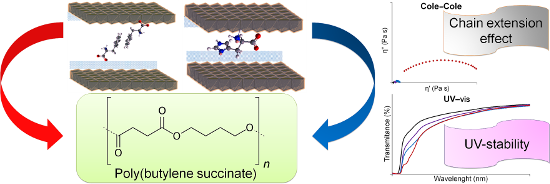
- was deleted and a second scan profile was performed by heating from −60 °C to 150 °C at 10 °C min−1. The glass transition temperature (Tg), the melting temperature (Tm) and the enthalpy of fusion (∆Hm) were measured from the second scan. Tg was taken as the midpoint of the heat capacity increment
- associated with the glass-to-rubber transition. The crystallization temperature (Tc) and the enthalpy of crystallization (∆Hc) were measured during the cooling scan. Thermogravimetric analysis (TGA) of LDH fillers and composites was performed in air atmosphere (gas flow 30 mL min−1) using a Perkin Elmer TGA7


One-step nonhydrolytic sol–gel synthesis of mesoporous TiO2 phosphonate hybrid materials
Beilstein J. Nanotechnol. 2019, 10, 356–362, doi:10.3762/bjnano.10.35
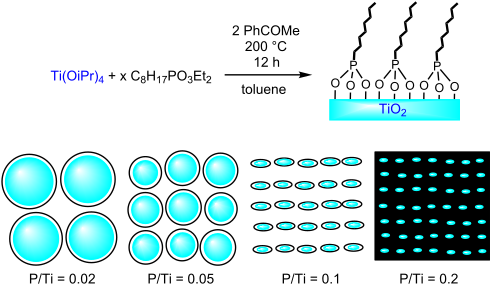
- ). Interestingly, the Brunauer–Emmett–Teller (BET) C constant, which is related to the adsorption enthalpy, decreased with the P/Ti ratio (42 for TiP0.02, 36 for TiP0.05, 28 for TiP0.1), as previously reported for nanoparticles grafted by octylphosphonic acid [37]. According to the recent IUPAC classification, the


Interaction of Te and Se interlayers with Ag or Au nanofilms in sandwich structures
Beilstein J. Nanotechnol. 2019, 10, 238–246, doi:10.3762/bjnano.10.22
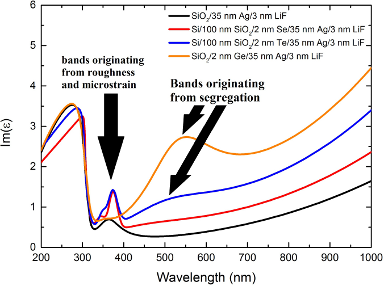
- [21][32], which contribute to the enthalpy (ΔH) of segregation. However, as shown in the previous work, the segregation process can be strongly influenced by the grain size distribution of the metal layer as well as its density profile [12], which may direct the segregation towards a specific
- interstitial lattice sites accessible to the minority atom as well as higher coordination number. Therefore, a system in which minority atoms reside in such voids has a higher entropy S (and thus lower free enthalpy G) than a system in which they reside in a simple grain boundary. Therefore, the distribution


Block copolymers for designing nanostructured porous coatings
Beilstein J. Nanotechnol. 2018, 9, 2332–2344, doi:10.3762/bjnano.9.218
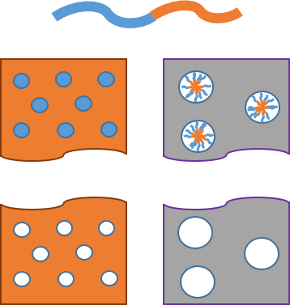
- of the thermal expansion coefficients and/or directional enthalpy (or entropy) changes, as shown in [83]. Furthermore, crystallinity is also an important parameter that can influence the domain orientation. As reported by Register and co-workers [84], there are three different levels of orientation


Surface energy of nanoparticles – influence of particle size and structure
Beilstein J. Nanotechnol. 2018, 9, 2265–2276, doi:10.3762/bjnano.9.211
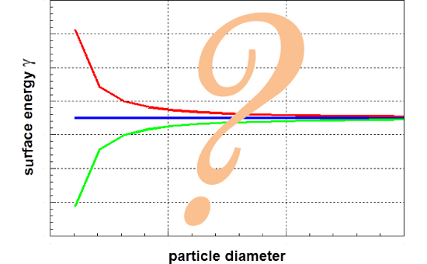
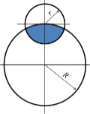
- obtains In this equation the quantities Q∞ and Q stand for the enthalpy of sublimation of the bulk and the enthalpy of sublimation for the particle in question, respectively. Vm stands for the molar volume of the atoms in the particle and r for its radius. Also in this case, the definition of the particle
- radius is a crucial problem that may be solved using a correction derived by Holec et al. [53]. The enthalpy of sublimation is determined as the binding energy of the outmost atoms of the particle. Figure 18 displays the binding energy for the atoms of the outmost layer of the glassy Au55 cluster. To





Absence of free carriers in silicon nanocrystals grown from phosphorus- and boron-doped silicon-rich oxide and oxynitride
Beilstein J. Nanotechnol. 2018, 9, 1501–1511, doi:10.3762/bjnano.9.141
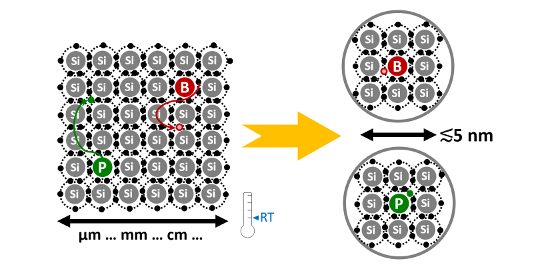
- as used in our work, the effective (endothermic) dissociation enthalpy of the reactions 2 P-DB + H2 → 2 P-H and 2 Si-DB + H2 → 2 Si-H yield ca. 0.05 eV and ca. 0.09 eV per DB passivation, respectively [51]. This finding renders the P–H bond breakage to occur at significantly lower temperatures as


Synthesis and characterization of two new TiO2-containing benzothiazole-based imine composites for organic device applications
Beilstein J. Nanotechnol. 2018, 9, 721–739, doi:10.3762/bjnano.9.67
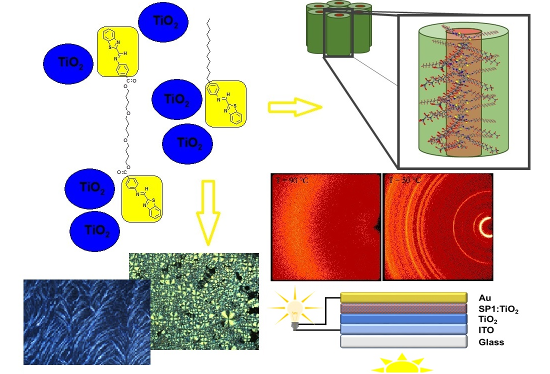
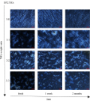
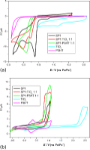
- energy level parameters of investigated compounds and mixtures. Transition temperatures and associated enthalpy changes of SP2 imine and its mixture with TiO2 in the various ratios upon 1st, 2nd heating and cooling cycles at a rate of 10 °C/min. Acknowledgements The research (FT-IR and DSC) was carried






Design of polar self-assembling lactic acid derivatives possessing submicrometre helical pitch
Beilstein J. Nanotechnol. 2018, 9, 333–341, doi:10.3762/bjnano.9.33
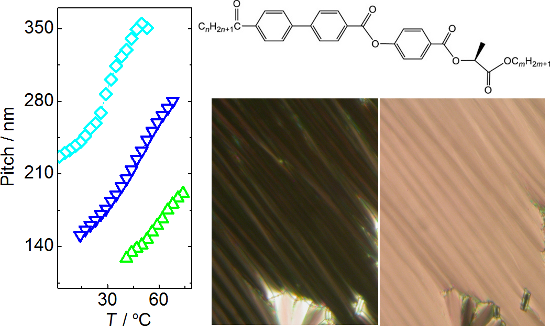
- control, which enabled temperature stabilisation within ±0.1 K. The phase transition temperatures were checked by DSC (Perkin-Elmer DSC 8000) on cooling/heating runs at a rate of 5 K·min−1 in a nitrogen atmosphere. The temperature and enthalpy change values were calibrated on the extrapolated onset
- temperatures and the enthalpy changes of the melting points of water, indium and zinc. Spontaneous polarisation The values of the spontaneous polarisation Ps were determined from the polarisation current peak by driving the sample with a triangular electric field at a frequency of 30 Hz and an electric field


Dielectric properties of a bisimidazolium salt with dodecyl sulfate anion doped with carbon nanotubes
Beilstein J. Nanotechnol. 2018, 9, 164–174, doi:10.3762/bjnano.9.19
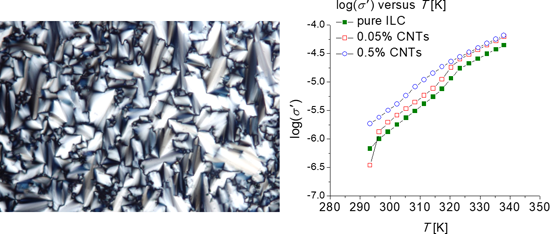
- corresponding temperatures together with the enthalpy values associated to these processes are presented in Figure 3. The transitions of [bisC8ImC10][C12H25OSO3]2 between mesophase and isotropic state observed by DSC are broad, with Tonset = 321.15 K. The temperature range of the liquid crystalline phase is
- limited to approx. 10 K during the heating run. The first heating run of the bisimidazolium salt shows a broad peak including the transition from the crystalline state to the LC phase and the following transition to the isotropic state, giving only the combined enthalpy of the two processes. However, POM
- given enthalpy contains the combined values for the two transitions Cr–SmA and SmA–Iso. Powder XRD pattern of [bisC8ImC10][C12H25OSO3]2 recorded at 298 K, after cooling from the isotropic state. Inset: the XRD pattern recorded at 298 K in the crystalline state (prior to heating). Permittivity as a


Growth model and structure evolution of Ag layers deposited on Ge films
Beilstein J. Nanotechnol. 2018, 9, 66–76, doi:10.3762/bjnano.9.9
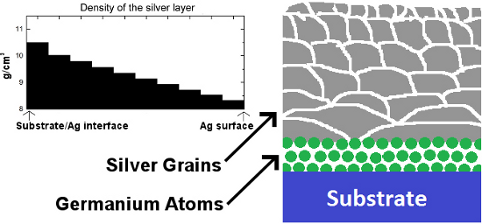
- surface. With the increased number of grains, the surface of the grain boundaries and volume of voids also increases. As hypothesized in [4], Ge atoms located in the silver grain boundaries or in the voids have lower free enthalpy than Ge atoms at the SiO2/Ag interface. The increased number of grain
- the substrate explains why the segregation of germanium in the silver structure occurs at an increasing rate. Ge atoms present in the boundaries of smaller nanocrystals have more neighboring crystals, what lowers the free enthalpy of such atoms. The opposite process, i.e., migration of Ge atoms from






Synthesis of [{AgO2CCH2OMe(PPh3)}n] and theoretical study of its use in focused electron beam induced deposition
Beilstein J. Nanotechnol. 2017, 8, 2615–2624, doi:10.3762/bjnano.8.262
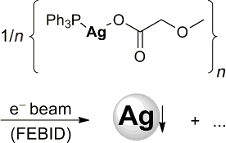
- , with an evaporation enthalpy of ΔHvap = 126.1 kJ mol−1. These data approve that 2 is confined to be used as CVD precursor. In addition to the mass-spectrometric and vapor pressure measurements (see earlier), it was proven that coordination compound 2 can experimentally brought into the vapor phase


Amplified cross-linking efficiency of self-assembled monolayers through targeted dissociative electron attachment for the production of carbon nanomembranes
Beilstein J. Nanotechnol. 2017, 8, 2562–2571, doi:10.3762/bjnano.8.256
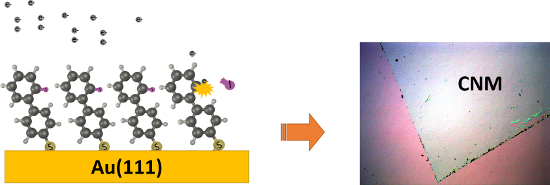
- fragment (X) exceeds the respective bond dissociation energy (BDE(M−X)); Here ΔHrxn is the reaction enthalpy for the bond rupture, which is approximately equal to the respective threshold energy (Eth). For the higher halogens Cl, Br and I, the BDE(C6H5−X) in the respective halo-benzenes decreases


Comparing postdeposition reactions of electrons and radicals with Pt nanostructures created by focused electron beam induced deposition
Beilstein J. Nanotechnol. 2017, 8, 2410–2424, doi:10.3762/bjnano.8.240
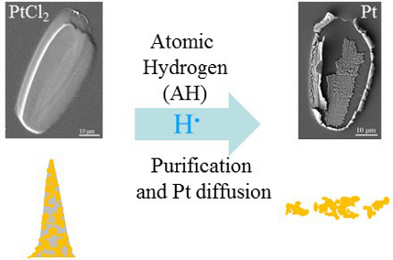
- highly exothermic, driven principally by the innate reactivity of AH, coupled with the comparatively low formation enthalpy (∆Hf) of PtCl2. In addition to purification, exposure of the PtCl2 deposits to AH also frequently resulted in significant structural modifications to the deposits. In some instances
- species. The qualitatively similar enthalpy of reaction for carbon atom removal by AO (≈−394 kJ/mol) [52] to Cl atom removal by AH purification (≈−483 kJ/mol) further supports the idea that the enhanced Pt atom mobility in the presence of AH is due principally to a chemical as opposed to a physical (e.g
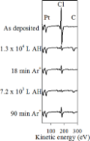
- height loss in the PtCx structures as a function of their initial thickness. The inset shows a top-down AFM image of one of the purified nanostructures. Hess cycle for electron purification of PtCl2. ∆H = −∆Hf PtCl2 + Cl2 bond dissociation enthalpy (BDE) + 2 × Cl electron affinity (EA) and therefore ∆H




Dissociative electron attachment to coordination complexes of chromium: chromium(0) hexacarbonyl and benzene-chromium(0) tricarbonyl
Beilstein J. Nanotechnol. 2017, 8, 2257–2263, doi:10.3762/bjnano.8.225
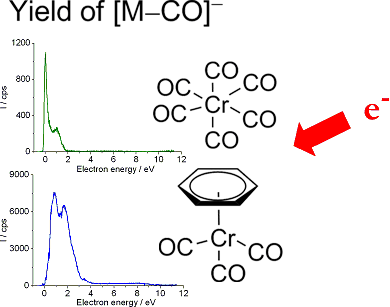
- fragment exceeds the bond energy of Cr–CO. According to the literature, the bond dissociation enthalpy of Cr(CO)5–CO is equal to 1.6 eV [31], therefore the electron affinity of Cr(CO)5 should be ≥1.6 eV. A further reaction channel in DEA to Cr(CO)6 is the formation of [Cr(CO)4]−, formed from the loss of
Au55, a stable glassy cluster: results of ab initio calculations
Beilstein J. Nanotechnol. 2017, 8, 2221–2229, doi:10.3762/bjnano.8.222
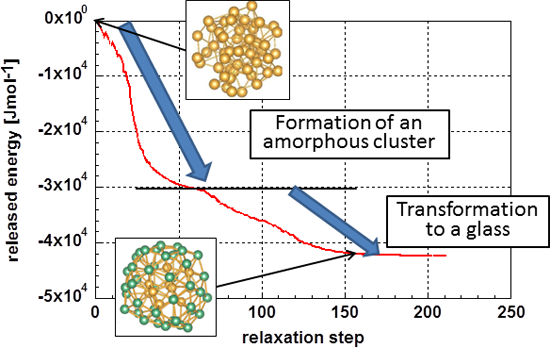
- that is close to the melting enthalpy of bulk gold. Additionally, the surface energy of this cluster was calculated using two different theoretical approaches resulting in values close to the surface energy for bulk gold. It shall be emphasized that it is now possible to give a confidence interval for
- , which is the final relaxed structure. The second regime describes the formation of the cluster. The energy released during this process is close to the enthalpy of melting of gold, 1.24 × 10⁴ J·mol−1 [28]. The two regimes can be explained as: (i) formation of an amorphous cluster from the random
- data suggest a phase transformation in the temperature range around 600 K, which is the highest temperature at which the coordination number of twelve is observed. In thermodynamics of bulk materials, a discontinuity of the free enthalpy as a function of the temperature is a typical marker for a phase


Modelling focused electron beam induced deposition beyond Langmuir adsorption
Beilstein J. Nanotechnol. 2017, 8, 2151–2161, doi:10.3762/bjnano.8.214
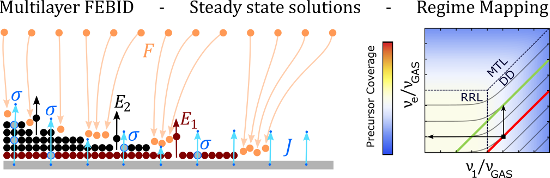
- on top of each other. This approach is the same followed by the Brunauer, Emmet, Teller (BET) adsorption model [43], with a different desorption energy value for the first monolayer than for the rest, and E2 usually taken as the vaporization enthalpy. E2 is therefore the standard desorption energy
- . Taking E2 = 56 kJ/mol as the vaporization enthalpy for this precursor at high coverages [51], v0 = 1013 s−1 as the desorption attempt frequency [52], and T = 120–300 K as the temperature range investigated, v2 is estimated to change in a very wide range, from 10−12 s−1 to 103 s−1 (Equation 6). From the
- temperature. Examples of ν2, νe and νGAS values for standard experimental FEBID conditions. σ = 5·10−21 m2 for Co2(CO)8 is used from [19]. F is calculated for a Helios FEI dual beam system with a Pfeiffer TMH 262 turbo-molecular pump. Typical vaporization enthalpy values for FEBID precursors, associated to E2


Preparation and characterization of polycarbonate/multiwalled carbon nanotube nanocomposites
Beilstein J. Nanotechnol. 2017, 8, 2026–2031, doi:10.3762/bjnano.8.203
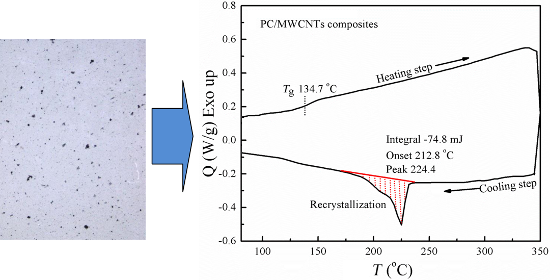
- , an endothermic peak followed by a shoulder with the enthalpy heat of fusion (27 J/g) is observed at 224.4 °C. This might be due to the possible ordered structure or segmental chain mobility of PC macromolecules changed due to the interaction of the MWCNTs. The lack of a cold crystallization peak
- appearing in the cooling cycle could be due to the enthalpy relaxation or mesophase transitions. The glass transition observed in the cooling cycle is 9 °C less than the heating cycle. Conclusion PC/MWCNTs composites were prepared as transparent films. The presence of a dispersed, uniform phase in the





