


Search results
Search for "high-resolution imaging" in Full Text gives 62 result(s) in Beilstein Journal of Nanotechnology.
Comparative biological effects of spherical noble metal nanoparticles (Rh, Pd, Ag, Pt, Au) with 4–8 nm diameter
Beilstein J. Nanotechnol. 2018, 9, 2763–2774, doi:10.3762/bjnano.9.258
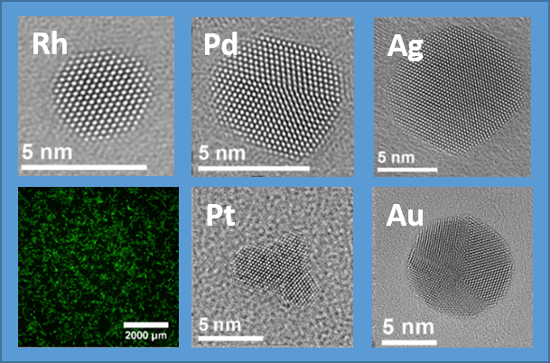
- with a sample volume of 750 µL were used. High-resolution imaging was performed using an aberration-corrected FEI Titan transmission electron microscope (TEM) equipped with a Cs-probe corrector (CEOS Company) and operating at 300 kV [53]. Cell biology Human mesenchymal stem cells (hMSC, 5th to 10th


High-throughput synthesis of modified Fresnel zone plate arrays via ion beam lithography
Beilstein J. Nanotechnol. 2018, 9, 2049–2056, doi:10.3762/bjnano.9.194
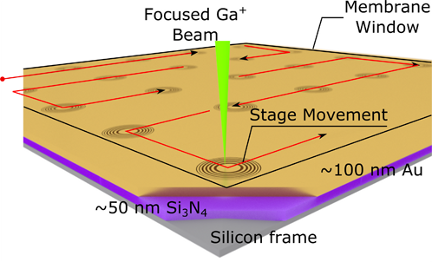
- writing/milling capability. IBL allows for rapid prototyping of high-resolution FZPs that can be used for high-resolution imaging at soft X-ray energies. Here, we discuss improvements in the process enabling us to write zones down to 15 nm in width, achieving an effective outermost zone width of 30 nm
- -resolution imaging and lithography at short wavelengths. Their fabrication requires nano-machining capabilities with exceptional precision and strict tolerances such as those enabled by modern lithography methods. In particular, ion beam lithography (IBL) is a noteworthy method thanks to its robust direct
- Kahraman Keskinbora Umut Tunca Sanli Margarita Baluktsian Corinne Grevent Markus Weigand Gisela Schutz Max Planck Institute for Intelligent Systems, Heisenbergstrasse 3, 70569 Stuttgart, Germany 10.3762/bjnano.9.194 Abstract Fresnel zone plates (FZP) are diffractive photonic devices used for high


Defect formation in multiwalled carbon nanotubes under low-energy He and Ne ion irradiation
Beilstein J. Nanotechnol. 2018, 9, 1951–1963, doi:10.3762/bjnano.9.186
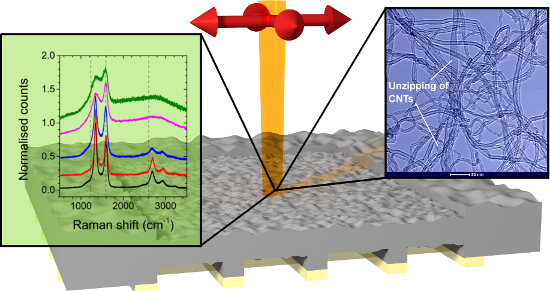
- -resolution imaging tool [32][33]. A He+ or Ne+ ion beam can be used to irradiated the samples with an impact energy in the range of 5 to 30 keV, either for imaging or nano-machining [34][35], or for doing both simultaneously [33]. For instance, the HIM has already been used for the imaging of graphene flakes
- directly related to the number of defects in CNTs [30], or X-ray photoelectron spectroscopy (XPS) which provides some information on the chemical environment of the carbon atoms [31]. In this context, it is to be noted that helium ion microscopy (HIM) has received increasing attention recently as a high



Quantitative comparison of wideband low-latency phase-locked loop circuit designs for high-speed frequency modulation atomic force microscopy
Beilstein J. Nanotechnol. 2018, 9, 1844–1855, doi:10.3762/bjnano.9.176
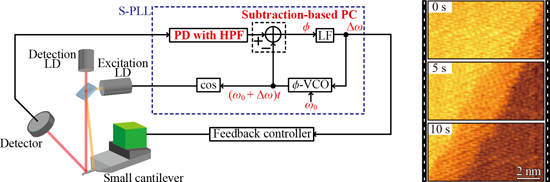
- imaging of calcite dissolution in water at 0.5 s/frame with true atomic resolution. The high-speed and high-resolution imaging capabilities of the proposed design will enable a wide range of studies to be conducted on various atomic-scale dynamic phenomena at solid–liquid interfaces. Keywords: calcite
- [1]. It has been used under ultrahigh vacuum conditions for high-resolution imaging of various materials, including metals, semiconductors, metal oxides, and organic molecules [2][3][4][5]. Furthermore, recent advances in FM-AFM have enabled atom manipulation and identification at room temperature [6



Electrostatically actuated encased cantilevers
Beilstein J. Nanotechnol. 2018, 9, 1381–1389, doi:10.3762/bjnano.9.130
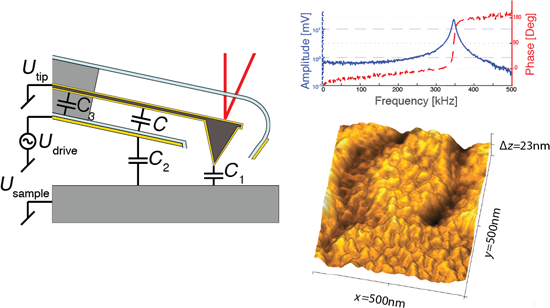
- ≈ 90 μm) with a stiffness of k = 4 N·m−1 and a resonance frequency of f0 = 144.525 kHz and Qair = 36.5 is used. After immersion in water the quality factor remained high Qwater = 27.4, which enables high-resolution imaging with small interaction forces in liquids. Moreover, the clean electrostatic
- small. However, in absence of a water meniscus for example when operating in vacuum or when immersed in liquid, small amplitudes (below 1 nm) are ideal to reach gentle and high-resolution imaging conditions. Yet, larger amplitudes can be obtained with softer cantilevers. For instance with the cantilever




Anchoring of a dye precursor on NiO(001) studied by non-contact atomic force microscopy
Beilstein J. Nanotechnol. 2018, 9, 242–249, doi:10.3762/bjnano.9.26
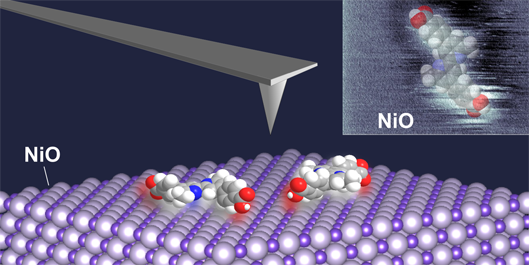
- extracted to be 0.5 D·nm−2. Taking into account a measured molecule density of 0.43 nm−2, which could be calculated thanks to high-resolution imaging, an average dipole moment of 1.1 D per molecule is estimated. This dipole moment is directed towards the NiO surface and can be attributed to a partial charge



Comparative study of post-growth annealing of Cu(hfac)2, Co2(CO)8 and Me2Au(acac) metal precursors deposited by FEBID
Beilstein J. Nanotechnol. 2018, 9, 91–101, doi:10.3762/bjnano.9.11
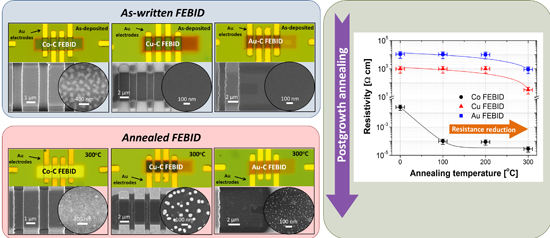
- light-brown with temperature, suggesting that less significant changes occurred in the Cu–C(–O–F) and Au–C(–O) deposits during the post-growth treatment (Figure 1b,c). In order to obtain a more precise description of the induced changes, high-resolution imaging was performed using a Hitachi S-4800 SEM


Photobleaching of YOYO-1 in super-resolution single DNA fluorescence imaging
Beilstein J. Nanotechnol. 2017, 8, 2296–2306, doi:10.3762/bjnano.8.229
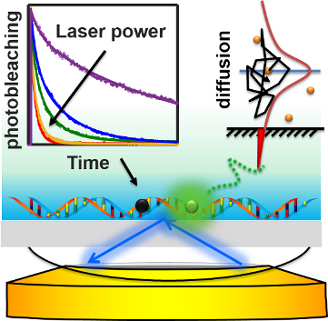
- as stimulated emission depletion (STED) microscopy [26][27]; (2) using software to super-localize single molecules [28][29][30][31], such as stochastic optical reconstruction microscopy (STORM) [32], photo-activated localization microscopy (PALM) [33], single-molecule high-resolution imaging with




Synthesis and functionalization of NaGdF4:Yb,Er@NaGdF4 core–shell nanoparticles for possible application as multimodal contrast agents
Beilstein J. Nanotechnol. 2017, 8, 1815–1824, doi:10.3762/bjnano.8.183
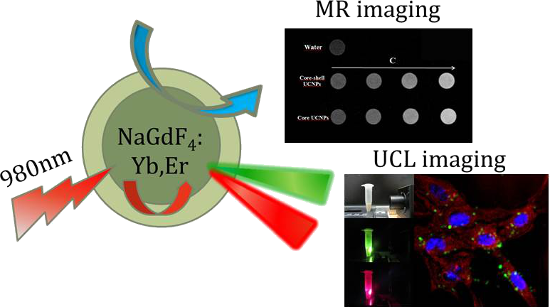
- treated with 10 µg/mL of Tween 80-coated core–shell UCNPs for 24 h. Then the cells were fixed with 4% paraformaldehyde and stained with DAPI. The high-resolution imaging system for UCNP imaging was based on a confocal microscopy system Nikon C1si (Japan). A 980 nm continuous wave laser with an intensity


Collembola cuticles and the three-phase line tension
Beilstein J. Nanotechnol. 2017, 8, 1714–1722, doi:10.3762/bjnano.8.172
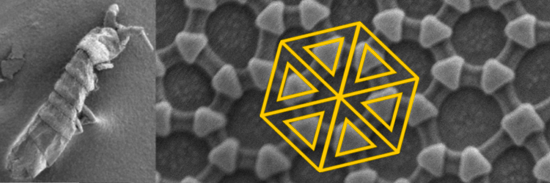
- local high-resolution imaging at the contact line and reported values in the range of λ = 10−10 N [21]. There is also contention with regards to the sign of the line tension [17][18], several theoretical studies predict both negative and positive signs for the line tension [19], while a majority of


![[Graphic 16]](/bjnano/content/inline/2190-4286-8-172-i22.png?max-width=637&scale=1.18182) . A system with θ0 = 105°, S = 0.1 μm a...
. A system with θ0 = 105°, S = 0.1 μm a...

Ion beam profiling from the interaction with a freestanding 2D layer
Beilstein J. Nanotechnol. 2017, 8, 682–687, doi:10.3762/bjnano.8.73
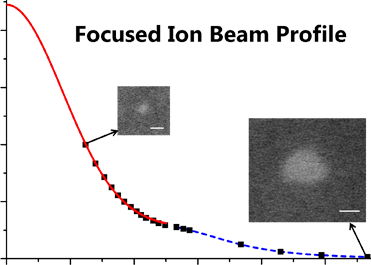
- important issue is high-resolution imaging of the pores. When pore size becomes smaller than a few nanometers, like in the case of 1–3 pA He+ beams, it is difficult to measure these pore dimensions precisely with standard STEM or HIM. Time consuming high-resolution TEM imaging would be required. The third


Multimodal cantilevers with novel piezoelectric layer topology for sensitivity enhancement
Beilstein J. Nanotechnol. 2017, 8, 358–371, doi:10.3762/bjnano.8.38
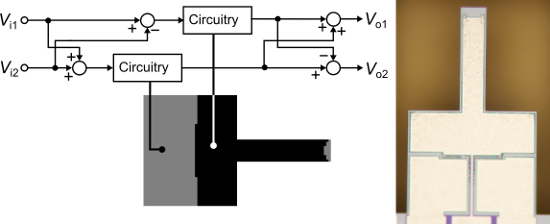
- was shown that these higher modes can be more sensitive to material properties such as elastic modulus and damping coefficients [17][18][19]. Additionally, stiff cantilevers have proven to provide high resolution imaging in ambient and liquid environments using quartz resonators [20][21]. Traditional


Ordering of Zn-centered porphyrin and phthalocyanine on TiO2(011): STM studies
Beilstein J. Nanotechnol. 2017, 8, 99–107, doi:10.3762/bjnano.8.11
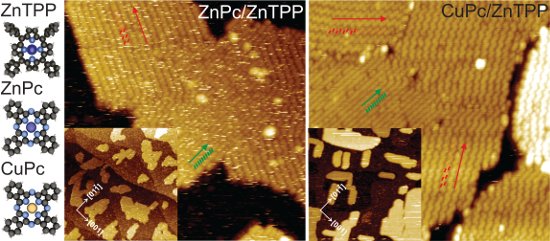
- molecular structures were unstable against the STM tip, precluding any high-resolution imaging. It was found, however, that this situation could be greatly improved if the wetting layer of the native CuPc molecules was substituted by Zn(II)meso-tetraphenylporphyrins (ZnTPP) [5]. The present work extends


Reasons and remedies for the agglomeration of multilayered graphene and carbon nanotubes in polymers
Beilstein J. Nanotechnol. 2016, 7, 1174–1196, doi:10.3762/bjnano.7.109
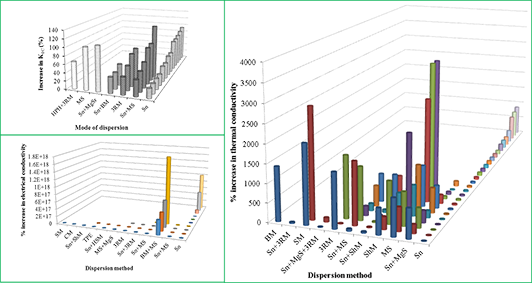
- (TEM) and other high-resolution imaging tools. Wrinkles were observed in flat graphene sheets that occur due to the instability of the 2D lattice structure [13]. Wrinkling is a large and out-of-plane deflection caused by compression (in-plane) or shear, and it is usually found in thin and flexible


Experimental and simulation-based investigation of He, Ne and Ar irradiation of polymers for ion microscopy
Beilstein J. Nanotechnol. 2016, 7, 1113–1128, doi:10.3762/bjnano.7.104
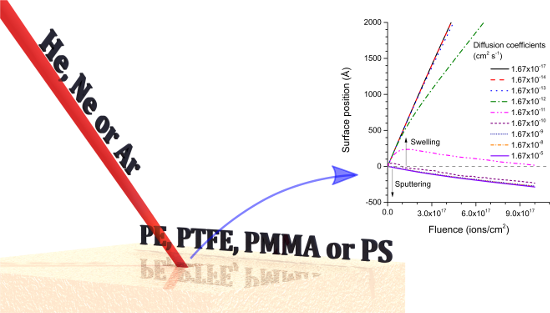
- is a SIMS instrument dedicated to high-resolution imaging, a lateral resolution of around 50 nm can be reached. Recently, the development of a SIMS add-on system for the helium ion microscope (HIM) [2] demonstrated SIMS imaging with even higher lateral resolution in the 10 nm range [3]. Initially the
- influenced a lot by the impact energy of the primary ions. At higher energies required for the high-resolution imaging, the preferential sputtering is more important than at the low energies used for depth profiling. For PTFE, the difference between initial sample composition and surface composition after a


Modelling of ‘sub-atomic’ contrast resulting from back-bonding on Si(111)-7×7
Beilstein J. Nanotechnol. 2016, 7, 937–945, doi:10.3762/bjnano.7.85
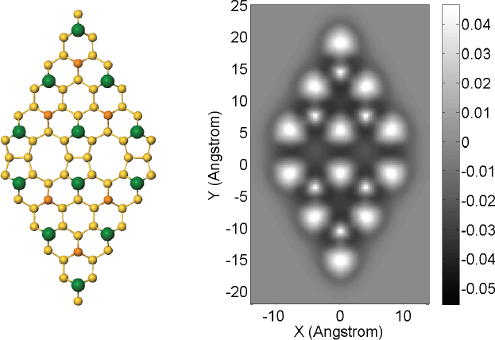
- temperature scanning probe instrumentation [1], coupled with specific experimental techniques utilising the in situ functionalisation of scanning probe tips with single molecules [2], and operation in the constant-height imaging mode, have resulted in an explosion of interest in high-resolution imaging and


Length-extension resonator as a force sensor for high-resolution frequency-modulation atomic force microscopy in air
Beilstein J. Nanotechnol. 2016, 7, 432–438, doi:10.3762/bjnano.7.38
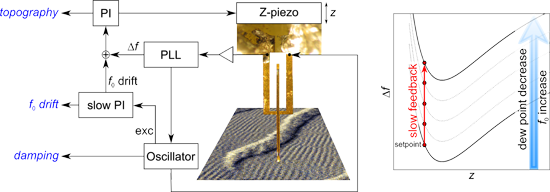
- limited to ultra-high vacuum conditions and cryogenic temperatures. Measurements under ambient conditions are influenced by variations of the dew point and thin water layers present on practically every surface, complicating stable imaging with high resolution. We demonstrate high-resolution imaging in
- hamper high-resolution imaging under ambient conditions. Especially, water layers present on surfaces exposed to air affect the forces acting on the tip, and as a result the stability. Meniscus forces may dominate the interaction and overshadow forces responsible for atomic contrast, namely short-range
- . Conclusion We have demonstrated high-resolution FM-AFM imaging under ambient conditions with the length-extension resonator. The resonator can be operated stably at small as well as large tip–sample interaction forces. Adsorbates of nitrogen were imaged on HOPG, which paves the road for high-resolution


Hydration of magnesia cubes: a helium ion microscopy study
Beilstein J. Nanotechnol. 2016, 7, 302–309, doi:10.3762/bjnano.7.28
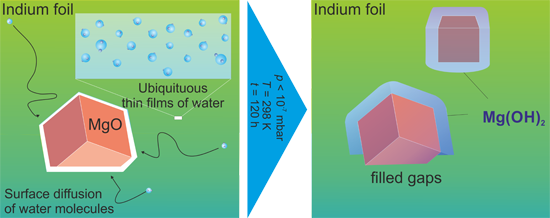
- images are not directly compromised [16]. In addition to the high SE-yield, helium ion microscopy allows the use of low beam currents for imaging [7]. For biological materials and polymers, HIM is preferable to SEM for high resolution imaging due to the problems related to electron-beam-induced damage
- [17]. However, shrinkage of PMMA after helium ion imaging at 30 kV was reported [18], showing that also helium ions may damage soft materials by radiolysis just like low-energy (below 1 keV) electron beams. Thus, without additional damage to soft materials, HIM facilitates high resolution imaging


Electrospray deposition of organic molecules on bulk insulator surfaces
Beilstein J. Nanotechnol. 2015, 6, 1927–1934, doi:10.3762/bjnano.6.195
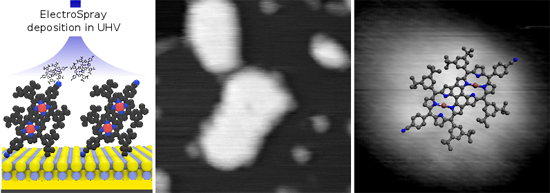
- molecules, their decoupling from the metal surface is desirable. Deposition and analysis on insulating films or crystals is thus mandatory and requires high resolution imaging. Therefore, for the characterization at the atomic-scale, atomic force microscopy (AFM) is mandatory. Numerous experimental AFM
- . Furthermore, this functional group is known to be quite flexible and will therefore, especially at room temperature conditions, prevent high-resolution imaging. A schematic model of an island is proposed in Figure 5d and Figure 5e showing a possible molecular arrangement. In this configuration, columnar


Focused particle beam-induced processing
Beilstein J. Nanotechnol. 2015, 6, 1883–1885, doi:10.3762/bjnano.6.191

- direction, Yuri Petrov and Oleg Vyvenko have exploited reflected helium ions for high-resolution imaging with “chemical contrast” [11]. Hongzhou Zhang and coworkers have utilized a focused helium ion beam to modify and mill thin silicon foils [12], which constitutes pioneering work in HIM towards
Imaging of carbon nanomembranes with helium ion microscopy
Beilstein J. Nanotechnol. 2015, 6, 1712–1720, doi:10.3762/bjnano.6.175
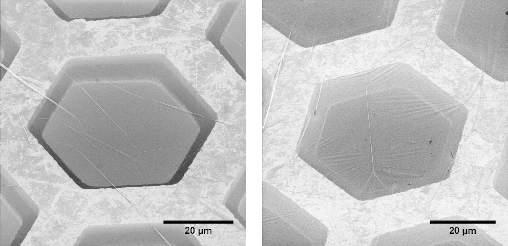
- where the membranes were exposed to highly charged ions [27]. This treatment induced nanopores in the size range of 10 nm, which were imaged by HIM with a reasonably high resolution [27]. Note that high resolution imaging of large freestanding CNMs requires the use of the electron flood gun for charge




Addition of Zn during the phosphine-based synthesis of indium phospide quantum dots: doping and surface passivation
Beilstein J. Nanotechnol. 2015, 6, 1237–1246, doi:10.3762/bjnano.6.127
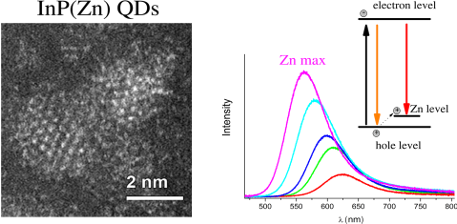
- scattering region. This discrepancy can be explained by fact that the contrast in bright-field low-magnification TEM is a mass-thickness contrast, which arises from Rutherford elastic scattering of electrons, rather than a diffraction or an amplitude contrast in the case of dislocations and high resolution
- imaging. Thus, the amorphous shell will be the basis of the main contrast in Figure 3a and, correspondingly, of the mean size of the QDs. Therefore, the change of the particle size, which depends on the Zn amount, is noticeable in the TEM images as well: for non-doped QDs dmean ≈ 4.3 nm (Figure 3a), for


Nano-contact microscopy of supracrystals
Beilstein J. Nanotechnol. 2015, 6, 1229–1236, doi:10.3762/bjnano.6.126
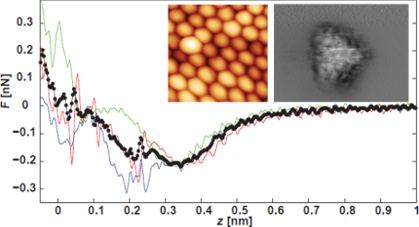
- distribution at the nanocrystal surface. Conclusion: Our combined STM–AFM measurements show that the contrast mechanism underpinning high resolution imaging of nanoparticle supracrystals involves a form of nanoscale contact imaging, rather than the through-vacuum tunnelling which underpins traditional

![[Graphic 1]](/bjnano/content/inline/2190-4286-6-126-i1.png?max-width=637&scale=1.18182) = 20 pA, ...
= 20 pA, ...


Overview about the localization of nanoparticles in tissue and cellular context by different imaging techniques
Beilstein J. Nanotechnol. 2015, 6, 263–280, doi:10.3762/bjnano.6.25
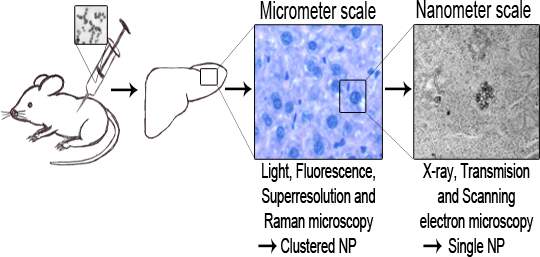
- been used to study NP, such as QD due to their favored optical properties [122][124][125] and in investigations on the architecture of specific NP [117]. Raman microspectroscopy Raman microspectroscopy provides high-resolution imaging combined with chemical analysis without destruction of the



High-frequency multimodal atomic force microscopy
Beilstein J. Nanotechnol. 2014, 5, 2459–2467, doi:10.3762/bjnano.5.255
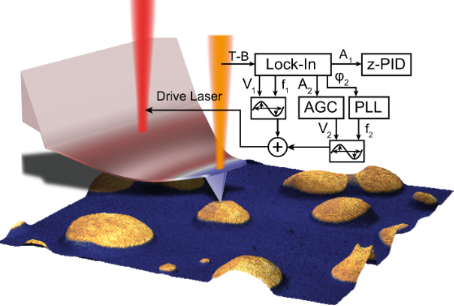
- multifrequency materials contrast imaging of a polymer blend in both air and fluid, and gentle, high-resolution imaging of an F-actin fibre in fluid. Results and Discussion Instrument design The basis for our optical design is a modular AFM readout head design we have reported earlier [36]. The modular nature of





