


Search results
Search for "hybrid structures" in Full Text gives 60 result(s) in Beilstein Journal of Nanotechnology.
Disorder-induced suppression of the zero-bias conductance peak splitting in topological superconducting nanowires
Beilstein J. Nanotechnol. 2018, 9, 1358–1369, doi:10.3762/bjnano.9.128
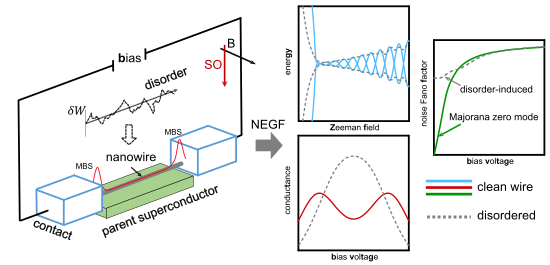
- -matter systems, including p-wave superconductors [10][11], topological insulator-superconductor hybrid structures [12][13], artificially engineered Kitaev chains [14][15], semiconductor-superconductor hybrid nanowire systems [16][17][18][19][20][21]. Very recently, the one-dimensional Majorana mode


![[Graphic 20]](/bjnano/content/inline/2190-4286-9-128-i39.svg?max-width=637&scale=1.18182) (das...
(das...


Circular dichroism of chiral Majorana states
Beilstein J. Nanotechnol. 2018, 9, 1194–1199, doi:10.3762/bjnano.9.110
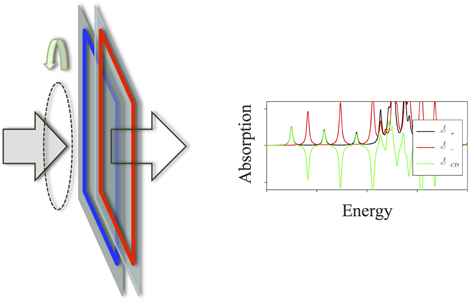
- decays exponentially with the distance to the nanowire end. By contrast, propagating Majorana states with sustained spatial oscillations can be present at the edges and along the perimeter of 2D-like hybrid structures. This is the situation in presence of p + ip superconductivity for spinless


![[Graphic 14]](/bjnano/content/inline/2190-4286-9-110-i18.svg?max-width=637&scale=1.18182) . Panels a) and b) correspond to the phases in Figure 1d with one (ΔB = 2...
. Panels a) and b) correspond to the phases in Figure 1d with one (ΔB = 2...
![[Graphic 15]](/bjnano/content/inline/2190-4286-9-110-i19.svg?max-width=637&scale=1.18182) ,
, ![[Graphic 16]](/bjnano/content/inline/2190-4286-9-110-i20.svg?max-width=637&scale=1.18182) and
and ![[Graphic 17]](/bjnano/content/inline/2190-4286-9-110-i21.svg?max-width=637&scale=1.18182) defined in the main text. The shown results correspond to the spe...
defined in the main text. The shown results correspond to the spe...

![[Graphic 19]](/bjnano/content/inline/2190-4286-9-110-i23.svg?max-width=637&scale=1.18182) ,
, ![[Graphic 20]](/bjnano/content/inline/2190-4286-9-110-i24.svg?max-width=637&scale=1.18182) and
and ![[Graphic 21]](/bjnano/content/inline/2190-4286-9-110-i25.svg?max-width=637&scale=1.18182) for (a) a square of Lx = Ly = 20 LU), and for (b) a rectangle of L...
for (a) a square of Lx = Ly = 20 LU), and for (b) a rectangle of L...
Inverse proximity effect in semiconductor Majorana nanowires
Beilstein J. Nanotechnol. 2018, 9, 1184–1193, doi:10.3762/bjnano.9.109
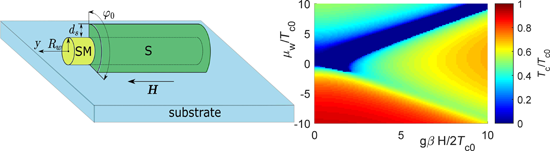
- Novgorod, 23 Gagarina, 603950 Nizhny Novgorod, Russia 10.3762/bjnano.9.109 Abstract We study the influence of the inverse proximity effect on the superconductivity nucleation in hybrid structures consisting of semiconducting nanowires placed in contact with a thin superconducting film and discuss the


Anchoring Fe3O4 nanoparticles in a reduced graphene oxide aerogel matrix via polydopamine coating
Beilstein J. Nanotechnol. 2018, 9, 591–601, doi:10.3762/bjnano.9.55
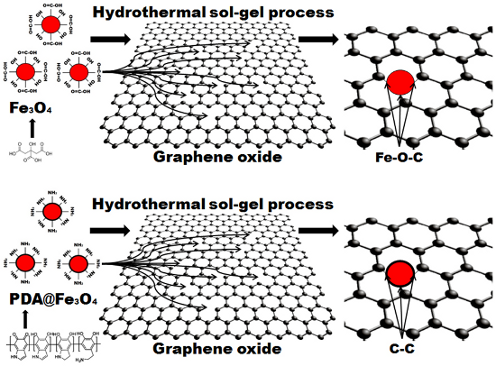
- ≈2959 cm−1 (I), 2921 cm−1 (II) and 2849 cm−1 (III) bands, corresponding to rGO and rGO-MNPs νas CH3 and νas/νs CH2 stretching, respectively. This effect could be related to the defect sites termination modified during the hydrothermal synthesis process. In the case of MNP hybrid structures, the


Synthesis and characterization of noble metal–titania core–shell nanostructures with tunable shell thickness
Beilstein J. Nanotechnol. 2017, 8, 2083–2093, doi:10.3762/bjnano.8.208
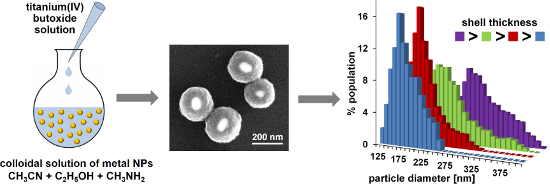
- characterization of metal–metal oxide core–shell nanostructures. Keywords: Ag@TiO2; Au@TiO2; core–shell nanostructures; titania coating; titanium dioxide; tunable resistive pulse sensing; Introduction In recent years, core–shell nanostructures (CSNs) have become one of the most widely studied hybrid structures


Synthesis of graphene–transition metal oxide hybrid nanoparticles and their application in various fields
Beilstein J. Nanotechnol. 2017, 8, 688–714, doi:10.3762/bjnano.8.74
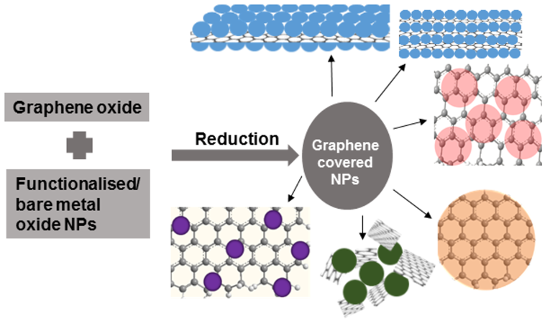
- unique two-dimensional structure, high conductivity, excellent electron mobility and high surface area. To explore the more prospective properties of graphene, graphene hybrids have been synthesised, where graphene has been integrated with other important nanoparticles (NPs). These graphene–NP hybrid
- structures are particularly interesting because after hybridisation they not only display the individual properties of graphene and the NPs, but also they exhibit further synergistic properties. Reduced graphene oxide (rGO), a graphene-like material, can be easily prepared by reduction of graphene oxide (GO




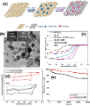


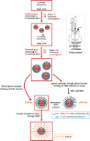
Methods for preparing polymer-decorated single exchange-biased magnetic nanoparticles for application in flexible polymer-based films
Beilstein J. Nanotechnol. 2017, 8, 408–417, doi:10.3762/bjnano.8.43
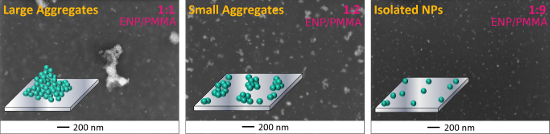
- magnetic NPs to decrease interparticle interactions, particularly dipolar ones [7][8]. The general strategy for such a purpose consists of forming core–shell hybrid structures in which the shell consists of a corona of polymer chains grafted onto the inorganic NP surface. Among the available polymer


Influence of hydrofluoric acid treatment on electroless deposition of Au clusters
Beilstein J. Nanotechnol. 2017, 8, 183–189, doi:10.3762/bjnano.8.19
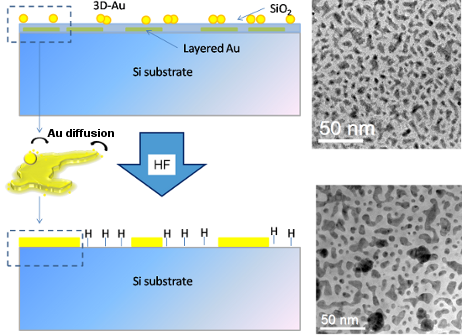
- excellent at scattering and absorbing visible light [6][7][8]. For these reasons, they have found an interesting application in the field of metal–semiconductor hybrid structures for solar energy conversion [9][10]. Among the different adopted methods to deposit Au nanoclusters on a substrate, electroless


Sensitive detection of hydrocarbon gases using electrochemically Pd-modified ZnO chemiresistors
Beilstein J. Nanotechnol. 2017, 8, 82–90, doi:10.3762/bjnano.8.9
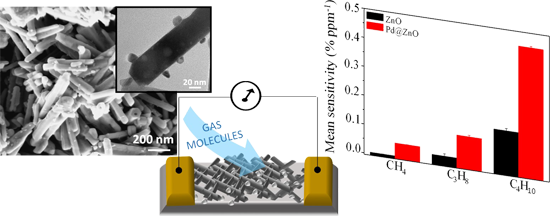
- evaluated by XPS analysis. In Figure 2 the high-resolution XPS spectra of Zn 2p and O 1s in pristine ZnO, and of Pd 3d in Pd@ZnO hybrid structures are reported. High-resolution XPS Zn 2p and O 1s spectra are the same in pristine and functionalized ZnO. Moreover, in both cases, the relative area of the two


Nonlinear thermoelectric effects in high-field superconductor-ferromagnet tunnel junctions
Beilstein J. Nanotechnol. 2016, 7, 1579–1585, doi:10.3762/bjnano.7.152
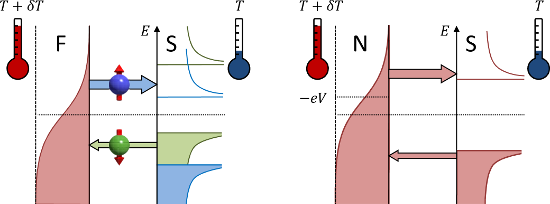
- , thermoelectric effects decrease towards low temperatures, which usually makes them vanishingly small in metal nanostructures in the sub-Kelvin regime. Results: We report on a combined experimental and theoretical investigation of thermoelectric effects in superconductor/ferromagnet hybrid structures. We
- investigate the dependence of thermoelectric currents on the thermal excitation, as well as on the presence of a dc bias voltage across the junction. Conclusion: Large thermoelectric effects are observed in superconductor/ferromagnet and superconductor/normal-metal hybrid structures. The spin-independent
- . Keywords: spintronics, superconductor-ferromagnet hybrids, thermoelectricity; Introduction Electrons in classical superconductors are bound in spin-singlet Cooper pairs, whereas ferromagnetic materials prefer parallel spin alignment. In nanoscale hybrid structures made of superconductors and ferromagnets


A composite structure based on reduced graphene oxide and metal oxide nanomaterials for chemical sensors
Beilstein J. Nanotechnol. 2016, 7, 1421–1427, doi:10.3762/bjnano.7.133
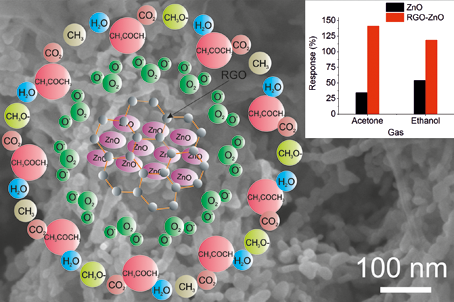
- , sensitivity and selectivity) with respect to the application of ZnO nanomaterials in chemical gas sensors that need to be overcome [7][14]. Hybrid structures composed of two or more different materials with diverse functional properties are of great interest to develop advanced composite materials for


Dielectrophoresis of gold nanoparticles conjugated to DNA origami structures
Beilstein J. Nanotechnol. 2016, 7, 948–956, doi:10.3762/bjnano.7.87
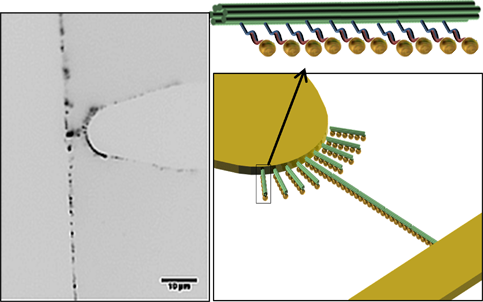
- hybrid structures required a lower electrical field strength and frequency for a comparable trapping at the edges of the electrode structure. The nanoparticle conjugation additionally resulted in a remarkable alteration of the DNA structure arrangement. The growth of linear, chain-like structures in
- hybrid structures. Keywords: gold nanoparticles; dielectrophoresis; DNA nanotechnology; DNA origami; self-assembly; Introduction The DNA origami method facilitates high throughput synthesis of identical and fully addressable two- (2D) or three-dimensional (3D) nanoscaled structures [1][2][3]. Such DNA
- nanoparticles (ε → ∞) [33][34]. Hence, the higher polarizability of gold nanoparticles extends the electrical field strength and frequency range of DNA/gold-nanoparticle hybrid structures for pDEP [35][36]. Furthermore, the gold-nanoparticle modification resulted in another interesting observation: At an


Hierarchical coassembly of DNA–triptycene hybrid molecular building blocks and zinc protoporphyrin IX
Beilstein J. Nanotechnol. 2016, 7, 697–707, doi:10.3762/bjnano.7.62
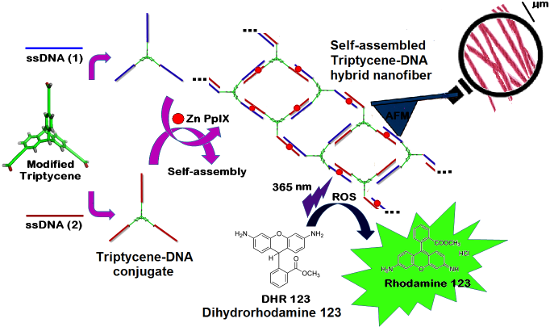
- involve Zn–protoporphyrin (Zn PpIX), the compound was added during the annealing process of the DNA conjugates at a temperature of 60 °C. Thermal melting The self-assembly of DNA–TPA hybrid structures was studied by optical melting experiments using a Peltier controlled UV–vis spectrophotometer (Bioquest


Novel roles for well-known players: from tobacco mosaic virus pests to enzymatically active assemblies
Beilstein J. Nanotechnol. 2016, 7, 613–629, doi:10.3762/bjnano.7.54
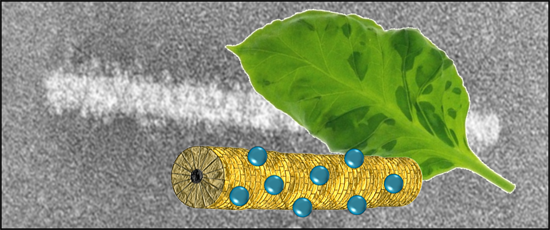
- development of 'smart' hybrid structures with elaborate functionalities exploiting biologically optimized principles. As these are sought-after especially for novel miniaturized devices and hierarchically organized materials, a second strikingly expanding field in contemporary virus research addresses both


Bacteriorhodopsin–ZnO hybrid as a potential sensing element for low-temperature detection of ethanol vapour
Beilstein J. Nanotechnol. 2016, 7, 501–510, doi:10.3762/bjnano.7.44
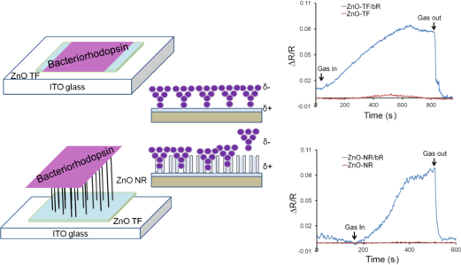
- . The morphological and spectroscopic analysis of the hybrid structures confirmed the ZnO thin film/nanorod growth and functional properties of bR. The photoactivity results of the bR protein further corroborated the sustainability of its charge transport property and biological activity. When exposed
- ][24]. The preference of ZnO in applications for the formation of hybrid structures is due to its high band gap (3.39 eV), large excitonic binding energy (60 meV), and high isoelectric point (9.2) [23][25][26][27]. One of the early reported works by Heiland in 1959 demonstrated the use of ZnO as a gas
- , which in turn enables the charge transfer in ZnO-TF/bR and ZnO-NR/bR interfaces [10][14]. In order to characterize the morphological changes, the surface of the hybrid structures was investigated by X-ray diffraction (XRD) and scanning electron microscopy (SEM). Figure 1 shows the XRD patterns of the


Organized films
Beilstein J. Nanotechnol. 2016, 7, 406–408, doi:10.3762/bjnano.7.35

- the development of functional capsules, opening interesting application perspectives [19][20][21]. Another side of the field of OF met the explosion of research on nano-objects such as nanoparticles, carbon nanotubes or the latest, graphene [22]. These have been used to build hybrid structures endowed
Hemolysin coregulated protein 1 as a molecular gluing unit for the assembly of nanoparticle hybrid structures
Beilstein J. Nanotechnol. 2016, 7, 351–363, doi:10.3762/bjnano.7.32
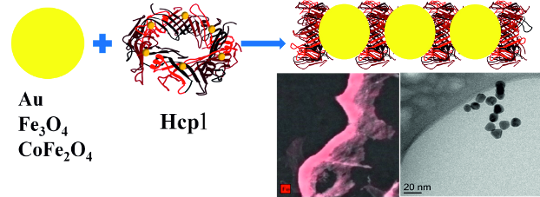
- gluing unit for the assembly of often linear, hybrid structures of plasmonic gold (Au NP), magnetite (Fe3O4 NP), and cobalt ferrite nanoparticles (CoFe2O4 NP). Furthermore, the assembly of Au NPs into linear structures using Hcp1_cys3 is investigated by UV–vis spectroscopy, TEM and cryo-TEM. One key
- order to prove the catalytic performance of the gold hybrid structures, they are used as a catalyst in the reduction reaction of 4-nitrophenol showing similar catalytic activity as the pure Au NPs. To further extend the functionality of the Hcp1_cys3 gluing unit, Fe3O4 and CoFe2O4 NPs are aligned in a
- potential in the design of 1D NP hybrid structures with advanced properties. However, examples for NP assembly using proteins are still limited [15][16][17][18]. Here, we apply the hemolysin coregulated protein 1 (Hcp1) homohexameric protein from Pseudomonas aeruginosa with its toroidal structure as a


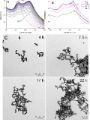


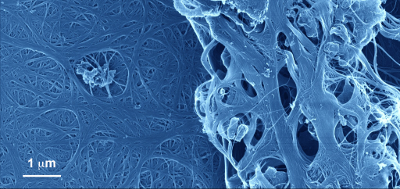
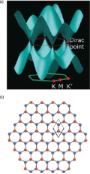
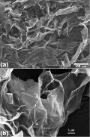
Synthesis and applications of carbon nanomaterials for energy generation and storage
Beilstein J. Nanotechnol. 2016, 7, 149–196, doi:10.3762/bjnano.7.17






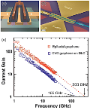




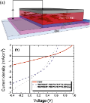


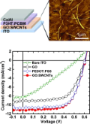


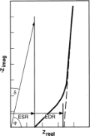


Linear and nonlinear optical properties of hybrid metallic–dielectric plasmonic nanoantennas
Beilstein J. Nanotechnol. 2016, 7, 111–120, doi:10.3762/bjnano.7.13
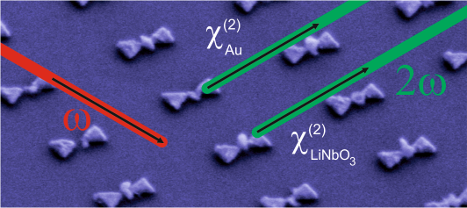
- demonstrated in a purely plasmonic system up to now, despite claims made. From the conclusions above, it thus appears that the most promising route is the combination of plasmonically active components and dielectrics into hybrid structures, in particular for dielectric subsystems exhibiting strong nonlinear
- mode is an extended one and thus the interaction volume is large. The coupling of extended photonic modes to localized plasmonic modes hence seems appealing. The field of nonlinear plasmon optics remains partially uncharted. With advances in sophisticated fabrication techniques for composite and hybrid
- structures, as well as advances in the rapidly growing field of theoretical and simulation-based descriptions of nonlinear plasmon optics, one can expect quite a number of fascinating discoveries in the next few years. Artists impression of a gold nanoantenna loaded with a nonlinear optical active material


Evaluation of gas-sensing properties of ZnO nanostructures electrochemically doped with Au nanophases
Beilstein J. Nanotechnol. 2016, 7, 22–31, doi:10.3762/bjnano.7.3
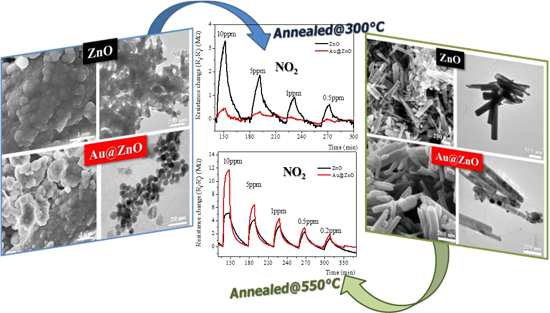
- –C at 532.5 eV), at the two annealing temperatures. In Figure 2B the high resolution XPS spectra of the, Zn 2p, O 1s and Au 4f in Au@ZnO hybrid structures are reported, investigating, also in this case, how the annealing temperature affects the O 1s spectrum and its components, and on the Au 4f




Controlled graphene oxide assembly on silver nanocube monolayers for SERS detection: dependence on nanocube packing procedure
Beilstein J. Nanotechnol. 2016, 7, 9–21, doi:10.3762/bjnano.7.2
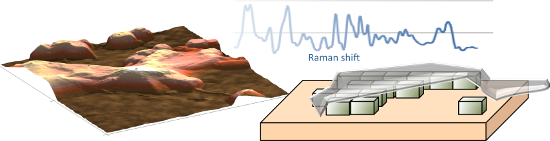
- surface. The hybrid samples were further characterized by means of atomic force microscopy that differences in the local morphology of the GO/AgNCs clusters. The relationship between surface coverage and morphology and SERS activity of the GO/AgNCs hybrid structures was addressed characterizing the SERS
- -containing functionalities, which confer to the system additional features including great chemical stability in aqueous media and superior ability of capturing and retaining molecules. Reports on nanoparticle/graphene hybrid nanocomposites showed that SERS signals arising from graphene/metal hybrid
- structures are higher compared to those of the individual components [19]. Several methods have been proposed for the fabrication of hybrid composites incorporating plasmonic nanoparticles and graphene [20]; preliminary results from this group evidenced that large SERS enhancement factors were obtained for


Synthesis, characterization and in vitro biocompatibility study of Au/TMC/Fe3O4 nanocomposites as a promising, nontoxic system for biomedical applications
Beilstein J. Nanotechnol. 2015, 6, 1677–1689, doi:10.3762/bjnano.6.170
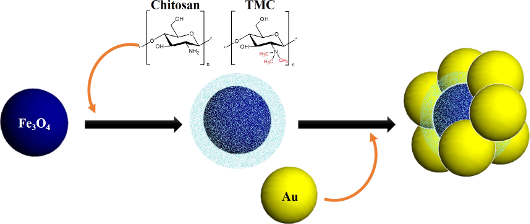
- used as the cross-linker during the polymer/Fe3O4 nanoparticle synthesis) [40]. Au/chitosan/Fe3O4 and Au/TMC/Fe3O4 nanocomposites Because of the numerous advantages of nanocomposites containing both Fe3O4 and Au, the synthesis of such hybrid structures has become one of the most quickly advancing




DNA–melamine hybrid molecules: from self-assembly to nanostructures
Beilstein J. Nanotechnol. 2015, 6, 1432–1438, doi:10.3762/bjnano.6.148
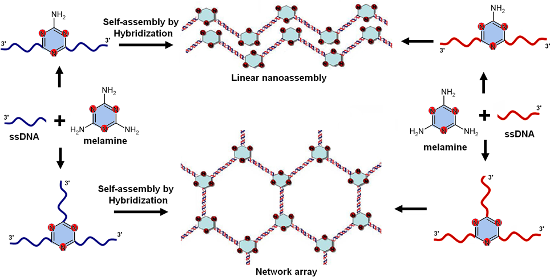
- an attractive molecular scaffold for the precise positioning of different molecules on the nanoscale [3][4]. DNA has been used to create nanostructures through hybridization-mediated self-assembly for molecular electronics and sensing applications [5][6][7]. DNA–organic hybrid structures have
- of using DNA–organic hybrid structures over DNA-only based nanostructures, there are challenges regarding their solubility as well as reactivity issues. In most cases, a DNA synthesizer based on phosphoramidite chemistry is used to introduce chemical modifications in the oligonucleotides [13][14][15
- ]. However, the directionality of the single-stranded DNA (ssDNA) sequences obtained through a DNA synthesizer is limited only to the terminal positions. This could limit further DNA extension in both directions. As a recent trend, DNA–organic molecule hybrid structures are being produced post-synthesis to



Simple approach for the fabrication of PEDOT-coated Si nanowires
Beilstein J. Nanotechnol. 2015, 6, 640–650, doi:10.3762/bjnano.6.65
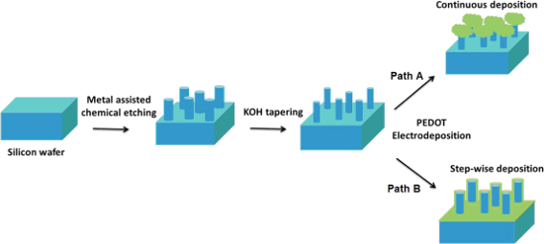
- sample in 11b). Schematic illustration of the processes resulting in PEDOT/SiNW hybrid structures. (a) Continuous electrodeposition leads to a mushroom-like morphology of PEDOT (green) on the tips of SiNW (blue), while (b) a step-wise deposition aids in the formation of a conformal PEDOT layer (green




X-ray photoelectron spectroscopy of graphitic carbon nanomaterials doped with heteroatoms
Beilstein J. Nanotechnol. 2015, 6, 177–192, doi:10.3762/bjnano.6.17
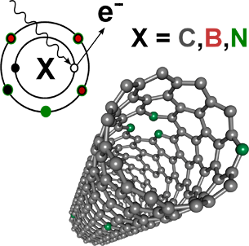
- been widely studied [2][12][40][41][42][43][44][45]. Since the binding energies of even the simplest dopant structures are still being debated, discussion of complicated hybrid structures or doping with more than one element at the same time will be omitted. However, we will endeavor to comprehensively





