


Search results
Search for "magnetite" in Full Text gives 86 result(s) in Beilstein Journal of Nanotechnology.
Transient coating of γ-Fe2O3 nanoparticles with glutamate for its delivery to and removal from brain nerve terminals
Beilstein J. Nanotechnol. 2020, 11, 1381–1393, doi:10.3762/bjnano.11.122
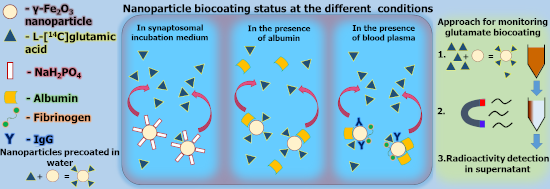
- moderate stirring. The forming black suspension was left to maturate for 45 min still under stirring and nitrogen flushing. The black precipitate of magnetite (Fe3O4) was then repeatedly washed with Milli-Q water with the help of magnetic separation (approx. 10×) until spontaneous deflocculation was
- achieved. In the next step, the magnetite colloid was stabilized with 0.1 M sodium citrate solution under sonication. The formation of maghemite was completed by oxidation of the magnetite colloid with 5% sodium hypochlorite solution and a subsequent sonication for 5 min. The final washing of the maghemite


Magnetic-field-assisted synthesis of anisotropic iron oxide particles: Effect of pH
Beilstein J. Nanotechnol. 2020, 11, 1230–1241, doi:10.3762/bjnano.11.107
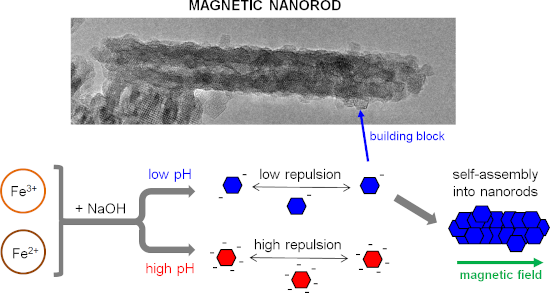
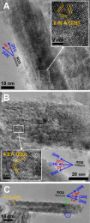
- University, Albert-Einstein-Allee 11, 89069 Ulm, Germany 10.3762/bjnano.11.107 Abstract The synthesis of magnetite (Fe3O4) nanorods using reverse co-precipitation of Fe3+ and Fe2+ ions in the presence of a static magnetic field is reported in this work. The phase composition and crystal structure of the
- the dipole–dipole interaction between their building blocks (small hexagonal faceted magnetite nanocrystals), which are formed during the first step of the reaction. The study suggests a facile, green and controllable method for synthesizing anisotropic magnetic nanoparticles in the absence of
- stabilizers, which is important for further modification of their surfaces and/or incorporation of the nanoparticles into different media. Keywords: anisotropic nanoparticles; magnetic nanoparticles; magnetite; nanorods; transmission electron microscopy; Introduction The research field dedicated to the





Influence of the magnetic nanoparticle coating on the magnetic relaxation time
Beilstein J. Nanotechnol. 2020, 11, 1207–1216, doi:10.3762/bjnano.11.105
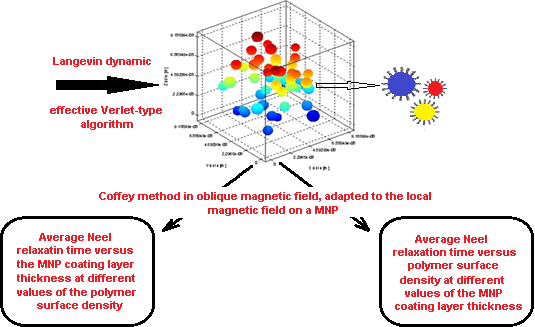
- generating heat. This heat increases the tumour cell temperature which leads to cell death [1][2][3][4]. Iron-oxide magnetic nanoparticles, in particular magnetite (Fe3O4) and maghemite (γ-Fe2O3), have been intensely studied in the context of magnetic hyperthermia applications. These nanoparticles can be
- oleic acid coating method used on pristine nanoparticles [14]. Homogeneous, polymer-coated spherical magnetite nanoparticles with superparamagnetic properties have been successfully synthesised. The polymer coating provides extra stability to the magnetic nanoparticles in aqueous media [15]. To increase
- , we considered the case in which a colloid is electrostatically stabilised. The system is composed of water-dispersed spherical magnetite nanoparticles whose sizes follow a lognormal distribution. The Hamaker constant for magnetite in water is given as a reference value [20]. The system parameter


Photothermally active nanoparticles as a promising tool for eliminating bacteria and biofilms
Beilstein J. Nanotechnol. 2020, 11, 1134–1146, doi:10.3762/bjnano.11.98
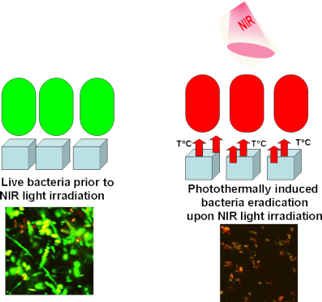
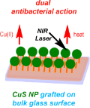
- irradiated gold nanocrosses attached to the bacteria was effective in eliminating and preventing bacterial regrowth. By combining the magnetic and optical properties of Fe3O4 and gold nanoparticles, respectively, multifunctional nanohybrids based on Fe3O4@Au (i.e., magnetite nanoparticles decorated with gold


Applications of superparamagnetic iron oxide nanoparticles in drug and therapeutic delivery, and biotechnological advancements
Beilstein J. Nanotechnol. 2020, 11, 1092–1109, doi:10.3762/bjnano.11.94
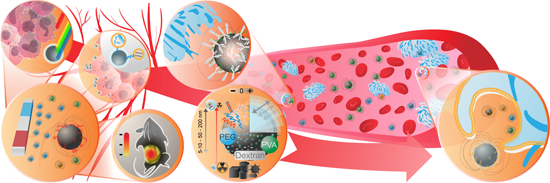
- of iron oxides in the form of magnetite (Fe3O4) or maghemite (Fe2O3) and are easy to produce through a few well-documented synthesis methods yielding different forms and structures (e.g., round, cubic, hexagonal, clusters, core–shell with gold, silica, polymers, or surfactants). A lot of research is
- many species including humans. There are reports of natural magnetite and ferritin formation in the brain and in tumors [50]. When degraded in the body (but only up to certain concentrations/doses), SPIONs are turned into nontoxic iron ions, and are stored in the liver [38]. If the concentration is too
- magnetite (Fe3O4), maghemite (γ-Fe2O3) or hematite (α-Fe2O3) [60]. There are various geometric forms of SPIONs, which depend on the synthesis. The most extensively studied form are spherical SPIONs, followed by cubic, hexagonal, rod-like, octagonal, nanoworm, and octopod (star-shaped) SPIONs [61][62]. Non


Key for crossing the BBB with nanoparticles: the rational design
Beilstein J. Nanotechnol. 2020, 11, 866–883, doi:10.3762/bjnano.11.72
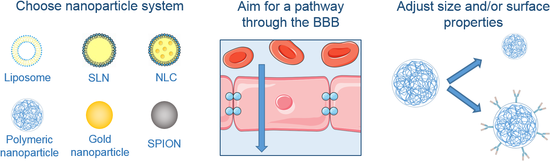
- ) are based on magnetite (Fe3O4) or maghemite (γ-Fe2O3) molecules encapsulated in polysaccharides, synthetic polymers or monomer coatings and have a size range from 1 to 100 nm [21][182]. SPIONs possess interesting magnetic properties and some formulations have already been approved as MRI contrast


Multilayer capsules made of weak polyelectrolytes: a review on the preparation, functionalization and applications in drug delivery
Beilstein J. Nanotechnol. 2020, 11, 508–532, doi:10.3762/bjnano.11.41
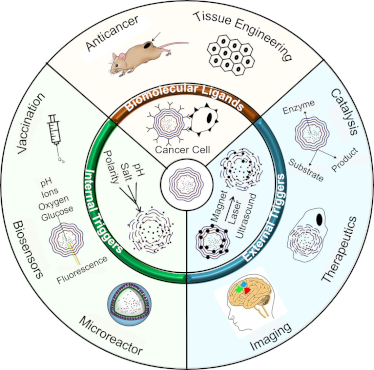
- changing the integrity or permeability. Magnetic NPs have shown greater cytotoxicity in comparison with microcapsules containing an equivalent amount of magnetite [79]. The first and foremost way of incorporating NPs into the shell is either by the adsorption of NPs over the sacrificial template or using



Use of data processing for rapid detection of the prostate-specific antigen biomarker using immunomagnetic sandwich-type sensors
Beilstein J. Nanotechnol. 2019, 10, 2171–2181, doi:10.3762/bjnano.10.210

- -linked immunosorbent assay. The approaches for immunoassays and data processing are generic, and therefore the strategies described here may provide a simple platform for clinical diagnosis of cancers and other types of diseases. Keywords: cancer biomarkers; magnetite nanoparticles; microfluidic devices
- ], including magnetic nanoparticles (MNPs) that can be exploited for their catalytic properties [10] and magnetic separation in pre-concentrating the analyte [11][12][13][14][15][16]. The most common magnetic nanoparticles used for this purpose are magnetite (Fe3O4) nanoparticles, which have a stronger


Magnetic properties of biofunctionalized iron oxide nanoparticles as magnetic resonance imaging contrast agents
Beilstein J. Nanotechnol. 2019, 10, 1964–1972, doi:10.3762/bjnano.10.193
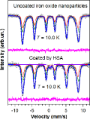
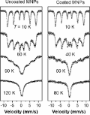
- nanoparticles located inside and outside of each capsule [11] and integration of the nanoparticles in the matrix of HSA threads, as will be discussed in this paper. The problem of distinguishing between magnetite Fe3O4 and maghemite γ-Fe2O3, both of which usually appear as synthesis products of iron oxide
- of the structure due to the presence of both magnetite Fe3O4 and maghemite γ-Fe2O3. Another method to distinguish between Fe2+ and Fe3+ and their positions in the crystal structure is Mössbauer spectroscopy. However, the use of ionizing radiation and radioactive sources in this method limits the
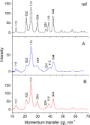
- possibility of its transfer to production. Raman spectroscopy can also be used to discriminate nanoscale magnetite and maghemite. However, this method gives only qualitative information about the iron oxide structure and does not allow the number of Fe2+ and Fe3+ atoms or their positions to be determined




The effect of magneto-crystalline anisotropy on the properties of hard and soft magnetic ferrite nanoparticles
Beilstein J. Nanotechnol. 2019, 10, 1348–1359, doi:10.3762/bjnano.10.133
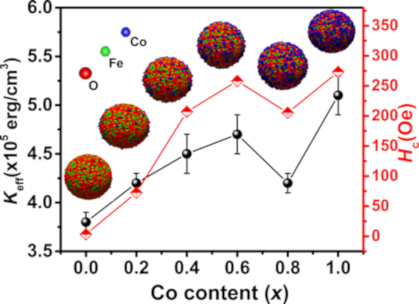
- substituting iron ions in the magnetite structure. This indicates an increase of the interplane distances (d) in the spinel structure. Similar results have been reported for NixCo1−xFe2O4 NPs by Caetano and co-workers [15]. According to Bragg’s law, λ = 2d·sin θ, (λ is the wavelength of X-ray wavelength, here
- , tend to occupy both the B-sites and the smaller A-sites (see Figure 6). This mixed occupancy in cobalt-substituted magnetite nanoparticles has been confirmed by Mössbauer spectroscopy [30]. Therefore, it is expected that when cobalt ions substitute iron ions at the A-sites, an increasing Me–O bond


On the relaxation time of interacting superparamagnetic nanoparticles and implications for magnetic fluid hyperthermia
Beilstein J. Nanotechnol. 2019, 10, 1280–1289, doi:10.3762/bjnano.10.127
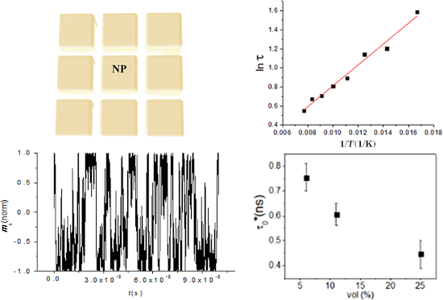
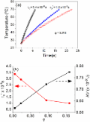
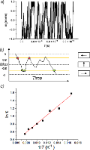
- -free nanoparticles, the Brownian relaxation mechanism becomes dominant over the Néel mechanism only for nanoparticles larger than a critical radius (e.g., 8 nm in the case of magnetite nanoparticles) [21]. In such conditions, the heat transfer mechanism might also be completed by a hysteretic loss (the
- magnetite nanoparticle based ferrofluids of different volume fractions were independently derived by alternative techniques [26][33]. Detailed experimental and methodological aspects involving a very diluted ferrofluid as reference are described in [26]. The adiabatic-like curve obtained in the case of a
- concentrated ferrofluid (φ = 0.094) consisting of quasi-ellipsoidal magnetite nanoparticles of average magnetic volume of 4.3 × 10⁻²⁵ m3 dispersed in transformer oil, with a spontaneous magnetization Ms = 4.5 × 10⁵ A m−2, as determined by DC low temperature magnetometry and an effective anisotropy energy



Photoactive nanoarchitectures based on clays incorporating TiO2 and ZnO nanoparticles
Beilstein J. Nanotechnol. 2019, 10, 1140–1156, doi:10.3762/bjnano.10.114
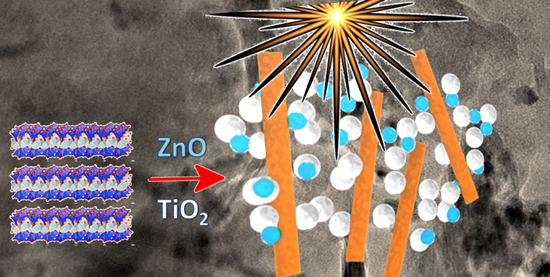
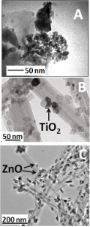
- nanoparticles on the external surface of sepiolite fibres. The resulting ZnO–Fe3O4@sepiolite nanoarchitecture exhibits photoactivity due to the ZnO NPs, and the presence of magnetite NPs facilitates the recovery by the use of a magnet (Figure 4) [133]. Moreover, the presence of iron oxide could be useful also
- isopropoxide; reprinted with permission from [109], copyright 2008 American Chemical Society. ZnO-Fe3O4@sepiolite nanoarchitecture prepared in two steps: First, the fiber clay is modified by assembly of magnetite NPs. After that, the ZnO NPs are added yielding a magnetic photocatalyst. The STEM images on the
- right shows the silicate component (red), the magnetite NPs (green) and the ZnO NPs (blue) analyzed with an EDAX detector and a Gatan Tridiem energy filter; reprinted with permission from [133], copyright 2017 Elsevier. (A) TEM image of the Pt–TiO2@sepiolite clay nanoarchitectures prepared by a



Scavenging of reactive oxygen species by phenolic compound-modified maghemite nanoparticles
Beilstein J. Nanotechnol. 2019, 10, 1073–1088, doi:10.3762/bjnano.10.108
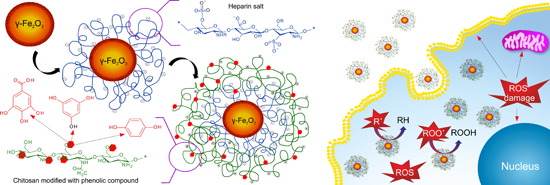
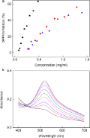
- , phenolic compounds with a higher number of hydroxy groups have enhanced ROS scavenging capability. In addition to low-molecular-weight phenolic compounds of natural origin, some inorganic nanoparticles also have antioxidant properties, e.g., zinc, cerium, magnesium oxide, magnetite, and silver [6][7][8][9
- functional groups. In this study, magnetite (Fe3O4) nanoparticles were synthetized by coprecipitation of iron(II) chloride and iron(III) chloride with ammonia and subsequently oxidized with hydrogen peroxide under mild acidic conditions. The resulting maghemite (γ-Fe2O3) has the benefit of higher chemical
- heated to 70 °C for 10 min, and 25% NH4OH (10 mL) in water (25 mL) was added dropwise. The mixture was heated at 90 °C for 1 h, and the particles were washed with water four times (50 mL for each wash) and dispersed in water (200 mL). To oxidize magnetite, 37% hydrochloric acid (150 µL) in water (5 mL





Fe3O4 nanoparticles as a saturable absorber for giant chirped pulse generation
Beilstein J. Nanotechnol. 2019, 10, 1065–1072, doi:10.3762/bjnano.10.107
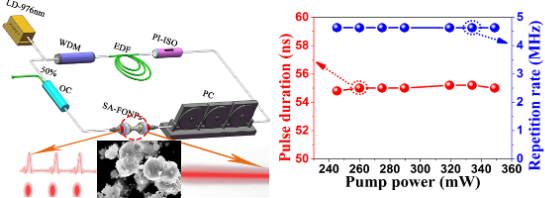
- ultrafast recovery time of 18–30 ps [3]. FONPs can be classified as a semiconductor material (with a band gap of ≈0.3 eV), which can be modulated by tuning the nanoparticle diameter [4]. For the magnetite (Fe3O4) material of anti-spinel structure, Fe(II) and Fe(III) of the octahedral position of the crystal


Magnetic field-assisted assembly of iron oxide mesocrystals: a matter of nanoparticle shape and magnetic anisotropy
Beilstein J. Nanotechnol. 2019, 10, 894–900, doi:10.3762/bjnano.10.90
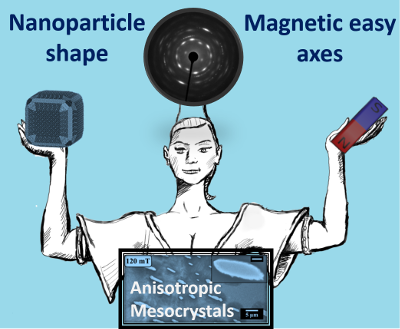
- driven by competing of two types of anisotropic interactions caused by particle shape (i.e., faceting) and orientation of the magnetic moment (i.e., easy axes: <111>magnetite). Hence, these findings provide a fundamental understanding of formation mechanisms and structuring of mesocrystals built up from
- superparamagnetic nanoparticles and how a magnetic field can be used to design anisotropic mesocrystals with different structures. Keywords: directed assembly; magnetite; mesocrystal; nanoparticle; transmission electron microscopy; Findings In materials science, nanoparticles and their assemblies belong to the
- hot research topics nowadays [1][2][3][4][5][6][7]. One reason is that their properties can strongly differ from the physical and chemical properties of their corresponding bulk material [8][9][10]. As a matter of fact, magnetite bulk single crystals are ferrimagnetic, while magnetite nanocrystals


Tungsten disulfide-based nanocomposites for photothermal therapy
Beilstein J. Nanotechnol. 2019, 10, 811–822, doi:10.3762/bjnano.10.81
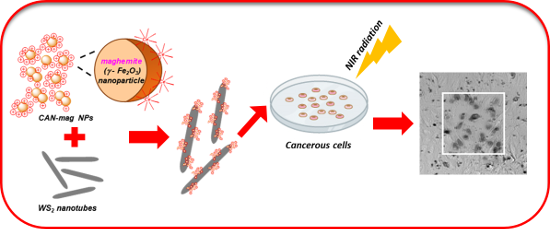
- magnetite nanoparticles into γ-maghemite (mag) nanoparticles. The cerium ion attaches to the nanoparticle, producing surface defects (an Fe–O–[CeLn] bond is formed). The cerium-doped maghemite nanoparticles are more stable than the non-doped ones, which tend to aggregate. In addition to the stabilization
- . Then, a concentrated (24 wt %) NH4OH solution (750 µL) was added, resulting in the immediate formation of a black precipitate of magnetite (Fe3O4) nanoparticles. Sonication was continued for an additional 10 min. The liquid was decanted with the help of magnetic separation, using a 0.5 T magnet. The
- to the decanted magnetite NPs, followed by the addition of degassed purified water (18 mL). The resulting mixture was ultrasonicated for 30 min under nitrogen using a high-power sonicator, then transferred into 50 mL Amicon® Ultra-15 centrifugal filter tubes (100KD, Millipore, Cork, Ireland). The






Heating ability of magnetic nanoparticles with cubic and combined anisotropy
Beilstein J. Nanotechnol. 2019, 10, 305–314, doi:10.3762/bjnano.10.29
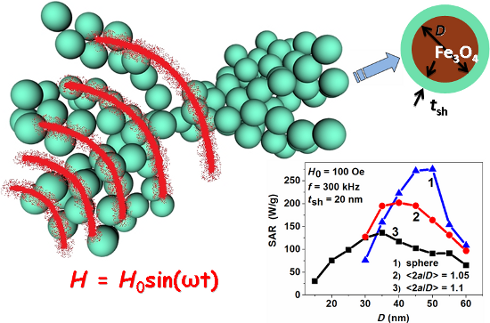
- , Moscow, Russia National Research Nuclear University “MEPhI”, 115409, Moscow, Russia 10.3762/bjnano.10.29 Abstract The low frequency hysteresis loops and specific absorption rate (SAR) of assemblies of magnetite nanoparticles with cubic anisotropy are calculated in the diameter range of D = 20–60 nm
- taking into account both thermal fluctuations of the particle magnetic moments and strong magneto–dipole interaction in assemblies of fractal-like clusters of nanoparticles. Similar calculations are also performed for assemblies of slightly elongated magnetite nanoparticles having combined magnetic
- . However, the ability of magnetic nanoparticle assemblies to generate heat can be improved if the nanoparticles are covered by nonmagnetic shells of appreciable thickness. Keywords: fractal clusters; magnetite nanoparticles; magneto–dipole interaction; numerical simulation; specific absorption rate


Size-selected Fe3O4–Au hybrid nanoparticles for improved magnetism-based theranostics
Beilstein J. Nanotechnol. 2018, 9, 2684–2699, doi:10.3762/bjnano.9.251
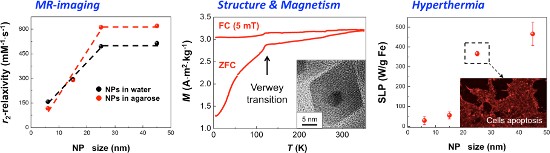
- and agarose phantom systems) showed the best characteristics for application as contrast agents in magnetic resonance imaging and for local heating using magnetic particle hyperthermia. Due to the octahedral shape and the large saturation magnetization of the magnetite particles, we obtained an
- hyperthermia; magnetic resonance imaging; nanomagnetism; theranostics; Introduction Biocompatible magnetite nanoparticles (NPs) are anticipated to provide new noninvasive therapies and early diagnostics for previously incurable diseases using a single, so-called “theranostics” platform [1][2][3]. The magnetic
- -Fe2O3 and magnetite, to high-quality stoichiometric Fe3O4. We find a size-dependent transition from superparamagnetic to a stable ferrimagnetic response, a bulk-like saturation magnetization, and observe the Verwey transition at 123 K – all of which result in the superior magnetic properties for a


Cytotoxicity of doxorubicin-conjugated poly[N-(2-hydroxypropyl)methacrylamide]-modified γ-Fe2O3 nanoparticles towards human tumor cells
Beilstein J. Nanotechnol. 2018, 9, 2533–2545, doi:10.3762/bjnano.9.236
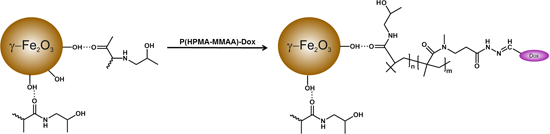
- , since they yield hydrophilic particles that are mildly polydisperse and do not need any transfer in water. The advantage of maghemite over magnetite consists in its chemical stability [22]. Moreover, the particles exhibited superparamagnetic behavior as documented in our previous paper [23]. This


Nanocellulose: Recent advances and its prospects in environmental remediation
Beilstein J. Nanotechnol. 2018, 9, 2479–2498, doi:10.3762/bjnano.9.232
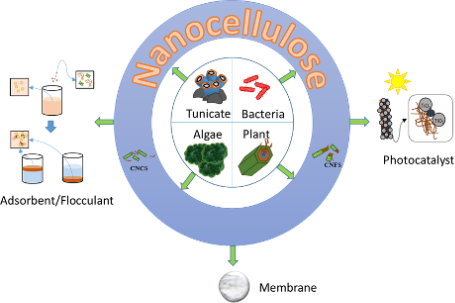
- nanocellulose surfaces can improve their function as magnetite-based adsorbents for arsenic removal. It is proven that amino groups accessible for iron coordination result in a larger number of adsorption sites on the nanocellulose surface as compared to MFC. In addition, nanocellulose has also been proposed as
- magnetic field. As a result, magnetic nanomaterials have drawn increasing attention. Nanocellulose incorporated with other magnetic nanomaterials is presented as an excellent composite adsorbent with magnetic properties. For example, a core–shell cellulose magnetite (Fe3O4) polymeric ionic liquid magnetic
- -absorbing materials in order to protect cellulosic fibres from UV bleaching [128]. An et al. [129] claimed that the prepared nano-fibrillated cellulose/magnetite/titanium dioxide nanocomposites had a higher photocatalytic hydrogen generation rate as compared to the nano-fibrillated cellulose/titanium


Synthesis of a MnO2/Fe3O4/diatomite nanocomposite as an efficient heterogeneous Fenton-like catalyst for methylene blue degradation
Beilstein J. Nanotechnol. 2018, 9, 1940–1950, doi:10.3762/bjnano.9.185
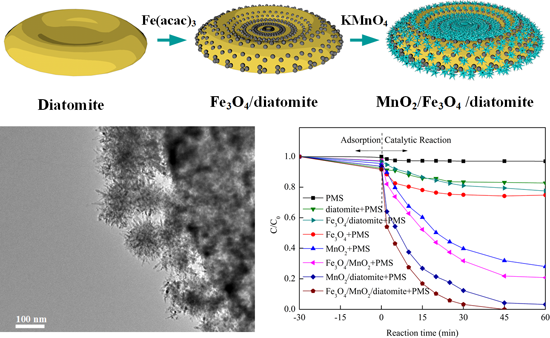
- /diatomite. These peaks match well with the (220), (311), (400), (422), (511) and (440) plane spacings of cubic magnetite (JCPDS file No. 19-0629), suggesting the Fe3O4 nanoparticles are successfully coating the surface of diatomite [21]. In addition, the characteristic peaks of magnetite have a large FWHM
- . However, the original characteristic peaks of magnetite are weakened. This indicates that the nano-MnO2 covering on the Fe3O4/diatomite is of low crystallinity or amorphous. Figure 2 shows the FTIR spectra of purified diatomite, Fe3O4/diatomite and MnO2/Fe3O4/diatomite. The broad peaks at 3400 and 1630 cm
- nanoparticles [28]. The marked lattice fringe spacing of 0.28 nm in the HRTEM images (inset) is corresponding to the (331) planes of cubic magnetite [29]. Figure 4b shows the TEM images of MnO2/Fe3O4/diatomite, the nanoparticles on the surface are fully covered by a layer of rough 3D structured material. As


Magnetic properties of Fe3O4 antidot arrays synthesized by AFIR: atomic layer deposition, focused ion beam and thermal reduction
Beilstein J. Nanotechnol. 2018, 9, 1728–1734, doi:10.3762/bjnano.9.164
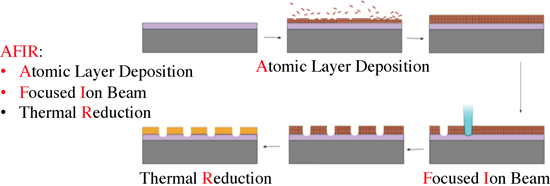
- .9.164 Abstract Magnetic films of magnetite (Fe3O4) with controlled defects, so-called antidot arrays, were synthesized by a new technique called AFIR. AFIR consists of the deposition of a thin film by atomic layer deposition, the generation of square and hexagonal arrays of holes using focused ion beam




Review on nanoparticles and nanostructured materials: history, sources, toxicity and regulations
Beilstein J. Nanotechnol. 2018, 9, 1050–1074, doi:10.3762/bjnano.9.98

- ]. Generally, biocompatible magnetite (Fe3O4), iron oxide, iron sulfides and maghemite (Fe2O3) are synthesized using magnetotactic bacteria [156][157] that helps in targeted cancer treatment via magnetic hyperthermia, magnetic resonance imaging (MRI), DNA analysis and gene therapy [158]. Moreover, surface


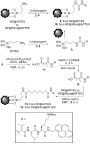
Enzymatically promoted release of organic molecules linked to magnetic nanoparticles
Beilstein J. Nanotechnol. 2018, 9, 986–999, doi:10.3762/bjnano.9.92
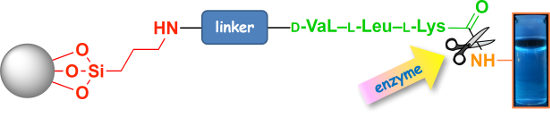
- Chiara Lambruschini Silvia Villa Luca Banfi Fabio Canepa Fabio Morana Annalisa Relini Paola Riani Renata Riva Fulvio Silvetti Department of Chemistry and Industrial Chemistry, Università di Genova, via Dodecaneso, 31 16146 Genova, Italy 10.3762/bjnano.9.92 Abstract Magnetite-based magnetic
- decided not to bind a real drug, but simply a fluorescent molecule, in order to facilitate analysis of enzymatic cleavage and obtain the first proof of concept of the enzymatic release of a small organic molecule bound to a magnetic nanoparticle. Results and Discussion Magnetite nanoparticles were
- azelate-linked conjugate 13. Figure 3B reports the fluorescence spectra for this compound and for unconjugated 12. Finally, the infrared spectra of both 9 and 13 are reported in Figure 4 and compared with the spectra of NP@APTES and of magnetite. Although a broadening of the peaks is observed, the signals




Heavy-metal detectors based on modified ferrite nanoparticles
Beilstein J. Nanotechnol. 2018, 9, 762–770, doi:10.3762/bjnano.9.69
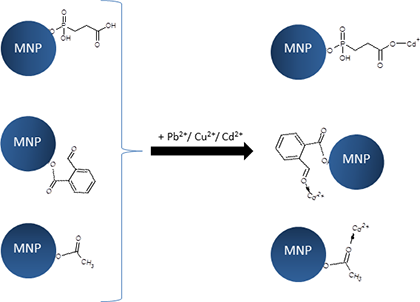
- Abstract In this work, we analyze artificial heavy-metal solutions with ferrite nanoparticles. Measurements of adsorption effectiveness of different kinds of particles, pure magnetite or magnetite doped with calcium, cobalt, manganese, or nickel ions, were carried out. A dependence of the adsorption
- ] and also magnetic nanoparticles [13][14] usually doped with other elements (e.g., Ca, Mn) [15][16] have been tested for this purpose. Therefore, detailed studies on adsorption efficiency on doped magnetite nanoparticles are very interesting and innovative in order to understand the importance of core
- composition and surface modification. The aim of the study is to examine the efficiency of adsorption of heavy metals in artificial solutions on doped magnetite nanoparticles (Ca, Co, Mn, Ni) surface-modified with PA, SA, AA, 3-PPA or 16-PHDA linkers. Experimental Reagents and solutions Chemicals used in this





