


Search results
Search for "oxygen vacancies" in Full Text gives 110 result(s) in Beilstein Journal of Nanotechnology.
Theoretical investigations of oxygen vacancy effects in nickel-doped zirconia from ab initio XANES spectroscopy at the oxygen K-edge
Beilstein J. Nanotechnol. 2022, 13, 975–985, doi:10.3762/bjnano.13.85
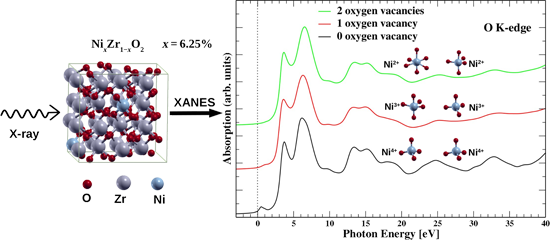
- is due to the structural disorder induced by the 2Ni dopants and the O vacancies. Furthermore, the analysis of the XANES signatures shows that the oxidation state of nickel atoms changes with the introduction of oxygen vacancies. Our study therefore shows a possibility to control the oxidation state
- large set of DMO. It is thus important to investigate other types of dopants in DMO or other types of oxide matrices doped with transition metals. Oxygen vacancies play a fundamental role in the aforementioned microscopic mechanisms since an excess or lack of oxygen vacancies with respect to their
- TM atom usually occupies the Zr site substitutionally. However, due to the difference in the oxidation state of the TM atom and Zr, oxygen vacancies are created to maintain an overall charge neutrality. This is aptly demonstrated in the experimental investigations of Fe-doped zirconia using X-ray


Hierarchical Bi2WO6/TiO2-nanotube composites derived from natural cellulose for visible-light photocatalytic treatment of pollutants
Beilstein J. Nanotechnol. 2022, 13, 745–762, doi:10.3762/bjnano.13.66
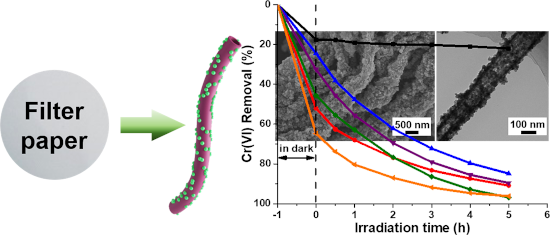
- three weak peaks at 448, 479, and 490 nm, which are indexed to the recombination of photoinduced electron−hole pairs, freely excited electrons, surface defects, and oxygen vacancies on the band edges, respectively [36][61]. It is apparent that the PL intensities of the Bi2WO6/TiO2-NT nanocomposites at


Zinc oxide nanostructures for fluorescence and Raman signal enhancement: a review
Beilstein J. Nanotechnol. 2022, 13, 472–490, doi:10.3762/bjnano.13.40
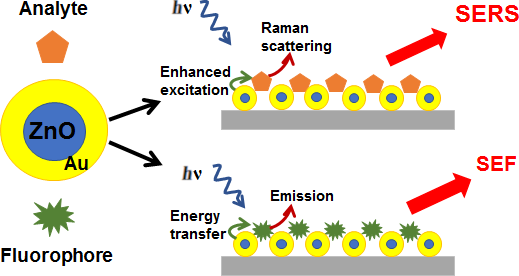
- a long time. It was assumed that zinc vacancies, oxygen vacancies, and other defects are candidates for recombination centres involved in the visible luminescence [78]. Studies concerning the green luminescence of ZnO in the past few years assumed that the oxygen vacancies are the most likely
- candidates for recombination centres involved in the visible luminescence of ZnO [77][79]. Thus, the electrical and luminescence characteristics of zinc oxide could be changed by the number of oxygen vacancies or other point defects (vacancies, atom substitutions, and interstitial atoms). Moreover
- also benefits the SERS enhancement. Doping zinc oxide–Ag nanoparticles with magnesium also introduces defect sites (surface defects and oxygen vacancies), which form new energy levels below the conduction band of zinc oxide, facilitating the charge transfer mechanism. In this case, besides the charge




Measurement of polarization effects in dual-phase ceria-based oxygen permeation membranes using Kelvin probe force microscopy
Beilstein J. Nanotechnol. 2021, 12, 1380–1391, doi:10.3762/bjnano.12.102
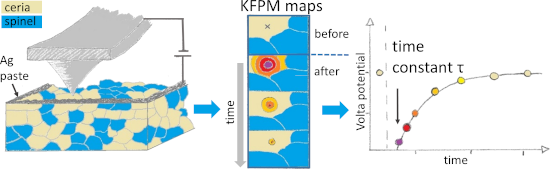
- time dependence was shown to vary with dopant concentration (e.g., abundance of oxygen vacancies in ceria) and also depends on the ratio of grain boundary/grain bulk [22][23][24][25]. Single ceria grains in a mixed ion/electron-conductive composite have so far not been addressed by AFM-based
- in this study strongly depended on the surrounding. In single-phase ceria materials, oxygen is incorporated into oxygen vacancies in the structure at high temperatures [4][30]: Previous studies showed that at temperatures below 400 °C the concentration of defect associates in ceria increases because
- electrons are trapped at oxygen vacancy sites, allowing also for singly charged () or uncharged (VO) oxygen vacancies in close vicinity to Ce3+ ions [31][32], which show a strongly lowered mobility. For low temperatures, the common electroneutrality equation for acceptor-doped ceria can be shortened, as


The preparation temperature influences the physicochemical nature and activity of nanoceria
Beilstein J. Nanotechnol. 2021, 12, 525–540, doi:10.3762/bjnano.12.43
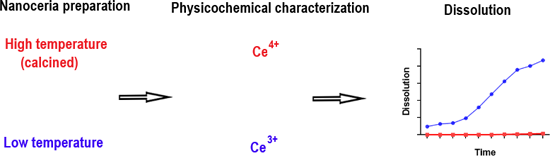
- fewer oxygen vacancies and exhibits, therefore, a predominance of surface Ce+4, compared to a solvothermally synthesized nanoceria material with more oxygen vacancies, which produce a preponderance of surface Ce+3, it was hypothesized the NM-212 would have less catalytic activity. Another nanoscale
- +. Increased Ce3+ is accompanied by an increase in oxygen vacancies that weaken the crystal lattice [14]. According to the dissolution framework by Gray and co-workers, Ce3+ can follow more dissolution pathways (including oxidative dissolution) than Ce4+ [59]. The much greater percentage of Ce3+ on the surface




Interface interaction of transition metal phthalocyanines with strontium titanate (100)
Beilstein J. Nanotechnol. 2021, 12, 485–496, doi:10.3762/bjnano.12.39
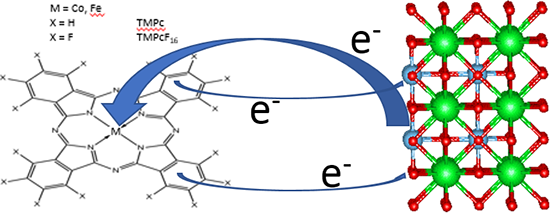
- increased by introducing oxygen vacancies into the crystal structure or by doping (e.g., n-type doping with niobium, Nb5+). Generally, two different terminations of STO(100) are known, that is, the surface can be either TiO2- or SrO-terminated. The TiO2 termination can be achieved by (ex situ) acid


Exploring the fabrication and transfer mechanism of metallic nanostructures on carbon nanomembranes via focused electron beam induced processing
Beilstein J. Nanotechnol. 2021, 12, 319–329, doi:10.3762/bjnano.12.26
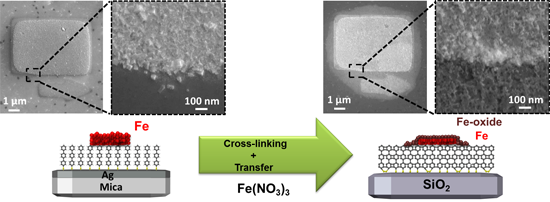
- ) [13], thin layers of porphyrin molecules [14][15], and surface-anchored metal-organic frameworks (SURMOFs) [16][17]. For oxide surfaces it is known that the activation mechanism is based on reactive oxygen vacancies, which are locally created by electron-stimulated oxygen desorption [18][19]. Whereas


ZnO and MXenes as electrode materials for supercapacitor devices
Beilstein J. Nanotechnol. 2021, 12, 49–57, doi:10.3762/bjnano.12.4
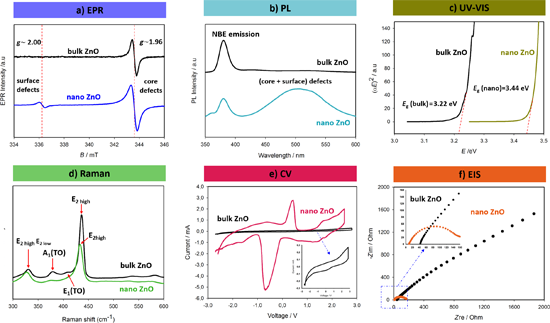
- point defects. PL yields defect-related emission from all possible defects whereas EPR reveals only signals from paramagnetic defects [7]. Therefore, using EPR one obtains signals from the vacancies or interstitials that are ionized and become paramagnetic. In ZnO, singly ionized oxygen vacancies are
- ionized oxygen vacancies located either in volume or at the surface of the material. (b) PL spectra showing all possible defect centers, including non-paramagnetic ones. The defects emit visible light yielding a broad emission band [4]. (c) Tauc plot obtained from UV–vis reflectance measurements
Unravelling the interfacial interaction in mesoporous SiO2@nickel phyllosilicate/TiO2 core–shell nanostructures for photocatalytic activity
Beilstein J. Nanotechnol. 2020, 11, 1834–1846, doi:10.3762/bjnano.11.165
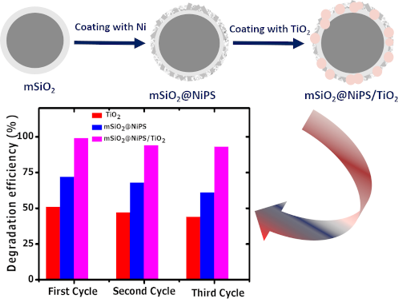
- that facilitates easy adsorption of organic molecules and their transfer onto the active sites of TiO2 [22][23]. Additionally, the interaction between SiO2 and TiO2 could result in the creation of oxygen vacancies that promote charge-transfer processes and, hence, enhance the photocatalytic activity
- electronegativity and ionic radius between the metal ions and titania can alter the concentration of oxygen vacancies in the TiO2 lattice. Hence, the higher electronegativity of Ni2+ in NiPS [43] can induce defect sites within the structure and, consequently, alter light absorption and charge-transfer processes [51
- ][67]. These oxygen vacancies easily act as hole traps that lower the charge-carrier recombination rate, resulting in more free electrons that can give rise to more superoxide radicals upon reaction with adsorbed surface oxygen [23]. Furthermore, the flake-like NiPS morphology could act as a suitable


Nanocasting synthesis of BiFeO3 nanoparticles with enhanced visible-light photocatalytic activity
Beilstein J. Nanotechnol. 2020, 11, 1822–1833, doi:10.3762/bjnano.11.164
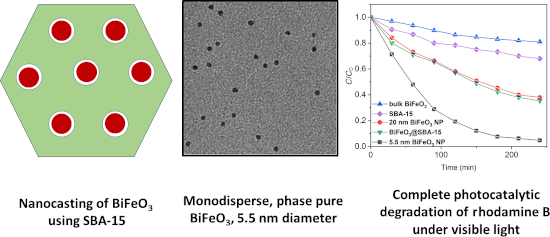
- to point out that a comparison of bandgap values with different BiFeO3 samples is very difficult as particle shape, size, phase purity, as well as oxygen vacancies have a strong impact on the electronic structure of the resulting material. Photocatalytic activity The photocatalytic activity of all




Structural and electronic properties of SnO2 doped with non-metal elements
Beilstein J. Nanotechnol. 2020, 11, 1321–1328, doi:10.3762/bjnano.11.116
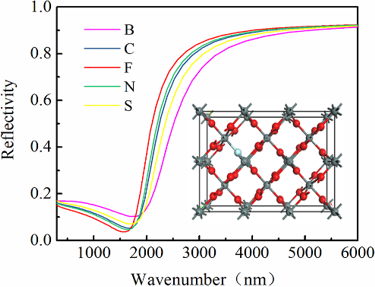
- oxygen vacancies, and thus, increase the charge density of the Sn sites. The replacement of O with N can simultaneously decrease the release of CO2. While there are reports on experiments regarding the doping of SnO2 with non-metal elements, the mechanism of the effect of non-metal element doping on the



Adsorption behavior of tin phthalocyanine onto the (110) face of rutile TiO2
Beilstein J. Nanotechnol. 2020, 11, 821–828, doi:10.3762/bjnano.11.67
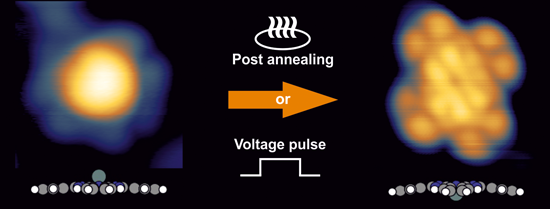
- molecule towards the surface. Also, the electrostatic landscape of a reduced rutile (110) surface prepared in UHV by sputter–anneal cycles is complicated. The cleaning procedure creates oxygen vacancies, which in turn leads to the formation of polarons near the surface [29][30][31]. Additionally, water
- molecules may dissociate at oxygen vacancies and form hydroxy groups on the surface. Both species can be recognized in our STM images and they both lead to the formation of dipole moments pointing away from the surface [32]. Their local arrangement may play a significant role in the interaction between a


Effect of Ag loading position on the photocatalytic performance of TiO2 nanocolumn arrays
Beilstein J. Nanotechnol. 2020, 11, 717–728, doi:10.3762/bjnano.11.59
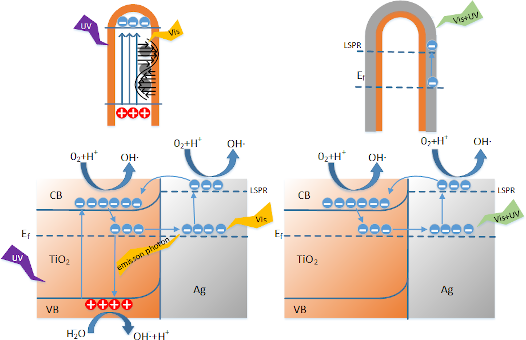
- the catalyst, so the catalyst needs to have a certain adsorption capacity for dye molecules. Due to the presence of oxygen vacancies, the surface of TiO2 is usually negatively charged and has a good adsorption capacity for cationic dye molecules [36]. Commonly used cationic dyes are rhodamine, methyl


Multiwalled carbon nanotube based aromatic volatile organic compound sensor: sensitivity enhancement through 1-hexadecanethiol functionalisation
Beilstein J. Nanotechnol. 2019, 10, 2364–2373, doi:10.3762/bjnano.10.227
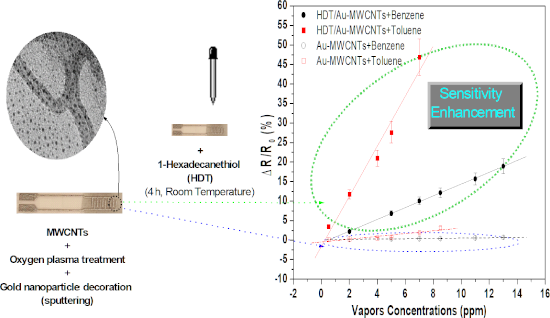
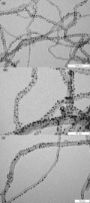
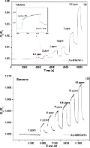
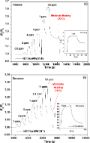
- decoration of MWCNTs Prior to their deposition on the interdigitated electrode surface, the MWCNTs were treated by oxygen plasma to create oxygen vacancies on the walls of the CNTs in order to enhance their surface reactivity [14][15]. The detailed description of the experimental steps undertaken is




Improved adsorption and degradation performance by S-doping of (001)-TiO2
Beilstein J. Nanotechnol. 2019, 10, 2116–2127, doi:10.3762/bjnano.10.206
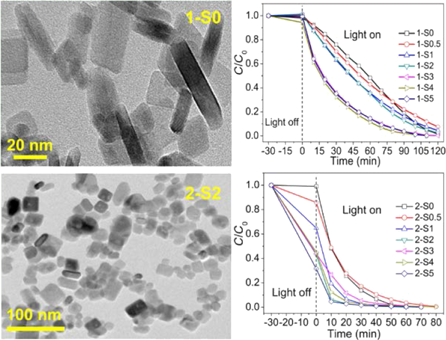
- % to 68.5% due to the synergistic effects of the oxygen vacancies, increased number of surface chemical adsorption centers as a result of SO42− adsorption on the TiO2 surface and the larger pore size. (3) S-doping increases the MB degradation rate from 6.9 × 10⁻² min−1 to 18.2 × 10⁻² min−1 due to an
- , the XP spectrum of O 1s can be fitted by three peaks and the CSs correspond to TiO2, –OH and oxygen vacancies (Ov) [44]. As the RS/Ti increases, the ratio of Ov increases from 4.3% (2-S0) to 22.9% (2-S3) and then decreases again to 19.9% (2-S5) (Table 3). The XPS signals of the oxygen vacancies were
- the O 2p orbitals. At the same time, the ratio of the Ov increases in the order of 2-S0.5 < 2-S1 < 2-S5 < 2-S3, as given in Table 3; therefore, the decrease of the DOS mainly results from an increase of the ratio of oxygen vacancies. Figure 6 shows the UV–vis DRS of 2-S0, 2-S0.5, 2-S1, 2-S3 and 2-S5




Improvement of the thermoelectric properties of a MoO3 monolayer through oxygen vacancies
Beilstein J. Nanotechnol. 2019, 10, 2031–2038, doi:10.3762/bjnano.10.199
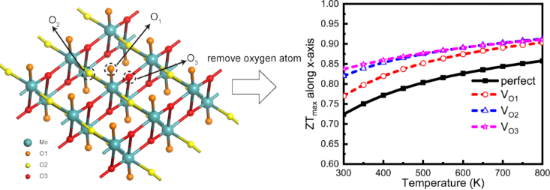
- , China 10.3762/bjnano.10.199 Abstract We have investigated the thermoelectric properties of a pristine MoO3 monolayer and its defective structures with different oxygen vacancies using first-principles methods combined with Boltzmann transport theory. Our results show that the thermoelectric properties
- oxygen vacancies leads to a sharp peak near the Fermi level in the density of states. This proves to be an effective way to enhance the ZT values of the MoO3 monolayer. The increased ZT values can reach 0.84 (x-axis) and 0.12 (y-axis) at 300 K. Keywords: Boltzmann transport theory; first-principles
- calculations; molybdenum trioxides; MoO3 monolayer; oxygen vacancies; thermoelectric properties; Introduction Thermoelectric materials that can directly convert temperature gradients to voltage gradients and vice versa provide a valid strategy to mitigate the global energy crisis. Owing to the unique ability


Kelvin probe force microscopy work function characterization of transition metal oxide crystals under ongoing reduction and oxidation
Beilstein J. Nanotechnol. 2019, 10, 1596–1607, doi:10.3762/bjnano.10.155
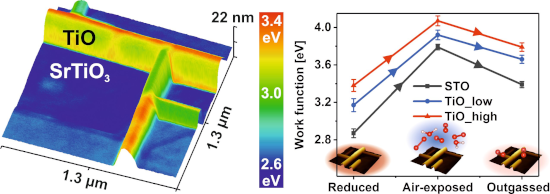
- conductivity. Here, a huge advantage over other materials is the possibility of oxides that self-dope via the introduction of oxygen vacancies [13], which is also a reason why there are not many reliable experimental studies on the work function of transition metal oxides (with one notable exception [14
- beforehand, resulting in the formation of a high concentration of oxygen vacancies. Therefore, the conductivity is much higher than that of a pristine single crystal, which has been estimated via a comparable LC-AFM study to be around 10−16 S [28]. Here the observed changes of conductivity on the surface
- comparable conductivity but notably different work functions. The reason behind this is that although undoped SrTiO3(100) is a band insulator, it could be easily self-doped with oxygen vacancies upon thermal reduction [28][30]. Reduction preferentially occurs at the surface, resulting in the reconstruction


Direct observation of oxygen-vacancy formation and structural changes in Bi2WO6 nanoflakes induced by electron irradiation
Beilstein J. Nanotechnol. 2019, 10, 1434–1442, doi:10.3762/bjnano.10.141
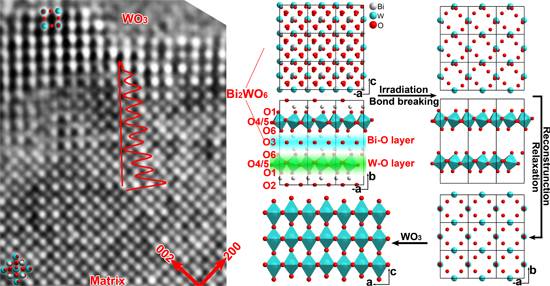
- prominent role of oxygen vacancies in the photocatalytic performance of bismuth tungsten oxides is well recognized, while the underlying formation mechanisms remain poorly understood. Here, we use the transmission electron microscopy to investigate the formation of oxygen vacancies and the structural
- evolution of Bi2WO6 under in situ electron irradiation. Our experimental results reveal that under 200 keV electron irradiation, the breaking of relatively weak Bi–O bonds leads to the formation of oxygen vacancies in Bi2WO6. With prolonged electron irradiation, the reduced Bi cations tend to form Bi
- . Keywords: bismuth tungsten oxide; electron diffraction; electron irradiation; nanoflakes; oxygen vacancies; Introduction Bi2WO6 has drawn great interest regarding its physical properties such as the piezoelectric effect and ferroelectricity with large spontaneous polarization and high Curie temperature [1


Gas sensing properties of individual SnO2 nanowires and SnO2 sol–gel nanocomposites
Beilstein J. Nanotechnol. 2019, 10, 1380–1390, doi:10.3762/bjnano.10.136
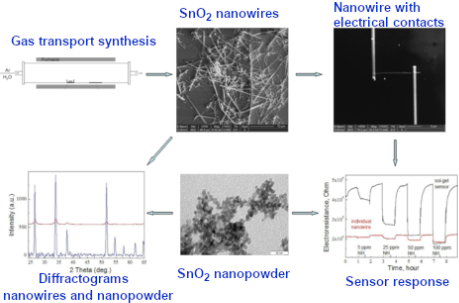
- nanowires, which is usually connected with the presence of oxygen vacancies [35][37][38]. The decrease in the half-widths and the increase in the relative intensity of the peaks for each of the features observed around 490 eV (main absorption edge of the SnO2) provides evidence for a more ordered structure
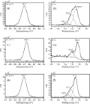
- structure density of states is typical of native SnO2-x oxide covering the surface of pure metallic tin foils [37][38] and was confirmed for SnO2 powder samples by the presence of noticeable amounts of oxygen vacancies (Figure 7). XANES oxygen lines near K-edge spectra are presented in Figure 8. The fine
- , powder particles may contain noticeable amounts of oxygen vacancies in their volume. This assumption moves the electronic structure of SnO2 powder particles close to the bulk (core) of natural SnO2-x oxides as confirmed by the XANES Sn M4,5 results (see Figure 7). After calcination, followed by




Imaging the surface potential at the steps on the rutile TiO2(110) surface by Kelvin probe force microscopy
Beilstein J. Nanotechnol. 2019, 10, 1228–1236, doi:10.3762/bjnano.10.122
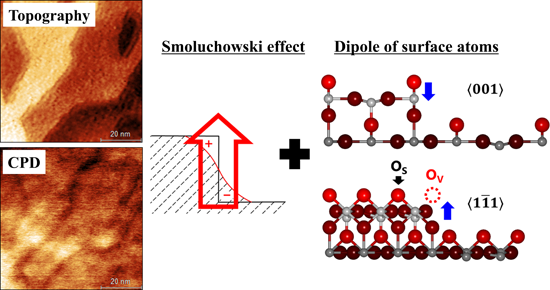
- [1][2][3][4][5][6][7]. The catalytic activity can be enhanced by the presence of defects, such as oxygen vacancies (Ov), Ti interstitials (Tiint) [8], and crystal steps. TiO2 is an n-type semiconductor because of these defects. In addition, reactive oxygen species, such as OH and H2O2 (compounds with
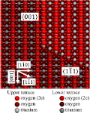
![[Graphic 16]](/bjnano/content/inline/2190-4286-10-122-i16.svg?max-width=637&scale=1.18182) and
and ![[Graphic 17]](/bjnano/content/inline/2190-4286-10-122-i17.svg?max-width=637&scale=1.18182) .
.
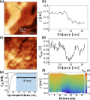

![[Graphic 38]](/bjnano/content/inline/2190-4286-10-122-i38.svg?max-width=637&scale=1.18182) and
and ![[Graphic 39]](/bjnano/content/inline/2190-4286-10-122-i39.svg?max-width=637&scale=1.18182) steps. (a) Topographic image...
steps. (a) Topographic image...


![[Graphic 72]](/bjnano/content/inline/2190-4286-10-122-i72.svg?max-width=637&scale=1.18182) , b)
, b) ![[Graphic 73]](/bjnano/content/inline/2190-4286-10-122-i73.svg?max-width=637&scale=1.18182) , c) reduced
, c) reduced ![[Graphic 74]](/bjnano/content/inline/2190-4286-10-122-i74.svg?max-width=637&scale=1.18182) , and d)
, and d) ![[Graphic 75]](/bjnano/content/inline/2190-4286-10-122-i75.svg?max-width=637&scale=1.18182) steps. B...
steps. B...
Photoactive nanoarchitectures based on clays incorporating TiO2 and ZnO nanoparticles
Beilstein J. Nanotechnol. 2019, 10, 1140–1156, doi:10.3762/bjnano.10.114
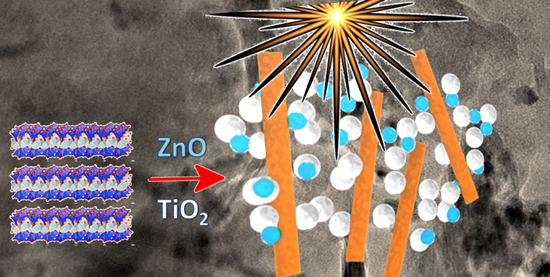
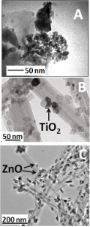
- visible wavelengths (blue and green emission at around 436–438 nm and 544–548 nm) of ZnO hybridized with CTA-smectites varies depending on the ZnO loading. This was attributed to defects, such as oxygen vacancies in ZnO, and trapped surface charges. The photoluminescence intensity of ZnO in saponite and



Quantitative analysis of annealing-induced instabilities of photo-leakage current and negative-bias-illumination-stress in a-InGaZnO thin-film transistors
Beilstein J. Nanotechnol. 2019, 10, 1125–1130, doi:10.3762/bjnano.10.112
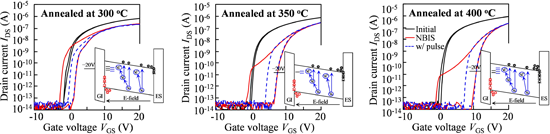
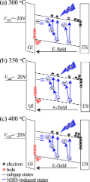
- higher-energy light irradiation, demonstrating that the generated ionized oxygen vacancies (VO+/VO2+) are neutralized by capturing electrons [8]. However, SS degradation still can be observed in the 300 °C-annealed TFT under the irradiation with short-wavelength light (below 430 nm), indicating that


Rapid, ultraviolet-induced, reversibly switchable wettability of superhydrophobic/superhydrophilic surfaces
Beilstein J. Nanotechnol. 2019, 10, 866–873, doi:10.3762/bjnano.10.87
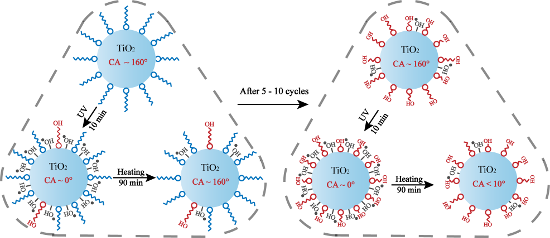
- are generated on the TiO2 surfaces under UV illumination. The holes lead to the production of oxygen vacancies to enhance the adsorption of hydroxy groups, while the hydroxy groups are replaced by oxygen atoms that have a stronger bond on the defect sites during heating process. However, the change in



On the transformation of “zincone”-like into porous ZnO thin films from sub-saturated plasma enhanced atomic layer deposition
Beilstein J. Nanotechnol. 2019, 10, 746–759, doi:10.3762/bjnano.10.74
- spectra confirm the removal of the carbon functionalities and the calcined layers showed an O/Zn ratio of 1.0 ± 0.1 (Table 1). The oxygen peaks were decomposed into two contributions, assigned to the oxygen–zinc bonds in the oxide lattice (O–Zn, 529.8 eV), and zinc hydroxides and/or oxygen vacancies (Zn
- are reported as a function of the plasma exposure time (see also Supporting Information File 1). For short plasma exposure times, the spectrum was fitted with three distinct peaks: one at 532.8 eV, attributed to organic oxygen, another one at 531.3 eV, assigned to Zn hydroxides and/or defective oxygen
- (vacancies). The latter peak is also attributed to the formation of metal carbonates, in line with the FTIR results and the literature values [60]. Finally, the peak at 529.8 eV was attributed to lattice O–Zn bonds [56]. Increasing the plasma time led to the decrease and eventual disappearance of the pure


Ceria/polymer nanocontainers for high-performance encapsulation of fluorophores
Beilstein J. Nanotechnol. 2019, 10, 522–530, doi:10.3762/bjnano.10.53
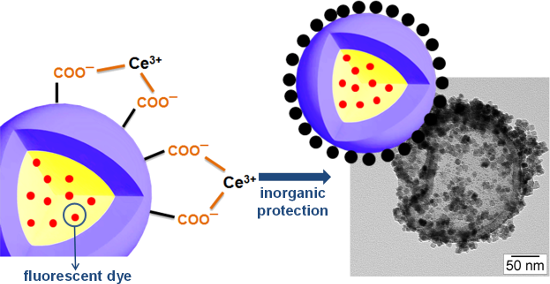
- combine biocompatibility with a high oxygen-scavenging ability. Cerium oxide is a lanthanide metal oxide with a redox potential behavior that can easily switch between cerium(IV) and cerium(III) and has the capability to leave oxygen vacancies in the crystal lattice [39]. Cerium(IV) oxide exhibits
- , which yielded the hybrid sample NC-CeO2. The fluorescence intensity is higher than for nanocapsules synthesized under ambient conditions without CeO2, but also even higher than for the sample NC(Ar) prepared under argon atmosphere. The oxygen vacancies present in the structure of cerium(IV) oxide





