Search results
Search for "photoluminescence" in Full Text gives 220 result(s) in Beilstein Journal of Nanotechnology. Showing first 200.
Determining by Raman spectroscopy the average thickness and N-layer-specific surface coverages of MoS2 thin films with domains much smaller than the laser spot size
Beilstein J. Nanotechnol. 2024, 15, 279–296, doi:10.3762/bjnano.15.26
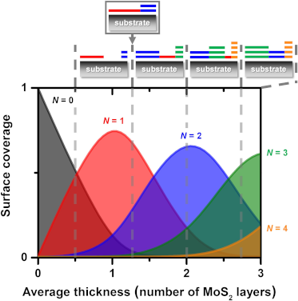
- transition to a direct bandgap semiconductor with very high photoluminescence quantum yield when thinned down to a monolayer [13][14][15][16][17]. Its unique electronic and optical properties could provide an edge in many future applications. The multilayers MoS2 structures are of the most common 2Hc type
- growth of wafer-scale MoS2 thin films on SiO2/Si substrates by direct liquid injection pulsed-pressure chemical vapor deposition (DLI-PP-CVD) using low-toxicity precursors [27]. Such MoS2 thin films showed good stoichiometry (Mo/S = 1.94–1.95) and the potential for high photoluminescence quantum yield
- signal in the wavelength range of photoluminescence emission (around 650 nm). The third parameter to define is the power of the 532 nm light, Pλ, impinging the sample. Much of the Raman information available to evaluate the thickness of MoS2 flakes is based on the following parameters: (i) on precise


CdSe/ZnS quantum dots as a booster in the active layer of distributed ternary organic photovoltaics
Beilstein J. Nanotechnol. 2024, 15, 144–156, doi:10.3762/bjnano.15.14
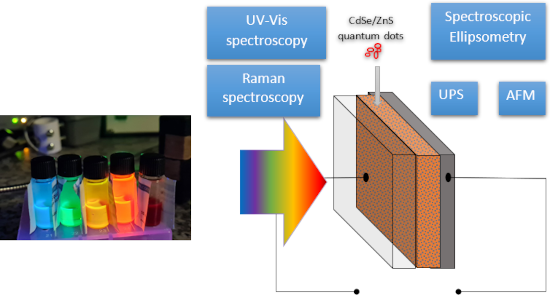
- [39][40]. One of the main existing challenges in synthesizing QDs is to increase their photoluminescence efficiency while simultaneously shifting the photoluminescence maximum to longer wavelengths. Initial applications focused on OLEDs. CdSe/ZnS quantum dots are luminescent inorganic nanostructures
- ultraviolet with a small exponentially decreasing band up to 500–600 nm (Figure 2). The absorption band maximum is about 260 nm in the solid state (quartz was used as reference) and 330 nm in chloroform solution. The photoluminescence spectra, excited by a 405 nm laser, are shown in Figure 3. This type of
- P3HT:PC71BM:QDs (ratio 1:0.5:0.5) measured in solution. In the case of absorption, spectrum shape and absorption range remain unchanged. The addition of quantum dots slightly increases the intensity in the range from 350 to 550 nm compared to the base P3HT:PC71BM array. In the case of photoluminescence spectra


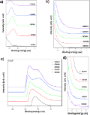


In situ optical sub-wavelength thickness control of porous anodic aluminum oxide
Beilstein J. Nanotechnol. 2024, 15, 126–133, doi:10.3762/bjnano.15.12
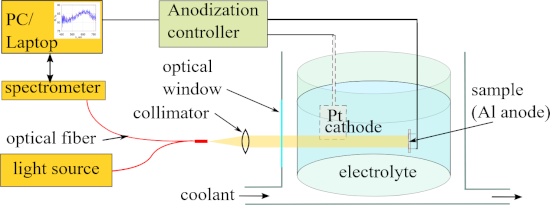
- ] and optical sensors [4][5], require precise control of PAAO layer thickness in the optical sub-wavelength range. Among other examples, by tuning the thickness of PAAO between 200 and 600 nm, it becomes possible to selectively enhance or suppress photoluminescence (PL) bands originating from defects in
- absorption and photoluminescence characteristics of PAAO [38]. In order to achieve nanometer-scale thickness uniformity of the PAAO layers (Figure 4), it was necessary to use single-crystal aluminum substrates as starting material. In previous studies it was shown that anodization of polycrystalline aluminum


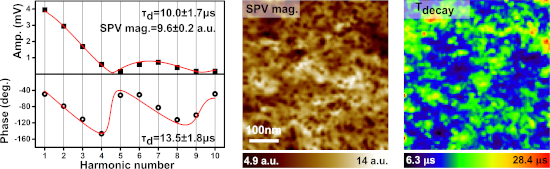
Dual-heterodyne Kelvin probe force microscopy
Beilstein J. Nanotechnol. 2023, 14, 1068–1084, doi:10.3762/bjnano.14.88




Nanoarchitectonics of photothermal materials to enhance the sensitivity of lateral flow assays
Beilstein J. Nanotechnol. 2023, 14, 988–1003, doi:10.3762/bjnano.14.82
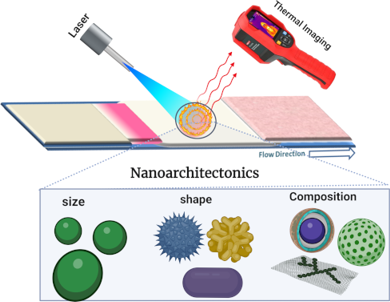
- ]. NIR light irradiation for 10 min can yield temperatures up to 61 °C in mesoporous PDA with a photoconversion efficiency of 26.7%. Despite the advantages, many of the polymer nanoparticles show strong photoluminescence and do not withstand long-term light irradiation. To overcome this challenge, hybrid


Isolation of cubic Si3P4 in the form of nanocrystals
Beilstein J. Nanotechnol. 2023, 14, 971–979, doi:10.3762/bjnano.14.80
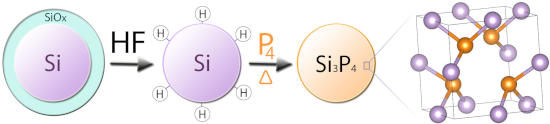
- spectra of the samples SP550, SP670, and SP900 are shown in Figure 3 (SP400 exhibited photoluminescence of an organic origin that hindered Raman studies). The spectra consist of multiple bands that provide a stark contrast to the zinc blende SiP structure, which exhibits a singular Raman mode (with a LO


A graphene quantum dots–glassy carbon electrode-based electrochemical sensor for monitoring malathion
Beilstein J. Nanotechnol. 2023, 14, 701–710, doi:10.3762/bjnano.14.56
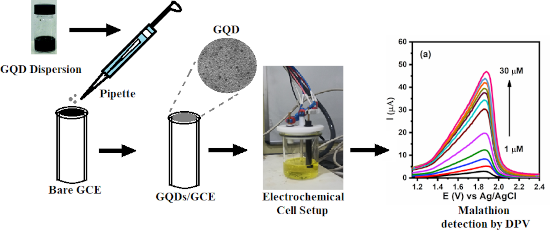
- hydrothermal process with glucose as a precursor undergoing carbonization. Different spectroscopic techniques were used to analyze the optical characteristics of GQDs, including UV–visible, photoluminescence, FTIR, and Raman spectroscopy. Atomic force microscopy, transmission electron microscopy, and X-ray
- was excited at 320 nm, the photoluminescence (PL) spectrum of GQDs showed a strong peak around 425 nm, similar to those reported for GQDs [32]. When excited at wavelengths between 320 and 420 nm, the PL peak shifts from 420 nm (violet) to 520 nm (green), and the PL intensity also decreases
- -based nanosensor described here could be used in future to develop portable monitoring systems for water contamination. Fabrication of the GQDs/GCE electrochemical nanosensor for the detection of malathion. (a) UV–vis absorption spectrum and (b) photoluminescence spectra of GQDs. (a) TEM image, (b) size


Metal-organic framework-based nanomaterials as opto-electrochemical sensors for the detection of antibiotics and hormones: A review
Beilstein J. Nanotechnol. 2023, 14, 631–673, doi:10.3762/bjnano.14.52
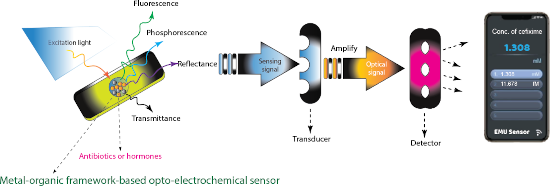
- excitation, for photoluminescence to occur, whether it be fluorescence or phosphorescence. The molecule-bound electron in the fluorescence mechanism absorbs a photon and is activated after the analyte interacts with the molecular recognition element. The transition from the ground state (S0) to the excited


Titania nanoparticles for photocatalytic degradation of ethanol under simulated solar light
Beilstein J. Nanotechnol. 2023, 14, 616–630, doi:10.3762/bjnano.14.51
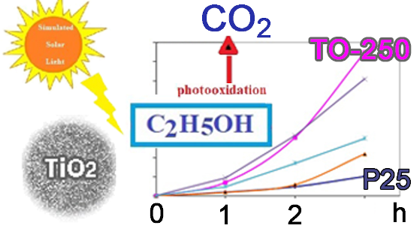
- transmission electron microscopy. Also, specific surface area and photoluminescence with optical absorbance were evaluated. By varying the synthesis parameters (especially the working pressure), different TiO2 nanopowders were obtained, whose photodegradation properties were tested compared to a commercial
- transitions, the values obtained in our powders are smaller. A possible explanation is the smaller volume of the particles with anatase crystal structure or the formation of shallow donor levels near the conduction band [64][65]. Photoluminescence (PL) spectra at 260 nm excitation wavelength are presented in
- using a JEM ARM 200F analytical microscope (Jeol, Japan). The specific surface area was measured using a BET flowing gas surface area analyzer, Horiba SA-9600, with a 30% N2/70% He gas mixture. Photoluminescence measurements were carried out using a Horiba Flourolog-3. The excitation source was a xenon




Conjugated photothermal materials and structure design for solar steam generation
Beilstein J. Nanotechnol. 2023, 14, 454–466, doi:10.3762/bjnano.14.36
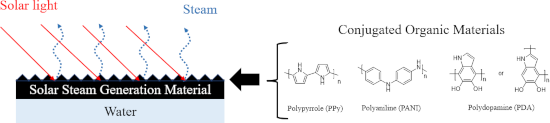
- photophysical properties and hydrophobicity through organic reactions. In general, DPP dyes have high photoluminescence quantum yields, but they have a relatively low photostability, degrading after 150 min under a collimated 300 W Xe lamp light source. It was previously reported that introducing electron
- -INCN (Figure 4b and Figure 4c). This suggests that stronger EW end groups and longer conjugation lengths induce more potent ICTs for the DPP derivatives, resulting in smaller bandgaps. In the photoluminescence (PL) spectra of the DPP derivatives, DPP-DCV displayed a much weaker PL than DPP-H, and no PL
- THF solution and (c) for drop-cast films. (d) The photoluminescence (PL) spectra of the DPP derivatives in THF solution. (Figure 4 was adapted with permission from [27], Copyright 2021 American Chemical Society.) Typical polymeric PTMs used for SSG. (a) Schematic illustration of the fabrication


Structural, optical, and bioimaging characterization of carbon quantum dots solvothermally synthesized from o-phenylenediamine
Beilstein J. Nanotechnol. 2023, 14, 165–174, doi:10.3762/bjnano.14.17
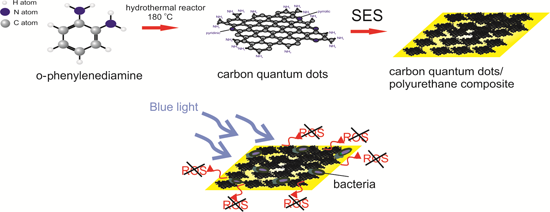
- characterization methods (AFM, TEM, EDS, FTIR, photoluminescence, and EPR) indicate the significant influence of the precursor on structural, chemical, and optical properties. Antibacterial and cytotoxicity tests showed that these dots did not have any antibacterial potential, because of the low extent of reactive
- resistance, and better antioxidant properties compared to pristine CQDs [5]. Functionalization of CQDs with amino groups (NH2 groups) induces a redshift of the photoluminescence because of the charge transfer from the amino groups to the carbon honeycomb core [6]. Also, grafting with NH2 groups, by means of
- . Photoluminescence of CQDs can be tuned, and quantum dots emit light in the range from blue to red. Some of them have very good prooxidant and antioxidant properties [14]. Under blue light irradiation, CQDs produce reactive oxygen species (ROS), which cause oxidative stress and further bacterial death [17][18][19


Formation of nanoflowers: Au and Ni silicide cores surrounded by SiOx branches
Beilstein J. Nanotechnol. 2023, 14, 133–140, doi:10.3762/bjnano.14.14
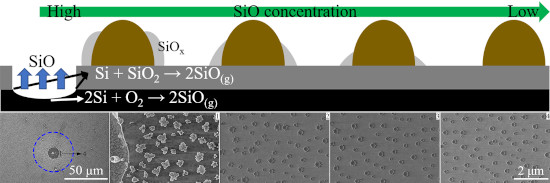
- and surrounding SiOx nanowires (NWs) show a significant enhancement of the photoluminescence (PL) emission compared with pure SiOx NWs due to the coupling effect between the local surface plasmon resonance (LSPR) of Au nanoparticles and the PL emission of SiOx [2]. Similar Au–SiOx nanoflowers have


Single-step extraction of small-diameter single-walled carbon nanotubes in the presence of riboflavin
Beilstein J. Nanotechnol. 2022, 13, 1564–1571, doi:10.3762/bjnano.13.130
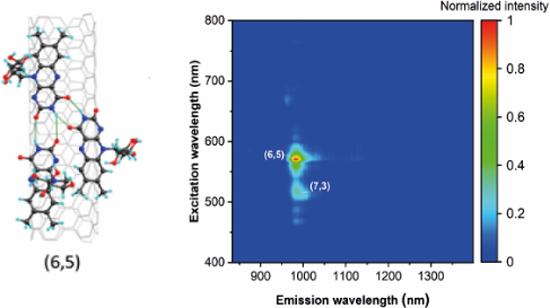
- between the SWCNTs and gel media. Our experimental findings are supported by ab initio calculations demonstrating the impact of the riboflavin wrapping pattern around the SWCNTs on their interaction with the allyl dextran gel. Keywords: carbon nanotubes; photoluminescence spectroscopy; riboflavin; size
- . Biomedical applications apply an additional constraint on the diameter of nanotubes. Small-diameter SWCNTs display intrinsic photoluminescence in the spectral range of 900–1100 nm within the biological transparency window, making them ideal candidates for single-molecule biosensors or biomedical imaging
- an average diameter of 1.5 nm. The set of chiralities present in CoMoCat demonstrates a high affinity towards riboflavin, leading to a high riboflavin density on the SWCNT surface. As a result, we do not observe significant changes in UV–vis–NIR spectra or photoluminescence of dispersions before and


Supramolecular assembly of pentamidine and polymeric cyclodextrin bimetallic core–shell nanoarchitectures
Beilstein J. Nanotechnol. 2022, 13, 1361–1369, doi:10.3762/bjnano.13.112
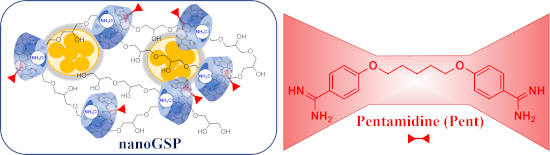
- electromagnetic field [4]. However, for <5 nm sized NPs, the LSPR phenomenon disappears, and they exhibit a tunable intrinsic photoluminescence with high Stokes shift and excellent photostability [5]. Plasmonic NPs can be produced in monometallic (MNPs) or bimetallic (BMNPs) forms and, in the latter, the internal


Near-infrared photoactive Ag-Zn-Ga-S-Se quantum dots for high-performance quantum dot-sensitized solar cells
Beilstein J. Nanotechnol. 2022, 13, 1337–1344, doi:10.3762/bjnano.13.110
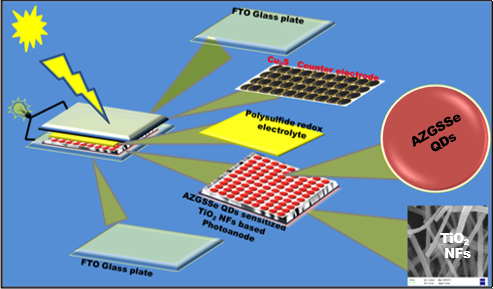
- ) and a photoluminescence spectrofluorometer (Jobin Yvon Horiba Nanolog). Impedance analysis of the fabricated QDSCs was conducted by using a CH instruments 760 A electrochemical workstation at applied frequencies of 100 kHz to 1 MHz with 10 mV AC voltage recording the Nyquist plots. The J–V curves were
- efficient photoanode for QDSCs and it produces more electron–hole pairs, which helps to improve the photocurrent density. Time-resolved photoluminescence (TRPL) studies were carried out to evaluate the electrons decay time of AZGSSe/TiO2. The decay curve was fitted with a biexponential function [33] and it


Rapid fabrication of MgO@g-C3N4 heterojunctions for photocatalytic nitric oxide removal
Beilstein J. Nanotechnol. 2022, 13, 1141–1154, doi:10.3762/bjnano.13.96
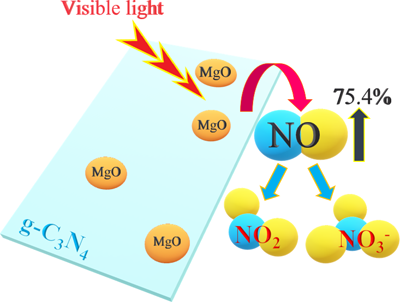
- spectroscopy (DRS) was used to determine the optical properties and bandgap energies of the material. The bandgap of the material decreases with increasing amounts of MgO. The photoluminescence spectra indicate that the recombination of electron–hole pairs is hindered by doping MgO onto g-C3N4. Also, NO
- (HR-XPS). The photoluminescence (PL) spectra of the materials was carried out in the form of fluorescence analysis with an excitation wavelength range of 200–900 nm. Finally, the photocatalytic mechanism was determined by trapping tests and ESR measurements. Photocatalytic performance The
- strongly depends on the optical properties. Photoluminescence Fluorescence spectra of MgO and 3% MgO@g-C3N4 are shown in Figure 10a and Figure 10b, respectively. MgO shows strong fluorescence at 270 nm with an excitation wavelength (270 nm) in the UV range. MgO also shows another emission wavelength at 380





Recent advances in green carbon dots (2015–2022): synthesis, metal ion sensing, and biological applications
Beilstein J. Nanotechnol. 2022, 13, 1068–1107, doi:10.3762/bjnano.13.93
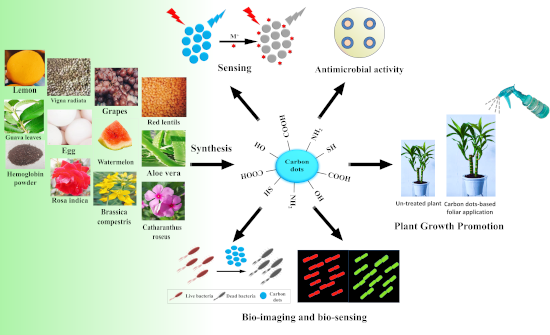
- photobleaching), and efficient photoluminescence. CDs have a broad spectrum of applications in the analytical, medical, biotechnology, biology, and theranostics domains [3][4]. The typical photoluminescence yield of CDs is less than 10%. Surface-passivating chemicals are used to improve the photoluminescence
- applications [36], tumor marker detection [37], bioanalytical studies [38], biomedical [39][40] and biotechnological applications [3], biosensing and bioimaging [31][32], and fluorescence [41] and photoluminescence processes [42]. Many reviews about CDs obtained from natural resources have been published
- juice) were tested. It was found that the photoluminescence (PL) intensity of citric acid was higher than that of lemon juice, which, in turn, was higher than that of orange juice. This outcome is the result of lemon juice having a greater citric acid concentration than orange juice. Compared to ripe




Spindle-like MIL101(Fe) decorated with Bi2O3 nanoparticles for enhanced degradation of chlortetracycline under visible-light irradiation
Beilstein J. Nanotechnol. 2022, 13, 1038–1050, doi:10.3762/bjnano.13.91
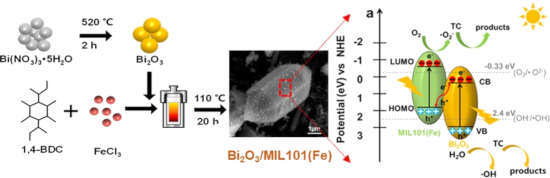
- ) with BaSO4 as a reference. The photoluminescence spectrum (PL) was obtained from a luminescence spectrometer at an excitation wavelength of 446 nm (RF-530IPC, Shimadzu, Japan). The photocurrent response and electrochemical impedance spectra (EIS) were measured by an electrochemical workstation


Hierarchical Bi2WO6/TiO2-nanotube composites derived from natural cellulose for visible-light photocatalytic treatment of pollutants
Beilstein J. Nanotechnol. 2022, 13, 745–762, doi:10.3762/bjnano.13.66
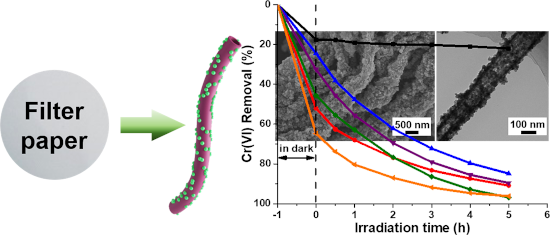
- reference standard for solid samples. The photoluminescence (PL) spectra were obtained on a Shimadzu RF-5301PC fluorescence spectrometer under a laser excitation of 360 nm. In order to observe the microstructures of the samples, a small amount of a given sample was dispersed in ethanol to generate a


Revealing local structural properties of an atomically thin MoSe2 surface using optical microscopy
Beilstein J. Nanotechnol. 2022, 13, 572–581, doi:10.3762/bjnano.13.49
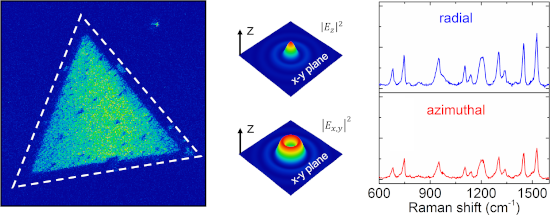
- molybdenum diselenide (MoSe2) flake as surface-enhanced Raman spectroscopy (SERS) platform, we demonstrate the dependency of the Raman enhancement on laser beam polarization and local structure using copper phthalocyanine (CuPc) as probe. Second harmonic generation (SHG) and photoluminescence spectroscopy
- with the SHG and photoluminescence optical images, indicating the relationship between local structure and optical properties of the MoSe2 flake. These results contribute to understand the impacts of local structural properties on the Raman enhancement at the surface of the 2D transition-metal
- addition, point defect-induced trions in monolayer WS2 on a nonconducting substrate can be visualized via photoluminescence in order to precisely explore the exciton binding energy [15]. The optical properties of edges and grain boundaries in 2D-TMDC materials have also been characterized by


Zinc oxide nanostructures for fluorescence and Raman signal enhancement: a review
Beilstein J. Nanotechnol. 2022, 13, 472–490, doi:10.3762/bjnano.13.40
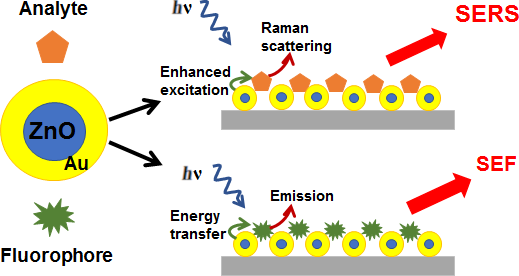
- as well as on tuning the photoluminescence properties of ZnO nanostructures through combination with metal nanoparticles. This review covers the major recent results of ZnO-based nanostructures used for fluorescence and Raman signal enhancement. The broad range of ZnO and ZnO–metal nanostructures
- synthesis methods are discussed, highlighting low-cost methods and the recyclability of ZnO-based nanosubstrates. Also, the SERS signal enhancement by ZnO-based nanostructures and the influences of lattice defects on the SERS signal are described. The photoluminescence enhancement of ZnO in the presence of
- applications [13]. This review article seeks to present the fabrication methods and applications of zinc oxide nanostructures enhancing the photoluminescence emission or the Raman signal of analyte molecules. First, we focus on a wide range of synthesis methods of ZnO nanostructures and nanocomposites based on




Micro- and nanotechnology in biomedical engineering for cartilage tissue regeneration in osteoarthritis
Beilstein J. Nanotechnol. 2022, 13, 363–389, doi:10.3762/bjnano.13.31

- TE, there are other nanoscale tube-based compounds, which can potentially be used for biomedical purposes. Among these, silica nanotubes have the greatest potential for integration in biomaterials because of their biocompatibility, photoluminescence activity, and ease of surface modification. Silica


Tin dioxide nanomaterial-based photocatalysts for nitrogen oxide oxidation: a review
Beilstein J. Nanotechnol. 2022, 13, 96–113, doi:10.3762/bjnano.13.7
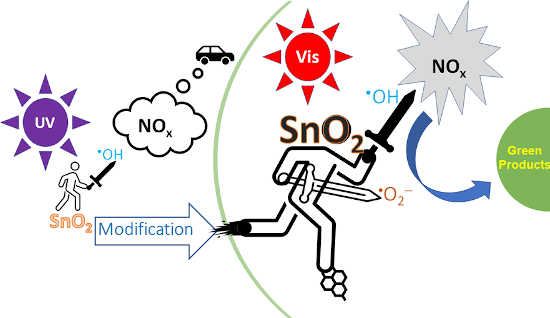
- •O2− radicals played a primary role in the photocatalytic NO oxidation. Additionally, using photoluminescence (PL) spectroscopy, XPS, active species trapping tests, and ESR spectroscopy, the authors studied the photoinduced charge migration and trapping. They proposed the band structure of the SnO2


Theranostic potential of self-luminescent branched polyethyleneimine-coated superparamagnetic iron oxide nanoparticles
Beilstein J. Nanotechnol. 2022, 13, 82–95, doi:10.3762/bjnano.13.6
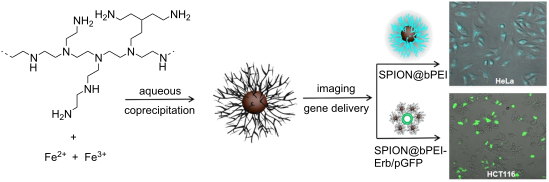
- selective uptake and hence the targeting ability of Erb-tagged nanoparticles. Altogether, this study proves luminescent, cationic, and small SPION@bPEI nanoparticles as strong candidates for imaging and gene therapy. Keywords: Erbitux; photoluminescence; polyethyleneimine; polyinosinic–polycytidylic acid
- (1.2 and 0.6 µg/mL) with N/P ratios of 30 and 45, respectively. The cell fixation procedure was performed 48 h after the treatment. Characterization The photoluminescence spectroscopy (PL) measurements were performed by using a Horiba Jobin Yvon FluoroMax-3 spectrofluorometer at room temperature (λexc
- N/P ratio of 1.4/1, 50% and at an N/P ratio of 2.8/1, almost all of poly I:C interacted with the nanoparticles, which resulted in the retardation of this dsRNA analogue (Figure 2a). The examination of the photoluminescence spectra of PIC-loaded SPION@bPEI (the amount of nanoparticles was kept




Sputtering onto liquids: a critical review
Beilstein J. Nanotechnol. 2022, 13, 10–53, doi:10.3762/bjnano.13.2