Search results
Search for "pyrolysis" in Full Text gives 117 result(s) in Beilstein Journal of Nanotechnology.
Photoelectrochemical water oxidation over TiO2 nanotubes modified with MoS2 and g-C3N4
Beilstein J. Nanotechnol. 2022, 13, 1541–1550, doi:10.3762/bjnano.13.127
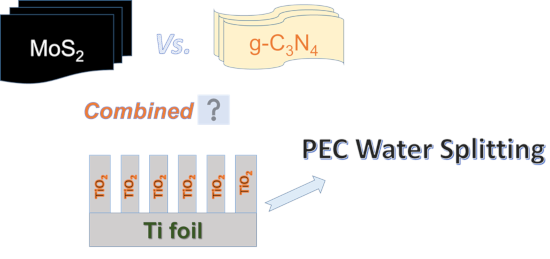
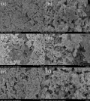
- materials (Figure 1b). This agrees with the results of previous publications in which hydrothermal methods were applied [24][25][26]. The SEM image of the g-C3N4 material shows the uniform nanosheets that were fabricated by the melamine pyrolysis method (Figure 1c). After the deposition of 2D materials MoS2


Structural studies and selected physical investigations of LiCoO2 obtained by combustion synthesis
Beilstein J. Nanotechnol. 2022, 13, 1473–1482, doi:10.3762/bjnano.13.121
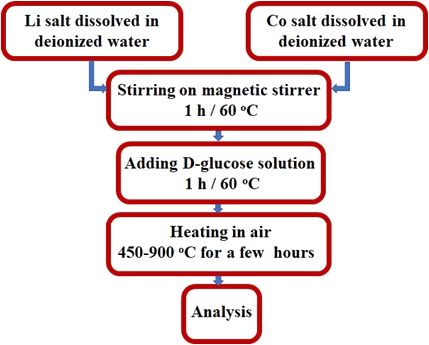
- produced in the form of powders, fibers, and films by using various processing techniques including wet chemical synthesis, such as the sol–gel method [33][34][35], precipitation [36], hydrothermal [37][38][39] and spray pyrolysis [40][41]. Also, solid-state synthesis methods, such as mechanical synthesis




Rapid fabrication of MgO@g-C3N4 heterojunctions for photocatalytic nitric oxide removal
Beilstein J. Nanotechnol. 2022, 13, 1141–1154, doi:10.3762/bjnano.13.96
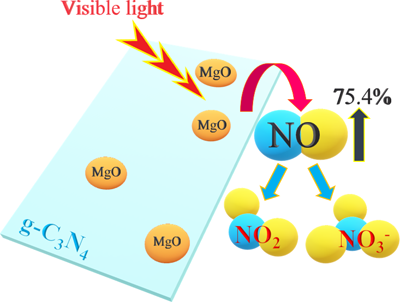
- heterojunction photocatalysts were synthesized by one-step pyrolysis of MgO and urea at 550 °C for two hours. The photocatalytic NO removal efficiency of the MgO@g-C3N4 heterojunctions was significantly improved and reached a maximum value of 75.4% under visible light irradiation. Differential reflectance
- the fabrication of the MgO@g-C3N4 heterojunction via one-step pyrolysis nor on the photocatalytic pathway of the MgO@g-C3N4 heterojunction for photocatalytic NO removal under visible light. In this study, a MgO@g-C3N4 heterojunction was synthesized via a one-step pyrolysis method using commercial MgO
- indicate that MgO@g-C3N4 heterojunction structures have been successfully synthesized with high photocatalytic NO degradation efficiency under visible light by one-step pyrolysis (see Table 1 for a comparison of the photocatalytic NO removal efficiency values). Also, the AQE has been calculated according





Recent advances in green carbon dots (2015–2022): synthesis, metal ion sensing, and biological applications
Beilstein J. Nanotechnol. 2022, 13, 1068–1107, doi:10.3762/bjnano.13.93
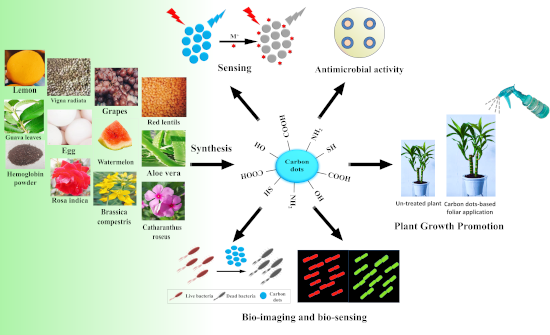
- , and ultrasonic synthesis. In the bottom-up methods, CDs are formed from molecular precursors by various techniques such as hydrothermal treatment [25][26][27][28][29], microwave synthesis [30], and pyrolysis [31]. A tremendous amount of work has been done regarding the synthesis and different
- treatments, ultrasonication, microwave irradiations, and microwave-assisted hydrothermal/pyrolysis are used in the green synthesis of CDs [41]. Hydrothermal methods convert the raw material into carbonized matter. Although relatively simple, the procedure takes several hours. Microwave irradiation, in
- emitting CDs [48]. A new type of fluorescent CDs from the flowers of Borassus flabellifer (male tree) through a green thermal pyrolysis method without adding any chemicals was synthesized [59]. A high QY of up to 13.97% was obtained at an optimized temperature of 300 °C. Hoan et al. used lemon juice to




Tubular glassy carbon microneedles with fullerene-like tips for biomedical applications
Beilstein J. Nanotechnol. 2022, 13, 455–461, doi:10.3762/bjnano.13.38
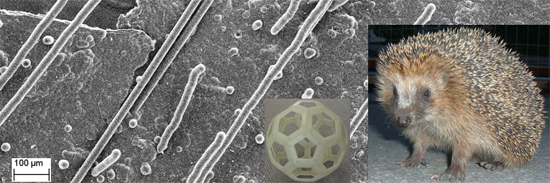
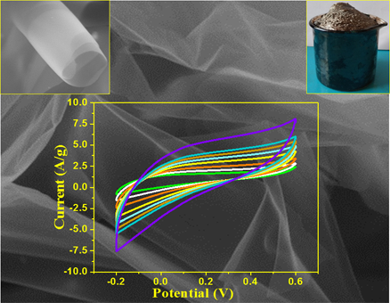
- /bjnano.13.38 Abstract Glassy carbon, in general, is made by the pyrolysis of polymeric materials and has been the subject of research for at least fifty years. However, as understanding its microstructure is far from straightforward, it continues to be an area of active research. Glassy carbon adopts
- the nanoarchitectonics concept of bottom-up creation of functional materials, we use methane rather than a polymer to form glassy carbon. Here we show that tubular glassy carbon microneedles with fullerene-like tips form when methane undergoes pyrolysis on a curved alumina surface. X-ray diffraction
- , the authors use the term glassy carbon in order to ensure its wider dissemination. Franklin stated that “the structure of carbons formed by pyrolysis of organic materials depends not only on the temperature of preparation, but also, to a very large extent, on the nature of the starting material” [2


Tin dioxide nanomaterial-based photocatalysts for nitrogen oxide oxidation: a review
Beilstein J. Nanotechnol. 2022, 13, 96–113, doi:10.3762/bjnano.13.7
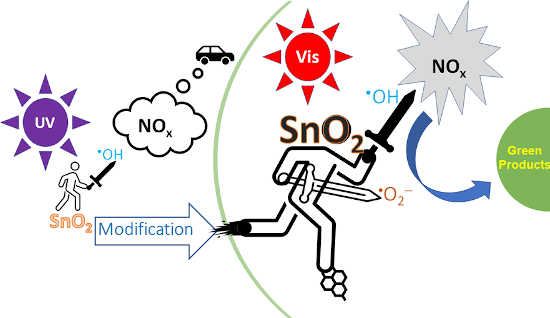
- SnO2, TiO2, and CuInS2 using an automated spray pyrolysis method, which is particularly beneficial for air cleaning applications. This work showed that the surface tension of the material surface directly impacts the photocatalytic activity under humid conditions. Furthermore, introducing CuInS2


Sputtering onto liquids: a critical review
Beilstein J. Nanotechnol. 2022, 13, 10–53, doi:10.3762/bjnano.13.2
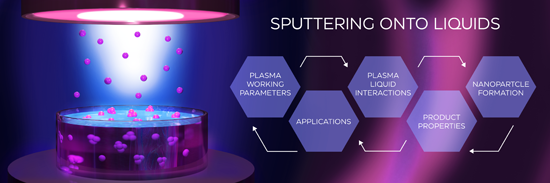
- in the synthesis procedures. The most common physical methods used to generate NPs are high-energy ball milling, laser ablation, electrospraying, inert gas condensation, PVD, laser pyrolysis, flash spray pyrolysis, and melt mixing [16]. Chemical methods are the traditional and most widely used






Chemical vapor deposition of germanium-rich CrGex nanowires
Beilstein J. Nanotechnol. 2021, 12, 1365–1371, doi:10.3762/bjnano.12.100
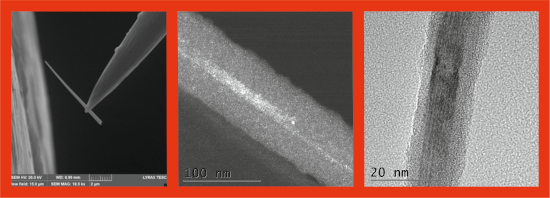
- first part of the furnace. The Cr(acac)3 vapor in a continuous flow (3 sccm) of germane (GeH4) at 250 Pa was transported to the second part of the furnace where pyrolysis took place at 500 °C over molybdenum substrates. X-ray photoelectron spectrometry (XPS, Kratos ESCA 3400 with a base pressure below



Progress and innovation of nanostructured sulfur cathodes and metal-free anodes for room-temperature Na–S batteries
Beilstein J. Nanotechnol. 2021, 12, 995–1020, doi:10.3762/bjnano.12.75
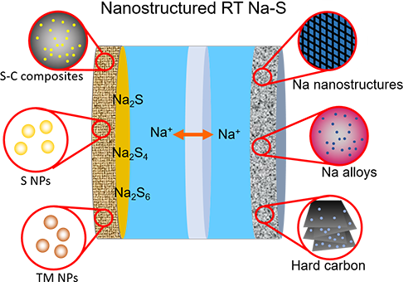
- ]. For instance, Hwang et al. [39] reported a cathode material based on one-dimensional sulfurized PAN nanofibers, and Kim et al. [40] reported the design of a flexible cathode that consists of a sulfurized PAN nanofiber web. The sulfurized PAN web was prepared by pyrolysis of PAN nanofibers and
- and improvement. Hard carbon anodes A somewhat more conventional approach to Na metal-free anodes is the use of hard carbon, also termed non-graphitizable carbon [82][85]. These are disorganized carbon materials with turbostratic nanoscale domains produced by pyrolysis of biomass, also including




Solution combustion synthesis of a nanometer-scale Co3O4 anode material for Li-ion batteries
Beilstein J. Nanotechnol. 2021, 12, 424–431, doi:10.3762/bjnano.12.34
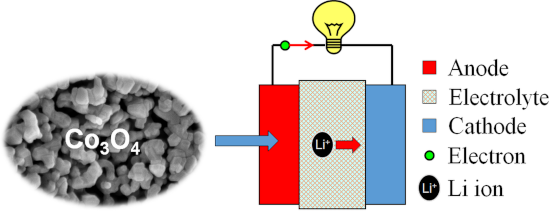
- been proposed including sol–gel methods [4][6][13][14][15], sol–electrospinning techniques [16][17][18][19], hydrothermal and solvothermal syntheses [20][21][22][23][24][25][26][27][28], precipitation and co-precipitation [29][30][31], chemical thermal decomposition and pyrolysis [32][33][34][35][36


A review on the green and sustainable synthesis of silver nanoparticles and one-dimensional silver nanostructures
Beilstein J. Nanotechnol. 2021, 12, 102–136, doi:10.3762/bjnano.12.9
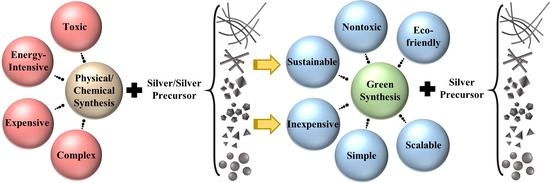
- ], lithography [120][121], spray pyrolysis [122][123][124], radiolysis [125][126][127][128], arc discharge [129][130][131][132][133], and photoirradiation [134][135][136] have been utilized to synthesize various morphologies of silver nanostructures with varied size and size distribution. The physical synthesis
- laser ablation at an industrial scale is difficult. To achieve desired concentrations, high-energy lasers should be used, which increase the costs significantly [112]. 2.1.5 Spray pyrolysis process. Spray pyrolysis is another method used to produce AgNPs with an average size of 10 nm embedded into
- amorphous calcium phosphate particles for enhanced adhesive applications [124]. The spray pyrolysis process requires using an atomizer, a tube furnace, a reaction tube, a collection filter, and a vacuum pump [124]. This method is also often used for production of metal powders and demonstrates less


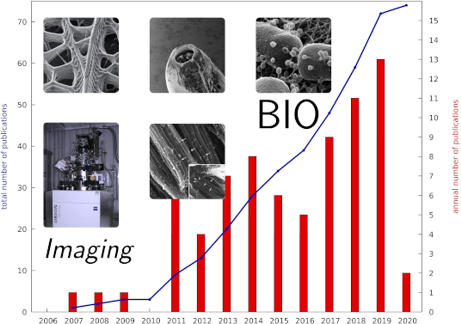
Bio-imaging with the helium-ion microscope: A review
Beilstein J. Nanotechnol. 2021, 12, 1–23, doi:10.3762/bjnano.12.1


Structural and electronic properties of SnO2 doped with non-metal elements
Beilstein J. Nanotechnol. 2020, 11, 1321–1328, doi:10.3762/bjnano.11.116
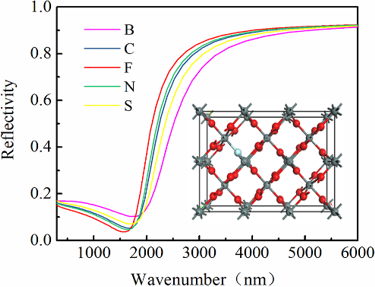
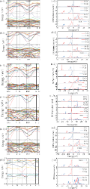
- (substituting O) can effectively increase the carrier concentration and improve the conductivity. Majumder successfully prepared SnO2:F thin films using spray pyrolysis with SnF2 as the precursor. By adjusting the concentration of the precursor solution, doped SnO2 films with different properties were obtained



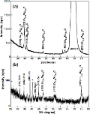
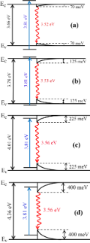
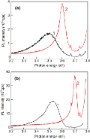
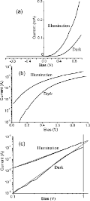
Band tail state related photoluminescence and photoresponse of ZnMgO solid solution nanostructured films
Beilstein J. Nanotechnol. 2020, 11, 899–910, doi:10.3762/bjnano.11.75
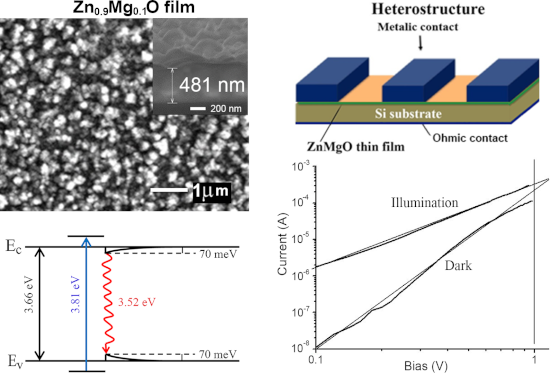
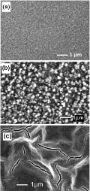
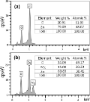
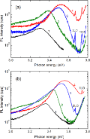
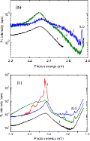
- of the alloy composition. Thin films were also prepared by aerosol spray pyrolysis deposition using the same sol–gel precursors for the purpose of comparison. The prepared films were tested for photodetector applications. Keywords: aerosol spray pyrolysis deposition; energy band tails; photodetector
- (MOCVD) [18][19], hydrothermal [4], chemical bath deposition (CBD) [20], sol–gel spin coating [21][22][23][24][25][26][27][28][29], and spray pyrolysis [28][29][30][31][32][33][34]. Among these techniques, the sol–gel spin coating method has the advantage of ensuring easy control and handling of
- ][32]. A comparison of MSM photodetectors based on ZnMgO films prepared by spin coating and spray pyrolysis performed recently revealed that the sensitivity of the structures prepared by spin coating is higher as compared to those obtained by spray pyrolysis, while the photoresponse to UV irradiation

Nickel nanoparticles supported on a covalent triazine framework as electrocatalyst for oxygen evolution reaction and oxygen reduction reactions
Beilstein J. Nanotechnol. 2020, 11, 770–781, doi:10.3762/bjnano.11.62
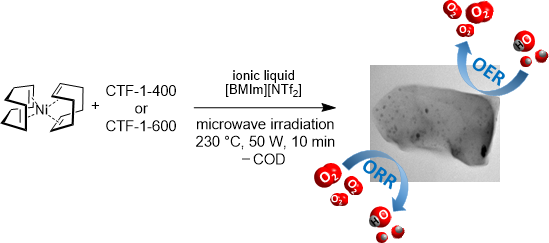
- (69 and 71 wt %, respectively, see Table S3, Supporting Information File 1). In the literature, there are various reports on Ni/carbon and Ni/N-doped carbon composites (Table S3, Supporting Information File 1). These composites are largely obtained by pyrolysis of Ni precursors or Ni-containing metal
- organic frameworks (MOF) with or without a nitrogen source [13][43][44]. An important step in these syntheses is high-temperature pyrolysis under inert atmosphere for a few hours. However, these methods often cannot control the nitrogen microstructure and composition. In contrast, Ni/CTF-1 is obtained in


Soybean-derived blue photoluminescent carbon dots
Beilstein J. Nanotechnol. 2020, 11, 606–619, doi:10.3762/bjnano.11.48
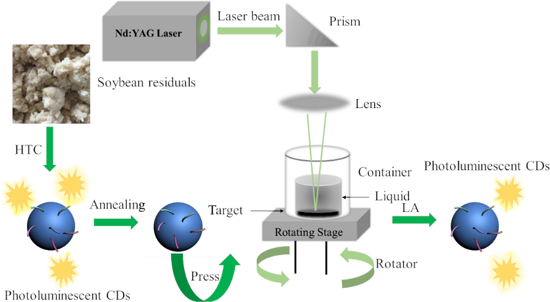
- synthesizing CDs, including oxidation and reduction [13][14][15], laser ablation [16], microwave irradiation [9], pyrolysis [17], and hydrothermal treatment [18]. Some of these methods are tedious and time consuming and use strong acids and/or surface treatment to improve their water solubility and
- methods; such studies would provide insight into the CD formation and PL mechanisms [31][32]. Using fluorescent N-doped CDs, which were made from grinding soybean via a pyrolysis process at 200 °C for 3 h under argon atmosphere, Xu et al. [31] observed blue emission with maximum emission of 3.17% quantum


Adsorptive removal of bulky dye molecules from water with mesoporous polyaniline-derived carbon
Beilstein J. Nanotechnol. 2020, 11, 597–605, doi:10.3762/bjnano.11.47
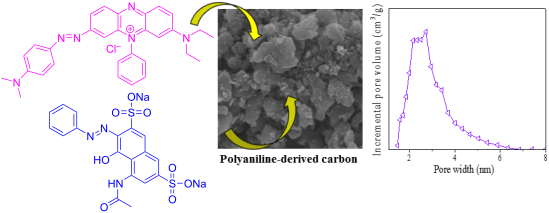
- Hyung Jun An Jong Min Park Nazmul Abedin Khan Sung Hwa Jhung Department of Chemistry and Green-Nano Materials Research Center, Kyungpook National University, Daegu 41566, Republic of Korea 10.3762/bjnano.11.47 Abstract Polyaniline-derived carbon (PDC) was obtained via pyrolysis of polyaniline
- under different temperatures and applied for the purification of water contaminated with dye molecules of different sizes and charge by adsorption. With increasing pyrolysis temperature, it was found that the hydrophobicity, pore size and mesopore volume increased. A mesoporous PDC sample obtained via
- pyrolysis at 900 °C showed remarkable performance in the adsorption of dye molecules, irrespective of dye charge, especially in the removal of bulky dye molecules, such as acid red 1 (AR1) and Janus green B (JGB). For example, the most competitive PDC material showed a Q0 value (maximum adsorption capacity


High-performance asymmetric supercapacitor made of NiMoO4 nanorods@Co3O4 on a cellulose-based carbon aerogel
Beilstein J. Nanotechnol. 2020, 11, 240–251, doi:10.3762/bjnano.11.18
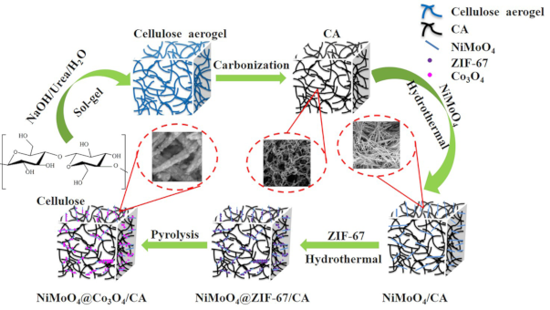
- uniformly filled the 3D network of CA, providing plenty of sites for coupling with ZIF-67. Third, ZIF-67 was in situ crystallized on the surface of the NiMoO4/CA skeleton by a hydrothermal method. Finally, after the pyrolysis of the NiMoO4@ZIF-67/CA precursor at 350 °C for 2 h under air atmosphere, the
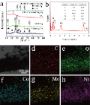
- NiMoO4@Co3O4/CA composite was obtained. The morphology of CA, NiMoO4/CA, NiMoO4@ZIF-67/CA and NiMoO4@Co3O4/CA was investigated by scanning electron microscopy (SEM) and transmission electron microscopy (TEM). As shown in Figure S1 in Supporting Information File 1, after the pyrolysis process, the volume
- temperature. The resulting ZIF-67/NiMoO4/CA sample was washed with anhydrous ethanol and then dried in vacuum at 80 °C for 12 h. Finally, the NiMoO4@Co3O4/CA samples were prepared by the pyrolysis of the NiMoO4@ZIF-67/CA precursors at 350 °C for 2 h under air atmosphere. Characterization The crystalline




Simple synthesis of nanosheets of rGO and nitrogenated rGO
Beilstein J. Nanotechnol. 2020, 11, 68–75, doi:10.3762/bjnano.11.7
- the carbon sheet, which lead to a disruption of the conjugated network and the flow of charge carriers is reduced by several orders of magnitude [10]. Up to now, several methods including chemical vapor deposition [11][12][13], arc discharge [14], aerosol pyrolysis [15], mechanical exfoliation [1


Semitransparent Sb2S3 thin film solar cells by ultrasonic spray pyrolysis for use in solar windows
Beilstein J. Nanotechnol. 2019, 10, 2396–2409, doi:10.3762/bjnano.10.230
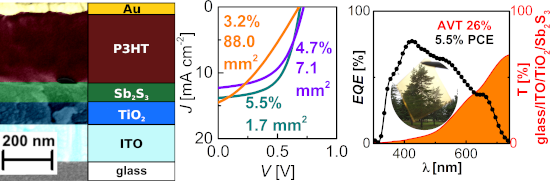
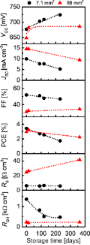
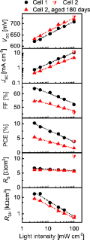
- spectroscopy, semitransparent Sb2S3 thin films can be rapidly grown in air by the area-scalable ultrasonic spray pyrolysis method. Integrated into a ITO/TiO2/Sb2S3/P3HT/Au solar cell, a power conversion efficiency (PCE) of 5.5% at air mass 1.5 global (AM1.5G) is achieved, which is a record among spray
- . Keywords: antimony sulfide; semitransparent solar cells; solar windows; thin films; ultrasonic spray pyrolysis; Introduction Modern buildings, especially high-rise buildings, have a large window area available for building-integrated photovoltaics (BIPV). Covering the windows with semitransparent thin
- techniques are the high energy demand and the need for batch processing, which inflates production costs. As a potent solution-based chemical deposition method, ultrasonic chemical spray pyrolysis (USP) is capable of rapid, area-scalable, roll-to-roll and low-cost in-air deposition of Sb2S3 layers without



Synthesis of highly active ETS-10-based titanosilicate for heterogeneously catalyzed transesterification of triglycerides
Beilstein J. Nanotechnol. 2019, 10, 2039–2061, doi:10.3762/bjnano.10.200
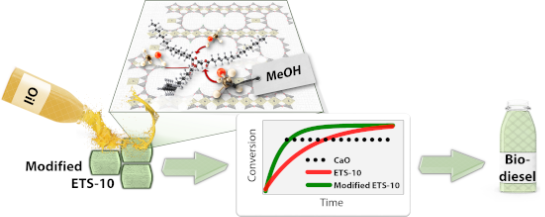
- efficient catalyst for initiation of the transesterification process that converts triglycerides into FAMEs. Other methods that do not require a catalyst, such as pyrolysis and utilization of supercritical fluid technology, are considered to be highly energy-intensive, inhibiting their practical








Synthesis of nickel/gallium nanoalloys using a dual-source approach in 1-alkyl-3-methylimidazole ionic liquids
Beilstein J. Nanotechnol. 2019, 10, 1754–1767, doi:10.3762/bjnano.10.171
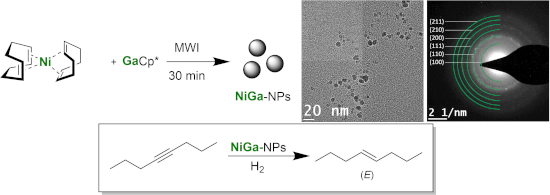
- oxidation state +1, was reported to form phase-pure NiGa and Ni3Ga nanoparticles with Ni(COD)2 in the ionic liquid [BMIm][BF4] under microwave-induced pyrolysis at 230 °C [30]. GaCp* is reported to be thermally stable in organic solvents in the absence of hydrogen to up to 300 °C [43]. In imidazolium-based




Upcycling of polyurethane waste by mechanochemistry: synthesis of N-doped porous carbon materials for supercapacitor applications
Beilstein J. Nanotechnol. 2019, 10, 1618–1627, doi:10.3762/bjnano.10.157
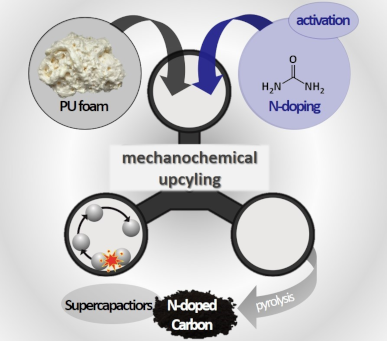
- concentration on the activation process by varying the K2CO3 content, while keeping the PU content constant (Table 1). The samples are indexed as follows: polyurethane (PU), K2CO3 (PC), and “800” standing for the pyrolysis temperature and a sequence number at the end of the sample code. The obtained plastic


Rapid thermal annealing for high-quality ITO thin films deposited by radio-frequency magnetron sputtering
Beilstein J. Nanotechnol. 2019, 10, 1511–1522, doi:10.3762/bjnano.10.149
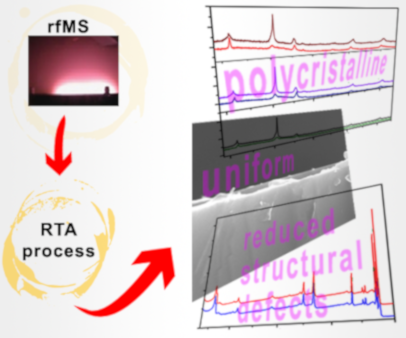
- of ITO in various applications increases when the electrical properties are improved. Various deposition techniques have been used to obtain TCO thin films, such as: vacuum thermal evaporation [15][16], chemical vapor deposition [17], sol–gel [18], pyrolysis spray techniques [5][19], magnetron


Alloyed Pt3M (M = Co, Ni) nanoparticles supported on S- and N-doped carbon nanotubes for the oxygen reduction reaction
Beilstein J. Nanotechnol. 2019, 10, 1251–1269, doi:10.3762/bjnano.10.125
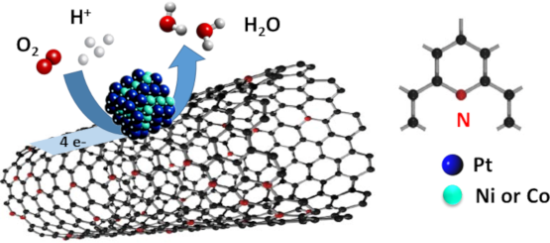
- at a binding energy of 781.1 and 796.2 eV [95]. However, the CoN4 single atoms are usually prepared by high temperature pyrolysis, and in our case, the synthesis is conducted at room temperature. It is very unlikely that CoN4 species will be formed under these conditions. The results of the XPS