


Search results
Search for "quality factor" in Full Text gives 124 result(s) in Beilstein Journal of Nanotechnology.
The patterning toolbox FIB-o-mat: Exploiting the full potential of focused helium ions for nanofabrication
Beilstein J. Nanotechnol. 2021, 12, 304–318, doi:10.3762/bjnano.12.25
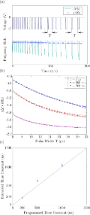
- ], and graphene nanomechanical resonators have been employed as various sensors [42][43][44][45][46]. Yet, the sensitivity at room temperature is limited by a rather low quality factor. Patterning of the devices into trampoline-shaped resonators yields a large increase in quality factor and, thus, device
- region exhibits temperatures around 800 K while the bridges stay close to room temperature. The resonance frequency of the fundamental mode is 12.5 MHz (cf. Figure 6b) and exhibits a quality factor of about 300 without laser heating. When suspended graphene is heated by a light source, the built-in
- increased responsiveness created by the trampoline pattern allows the system to operate as an ultra-sensitive and ultra-fast bolometer [48]. Finally, the increased quality factor and reduced thermal coupling to the substrate should allow for efficient side-band cooling experiments, which so far are hindered


Numerical analysis of vibration modes of a qPlus sensor with a long tip
Beilstein J. Nanotechnol. 2021, 12, 82–92, doi:10.3762/bjnano.12.7
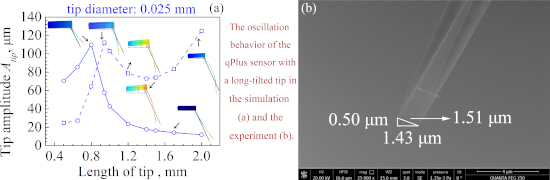
- horizontally and vertically. The vibration characteristics of qPlus sensors with different tip sizes were studied. An optimized tip size was derived from obtained values of tip amplitude, ratio between vertical and lateral amplitude components, output current, and quality factor. For high spatial resolution
- temperature range [1]. In addition, quartz tuning forks have a high elastic constant, a high quality factor (Q factor), and are self-sensing due to the piezoelectric effect [1]. Therefore, a quartz tuning fork can be used as a force sensor. The central part of the “qPlus sensor” is a quartz tuning fork of






Bulk chemical composition contrast from attractive forces in AFM force spectroscopy
Beilstein J. Nanotechnol. 2021, 12, 58–71, doi:10.3762/bjnano.12.5
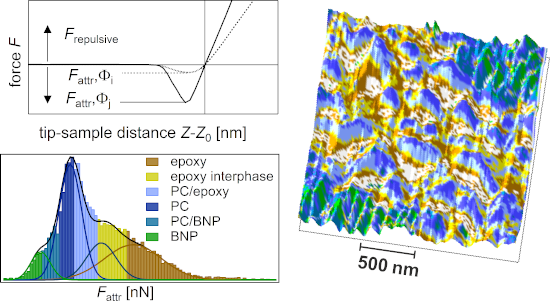
- /m, and a quality factor Q = 421. The AFM-IR data were obtained using a NanoIR2s (Bruker/Anasys Instruments) coupled with a multichip quantum cascade laser (QCL) source (MIRcat, Daylight Solutions; with a tunable repetition rate in the range of 0–500 kHz and a spectral resolution of 0.1 cm−1


Nanomechanics of few-layer materials: do individual layers slide upon folding?
Beilstein J. Nanotechnol. 2020, 11, 1801–1808, doi:10.3762/bjnano.11.162
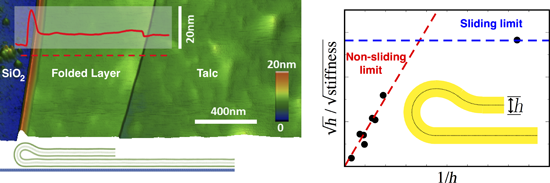
- small force or mass changes [16]. It is important to emphasize that the quality factor of the resonator depends on its maximum resonant frequency, which is intrinsically related to the flexural properties of the employed 2D material. As an example of an application based on the folds of a 2D material

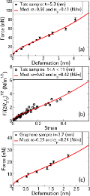
![[Graphic 5]](/bjnano/content/inline/2190-4286-11-162-i8.svg?max-width=637&scale=1.18182) =
= ![[Graphic 6]](/bjnano/content/inline/2190-4286-11-162-i9.svg?max-width=637&scale=1.18182) as a function of 1/h for the nine measured talc samples. h is a directly measured ...
as a function of 1/h for the nine measured talc samples. h is a directly measured ...
Design of V-shaped cantilevers for enhanced multifrequency AFM measurements
Beilstein J. Nanotechnol. 2020, 11, 1525–1541, doi:10.3762/bjnano.11.135
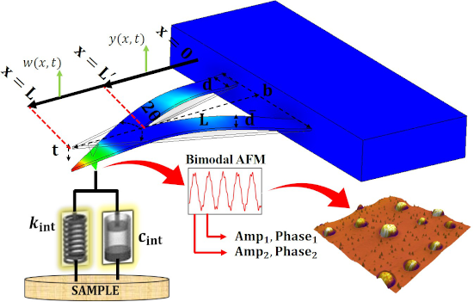
- spring constant, quality factor, and resonant frequencies. Research has been conducted to improve AFM cantilevers in terms of manipulation, approximating material property, and images contrast. V-shaped and triangular cantilevers are widely employed in AFM imaging techniques due to their stability
- . Bushan stated that the cantilever stylus used in the AFM should have properties such as low normal spring constant, high resonance frequency, high quality factor, high lateral spring constant, and short cantilever length [12]. V-shaped cantilevers have a unique set of properties, that is, low normal
- 16, the modal damping factors can be written as: In Equation 17, subscript i represents the corresponding eigenmode. By finding γi, the corresponding eigenmode quality factor can be found since: Qi = 1/2γi. The quality factors of each eigenmode in addition to their corresponding resonant frequencies


![[Graphic 4]](/bjnano/content/inline/2190-4286-11-135-i26.svg?max-width=637&scale=1.18182) = 15 µm, bref = 8...
= 15 µm, bref = 8...


![[Graphic 17]](/bjnano/content/inline/2190-4286-11-135-i39.svg?max-width=637&scale=1.18182) ) of V-shaped cantilevers for...
) of V-shaped cantilevers for...


Current measurements in the intermittent-contact mode of atomic force microscopy using the Fourier method: a feasibility analysis
Beilstein J. Nanotechnol. 2020, 11, 453–465, doi:10.3762/bjnano.11.37
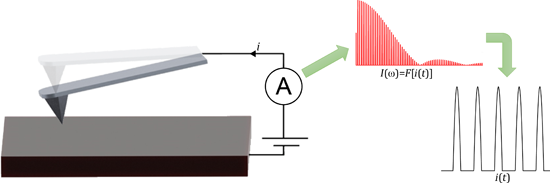
- effective mass of the cantilever, f0 its natural frequency, k its stiffness and Q its quality factor: Fexcitation is the sinusoidal driving force and the tip–sample interaction force, Finteraction, is based on the Hamaker equation [42]. The simulation parameters are provided in Table 1. In the power




A review of demodulation techniques for multifrequency atomic force microscopy
Beilstein J. Nanotechnol. 2020, 11, 76–91, doi:10.3762/bjnano.11.8

- particularly suited to intermittent-contact AFM [9] when tip–sample contact is gentle. Environmental damping has a large effect on the quality factor (Q) of the cantilever. Values can range from as low as Q ≈ 1 in liquid [10], up to Q ≈ 10,000 in ultra-high vacuum [11]. This affects the mechanical bandwidth of
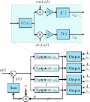
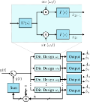
- the cantilever according to the expression f−3dB = f0/2Q, where f0 is the fundamental resonance frequency. Assuming all other components in the z-axis feedback loop are also working at high speed [3], a low quality factor can demand a fast demodulator [12]. Multifrequency AFM (MF-AFM) is a major field


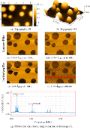
The effect of heat treatment on the morphology and mobility of Au nanoparticles
Beilstein J. Nanotechnol. 2020, 11, 61–67, doi:10.3762/bjnano.11.6
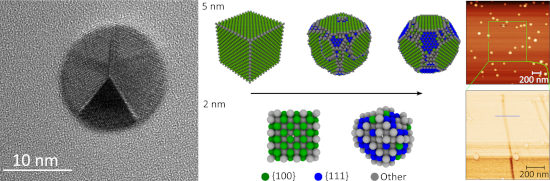
- calculated with the following equation [20]: where k is the cantilever spring constant, f0 is the resonance frequency of the cantilever, Aset is the setpoint amplitude, Apiezo is the drive amplitude, θ is the phase signal and Q is the quality factor of the AFM cantilever. The dissipated power was used as a


Integration of sharp silicon nitride tips into high-speed SU8 cantilevers in a batch fabrication process
Beilstein J. Nanotechnol. 2019, 10, 2357–2363, doi:10.3762/bjnano.10.226
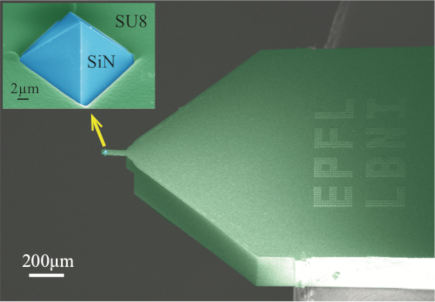
- amplitude modulation AFM (HS-AM-AFM) enhanced by up to one order of magnitude due to their low mechanical quality factor (Q-factor) and hence their high mechanical bandwidth [23]. A tip made of SU8 or other structural polymers can be integrated into a polymer cantilever by moulding. Such tips have been


Nanoscale spatial mapping of mechanical properties through dynamic atomic force microscopy
Beilstein J. Nanotechnol. 2019, 10, 1332–1347, doi:10.3762/bjnano.10.132
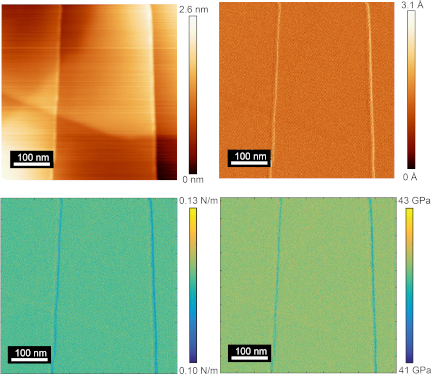
- contaminants on the surface when measuring the mechanical properties of atomic-sized defects [15][16][17]. Furthermore, the high quality factor of the AFM cantilever that is achieved under UHV conditions can be very beneficial in dynamic AFM modes, as the Q-factor is inversely proportional to the force




Influence of dielectric layer thickness and roughness on topographic effects in magnetic force microscopy
Beilstein J. Nanotechnol. 2019, 10, 1056–1064, doi:10.3762/bjnano.10.106
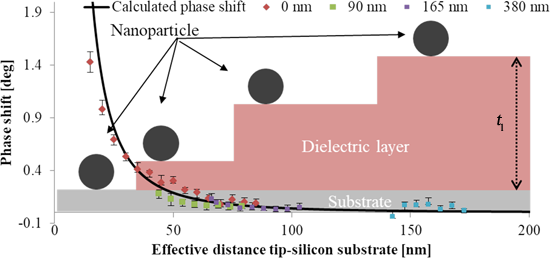
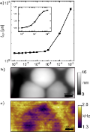
- nanoparticle diameter) resulting in a positive phase shift: with A being the effective capacitive area, z the lift height, d the nanoparticle diameter, VCPD the contact potential difference between tip and substrate, Q the quality factor, k the spring constant of the cantilever, and ε0 the dielectric constant
- magnetized sphere [20][22][23]: where Q is the quality factor of the cantilever, k is the spring constant, µ0 is the vacuum permeability, mp is the magnetic moment of the nanoparticle, mtip is the magnetic moment of the tip, and a is the distance between the two dipoles and is shown schematically in Figure 5




![[Graphic 2]](/bjnano/content/inline/2190-4286-10-106-i7.svg?max-width=637&scale=1.18182) ; black line) and measured phase shift for single nanoparticles with 10 ± 2 nm diameter...
; black line) and measured phase shift for single nanoparticles with 10 ± 2 nm diameter...


Direct growth of few-layer graphene on AlN-based resonators for high-sensitivity gravimetric biosensors
Beilstein J. Nanotechnol. 2019, 10, 975–984, doi:10.3762/bjnano.10.98
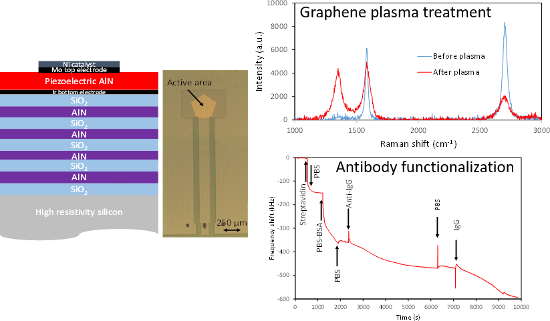
- and quality factor of the resonators remain almost constant, with typical values of, respectively, 3% and 150 [20]. It is worth noting that the modulus of the impedance displays a minimum at around 3000 MHz due to the LC resonance that arises from the static capacitance of the resonator and the series


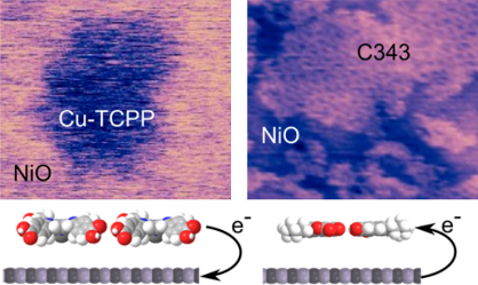
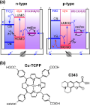
Comparing a porphyrin- and a coumarin-based dye adsorbed on NiO(001)
Beilstein J. Nanotechnol. 2019, 10, 874–881, doi:10.3762/bjnano.10.88
- ≈ 165 kHz, quality factor Qf1 ≈ 30000) with compensated contact potential difference. Kelvin probe force microscopy was performed in frequency-modulation mode using a voltage modulation applied together with the dc compensation voltage to the sample (Vac = 800 mV and fac = 1 kHz or 250 Hz). (a



Commercial polycarbonate track-etched membranes as substrates for low-cost optical sensors
Beilstein J. Nanotechnol. 2019, 10, 677–683, doi:10.3762/bjnano.10.67
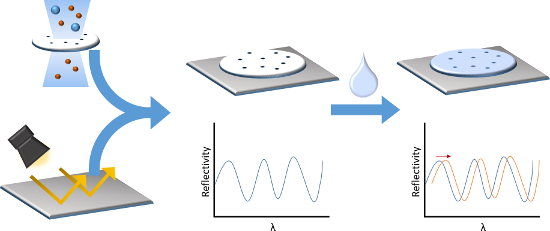
- become smaller, which should make the spectrum return to its initial position. Regarding the spectrum, the best region to monitor how the position of its maxima changes when exposed to ethanol is between 2200 nm and 2500 nm. In this region, the peaks have a better quality factor and their amplitude is


Review of time-resolved non-contact electrostatic force microscopy techniques with applications to ionic transport measurements
Beilstein J. Nanotechnol. 2019, 10, 617–633, doi:10.3762/bjnano.10.62
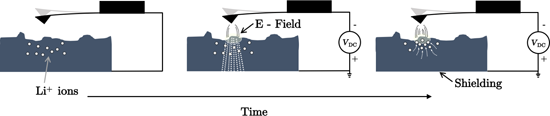
- ). This is due to the large quality factor enhancement present on resonance, which would lead to a significant contribution to the total mechanical energy from even a small voltage (and thus field) applied near resonance, invalidating the perturbation approach to derive Equation 8. Validation measurement
- on a conducting sample with known voltage pulses. One foreseeable challenge will be in performing measurements under vacuum conditions, which is typically beneficial due to the large increase in quality factor that leads to a greater force sensitivity. However, for intermodulation spectroscopy
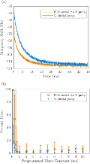
- measurements, this will lead to a smaller frequency window in which quality factor enhancement will be available to boost the relative amplitudes of the IMPs. This is illustrated in Figure 10 where panel (a) shows synthetic data for a standard cantilever in ambient (Q = 200) with several IMPs clearly visible





Electromagnetic analysis of the lasing thresholds of hybrid plasmon modes of a silver tube nanolaser with active core and active shell
Beilstein J. Nanotechnol. 2019, 10, 294–304, doi:10.3762/bjnano.10.28
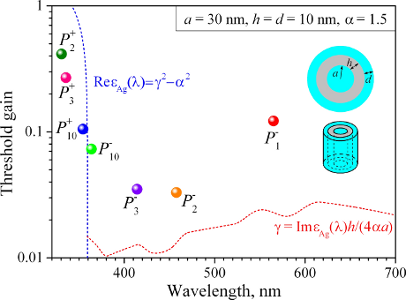
- ). Thus, Note that if γN << 1, then Equation 13 can also be cast to the form given in Equation 15; this is equivalent to Equation 14 but presented in terms of the dielectric permittivity of the gain material in the active region, Thus the lowest-threshold mode is not the one with the highest quality
- factor, QN(0), of the pump-off cavity, but the mode with the largest product of and QN(0). The expression obtained, in either form, communicates the fundamental engineering rule for the design of low-threshold laser: take the highest-Q mode of the cavity and equip it with the active region matching its


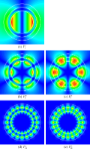
![[Graphic 29]](/bjnano/content/inline/2190-4286-10-28-i46.svg?max-width=637&scale=1.18182) λ = 565.03...
λ = 565.03...

![[Graphic 36]](/bjnano/content/inline/2190-4286-10-28-i53.svg?max-width=637&scale=1.18182) ...
...


Magnetic-field sensor with self-reference characteristic based on a magnetic fluid and independent plasmonic dual resonances
Beilstein J. Nanotechnol. 2019, 10, 247–255, doi:10.3762/bjnano.10.23
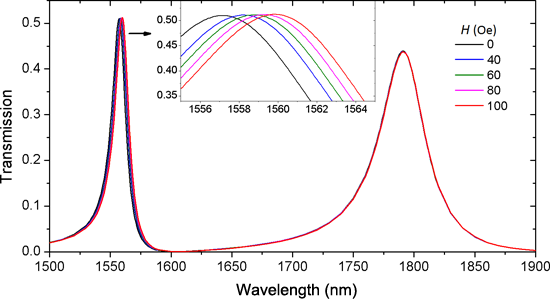
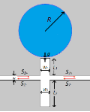
- MDM waveguide, the energy stored in the stubs will be reduced and the quality factor of the stubs will decrease. As a result, broad transmission dips are formed. The disk resonator has narrower transmission dip than the stubs. This is because the disk is side-coupled to the waveguide. Besides, the
- disk resonator can support whispering gallery modes. These can greatly reduce the propagation loss in the disk resonator. Therefore its quality factor is higher and the corresponding transmission dip is narrower. The spectral shape of the transmission for a single resonator agrees well with the



Femtosecond laser-assisted fabrication of chalcopyrite micro-concentrator photovoltaics
Beilstein J. Nanotechnol. 2018, 9, 3025–3038, doi:10.3762/bjnano.9.281
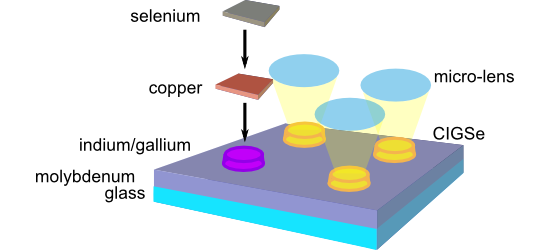
- , n the diode quality factor and T the temperature. By solving for VOC = V(I = 0) and performing the substition of ISC = IL with ISC·C, where C is the concentration factor and ISC the short-circuit current we obtain: This is inserted into the expression for the efficiency: With the incident power


Effective sensor properties and sensitivity considerations of a dynamic co-resonantly coupled cantilever sensor
Beilstein J. Nanotechnol. 2018, 9, 2546–2560, doi:10.3762/bjnano.9.237
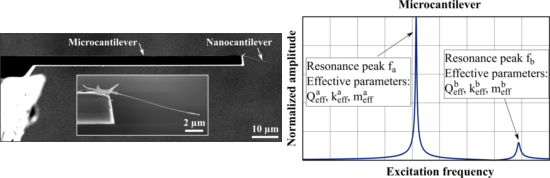
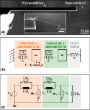
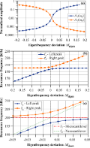
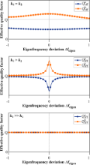
- and the degree of frequency matching. Consequently, while an individual cantilever is characterized by its eigenfrequency, spring constant, effective mass and quality factor, the resonance peaks of the co-resonantly coupled system can be described by effective properties which are a mixture of both
- -resonant system’s effective properties. While the effective spring constant and effective mass mainly define the sensitivity of the coupled cantilever sensor, the effective quality factor primarily influences the detectability. Hence, a balance has to be found in optimizing both parameters in sensor design
- response of an individual cantilever to an external interaction depends on the cantilever’s properties, i.e., its resonance frequency f, spring constant k, effective mass meff and also quality factor Q (with regard to detectability [19]). While a single cantilever only exhibits one resonance peak for each


![[Graphic 7]](/bjnano/content/inline/2190-4286-9-237-i43.svg?max-width=637&scale=1.18182) ...
...


Metal–dielectric hybrid nanoantennas for efficient frequency conversion at the anapole mode
Beilstein J. Nanotechnol. 2018, 9, 2306–2314, doi:10.3762/bjnano.9.215
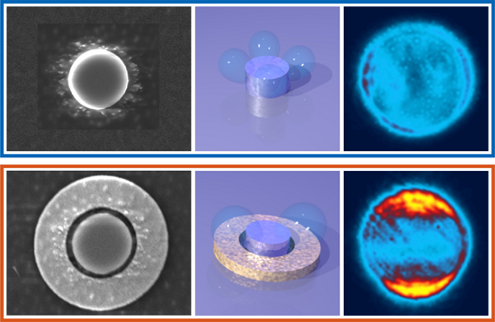
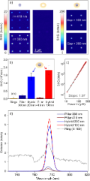
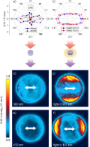
- condition and reduces the quality factor because of increased radiation losses. As a result, while the F value in the hybrid antenna is enhanced by more than two orders of magnitude, the SHG yield is only increased by one order of magnitude (see Figure 5d,f). Furthermore, in the hybrid configuration, SHG




Cathodoluminescence as a probe of the optical properties of resonant apertures in a metallic film
Beilstein J. Nanotechnol. 2018, 9, 1491–1500, doi:10.3762/bjnano.9.140
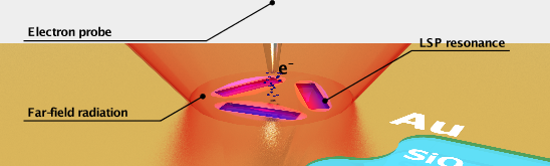
- other optical methods. These modes are of intrinsic interest, however, and have also attracted attention due to their relatively high quality factor and long lifetimes that may underpin new optical sensors with a higher sensitivity and figure-of-merit than devices utilising “bright” dipole modes [35


Excitation of nonradiating magnetic anapole states with azimuthally polarized vector beams
Beilstein J. Nanotechnol. 2018, 9, 1478–1490, doi:10.3762/bjnano.9.139
- to eliminate, the norm of the vector B. If we define the quality factor of the anapole excitation as Q = (4Pinc/Psca) − 1, then, by expanding the output vector again on the basis of the left-singular vectors, finally we have: It becomes obvious now that the ability of a particle to host a
- quality factor of the supported anti-resonances is quite low as well. A plasmonic nanoparticle can only provide us with a very poor (anti-)resonant spectrum to work with. So, we resort to high-index silicon nanoparticles as a platform to excite a nonradiating anapole state of magnetic type. Silicon


Electrostatically actuated encased cantilevers
Beilstein J. Nanotechnol. 2018, 9, 1381–1389, doi:10.3762/bjnano.9.130
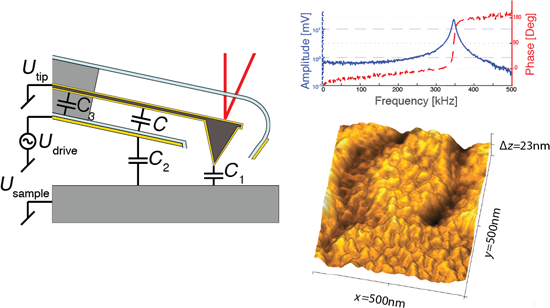
- , and a quality factor of Q = 50.0. Using the Sader method [25] we find a spring constant of kdyn = 18 N·m−1. Figure 2d compares electrostatically excited resonance peaks for air and deionized water. For regular cantilevers without an encasement viscous losses to the surrounding medium are the dominate
- damping mechanism. The quality factor of the cantilever typically drops by a factor of 50 when immersed in water. By trapping air inside the hydrophobic encasement [26][27][28][29], the resonator maintains a high quality factor and resonance frequency. For the liquid air comparison a softer cantilever (L
- ≈ 90 μm) with a stiffness of k = 4 N·m−1 and a resonance frequency of f0 = 144.525 kHz and Qair = 36.5 is used. After immersion in water the quality factor remained high Qwater = 27.4, which enables high-resolution imaging with small interaction forces in liquids. Moreover, the clean electrostatic




Artifacts in time-resolved Kelvin probe force microscopy
Beilstein J. Nanotechnol. 2018, 9, 1272–1281, doi:10.3762/bjnano.9.119
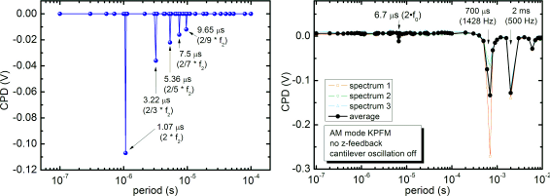
- quality factor. The first three (i = 1,2,3) eigenmodes of the cantilever are used. Only the electrostatic forces relevant for electrostatic and Kelvin probe force microscopy are considered according to [2]: Here, Vdc is the applied dc voltage, Vac the ac-detection voltage, fac the frequency of the ac


Electrostatic force spectroscopy revealing the degree of reduction of individual graphene oxide sheets
Beilstein J. Nanotechnol. 2018, 9, 1146–1155, doi:10.3762/bjnano.9.106
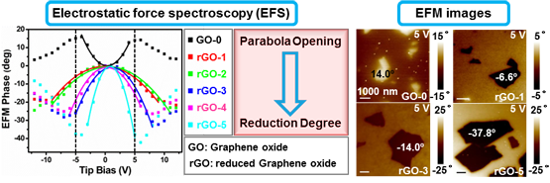
- of dergree of the samples' reduction as: sample 0 < sample 1 ≈ sample 2 < sample 4 < sample 3 < sample 5. The parabola of ∆φn − ∆φMica versus tip bias (Equation 8) is consistent with the previous results [31] that the small phase shifts ∆φ can be approximated by where Q is the quality factor of the





