Search results
Search for "remediation" in Full Text gives 78 result(s) in Beilstein Journal of Nanotechnology.
Mn-doped ZnO nanopowders prepared by sol–gel and microwave-assisted sol–gel methods and their photocatalytic properties
Beilstein J. Nanotechnol. 2024, 15, 1283–1296, doi:10.3762/bjnano.15.104
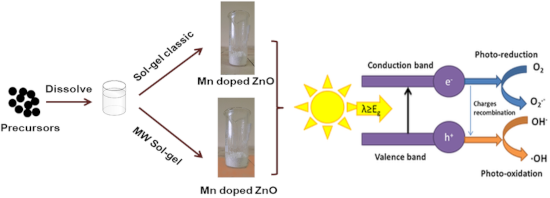
- purification and pollutant remediation. Experimental Synthesis The starting materials (all reagent grade) for obtaining precursor solutions are zinc acetate dehydrate (Zn(CH3COO)2·2H2O), anhydrous manganese acetate (Mn(CH3COO)2), absolute ethanol (C2H5OH), and triethanolamine (C6H15NO3, TEA). The precursor


Enhanced catalytic reduction through in situ synthesized gold nanoparticles embedded in glucosamine/alginate nanocomposites
Beilstein J. Nanotechnol. 2024, 15, 1227–1237, doi:10.3762/bjnano.15.99
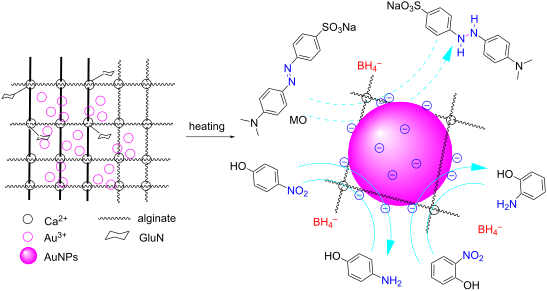
- challenge has spurred extensive research into various remediation methods. Recently, there has been growing interest in catalytic degradation using oxidizing agents such as H2O2 and iron in Fenton reactions [26], as well as reducing agents such as NaBH4 with nanometal catalysts. Additionally, the reduction
- , offering a potent solution for dye remediation [28]. In our ongoing research, we synthesized for the first time AuNPs using GluN molecules, serving as both interaction agents to cross-link Ca-Alg gelispheres and reducing agents, thereby providing a novel material for the stabilization of AuNPs. The




Introducing third-generation periodic table descriptors for nano-qRASTR modeling of zebrafish toxicity of metal oxide nanoparticles
Beilstein J. Nanotechnol. 2024, 15, 1142–1152, doi:10.3762/bjnano.15.93
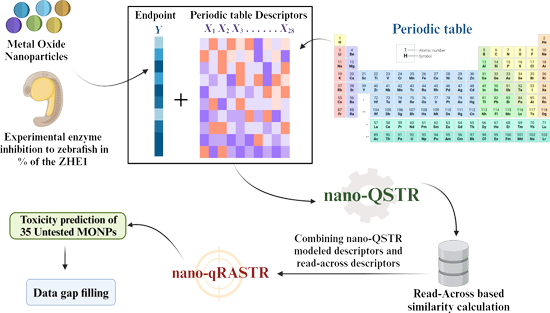
- Supratik Kar Siyun Yang Chemometrics and Molecular Modeling Laboratory, Department of Chemistry and Physics, Kean University, 1000 Morris Avenue, Union, NJ 07083, USA 10.3762/bjnano.15.93 Abstract Metal oxide nanoparticles (MONPs) are widely used in medicine and environmental remediation because
- strong antibacterial, antifungal, antidiabetic, antioxidant, anticancer, and photocatalytic activities [7][8][9]. Besides the medical field, they are also commonly used in commercial products such as fuel cells and plastics, and environmental applications such as analysis, sensing, remediation, and
- of safer nanomedicines. MONPs are also being utilized in environmental remediation efforts to remove pollutants from water and soil. The insights gained from this study can help in selecting nanoparticles that are effective in remediation without posing significant risks to aquatic life and


Green synthesis of biomass-derived carbon quantum dots for photocatalytic degradation of methylene blue
Beilstein J. Nanotechnol. 2024, 15, 755–766, doi:10.3762/bjnano.15.63
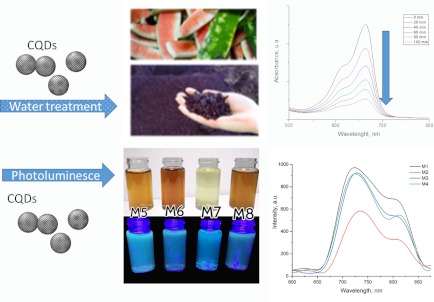
- the efficacy of the top-down hydrothermal method for CQD production, offering insights for tailored applications and emphasizing the potential of biomass-derived nanomaterials in environmental remediation and biomedicine, paving the way for the development of sustainable and effective technologies. UV


Nanomaterials for photocatalysis and applications in environmental remediation and renewable energy
Beilstein J. Nanotechnol. 2023, 14, 722–724, doi:10.3762/bjnano.14.58

- appropriate for treating pollutants, even in atmospheric conditions [9][10][11]. Moreover, the photocatalysis method is also a potential solution for environmental remediation, carbon emission reduction, and renewable energy production [12][13][14]. Combining photocatalysts and sunlight irradiation is a
- nanomaterials for environmental remediation and sustainable applications; for instance, dye solar cells, solar-driven water splitting, NOx removal, and contaminant degradation. This Thematic Issue will make a good reference material and be of great use for scientists in nanomaterials fields. Viet Van Pham and

Quercetin- and caffeic acid-functionalized chitosan-capped colloidal silver nanoparticles: one-pot synthesis, characterization, and anticancer and antibacterial activities
Beilstein J. Nanotechnol. 2023, 14, 362–376, doi:10.3762/bjnano.14.31
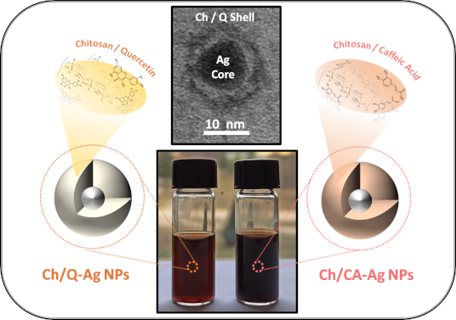
- , especially chitosan–silver nanocomposites, which yield a new type of nanoparticles, has raised more attention regarding eco-friendly properties and applications in nanomedicine and environmental remediation. Syntheses of chitosan, silver, and quercetin alone or in binary combinations, that is, chitosan


Bismuth-based nanostructured photocatalysts for the remediation of antibiotics and organic dyes
Beilstein J. Nanotechnol. 2023, 14, 291–321, doi:10.3762/bjnano.14.26
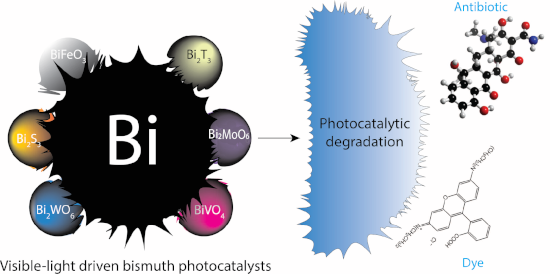
- . Different materials based on bismuth have been developed and used for a range of environmental remediation applications. For instance, Mu et al. [46] synthesised a Bi2S3/Bi4O7 heterostructure via an in situ sulfidation approach and utilised it for the degradation of rhodamine B dye under visible-light
- extensive critical evaluation is given of recent findings on the photocatalysis of nanostructured materials based on bismuth and doped bismuth for the remediation of textile and pharmaceutical wastewater. Antibiotics and organic dyes in the environment and their toxicological consequences Antibiotics are
- ecological concerns of excess antibiotics and dyes in the environment. This article discusses the use of nanomaterials based on bismuth for the remediation of persistent organic pollutants. Bismuth and bismuth-based nanostructured photocatalysts Bismuth (Bi) is a semimetal and a member of the p-block with a


Recent trends in Bi-based nanomaterials: challenges, fabrication, enhancement techniques, and environmental applications
Beilstein J. Nanotechnol. 2022, 13, 1316–1336, doi:10.3762/bjnano.13.109
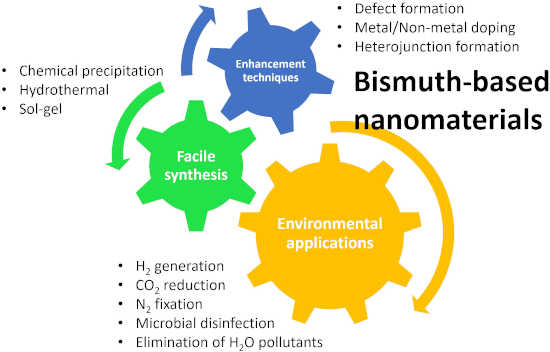
- photocatalysts, upgrading the photocatalytic ability, and understanding essential reactions of the photocatalytic process. This paper provides insights into the characteristics of Bi-based photocatalysts, making them a promising future nanomaterial for environmental remediation. The current review discusses the
- of Bi-based photocatalysts. Keywords: bismuth-based nanomaterials; environmental remediation; heterojunction formation; photocatalysis; Introduction Nanomaterials photocatalysis is a “green” integrative technique that combines physics, chemistry, and materials science with chemical engineering to
- synthesizing and applying a semiconductor photocatalyst have been published in recent years. A survey on bismuth-based nanocomposites with the search keywords "Bismuth-based nanoparticles for environmental remediation" from 2011 to 2021 yields roughly 15,995 articles. This data illustrates the interest of the





Rapid fabrication of MgO@g-C3N4 heterojunctions for photocatalytic nitric oxide removal
Beilstein J. Nanotechnol. 2022, 13, 1141–1154, doi:10.3762/bjnano.13.96
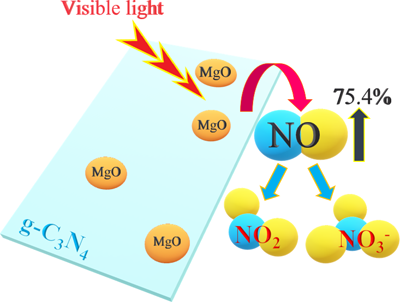
- simple way to synthesize photocatalytic heterojunction materials with high reusability and the potential of heterojunction photocatalysts in the field of environmental remediation. Keywords: g-C3N4; MgO; nitric oxide; photocatalyst; visible light; Introduction The rapid development of industrialization
- pollutants with light under ambient conditions [10]. Due to its unique properties, such as high chemical stability and low synthesis cost, graphitic carbon nitride has attracted considerable attention in the realm of environmental remediation [11][12][13]. It is an organic semiconductor that effectively








Recent advances in green carbon dots (2015–2022): synthesis, metal ion sensing, and biological applications
Beilstein J. Nanotechnol. 2022, 13, 1068–1107, doi:10.3762/bjnano.13.93
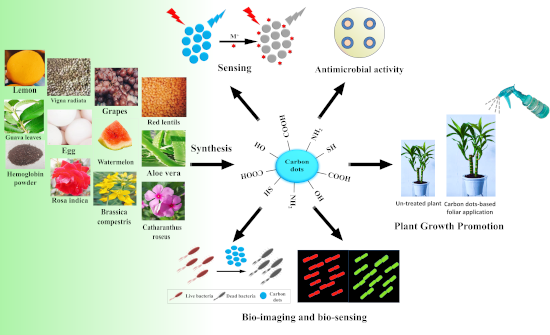
- , wheat straw, and rice straw by Ding et al. These CDs were utilized to detect Fe3+, which could be useful in areas of environmental remediation and medical diagnosis [77]. A hydrothermal technique employing near-critical water has been utilized recently to develop a simple, cost-effective, and




A comprehensive review on electrospun nanohybrid membranes for wastewater treatment
Beilstein J. Nanotechnol. 2022, 13, 137–159, doi:10.3762/bjnano.13.10
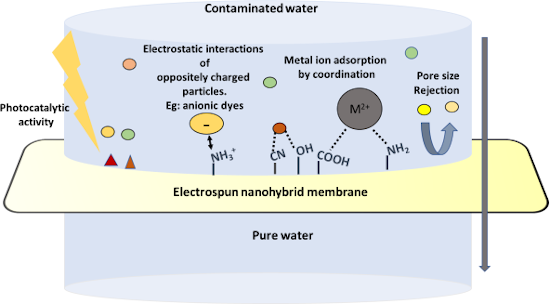
- functional specific nanosized additives to be used in various water remediation membrane techniques. The adsorption, filtration, photocatalytic, and bactericidal capabilities of the hybrid membranes in removing common major water pollutants such as metal ions, dyes, oils, and biological pollutants have been
- discussed. Finally, an outlook on the future research pathways to fill the gaps existing in water remediation have been suggested. Keywords: electrospinning; environmental remediation; membrane technologies; nanohybrids; water purification; Review 1 Introduction Nanotechnology is a technique that exploits
- regulation of parameters has made the electrospun nanofibers find its applications in various areas such as the health sector, food, energy and textile industries, and environmental remediation. Electrospun nanohybrids (ENHs) produced by immobilization of function-specific nanoparticles or mixtures of





The role of deep eutectic solvents and carrageenan in synthesizing biocompatible anisotropic metal nanoparticles
Beilstein J. Nanotechnol. 2021, 12, 924–938, doi:10.3762/bjnano.12.69
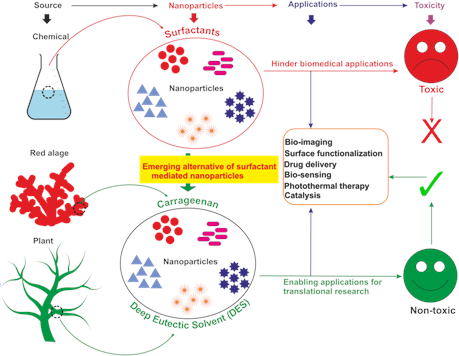
- nanomaterials in CO2 mitigation and climate change control [20][21][22]. Several other studies reported novel environmental remediation approaches based on nanomaterials [23][24]. Deep eutectic solvents (DESs) are a class of nascent sustainable, non-aqueous solvents, comparable to room-temperature ionic liquids


Recent progress in magnetic applications for micro- and nanorobots
Beilstein J. Nanotechnol. 2021, 12, 744–755, doi:10.3762/bjnano.12.58
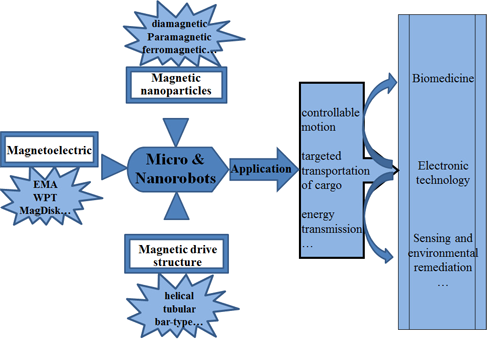
- Micro- and nanorobots (MNRs) present challenges and prospects in the field of nanotechnology. MNRs have been a major direction of technological development and will be widely used in many fields such as biomedicine, electronic technology and sensing, and environmental remediation [1][2][3][4]. Therefore
- avoid the reassembly of the chains. Doherty et al. [38] pointed out that superparamagnetic nanofibers could prevent the uncontrolled agglomeration of particles because the residual magnetization of this material is almost zero. They applied this technology to sensing and environmental remediation and
- with different magnetisms with applications in, for example, energy-saving logic, sensors, environmental remediation, and data storage [52]. Chen et al. [53] studied compensated magnetic heterostructures containing ferrimagnetic CoGd alloys and antiferromagnetic IrMn layers. The terahertz emission from


Boosting of photocatalytic hydrogen evolution via chlorine doping of polymeric carbon nitride
Beilstein J. Nanotechnol. 2021, 12, 473–484, doi:10.3762/bjnano.12.38
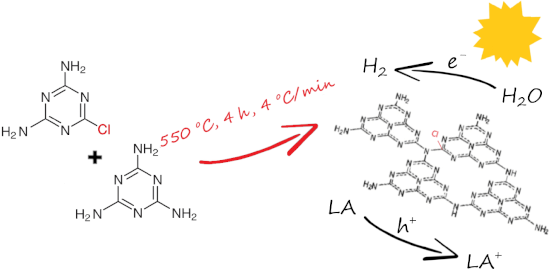
- hydrogen [1][2][3][4], environmental remediation [5][6], decomposition of organic pollutants [7], CO2 reduction into hydrocarbon fuels [8][9][10], disinfection [11][12], and selective organic transformations [13][14]. One of the most studied catalysts is polymeric carbon nitride (PCN). This graphite-like


A review on the green and sustainable synthesis of silver nanoparticles and one-dimensional silver nanostructures
Beilstein J. Nanotechnol. 2021, 12, 102–136, doi:10.3762/bjnano.12.9
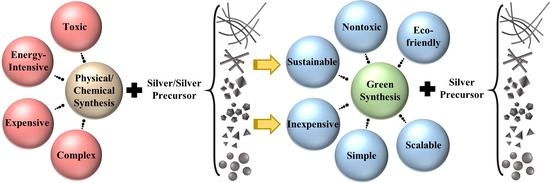
- ][34][35][36], wastewater remediation [37][38], and catalysis [39][40][41][42][43], to name a few. The success of nanotechnology has been established and the promising outcomes cannot be overlooked; however, the main principles behind the production of nanomaterials are yet to be examined more closely


Preparation, characterization and photocatalytic performance of heterostructured CuO–ZnO-loaded composite nanofiber membranes
Beilstein J. Nanotechnol. 2020, 11, 631–650, doi:10.3762/bjnano.11.50
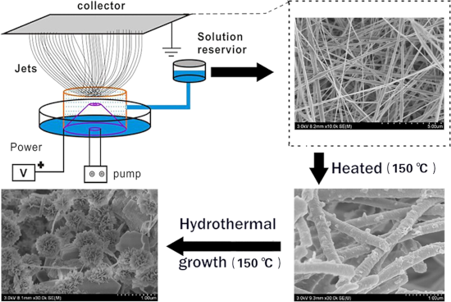
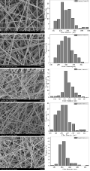
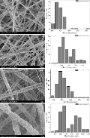
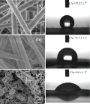
- three times, and the degradation rate remained above 90%. Keywords: electrospinning; composite nanofibers; heterostructured CuO–ZnO; hydrothermal synthesis; photocatalysis; semiconductor oxide; Introduction Water remediation is one of the main scientific research subjects regarding environmental













Nanoarchitectonics: bottom-up creation of functional materials and systems
Beilstein J. Nanotechnol. 2020, 11, 450–452, doi:10.3762/bjnano.11.36
- ], environmental remediation with sensitive pollutant detection [3][4], and biological and biomedical applications [5][6] is a crucial matter. In addition to the intrinsic functionality of bulk materials, control of their internal structure on the nanometer-scale is realized to be increasingly important to obtain

Advanced hybrid nanomaterials
Beilstein J. Nanotechnol. 2019, 10, 2563–2567, doi:10.3762/bjnano.10.247
- .10.247 Keywords: colloidal chemistry; environmental remediation; hybrid nanomaterials; nanocomposite; nanofillers; nanomedicine; nanostructures; polymer fillers; pore templating; smart materials; The Maya blue pigment that was used in Mexico during the VIIIth century is often given as a prototypical
- photosensitizers for biological applications. In this work, it was found that the photodynamic efficacy of the system depends on the substituent at the porphyrin phosphinate groups. Environmental Hybrid nanomaterials may play a key role in the field of environmental research, in which environmental remediation and
- material exhibiting both micro- and mesopores [37]. The material is efficient in adsorbing water micropollutants, as well as the pathogen E. coli., lending itself for application in water remediation. For the same application, a silica matrix, onto which the conjugated β-ketoenol–pyridine–furan ligand is
Review of advanced sensor devices employing nanoarchitectonics concepts
Beilstein J. Nanotechnol. 2019, 10, 2014–2030, doi:10.3762/bjnano.10.198

- detection of various risks [9][10][11], environmental remediation including pollution problems [12][13][14], energy production [15][16][17], energy and electricity storage [18][19][20], device technologies [21][22][23], and biomedical treatment [24][25][26][27], and the targets must be detected with high


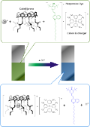





Layered double hydroxide/sepiolite hybrid nanoarchitectures for the controlled release of herbicides
Beilstein J. Nanotechnol. 2019, 10, 1679–1690, doi:10.3762/bjnano.10.163
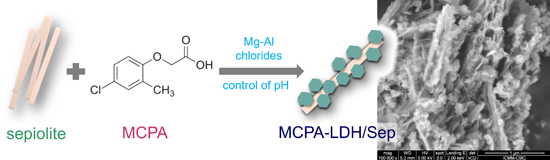
- palygorskite has increased, yielding nanoplatforms useful in a large number of applications from catalysis, environmental remediation, energy production and storage to biomedicine [14][18]. The co-assembly of particles can be reached through several methods, from the direct assembly of the clay to diverse


BiOCl/TiO2/diatomite composites with enhanced visible-light photocatalytic activity for the degradation of rhodamine B
Beilstein J. Nanotechnol. 2019, 10, 1412–1422, doi:10.3762/bjnano.10.139
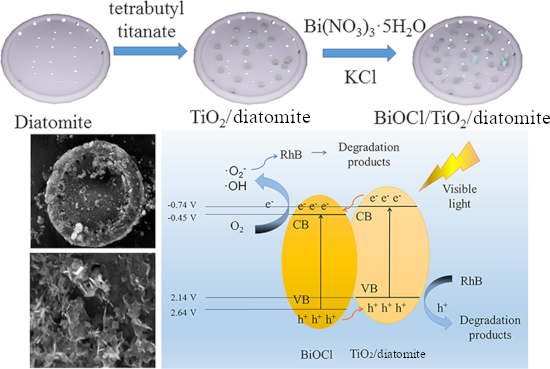
- , low-cost and ease of application, which are superior to other approaches of environmental remediation [8][9]. However, the application of photocatalysis is still hindered due to the agglomeration of photocatalyst particles, the difficulty of photocatalyst recovery and low photocatalytic performance


Construction of a 0D/1D composite based on Au nanoparticles/CuBi2O4 microrods for efficient visible-light-driven photocatalytic activity
Beilstein J. Nanotechnol. 2019, 10, 1360–1367, doi:10.3762/bjnano.10.134
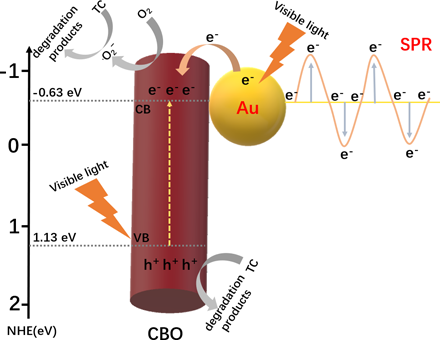
- , enhancing photoresponse and providing more active sites. Our work shows a possible design of efficient photocatalysts for environmental remediation. Keywords: Au nanoparticles; 0D/1D composite; CuBi2O4 microrods; photocatalysis; photocatalytic degradation; Introduction Heterogeneous semiconductor
- work suggests a rational structure design of efficient photocatalysts for environmental remediation. Synthesis of Au/CBO composite. (a) XRD patterns of CBO and 2.5 wt % Au/CBO; (b) UV–vis diffuse reflectance spectra of as-prepared composites. (a, b) SEM images and (c) EDX spectrum of the 2.5 wt % Au


Photoactive nanoarchitectures based on clays incorporating TiO2 and ZnO nanoparticles
Beilstein J. Nanotechnol. 2019, 10, 1140–1156, doi:10.3762/bjnano.10.114

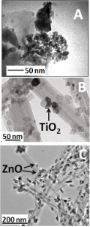
- semiconductors such as ZnO are increasingly investigated for processes concerning environmental remediation, antibacterial activity and chemical technologies for hydrogen production and synthesis of organic compounds [22]. Anyway, according to WoS, in the given period TiO2 NPs appear to be cited ten times more
- often than ZnO NPs regarding their use as photocatalysts. One of the main applications of clay–semiconductor materials is the mineralization of organic pollutants, which represents an ideal solution for the remediation of wastewater contaminated with diverse organic species. This process consists in the



Removal of toxic heavy metals from river water samples using a porous silica surface modified with a new β-ketoenolic host
Beilstein J. Nanotechnol. 2019, 10, 262–273, doi:10.3762/bjnano.10.25
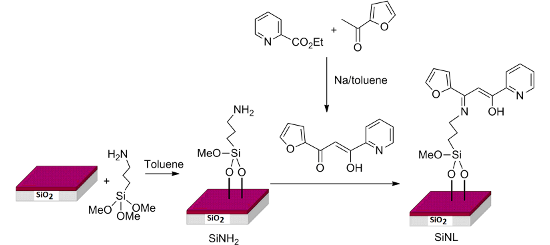
- cycles of adsorption/desorption. Compared to literature results, this material can be considered a high-performing remediation adsorbent for the extraction of Zn(II) from natural real water solution. Keywords: heavy metals; hybrid materials; β-ketoenol–pyridine–furan ligands; polluted media; porous
- silica; remediation; Introduction Nowadays, pollution by a large number of heavy metals in water sources is commonly observed due the constant economical growth of our modern society. This environmental issue is being seriously considered by different circles [1][2], given that heavy metal ions are
- removal of heavy metals from real aqueous solutions – a topic which bears enormous importance in environmental remediation. FTIR spectra of SiG, SiNH2 and SiNL. SEM images of free silica (SiG), SiNH2 and SiNL. Thermogravimetric profiles of free silica SiG, SiNH2 and SiNL. Nitrogen adsorption–desorption


New micro/mesoporous nanocomposite material from low-cost sources for the efficient removal of aromatic and pathogenic pollutants from water
Beilstein J. Nanotechnol. 2019, 10, 119–131, doi:10.3762/bjnano.10.11
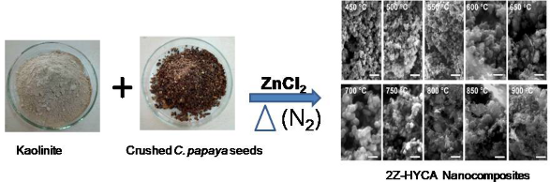
- matter. The new composite is stable up to 900 °C and is an efficient adsorbent for the removal of a water micropollutant, 4-nitrophenol, and a pathogen, E. coli, from an aqueous medium, suggesting applications in water remediation are feasible. Keywords: 4-nitrophenol; Carica papaya seeds; clay; E. coli
- ; micro/mesoporous; nanocomposite; water remediation; Introduction Porous carbon-based materials and carbon/inorganic hybrid materials have extensively been used for the adsorption of pollutants, such as heavy metals or aromatic hydrocarbons, from water in developing countries [1][2][3][4]. The removal
- overcome these issues. When water remediation in developing countries is considered, the price of the materials and not their performance is unfortunately the key aspect to take into account. Current technologies such as activated carbon or silica-based materials are still too expensive for these