


Search results
Search for "selected area electron diffraction" in Full Text gives 95 result(s) in Beilstein Journal of Nanotechnology.
Exfoliation in a low boiling point solvent and electrochemical applications of MoO3
Beilstein J. Nanotechnol. 2020, 11, 662–670, doi:10.3762/bjnano.11.52
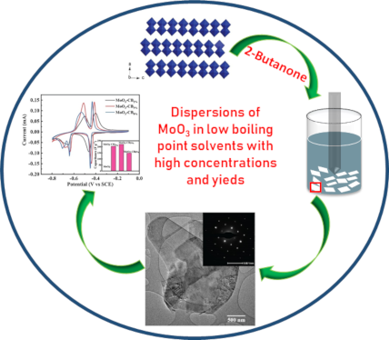
- 2a. Supporting Information File 1, Figure S3c,d, also shows ultrathin nanosheets of MoO3 suggesting a successful exfoliation. The selected-area electron diffraction (SAED) pattern shown in the inset of Figure 2a indicates that the MoO3 nanosheets are crystalline after exfoliation. Crystallinity and

Soybean-derived blue photoluminescent carbon dots
Beilstein J. Nanotechnol. 2020, 11, 606–619, doi:10.3762/bjnano.11.48
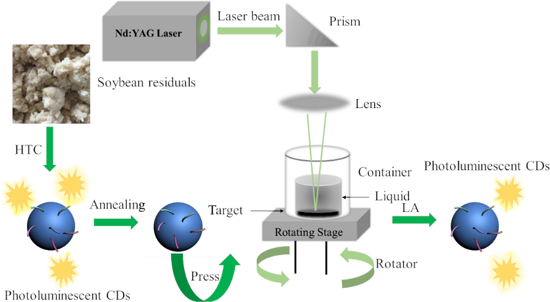
- the nanoparticles. The selected area electron diffraction (SAED) patterns embedded in the figures reveal that all the nanoparticles are amorphous. The EDS and XPS analyses of the HTC-CDs shown in Figure S1 and Table S1 in Supporting Information File 1 confirm that the main component of the HTC-CDs is


Simple synthesis of nanosheets of rGO and nitrogenated rGO
Beilstein J. Nanotechnol. 2020, 11, 68–75, doi:10.3762/bjnano.11.7
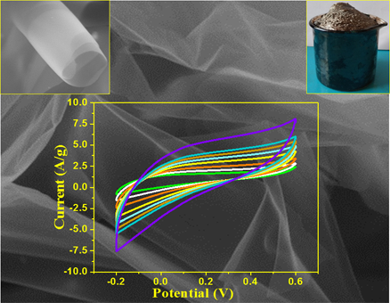
- 76.03% and 23.97%, respectively, as shown in the inset of Figure 4c. The TEM image shown in Figure 4d indicates that the rGO sample is comprised of nanosheets with a smooth surface. The TEM image is in accordance with the SEM image (Figure 4b) of the sample. The selected area electron diffraction (SAED


Ultrathin Ni1−xCoxS2 nanoflakes as high energy density electrode materials for asymmetric supercapacitors
Beilstein J. Nanotechnol. 2019, 10, 2207–2216, doi:10.3762/bjnano.10.213
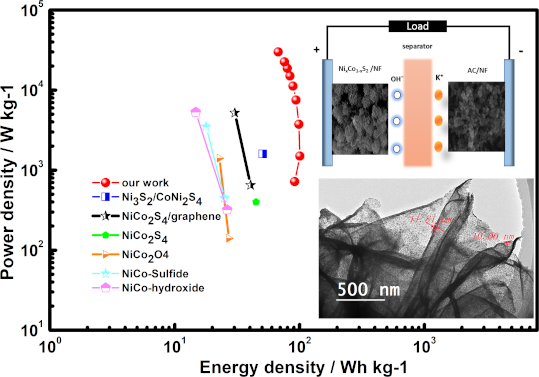
- ). Moreover, the polycrystalline nature of the synthesized Ni–Co sulfides was revealed by the selected area electron diffraction (SAED) pattern (Figure 1g, inset), the diffraction pattern can be readily indexed to the (002), (021), (112), (113) and (132) planes of Ni1−xCoxS2. The diffraction pattern is


Fabrication and characterization of Si1−xGex nanocrystals in as-grown and annealed structures: a comparative study
Beilstein J. Nanotechnol. 2019, 10, 1873–1882, doi:10.3762/bjnano.10.182
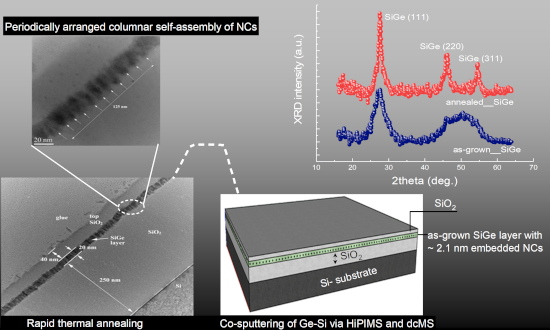
- annealed at 600 °C for 1 min is presented. The thicknesses of the SiO2 bottom (buffer) and top layers are about 250 nm and 40 nm, respectively while the SiGe layer is 20 nm thick. Figure 4b presents the selected area electron diffraction (SAED) pattern. The area used for electron diffraction was selected


Synthesis of nickel/gallium nanoalloys using a dual-source approach in 1-alkyl-3-methylimidazole ionic liquids
Beilstein J. Nanotechnol. 2019, 10, 1754–1767, doi:10.3762/bjnano.10.171
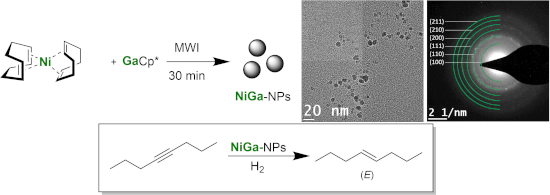
- copper or gold grids. The size distribution was determined manually or with the aid of the Gatan Digital Micrograph software from at least 50 individual particles. Selected-area electron diffraction (SAED) patterns have been recorded with the above mentioned TEM instruments. The area selection was




Remarkable electronic and optical anisotropy of layered 1T’-WTe2 2D materials
Beilstein J. Nanotechnol. 2019, 10, 1745–1753, doi:10.3762/bjnano.10.170
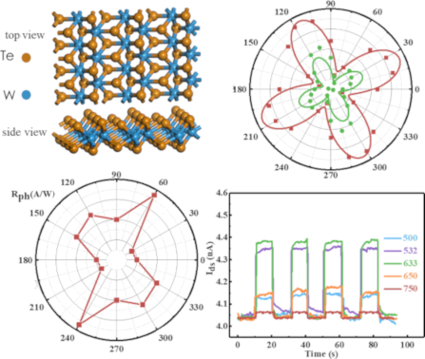
- distorted 1T’ atomic phase, and the selected area electron diffraction (SEAD) pattern illustrated in Figure 1c, which demonstrates the rectangular symmetry of 1T’-WTe2 with space group Pmn21. Furthermore, graphene diffraction spots were utilized for calibrating the SAED pattern, and we measured the lattice


Direct observation of oxygen-vacancy formation and structural changes in Bi2WO6 nanoflakes induced by electron irradiation
Beilstein J. Nanotechnol. 2019, 10, 1434–1442, doi:10.3762/bjnano.10.141
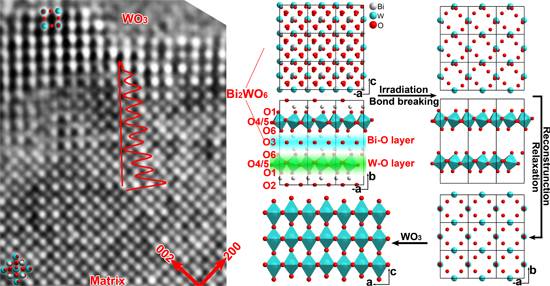
- = 1.5406 Å). Morphological analyses were carried out on a field-emission scanning electron microscope (SEM, Hitachi S-4800) equipped with an energy-dispersive X-ray spectroscopy (EDX) detector operating at 10 kV and 10 μA. Selected-area electron diffraction (SAED) and high-resolution transmission electron


Synthesis and characterization of quaternary La(Sr)S–TaS2 misfit-layered nanotubes
Beilstein J. Nanotechnol. 2019, 10, 1112–1124, doi:10.3762/bjnano.10.111
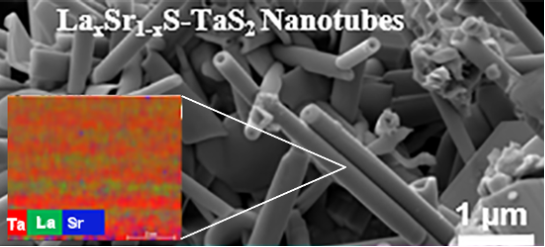
- two folding vectors for TaS2. The atomic arrangement of the SrxLa1−xS double layers are better revealed in the nanotube shown in Figure 4d. The structure of this nanotube was further analyzed by a selected area electron diffraction (SAED) pattern as shown in Figure 5. Twelve pairs of spots
- % Sr in the precursor) nanotube showing 1.157 nm periodicity along the c-axis. b) Selected area electron diffraction showing the orientation relationship between LaS layers (green) and TaS2 layers (red). The nanotube axis is shown as a pink arrow and the basal reflections are marked with blue arrows


Structural and optical properties of penicillamine-protected gold nanocluster fractions separated by sequential size-selective fractionation
Beilstein J. Nanotechnol. 2019, 10, 955–966, doi:10.3762/bjnano.10.96
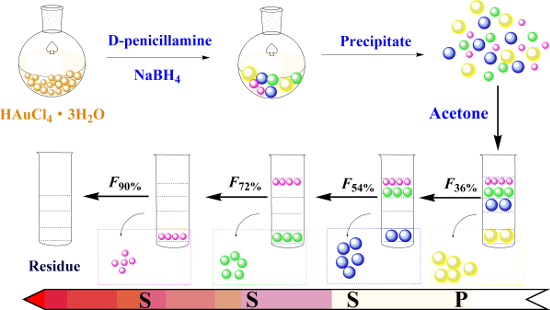
- AuNC product is comprised of spherical particles of various sizes. The insets of Figure 2A show the selected area electron diffraction (SAED) pattern and high-magnification TEM image of a typical particle. The SAED pattern indicates the {111} and {200} planes of the typical face-centered cubic (fcc
- difficult to obtain similar size fractions in the separation process. This issue can be addressed by accurately and carefully controlling the water/acetone proportion so that the required size fraction may be achieved. Selected-area electron diffraction characteristics of AuNCs fractions The corresponding



Magnetic field-assisted assembly of iron oxide mesocrystals: a matter of nanoparticle shape and magnetic anisotropy
Beilstein J. Nanotechnol. 2019, 10, 894–900, doi:10.3762/bjnano.10.90

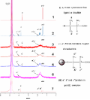
- nanoparticles (Figure 4e) plays a dominant role and controls the symmetry of packing arrangement and the orientational order of the nanoparticles within the mesocrystals. In contrast to such mesocrystals, the selected area electron diffraction (SAED) patterns of the “directed mesocrystals” (Figure 4b,c,f


Enhancement in thermoelectric properties due to Ag nanoparticles incorporated in Bi2Te3 matrix
Beilstein J. Nanotechnol. 2019, 10, 634–643, doi:10.3762/bjnano.10.63
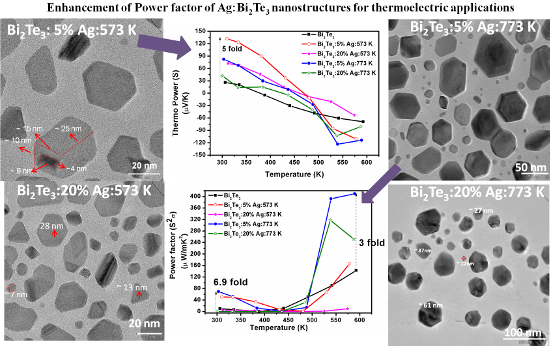
- using a commercial instrument (Ulvac, ZEM3). The instrument error during TE measurements is ±5%. Results and Discussion X-ray diffraction and transmission electron microscopy selected area electron diffraction X-ray diffraction (XRD) patterns of Bi2Te3 with different concentrations of Ag (0, 5 and 20 wt
- ), respectively, can be seen. Bi2Te3 and Ag planes are in good agreement with the literature [20]. Figure 1b shows the XRD of commercially purchased Bi2Te3 and Ag powder without annealing. The XRD results have also been verified by transmission electron microscopy selected area electron diffraction (TEM SAED



Temperature-dependent Raman spectroscopy and sensor applications of PtSe2 nanosheets synthesized by wet chemistry
Beilstein J. Nanotechnol. 2019, 10, 467–474, doi:10.3762/bjnano.10.46
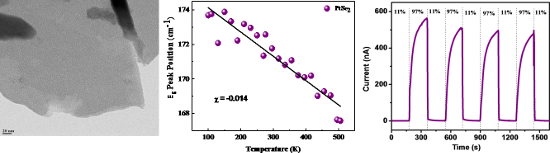
- -synthesized PtSe2 sample clearly showing the sheet-like morphology with lateral dimension of ≈700 nm. Figure 3d shows a high-resolution TEM image of the PtSe2 nanosheets. The inset of Figure 3d shows the selected area electron diffraction pattern (SAED) which depicts the crystalline nature of the as
- nanosheets. (a) Typical XRD pattern and (b) Raman spectra recorded at room temperature. (a–d) Typical SEM images for PtSe2 nanosheets synthesized using the wet chemistry method. (a–c) Low-magnification TEM images and (d) a high-magnification TEM image, where the inset shows the selected area electron
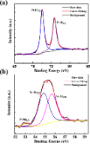
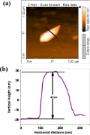
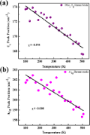
- diffraction (SAED) pattern for the as-synthesized PtSe2 nanosheets. (a) Deconvoluted XPS spectra for Pt and (b) Se elements. (a) AFM image and (b) AFM height profile plot for a PtSe2 nanosheet. Temperature-dependent Raman spectra analysis for PtSe2 nanosheets for the (a) Eg mode and the (b) A1g mode as a



Site-specific growth of oriented ZnO nanocrystal arrays
Beilstein J. Nanotechnol. 2019, 10, 274–280, doi:10.3762/bjnano.10.26
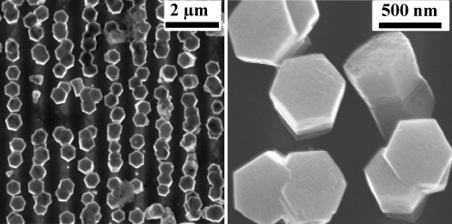
- of the wurtzite phase of ZnO (JCPDS 05-0664), which is well in agreement with the XRD results (Figure 3). Moreover, the selected area electron diffraction (SAED) pattern (Figure 4d) reveals the excellent crystallinity of ZnO NCs and confirms the growth of the c-axis normal to the substrate in these
- S600 sample. (a, b) Low-resolution TEM image, (c) high-resolution TEM image, and (d) selected area electron diffraction pattern. Acknowledgements S.C. and D.K.P. acknowledge the financial support from DST under the Indo-Finland Project [INT/FIN/P-12]. V.D. and H.L. acknowledge support from the Academy


Wet chemistry route for the decoration of carbon nanotubes with iron oxide nanoparticles for gas sensing
Beilstein J. Nanotechnol. 2019, 10, 105–118, doi:10.3762/bjnano.10.10
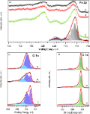
- size distribution for all samples. In addition, HRTEM imaging for the anchored iron oxide nanoparticles on the MWCNTs surface was performed and the selected area electron diffraction (SAED) pattern for was identified, as shown in Figure 4. The image shows the high crystallinity of the prepared iron
- oxide nanoparticles and the selected area electron diffraction (SAED) pattern of the iron oxide nanoparticles (see inset of Figure 4) clearly shows the diffraction rings of a typical cubic structure. XPS was performed to investigate the chemical composition of the samples and, in particular, to




Zn/F-doped tin oxide nanoparticles synthesized by laser pyrolysis: structural and optical properties
Beilstein J. Nanotechnol. 2019, 10, 9–21, doi:10.3762/bjnano.10.2
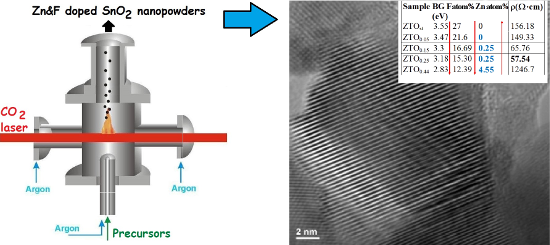
- the crystalline domains by selected area electron diffraction (SAED) analysis. Energy dispersion X-ray spectroscopy (EDX) was performed using a scanning electron microscopy (SEM-Inspect TM S50) with an acceleration voltage of 15 kV, using a SiLi detector cooled with liquid nitrogen. This method can



Improved catalytic combustion of methane using CuO nanobelts with predominantly (001) surfaces
Beilstein J. Nanotechnol. 2018, 9, 2526–2532, doi:10.3762/bjnano.9.235
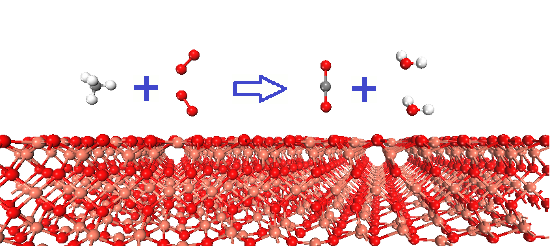
- transmission electron microscopy (TEM). Figure 2a,b shows the NWs which have a diameter of 20–100 nm and length of 1–3 μm, and Figure 2c shows the thin NBs, with a width of 200–300 nm and a length of ≈1 μm. The selected area electron diffraction patterns (SAED), projected from the [1] zone axis of the yellow


Synthesis of rare-earth metal and rare-earth metal-fluoride nanoparticles in ionic liquids and propylene carbonate
Beilstein J. Nanotechnol. 2018, 9, 1881–1894, doi:10.3762/bjnano.9.180
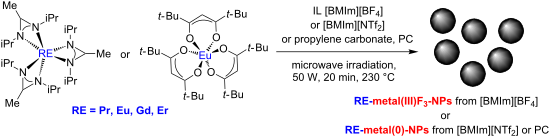
- IL [BMIm][BF4] for RE = Pr, Eu, Gd and Er. The crystalline phases and the absence of significant oxide impurities in RE-NPs and REF3-NPs were verified by powder X-ray diffraction (PXRD), selected area electron diffraction (SAED) and high-resolution X-ray photoelectron spectroscopy (XPS). The size
- -NPs (Figure 2) were assigned by selected area electron diffraction (SAED). The characterization was completed by energy-dispersive X-ray spectroscopy (EDX, in combination with TEM) for the qualitative element composition. EDX spectroscopy (Figure 3 and Figures S5b, S6c, Supporting Information File 1
- powder X-ray diffraction (PXRD), selected area electron diffraction (SAED) and high-resolution X-ray photoelectron spectroscopy (HR-XPS). To the best of our knowledge, there have been so far no reports on the synthesis of non-oxidized nanoparticles of any rare-earth element by soft-wet chemical routes


Nitrogen-doped carbon nanotubes coated with zinc oxide nanoparticles as sulfur encapsulator for high-performance lithium/sulfur batteries
Beilstein J. Nanotechnol. 2018, 9, 1677–1685, doi:10.3762/bjnano.9.159
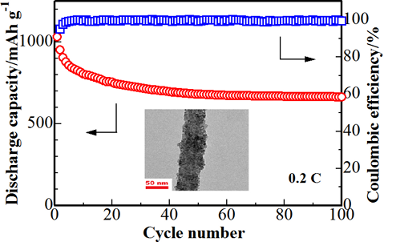
- observed in the HRTEM image of the ZnO@NCNT composite (Figure 3a), which correspond to the (002) and (101) planes of ZnO, respectively. Figure 3b shows the selected area electron diffraction (SAED) patterns of the ZnO@NCNT composite. The diffraction rings represent different planes of ZnO, revealing the


Sheet-on-belt branched TiO2(B)/rGO powders with enhanced photocatalytic activity
Beilstein J. Nanotechnol. 2018, 9, 1550–1557, doi:10.3762/bjnano.9.146
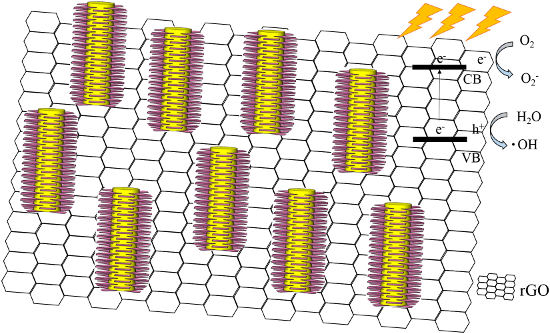
- in Figure 3a). Figure 3b shows more clearly the radially growing nanosheets along the nanobelt trunk. The average length of the nanosheet branches is ≈100 nm. The selected area electron diffraction (SAED) pattern collected from several “sheet-on-belt” nanostructures indicates diffraction rings


A novel copper precursor for electron beam induced deposition
Beilstein J. Nanotechnol. 2018, 9, 1220–1227, doi:10.3762/bjnano.9.113
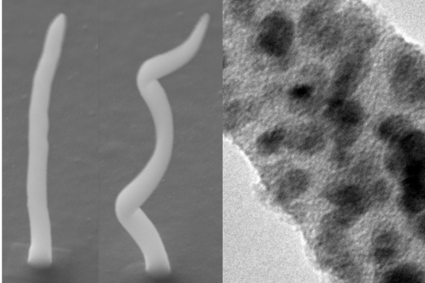
- deposits, with crystallites below ≈20 nm in diameter. Selected area electron diffraction (SAED) of the deposit (Figure 2e) yields diffraction rings which fully correspond to pure Cu, with no rings corresponding to Cu oxides. SAED was carried out for different regions within the deposit covering a


Magnetic characterization of cobalt nanowires and square nanorings fabricated by focused electron beam induced deposition
Beilstein J. Nanotechnol. 2018, 9, 1040–1049, doi:10.3762/bjnano.9.97
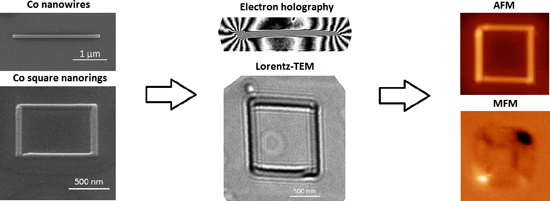
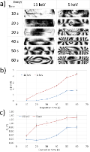
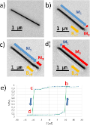
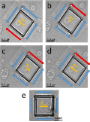
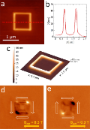
- , they consist of nanocrystalline Co grains embedded in a carbonaceous matrix. Selected area electron diffraction shows a mixture of hexagonal close-packed (HCP) and face-centered cubic (FCC) Co crystal structures [23]. Magnetic characterization in the TEM was carried out using off-axis EH and L-TEM in
Facile synthesis of a ZnO–BiOI p–n nano-heterojunction with excellent visible-light photocatalytic activity
Beilstein J. Nanotechnol. 2018, 9, 789–800, doi:10.3762/bjnano.9.72
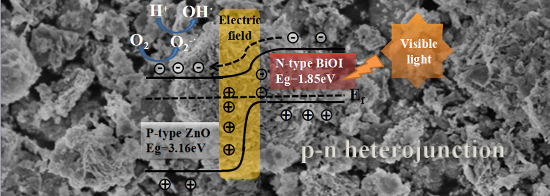
- the sample particle displayed here highly agrees with the results of the SEM image, where ZnO aggregates are decorated on the exfoliated BiOI nanolayers. The selected area electron diffraction (SAED) pattern of BiOI (Figure S2c, Supporting Information File 1) reveals that the sample is highly


Gas-assisted silver deposition with a focused electron beam
Beilstein J. Nanotechnol. 2018, 9, 224–232, doi:10.3762/bjnano.9.24
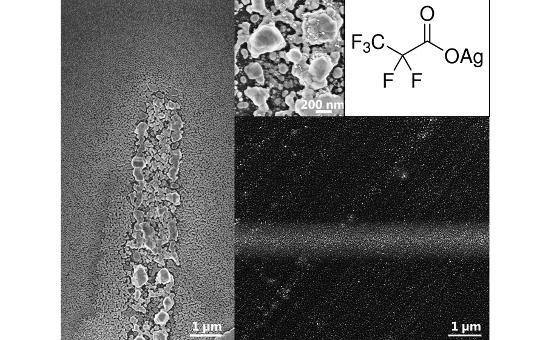
- performed with the CASINO v3.3 software. All graphical data was further processed with Origin® 2015. A JEOL JEM2200fs with a JEOL EX-24065JGT EDX detector was used for transmission electron microscopy (TEM). Selected area electron diffraction (SAED) pattern indexing was performed using the CSpot software
- . Large silver crystals were obtained with an average silver content of about 70 atom %. TEM and selected area electron diffraction confirmed the purity of the silver crystallites. Furthermore, electrical measurements on percolated line structures showed that the resistivity was 500 times better than that
- nanoparticles within the line. Visible lattice planes indicate crystallinity of the material. (d) Selected area electron diffraction pattern on the line deposit. The diffraction pattern clearly confirms crystallinity of the deposit. By comparing to the fcc silver diffraction pattern (green) the pure silver


Facile synthesis of silver/silver thiocyanate (Ag@AgSCN) plasmonic nanostructures with enhanced photocatalytic performance
Beilstein J. Nanotechnol. 2017, 8, 2781–2789, doi:10.3762/bjnano.8.277
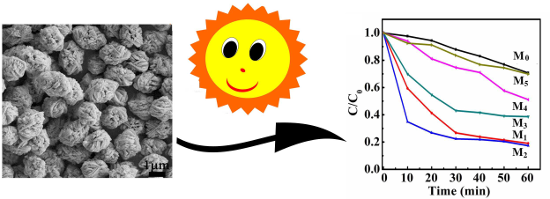
- are detected in the sample (Supporting Information File 1, Figure S1), showing the high chemical purity of the product. The selected area electron diffraction (SAED) pattern of a single particle (Figure 1c) displays a set of bright spots, obviously suggesting the high crystallinity of the product





