


Search results
Search for "structural properties" in Full Text gives 181 result(s) in Beilstein Journal of Nanotechnology.
Preferential enrichment and extraction of laser-synthesized nanoparticles in organic phases
Beilstein J. Nanotechnol. 2025, 16, 254–263, doi:10.3762/bjnano.16.20
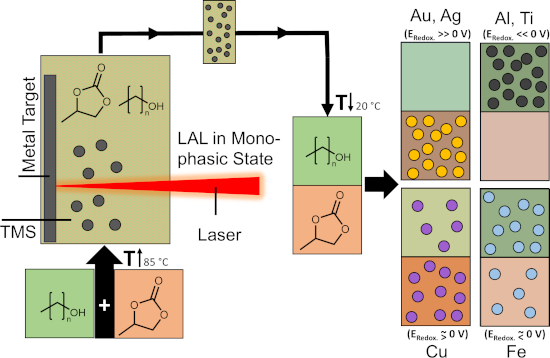
- formed nanoparticles [1][2][3]. However, the formed nanoparticles also interact with the used liquid during the process; thus, chemical reactions such as oxidation [3][4][5][6] or carbon shell formation [7][8][9] occur depending on the solvent’s properties, allowing for alterations of the structural
- properties and surface chemistry of the gained colloids. The use of organic solvents as liquid may result in reactive LAL processes [1][10] that cause elements from the solvent molecules (and solutes) to be part of the final nanoparticle’s composition. The solvent decomposition induced by laser-based




A review of metal-organic frameworks and polymers in mixed matrix membranes for CO2 capture
Beilstein J. Nanotechnol. 2025, 16, 155–186, doi:10.3762/bjnano.16.14




Theoretical study of the electronic and optical properties of a composite formed by the zeolite NaA and a magnetite cluster
Beilstein J. Nanotechnol. 2025, 16, 44–53, doi:10.3762/bjnano.16.5
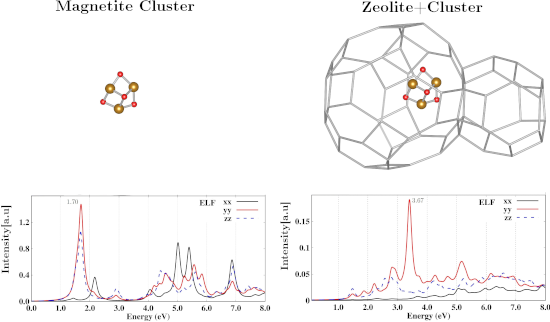
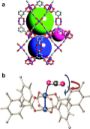
- magnetic properties to zeolite composites is evident, a comprehensive understanding of these properties remains elusive because of the challenges in experimentally characterizing the structural properties of zeolite-hosted clusters. This field is relatively new, and experimental data on the precise




Orientation-dependent photonic bandgaps in gold-dust weevil scales and their titania bioreplicates
Beilstein J. Nanotechnol. 2025, 16, 1–10, doi:10.3762/bjnano.16.1
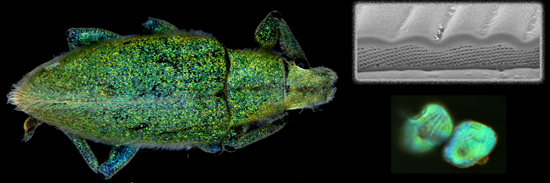
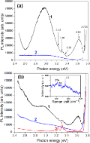
- ) are indicated with letters (LUXWK). The white circle in (d) approximates the collection area of the XY-translatable fiber. Structural properties of negative titania diamond scale replicas, optical measurements, and optical modeling. (a, b) Real space microscopy images, the insets show the associated


Natural nanofibers embedded in the seed mucilage envelope: composite hydrogels with specific adhesive and frictional properties
Beilstein J. Nanotechnol. 2024, 15, 1603–1618, doi:10.3762/bjnano.15.126
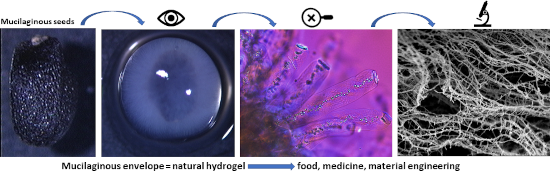
- branches because of their natural origin and biodegradability. They are used, for example, for paper production, as food additives, in biofilms, and in the production of packing materials and aerogels [15][18][20][21][22]. However, little is known about the structural properties of CNFs, and they require


Effect of radiation-induced vacancy saturation on the first-order phase transformation in nanoparticles: insights from a model
Beilstein J. Nanotechnol. 2024, 15, 1453–1472, doi:10.3762/bjnano.15.117

- , changes in the structural properties of Ni nanostructures due to ion bombardment have been reported in [15]. Interestingly, certain types of radiation ions have shown a positive effect on the crystal structure, leading to an increase in the degree of crystallinity after the austenitic annealing of defects


The role of a tantalum interlayer in enhancing the properties of Fe3O4 thin films
Beilstein J. Nanotechnol. 2024, 15, 1253–1259, doi:10.3762/bjnano.15.101

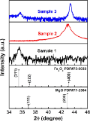
- interlayer has an effect on the crystallization of the Fe3O4 film. XRD patterns provide further information about the structural properties of a material, such as lattice constant (a), dislocation density (δ), and microstrain (ε). Bragg’s law was used to calculate the d-spacing of the Fe3O4(311) and Fe3O4
- annealed at a temperature of 723 K for a duration of 2 h under a base pressure of 2.3 × 10⁻⁸ Torr. The Fe3O4 films were analyzed regarding their surface morphology, magnetic properties, and structural properties using atomic force microscopy (EasyScan2, Nanosurf), vibration sample magnetometry (Quantum


Can neutral clusters: a two-step G0W0 and DFT benchmark
Beilstein J. Nanotechnol. 2024, 15, 1010–1016, doi:10.3762/bjnano.15.82
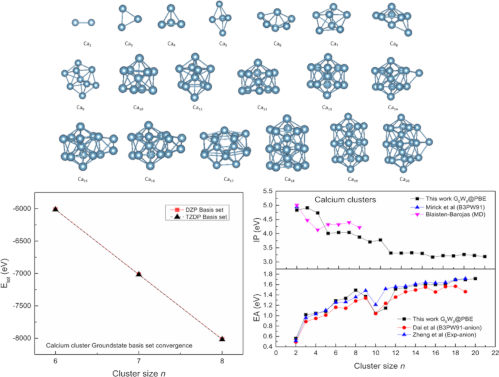
- /bjnano.15.82 Abstract Electronic and structural properties of calcium clusters with a varying size range of 2–20 atoms are studied using a two-step scheme within the GW and density functional theory (DFT) with generalized gradient approximation (GGA). The GGA overestimates the binding energies, optimized
- -capacity hydrogen storage [8]. As cluster size grows, the electronic configuration changes its semiconducting behavior from nonmetal to metallic due to the overlap between the s and p orbitals. Moreover, the geometry of clusters is related to their structural properties. Most of the studies on calcium
- thermodynamic properties [1][13][14]. However, there are no systematic studies on the electronic and structural properties of the series of calcium clusters. Apart from some theoretical studies on calcium clusters, there are no systematic discussions on neutral cluster structural and electronic properties


Electrospun nanofibers: building blocks for the repair of bone tissue
Beilstein J. Nanotechnol. 2024, 15, 941–953, doi:10.3762/bjnano.15.77
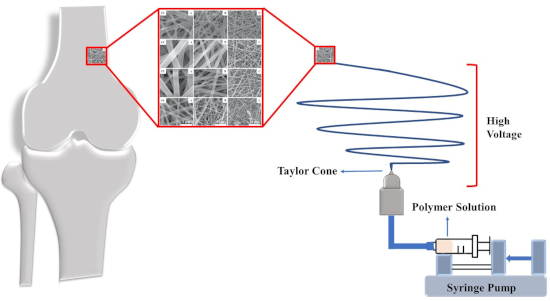
- delivery systems [1][2][3][4][5]. Because of the structural properties of nanofibers, which enable cell growth and proliferation, their use in tissue engineering, especially regarding bone tissue, is quite common [2]. Nanofiber scaffolds may carry active substances such as cells for tissue repair


A review on the structural characterization of nanomaterials for nano-QSAR models
Beilstein J. Nanotechnol. 2024, 15, 854–866, doi:10.3762/bjnano.15.71

- specify a particular substance in the NM field for questions such as their registration and risk evaluation. A nanoform is defined by having particles with a specific composition and with structural properties (such as size and shape) in a defined range. In this way, it differs from more general labels


Synthesis of silver–palladium Janus nanoparticles using co-sputtering of independent sources: experimental and theorical study
Beilstein J. Nanotechnol. 2024, 15, 808–816, doi:10.3762/bjnano.15.67
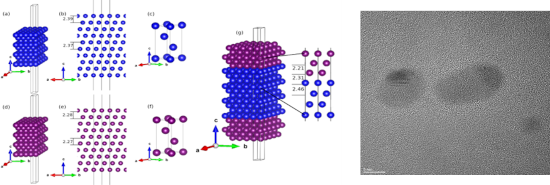
- promote the synthesis of bimetallic Janus nanoparticles. The structural properties of the resulting nanoparticles were investigated by transmission electron microscopy (TEM), and the chemical composition was analyzed by TEM energy dispersive spectroscopy (TEM-EDS), which, together with structural analysis




Effect of repeating hydrothermal growth processes and rapid thermal annealing on CuO thin film properties
Beilstein J. Nanotechnol. 2024, 15, 743–754, doi:10.3762/bjnano.15.62
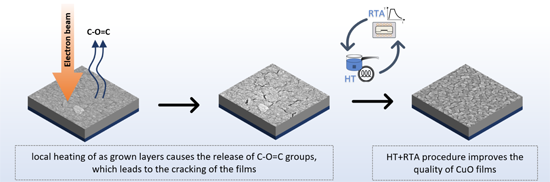
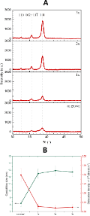
- procedure. It demonstrates homogeneity without a notable dominance of hills or valleys. The structural properties of the CuO films were evaluated using XRD and Raman spectroscopy. The XRD diffractograms (Figure 4A) exhibit well-defined reflections that correspond to the polycrystalline monoclinic structure
- variation. On this basis, it is concluded that the number of HT+RTA cycles has a minimal impact on the structural properties of the prepared CuO films. This result further validates the high reproducibility of the developed sequencing procedure. Three different copper oxide phases can be obtained, namely
- structural properties and elemental composition among the 1×, 2×, and 3× samples. Hence, it is believed that the most probable cause for the increasing work function value is the annealing atmosphere of the samples (O2/N2, 1:1) [66]. The presence of oxygen in the annealing atmosphere fills the oxygen




Elastic modulus of β-Ga2O3 nanowires measured by resonance and three-point bending techniques
Beilstein J. Nanotechnol. 2024, 15, 704–712, doi:10.3762/bjnano.15.58
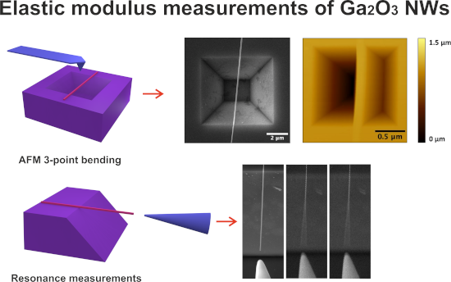
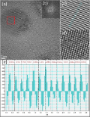
- ]. Different growth mechanisms could potentially lead to variations in the NW structural properties, as was also indicated by the TEM study. The mechanical characteristics of Ga2O3 NWs were first examined using in-situ SEM resonance tests. Figure 3a–c presents a series of SEM images depicting an excitation of


Aero-ZnS prepared by physical vapor transport on three-dimensional networks of sacrificial ZnO microtetrapods
Beilstein J. Nanotechnol. 2024, 15, 490–499, doi:10.3762/bjnano.15.44
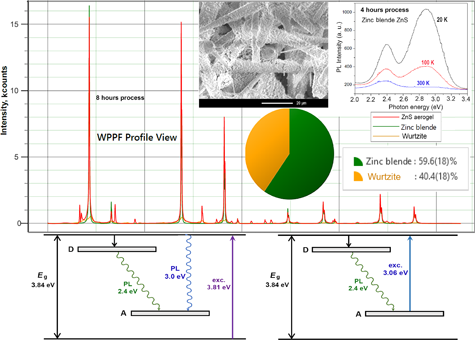
- Instruments. The structural properties were investigated by X-ray diffraction measurements on a Rigaku MiniFlex 600 diffractometer with Cu Kα radiation (λ=1.540598 Å) in a standard 2θ Bragg–Brentano configuration, operating at 45 kV beam voltage and 15 mA beam current. Photoluminescence (PL) was excited by



Controllable physicochemical properties of WOx thin films grown under glancing angle
Beilstein J. Nanotechnol. 2024, 15, 350–359, doi:10.3762/bjnano.15.31
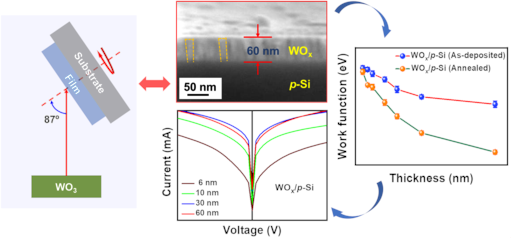
- identified to regulate the rectification ratio values at the WOx/p-Si heterostructures and increase in series resistance within the bulk of the films. The present study provides valuable insights to correlate optical, electrical, and structural properties of WOx thin films, which will be beneficial for


Investigating structural and electronic properties of neutral zinc clusters: a G0W0 and G0W0Г0(1) benchmark
Beilstein J. Nanotechnol. 2024, 15, 310–316, doi:10.3762/bjnano.15.28
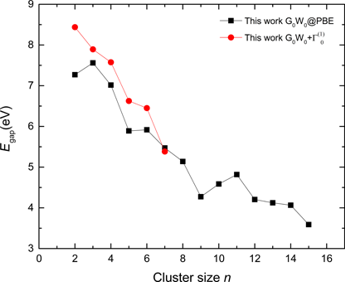
- presented, and binding energies are discussed. In addition, we have also explored the ionization potentials, electron affinities, and energy gaps for the series of Zn clusters. Geometrical structures Various theoretical studies have been performed regarding the structural properties of Zn clusters. Among
- structural properties of neutral Zn clusters by employing the PW91 functional. Analyzing the performance of different functionals for Zn clusters, it can be concluded that the LDA overestimates the binding energy significantly. Our PBE results are in good agreement with the PW91 results reported by Iokibe et


![[Graphic 14]](/bjnano/content/inline/2190-4286-15-28-i15.svg?max-width=637&scale=1.18182)
Exploring the relationships between physiochemical properties of nanoparticles and cell damage to combat cancer growth using simple periodic table-based descriptors
Beilstein J. Nanotechnol. 2024, 15, 297–309, doi:10.3762/bjnano.15.27
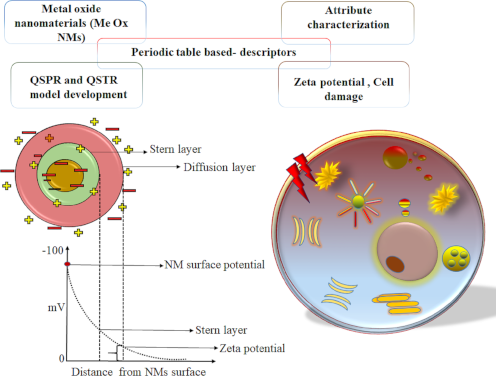
- new ways for modeling the structural properties and bio-toxic effects of NMs. The goal of the study is to construct fully validated property-based models to extract relevant features for estimating and influencing the zeta potential and obtaining the toxicity profile regarding cell damage in the


Properties of tin oxide films grown by atomic layer deposition from tin tetraiodide and ozone
Beilstein J. Nanotechnol. 2023, 14, 1085–1092, doi:10.3762/bjnano.14.89
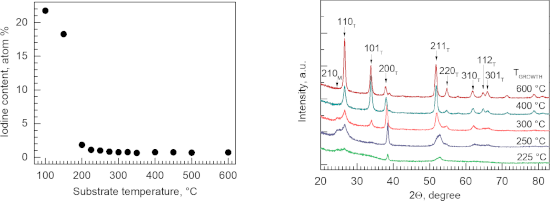
- applied and reported in this work provides a fast route to SnO2 films with clearly defined structural properties. The growth per cycle of the films was about 0.25 nm/cycle. The deposition temperature can be lower than the minimally 400 °C needed for a process using SnI4 and O2, and the growth per cycle is


Prediction of cytotoxicity of heavy metals adsorbed on nano-TiO2 with periodic table descriptors using machine learning approaches
Beilstein J. Nanotechnol. 2023, 14, 939–950, doi:10.3762/bjnano.14.77
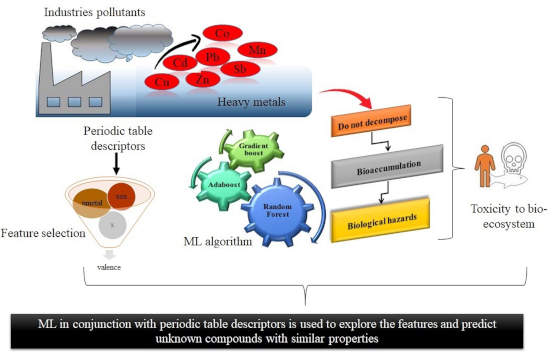
- ) cells. The ensemble learning approach implements gradient boosting and bagging algorithms; that is, random forest, AdaBoost, Gradient Boost, and Extreme Gradient Boost were constructed and utilized to establish statistically significant relationships between the structural properties of NPs and the


Biomimetics on the micro- and nanoscale – The 25th anniversary of the lotus effect
Beilstein J. Nanotechnol. 2023, 14, 850–856, doi:10.3762/bjnano.14.69

- the same time selectively enhance regeneration in host tissues. The authors point out that in this context, protein-based materials and especially silk materials are interesting candidates due to their natural origin, biological activity, and structural properties. These exciting recombinant


A graphene quantum dots–glassy carbon electrode-based electrochemical sensor for monitoring malathion
Beilstein J. Nanotechnol. 2023, 14, 701–710, doi:10.3762/bjnano.14.56
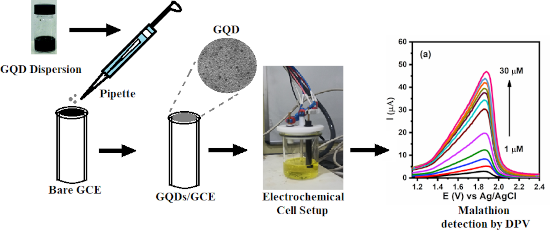
- diffraction were used to characterize the morphological and structural properties of GQDs. An electrochemical sensor was developed by drop casting GQDs on a glassy carbon electrode (GCE). The sensor detects the organophosphate pesticide malathion in a selective and sensitive manner. Using cyclic voltammetry
- room temperature, an AIRIX STR 500 laser Raman spectrometer was used with Ar laser excitation at 532 nm. A Panalytical X-Pert Pro diffractometer with Cu Kα radiation (λ = 1.5418 Å) was used for investigating the structural properties of GQDs. Morphology and size of GQDs were confirmed with data


Transferability of interatomic potentials for silicene
Beilstein J. Nanotechnol. 2023, 14, 574–585, doi:10.3762/bjnano.14.48
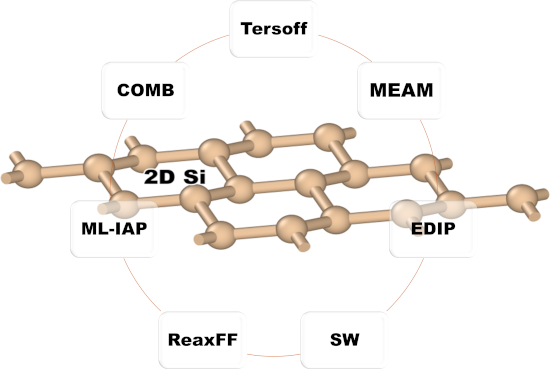
- Table 6. Now let us take a summary look. Seven of the analyzed fourteen potentials, namely Tersoff2007, Tersoff2017, SW1985, SW2014, ReaxFF, SNAP, and ACE, are able to correctly reproduce the structural properties of the five polymorphs of silicene, see Table 3, Table 5, and Table 6. Two potentials
![[Graphic 3]](/bjnano/content/inline/2190-4286-14-48-i7.svg?max-width=637&scale=1.18182)

Evaluation of electrosynthesized reduced graphene oxide–Ni/Fe/Co-based (oxy)hydroxide catalysts towards the oxygen evolution reaction
Beilstein J. Nanotechnol. 2023, 14, 420–433, doi:10.3762/bjnano.14.34
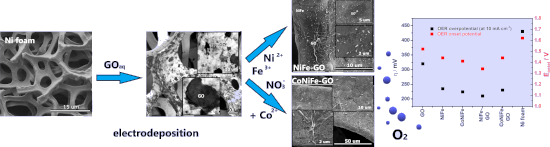
- NiFe and CoNiFe by electrodeposition significantly affected their morphological and structural properties, as well as on the electroactivity towards the OER. The addition of GO to NiFe resulted in a significant increase in the OER catalytic performance compared to GO and NiFe alone. OER η(10 mA·cm−2
- in a gradual increase of ECSA and OER activity). Conclusion The effect of the addition of GO to electrodeposited NiFe and CoNiFe on their morphological and structural properties, as well as on the OER catalytic performance was studied successfully. The studies showed that modification of NiFe or




Structural, optical, and bioimaging characterization of carbon quantum dots solvothermally synthesized from o-phenylenediamine
Beilstein J. Nanotechnol. 2023, 14, 165–174, doi:10.3762/bjnano.14.17
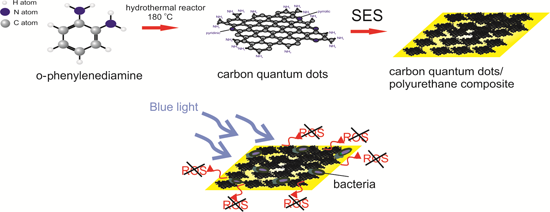
- (nitrogen, chlorine, and fluorine) affected structural properties and ROS production with or without visible light irradiation. In addition, we examined antibacterial and cytotoxic properties. An important issue is the preparation of CQDs and polymer-based composites and their possible antibacterial


Non-stoichiometric magnetite as catalyst for the photocatalytic degradation of phenol and 2,6-dibromo-4-methylphenol – a new approach in water treatment
Beilstein J. Nanotechnol. 2022, 13, 1531–1540, doi:10.3762/bjnano.13.126
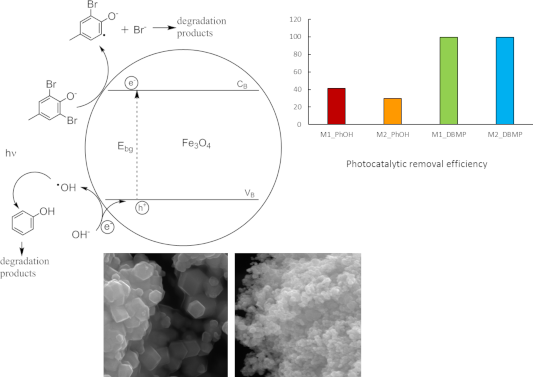
- as possible photocatalysts. The morphology, optical properties, and structural properties of the M1 and M2 samples were investigated. The stoichiometry of magnetite noticeably impacted the optical and surface properties. Direct photolysis indicated that the bromine substituent facilitated the





