


Search results
Search for "swelling" in Full Text gives 103 result(s) in Beilstein Journal of Nanotechnology.
Elasticity, an often-overseen parameter in the development of nanoscale drug delivery systems
Beilstein J. Nanotechnol. 2023, 14, 1149–1156, doi:10.3762/bjnano.14.95
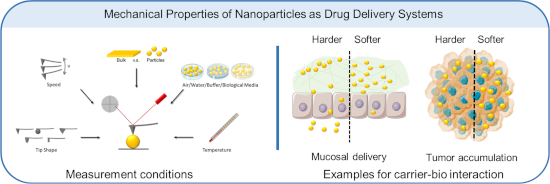
- high impact of performing the measurement in air or in water, resulting in lower values using water due to swelling and/or softening effects. The knowledge about the influence of measurement conditions on the absolute elastic value is still limited. Temperature is an important factor in the context of


Green SPIONs as a novel highly selective treatment for leishmaniasis: an in vitro study against Leishmania amazonensis intracellular amastigotes
Beilstein J. Nanotechnol. 2023, 14, 893–903, doi:10.3762/bjnano.14.73
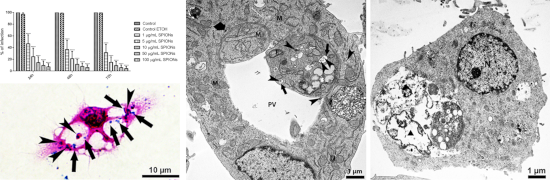
- ) myelin-like figures (Figure 5A, arrowhead), and (4) mitochondrial swelling (Figure 5C, star). Furthermore, in the intracellular amastigotes, there are membrane-bound compartments containing SPION aggregates and parasitophorous vacuoles containing cellular debris and dead amastigotes (Figure 5D, triangle
- ) intense intracellular vacuolization, (3) mitochondrial swelling, (4) myelin-like figures, and (5) cell death. The observed ultrastructural effects corroborate the significant antiproliferative effect found and give indications of the possible mechanisms of action of these nanoparticles, which may be
- ultrastructural changes were observed in intracellular amastigotes: (1) many lipid bodies (A–C, thin arrows), (2) increased secretion of extracellular vesicles (A–C, broad arrows), (3) intracellular vacuolization (A–C, arrows), (4) myelin-like figures (A, arrowhead), (5) mitochondrial swelling (C, star), and (6


Carbon nanotube-cellulose ink for rapid solvent identification
Beilstein J. Nanotechnol. 2023, 14, 535–543, doi:10.3762/bjnano.14.44
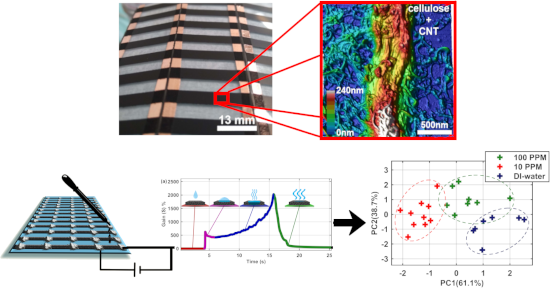
- sensor based on a carbon nanotube–cellulose ink that proves to be highly sensitive to various solvents and water with different impurity levels and can detect glycerin in water down to the 10–100 ppm range. We provide insights into the liquid detection mechanism, combining the well-known swelling
- ) and a decrease in current (pink part). The absorbed liquid makes the material swell while it simultaneously absorbs heat and evaporates (blue part). At a certain point, the evaporation leads to the drying of the composite, reversing the swelling process. This leads to a decrease in gain until it
- ) with physicochemical properties of the organic solvents (vapor pressure and dielectric constant) [63][64]. Guided by previous studies that show the electrical response is due to the swelling of CPCs [25][56][57], we found that the maximum value in the Gain curve (max) is proportional to the dielectric


Conjugated photothermal materials and structure design for solar steam generation
Beilstein J. Nanotechnol. 2023, 14, 454–466, doi:10.3762/bjnano.14.36
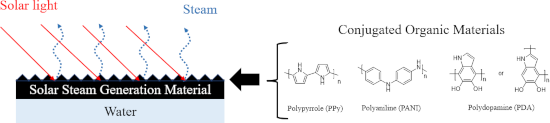
- buoyancy due to their superior water resistance and antifouling properties. Due to the microporous nature of the polymer foams, after 10 min of swelling in water, the water could eventually be transported from the bottom to the surface through the foam’s interconnected pathways. These polymer evaporators


Molecular nanoarchitectonics: unification of nanotechnology and molecular/materials science
Beilstein J. Nanotechnol. 2023, 14, 434–453, doi:10.3762/bjnano.14.35
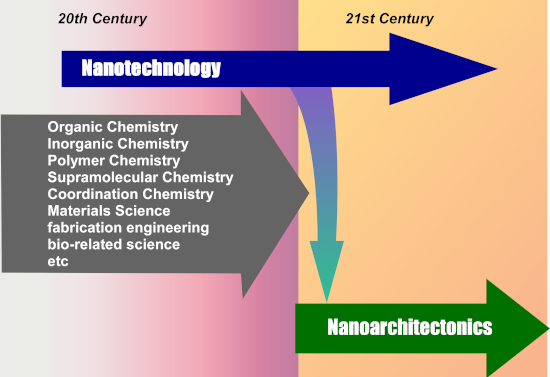
- water impermeability of the bilayer membrane causes one-dimensional swelling and diffusion, and the hydrophobic aggregates act as sacrificial bonds to yield high mechanical strength and toughness during deformation. The abovementioned general examples could be involved in parts of nanoarchitectonics





Overview of mechanism and consequences of endothelial leakiness caused by metal and polymeric nanoparticles
Beilstein J. Nanotechnol. 2023, 14, 329–338, doi:10.3762/bjnano.14.28
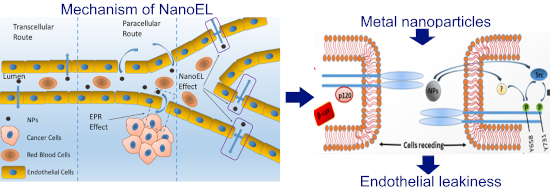
- also contribute to the spread of infections through blood-borne infectious agents and organisms, leading to increased inflammation and tissue swelling due to the extravasation of plasma proteins and blood clotting proteins. There are also reports regarding the toxic effects of NPs on cells. Duan et al


Structural, optical, and bioimaging characterization of carbon quantum dots solvothermally synthesized from o-phenylenediamine
Beilstein J. Nanotechnol. 2023, 14, 165–174, doi:10.3762/bjnano.14.17
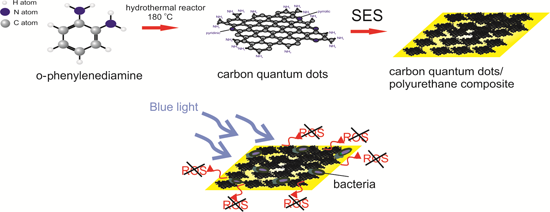
- time, carbon quantum dots were prepared from o-phenylenediamine dissolved in toluene by a solvothermal route. Subsequently, the prepared carbon quantum dots were encapsulated into polyurethane films by a swelling–encapsulation–shrink method. Analyses of the results obtained by different
- synthesis by a solvothermal method. The prepared CQDs were encapsulated into medical grade polyurethane (PU) films by a swelling–encapsulation–shrink method. It was investigated how the precursor influenced the structure (morphology and chemical composition) and further prooxidative, antibacterial, and
- 1 × 1 cm2, thickness of 1mm, donated by American Polyfilm) by the swelling–encapsulation–shrink method described previously for 12 h [18]. Later, these CQDs/PU films were dried in a Memmert vacuum furnace at 80 °C overnight to remove toluene. The concentration of the CQDs in the toluene solution was


Microneedle-based ocular drug delivery systems – recent advances and challenges
Beilstein J. Nanotechnol. 2022, 13, 1167–1184, doi:10.3762/bjnano.13.98
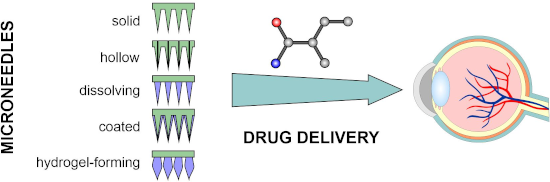
- ) [130], and poly(lactic-co-glycolic)acid (PLGA) [131] are widely investigated as microneedle materials. Among them, there are hydrogel-forming agents swelling upon the contact with interstitial fluid in the skin during microneedle application. These polymers include poly(ethylene glycol) diacrylate
- swelling upon the contact with the fluid at the administration site. It is noteworthy that the polymer matrix does not dissolve under physiological conditions and can be removed after the drug is released [117][144]. As the microneedles absorb interstitial fluid from the surrounding tissue, they can be


Biomimetic chitosan with biocomposite nanomaterials for bone tissue repair and regeneration
Beilstein J. Nanotechnol. 2022, 13, 1051–1067, doi:10.3762/bjnano.13.92
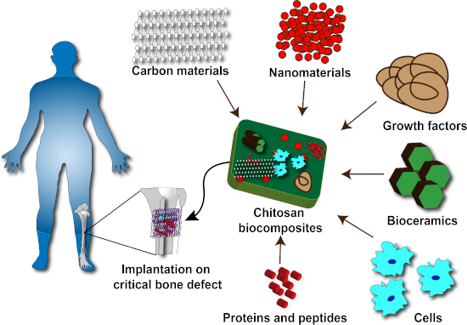
- high swelling ratio. Besides, in vitro biological assays with MC3T3-E1 cells show that nanofibres promote cell proliferation, alkaline phosphatase activity, and induce mineralisation [65]. Chitosan and biosilica-containing nanocomposites which include chitosan/ octa(tetramethylammonium)polyhedral
Gelatin nanoparticles with tunable mechanical properties: effect of crosslinking time and loading
Beilstein J. Nanotechnol. 2022, 13, 778–787, doi:10.3762/bjnano.13.68
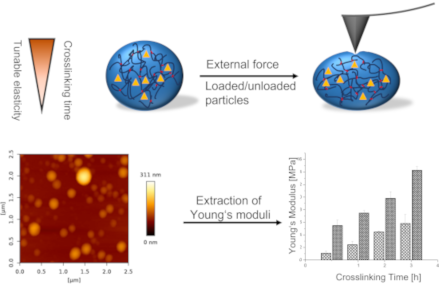
- demonstrated by Bigi et al. for bulk gelatin gels in the past [19]. They claimed that this can be explained by the lower swelling behavior of particles crosslinked with a higher glutaraldehyde concentration [19]. The lower swelling potential resulted in a denser gelatin network (reflected by the smaller
- hydrodynamic sizes), which consequently showed lower elasticity. This could explain the stiffer nanoparticles after 3 h of crosslinking in comparison to the particles crosslinked for 2 h, as the longer crosslinking time results in smaller hydrodynamic particle diameters indicating a decreased swelling


A chemiresistive sensor array based on polyaniline nanocomposites and machine learning classification
Beilstein J. Nanotechnol. 2022, 13, 411–423, doi:10.3762/bjnano.13.34
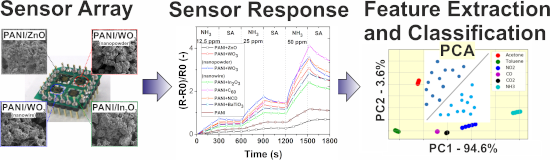
- concentration due to PANI doping and the formation of charge transfer complexes [20]. The decrease of electrical resistance is caused by the greater mobility of the dopant ions, related to the development of PANI chains. Furthermore, the swelling effect contributes to the change in resistivity [21]. Statistical




Effect of sample treatment on the elastic modulus of locust cuticle obtained by nanoindentation
Beilstein J. Nanotechnol. 2022, 13, 404–410, doi:10.3762/bjnano.13.33
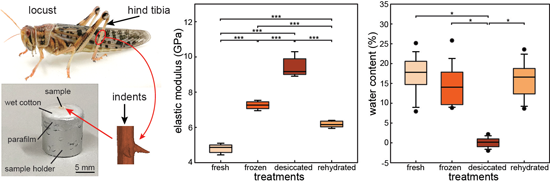
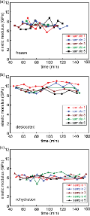
- period of time. Storing the specimens in water can also cause overhydration. The increased amount of water can result in swelling of specimens, which can consequently reduce the cuticle stiffness [9][15]. Here, we suggest a new protocol that can be used to measure the elastic modulus of cuticle specimens


Micro- and nanotechnology in biomedical engineering for cartilage tissue regeneration in osteoarthritis
Beilstein J. Nanotechnol. 2022, 13, 363–389, doi:10.3762/bjnano.13.31
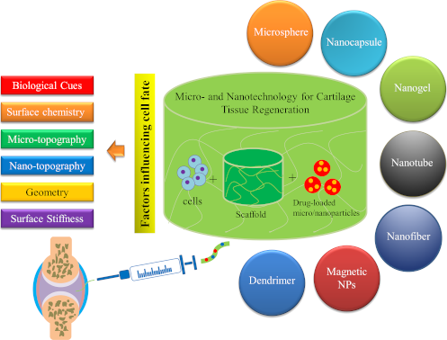
- prolonging the drug residence time. The intra-articular administration of these nanocapsules in a rat model of OA remarkably decreased knee swelling and improved cartilage repair [65]. In another study, to suppress the expression of pro-inflammatory cytokines in inflamed cartilage, researchers designed poly
- and increased biocompatibility when human dermal fibroblasts were seeded on the scaffold or encapsulated in the hydrogel. Incorporation of HNTs into alginate hydrogel also yielded enhanced mechanical properties and scaffold density [147]. HNTs led to a decreased water swelling ratio of alginate


Systematic studies into uniform synthetic protein nanoparticles
Beilstein J. Nanotechnol. 2022, 13, 274–283, doi:10.3762/bjnano.13.22
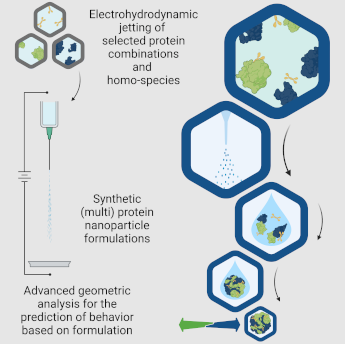
- jet to the substrate, the solvent system evaporates, and the resulting particles are deposited on the substrate. To date, SPNPs have displayed a broad spectrum of sizes, swelling factors, elasticities, and mesh sizes [27]. Here, we improve on these recent efforts by elucidating the role of blended


A photonic crystal material for the online detection of nonpolar hydrocarbon vapors
Beilstein J. Nanotechnol. 2022, 13, 127–136, doi:10.3762/bjnano.13.9
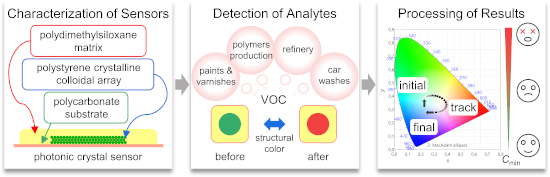
- [14]. Most of the configuration changes of the photonic bandgap in opal and inverse opal structures occur due to swelling or compression of the polymer matrix or gel. To date, four main methods for the modification of photonic crystals are used for the creation of stimuli-responsive materials: (a
- layer and the CCA leads to their swelling and, to a lesser extent, to a change in the effective refractive index of the structure (Figure 3). Since the experimental observation of the photonic bandgap shift was more than 100 nm, this would require a very large change in the effective refractive index
- . Consequently, the degree of swelling of polydimethylsiloxane predominantly affects the formation of a response when exposed to hydrocarbons. In this regard, it can be assumed that the sensor will be able to detect other hydrocarbons leading to a swelling of PDMS, such as diethyl ether, tetrahydrofuran and


Polarity in cuticular ridge development and insect attachment on leaf surfaces of Schismatoglottis calyptrata (Araceae)
Beilstein J. Nanotechnol. 2021, 12, 1326–1338, doi:10.3762/bjnano.12.98
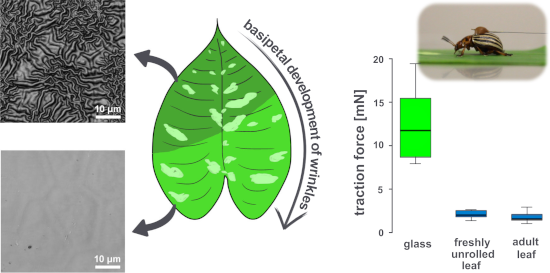
- underlying structure of the cuticle–cell wall interface. A better understanding of these processes might also provide insights for bioinspired growth or swelling-induced microstructures for technical applications [44]. The morphological changes in the cuticular structure of plant leaves during ontogeny have




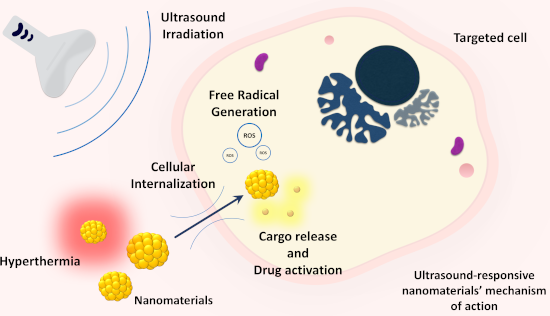
Comprehensive review on ultrasound-responsive theranostic nanomaterials: mechanisms, structures and medical applications
Beilstein J. Nanotechnol. 2021, 12, 808–862, doi:10.3762/bjnano.12.64


A review of defect engineering, ion implantation, and nanofabrication using the helium ion microscope
Beilstein J. Nanotechnol. 2021, 12, 633–664, doi:10.3762/bjnano.12.52
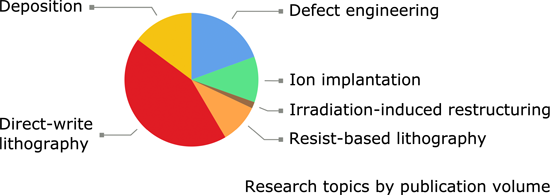
- also lead to a nanofabrication outcome. For example, localized swelling by ion implantation can be used to pattern nanoscale surface topographies, ion-induced collisional mixing can restructure buried interfaces, and ion-induced chemical changes can be used for resist-based lithography. In the
- beam milling that were inspected by transmission electron microscopy (TEM). In this way, the microstructural effect of increasing the helium ion-induced defect density was probed, and threshold doses for a series of structural changes, such as amorphization and subsurface swelling, were established
- implementing doses up to 1 × 10¹⁷ ions/cm2, stripe patterns were irradiated onto a magnetic thin film structure (this time comprising a ferro- and an antiferromagnetic layer) [53]. The reason for using the higher doses was to investigate the effect of helium implantation and subsequent swelling of the layers


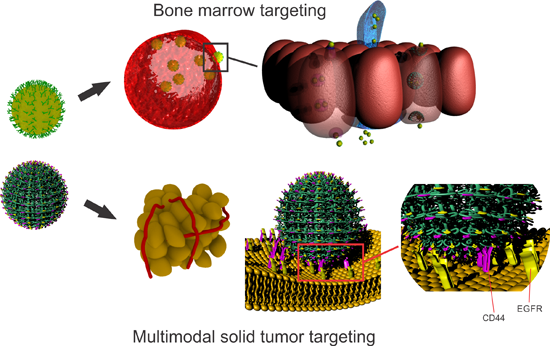
The impact of molecular tumor profiling on the design strategies for targeting myeloid leukemia and EGFR/CD44-positive solid tumors
Beilstein J. Nanotechnol. 2021, 12, 375–401, doi:10.3762/bjnano.12.31


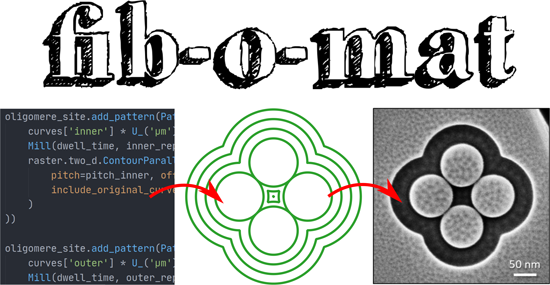
The patterning toolbox FIB-o-mat: Exploiting the full potential of focused helium ions for nanofabrication
Beilstein J. Nanotechnol. 2021, 12, 304–318, doi:10.3762/bjnano.12.25
- , large ion doses lead to gas agglomeration and the formation of bubbles, manifesting as strong surface swelling [23]. Furthermore, the associated sputter rate of light ions is roughly an order of magnitude smaller than that of Ga ions [21][22]. In addition, the low ion mass has further implications. The


Effect of different silica coatings on the toxicity of upconversion nanoparticles on RAW 264.7 macrophage cells
Beilstein J. Nanotechnol. 2021, 12, 35–48, doi:10.3762/bjnano.12.3
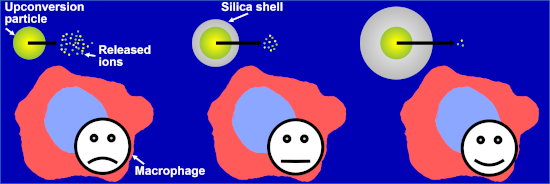
- lysosomal permeabilization and mitochondrial damage happened in RAW 264.7 cells but not in the other cell types. The particles were cytotoxic to RAW 264.7 and BEAS-2B cells but not to other cells. The nanoparticles perturbed the proton pump activity in RAW 264.7 cells, causing osmotic swelling and lysosomal


Out-of-plane surface patterning by subsurface processing of polymer substrates with focused ion beams
Beilstein J. Nanotechnol. 2020, 11, 1693–1703, doi:10.3762/bjnano.11.151
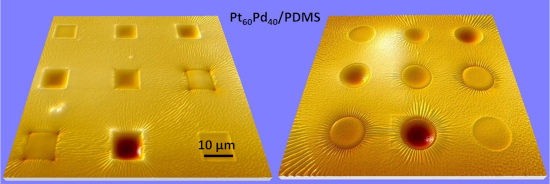
- investigated [21][22][23][24]. It has been shown that the ion beam irradiation can result in a significant compacting and, under certain conditions, in swelling of the irradiated PDMS areas [25]. In addition, a stiff “skin” layer produced by ion irradiation on the PDMS surface leads to the formation of ordered
- energy barrier for material expansion and relaxation. This entirely phenomenological model is consistent with the conclusions drawn in a previous study [25], in which swelling was observed in PDMS samples irradiated with a 2 MeV proton beam. In that the case, the irradiated surface was fabricated by
- films and roughens the surface due to the prevalence of a sputtering process induced by ions with a high mass. In contrast to the flat surface depression observed in the case of PMMA and PC substrates, complex, multiscale surface patterns, and a transition from polymer compacting to polymer swelling


Electrokinetic characterization of synthetic protein nanoparticles
Beilstein J. Nanotechnol. 2020, 11, 1556–1567, doi:10.3762/bjnano.11.138
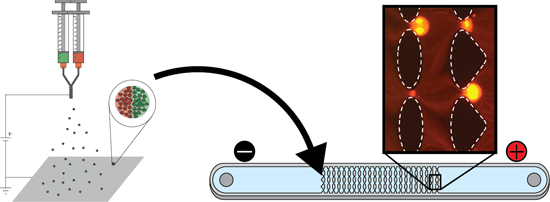
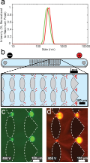
- obtained from SEM and DLS were similar to those previously obtained from EHD jetting [56]. The size difference between the SEM and DLS measurements resulted from the particle solvation state since they swell in water. A swelling behavior of a similar magnitude was observed in both ultrapure H2O and in the



Multilayer capsules made of weak polyelectrolytes: a review on the preparation, functionalization and applications in drug delivery
Beilstein J. Nanotechnol. 2020, 11, 508–532, doi:10.3762/bjnano.11.41
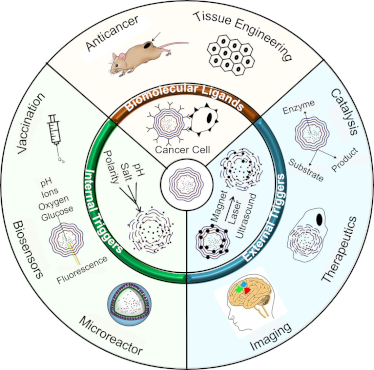
- polystyrene (PS) were the few originally employed as sacrificial templates. Upon dissolution of these templates at pH < 1.6 or by organic solvents such as dimethylformamide (DMF), dimethyl sulfoxide (DMSO), hydrochloric acid (HCl) and tetrahydrofuran, the capsule showed swelling and retraction of the shell in
- pH 3.5 to closed state at pH 10. The pore formation is either due to the weakening of molecular bonds through ionization or osmotic pressure developed during core dissolution. By increasing the NaCl salt concentration from 0.1 to 0.5 M, similar swelling and shrinking was observed due to the charge
- approached, the morphological changes in PVP/PMA capsules were seen with the decrease in multilayer thickness due to disruption of hydrogen bonds [50]. When the same was cross-linked by carbodiimide chemistry, the swelling was observed at higher pH, leading to the formation of highly swollen hydrogels. To



Understanding nanoparticle flow with a new in vitro experimental and computational approach using hydrogel channels
Beilstein J. Nanotechnol. 2020, 11, 296–309, doi:10.3762/bjnano.11.22
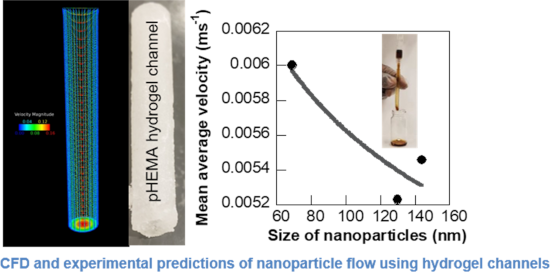
- water within its structure with a 60% increase in mass from swelling after 1 h of water absorption at pH 11 at ambient temperature (25 °C). The high water content of the pHEMA hydrogels is attractive as it resembles properties of soft tissues and vascular networks. Figure 2 shows the pH- and time
- -dependent swelling behavior of the pHEMA hydrogels selected for fabrication of the flow channels. In general, the different pHEMA gels showed maximum swelling after 1.5 h and 3.5 h with a 40–50% increase in mass and disintegrated after 7 h of water absorption (Figures S1–S3, Supporting Information File 1
- ). The swelling behavior was highly influenced by the pH value of the solution. The selected gel formulation synthesized with 1.3 mL DI water showed an increased mass of 25% at pH 2, 30% at pH 13, and a maximum of 60% at pH 11. Figure 3 shows the scanning electron microscopy (SEM) images of the different





