Search results
Search for "temperature dependent" in Full Text gives 133 result(s) in Beilstein Journal of Nanotechnology.
Recent advances in green carbon dots (2015–2022): synthesis, metal ion sensing, and biological applications
Beilstein J. Nanotechnol. 2022, 13, 1068–1107, doi:10.3762/bjnano.13.93
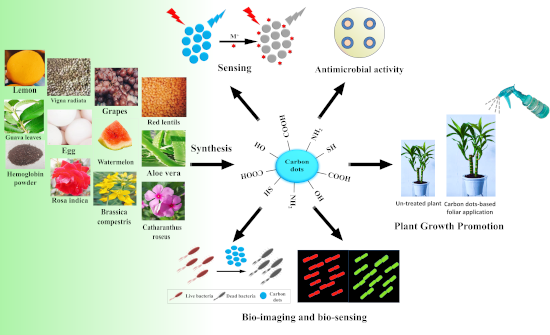
- with a calculated fluorescence QY of 10.6% were also reported, which were found to selectively detect Fe3+ ions. These N-CDs/Fe3+ systems could be used to sense cysteine, based on fluorescence “turn on” effects (see below Figure 9). The reported N-CDs showed temperature-dependent fluorescence behavior




Efficient liquid exfoliation of KP15 nanowires aided by Hansen's empirical theory
Beilstein J. Nanotechnol. 2022, 13, 788–795, doi:10.3762/bjnano.13.69
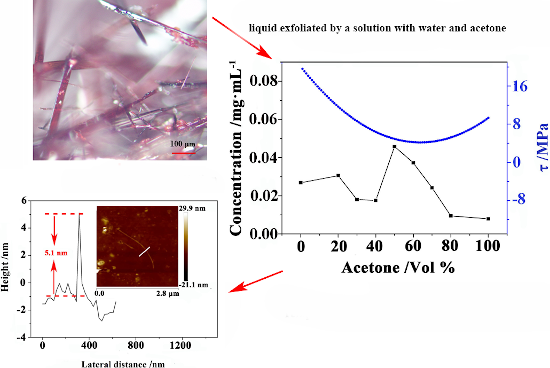
- value below 100 nm. The thinnest KP15 nanowires reached 5.1 nm and had smooth boundaries. Meanwhile, strong temperature-dependent Raman response in exfoliated KP15 nanowires has been observed, which indicates a strong phonon–phonon coupling in those nanowires. This is helpful for non-invasive
- reached 5.1 nm and had smooth boundaries. Meanwhile, a strong temperature-dependent Raman response was found in exfoliated KP15 nanowires. This indicates a strong phonon–phonon coupling in KP15 nanowires, which favors non-invasive temperature measurements of KP15 nanodevices. Methods Synthesis of KP15
- the obtained KP15 nanowires were much smaller than those obtained in our previous studies [13]. Meanwhile, a strong temperature-dependent Raman response in exfoliated KP15 nanowires has been observed. That may help with non-invasive temperature measurements of KP15 nanodevices (details are


The role of sulfonate groups and hydrogen bonding in the proton conductivity of two coordination networks
Beilstein J. Nanotechnol. 2022, 13, 437–443, doi:10.3762/bjnano.13.36
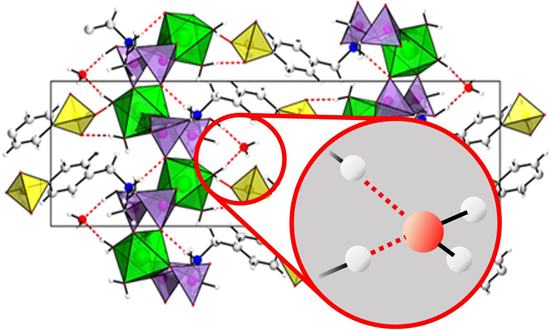
- strongly humidity- and temperature-dependent. We discuss how differences in the conduction behavior may be related to the respective structural properties. Results and Discussion The compounds [Mg(H2O)2(H3L)]·H2O and [Pb2(HL)]·H2O were synthesized using the linker molecule H5L (see Supporting Information


Impact of device design on the electronic and optoelectronic properties of integrated Ru-terpyridine complexes
Beilstein J. Nanotechnol. 2022, 13, 219–229, doi:10.3762/bjnano.13.16
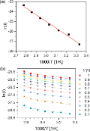
- . In order to determine the underlying conductance mechanism, temperature-dependent measurements have been carried out. For this, the current at a constant bias of 1 V was recorded at different temperatures in the range between 300 and 360 K. Figure 4a shows the resulting Arrhenius plot of a Ru(TP)2
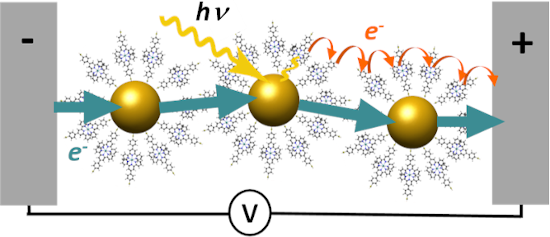
- for wire-to-wire hopping may become relevant, too. The absent length dependence, the linear correlation between device conductance and bias voltage, and the distinct temperature dependence of EA point to a thermally activated hopping conduction in solid-state nanowire devices. Temperature dependent I
- -complex wire devices and decline with ascending voltage from EA = 75 meV at 0.1 V to 64 meV at 1 V (see also Supporting Information File 1, Figure S7). This small decline in EA can be attributed to the broadening of the electron energy distribution at the Fermi level, that is, the temperature-dependent


Influence of magnetic domain walls on all-optical magnetic toggle switching in a ferrimagnetic GdFe film
Beilstein J. Nanotechnol. 2022, 13, 74–81, doi:10.3762/bjnano.13.5
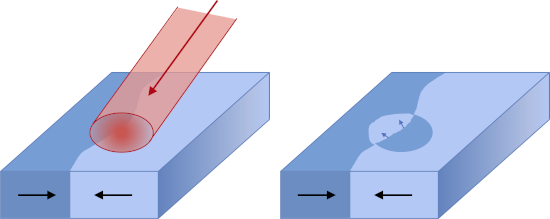
- Information File 1 for temperature-dependent magnetization loops. Magnetic domains were resolved using the photoemission electron microscope (PEEM) at the UE49-PGM SPEEM beamline of BESSY II. The acceleration potential between the sample and the first objective lens of the PEEM was set to 15 keV. X-ray
- Supporting information features temperature-dependent magnetization loops of the sample and the determination of the magnetic compensation temperature. Supporting Information File 14: Magnetic characterization. Acknowledgements We thank the Helmholtz-Zentrum Berlin for the allocation of synchrotron


Sputtering onto liquids: a critical review
Beilstein J. Nanotechnol. 2022, 13, 10–53, doi:10.3762/bjnano.13.2







Measurement of polarization effects in dual-phase ceria-based oxygen permeation membranes using Kelvin probe force microscopy
Beilstein J. Nanotechnol. 2021, 12, 1380–1391, doi:10.3762/bjnano.12.102
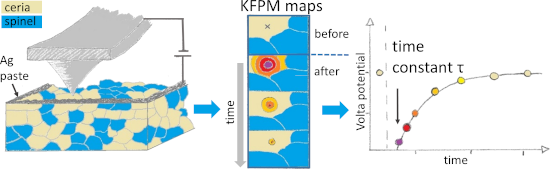
- electrochemical experiments or KPFM imaging. Additionally, temperature-dependent measurements of the polarization–relaxation behavior are planned. TEM image (a) and the corresponding energy-filtered TEM (EFTEM) image (b) showing the grain size and phase distribution inside 60CSO20-FC2O (red: Ce and thus


First-principles study of the structural, optoelectronic and thermophysical properties of the π-SnSe for thermoelectric applications
Beilstein J. Nanotechnol. 2021, 12, 1101–1114, doi:10.3762/bjnano.12.82
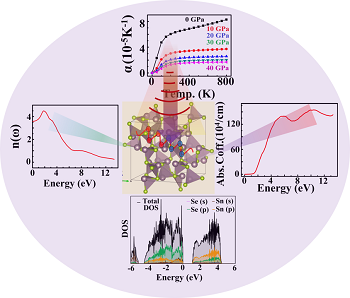
- (γ) at different temperature values for the π-SnSe alloy. Temperature-dependent (a) Seebeck coefficient (S); (b) electrical conductivity (σ/τ); (c) electronic (κe), lattice (κl), and total (κtot) thermal conductivity values and (d) power factor (PF) of the π-SnSe alloy. Figure of merit of the cubic π


Revealing the formation mechanism and band gap tuning of Sb2S3 nanoparticles
Beilstein J. Nanotechnol. 2021, 12, 1021–1033, doi:10.3762/bjnano.12.76
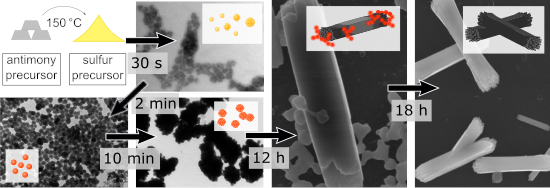
- at 150 °C was revealed. In this way, we could gain a more in-depth insight into the kinetics of particle formation, while earlier studies by Abulikemu et al. and Li et al. were focusing on the temperature-dependent evolution of Sb2S3 particles. The suggested mechanism assumes that seeds (type 0


The role of deep eutectic solvents and carrageenan in synthesizing biocompatible anisotropic metal nanoparticles
Beilstein J. Nanotechnol. 2021, 12, 924–938, doi:10.3762/bjnano.12.69
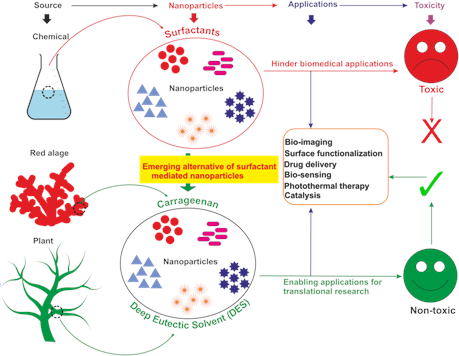
- capping agents such as polymers or surfactants, highlighting the role of DES as a stabilizer and structure-directing agent. The work also illustrated temperature-dependent morphological differences between the nanostructures. Spherical sized small gold particles of nearly 100 nm were synthesized at 70 °C


The preparation temperature influences the physicochemical nature and activity of nanoceria
Beilstein J. Nanotechnol. 2021, 12, 525–540, doi:10.3762/bjnano.12.43
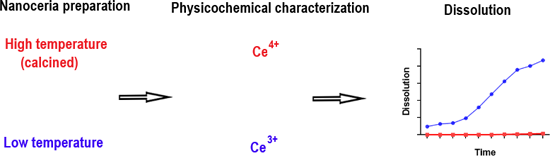
- dissolved nanoceria supports this assumption. The high fraction of Ce4+ in the calcined solvothermally synthesized nanoceria is comparable to that of NM-212 and expected after calcination [18]. The increased primary particle size is consistent with reports that found a temperature-dependent increase of




The influence of an interfacial hBN layer on the fluorescence of an organic molecule
Beilstein J. Nanotechnol. 2020, 11, 1663–1684, doi:10.3762/bjnano.11.149
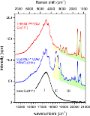
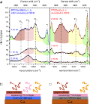
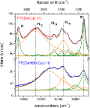
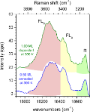
- 2.2.2, we focus on temperature-dependent effects (cf. Figure 3b). 2.2.1 The final state – 300 K spectra: Figure 3a shows Raman modes of PTCDA/hBN/Cu(111) after deposition at 20 K and subsequent annealing at 300 K (blue), and of PTCDA/Cu(111) after deposition at 300 K (red). The positions of the Raman
- ), respectively; the other modes remain unchanged (±0.4%, cf. Table 1). This reflects the situation of PTCDA/Ag(111) [42] where the only significant temperature-dependent shift (by 10 cm−1) was also observed for the RB mode. In that study, the shift of the RB mode was originally attributed to be of chemical
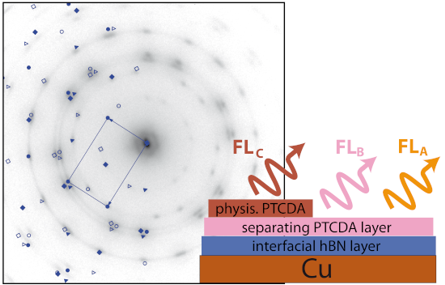
- temperature that is required for FLB to be observed at all. This behavior was found for layers within a range of sub-monolayer coverages (between 0.10 and 0.80 ML). For further insight, we refer to a temperature-dependent series of spectra at a higher coverage of 1.55 ML PTCDA on hBN/Cu(111), shown in Figure





Thermophoretic tweezers for single nanoparticle manipulation
Beilstein J. Nanotechnol. 2020, 11, 1126–1133, doi:10.3762/bjnano.11.97
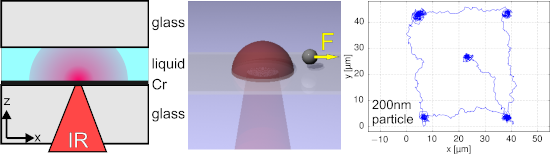
- well as the temperature-dependent water viscosity and Soret coefficient, were not taken into account. The influence of surface proximity on the diffusion constant was neglected. For a thorough analysis of feedback-based traps in general, see [34]. The simulated equation of bead motion was where R(t) is
- 1b,c). Temperature measurements are performed using the temperature-dependent fluorescence of sulforhodamine B (Radiant dyes Chemie), which is calibrated in an independent measurement (accuracy ±2 K). Since the sapphire glass with a high thermal conductivity helps cooling the thin sample film, the


A Josephson junction based on a highly disordered superconductor/low-resistivity normal metal bilayer
Beilstein J. Nanotechnol. 2020, 11, 858–865, doi:10.3762/bjnano.11.71
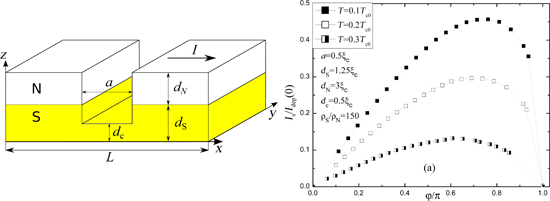
- the current–phase relation comes close to a sinusoidal shape. At T = 0.3Tc0 the amplitude of the first harmonic, sin ϕ, is 0.98Ic and the amplitude of the second harmonic, sin 2ϕ, is −0.19Ic). This is typical for S’-S-S’ junctions [21] and is related to the increase of the temperature-dependent


Light–matter interactions in two-dimensional layered WSe2 for gauging evolution of phonon dynamics
Beilstein J. Nanotechnol. 2020, 11, 782–797, doi:10.3762/bjnano.11.63
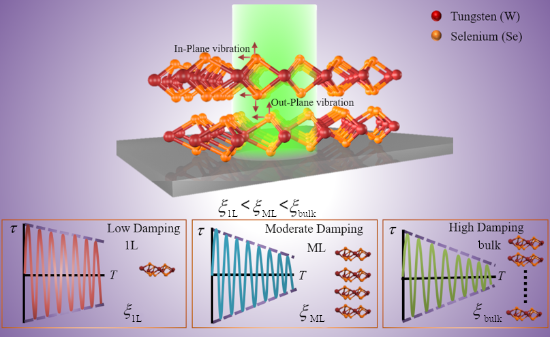
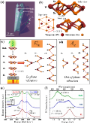
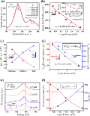
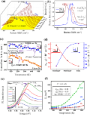
- of Electrical and Computer Engineering, University of Texas, El Paso, TX 79968, United States 10.3762/bjnano.11.63 Abstract Phonon dynamics is explored in mechanically exfoliated two-dimensional WSe2 using temperature-dependent and laser-power-dependent Raman and photoluminescence (PL) spectroscopy
- dependence of the Raman shifts in 2D TMDCs such as MoS2 [20][21][22][23][24], and WS2 [25][26] have been extensively studied over a wide temperature range from which properties such as thermal conductivity was deciphered [23][27]. On the contrary, the temperature-dependent Raman analysis of WSe2 is rather
- limited with only one prior report discussing the thermal coefficients of various Raman modes in WSe2 where a comparative analysis of temperature-dependent Raman modes in WSe2 and MoSe2 was presented [28]. Moreover, the study related to the phonon lifetime in WSe2 is also limited, among which one prior
Hexagonal boron nitride: a review of the emerging material platform for single-photon sources and the spin–photon interface
Beilstein J. Nanotechnol. 2020, 11, 740–769, doi:10.3762/bjnano.11.61
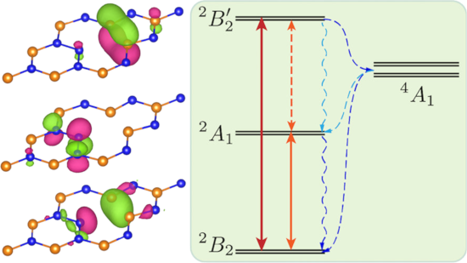
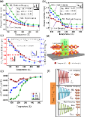
- and clarified their temperature dependence of the ZPL peak shift, line width, and PL intensity ranging from 4 to 300 K. The temperature-dependent line width, spectral energy shift, and intensity differing ZPLs are described by a lattice vibration model that considers piezoelectric coupling to in-plane




Nonequilibrium Kondo effect in a graphene-coupled quantum dot in the presence of a magnetic field
Beilstein J. Nanotechnol. 2020, 11, 225–239, doi:10.3762/bjnano.11.17
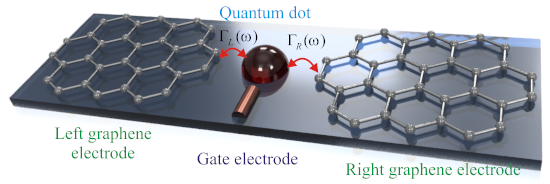
- an approximation based on self-consistent calculations [47]. Besides the strongly temperature-dependent sharp Kondo peaks, the DOS consists of a broadened peak with large amplitude, the peak of which is located at where ReΣ3(ω) = ReΣ3↑(ω) = ReΣ3↓(ω). This broadened peak corresponds to a resonant
- -bias peak in the differential conductance corresponds to a resonant transmission through the QD and is strongly temperature-dependent. At low temperature, its shape is narrow and sharp, but with increasing temperature the amplitude decreases, and the peak becomes broadened. We also observe that the
- are shown in Figure 9. At low temperature, similar to the case of U → ∞ (see Figure 2 and Figure 3), the Kondo resonances appear at the chemical potentials, and their amplitudes decrease with increasing temperature and disappear at high temperature. Besides the temperature-dependent narrow and sharp


The effect of heat treatment on the morphology and mobility of Au nanoparticles
Beilstein J. Nanotechnol. 2020, 11, 61–67, doi:10.3762/bjnano.11.6
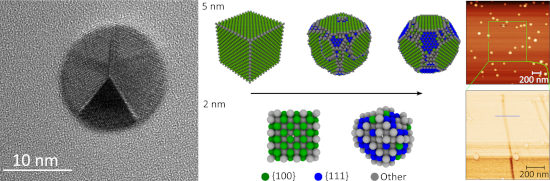
- interstitial diffusion [27]. The process is highly temperature-dependent, and diffusion at 800 °C is four orders of magnitude faster than at 400 °C (see Table 7 in Fisher [28]). Another reason may be the temperature-sensitive growth of the SiO2 layer [29], which escalates rapidly above 600 °C, as can be seen
- of the SiO2 layer. Both processes are highly temperature-dependent, exhibiting drastic enhancement above 700 °C. Overall, we demonstrated that heat treatment, which is widely used for surfactant removal prior to nanomanipulation experiments, can have an extensive effect on the mobility of Au NPs


Influence of the epitaxial composition on N-face GaN KOH etch kinetics determined by ICP-OES
Beilstein J. Nanotechnol. 2020, 11, 41–50, doi:10.3762/bjnano.11.4
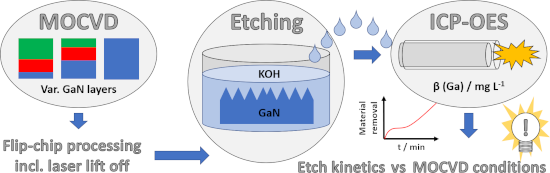
- and crystal facets was reached. Applying temperature dependent crossing of 2D–3D transitions, the second 2D–3D transition of E became selectively exposed by first etching in 30 wt % KOH at 70 °C for 3 min. This led to penetration of the first 2D–3D interface. Subsequently, etching at RT for 5 h


Preservation of rutin nanosuspensions without the use of preservatives
Beilstein J. Nanotechnol. 2019, 10, 1902–1913, doi:10.3762/bjnano.10.185
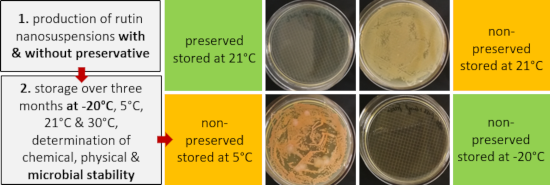
- upon the production with high-pressure homogenization, which is a well-described technique to reduce the number of bacteria in liquids [26]. The growth of microorganisms during storage was temperature-dependent and was also found to be slightly influenced by the type of stabilizer, i.e., a slightly


Long-term entrapment and temperature-controlled-release of SF6 gas in metal–organic frameworks (MOFs)
Beilstein J. Nanotechnol. 2019, 10, 1851–1859, doi:10.3762/bjnano.10.180
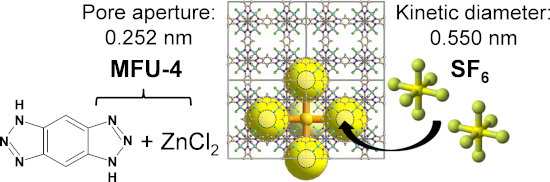
- the fact that all calculated values formally correspond to a temperature of zero Kelvin. In the future, metadynamic MD simulation studies might be performed, which should take into account both the effects of different gas loading conditions as well as temperature-dependent lattice vibrations and


Energy distribution in an ensemble of nanoparticles and its consequences
Beilstein J. Nanotechnol. 2019, 10, 1452–1457, doi:10.3762/bjnano.10.143
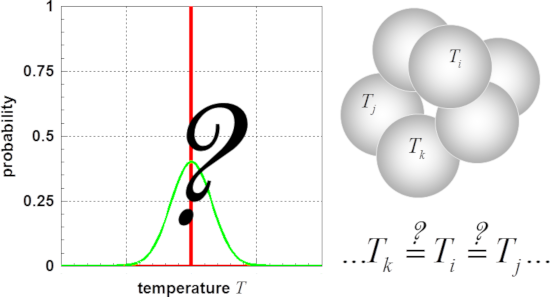
- expression di = 1.63 × 10⁻⁹ + 6.17 × 10⁻¹⁰ Ti was derived from Figure 5. For the temperature dependent heat capacity, data published by Horowitz et al. [10] for bulk lead were applied. In contrast to the previous example, in this case not the probability density function (Equation 3) but its integral (the


On the relaxation time of interacting superparamagnetic nanoparticles and implications for magnetic fluid hyperthermia
Beilstein J. Nanotechnol. 2019, 10, 1280–1289, doi:10.3762/bjnano.10.127
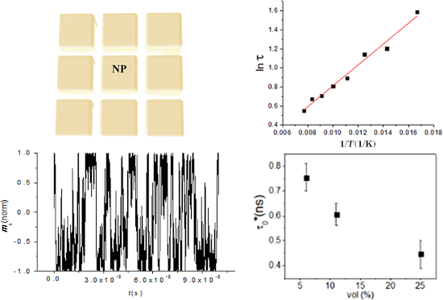
- noninteracting particles, but in a such a way that the relaxation time will remain larger in the first case. On the contrary, Mørup et al. [31] have reported, starting from temperature-dependent Mössbauer spectroscopy data obtained on maghemite based ferrofluids, a decrease of the relaxation time with increasing
- assemblies of a large number of MNPs) for different volume fractions are shown in Figure 5. It is worth noting that the equality between the anisotropy energy barrier per nanoparticle obtained in the case of static and dynamic (temperature dependent) simulations is not straightforward due to the fact that in



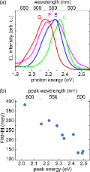
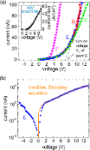
Electroluminescence and current–voltage measurements of single-(In,Ga)N/GaN-nanowire light-emitting diodes in a nanowire ensemble
Beilstein J. Nanotechnol. 2019, 10, 1177–1187, doi:10.3762/bjnano.10.117
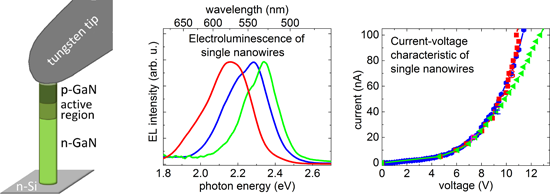
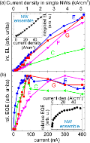
- polarization fields cause a spatial separation of electrons and holes in the QWs which in turn leads to a reduced radiative recombination rate and hence a reduced relative EQE for small injection currents. Due to the lack of temperature-dependent measurements, it was not possible to draw any hard conclusions


Concurrent nanoscale surface etching and SnO2 loading of carbon fibers for vanadium ion redox enhancement
Beilstein J. Nanotechnol. 2019, 10, 985–992, doi:10.3762/bjnano.10.99
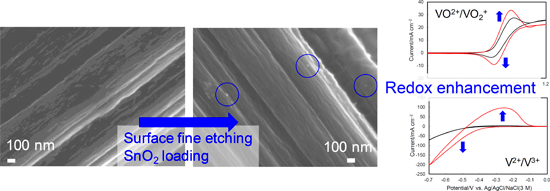
- drastic change in the surface structure was attributed to a temperature-dependent catalytic effect of the tin-oxide nanoparticles on the carbon surface oxidation leading to fine etching. A significant enhancement of the activity for the V2+/3+ redox reactions was also observed at TGP-CSnPc-550Air. The