


Search results
Search for "transport properties" in Full Text gives 171 result(s) in Beilstein Journal of Nanotechnology.
Enhanced electronic transport properties of Te roll-like nanostructures
Beilstein J. Nanotechnol. 2022, 13, 1284–1291, doi:10.3762/bjnano.13.106
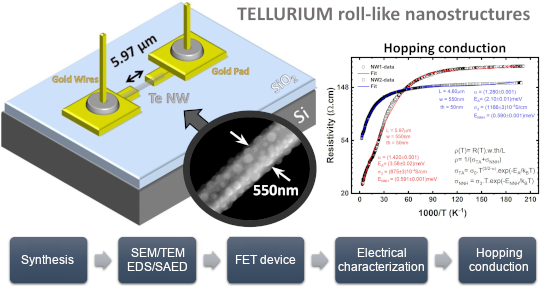
- work, the electronic transport properties of Te roll-like nanostructures were investigated in a broad temperature range by fabricating single-nanostructure back-gated field-effect-transistors via photolithography. These one-dimensional nanostructures, with a unique roll-like morphology, were produced
- charges have been studied in p-type Te NBs [13]. In this work, we have studied the electronic transport properties of a distinct one-dimensional t-Te nanostructure with a roll-like morphology, which resembles cinnamon sticks. The nanostructures were obtained by a facile PVP-assisted hydrothermal route
- mode. EDS point acquisitions were also performed during TEM analysis by using a silicon drift detector (SDD) from Oxford Instruments. Electronic transport The electronic transport properties of the sample were investigated by acquiring and modeling the transfer and gate curves of Te roll-like single




Application of nanoarchitectonics in moist-electric generation
Beilstein J. Nanotechnol. 2022, 13, 1185–1200, doi:10.3762/bjnano.13.99
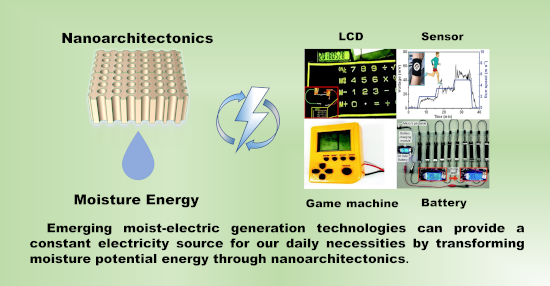
- can be easily grown on substrates to form nanoscale networks and perform well in MEGs due to their unique electron transport properties [2][47][48]. This includes Al2O3 [49], MoS2 [50][51], Ni–Al layered double hydroxide (LDH) [52], MoS2/SiO2 composites [53], TiO2 [54], and Ti3C2Tx MXene nanosheets


Ethosomal (−)-epigallocatechin-3-gallate as a novel approach to enhance antioxidant, anti-collagenase and anti-elastase effects
Beilstein J. Nanotechnol. 2022, 13, 491–502, doi:10.3762/bjnano.13.41
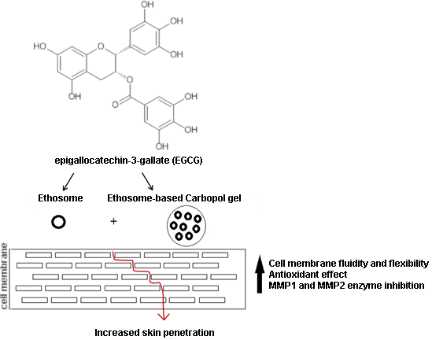
- solution form of EGCG for the transdermal delivery of EGCG. The parameters considered were antioxidant and enzymes inhibition effects, transport properties across cell monolayers, and better stability profiles. These evident effects of EGCG via ethosomal formulations might help to optimize the targeting of

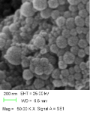


Impact of device design on the electronic and optoelectronic properties of integrated Ru-terpyridine complexes
Beilstein J. Nanotechnol. 2022, 13, 219–229, doi:10.3762/bjnano.13.16
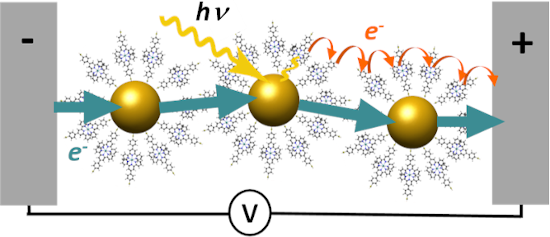
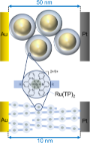
- constituting building blocks. For this purpose, the transport properties of the redox-active Ru(TP)2-complexes are studied under electrical or optical triggering in Ru(TP)2-complex wire devices and in Ru(MPTP)2–AuNP devices. Both devices are based on the same nanoelectrode design and are composed of analogous


Nonmonotonous temperature dependence of Shapiro steps in YBCO grain boundary junctions
Beilstein J. Nanotechnol. 2021, 12, 1279–1285, doi:10.3762/bjnano.12.95
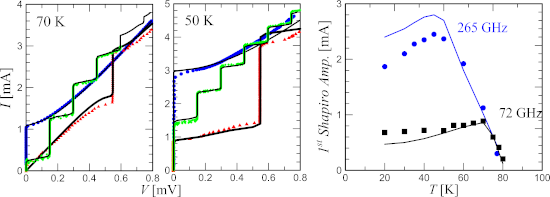
- analysis of the transport properties, the best structure was selected and located at the center of a Si lens for efficient detection. The sample was mounted into a dry cryostat allowing for measurements in a wide temperature range from helium temperatures to ≈80 K. An external gigahertz signal was fed
- through an optical window with IR filters using a semiconductor synthesizer with a multiplier (70–78 GHz) or using a backward wave oscillator (230–370 GHz). The JJ transport properties and the response were characterized by a precise Keithley low-noise current source and nanovoltmeter using a standard 4


Impact of electron–phonon coupling on electron transport through T-shaped arrangements of quantum dots in the Kondo regime
Beilstein J. Nanotechnol. 2021, 12, 1209–1225, doi:10.3762/bjnano.12.89
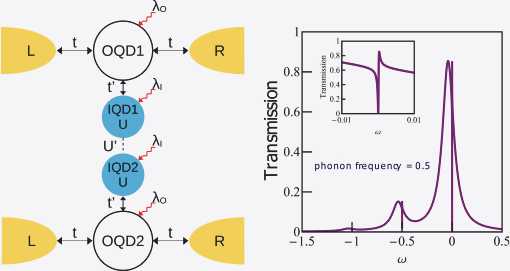
- already a well-established branch of research. The attached objects act as scatterers for electron transmission through the quantum wire and allow one to tune its transport properties. In T-shaped systems, the interference of different conduction paths can lead to Fano antiresonance manifesting as a dip


First-principles study of the structural, optoelectronic and thermophysical properties of the π-SnSe for thermoelectric applications
Beilstein J. Nanotechnol. 2021, 12, 1101–1114, doi:10.3762/bjnano.12.82
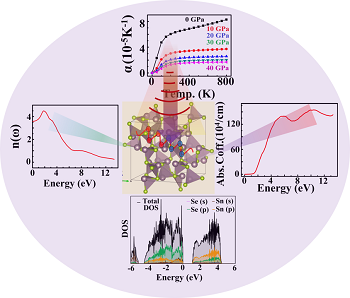
- -type Bi-doped SnSe single crystal also gives a high ZT value of 2.2 (along the b axis) at 773 K [37]. Motivated by these prominent TE performances, which were due to ultra-low thermal conductivity along with modest electrical transport properties, SnSe-based TE alloys have drawn considerable attention
- -doped 2D SnSe material shows a ZT value of ≈1 at 868 K, which is high as compared to π-SnSe [69]. It is very important to mention that we evaluated the transport properties only under constant relaxation time approximation. For the practical use of the π-SnSe alloy in TE applications, further


The role of deep eutectic solvents and carrageenan in synthesizing biocompatible anisotropic metal nanoparticles
Beilstein J. Nanotechnol. 2021, 12, 924–938, doi:10.3762/bjnano.12.69
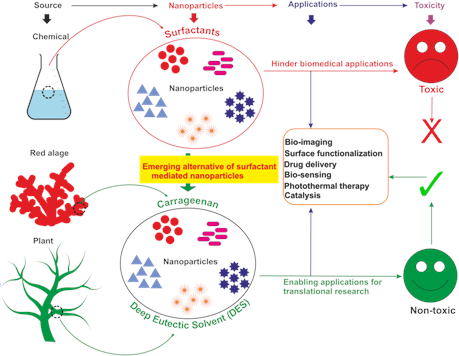
- oxide nanoparticles [28]. Numerous indispensable parameters including surface tension, polarity, viscosity, and hydrogen bonding have an important influence on the reactivity of species. Also, the formation of nanostructures is governed by the mass transport properties of the DES components. It is also


In situ transport characterization of magnetic states in Nb/Co superconductor/ferromagnet heterostructures
Beilstein J. Nanotechnol. 2021, 12, 913–923, doi:10.3762/bjnano.12.68
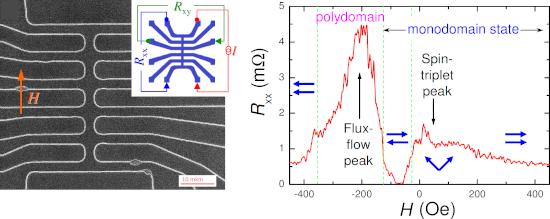
- states in complex thin-film multilayers. In this work, we study experimentally in-plane transport properties of microstructured Nb/Co multilayers. We apply various transport characterization techniques, including magnetoresistance, Hall effect, and the first-order-reversal-curves (FORC) analysis. We
- memory elements and spin valves [22][29][34][39][40][41][42][43]. The need for establishing experimental characterization techniques for the in situ monitoring of magnetic states in S/F micro- and nanoscale devices is our main motivation. Here we study experimentally in-plane transport properties of
- FF mechanism at negative fields, corresponding to an irreversible domain-vortex state. Conclusion To conclude, we have studied in-plane transport properties of microstructured Nb/Co multilayers. We demonstrated how conventional “transport” techniques can be used for the assessment of magnetic states


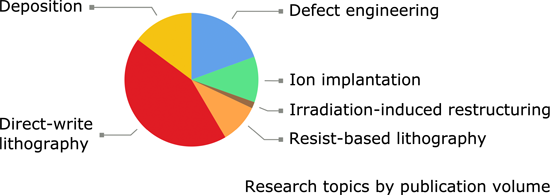
A review of defect engineering, ion implantation, and nanofabrication using the helium ion microscope
Beilstein J. Nanotechnol. 2021, 12, 633–664, doi:10.3762/bjnano.12.52
- the high sensitivity of the electronic transport properties of YBCO to point defects introduced into the lattice [43]. The same study also confirmed that minimal lateral scatter of the ions in the YBCO thin film occurs; even at the higher doses used to induce amorphisity, the irradiated channels


Spontaneous shape transition of MnxGe1−x islands to long nanowires
Beilstein J. Nanotechnol. 2021, 12, 366–374, doi:10.3762/bjnano.12.30
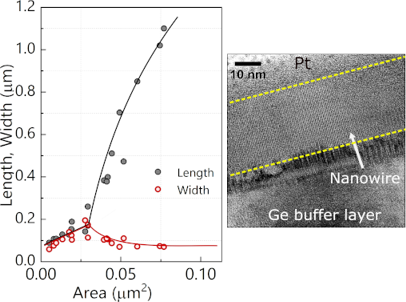
- the wires. For instance, Au, generally used as catalyst for the growth of various semiconductor NWs, acts as a deep-level trap in germanium bulk and NWs, modifying the electronic transport properties [5]. Strain-induced elongation is a mechanism [34] that can lead to either epitaxial or endotaxial


Kondo effects in small-bandgap carbon nanotube quantum dots
Beilstein J. Nanotechnol. 2020, 11, 1873–1890, doi:10.3762/bjnano.11.169
- ][10][11]. CNTs are also interesting for fundamental science. Their study allows for the examination of many basic properties in ranges often not reachable in other systems. Many of the fundamental transport properties were observed in nanotubes, including Coulomb blockade [12][13], Fabry–Perot
- nanoscopic system. The storage capacity of three-state or four-state qudits is obviously higher than the capacity of a qubit. In the present paper, we are interested in transport properties. The regime of charge transport depends on the ratio between tunnel-induced broadening of dot energy levels and
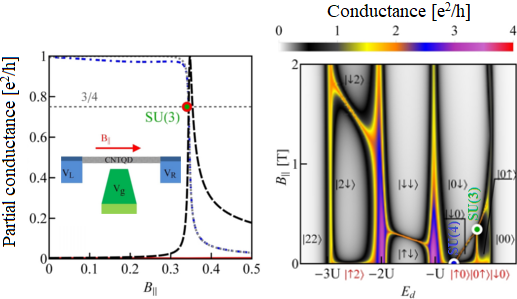
- transport properties in the strong-correlation regime. Figure 1c,d presents partial-conductance values of a dot formed in a nanotube C(24,21), CNTQD(24,21), for the case that the dot is strongly coupled to the leads and Kondo effects occur at degeneracy points or lines. Figure 1c presents gate-dependencies

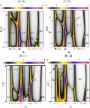
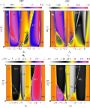


![[Graphic 37]](/bjnano/content/inline/2190-4286-11-169-i52.svg?max-width=637&scale=1.18182) as a functio...
as a functio...


Seebeck coefficient of silicon nanowire forests doped by thermal diffusion
Beilstein J. Nanotechnol. 2020, 11, 1707–1713, doi:10.3762/bjnano.11.153
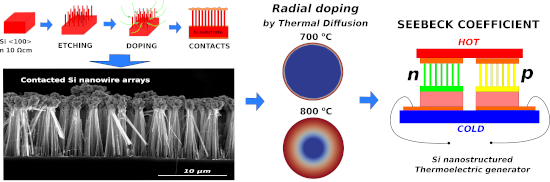
- of integrated electronic devices and circuits [24]. The diameter of the nanowires fabricated by MACE is not uniform, but it is distributed around an average value of 80 nm, which depends on the etching parameters. The transport properties (thermal conductivity and Seebeck coefficient) have been


Superconductor–insulator transition in capacitively coupled superconducting nanowires
Beilstein J. Nanotechnol. 2020, 11, 1402–1408, doi:10.3762/bjnano.11.124
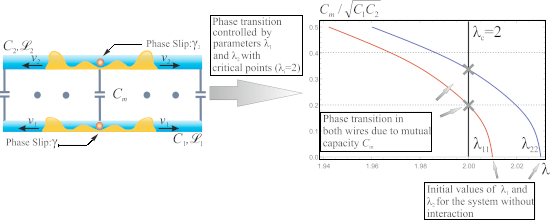
- less than 2. As a result, two superconducting wires become insulating as soon as they are brought sufficiently close to each other. This remarkable physical phenomenon is illustrated by the phase diagram in Figure 2b. In order to complete this part of our analysis, we point out that transport
- properties can be investigated in exactly the same manner as was done in [5] in the case of a single nanowire. Generalization of the technique [5] to the case of two capacitively coupled superconducting nanowires is straightforward. For a linear resistance of the ith wire Ri(T) and for λii > 2 (or for any


Controlling the proximity effect in a Co/Nb multilayer: the properties of electronic transport
Beilstein J. Nanotechnol. 2020, 11, 1336–1345, doi:10.3762/bjnano.11.118
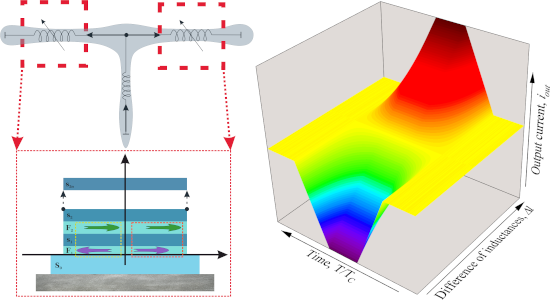
- the conditions at which switching from the parallel to the antiparallel alignment of the neighboring F-layers leads to a significant change of the superconducting order parameter in superconductive thin films. We experimentally study the transport properties of a lithographically patterned Nb/Co
- multilayer structure is possible. In addition, the temperature of this transition depends on the magnetic environment. Given the aforementioned results, one can conclude that the electronic transport properties in the multilayer structure S/[F1/s/F2/s]n can be used to create different switching electronic



Effect of localized helium ion irradiation on the performance of synthetic monolayer MoS2 field-effect transistors
Beilstein J. Nanotechnol. 2020, 11, 1329–1335, doi:10.3762/bjnano.11.117
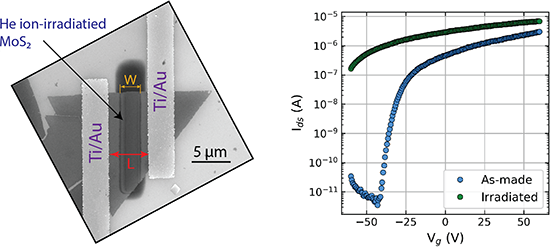
- of well-performing monolayer TMD films [3][4][5], leading to viable large-scale integration of on-chip TMD FETs. With device miniaturization, it becomes key to understand the impact of defects such as chalcogen vacancies on the electrical transport properties of FETs based on 2D semiconductors. This


Proximity effect in [Nb(1.5 nm)/Fe(x)]10/Nb(50 nm) superconductor/ferromagnet heterostructures
Beilstein J. Nanotechnol. 2020, 11, 1254–1263, doi:10.3762/bjnano.11.109
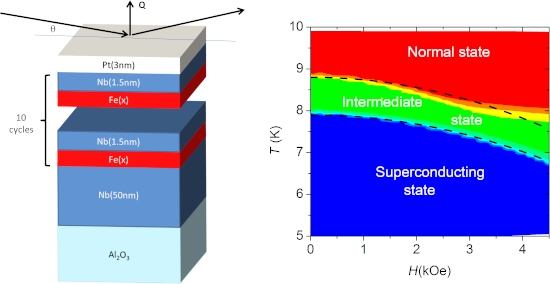
- , and re-entrant superconductivity as evidence of nonuniform LOFF-states [17][18][19][20]. Apart from the interest in basic science, the proximity effect in S/F structures has great technological importance for the creation of spintronics devices, where the transport properties of the structure are
- phase. Secondly, we draw attention to the difference between the transport properties of samples s5 and s6. Lowering of the deposition temperature of thick niobium TNb led to polycrystalline growth of the thick Nb layer of sample s6 and a strong decrease of its RRR (Table 1). Such a sensitivity of the


![[Graphic 13]](/bjnano/content/inline/2190-4286-11-109-i17.svg?max-width=637&scale=1.18182) ) substrate, (b) the Pt cap layer, and the Nb buffer layer grown at...
) substrate, (b) the Pt cap layer, and the Nb buffer layer grown at...


![[Graphic 16]](/bjnano/content/inline/2190-4286-11-109-i20.svg?max-width=637&scale=1.18182) (T) for the samples s4 (black) and s3 (red) in the vicinity of the superconducting transition m...
(T) for the samples s4 (black) and s3 (red) in the vicinity of the superconducting transition m...
Monolayers of MoS2 on Ag(111) as decoupling layers for organic molecules: resolution of electronic and vibronic states of TCNQ
Beilstein J. Nanotechnol. 2020, 11, 1062–1071, doi:10.3762/bjnano.11.91
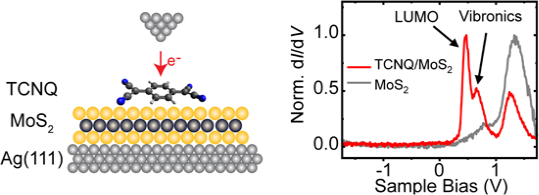
- molecule is freely hanging between the electrodes [7][8][9][10]. While these configurations give access to important transport properties [11][12][13], they do not allow for imaging molecular properties with intramolecular resolution [14]. The latter requires the molecules to be flat lying on a surface. To


Effect of substitutional defects on resonant tunneling diodes based on armchair graphene and boron nitride nanoribbons lateral heterojunctions
Beilstein J. Nanotechnol. 2020, 11, 688–694, doi:10.3762/bjnano.11.56
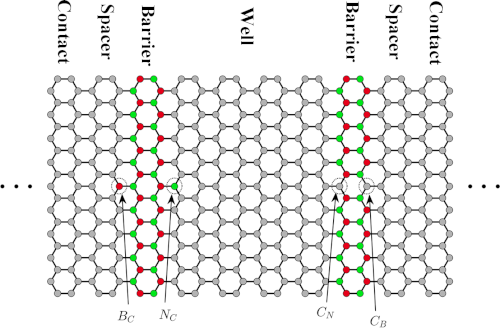
- substitutional defects at the interface of AGNR/ABNNR heterojunctions on the electronic behavior of the proposed RTD is investigated. The effect of substitutional defects on the electronic transport properties of zigzag graphene nanoribbons symmetrically decorated with BN is described in [34]. However, it



High dynamic resistance elements based on a Josephson junction array
Beilstein J. Nanotechnol. 2020, 11, 417–420, doi:10.3762/bjnano.11.32
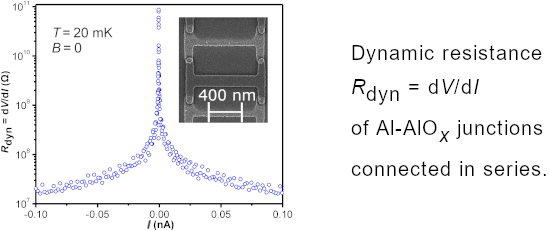
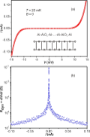
- ]. Hence, to enable the phase fluctuation regime, the electric current, I, through a QPSJ, which is just the time derivative of charge, I = dq/dt, should be stabilized. The focus of this manuscript is to study the transport properties of JJ chains to be used as current-biasing elements of a QPSJ. Note that

Nonequilibrium Kondo effect in a graphene-coupled quantum dot in the presence of a magnetic field
Beilstein J. Nanotechnol. 2020, 11, 225–239, doi:10.3762/bjnano.11.17
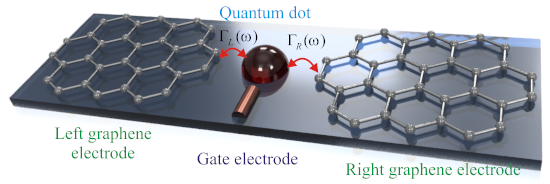
- value even at the Dirac point. The influence of the on-site Coulomb interaction and the magnetic field on the transport properties of the system shows a tendency similar to the previous results obtained for quantum dots connected to metallic electrodes. Most remarkably, we find that the Kondo resonance
- ][39][40]. The choice of electrodes can have a significant effect on the transport properties of the QD system. In the present work, we study the nonequilibrium Kondo effect and the transport properties in a QD coupled to graphene-based leads by solving the pseudogap Anderson model [36][37][38][39][40
- interaction [27], respectively. The NCA was also used to study the nonequilibrium Kondo effect in QDs without magnetic fields [13]. In addition, the transport properties of QDs were studied within the framework of modified perturbation theory [20][28][29]. Moreover, the DOS of a single QD was calculated via


Rational design of block copolymer self-assemblies in photodynamic therapy
Beilstein J. Nanotechnol. 2020, 11, 180–212, doi:10.3762/bjnano.11.15
- polymers has been recently published and indicated differences in aggregation among all systems [32]. Going further, the PS might be specifically modified to optimize its affinity towards the desired vector. This has been performed on indocyanine in order to have good transport properties by HAS [131


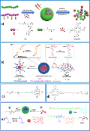


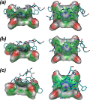


Molecular architectonics of DNA for functional nanoarchitectures
Beilstein J. Nanotechnol. 2020, 11, 124–140, doi:10.3762/bjnano.11.11
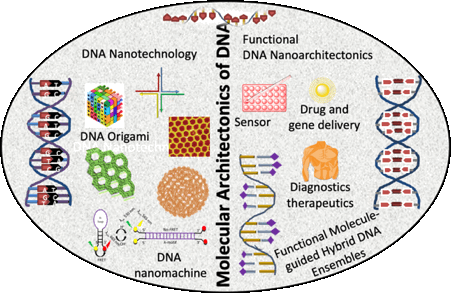
- excellent transport properties of individual BNAn–dTn nanoarchitectures (nanosheets), which also provided highly sensitive detection of mercury. The displacement of BNA in BNAn–dTn by Hg(II) resulted in a change of morphology of the nanoarchitectures from nanosheets to 1D tapes. This unique strategy


Recent progress in perovskite solar cells: the perovskite layer
Beilstein J. Nanotechnol. 2020, 11, 51–60, doi:10.3762/bjnano.11.5

- resulting films benefit from a higher conductivity, better carrier transport properties and a smaller exciton binding energy compared to traditional 2DRP perovskites based on bulky BA. Ultrastable 2DRP PSCs with a certified PCE of 16.6% were obtained. Their initially determined properties were degraded by


Green and scalable synthesis of nanocrystalline kuramite
Beilstein J. Nanotechnol. 2019, 10, 2073–2083, doi:10.3762/bjnano.10.202
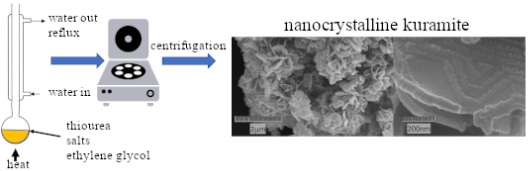
- the available tetrahedral sites, which are suggested to play a decisive role in the semiconducting and transport properties of the compound [2][33][82]. It should be noted that for both kuramite and mohite the cubic polymorphs have been reported but only at high temperatures of 680 °C and 780 °C





