


Search results
Search for "automated" in Full Text gives 109 result(s) in Beilstein Journal of Nanotechnology.
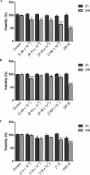
Toxicity and safety study of silver and gold nanoparticles functionalized with cysteine and glutathione
Beilstein J. Nanotechnol. 2019, 10, 1802–1817, doi:10.3762/bjnano.10.175
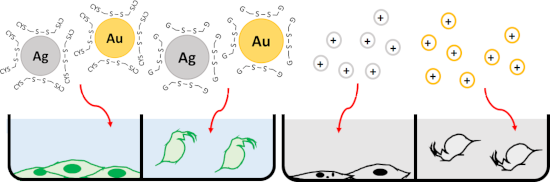
- %) solution and incubated for 10 min at 37 °C and 5% CO2. The detached cells were collected, counted on a TC20 automated cell counter (Biorad, Invine, CA, USA), and seeded in sterile 96-well plates or 12-well plates (Eppendorf, Hamburg, Germany) for subsequent treatment. The seeded cells were grown for 24 h


Growth of lithium hydride thin films from solutions: Towards solution atomic layer deposition of lithiated films
Beilstein J. Nanotechnol. 2019, 10, 1443–1451, doi:10.3762/bjnano.10.142
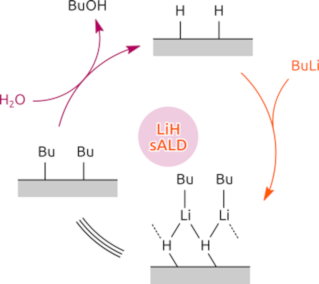
- collected using the pass energy of 50 eV. Charge compensation was achieved with the system dual beam flood gun. The Thermo Scientific Avantage software, version 5.9904 (Thermo Fisher Scientific), was used for digital acquisition and data processing. Spectral calibration was determined by using the automated


Glucose-derived carbon materials with tailored properties as electrocatalysts for the oxygen reduction reaction
Beilstein J. Nanotechnol. 2019, 10, 1089–1102, doi:10.3762/bjnano.10.109
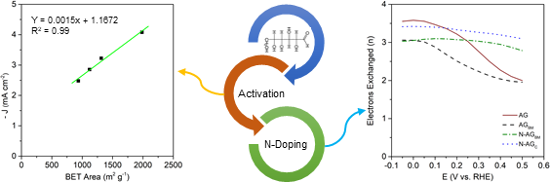
- adsorption at −196 °C performed in a Quantachrome Autosorb iQ automated gas sorption analyzer. All samples were degassed under vacuum at 150 °C for 12 h before the analysis. The specific surface area (SBET) was determined according to the Brunauer–Emmett–Teller (BET) equation, the total pore volume (Vp) was


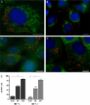
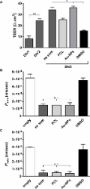
Effects of gold and PCL- or PLLA-coated silica nanoparticles on brain endothelial cells and the blood–brain barrier
Beilstein J. Nanotechnol. 2019, 10, 941–954, doi:10.3762/bjnano.10.95
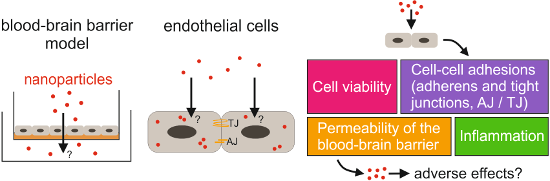
- quantitatively with high-content analysis using a fully automated inverted epifluorescence microscope (Figure 3E). As Au-NPs were only taken up to a very low extent, quantification was not carried out for these. PCL- and PLLA-NP uptake was measured after 0.5, 2 and 24 h of exposure to a concentration of [24.9 µg



Hydrophilicity and carbon chain length effects on the gas sensing properties of chemoresistive, self-assembled monolayer carbon nanotube sensors
Beilstein J. Nanotechnol. 2019, 10, 565–577, doi:10.3762/bjnano.10.58
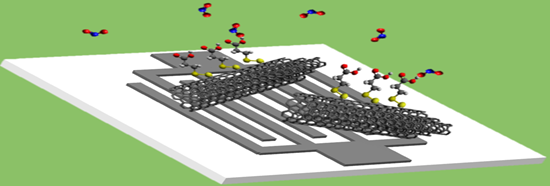
- printed circuit board (PCB), which was then plugged inside a test chamber (see Supporting Information File 1, Figure S7). Gas sensing measurements A 35 mL airtight test chamber in Teflon was connected to an automated gas mixture delivery system controlled by Bronkhorst mass-flow controllers and calibrated


Intuitive human interface to a scanning tunnelling microscope: observation of parity oscillations for a single atomic chain
Beilstein J. Nanotechnol. 2019, 10, 337–348, doi:10.3762/bjnano.10.33
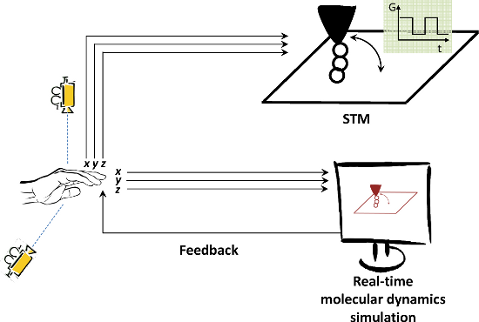
- using STM involves a pre-defined trajectory (controlled by the operator or by an automated procedure) of the STM tip. An example is reducing the tip–sample distance and moving the tip in a desired direction assuming an isotropic nature of adsorption bonds [19] in metallic systems. In such a procedure




A comparison of tarsal morphology and traction force in the two burying beetles Nicrophorus nepalensis and Nicrophorus vespilloides (Coleoptera, Silphidae)
Beilstein J. Nanotechnol. 2019, 10, 47–61, doi:10.3762/bjnano.10.5
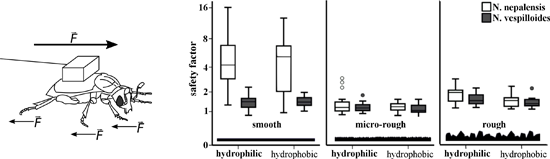
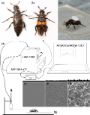
- half cycle were extracted by automated analysis with a script written in Python 2.7 [58] and NumPy [59]. The arithmetic means of the coefficients of friction of the three middle cycles of a measurement were taken for further statistical analyses. We recorded 12 extreme values that exceeded three



Femtosecond laser-assisted fabrication of chalcopyrite micro-concentrator photovoltaics
Beilstein J. Nanotechnol. 2018, 9, 3025–3038, doi:10.3762/bjnano.9.281
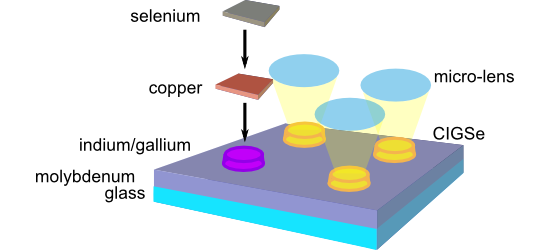
- automated planar micro-tracking systems with less than 2 cm thickness have been developed, which may open up an avenue towards planar rooftop CPV [10]. Taken together, these aspects make micro-scale CPV an attractive approach for next-generation solar cells, which has been explored for several years [11


The effect of flexible joint-like elements on the adhesive performance of nature-inspired bent mushroom-like fibers
Beilstein J. Nanotechnol. 2018, 9, 2893–2905, doi:10.3762/bjnano.9.268
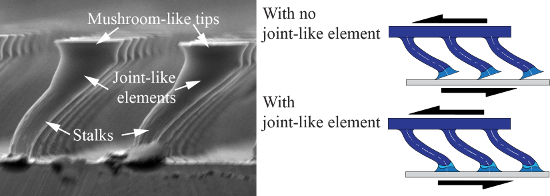
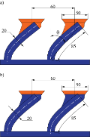
- about 0.3 mm, which is more material than needed. The excess material is expelled out once the fiber array approaches the slide. Using the precision linear stage, the fibers are lowered toward the uncured silicon rubber until the fibers touch the microscope slide. Upon contact, an automated stage and






Impact of the anodization time on the photocatalytic activity of TiO2 nanotubes
Beilstein J. Nanotechnol. 2018, 9, 2628–2643, doi:10.3762/bjnano.9.244
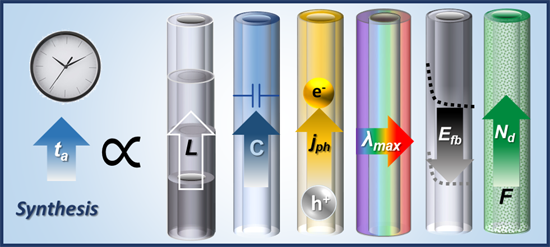
- characterizations. A UV hot-mirror filter (Edmund Optics F45-066) was used to prevent the heating of the electrolyte and to allow light with an irradiance power of 20 mW/cm2 to pass. Photocurrent transient curves were obtained by blocking the light for periods of 5 s with an automated shutter (Lambda SC Smart


Hydrothermal-derived carbon as a stabilizing matrix for improved cycling performance of silicon-based anodes for lithium-ion full cells
Beilstein J. Nanotechnol. 2018, 9, 2381–2395, doi:10.3762/bjnano.9.223
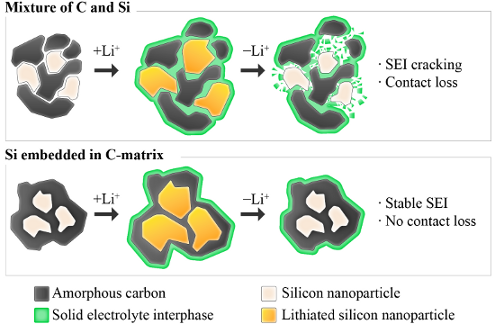
- (DMC) in a ratio of 1:1 by weight, 1 M LiPF6 (LP30, BASF) plus 5 vol % of fluoroethylene carbonate (FEC, BASF). A Maccor Series 4000 automated test system (Maccor) was used to carry out constant current charge (=lithiation)/discharge (=delithiation) experiments. The cut-off potentials during the long


Filling nanopipettes with apertures smaller than 50 nm: dynamic microdistillation
Beilstein J. Nanotechnol. 2018, 9, 2181–2187, doi:10.3762/bjnano.9.204
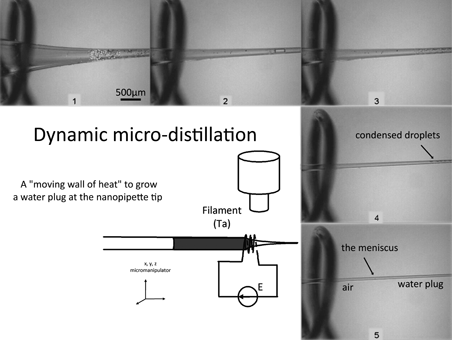
- filled nanopipettes were open and exhibited electrical characteristics related to their shape. The process works despite surrounding atmospheric pollution and humidity, which usually impede complete filling. Using a programmable piezo-electric actuator, the process could be automated and certainly


High-throughput synthesis of modified Fresnel zone plate arrays via ion beam lithography
Beilstein J. Nanotechnol. 2018, 9, 2049–2056, doi:10.3762/bjnano.9.194
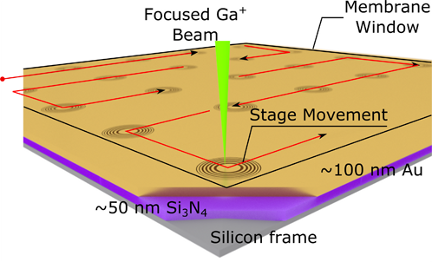
- as illustrated schematically in Figure 4a. A single FZP was written using the parameters described above, and then the stage was driven to the next FZP position until all 64 FZPs were finished in an automated overnight process. The writing of 64 FZPs using the given parameters takes less than 10 h


Numerical analysis of single-point spectroscopy curves used in photo-carrier dynamics measurements by Kelvin probe force microscopy under frequency-modulated excitation
Beilstein J. Nanotechnol. 2018, 9, 1834–1843, doi:10.3762/bjnano.9.175
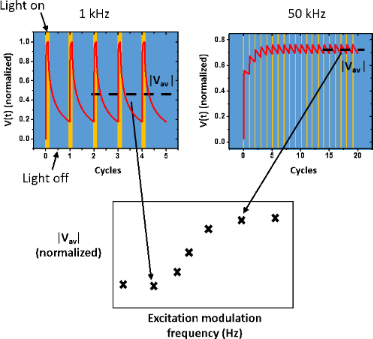
- automated numerical analysis routine, we verify the validity of the model by checking the self-consistency of the previously obtained results via the comparison of measured data, mathematical fit and simulations. In a first approach, an exponential function can be used to describe the built-up and decay of


Nanoporous silicon nitride-based membranes of controlled pore size, shape and areal density: Fabrication as well as electrophoretic and molecular filtering characterization
Beilstein J. Nanotechnol. 2018, 9, 1390–1398, doi:10.3762/bjnano.9.131
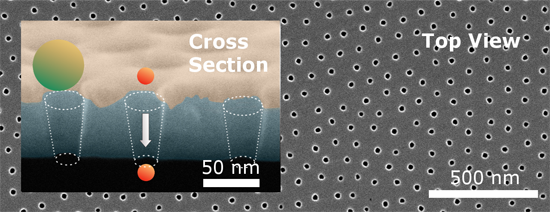
- (Supporting Information File 1, details in the text and Figure S1). Subsequently, the chambers were filled with a KCl electrolyte and the conductance was determined by applying dc voltages to the Ag/AgCl electrodes and automated current measurements. The results of the according experiments on the membranes A


Automated image segmentation-assisted flattening of atomic force microscopy images
Beilstein J. Nanotechnol. 2018, 9, 975–985, doi:10.3762/bjnano.9.91
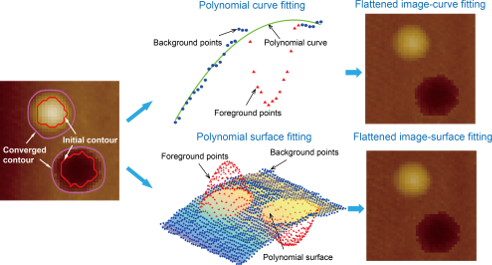
- are generally manually excluded using rectangular masks in image flattening, which is time consuming and inaccurate. In this study, a two-step scheme was proposed to achieve optimized image flattening in an automated manner. In the first step, the convex and concave features in the foreground were
- case, hundreds of features maybe required to be excluded in one image, which makes the manual operation tedious and time consuming. A robust and automated algorithm for feature detection in MEF is highly awaited. Essentially, the extraction of the exclusion masks is a process of image segmentation
- lines can no longer be represented by polynomial curves. To solve the problems mentioned above, a two-step scheme was proposed for optimized flattening of AFM images in this study. In this method, the contour expansion method [3] was first applied to achieve automated extraction of exclusion mask areas


Towards 3D crystal orientation reconstruction using automated crystal orientation mapping transmission electron microscopy (ACOM-TEM)
Beilstein J. Nanotechnol. 2018, 9, 602–607, doi:10.3762/bjnano.9.56
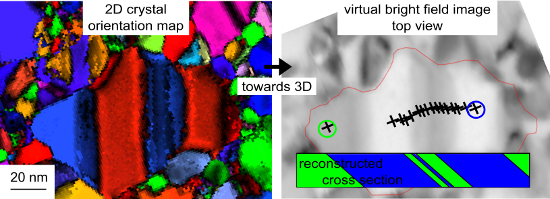
- combination with template matching for the creation of crystal orientation maps, mostly referred to as automated crystal orientation mapping transmission electron microscopy (ACOM-TEM), has become the most prominent method [22][23][27][28][29][30][31][32]. The template matching, which cross-correlates the

Robust nanobubble and nanodroplet segmentation in atomic force microscope images using the spherical Hough transform
Beilstein J. Nanotechnol. 2017, 8, 2572–2582, doi:10.3762/bjnano.8.257
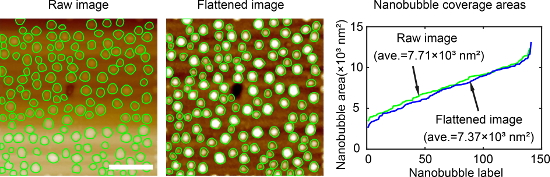
- potential for numerous applications. As a result, the automated segmentation and morphological characterization of NBs and NDs in atomic force microscope (AFM) images is highly awaited. The current segmentation methods suffer from the uneven background in AFM images due to thermal drift and hysteresis of
- AFM scanners. In this study, a two-step approach was proposed to segment NBs and NDs in AFM images in an automated manner. The spherical Hough transform (SHT) and a boundary optimization operation were combined to achieve robust segmentation. The SHT was first used to preliminarily detect NBs and NDs
- . After that, the so-called contour expansion operation was applied to achieve optimized boundaries. The principle and the detailed procedure of the proposed method were presented, followed by the demonstration of the automated segmentation and morphological characterization. The result shows that the


Tailoring the nanoscale morphology of HKUST-1 thin films via codeposition and seeded growth
Beilstein J. Nanotechnol. 2017, 8, 2307–2314, doi:10.3762/bjnano.8.230
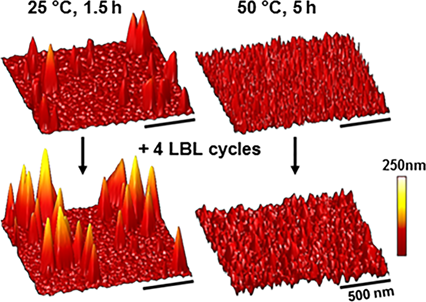
- literature by alternating, solution-phase deposition [11]. This process was automated by a Midas III automated slide stainer. For all experiments herein, solutions were held at room temperature. Characterization All samples were characterized by atomic force microscopy (Figures 1–3) and ellipsometry (Table 1


Optical techniques for cervical neoplasia detection
Beilstein J. Nanotechnol. 2017, 8, 1844–1862, doi:10.3762/bjnano.8.186
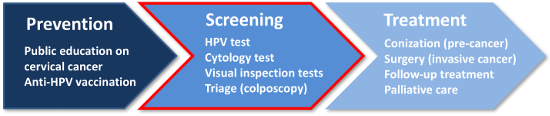
- not suitable for CIN screening in real settings. The instruments that perform a multi-spectral wide-field imaging of the whole cervix are required to address these issues. Park et al. [41] developed an algorithm for the automated analysis of colposcopic images taken with a multispectral digital
- cervical tissue. In their study of 29 patients a sensitivity of 79% and a specificity of 88% for HSIL detection were reported using histological analysis of excised cone biopsies (Figure 5c) as the gold-standard diagnosis technique. The advanced version of the automated domain-specific image analysis
- increased number of false positive results. Gu et al. [53] suggested using fluorescence-lifetime imaging microscopy (FLIM) on haematoxylin and eosin (H&E) stained histological cuts of cervical tissue and a neural network classifier for the automated diagnosis of CIN lesions. This technique can overcome the



A biofunctionalizable ink platform composed of catechol-modified chitosan and reduced graphene oxide/platinum nanocomposite
Beilstein J. Nanotechnol. 2017, 8, 1508–1514, doi:10.3762/bjnano.8.151
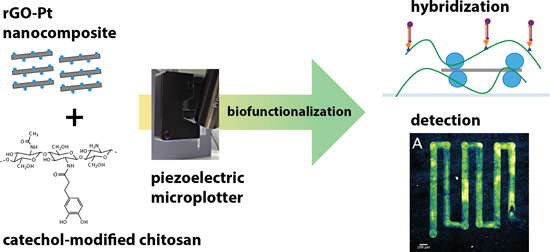
- process did not remove Pt nanoparticles from rGO–Pt. The obtained images were analyzed using Fiji [22] following the NIST guidelines [23]: noise was reduced by processing with “Despeckle,” followed by five rounds of “Smooth,” automated thresholding was performed using the Otsu algorithm to obtain binary


BTEX detection with composites of ethylenevinyl acetate and nanostructured carbon
Beilstein J. Nanotechnol. 2017, 8, 982–988, doi:10.3762/bjnano.8.100
- ). The samples were dried at room temperature [20]. The schematic structure and the dimensions are illustrated in Figure 1. Methods Gas-sensing measurements were carried out using a Kin-Tek FlexStream automated permeation tube system with a benzene permeation tube and synthetic air as carrier gas. A
- automated permeation tube system. As expected the measured effect decreases with increasing Kin-Tek carrier gas flow (Figure 5a) because the faster gas flow does not allow the molecules to adsorb. In Figure 5 we can see that at 500 ppm, the value of ∆R/R0 max for ethylbenzene is over 0.08 while for benzene


Bio-inspired micro-to-nanoporous polymers with tunable stiffness
Beilstein J. Nanotechnol. 2017, 8, 906–914, doi:10.3762/bjnano.8.92
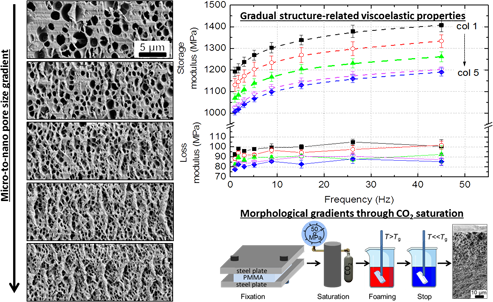
- analysis of the porous surfaces, only the undeformed regions between the indents were used (see below in Figure 2). The open-source software ImageJ [23] was used for automated analysis of pore-size and pore-area fraction. Thickness of polymeric walls was determined with the help of the recently created ND
- . In order to account for this minimum pore size, Ramesh et al. [28] introduced a cut-off to a log-normal distribution of pore sizes, so the resulting distribution is cut around zero-values. As the pores were analysed based on automated image processing, we introduced a minimum detectable pore size of


Functional dependence of resonant harmonics on nanomechanical parameters in dynamic mode atomic force microscopy
Beilstein J. Nanotechnol. 2017, 8, 883–891, doi:10.3762/bjnano.8.90
- distance. Off-resonance experimental approach curves. Acknowledgements This work has been performed within the aim4np project (Automated in-line Metrology for Nanoscale Production), which is supported by the EC through a grant (contract Nr. 309558) within the 7th Frame-work Program NMP Call 2012.1.4-3 on


3D Nanoprinting via laser-assisted electron beam induced deposition: growth kinetics, enhanced purity, and electrical resistivity
Beilstein J. Nanotechnol. 2017, 8, 801–812, doi:10.3762/bjnano.8.83
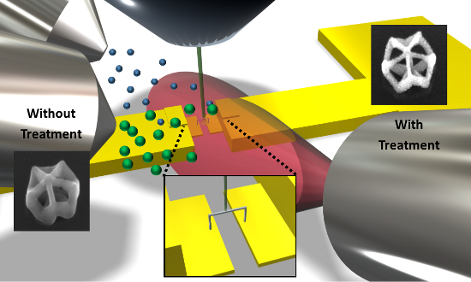
- automated axial translation. An objective lens located at the shaft tip projects the 100 µm diameter laser spot with a Gaussian distribution at the coincidence point between the focused electron beam and the gas injection systems. The laser delivery system is a prototype under development by Waviks, Inc





