


Search results
Search for "biosensors" in Full Text gives 151 result(s) in Beilstein Journal of Nanotechnology.
High-responsivity hybrid α-Ag2S/Si photodetector prepared by pulsed laser ablation in liquid
Beilstein J. Nanotechnol. 2020, 11, 1596–1607, doi:10.3762/bjnano.11.142
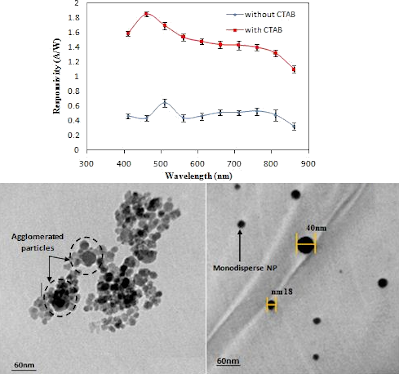
- ][6]. Silver sulfide nanoparticles (NPs) are extensively used in many applications, such as photoconductors, solar cells, infrared (IR) photodetectors, biosensors, photocatalysts, and probes [7][8][9]. A number of techniques have been used to synthesize nanostructured Ag2S, including facile




Wafer-level integration of self-aligned high aspect ratio silicon 3D structures using the MACE method with Au, Pd, Pt, Cu, and Ir
Beilstein J. Nanotechnol. 2020, 11, 1439–1449, doi:10.3762/bjnano.11.128
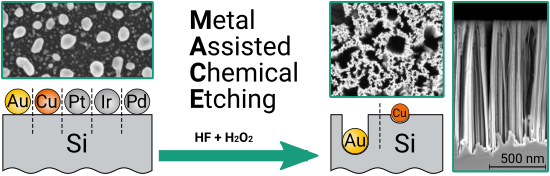
- platform and can be adapted to detect biomolecules [9]. Silicon nanowires are used as template for cancer sensors. The nanowires are implemented as gate in integrated sensing FETs [10][11]. A wide range of chemical sensors and biosensors benefit from porous silicon structures [12]. All these presented


A few-layer graphene/chlorin e6 hybrid nanomaterial and its application in photodynamic therapy against Candida albicans
Beilstein J. Nanotechnol. 2020, 11, 1054–1061, doi:10.3762/bjnano.11.90
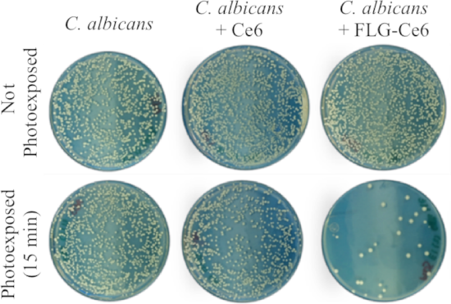
- biological applications, such as biosensors, protein detection, bioimaging and drug delivery [17][18]. In recent years, graphene nanoparticles have been used in many different applications ranging from enhanced spectroscopy techniques, coatings, polymeric composites, sensors, drug delivery systems and others


Multilayer capsules made of weak polyelectrolytes: a review on the preparation, functionalization and applications in drug delivery
Beilstein J. Nanotechnol. 2020, 11, 508–532, doi:10.3762/bjnano.11.41



Using gold nanoparticles to detect single-nucleotide polymorphisms: toward liquid biopsy
Beilstein J. Nanotechnol. 2020, 11, 263–284, doi:10.3762/bjnano.11.20
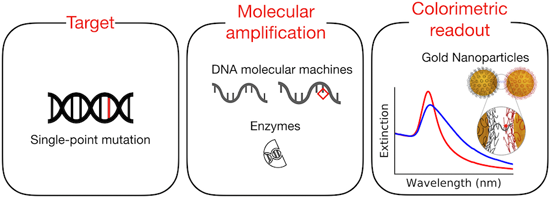
- and its implementation into point-of-care devices for common use. Covering the last twenty years, this review gives an overview of the state-of-the-art of the research on the use of gold nanoparticles in the development of colorimetric biosensors for the detection of single-nucleotide polymorphism as
- discrimination of SNP. The most relevant types of cancer including colorectal, breast, ovarian, pancreatic and lung cancer comprise several common tumor-specific aberrations of single-point mutations, which are frequently selected as targets in the development of novel biosensors based on nanoparticles. Further
- below, we describe the working principles of biosensors that were designed for the detection of the primary tumor-specific aberrations listed in Table 2. Colloidal gold as a signal transducer in SNP detection With the increased diversity of available optically active nanomaterials, optical assays have


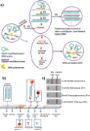

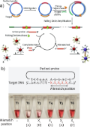

Molecular architectonics of DNA for functional nanoarchitectures
Beilstein J. Nanotechnol. 2020, 11, 124–140, doi:10.3762/bjnano.11.11
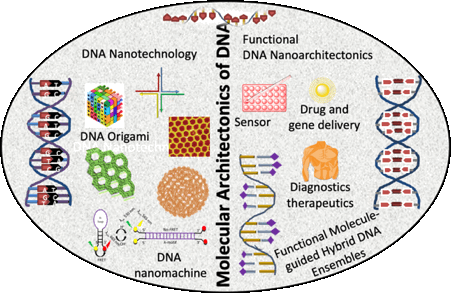
- vector and provided efficient sensing of changes in the intracellular acidic pH value. In recent years, DNA thin film-based biosensors received significant interest for the detection of biologically relevant analytes, such has forensic samples [61][62]. The design of active electrochemical DNA sensors


Evaluation of click chemistry microarrays for immunosensing of alpha-fetoprotein (AFP)
Beilstein J. Nanotechnol. 2019, 10, 2505–2515, doi:10.3762/bjnano.10.241
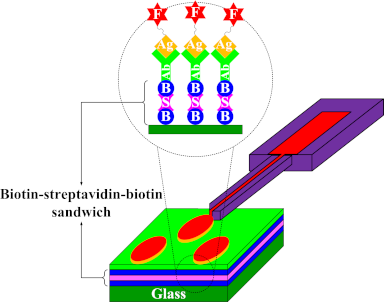
- fabricated by microchannel cantilever spotting (μCS). Here, patterns are written with fluorescently labeled AFP (as antigen) on the surfaces modified with anti-AFP (as antibody). In different studies, many selective biosensors have been developed based on antigen–antibody interactions [22][30][31][33][34][35


Atomic force acoustic microscopy reveals the influence of substrate stiffness and topography on cell behavior
Beilstein J. Nanotechnol. 2019, 10, 2329–2337, doi:10.3762/bjnano.10.223
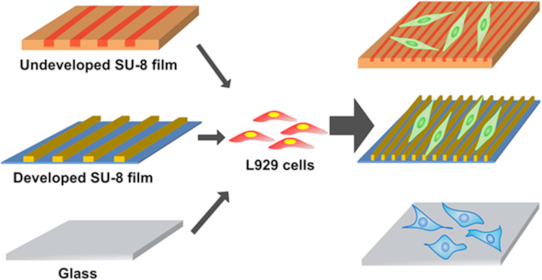
- SU-8 photoresist films as the substrate and generated local changes in the stiffness and the nanopattern topography on the surface. The SU-8 photoresist has been used as the material for biosensors in living tissues [24] and cell culture molds in vitro due to its excellent biocompatibility [16] and


Use of data processing for rapid detection of the prostate-specific antigen biomarker using immunomagnetic sandwich-type sensors
Beilstein J. Nanotechnol. 2019, 10, 2171–2181, doi:10.3762/bjnano.10.210
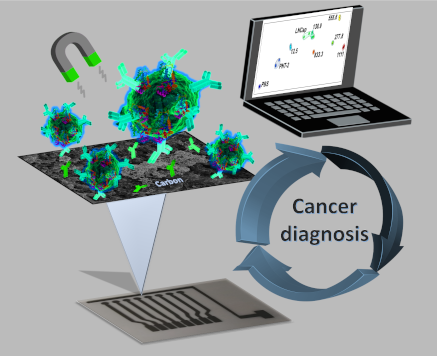
- sparked interest in computational tools [31]. For instance, information visualization techniques have been used to enhance the distinguishing ability of biosensors [32][33][34]. Discrimination of blood serum samples from patients with distinct probability to develop pancreatic cancer was made possible
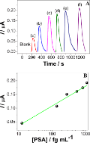
- polymer-based immunosensor [34][55]. This rather low value is expected for biosensors where the index n is characteristic of heterogeneous adsorption with polyclonal biomolecules that have many active sites with different degrees of affinity and selectivity. Application of the immunosensor in real samples


Review of advanced sensor devices employing nanoarchitectonics concepts
Beilstein J. Nanotechnol. 2019, 10, 2014–2030, doi:10.3762/bjnano.10.198
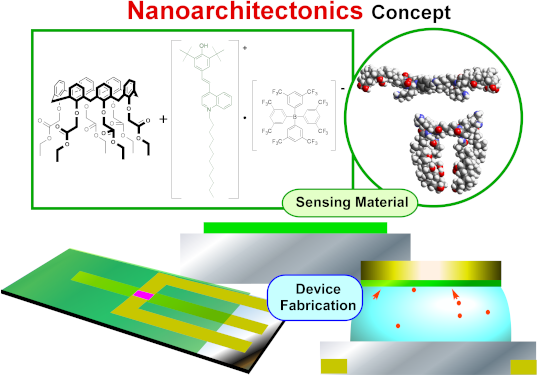
- science [44][45][46]. Therefore, further developments in sensors can be made by the combined efforts in nanotechnology and other research fields including supramolecular chemistry, organic synthesis, and materials sciences. In case of biosensors, contributions from biology play important roles [47][48][49
- features [82]. Therefore, the design and fabrication of biosensors based on the nanoarchitectonics concept may have many particular advantages. In this review article, we first discuss several examples of recent progress in sensor systems whose advanced nanoarchitectonic design and fabrication allowed for
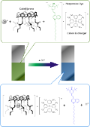
- ultrathin polyethylene terephthalate foils. The prepared sensors are extremely flexible (bending radii <3 µm) and light weight (≈3 g m−2). They are wearable and act as a magneto-sensitive skin with navigation and touchless control capabilities. Biosensors Because biosensors can provide crucial contributions





Nanoarchitectonics meets cell surface engineering: shape recognition of human cells by halloysite-doped silica cell imprints
Beilstein J. Nanotechnol. 2019, 10, 1818–1825, doi:10.3762/bjnano.10.176
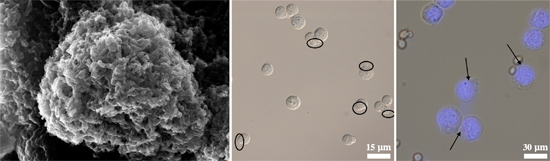
- in cell surface engineering [15]. Surface-engineered cells have found applications in whole-cell biocatalysis [16], cell therapy [17], magnetic cell delivery [18], fabrication of multicellular assemblies [19], cell protection [20][21], biosensors [22] and tissue engineering [23]. Shells derived from


Layered double hydroxide/sepiolite hybrid nanoarchitectures for the controlled release of herbicides
Beilstein J. Nanotechnol. 2019, 10, 1679–1690, doi:10.3762/bjnano.10.163
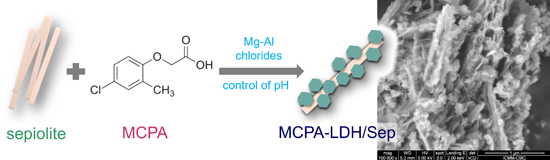
- components in diverse electrochemical devices (such as supercapacitors, sensors, and biosensors), in drug delivery and controlled-release formulations, or in non-viral gene transfection [21][22][23][24][25][26]. The fact that the stability of LDH varies with the pH value has proved advantageous in some of


Multicomponent bionanocomposites based on clay nanoarchitectures for electrochemical devices
Beilstein J. Nanotechnol. 2019, 10, 1303–1315, doi:10.3762/bjnano.10.129
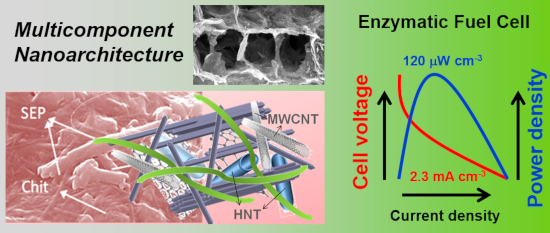
- characteristics allow for a possible application of these active elements as integrated multicomponent materials for advanced electrochemical devices such as biosensors and enzymatic biofuel cells. This strategy can be regarded as an “a la carte” menu, where the selection of the nanocomponents exhibiting
- including drugs, proteins, and enzymes [14][15][16][17][18], even serving as nanoreactor for chemical processes [19]. Of particular interest is the use of HNTs for the uptake of enzymes in an approach for the development of (bio)electrochemical devices like biosensors and enzymatic biofuel cells (EBCs) [20
- ]. The resulting multicomponent systems have advantages such as high electrical conductivity and flexibility that make the bionanocomposite films appropriate components for biosensors [35][40] for glucose detection, while the relatively high porosity of the bioactive foams enhances the power density and



Direct growth of few-layer graphene on AlN-based resonators for high-sensitivity gravimetric biosensors
Beilstein J. Nanotechnol. 2019, 10, 975–984, doi:10.3762/bjnano.10.98
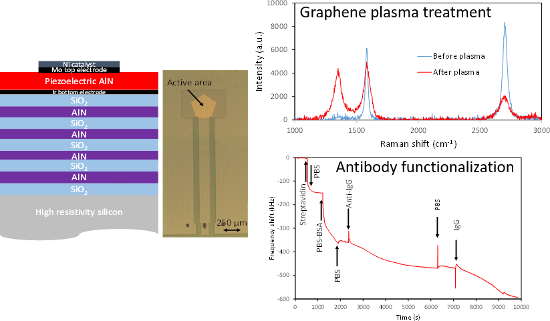
- detection; graphene integration; gravimetric biosensor; surface functionalization; Introduction Gravimetric biosensors based on microscale mechanical or electromechanical resonators have attracted significant interest in recent years mainly due to the high sensitivity and selectivity they can attain if
- resonators (SMR), providing acoustic isolation through acoustic reflectors instead of air cavities, are well suited for in-liquid operation and microfluidics integration [3]. A critical step in the manufacturing of gravimetric biosensors is the functionalization of their active surface, which provides the
- scientific community due to their extraordinary prospects for novel applications, such as highly sensitive biosensors that may offer continuous label-free measurement of key bio-active cell molecules [10]. Few-layer graphene grown on top of gravimetric transducers offers, a priori, one of the most versatile


Experimental study of an evanescent-field biosensor based on 1D photonic bandgap structures
Beilstein J. Nanotechnol. 2019, 10, 967–974, doi:10.3762/bjnano.10.97
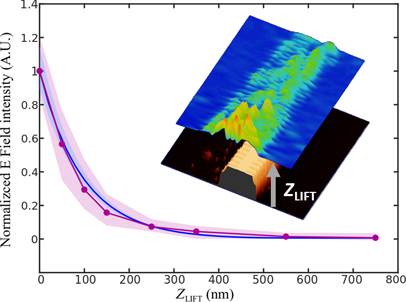
- , due to the various advantages it provides, e.g., high sensitivity, miniaturization, high multiplexing level, fast response, need for very low sample and reagent volumes and the compatibility to complementary metal-oxide semiconductor (CMOS) fabrication [3]. Chip-integrated photonic biosensors have
- been demonstrated for several applications such as medical diagnosis, environmental monitoring or security control [4]. Most typical configurations of integrated photonic biosensors are based on the use of resonant or interferometric configurations, as it is the case of ring resonators or disks and
- femtomolar range for oligonucleotides detection [6]. A particular type of photonic sensing devices are photonic bandgap (PBG) biosensors based on evanescent-wave detection [7]. PBG structures consist of a periodic dielectric configuration for which the propagation of a certain wavelength range is forbidden


A carrier velocity model for electrical detection of gas molecules
Beilstein J. Nanotechnol. 2019, 10, 644–653, doi:10.3762/bjnano.10.64
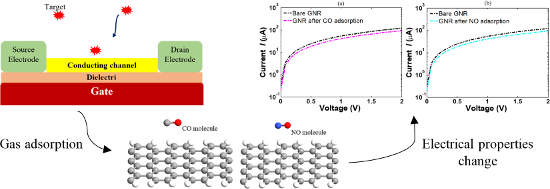
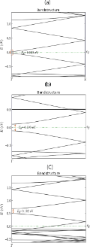
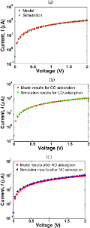
- detection approaches have been studied, and their electrical properties have also been investigated [5][6][7][8][9]. In addition, many researchers have experimentally worked on the fabrication of graphene and GNR-based biosensors and gas sensors [10][11][12][13][14][15]. Most of the previous works are




Accurate control of the covalent functionalization of single-walled carbon nanotubes for the electro-enzymatically controlled oxidation of biomolecules
Beilstein J. Nanotechnol. 2018, 9, 2750–2762, doi:10.3762/bjnano.9.257
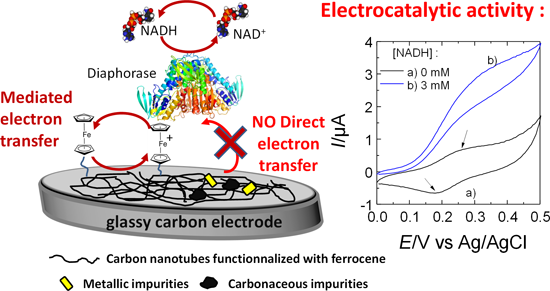
- as biosensors: the water solubility and the cleanliness of employed CNTs in order to avoid misinterpreted results. The solubility of CNTs in water, a usual solvent for biosensors, is quite low. The strategies used to increase their water solubility have been either i) to chemically modify them by






ZnO-nanostructure-based electrochemical sensor: Effect of nanostructure morphology on the sensing of heavy metal ions
Beilstein J. Nanotechnol. 2018, 9, 2421–2431, doi:10.3762/bjnano.9.227
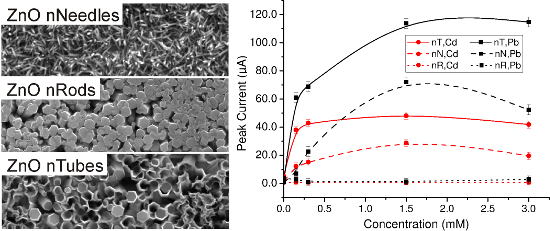
- nanostructures are promising candidates for use in sensors, especially in electrochemical sensors and biosensors, due to their unique physical and chemical properties, as well as sensitivity and selectivity to several types of contamination, including heavy metal ions. In this work, using the hydrothermal method


High-throughput micro-nanostructuring by microdroplet inkjet printing
Beilstein J. Nanotechnol. 2018, 9, 2372–2380, doi:10.3762/bjnano.9.222
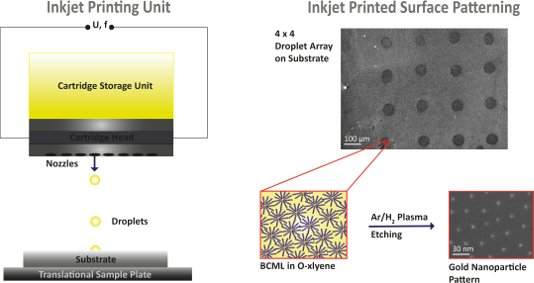
- : biofunctional surfaces; inkjet printing; microstructures; nanolithography; nanoparticles; Introduction Many applications require well-organized micro- and nanoscale patterning of metallic nanoparticles. Examples include high-performance optics [1], multimodal waveguides [2], biosensors [3] and biomaterials [4


Optimization of the optical coupling in nanowire-based integrated photonic platforms by FDTD simulation
Beilstein J. Nanotechnol. 2018, 9, 2248–2254, doi:10.3762/bjnano.9.209
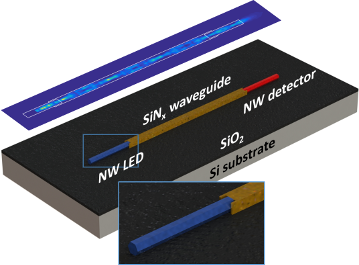
- communication; Introduction Today, infrared (IR) photonic integrated circuits (PICs) represent a well-established technology with numerous applications in optical telecommunications [1][2][3][4]. However, for life science applications (biosensors, molecular diagnostics, food inspection, etc.) visible light


Magnetic properties of Fe3O4 antidot arrays synthesized by AFIR: atomic layer deposition, focused ion beam and thermal reduction
Beilstein J. Nanotechnol. 2018, 9, 1728–1734, doi:10.3762/bjnano.9.164
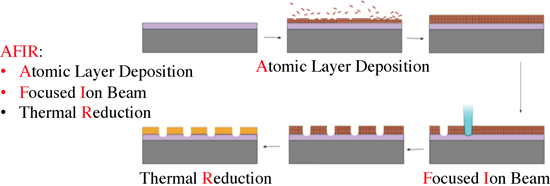
- material, such new Fe3O4 antidot arrays are of interest for the future development of nano-scale biosensors. Experimental Figure 1 shows the outline of the AFIR process. Si(100) wafers with a native layer of SiO2 were coated with hematite (Fe2O3) in a Savannah S100 ALD reactor from Ultratech operated at




Interaction-tailored organization of large-area colloidal assemblies
Beilstein J. Nanotechnol. 2018, 9, 1582–1593, doi:10.3762/bjnano.9.150
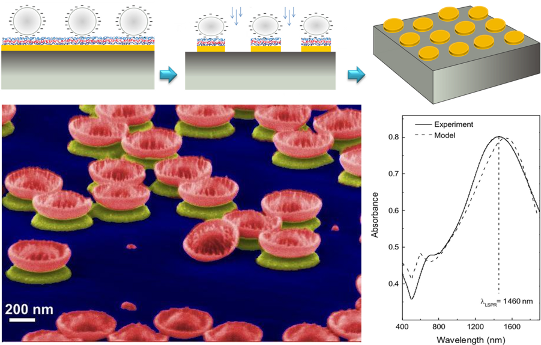
- applications in many fields such as photonics/plasmonics [1], phononics [2][3], spintronics/magnonics [4][5], biosensors and energy harvesting [6][7][8]. For example, metal nanostructured systems, stimulated by incident light of a specific wavelength, can support localized surface plasmon resonant modes. The


Cathodoluminescence as a probe of the optical properties of resonant apertures in a metallic film
Beilstein J. Nanotechnol. 2018, 9, 1491–1500, doi:10.3762/bjnano.9.140
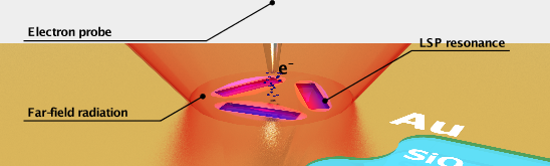
- nanogratings [15], plasmonic oligomers [16], dolmen arrangements of nanorods [17] and ring–disk dimers [18]. Fano resonances have also been observed in nanoholes such as coaxial apertures [19] and dolmen nanocavities [18]. The performance of an array of double split-ring cavities [20] as biosensors using Fano


Surface characterization of nanoparticles using near-field light scattering
Beilstein J. Nanotechnol. 2018, 9, 1228–1238, doi:10.3762/bjnano.9.114
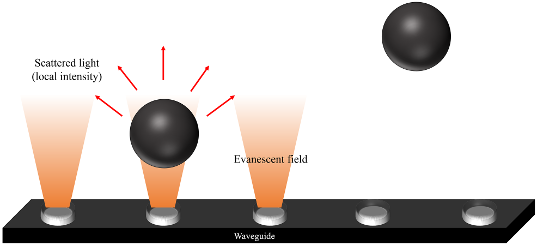
- cell labeling, gene and drug delivery, molecular imaging, and biosensors [1][2][3][4]. Nanoparticles can be manipulated or modified to fulfill a specific, engineered purpose, partially through changing the surface chemistry or surface coating of the particle. As such, changes in particle surface




Electrodeposition of reduced graphene oxide with chitosan based on the coordination deposition method
Beilstein J. Nanotechnol. 2018, 9, 1200–1210, doi:10.3762/bjnano.9.111
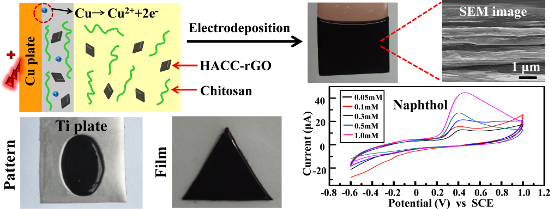
- nanoparticles, carbon nanotubes, manganese oxides nanoparticles, and carbon dots) on electrodes through codeposition with chitosan, which offers attractive applications in antimicrobial coatings, biosensors, microbial fuel cells, and energy storage materials [14][15][16][17][18]. Among the studies on the





