


Search results
Search for "colloids" in Full Text gives 130 result(s) in Beilstein Journal of Nanotechnology.
Nanostructured liquid crystal systems and applications
Beilstein J. Nanotechnol. 2018, 9, 2644–2645, doi:10.3762/bjnano.9.245

- directions, such as novel LC phases, structure and phase behavior design and synthesis of LC materials photonic, electro- and photo-responsive LC systems theory and simulations of LC systems LC polymers, elastomers, colloids and gels hybrid and nanostructured LC systems biological, lyotropic and chromonic LC
Cytotoxicity of doxorubicin-conjugated poly[N-(2-hydroxypropyl)methacrylamide]-modified γ-Fe2O3 nanoparticles towards human tumor cells
Beilstein J. Nanotechnol. 2018, 9, 2533–2545, doi:10.3762/bjnano.9.236
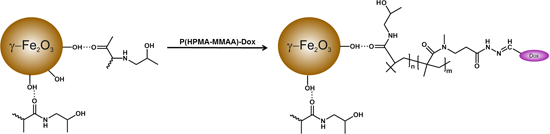
- studies of Dox-conjugated polymer-coated γ-Fe2O3 nanoparticles by primary cells (hMSCs) and human tumor cells (MG-63 and HeLa) were carried out as follows. The cells were incubated with appropriate amounts of the particle colloids for 48 h and washed with PBS three times to remove dissolved compounds not


Nanocellulose: Recent advances and its prospects in environmental remediation
Beilstein J. Nanotechnol. 2018, 9, 2479–2498, doi:10.3762/bjnano.9.232
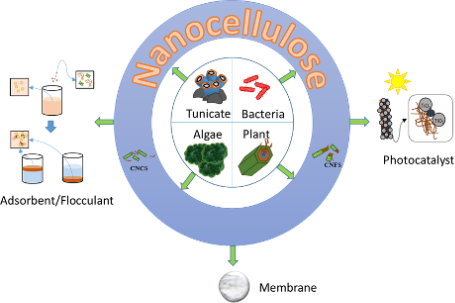
- nanocellulose, which could be particularly useful for particle aggregation of negatively charged pollutants to coagulate and flocculate kaolin colloids as reported by Liimatainen et al. [79]. On the other hand, the utilization of green solvents (ionic liquids) as both solvent and catalyst for cellulose
- case, rod-shaped particles (commonly found in CNC) could deplete larger colloids than spherical particles [145]. Besides, the introduction of cationic pyridinium and imidazole functional groups through grafting provided an advantage to CNCs over common polymer flocculants in terms of flocculation


SERS active Ag–SiO2 nanoparticles obtained by laser ablation of silver in colloidal silica
Beilstein J. Nanotechnol. 2018, 9, 2396–2404, doi:10.3762/bjnano.9.224
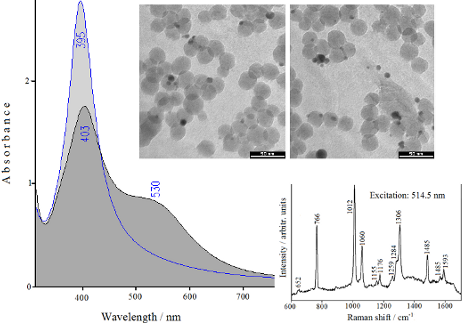
- adhere to silica can be stabilized in colloidal suspensions far better than in pure metal colloids, providing improved reproducibility of the SERS data. The second motivation is to exploit the adsorption capability of the colloidal silica for various organic ligands, for example glucose, formaldehyde
- exciting radiation matches the plasmonic band. The observed SERS frequencies (see Figure 3B,C) correspond to those of bpy adsorbed on silver colloids [42][43], reported in Table 1. From a spectroscopic point of view, the silica/silver colloidal substrate presented in this work allows the SERS spectra to be
- completely comparable with those recorded in pure silver colloids, with regards to both frequency and intensity. In this regard, we present the SERS spectrum of 2,2’-bipyridine adsorbed on silver nanoparticles obtained by laser ablation in water in Figure S4 of the Supporting Information File 1. This


Block copolymers for designing nanostructured porous coatings
Beilstein J. Nanotechnol. 2018, 9, 2332–2344, doi:10.3762/bjnano.9.218
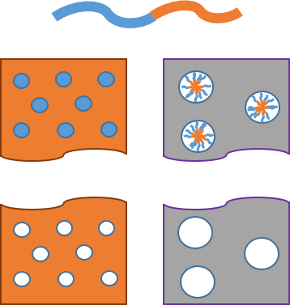
- dimensions [11]. Conversely, a “bottom-up” approach involves the growth of (sub)nanometer components (i.e., colloids, (macro)molecules, or even atoms) to produce complex nanoarchitectures [12]. The fabrication of well-ordered nanostructured materials has developed considerably in recent years, thus becoming


The role of adatoms in chloride-activated colloidal silver nanoparticles for surface-enhanced Raman scattering enhancement
Beilstein J. Nanotechnol. 2018, 9, 2236–2247, doi:10.3762/bjnano.9.208
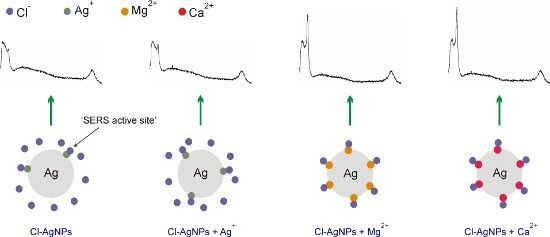
- the advantages of Cl-AgNPs compared to the as-synthesized AgNPs obtained by standard Ag+ reduction with hydroxylamine (hya-AgNPS) or citrate (cit-AgNPs). The results of SERS experiments on anionic and cationic test molecules comparing Cl-AgNPs, hya-AgNPs and cit-AgNPs colloids activated with different
- added to metal colloids to enhance the Raman signal of the analytes. This phenomenon can be explained by two distinct mechanisms: the electromagnetic mechanism and the chemical effect. Each mechanism is believed to contribute complementary to the Raman scattering enhancement of the adsorbate in SERS
- with the distance from the metal surface. Chloride ions, when used at concentrations higher than 0.1 M, induce the aggregation of the metal colloids. The addition of Cl− ions to the colloidal solution reduces the absolute zeta potential value of the nanoparticles, leading to a decrease in the stability



Electrospun one-dimensional nanostructures: a new horizon for gas sensing materials
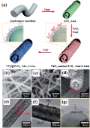
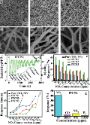
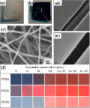
Beilstein J. Nanotechnol. 2018, 9, 2128–2170, doi:10.3762/bjnano.9.202






Recent highlights in nanoscale and mesoscale friction
Beilstein J. Nanotechnol. 2018, 9, 1995–2014, doi:10.3762/bjnano.9.190
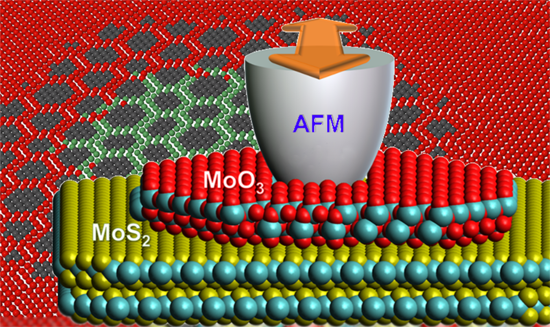
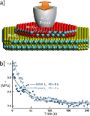
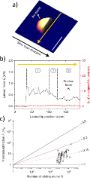
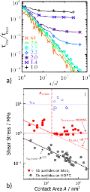
- “Trapped optical systems: ions and colloids” reviews recent experiments and theory exploring the depinning and sliding mechanisms in analog model systems controlled by forces generated by electromagnetic fields. A successive section “Controlling friction and wear at the nanometer scale” addresses novel
- colloids” for more details). However, in more conventional nanomanipulation experiments such a transition could not yet be actively induced, most probably due to insufficient normal forces [50][76][84]. Nonetheless, this does not mean that interface-relaxation effects play no role even for relatively rigid
- identified in the simple ideal 1D geometry [137][138][139][140] was also demonstrated in 2D [141][142] and 3D [143] realistic numerical simulations, but it still awaits experimental confirmation. Trapped optical systems: ions and colloids One of the main challenges and difficulties in unraveling the


Cryochemical synthesis of ultrasmall, highly crystalline, nanostructured metal oxides and salts
Beilstein J. Nanotechnol. 2018, 9, 1755–1763, doi:10.3762/bjnano.9.166
- inorganic salts in these solvents limits their application in cryochemical processing. Along with aqueous solutions, in the last few years the freezing of colloids (gels, suspensions) and precipitates has been increasingly used [8]. As a rule, salts solutions are treated by fast cooling [9]. For example
- of the chain aggregates was related to the ice structure formed during freezing [10]. The cryoprocessing of liquid media, solutions and colloids can be used to limit the growth and agglomeration of the formed particles, to stabilize their surface, and thus, to obtain discrete particles of
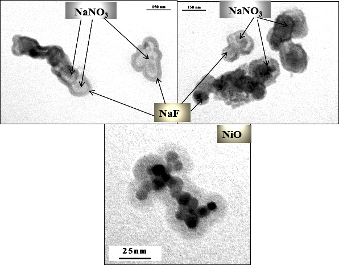
- , including a modified sol–gel synthesis of the colloids and their cryogenic processing, was used in the synthesis of nickel, iron and cerium oxide nanopowders. In this case, cerium, iron and nickel nitrates were used as metal sources for the synthesis of metal-containing sols. The sol synthesis was carried


Nanoporous silicon nitride-based membranes of controlled pore size, shape and areal density: Fabrication as well as electrophoretic and molecular filtering characterization
Beilstein J. Nanotechnol. 2018, 9, 1390–1398, doi:10.3762/bjnano.9.131
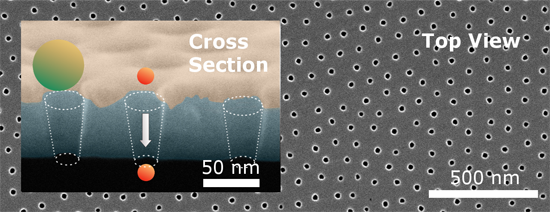
- purpose monolayers of non-close-packed colloids, and diblock or triblock copolymers were used [23][24][25][26][27]. For the present work with targeted pore sizes of some nanometers up to 50 nm in about 50 nm thick membranes, the sought control of pore shape with smooth inner pore surfaces, and, most


Review on nanoparticles and nanostructured materials: history, sources, toxicity and regulations
Beilstein J. Nanotechnol. 2018, 9, 1050–1074, doi:10.3762/bjnano.9.98

- history of NMs in the scientific arena. He also revealed that the optical characteristics of Au colloids are dissimilar compared to their respective bulk counterpart. This was probably one of the earlier reports where quantum size effects were observed and described. Later, Mie (1908) explained the reason
- behind the specific colors of metal colloids [32]. In the 1940s, SiO2 NPs were being manufactured as substitutes to carbon black for rubber reinforcement [33]. Today manufactured NMs can significantly improve the characteristics of bulk materials, in terms of strength, conductivity, durability, and


Effect of ferroelectric BaTiO3 particles on the threshold voltage of a smectic A liquid crystal
Beilstein J. Nanotechnol. 2018, 9, 824–828, doi:10.3762/bjnano.9.76
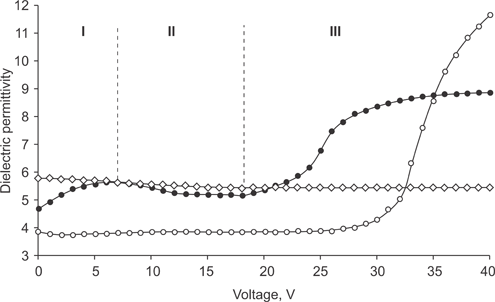
- an LC medium. Even a small amount of such particles leads to colossal changes in the properties of LC and causes qualitatively new effects [6][7][8]. Particularly interesting results were obtained in colloids consisting of nematic LCs and ferroelectric particles. LCs doped with a small quantity of
- electric field [10]. The Fréedericksz transition occurs at least in two stages when the BaTiO3 nanoparticles are added to the liquid crystal [11][12]. In colloids of ferroelectric particles in nematic LCs, as a rule, oleic acid is present as a stabilizer, the role of which is to prevent the aggregation of
- change the value of the elastic constant K11. Equation 1 shows that the increase in dielectric anisotropy by 1.2 times reduces the threshold voltage only by 1.1-times. In recent theoretical papers devoted to LC colloids [21][22] containing ferroelectric nanoparticles, the reducing of Fréedericksz effect


Tuning adhesion forces between functionalized gold colloidal nanoparticles and silicon AFM tips: role of ligands and capillary forces
Beilstein J. Nanotechnol. 2018, 9, 660–670, doi:10.3762/bjnano.9.61
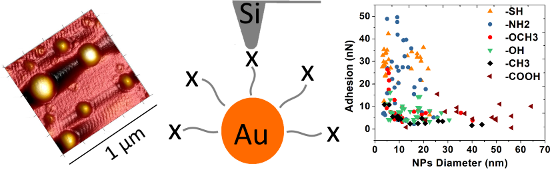
- , but also by the interactions of the NPs and silicon substrate during nanomanipulation in AFM in tapping mode [23]. Despite its inertness [24], Au NPs can be relatively easily functionalized with organic ligands resulting in the formation of stable colloids [23][25]. The possibility of changing the


Colloidal solution of silver nanoparticles for label-free colorimetric sensing of ammonia in aqueous solutions
Beilstein J. Nanotechnol. 2018, 9, 499–507, doi:10.3762/bjnano.9.48
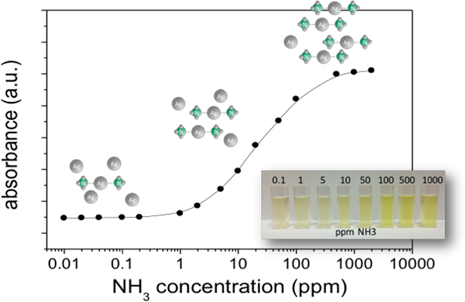
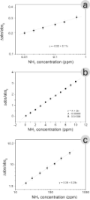
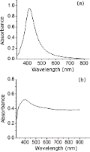
- nanoparticles, we show in Figure 1 the UV–vis absorption spectra obtained from the most representative samples. The peak at about 400 nm is due to SPR of the electrons in the conduction band of silver and indicates the formation of silver colloids with nanometre-sized dimensions. Ammonia modulates the UV–vis



Liquid-crystalline nanoarchitectures for tissue engineering
Beilstein J. Nanotechnol. 2018, 9, 205–215, doi:10.3762/bjnano.9.22
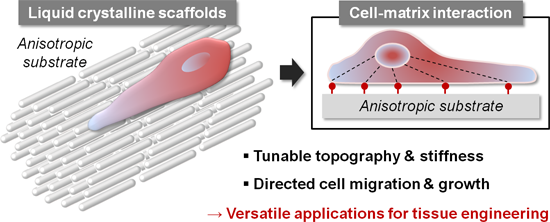
- for applying LC nanoarchitectures to tissue regeneration purposes is discussed. Liquid crystalline phases of biological polymers and colloids in vitro Geometry in biological LCs Lyotropic LC phases are observed in the aqueous dispersions of various types of biological rod-like building blocks, such as


The role of ligands in coinage-metal nanoparticles for electronics
Beilstein J. Nanotechnol. 2017, 8, 2625–2639, doi:10.3762/bjnano.8.263
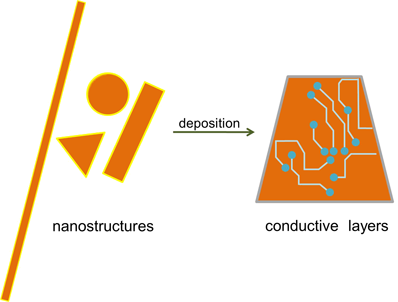
- of chemistry and materials science will continue to grow. Ligands determine the shape of coinage-metal nanoparticles, affect the stability of their colloids and inks containing them, and the structure and properties of films deposited from such inks. Common surface ligands for solution metal particle


Synthesis of metal-fluoride nanoparticles supported on thermally reduced graphite oxide
Beilstein J. Nanotechnol. 2017, 8, 2474–2483, doi:10.3762/bjnano.8.247
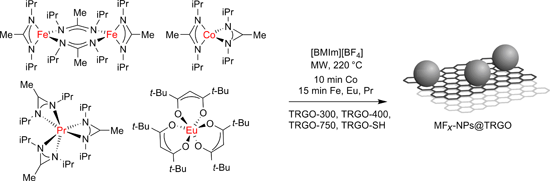
- nanocomposite materials in ionic liquids (ILs) to yield selectively phase-pure metal-fluoride nanoparticles (MFx-NPs) supported on the TRGO as stable colloids (Scheme 1). The used TRGO starting materials differed in the temperatures at which they were reduced (300, 400 or 750 °C) and in the presence of sulfur


Synthesis and characterization of noble metal–titania core–shell nanostructures with tunable shell thickness
Beilstein J. Nanotechnol. 2017, 8, 2083–2093, doi:10.3762/bjnano.8.208
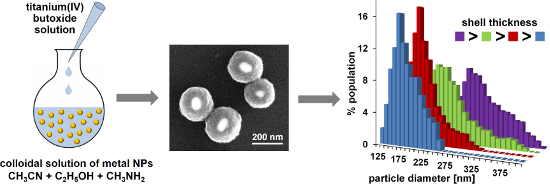
- and Au@TiO2 structures could be their rather difficult synthesis process [21][22]. The main problem in coating various particles (including metal colloids) with titania is the very fast hydrolysis rate of its most commonly used precursors, titanium alkoxides, which makes the coating process hard to
- water and acetone several times. Gold colloids Gold colloids were prepared using the Frens method. 100 mL of 0.01% (w/w) aqueous HAuCl4 solution were heated to boiling point and 0.6 mL of 1% (w/w) of sodium citrate solution were added. In ca. 2 min the boiling solution turned blue (nucleation) and after
- approximately 5 min the color suddenly changed into red, indicating the formation of spherical gold nanoparticles. After cooling down to room temperature the reaction mixture was centrifuged and 3 mL of concentrated colloidal gold solution were collected from the bottom of the tube. Silver colloids 90 mL of


A comparative study of the nanoscale and macroscale tribological attributes of alumina and stainless steel surfaces immersed in aqueous suspensions of positively or negatively charged nanodiamonds
Beilstein J. Nanotechnol. 2017, 8, 2045–2059, doi:10.3762/bjnano.8.205
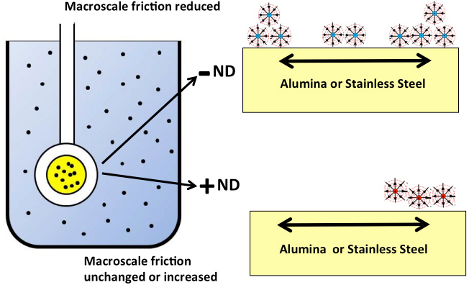
- : additives; alumina; aqueous colloids; fractal; friction; lubricants; nanodiamond; nanotribology; quartz crystal microbalance; stainless steel; Introduction Interest in nanoparticles as eco-friendly lubricant additives has grown tremendously in recent years [1][2]. The field is driven in a large part by a
- NDs similar to those employed here result in a markedly lower friction coefficients when treated with a dispersant so as to form colloids in oils [53]. This is consistent with a suggestion that the surface passivation treatments of NDs have great impact on the tribological properties. The notion is


Surface-enhanced Raman spectroscopy of cell lysates mixed with silver nanoparticles for tumor classification
Beilstein J. Nanotechnol. 2017, 8, 1183–1190, doi:10.3762/bjnano.8.120

- , ≥99%), sodium hydroxide, hydroxylamine hydrochloride (reagent plus, 99%) and potassium chloride were purchased from Sigma–Aldrich. Distilled water was used for all preparations. The silver nanoparticle colloids were synthesized according to the protocol described by Leopold and Lendl [31]. Briefly, 1
- mM silver nitrate was added to a solution of 1.5 mM hydroxylamine hydrochloride and 3 mM sodium hydroxide. The whole mixture was stirred during the addition of the silver nitrate. As a sign of a successful preparation the color of the solution changed from grey to yellow. The silver colloids were



First examples of organosilica-based ionogels: synthesis and electrochemical behavior
Beilstein J. Nanotechnol. 2017, 8, 736–751, doi:10.3762/bjnano.8.77
- simulations providing the starting configuration of the AIMD simulation, Dr. O. Holloczki for help with simulation data analysis, Dr. K. Tauer for access to the DSC instrument, and the Max-Planck Institute of Colloids & Interfaces for access to the SAXS instrument. The University of Potsdam, the Max-Planck
- Institute for Colloids & Interfaces, and the DFG (TA571/2-1, 3-1, 13-1 and KI 768/12-1, DFG SPP 1708, Materials Synthesis near Room Temperature) are thanked for financial support. R. L. acknowledges COST MP1202 for funding an exchange with ICCF in Clermont-Ferrand for EIS measurements.








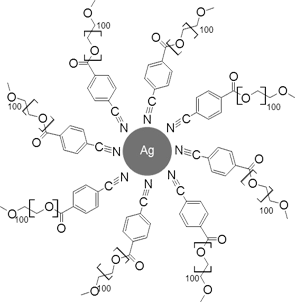
α-((4-Cyanobenzoyl)oxy)-ω-methyl poly(ethylene glycol): a new stabilizer for silver nanoparticles
Beilstein J. Nanotechnol. 2017, 8, 627–635, doi:10.3762/bjnano.8.67
- Colloids & Interfaces) for GPC measurements, A. Krtitschka and Prof. H. Möller (University of Potsdam) for help with NMR experiments, and U. Koch (FU Berlin/University of Potsdam) for preliminary experiments on nanoparticle synthesis. Funding by the University of Potsdam, BfR – German Federal Institute for


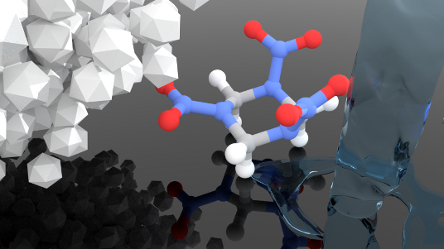
The longstanding challenge of the nanocrystallization of 1,3,5-trinitroperhydro-1,3,5-triazine (RDX)
Beilstein J. Nanotechnol. 2017, 8, 452–466, doi:10.3762/bjnano.8.49
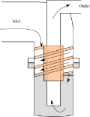
- synthesis of metal in solution at the laboratory scale. The colloids produced are found to be extremely stable. Used in dried conditions, a deposit of nanoparticles on a substrate could be obtained from a gas flow, or a dried powder could be collected within a cyclonic separator. This laser-based technique


Microfluidic setup for on-line SERS monitoring using laser induced nanoparticle spots as SERS active substrate
Beilstein J. Nanotechnol. 2017, 8, 237–243, doi:10.3762/bjnano.8.26
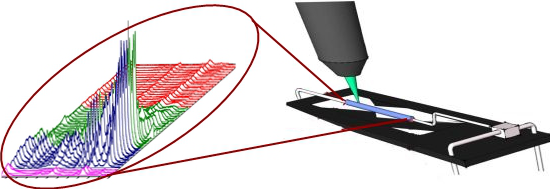
- employed SERS substrates. However, the citrate reduced colloids are difficult to be prepared in experiments when in situ synthesis is required. In the past years, miniaturization of the systems became important for the development of bioanalytical sensors, having advantages such as precise control over the
- ][14][15][16][17][18][19][20], so far, for a successful experiment the procedures require the synthesis of the colloids and previous mixing of the analyte and the silver nanoparticles. This study focuses on the on-line SERS monitoring of malachite green (MG) as a model analyte. However, the detection


Performance of colloidal CdS sensitized solar cells with ZnO nanorods/nanoparticles
Beilstein J. Nanotechnol. 2017, 8, 210–221, doi:10.3762/bjnano.8.23
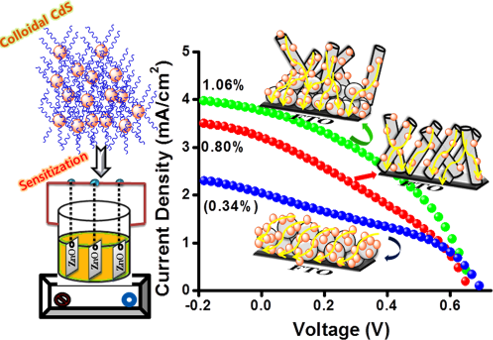
- various optimizations in terms of varying the morphology of the used photoanodes, the use of surface functionalized CdS colloids, deposition techniques such as SILAR and CBD using the colloidal dispersion, and different types of electrolytes, the overall conversion efficiency of the fabricated cells could





