Search results
Search for "crystallites" in Full Text gives 201 result(s) in Beilstein Journal of Nanotechnology. Showing first 200.
Green and scalable synthesis of nanocrystalline kuramite
Beilstein J. Nanotechnol. 2019, 10, 2073–2083, doi:10.3762/bjnano.10.202
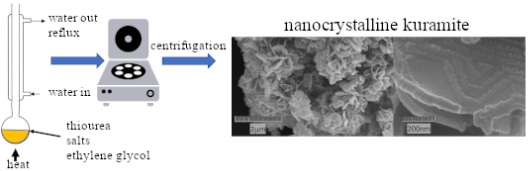
- al. [82] and references therein); no second shell signal is observable, which is in reasonable agreement with the lower ordering expected from the extremely small crystallites (e.g., in the work of Giaccherini et al. [45]). Data from Sn K-edge indicate a first shell with bond distances compatible


Nanostructured and oriented metal–organic framework films enabling extreme surface wetting properties
Beilstein J. Nanotechnol. 2019, 10, 1994–2003, doi:10.3762/bjnano.10.196
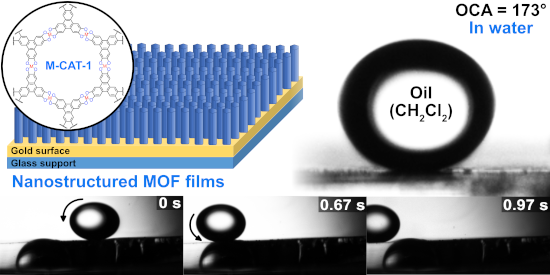
- were synthesized as highly crystalline bulk materials. The M-CAT-1 surface energy was estimated by contact angle measurements using pellet samples exposing nonoriented crystallites on the surface. Next, oriented and compact Co- and Ni-CAT-1 films were deposited on gold surfaces by vapor-assisted
- -CAT-1 crystallites exhibit a hexagonally faceted, needle-like morphology with crystal cross-sections of 30–40 nm and several micrometers in length (Figure 1). In addition, the M-CAT-1 materials are electroactive featuring electrical conductivity values of up to 10−2–10−3 S cm−1 for pressed powder
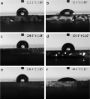
- activated MOF, roughness (RMS): 37 nm). Scanning electron microscope (SEM) micrographs reveal densely packed and randomly oriented MOF crystallites throughout the sample (see Figure S3.2, Supporting Information File 1). For the contact angle (CA) measurements at the solid/air interface we chose


Oblique angle deposition of nickel thin films by high-power impulse magnetron sputtering
Beilstein J. Nanotechnol. 2019, 10, 1914–1921, doi:10.3762/bjnano.10.186
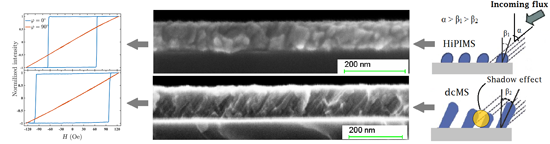
- reported [60][61]. They originate from the bombardment of the film surface by energetic ions during deposition, which constantly creates new sites for growing new crystallites. This, in consequence, leads to smaller grain sizes [62][63]. Magnetic properties We used MOKE to explore the magnetic properties


Fabrication and characterization of Si1−xGex nanocrystals in as-grown and annealed structures: a comparative study
Beilstein J. Nanotechnol. 2019, 10, 1873–1882, doi:10.3762/bjnano.10.182
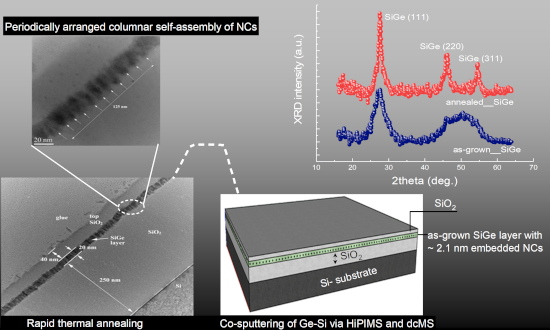
- as-grown structure. The first one corresponds to the (111) planes of SiGe and the second one to the (220) and (311) planes, which overlap indicating the presence of (nano)crystallites [22]. In Figure 1b, a deconvolution of diffractogram for the as-grown MLs was achieved using Origin software (ver
- . 10.0) (checked using X’Pert HighScore Plus software from PANalytical, ver. 2.2). The size of the crystallites was calculated from the (111) peak using the Scherrer equation [33][34] with a shape factor (k) of 0.9 and an instrumental error, i.e., beam broadening of 0.12. Although this is an indecisive
- approach [22][23], the parameters used to calculate the crystallites size are mentioned in Figure 1b and it was found to be 2.1 ± 0.8 nm. This reduction in crystallite size, compared to previously investigated structures is due to variation in deposition parameters such as cathode voltage. After annealing


High-temperature resistive gas sensors based on ZnO/SiC nanocomposites
Beilstein J. Nanotechnol. 2019, 10, 1537–1547, doi:10.3762/bjnano.10.151
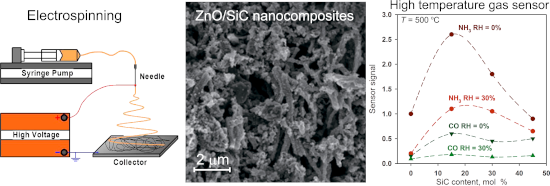
- composite materials with respect to temperature, radiation, chemical and mechanical effects [6][7]. It has been shown that in MO/SiC nanocomposites containing metal oxide (MO) and nanostructured SiC, the presence of silicon carbide inhibits the growth of MO crystallites at high temperatures [8]. The



Hierarchically structured 3D carbon nanotube electrodes for electrocatalytic applications
Beilstein J. Nanotechnol. 2019, 10, 1475–1487, doi:10.3762/bjnano.10.146
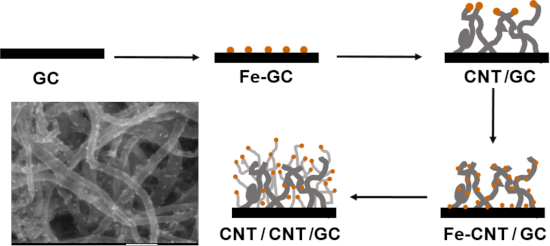
- , however, no meaningful diffractograms were obtained due to the low overall Pt loading and probably due to the fact that the electrodeposited Pt nanoparticles seem to be quite irregular and might consist of several crystallites that are too small to be detected by XRD (compare Supporting Information File 1





Direct observation of oxygen-vacancy formation and structural changes in Bi2WO6 nanoflakes induced by electron irradiation
Beilstein J. Nanotechnol. 2019, 10, 1434–1442, doi:10.3762/bjnano.10.141
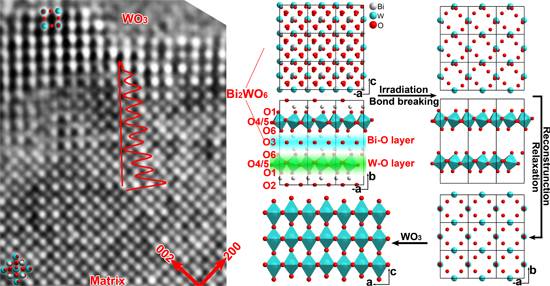
- that the released atoms tend to aggregate on the surface of the flakes, and then recrystallize into new crystallites. Moreover, larger lattice spacings (d ≈ 3.768 Å, arrows indicated in Figure 2c) were observed at the edges of the irradiated flake, resulting in stronger electron scattering at the
- irradiation time of 4, 16, 28, 47 and 63 min, hinting at the variation of the preferred growth orientation of bismuth crystallites on the surface of the Bi2WO6 nanoflake. Analysis of HRTEM images of precipitates (Figure 4a,b) confirms the formation of a hexagonal bismuth phase. The zone-axis directions of the


Gas sensing properties of individual SnO2 nanowires and SnO2 sol–gel nanocomposites
Beilstein J. Nanotechnol. 2019, 10, 1380–1390, doi:10.3762/bjnano.10.136
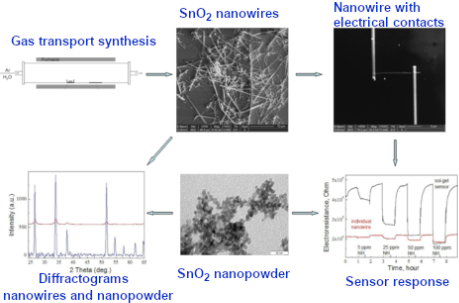
- crystallites obtained by sedimentation (Figure 2) should lead to a considerable dispersion of sorption enthalpies at the different sites. It is commonly thought that this fact results in an increase in the b factor. A second factor, which may lead to an increase in the b parameter value for sol–gel sensors is




Highly ordered mesoporous silica film nanocomposites containing gold nanoparticles for the catalytic reduction of 4-nitrophenol
Beilstein J. Nanotechnol. 2019, 10, 1368–1379, doi:10.3762/bjnano.10.135
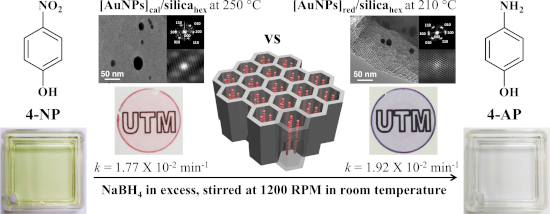
- ]. For example, at temperatures as high as 450 °C for both the calcination and thermal hydrogen reduction heat treatment methods (Figure 8a(e) and 8b(e)), the resulting silica film composites gave the lowest SPR bands centered at 538 and 550 nm due to the formation of the largest AuNPs crystallites (27


Synthesis and characterization of quaternary La(Sr)S–TaS2 misfit-layered nanotubes
Beilstein J. Nanotechnol. 2019, 10, 1112–1124, doi:10.3762/bjnano.10.111
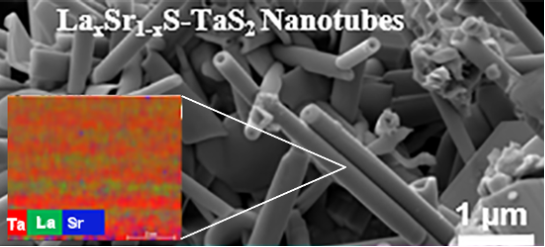
- often grow in a same batch”. Unfortunately, the authors did not elaborate any further or study these “hollow-rod” shaped crystallites in their following work. Nanotubes based on rare-earth monosulfide-tantalum disulfide MLCs have been the subject of a few works, which demonstrate the possibility of


Co-doped MnFe2O4 nanoparticles: magnetic anisotropy and interparticle interactions
Beilstein J. Nanotechnol. 2019, 10, 856–865, doi:10.3762/bjnano.10.86
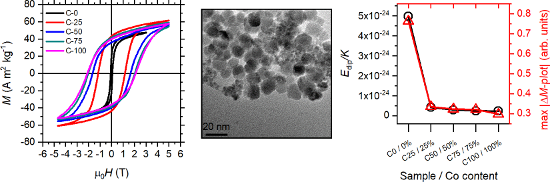
- angle, C is the Scherrer constant related to the shape of crystallites (≈0.9 for spherical ones) and λ is the X-ray radiation wavelength. The lattice constant (a) of the samples was calculated using the following Bragg condition for cubic structures: where d is the interplanar distance and (h, k, l) are


On the transformation of “zincone”-like into porous ZnO thin films from sub-saturated plasma enhanced atomic layer deposition
Beilstein J. Nanotechnol. 2019, 10, 746–759, doi:10.3762/bjnano.10.74
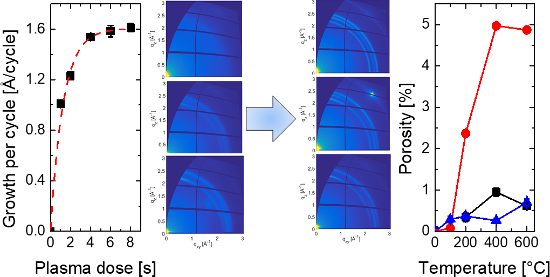
- , development of controlled porosity, and formation and growth of ZnO crystallites. The layers developed controlled nanoporosity in the range of 1–5%, with pore sizes between 0.27 and 2.00 nm as measured with ellipsometric porosimetry (EP), as a function of the plasma dose and post-annealing temperature
- represented in the scattering vector (qz) notation, where qz = 4π·sin(θ)/λ. Grazing incidence X-ray diffraction (GIXD) was performed to investigate the in-plane orientation of the crystallites, that is, with the crystallographic planes perpendicular to the substrate. The measurements were conducted at the
- literature, post-deposition annealing studies on ALD ZnO layers [62] reported an increase of refractive index between 400 and 700 °C. The increase was attributed to the growth and coalescence of the ZnO crystallites. In the present contribution, similar conclusions were drawn based on the XRD measurements


Nanocomposite–parylene C thin films with high dielectric constant and low losses for future organic electronic devices
Beilstein J. Nanotechnol. 2019, 10, 428–441, doi:10.3762/bjnano.10.42
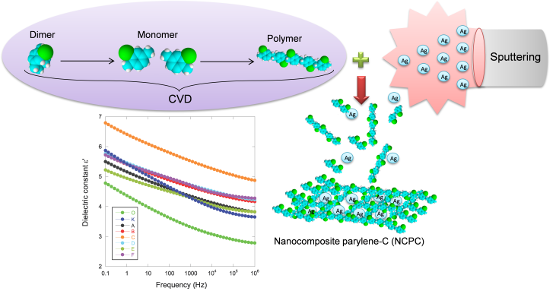
- modifies the film density as well as the degree of crystallinity and the size of parylene C crystallites. Moreover, silver is incorporated in the parylene matrix as an oxide phase. The average size of the Ag oxide nanoparticles is lower than 20 nm and influences the roughness of the NCPC films. Samples




One-step nonhydrolytic sol–gel synthesis of mesoporous TiO2 phosphonate hybrid materials
Beilstein J. Nanotechnol. 2019, 10, 356–362, doi:10.3762/bjnano.10.35
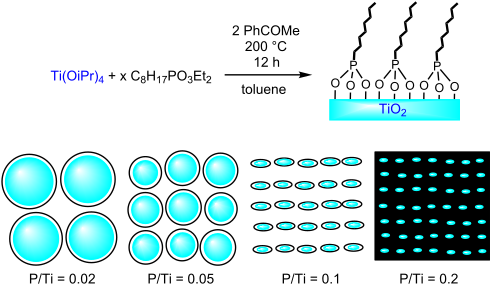
- samples decreased with the P/Ti ratio from 16 to 6 nm. The lower intensity of the (004) reflection compared to the (200) reflection indicated that the crystallites are not elongated and have a roughly spherical morphology. Raman spectroscopy (Figure 4) confirmed the XRD results. For P/Ti ratios between 0
- octylphosphonic acid with grafting densities of 1.4 and 4.1 P/nm2, respectively [37]. In our hybrid materials, the anatase particle size decreases with the P/Ti ratio, leading to an increase of the specific surface area of the crystallites. The density of grafting, estimated from the composition and from the
- diameter of the crystallites (assuming a spherical shape and a density of 3.8), increases with the P/Ti ratio from 1.5 P/nm2 for TiP0.02 to 2.9 P/nm2 for TiP0.1. These values suggest the formation of monolayers with low to moderate density (grafting densities of up to 4 to 5 P/nm2 have been reported for


Relation between thickness, crystallite size and magnetoresistance of nanostructured La1−xSrxMnyO3±δ films for magnetic field sensors
Beilstein J. Nanotechnol. 2019, 10, 256–261, doi:10.3762/bjnano.10.24
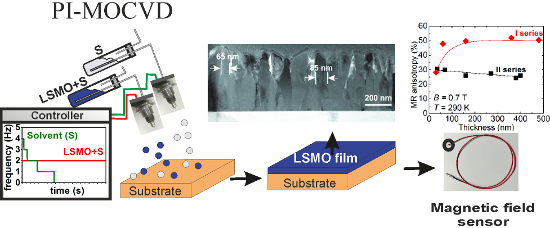
- : colossal magnetoresistance; crystallites; magnetic field sensors; MOCVD growth; nanostructured films; Introduction Perovskite manganite materials are an interesting topic of research since they can be applied as sensors for measuring the magnetic field due to the colossal magnetoresistance (CMR
- electron microscopy (TEM) analysis (Figure 1a,b) shows the column-like growth with larger dimensions and more dense, close packing of the crystallites for the II series. Film composition, structure and surface morphology Figure 2a–c presents scanning electron microscopy (SEM) images of the films with
- ]. Transport and magnetoresistive properties In nanostructured manganite materials the difference in dimensions of crystallites and change of the relative amount of grain boundaries (GBs) and film composition significantly change the transport behaviour [17][21]. The decrease of electrical resistivity and the


Uniform Sb2S3 optical coatings by chemical spray method
Beilstein J. Nanotechnol. 2019, 10, 198–210, doi:10.3762/bjnano.10.18
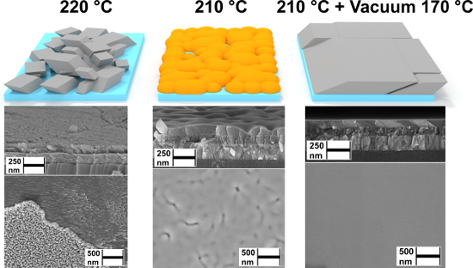
- deposited from Sb/S 1:3 solution. Sb2S3 crystallites in most of our samples have no preferred orientation. Only crystallites in as-deposited and vacuum treated (170 °C) samples deposited from Sb/S 1:6 solution (6-220-As-dep., 6-220-170, Figure 2B) show a preferred orientation parallel to the substrate
- surface along the (0 2 0) plane normal of Sb2S3. Interestingly, this preferred orientation of crystallites does not extend to the sample with Sb2S3 deposited in the same conditions, but thermally treated in vacuum at 200 °C (6-220-200, Figure 2B). The larger crystallite size is a boon to the power
- at 200 °C vs 170 °C does not substantially affect the crystallite size of Sb2S3 layers. In comparison, the largest crystallites in Sb2S3 layers grown on TiO2 substrates via CBD and annealed at 270 °C in N2 for 30 min oriented along the (2 0 0) plane parallel to the substrate were 74 nm in size [16




Amorphous NixCoyP-supported TiO2 nanotube arrays as an efficient hydrogen evolution reaction electrocatalyst in acidic solution
Beilstein J. Nanotechnol. 2019, 10, 62–70, doi:10.3762/bjnano.10.6
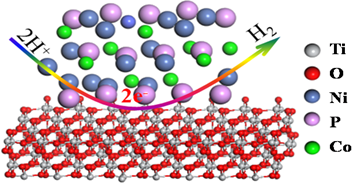
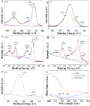
- the samples. All three samples displayed characteristic anatase TiO2 diffraction peaks of (101), (004), (200), (105), (211), (204), (116), and (215) (JCPDS card No. 21-1272) and the Ti peak at (101) [27]. No diffraction peaks related to Ni–P or NiCoP crystallites was found, illustrating that the




Characterization and influence of hydroxyapatite nanopowders on living cells
Beilstein J. Nanotechnol. 2018, 9, 3079–3094, doi:10.3762/bjnano.9.286
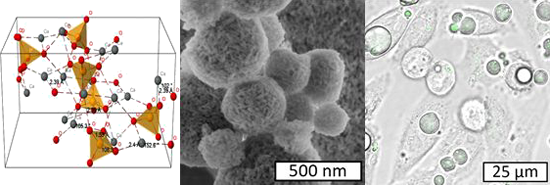
- , followed by 5 min of ultrasonic treatment. The samples were then left for about 10 min to evaporate the ethanol. Afterwards, they were dripped on the surface of carbon-coated copper grids. Sizes of crystallites were measured with the ImageJ software [34], using representative TEM images. Average values
- , it was calculated how many crystals in this size rang are on the analysed TEM images. Only F201 (8%), F202 (15%) and GoHAP90s (40%) exhibited a content of such small crystallites above 1%. The average particle size determined with the use of TEM imaging did not differ significantly from the values
- sizes, large surface area, high crystallinity and relatively high phase purity (F201 and F202), and (ii) materials with bigger crystallites, low surface area, low phase purity and low crystallinity (HApSA+Si, CaHFAP300). Additionally, CaHFAP300 and CaHAP300 (with high, but not toxic, negative effect on

![[Graphic 1]](/bjnano/content/inline/2190-4286-9-286-i2.svg?max-width=637&scale=1.18182) .
.



A novel polyhedral oligomeric silsesquioxane-modified layered double hydroxide: preparation, characterization and properties
Beilstein J. Nanotechnol. 2018, 9, 3053–3068, doi:10.3762/bjnano.9.284
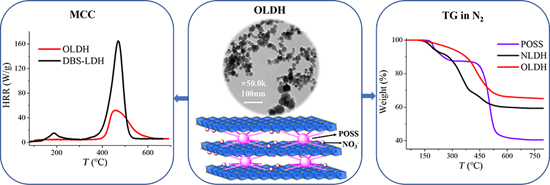
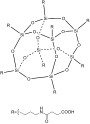
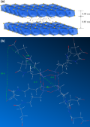
- stacking structure of Mg–Al LDH crystallites. The first basal reflection (003) of NLDH at 2θ = 9.83° corresponds to an interlayer distance of 0.90 nm. After the modification with OCPS, the position of the (003) reflection shifts to 6.62°, indicating an interlayer distance of 1.33 nm of OLDH. The
- clear advantage of the one-step method that the possible presence of small organic anions in the interlayer region along with intercalator of much larger size hardly affects the interlayer distance [14]. The intergallery spacing of OLDH crystallites is mainly controlled by OCPS anions despite the







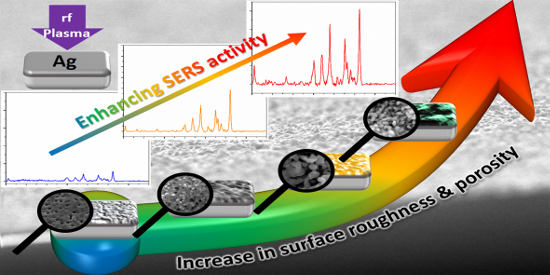
Controlling surface morphology and sensitivity of granular and porous silver films for surface-enhanced Raman scattering, SERS
Beilstein J. Nanotechnol. 2018, 9, 2813–2831, doi:10.3762/bjnano.9.263
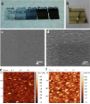
- show a dependence of the significant and most prominent reflexes on the film texture (Figure 4b). As can be seen from Figure 4b and Figure 4c the preferential orientation of the crystallites is different from that of bulk silver (JCPDS file No. 04-0783). In case of the as-sputtered silver film the
- crystallites show a preferential (200) orientation. After plasma treatment a gradual change of the preferential orientation can be observed. After argon plasma treatment the preferential orientation completely changes to (111). At the same time the peak width and the positions of the (111) and (200) reflexes
- TEM (FIB) images of an as-sputtered 10 nm silver film with a 10 nm silver film treated with nitrogen plasma (g12-p200) for 5 min shows a decrease in the silver film density indicated by a contrast change through which the boundaries of the different crystallites become visible (Figure 4d,e). At the





ZnO-nanostructure-based electrochemical sensor: Effect of nanostructure morphology on the sensing of heavy metal ions
Beilstein J. Nanotechnol. 2018, 9, 2421–2431, doi:10.3762/bjnano.9.227
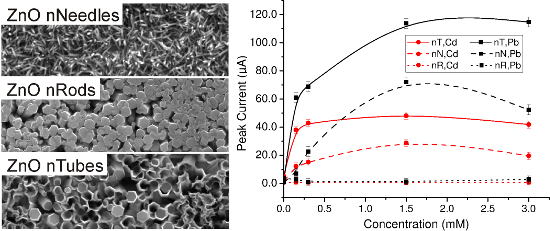
- to 2 mM). The reduction peak current for the highest concentration can be explained by mass crystallization in the solution, in parallel with the sorption process. It is the threshold above which crystallites of lead oxides become visible on the ZnO nanostructured surface by SEM. In order to visually
- forms well-developed crystallites of lead oxides mixture, whereas Cd(NO3)2 forms a very thin amorphous layer on the ZnO surface. The SEM images were recorded using secondary electrons, whose output depth is within the range of 1–10 nm; the fact that the contours of the ZnO nanotubes (bright points) are
- easily visible through the film therefore indicates that the thickness of the Cd film does not exceed 10 nm. It can be concluded that Cd sediments form a very thin layer of horizontally oriented crystallites. This confirms that bonds between Cd ions and the ZnO surface are much weaker than between


Lead-free hybrid perovskites for photovoltaics
Beilstein J. Nanotechnol. 2018, 9, 2209–2235, doi:10.3762/bjnano.9.207
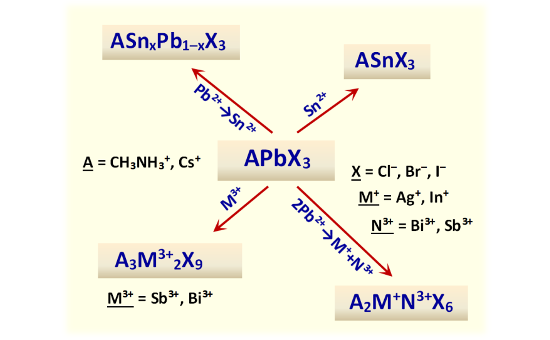
- . Cs2AgInCl6 HP was produced by a hydrothermal synthesis allowing the size of the final crystallites to be tailored by adjusting the hydrothermal treatment duration [179]. The perovskite crystallizes in the rock-salt structure with alternating [AgCl6] and [InCl6] octahedra (Figure 15a) and shows a direct


Synthesis of hafnium nanoparticles and hafnium nanoparticle films by gas condensation and energetic deposition
Beilstein J. Nanotechnol. 2018, 9, 1868–1880, doi:10.3762/bjnano.9.179
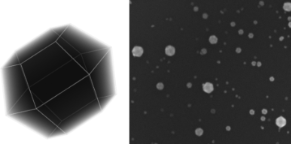
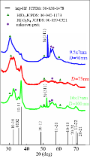
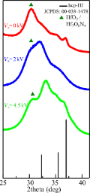
- ]. The size of the crystallites was calculated to be ca. 11 nm. This value is smaller than the average nanoparticle diameter defined from TEM images equal to D = 16 nm. This observation indicates that the nanoparticles are not single crystals, which is expected in our case, because the nanoparticles have
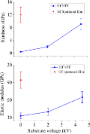
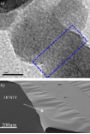
- transmission microscopy (HRTEM) and X-ray diffraction. In both cases the nanoparticles were exposed to atmospheric air prior to characterization. HRTEM images indicate that the NTFs formed for both cases of energetic deposition (Vs = 2 and 4.5 kV) are nanocrystalline. The individual crystallites are






Cryochemical synthesis of ultrasmall, highly crystalline, nanostructured metal oxides and salts
Beilstein J. Nanotechnol. 2018, 9, 1755–1763, doi:10.3762/bjnano.9.166
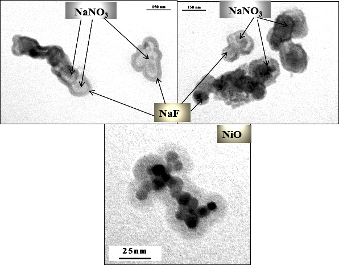
- salt crystallites could also be reduced to ≤50 nm by freezing in a liquid nitrogen atmosphere, which is a significant improvement over analogous salts obtained by traditional methods (average diameter 300–1000 nm). The characterization of the obtained nanopowders was carried out using X-ray diffraction
- protective coating with a thickness of 2–3 nm on the surface of NaNO3 crystallites, preventing their association. The results obtained show that the cryochemical processing of the solutions during the preparation phase of production allows nanopowders to be obtained with improved morphological and textural
- , aqueous solutions of Al- and Fe-sulfates were used to obtain highly dispersed Al2O3 and Fe2O3 crystallites by a freeze-drying technique. The formation and growth of chain-like aggregates of crystallites was shown as a process followed the surface diffusion mechanism. It was observed that the orientation


Controllable one-pot synthesis of uniform colloidal TiO2 particles in a mixed solvent solution for photocatalysis
Beilstein J. Nanotechnol. 2018, 9, 1715–1727, doi:10.3762/bjnano.9.163
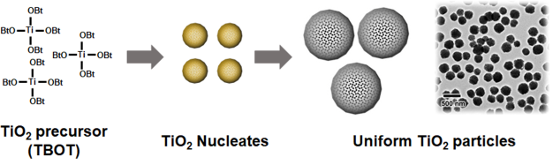
- samples were subjected to calcination at high temperatures, small TiO2 crystallites were grown, severely fused and finely shirked, which resulted in decreased mesoporosity and a small BET surface area but increased crystallinity. To estimate the carbon content and thermal behavior of the TiO2 samples, TGA
- light [34]. Another hypothesis regarding the exceptional activity of anatase and rutile P25 is that the presence of rutile crystallites generates a favorable structure in which rapid electron transfer from rutile to lower energy lattice trapping centers of anatase phase occurs under visible-light