Search results
Search for "dissipation" in Full Text gives 241 result(s) in Beilstein Journal of Nanotechnology. Showing first 200.
The influence of structure and local structural defects on the magnetic properties of cobalt nanofilms
Beilstein J. Nanotechnol. 2023, 14, 23–33, doi:10.3762/bjnano.14.3
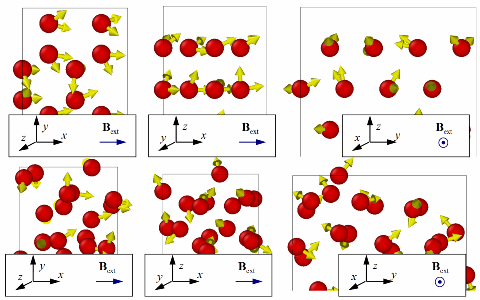
- of spintronics. Modern computing devices face a number of difficulties during production, including those related to arrangement of nanoscale computing elements on integrated circuits and their subsequent cooling during operation [17][18]. Problems related to excessive heat dissipation and


Design of surface nanostructures for chirality sensing based on quartz crystal microbalance
Beilstein J. Nanotechnol. 2022, 13, 1201–1219, doi:10.3762/bjnano.13.100
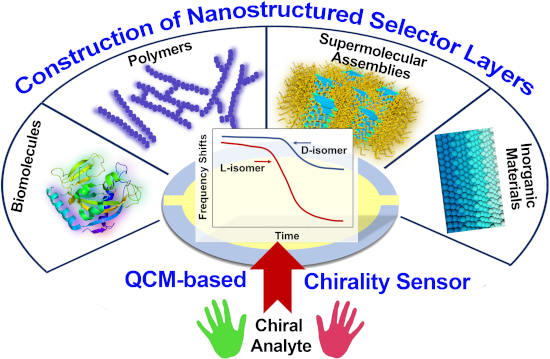
- metal. Different from all prior QCM-based chiral sensing systems, no organic coating/recognition layer was used in this case. With this approach, dissipation of the oscillation or detachment of the organic selector layers is avoided, and the signal transfer during the molecular recognition processes is


A cantilever-based, ultrahigh-vacuum, low-temperature scanning probe instrument for multidimensional scanning force microscopy
Beilstein J. Nanotechnol. 2022, 13, 1120–1140, doi:10.3762/bjnano.13.95
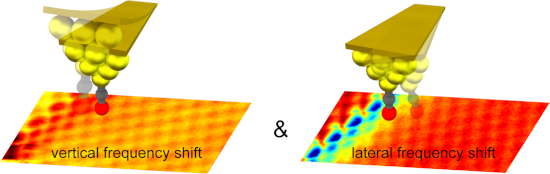
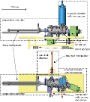
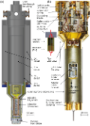
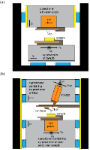
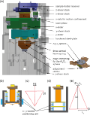
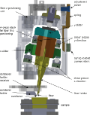
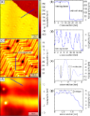
- = ≈ 100,000. Note that the quality factor of the second flexural mode is not noticeably influenced by the interferometer operation point, but is typically considerably lower than Q1 (Q2 ≈ 10,000). We attribute this to energy dissipation arising by instabilities of the atomic positions of atoms inside the
- for the coating of high-quality factor cantilevers for magnetic force microscopy [29]. In future work, much thinner coating thicknesses could be used, or the coating could be applied to the cantilever side to reduce energy dissipation processes arising from the grain boundaries of the polycrystalline





Influence of water contamination on the sputtering of silicon with low-energy argon ions investigated by molecular dynamics simulations
Beilstein J. Nanotechnol. 2022, 13, 986–1003, doi:10.3762/bjnano.13.86
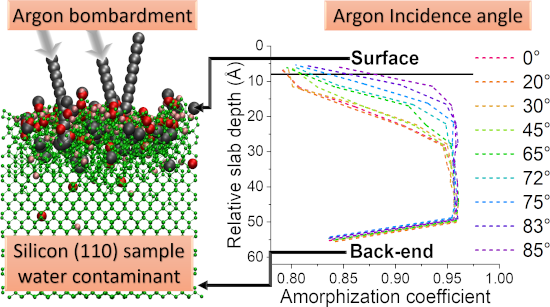
- the NVE ensemble in order to avoid any impact of a thermostat on the collision cascade. Once properly equilibrated, the simulation of argon bombardment of pristine Si(100) was run for 50 ps, which was enough for the modelling of energy dissipation and sputtering, and then thermalized to 300 K. The




Bioselectivity of silk protein-based materials and their bio-inspired applications
Beilstein J. Nanotechnol. 2022, 13, 902–921, doi:10.3762/bjnano.13.81
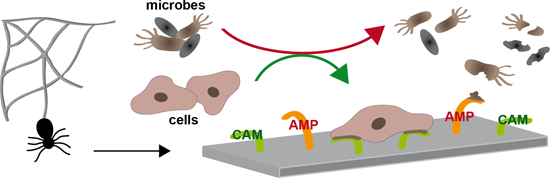
- with membrane perturbation and dissipation of the transmembrane potential, which results in bacterial cell lysis and death [92]. In humans, over 120 HDPs have been identified, and typical examples include lysozyme, defensins, histatins, lactoferricin, kinocidins, ribonuclease, dermcidin, and


A superconducting adiabatic neuron in a quantum regime
Beilstein J. Nanotechnol. 2022, 13, 653–665, doi:10.3762/bjnano.13.57
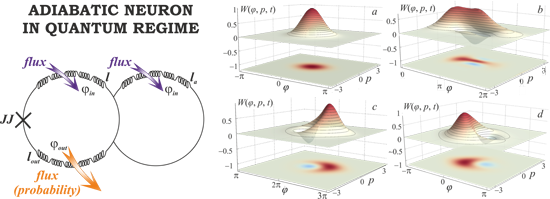
- is assumed for a hybrid system of a classical neural network whose configuration is dynamically adjusted by a quantum co-processor. Analytical and numerical studies take into account non-adiabatic processes as well as dissipation, which leads to smoothing of quantum coherent oscillations. The
- with extremely small energy dissipation [42][43][44][45]. We especially note the demonstrated possibility of the adiabatic evolution of the state for a neuron in a multilayer perceptron with Josephson junctions without resistive shunting [46]. It is precisely such a heterostructure without resistive
- the dynamics of the neuron. The range of the operating parameters for the proposed neuron circuit under the action of unipolar magnetic flux pulses is found. Finally, the influence of the dissipation on the features of the dynamic processes and characteristics of the cell is revealed. Methods Neuron


Quantitative dynamic force microscopy with inclined tip oscillation
Beilstein J. Nanotechnol. 2022, 13, 610–619, doi:10.3762/bjnano.13.53
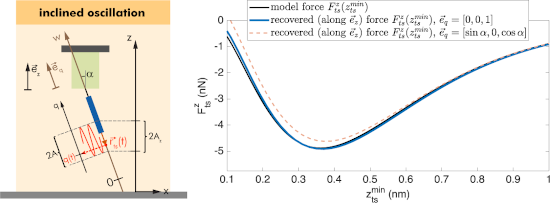
- of a viscous damping layer, in-plane dissipation mechanisms have been found to cause systematic changes of the phase shift in amplitude-modulation AFM depending on the cantilever inclination [15]. Furthermore, it has been proposed to use the presence of a lateral component in the tip oscillation path


![[Graphic 38]](/bjnano/content/inline/2190-4286-13-53-i79.svg?max-width=637&scale=1.18182) and the axis w....
and the axis w....


Effects of substrate stiffness on the viscoelasticity and migration of prostate cancer cells examined by atomic force microscopy
Beilstein J. Nanotechnol. 2022, 13, 560–569, doi:10.3762/bjnano.13.47
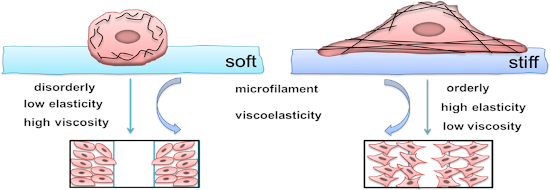
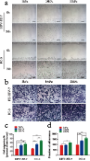
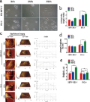
- deformation [38][39]) the energy dissipation was mainly caused by cell adhesion, which was a certain separation between the approach and retraction curves (Figure 5c). The results showed a negative correlation between viscosity values and substrate stiffness in PC-3 cells: the higher the substrate stiffness



Tunable superconducting neurons for networks based on radial basis functions
Beilstein J. Nanotechnol. 2022, 13, 444–454, doi:10.3762/bjnano.13.37
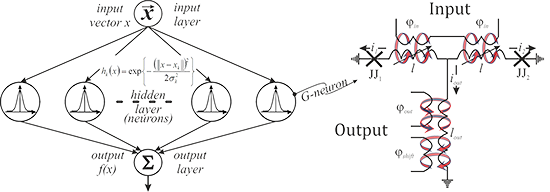
- operation of the cell (tRF up to 8000tC, where tC is the characteristic time for the Josephson junction). The dissipation during the operation of the Gauss-neuron remains small, which justifies classifying the proposed cell as adiabatic (Figure 4b). Realization of tunability: adjustable kinetic inductance
- considered a basic cell for superconducting signal neurocomputers designed for the fast processing of a group signal with extremely low energy dissipation. It turned out that for this purpose it is possible to modify the previously discussed element of adiabatic superconducting neural networks. The ability
- deviation from the Gaussian-like function depending on the inductances l and lout of the G-cell. The bias flux is equal to 0.05π. (a) Dynamic transfer function of a Gauss-neuron for a trapezoidal external signal for different values of the rise/fall times of the signal tRF and (b) energy dissipation


Plasma modes in capacitively coupled superconducting nanowires
Beilstein J. Nanotechnol. 2022, 13, 292–297, doi:10.3762/bjnano.13.24
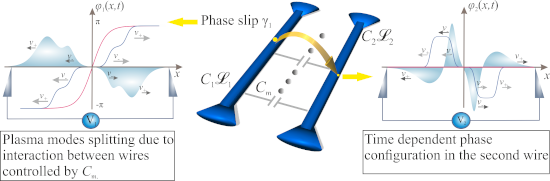
- along the wire playing the role of an effective quantum dissipative environment for electrons inside the wire. The frequency spectrum of this effective environment is similar to that of the celebrated Caldeira–Leggett model [8], which is widely employed in order to account for both quantum dissipation


Nanoscale friction and wear of a polymer coated with graphene
Beilstein J. Nanotechnol. 2022, 13, 63–73, doi:10.3762/bjnano.13.4
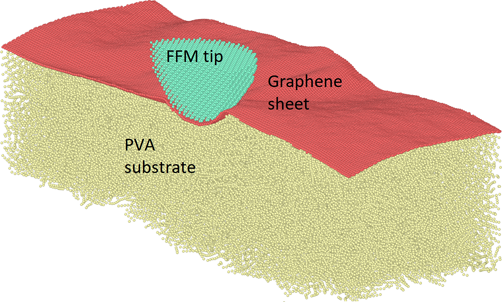
- . Given the density and the fact that the typical time scale of dissipation is around 1 ps, this is sufficient to increase the temperature of the substrate locally by several kelvin. Near the glass transition, this could lead to significant changes in yield strength. The sinking affects the real surface


Effect of lubricants on the rotational transmission between solid-state gears
Beilstein J. Nanotechnol. 2022, 13, 54–62, doi:10.3762/bjnano.13.3
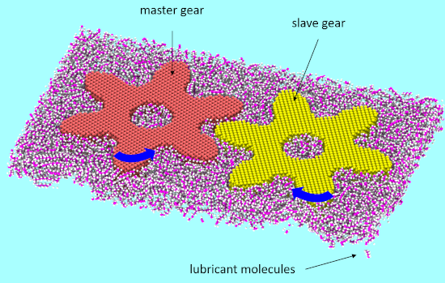
- mechanical systems such as nanorobots [28] or mechanical calculators such as the Pascaline [29]. This draws a lot of attention to issues such as triggering rotations on a surface [30][31][32][33][34][35][36][37][38][39][40], collective rotations [41][42][43][44][45][46][47][48] and rotational dissipation [49
- friction or gear–lubricant friction are accounted for within the MD simulation in the form of an irreversible rotational kinetic energy dissipation. The energy of gear rotation can be transferred to deformation energy [49] or to the lubricants due to microscopic Lennard-Jones interactions. Angular velocity


Design aspects of Bi2Sr2CaCu2O8+δ THz sources: optimization of thermal and radiative properties
Beilstein J. Nanotechnol. 2021, 12, 1392–1403, doi:10.3762/bjnano.12.103
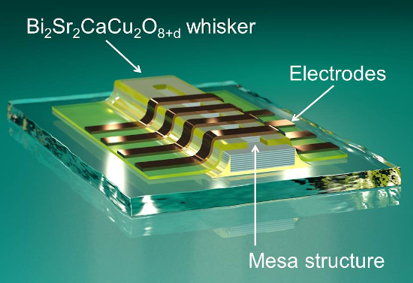
- detector mesa is biased by a small alternating current and the generator by a direct current in the same range as in Figure 2a. Figure 2c shows the ac resistance of the detector mesa, Rdet, as a function of dissipation power in the generator mesa, Pgen = IgenVgen. It is anticipated that self-heating is
- monotonic (approximately linear) with the dissipation power, while the emission is nonmonotonic [14][40] because it occurs at certain bias voltages, corresponding to geometrical resonances in the mesa [14][16][24][26]. From Figure 2c it is seen that a profound EMW emission occurs in a whisker-based mesa
- device. Despite a significant progress in this direction [10][12][13][35][36][38][47], it is unlikely that a single emitter would be able to sustain the dissipation power above few tens of milliwatts. The tolerable dissipation power can be significantly enhanced by spreading it between several smaller


Alteration of nanomechanical properties of pancreatic cancer cells through anticancer drug treatment revealed by atomic force microscopy
Beilstein J. Nanotechnol. 2021, 12, 1372–1379, doi:10.3762/bjnano.12.101
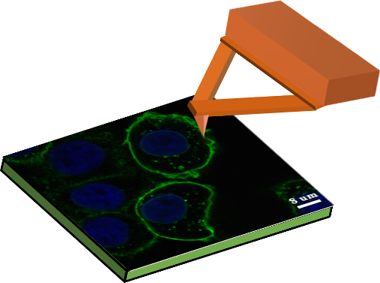
- angle of the probe, and δ is the indentation depth. Thus the E can be calculated by transforming the above equation: Hence the Young’s modulus can be calculated by fitting the linear part of the force–distance curves, that is, the slope of the force–distance curve. Energy dissipation is the loss of
- mechanical energy during each trace–retrace cycle. The hysteresis in the force–distance curves between different types of cells indicates the energy dissipation. The dissipated energy can be calculated by the following formula, where W is the total amount of energy dissipation, and its value in the force
- indicates that pancreatic cancer softens pancreatic cells. Also, there is energy dissipation manifested as hysteresis in a cycle of force–distance curves in all four kinds of cells. The results (Supporting Information File 1, Table S2) show that the hysteresis in the force–displacement cycle of HPDE6-C7 is


A review on slip boundary conditions at the nanoscale: recent development and applications
Beilstein J. Nanotechnol. 2021, 12, 1237–1251, doi:10.3762/bjnano.12.91
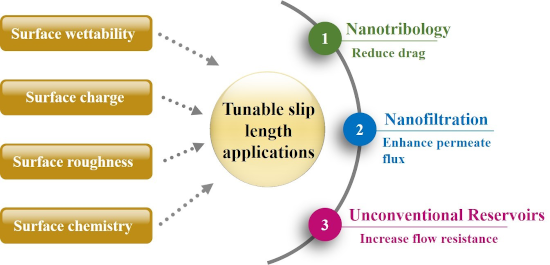
- ]. 3 Applications of nanofluidics with tunable slip length 3.1 Drag reduction Reducing drag is of great significance in many areas related to nanotechnology, such as nanotribology [117], nanomedicine [118], and electrokinetics [119] due to the low energy dissipation. For instance, it has been reported


Two dynamic modes to streamline challenging atomic force microscopy measurements
Beilstein J. Nanotechnol. 2021, 12, 1226–1236, doi:10.3762/bjnano.12.90
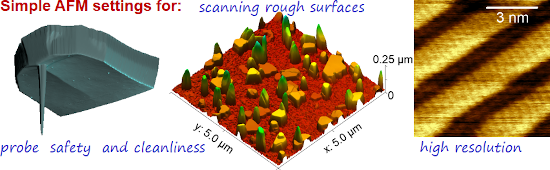
- quite complicated, since it requires taking into account many factors and finding the optimal balance between them. A researcher’s task can be significantly simplified by introducing new scanning techniques. Two such techniques are described: vertical and dissipation modes. Significantly simplified and
- formalized choice of the imaging parameters in these modes allows addressing a wide range of formerly challenging tasks – from scanning rough samples with high aspect ratio features to molecular resolution imaging. Keywords: atomic force microscopy; dissipation mode; scanning probe microscopy; vertical mode
- , in turn, limits the successful imaging of complex samples only to experienced researchers. In this article, we would like to draw the attention of AFM practitioners to two operating modes, the vertical mode [2] and the dissipation mode [3][4][5], which can greatly simplify and expand the


Open-loop amplitude-modulation Kelvin probe force microscopy operated in single-pass PeakForce tapping mode
Beilstein J. Nanotechnol. 2021, 12, 1115–1126, doi:10.3762/bjnano.12.83
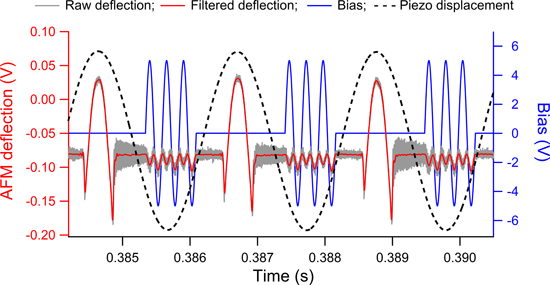
- out in one-pass, with the CPD value affixed to the topographical feature and other PFT quantities (e.g., elastic modulus, pull-off force, and dissipation) at each location during scanning. A typical cantilever deflection to the synchronized PFT and KPFM modulations over three consecutive PFT





The role of convolutional neural networks in scanning probe microscopy: a review
Beilstein J. Nanotechnol. 2021, 12, 878–901, doi:10.3762/bjnano.12.66
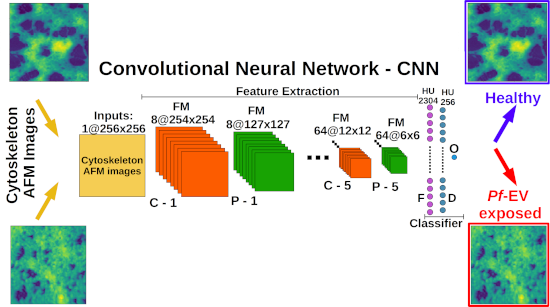
- quantities, that is, frequency (giving the stiffness), amplitude (giving the piezoresponse), Q (dissipation), and phase (directionality of polarization). PFM can map piezoelectric domains and the inverse piezoresponse of a sample, but signals are notoriously low. In this work, two arrays (real and imaginary







Local stiffness and work function variations of hexagonal boron nitride on Cu(111)
Beilstein J. Nanotechnol. 2021, 12, 559–565, doi:10.3762/bjnano.12.46
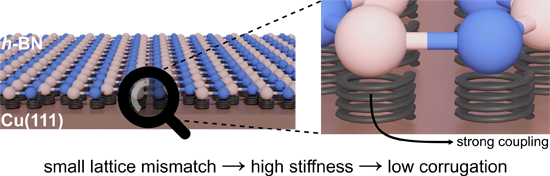
- obtained at valley and rim regions is shown in Figure 4b. The grey shaded area, showing little change in dissipation, is used for the z-range for which Δf maps are acquired. The resulting difference FD = FR − FV is the additional short-range force, which solely influences rim and bridge areas and which


Paper-based triboelectric nanogenerators and their applications: a review
Beilstein J. Nanotechnol. 2021, 12, 151–171, doi:10.3762/bjnano.12.12
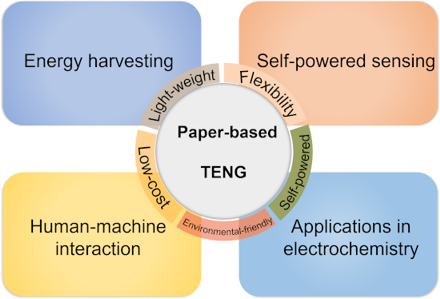
- transferred charges and the corresponding CE mechanism in TENGs. The results shown in [90] suggest that the electron transfer dominates the CE process. The charge retention ability is attributed to the intrinsic potential barrier heights of the different materials, which can prevent the charge dissipation. As






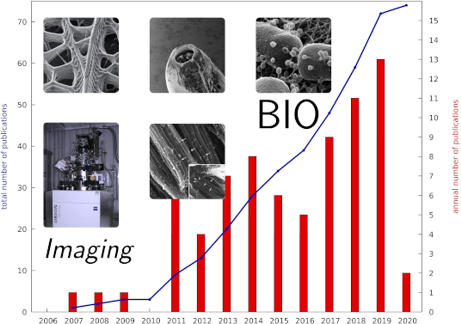
Bio-imaging with the helium-ion microscope: A review
Beilstein J. Nanotechnol. 2021, 12, 1–23, doi:10.3762/bjnano.12.1


Molecular dynamics modeling of the influence forming process parameters on the structure and morphology of a superconducting spin valve
Beilstein J. Nanotechnol. 2020, 11, 1776–1788, doi:10.3762/bjnano.11.160
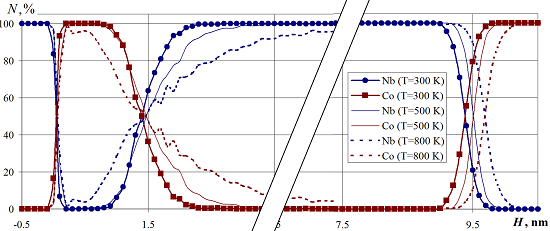
- structures are highly sensitivity to magnetic field switching and energy consumption is significantly reduced due to the absence of dissipation in such a valve in the ground (superconducting) state. Practice shows that the creation of multilayer S/F nanostructures with the required properties is an


Functional nanostructures for electronics, spintronics and sensors
Beilstein J. Nanotechnol. 2020, 11, 1704–1706, doi:10.3762/bjnano.11.152

- , Pentium II, Pentium III and Pentium IV, described the stagnation of semiconductor technology as follows [1]: “Officially Moore’s Law ends in 2020 at 7 nm, but nobody cares, because 11 nm isn’t any better than 14 nm, which was only marginally better than 22 nm … thermal dissipation issues thoroughly
- not solve the problem [3]. The future of high-performance computing will most likely be associated with one of the alternative “post-Moore’s” technologies where energy dissipation is drastically lower. It is expected that the most promising “post-Moore’s” candidate to lead the technological way is
Selective detection of complex gas mixtures using point contacts: concept, method and tools
Beilstein J. Nanotechnol. 2020, 11, 1631–1643, doi:10.3762/bjnano.11.146
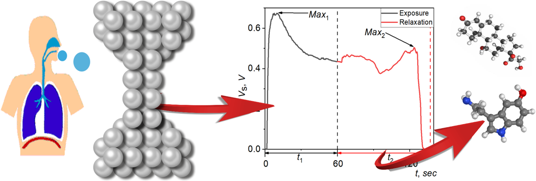
- correspond to the quantum dissipation of energy, which is measured as a voltage change in the sensor element by a special device. Since the relaxation process lasts for about a minute, it can easily be recorded as an equidistant time series. We consider this series as a sensor response to the breath medium


![[Graphic 4]](/bjnano/content/inline/2190-4286-11-146-i8.svg?max-width=637&scale=1.18182) in th...
in th...

![[Graphic 7]](/bjnano/content/inline/2190-4286-11-146-i11.svg?max-width=637&scale=1.18182) in the...
in the...
A wideband cryogenic microwave low-noise amplifier
Beilstein J. Nanotechnol. 2020, 11, 1484–1491, doi:10.3762/bjnano.11.131
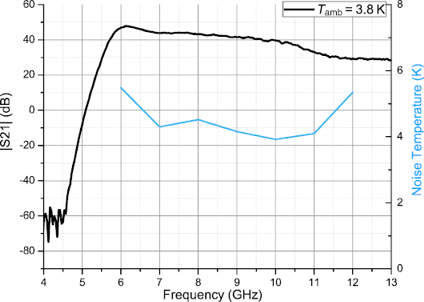
- amplifier was designed and characterized in a cryogen-free dilution refrigerator at the 3.8 K temperature stage. The obtained power dissipation of the amplifier is below 20 mW. In the frequency range from 6 to 12 GHz its gain exceeds 30 dB. The equivalent noise temperature of the amplifier is below 6 K for
- for C (ranging from 4 to 8 GHz) and X (ranging from 8 to 12 GHz) frequency bands the number of amplification stages of the HBT cLNA should be increased. This leads to an increase of the total power dissipation in the dilution refrigerator, which makes its operation unstable. In contrast, using modern