Search results
Search for "dosage" in Full Text gives 96 result(s) in Beilstein Journal of Nanotechnology.
A review on nanostructured silver as a basic ingredient in medicine: physicochemical parameters and characterization
Beilstein J. Nanotechnol. 2021, 12, 440–461, doi:10.3762/bjnano.12.36
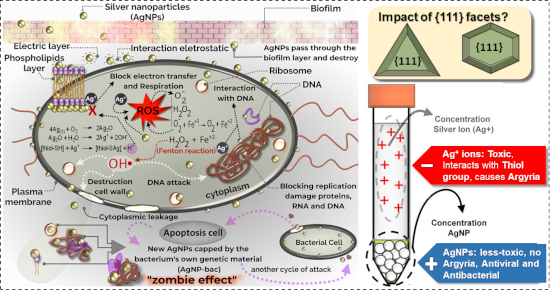
- , hematological, urinary, physical, or morphological findings. Further studies, however, are needed to observe the threshold toxicity in other human organs upon increasing dosage and time exposure to AgNPs [130]. The toxicity of AgNPs has been evaluated in several studies; however, only a few researchers


The impact of molecular tumor profiling on the design strategies for targeting myeloid leukemia and EGFR/CD44-positive solid tumors
Beilstein J. Nanotechnol. 2021, 12, 375–401, doi:10.3762/bjnano.12.31
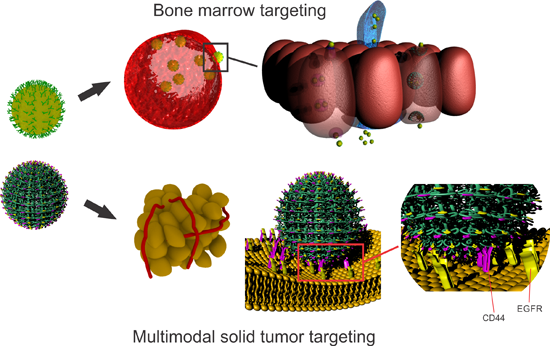
- regimens, which simply combine different drugs in a conventional dosage form, are far from a perfect chemotherapy approach for leukemia patients. It is logical to assume that loading multiple drugs onto a single nanoscale carrier will synchronize the corresponding therapeutic activities, thus maximizing


Exploring the fabrication and transfer mechanism of metallic nanostructures on carbon nanomembranes via focused electron beam induced processing
Beilstein J. Nanotechnol. 2021, 12, 319–329, doi:10.3762/bjnano.12.26
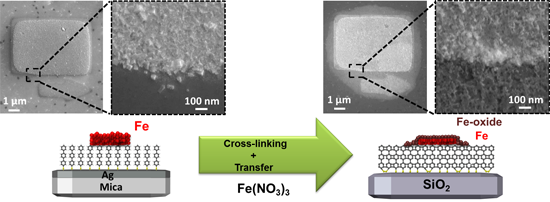
- satisfying results [4][9]. However, for certain precursors, EBID yields clean deposits when carried out under ultrahigh vacuum (UHV) conditions. It was shown that in UHV, for some precursors, an autocatalytic growth (AG) process occurs already at room temperature, which leads, upon further precursor dosage
- exploits the AG process [11]. In EBISA, the surface is, in a first step, irradiated and chemically modified without precursor dosage. In a second “development” step, a well-defined deposit is formed at the chemically activated sites, as the precursor is dosed and dissociates locally. Of course, for EBISA a
- the precursor molecules (Figure 1d). Assuming that the two described methods are effective, an initial well-defined local deposit is formed in both cases (Figure 1e). Upon further precursor dosage, the AG process occurs and leads to further agglomeration of material on top of the initial deposit


TiOx/Pt3Ti(111) surface-directed formation of electronically responsive supramolecular assemblies of tungsten oxide clusters
Beilstein J. Nanotechnol. 2021, 12, 203–212, doi:10.3762/bjnano.12.16
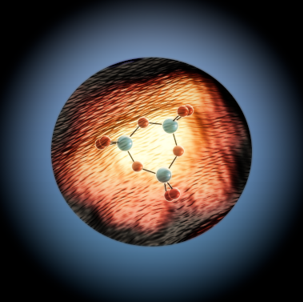
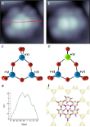
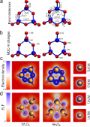
- different surface coverages. While the rectangular z’-TiOx phase is a typical island structure, whose number and size increase with the oxygen dosage, the hexagonal w’-TiOx phase always covers the entire surface. In the latter case, the surface stress would be too high to engage the usually favored



Unravelling the interfacial interaction in mesoporous SiO2@nickel phyllosilicate/TiO2 core–shell nanostructures for photocatalytic activity
Beilstein J. Nanotechnol. 2020, 11, 1834–1846, doi:10.3762/bjnano.11.165
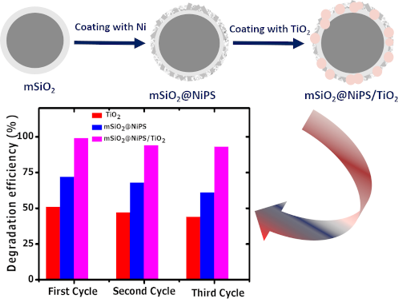
- /TiO2 composite for MV degradation was superior to that of other related materials reported in the literature (Table 2) [18][74][75][76][77][78][79][80]. In addition, it was possible to achieve higher photodegradation efficacies at a lower catalyst dosage and within shorter irradiation times. Conclusion


Applications of superparamagnetic iron oxide nanoparticles in drug and therapeutic delivery, and biotechnological advancements
Beilstein J. Nanotechnol. 2020, 11, 1092–1109, doi:10.3762/bjnano.11.94
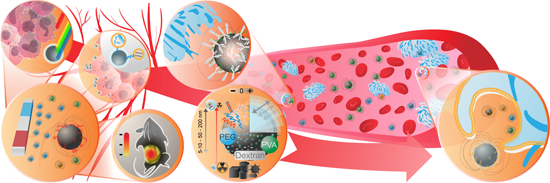
- very important for medical applications. These properties depend on the methods used, targeted organs/tissues, image resolution, administration way and dosage, and toxicity [116]. Fakhar-e-Alam and collaborators [117] observed that above a certain dose cancer cells develop a resistance to ligand
- ]. Therefore, the cytotoxic reaction of the target cells to SPIONs still requires further examination. Cationic ethylamine-SPIONs of ultrasmall dimensions showed improved relaxivity values (at smaller dosage) compared to some of the commercial iron oxides, good renal clearance and no toxicity to rats [157


Multilayer capsules made of weak polyelectrolytes: a review on the preparation, functionalization and applications in drug delivery
Beilstein J. Nanotechnol. 2020, 11, 508–532, doi:10.3762/bjnano.11.41



Synthesis and enhanced photocatalytic performance of 0D/2D CuO/tourmaline composite photocatalysts
Beilstein J. Nanotechnol. 2020, 11, 407–416, doi:10.3762/bjnano.11.31
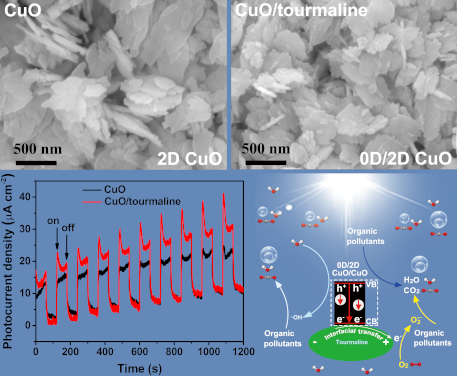
- product was named CuO/tourmaline-1:1 (1:1 in mass ratio of the CuO/tourmaline). By controlling the dosage of Cu(CH3COO)2·H2O and NaOH in proportion the CuO/tourmaline composites in different mass ratios of the CuO/tourmaline were acquired. Characterization X-ray diffraction (XRD) patterns were obtained


Phase inversion-based nanoemulsions of medium chain triglyceride as potential drug delivery system for parenteral applications
Beilstein J. Nanotechnol. 2020, 11, 213–224, doi:10.3762/bjnano.11.16
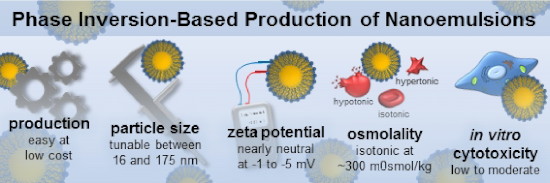
- 0.02–0.23. Increasing the mass share of the surfactant Kolliphor HS 15 led to smaller particles and narrower PDI distributions. Influence of the nonionic surfactant Kolliphor HS 15 on the osmolality The osmolality is an important parameter of the toxicity of parenteral dosage forms. The ideal




Frontiers in pharmaceutical nanotechnology
Beilstein J. Nanotechnol. 2019, 10, 2538–2540, doi:10.3762/bjnano.10.244

- science. They have fundamentally changed our understanding of the way dosage forms can facilitate drug therapy. Prof. Jörg Kreuter has been a pioneer in this research area and dedicated his life’s work to nanoparticle research and the blood–brain barrier [2]. One of his most outstanding discoveries, the
Air oxidation of sulfur mustard gas simulants using a pyrene-based metal–organic framework photocatalyst
Beilstein J. Nanotechnol. 2019, 10, 2422–2427, doi:10.3762/bjnano.10.232
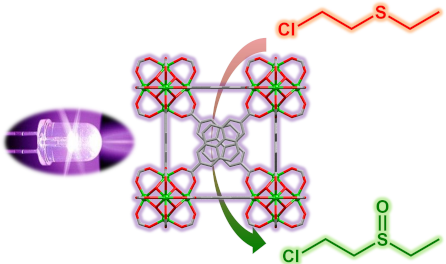
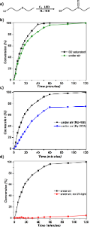
- ; photocatalysis; singlet oxygen; sulfur mustard gas; Introduction Sulfur mustard gas also known as mustard gas, HD, or Yperite belongs to a class of chemical warfare agents (CWAs) known as vesicants, which have detrimental effects on humans, including the blistering of skin upon contact [1]. Even at a low dosage




Atomic force acoustic microscopy reveals the influence of substrate stiffness and topography on cell behavior
Beilstein J. Nanotechnol. 2019, 10, 2329–2337, doi:10.3762/bjnano.10.223
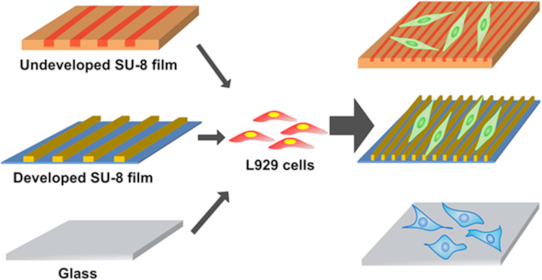
- mechanical strength [25][26]. The patterned stiffness of the SU-8 films was induced by electron beam lithography (EBL). The approach to control the stiffness and the topography of the substrate is shown in Figure 1. The rigidity of the film was tuned by varying the electron beam dosage, while the surface


Design of a nanostructured mucoadhesive system containing curcumin for buccal application: from physicochemical to biological aspects
Beilstein J. Nanotechnol. 2019, 10, 2304–2328, doi:10.3762/bjnano.10.222
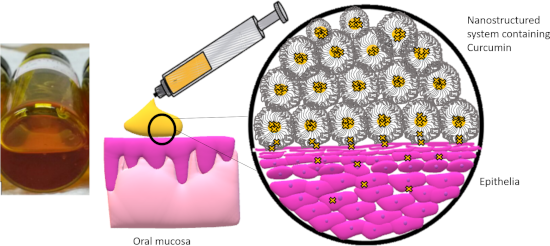
- due to some important characteristics. They can provide intimate contact between the dosage form and tissue, which could guarantee high drug flux through the absorbing tissue to subsequently increase drug permeation and bioavailability [14][15]. In addition, the incorporation of thermoresponsive


Synthesis and potent cytotoxic activity of a novel diosgenin derivative and its phytosomes against lung cancer cells
Beilstein J. Nanotechnol. 2019, 10, 1933–1942, doi:10.3762/bjnano.10.189
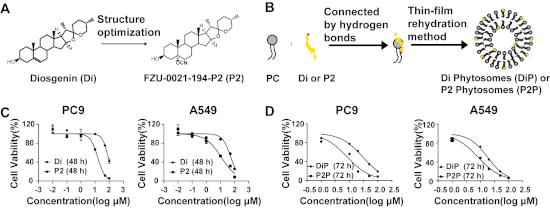
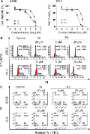
- easily. The cyano group in P2 might increase the binding capability of P2 to specific proteins to improve its anticancer potency. Figure 2A shows that Di and P2 could suppress the cell viability in a dosage-dependent manner in A549 and PC9 cells. All the results demonstrated that P2 had much stronger



Preservation of rutin nanosuspensions without the use of preservatives
Beilstein J. Nanotechnol. 2019, 10, 1902–1913, doi:10.3762/bjnano.10.185
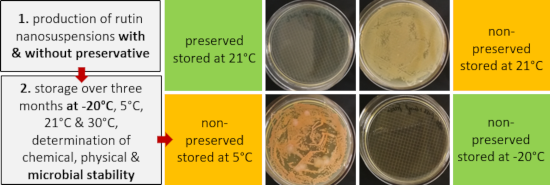
- are precipitation, wet milling, high-pressure homogenization or combinations of these methods [1][2][3][4]. Regardless of the process used, all these methods will yield nanosuspensions, i.e., nanocrystals dispersed in a liquid. As liquid formulations are not always a convenient dosage form for the
- final drug product, in most cases nanosuspensions need to be formulated into other, more convenient, dosage forms. Depending on the route of administration this could be tablets, pellets, powders, gels or creams. However, prior to the formulation into final drug products, the aqueous nanosuspensions
- was detected. These findings so far are very promising and could enable a new concept to produce preservative-free nanosuspensions that can be stored over a longer period until further use or processing into final dosage forms. Preservative-free aqueous nanosuspensions would be a convenient


Lipid nanostructures for antioxidant delivery: a comparative preformulation study
Beilstein J. Nanotechnol. 2019, 10, 1789–1801, doi:10.3762/bjnano.10.174
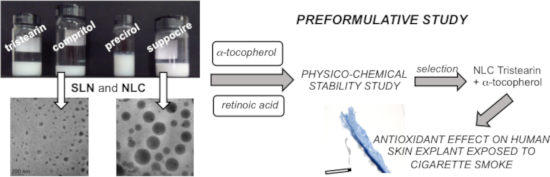
- effects when employed in high dosage [24][25]. Thus, TOC and RA need to be loaded in specialized formulations suitable for skin application and able to adequately protect them from degradation. In this respect, recently different lipid nanoparticles have been proposed, including solid lipid nanoparticles
- loaded in NLCs with respect to an unloaded TOC solution. Conclusion This work has underlined the importance of technological screening in the design of a nanoparticulate lipid dosage formulation. Notably, dimensional and morphological characterization of nanoparticles should be performed at different

A highly efficient porous rod-like Ce-doped ZnO photocatalyst for the degradation of dye contaminants in water
Beilstein J. Nanotechnol. 2019, 10, 1157–1165, doi:10.3762/bjnano.10.115
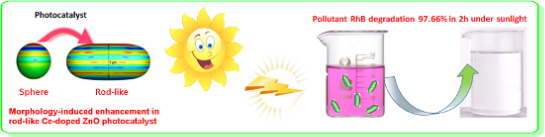
- influential factor. The optimum reaction conditions are as follows: RhB concentration of 10 mg/L, catalyst (ZnO) dosage of 0.7 g/L, pH 9, temperature of 50 °C. This result could serve as a beneficial reference for large-scale wastewater degradation. Recycling experiments To evaluate the stability and
- repeatability of CZO-4, recycling experiments were carried out at optimized conditions (concentration of RhB = 10 mg/L, catalyst dosage = 0.7 g/L, pH 9 and temperature = 50 °C). The photocatalysts were recycled after washing, centrifugation and vacuum drying at 75 °C for 1 h. The results given in Figure 2


Serum type and concentration both affect the protein-corona composition of PLGA nanoparticles
Beilstein J. Nanotechnol. 2019, 10, 1002–1015, doi:10.3762/bjnano.10.101
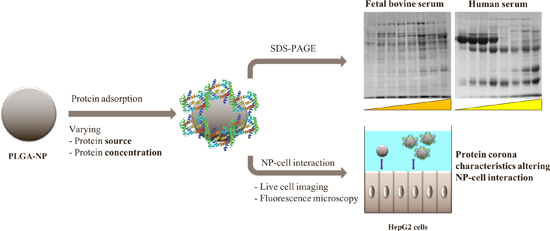
- these environmental factors in order to successfully introduce and firmly establish new nanoparticulate dosage forms onto the market, thus offering further options to prevent and treat many major illnesses. The main objective of the present study was to investigate the compositional evolution of the NP
- studies. Consequently, our study represents a fundamental step towards establishing detailed relations between the interaction of PLGA NPs and the environmental surrounding, thus offering advances for accelerating the translation of new nanoparticulate dosage forms into the clinical practice. Experimental



The systemic effect of PEG-nGO-induced oxidative stress in vivo in a rodent model
Beilstein J. Nanotechnol. 2019, 10, 901–911, doi:10.3762/bjnano.10.91
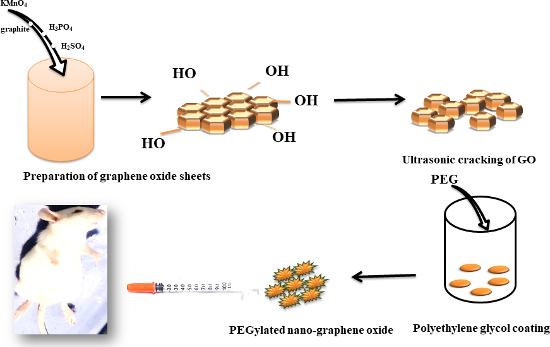
- Zhang and co-workers [29]. Biocompatibility of nGO was achieved by coating with polyethylene glycol (PEG). Then, a single dose (5 mg/kg) of synthesized PEG-nGO was administered to groups of groups of six mice. The dosage was found to be optimum in previous studies [28][29]. The animals were dissected


Removal of toxic heavy metals from river water samples using a porous silica surface modified with a new β-ketoenolic host
Beilstein J. Nanotechnol. 2019, 10, 262–273, doi:10.3762/bjnano.10.25
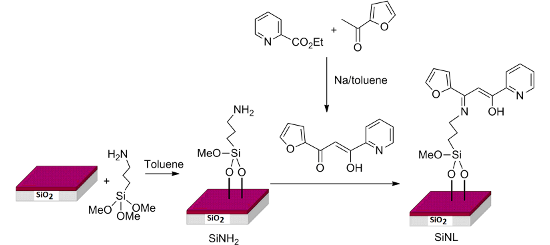
- too. The adsorption thermodynamic parameters (Table 3) were calculated with the van 't Hoff equation [67] which is recalled below: where C0 (mg/L) is the initial concentration of metal solution, Ce (mg/L) is the equilibrium concentration, V (mL) is the volume of solution and m (g) is the dosage of


Cytotoxicity of doxorubicin-conjugated poly[N-(2-hydroxypropyl)methacrylamide]-modified γ-Fe2O3 nanoparticles towards human tumor cells
Beilstein J. Nanotechnol. 2018, 9, 2533–2545, doi:10.3762/bjnano.9.236
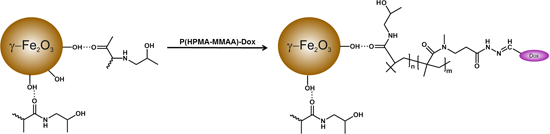
- side effects are considered to be the main drawback of conventional anticancer drugs. The drug dosage is significantly limited and thus complete elimination of tumor cells in cancer patients is not guaranteed. Among antitumor drugs, special attention has been paid to the anthracycline antibiotic


Enhanced antineoplastic/therapeutic efficacy using 5-fluorouracil-loaded calcium phosphate nanoparticles
Beilstein J. Nanotechnol. 2018, 9, 2499–2515, doi:10.3762/bjnano.9.233
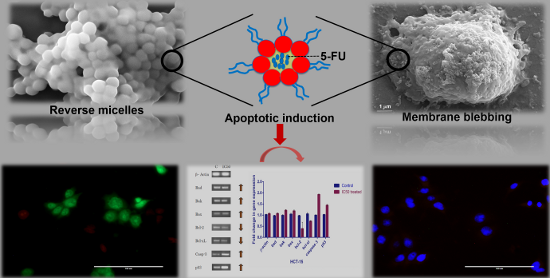
- practicability of these materials for therapeutics. Given the results presented herein, we believe that the CaP@5-FU NP platform, providing increased efficacy in low dosage, will be an efficient means to replace some conventional chemotherapeutic strategies in the near future and to significantly reduce the


High-throughput synthesis of modified Fresnel zone plate arrays via ion beam lithography
Beilstein J. Nanotechnol. 2018, 9, 2049–2056, doi:10.3762/bjnano.9.194
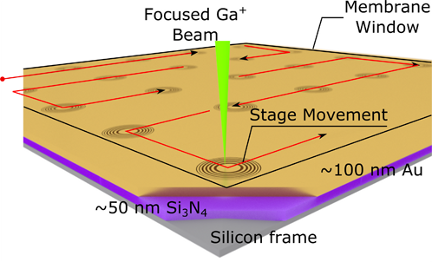
- sputtering processes. The idea here is, if the desired depth of an open zone can be reached before destroying the adjacent zones, it becomes possible to write very dense structures, very quickly. To achieve this goal, the ion beam dosage, which is now determined by the 1D beam overlap (i.e., the step size in
- )3CH3C5H4Pt, as the metal-organic precursor gas. Structure of the FZP The patterning and ion beam parameters tabulated in Table 1 resulted in a linear dosage of 0.8 pC/µm, and the successful fabrication of the FZP with 50 µm diameter, 110 nm nominal thickness and 30 nm Δr in just 8 min and 23 s. The dosage is
- ion beam with a nominal beam size of 16 nm was utilized. By using a step size of 8 nm and a dwell time of 0.2133 the linear dosage was 0.8 pC/µm. The array was fabricated by replicating the pattern in a matrix form with 55 µm steps in the x- and y-directions. Dark-field scanning transmission electron


Synthesis of a MnO2/Fe3O4/diatomite nanocomposite as an efficient heterogeneous Fenton-like catalyst for methylene blue degradation
Beilstein J. Nanotechnol. 2018, 9, 1940–1950, doi:10.3762/bjnano.9.185
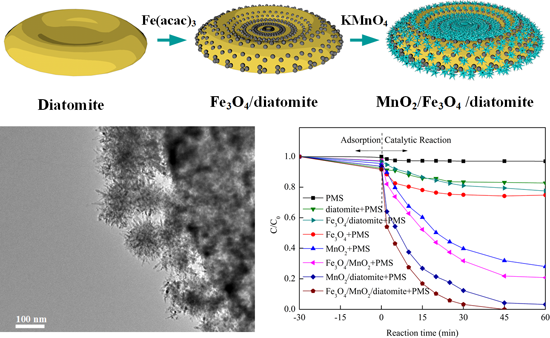
- samples were taken with a syringe with filter membrane (0.45 μm) at predetermined times and analyzed by a UV-2600 spectrophotometer at the absorption wavelength of 664 nm. The effects of reaction temperature, pH value and PMS dosage on the catalytic reaction were also researched under same experimental
- . MB removal of different catalytic systems (a) without and (b) with (b) PMS. (Reaction conditions: catalyst dosage = 0.10 g/L, PMS dosage = 0.30 g/L, initial MB concentration = 10 mg/L, T = 25 °C, initial pH 6). MB removal using MnO2/Fe3O4/diatomite at (a) different pH values, (b) different
- temperatures and (c) different PMS concentrations; (d) the TOC as a function of reaction time (reaction conditions: catalyst dosage = 0.10 g/L, MB concentration = 10 mg/L; default conditions: PMS dosage = 0.30 g/L, T = 25 °C, initial pH 6). Recyclability of the MnO2/Fe3O4/diatomite catalyst for the degradation


A visible-light-controlled platform for prolonged drug release based on Ag-doped TiO2 nanotubes with a hydrophobic layer
Beilstein J. Nanotechnol. 2018, 9, 1793–1801, doi:10.3762/bjnano.9.170
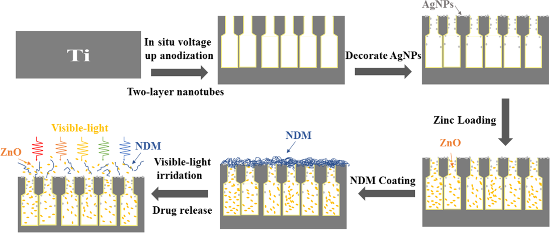
- solved and the effects of prolonging and slowing the release still need to be improved. Also, the drug dosage should be able to be directed to a specific location at a specific time. In particular, some points of high practical application related to drug delivery mechanisms are external factors, such as