Search results
Search for "dye" in Full Text gives 347 result(s) in Beilstein Journal of Nanotechnology. Showing first 200.
Intermixing of MoS2 and WS2 photocatalysts toward methylene blue photodegradation
Beilstein J. Nanotechnol. 2024, 15, 817–829, doi:10.3762/bjnano.15.68
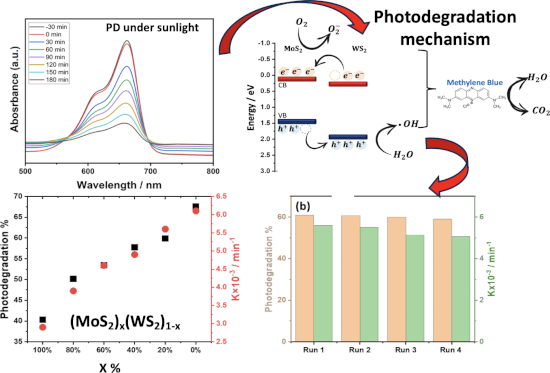
- removal, or synthetic dye degradation [4][5][6]. For instance, methylene blue (MB), which is considered one of the most used synthetic organic dyes in various industrial and medical applications, poses serious risks as a pollutant to water resources [7]. Indeed, MB is a potential carcinogen and mutagen
- evaluated the PD of the MB dye solution under light excitation without any photocatalysts (MB photolysis) as well as its PD in the dark in the presence of a photocatalyst. The optical absorbance spectra of the MB solution in the presence of MoS2 and WS2 were recorded in the dark and under visible light
- model [38]. Our results show a PD rate constant of 6.1 × 10⁻³ min−1 and 3.3 × 10⁻³ min−1 achieved by WS2 and MoS2, respectively. To evaluate the cyclability of our photocatalysts, we have conducted four consecutive PD runs. After each cycle (3 h), the MB dye solution was replaced with a fresh one to


Green synthesis of biomass-derived carbon quantum dots for photocatalytic degradation of methylene blue
Beilstein J. Nanotechnol. 2024, 15, 755–766, doi:10.3762/bjnano.15.63
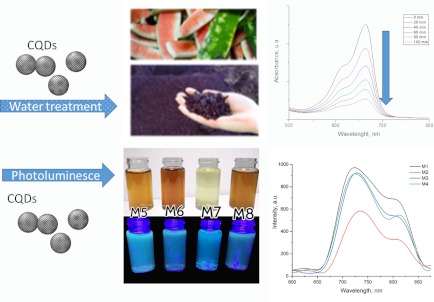
- -conversion luminescence. The results revealed effective photocatalytic degradation of methylene blue under sunlight, highlighting the potential for scalable production of these cost-effective catalytic nanomaterials for synthetic dye degradation. Keywords: biomass; carbon dots; catalysis; methylene blue
- quantum dots (CQDs) through a hydrothermal method using biomass from watermelon peels and grape pomace. This method is chosen for its ease of production, low cost, and scalability. We aim to evaluate the potential of CQDs as catalysts in the photocatalytic degradation of methylene blue (MB) dye in
- value of the reaction mixture was kept constant during the test (pH 7). To initiate the catalytic process, each CQD sample was individually applied to the degradation of the MB dye. The UV–vis absorption spectrum of the dye was monitored using a spectrophotometer (Thermo Scientific Evolution model 220


Comparative analysis of the ultrastructure and adhesive secretion pathways of different smooth attachment pads of the stick insect Medauroidea extradentata (Phasmatodea)
Beilstein J. Nanotechnol. 2024, 15, 612–630, doi:10.3762/bjnano.15.52
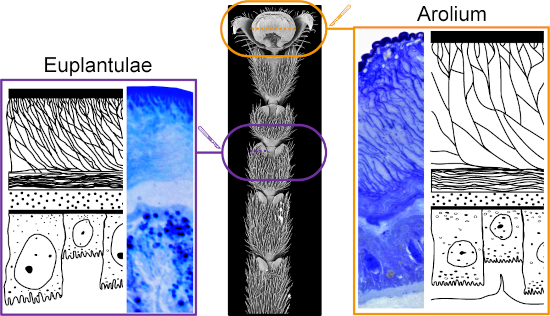
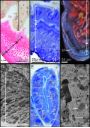
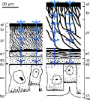
- metachromatic dye, which selectively stains basophilic tissue components and has a high affinity to acidic tissue (nucleic acids are stained blue and polysaccharides purple). Previous experiments have also shown that the dye stains soft parts of the cuticle dark blue, and sclerotized parts of the cuticle light






Cholesterol nanoarchaeosomes for alendronate targeted delivery as an anti-endothelial dysfunction agent
Beilstein J. Nanotechnol. 2024, 15, 517–534, doi:10.3762/bjnano.15.46
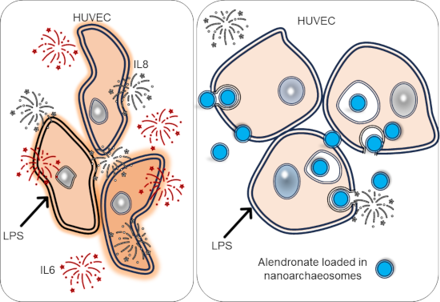
- metalloproteases substrate (FS-6), Sephadex G-50, lipopolysaccharides from Escherichia coli 0111:B4 (LPS), Mitochondria Staining Kit (JC-1 dye), valinomycin, sodium dodecyl sulfate (SDS), dexamethasone (DEX), ammonium persulfate, phorbol 12-myristate 13-acetate (PMA), gelatin from bovine skin type B, and BSA
- at λem = 440 nm and λem = 490 nm, respectively. Mitochondrial membrane potential The effect of nanovesicle uptake by THP-1 macrophages and HUVECs on the mitochondrial membrane potential was determined using JC-1 dye according to the manufacturer’s guidelines [84]. Briefly, THP-1 macrophages and
- carried out at 450 nm on a microplate reader. The generation of ROSs was measured in THP-1 macrophages and FCs in the basolateral compartments using the CM-H2DCFDA dye. Briefly, cells attached at the bottom of the well were washed twice with 100 µL PBS and incubated with a solution of 10 µM CM-H2DCFDA for





Photocatalytic degradation of methylene blue under visible light by cobalt ferrite nanoparticles/graphene quantum dots
Beilstein J. Nanotechnol. 2024, 15, 475–489, doi:10.3762/bjnano.15.43
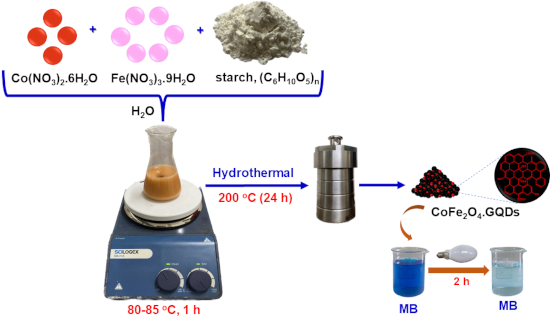
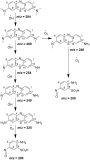
- /GQDs nanoparticles. Magnetic properties, morphology, structure, and fluorescence of the nanocomposites were studied, and the photocatalytic degradation of methylene blue as a dye model and the mechanism of methylene degradation were also addressed. Experimental Materials Cobalt(II) nitrate hexahydrate
- 8.33 [25]. The MB dye can exist in several chemical forms, namely MBH32+ (the tri-protonated form), MBH2+ (diprotonated form), MBH (monoprotonated form), and MB− (deprotonated form) [25]. With increasing pH, the decolourisation efficiency increases, reaches its maximum at pH ca. 7, and decreases




Nanocarrier systems loaded with IR780, iron oxide nanoparticles and chlorambucil for cancer theragnostics
Beilstein J. Nanotechnol. 2024, 15, 180–189, doi:10.3762/bjnano.15.17
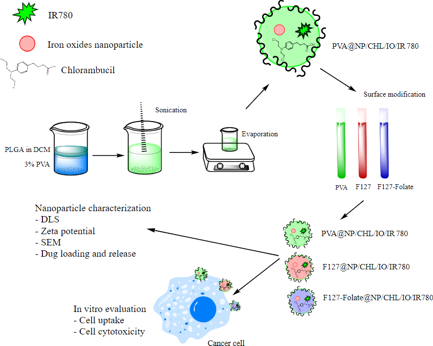
- diagnostics, near-infrared (NIR) fluorescent dyes are a potential alternative for the diagnosis and excision of residual malignant cancer, which is invisible by conventional visual examination and palpation [16][17][18]. Indocyanine green is the only NIR dye permitted for clinical use [19]. Dyes such as IR780


CdSe/ZnS quantum dots as a booster in the active layer of distributed ternary organic photovoltaics
Beilstein J. Nanotechnol. 2024, 15, 144–156, doi:10.3762/bjnano.15.14
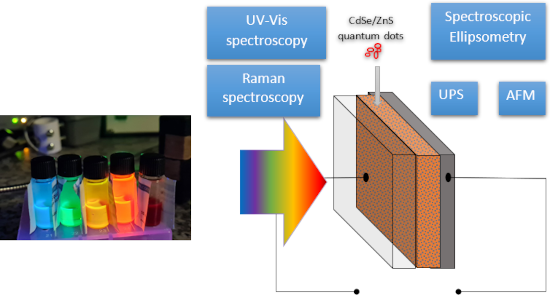
- ; organic solar cells; quantum dots; Introduction Organic solar cells have been intensively developed in recent years as the third generation [1][2] of photovoltaic cells, next to dye-synthesized solar cells and perovskite cells. One of the relatively novel concepts of organic solar cells that yield higher




New application of bimetallic Ag/Pt nanoplates in a colorimetric biosensor for specific detection of E. coli in water
Beilstein J. Nanotechnol. 2024, 15, 95–103, doi:10.3762/bjnano.15.9
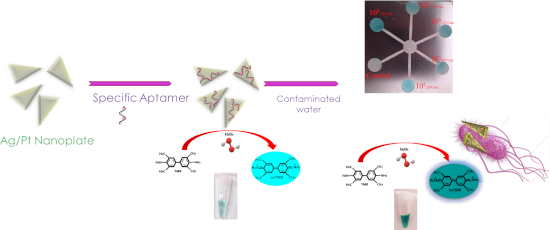
- nanoparticles (i.e., silver nanoplates, Ag NPLs) covered with a layer of Pt atoms to improve the peroxide activity of NPLs, and use them as colorimetric biosensor materials. Metallic NPLs were employed in a variety of applications, including antibacterial activity [17][18][19], hazardous dye removal [20


Fluorescent bioinspired albumin/polydopamine nanoparticles and their interactions with Escherichia coli cells
Beilstein J. Nanotechnol. 2023, 14, 1208–1224, doi:10.3762/bjnano.14.100
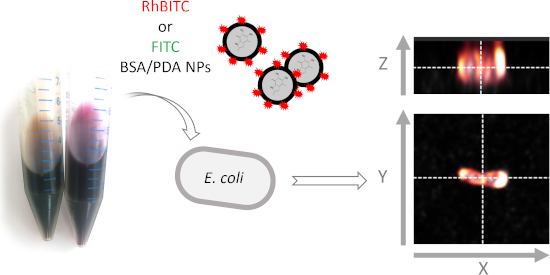
- with a fluorescent dye or oxidizing them, as reported by Ma et al. for other PDA NPs [21]. However, the capacity of PDA-based nanoparticles to target and penetrate bacteria for drug delivery, photothermic action, or fluorescent labelling of cells is unknown. Few publications have reported that
- (Supporting Information File 1, Figure S3b,c), respectively, in agreement with the color of the corresponding dye. Pristine BSA/PDA-NPs exhibited a wide absorption spectrum with a maximum of absorption at 280 nm, whereas Ox-PDA/BSA-NPs showed a less broad and intense absorption with a maximum at 285 nm
- labelled NPs by following the same procedure as described below for the elimination of unbound labelling molecules (see Experimental section). The fraction of released dye was estimated on the basis of the emission intensity of the dialysate and the initial quantity of labelled NPs (Supporting Information



Curcumin-loaded albumin submicron particles with potential as a cancer therapy: an in vitro study
Beilstein J. Nanotechnol. 2023, 14, 1127–1140, doi:10.3762/bjnano.14.93
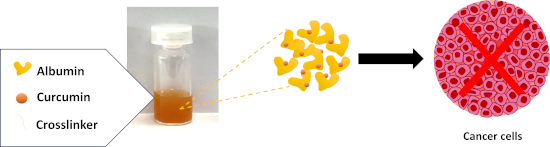
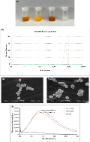
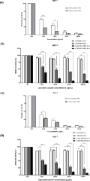
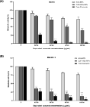
- the tetrazolium dye MTT to water-insoluble purple formazan crystals, indicating mitochondrial function and metabolically active cells. After medium removal, the dark blue crystals were dissolved in 100 μL of DMSO; then, the absorption was measured at wavelengths of 570 nm with a Cytation™ 5 Cell




Nanoarchitectonics of photothermal materials to enhance the sensitivity of lateral flow assays
Beilstein J. Nanotechnol. 2023, 14, 988–1003, doi:10.3762/bjnano.14.82
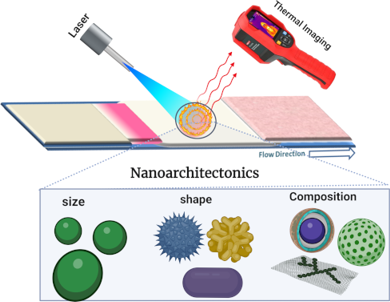
- reduced graphene oxide (rGO), SERS imaging can be done along with photothermal therapy [84]. Recently, our group developed a multifunctional rGO–Au nanoscale architecture loaded with Raman dye and anticancer drugs for fluorescence/SERS imaging-guided breast cancer therapy. Under activation of a laser at
- . developed a multifunctional Au@Pt@Ag nanocomposite loaded with the Raman dye 5,5′-dithiobis-(2-nitrobenzoic acid) for the sensitive and quantitative detection of dehydroepiandrosterone (DHEA) through LFA. The developed nanocomposite combined colour signal, SERS, and photothermal properties, providing a


Silver-based SERS substrates fabricated using a 3D printed microfluidic device
Beilstein J. Nanotechnol. 2023, 14, 793–803, doi:10.3762/bjnano.14.65
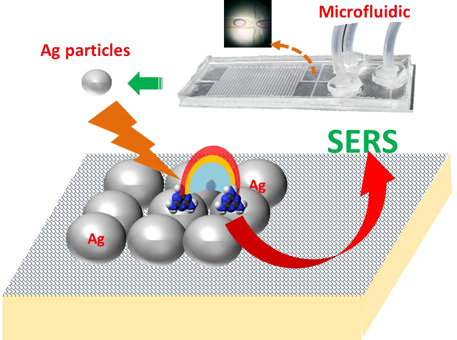
- is more cost-effective, straightforward, and accessible. The chemical treatment of PDMS and the glass plate aims to decorate their surfaces with silanol groups (Si–OH), enabling the two surfaces to bond chemically at the atomic level [49]. To determine the droplet size, we used two dye solutions and



Nanomaterials for photocatalysis and applications in environmental remediation and renewable energy
Beilstein J. Nanotechnol. 2023, 14, 722–724, doi:10.3762/bjnano.14.58

- semiconductor materials for sustainable applications; for instance, dye solar cells, solar-driven water splitting, NOx removal, and contaminant degradation. The synthesis of semiconductor nanomaterials published on this thematic issue indicates a wide range of synthetic routes. The as-prepared nanomaterials
- with various morphologies demonstrated many preeminent features in the above applications. In detail, the MoS2 with a honeycomb-like structure was first synthesized by an electrochemical route and applied in dye-sensitized solar cells [19], which expressed a higher applicability than that of other
- nanomaterials for environmental remediation and sustainable applications; for instance, dye solar cells, solar-driven water splitting, NOx removal, and contaminant degradation. This Thematic Issue will make a good reference material and be of great use for scientists in nanomaterials fields. Viet Van Pham and

Titania nanoparticles for photocatalytic degradation of ethanol under simulated solar light
Beilstein J. Nanotechnol. 2023, 14, 616–630, doi:10.3762/bjnano.14.51
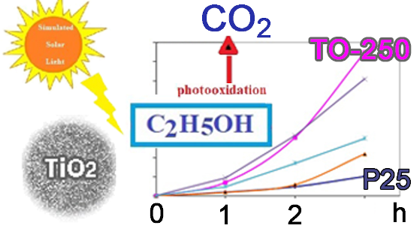
- found that TiO2 shows a high photocatalytic efficiency in the decomposition of pollutant substances such as dye wastewater [8][9][10][11], soiling [12], and harmful organic materials [13][14][15]. Also, TiO2 powders show promising results for the decomposition of ethanol in various environments [16][17




Nanoarchitectonics to entrap living cells in silica-based systems: encapsulations with yolk–shell and sepiolite nanomaterials
Beilstein J. Nanotechnol. 2023, 14, 522–534, doi:10.3762/bjnano.14.43
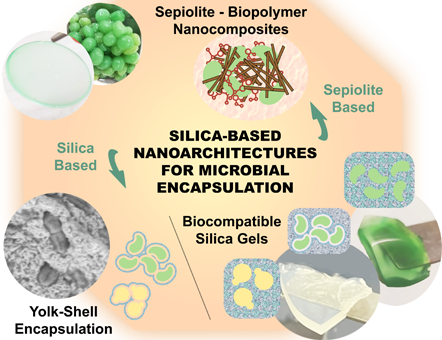
- produced G57-4 silica gel material appears to be a rigid, semitransparent, lightly coloured material. Diffusional tests with an identically synthesised silica gel (G57-4 conditions) prepared in the presence of Congo red dye indicated a higher diffusional limit than that of the formerly studied sepiolite
- , being observed and opened daily in a sterile environment for gas exchange. On days 1, 3, 5, 7, and 10, the tubes were kept still outside the incubator for 1 h to observe the behaviour of each material. For the diffusional limitation studies, 100 µL of saturated solution of the dye were mixed with 15 mL


Bismuth-based nanostructured photocatalysts for the remediation of antibiotics and organic dyes
Beilstein J. Nanotechnol. 2023, 14, 291–321, doi:10.3762/bjnano.14.26
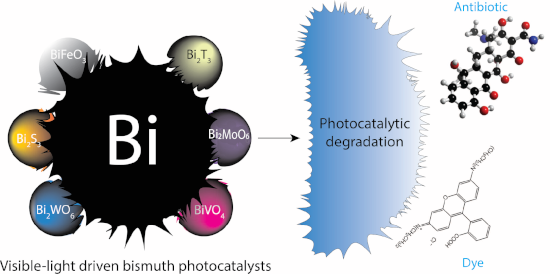
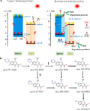
- mechanisms is included, along with potential antibiotic and dye degradation pathways in wastewater. Finally, areas that require additional study and attention regarding the usage of photocatalysts based on bismuth for removing pharmaceuticals and textile dyes from wastewater, particularly for real-world
- . Different materials based on bismuth have been developed and used for a range of environmental remediation applications. For instance, Mu et al. [46] synthesised a Bi2S3/Bi4O7 heterostructure via an in situ sulfidation approach and utilised it for the degradation of rhodamine B dye under visible-light
- exposure. Since the oxidation rate is still up to 96.3% after four cycles, the photocatalyst showed great performance and stability in the photocatalytic oxidation of the dye. This review provides an overview of the recent nanostructured photocatalytic materials based on bismuth that are employed in the


Recent progress in cancer cell membrane-based nanoparticles for biomedical applications
Beilstein J. Nanotechnol. 2023, 14, 262–279, doi:10.3762/bjnano.14.24
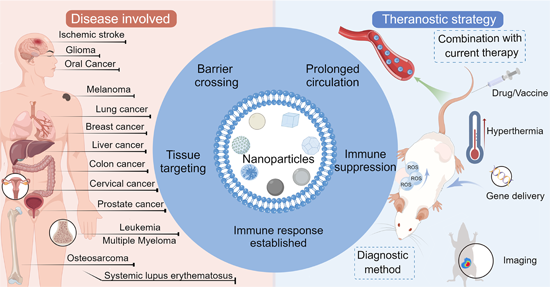
- fluorescent dye Cy5.5 (Cy5.5@HMnO2-AM) in mice. (A) In vivo fluorescence imaging. (B) Statistical analysis of the fluorescence intensity of tumors in different treatment groups. (C) Mouse image. (D) Ex vivo fluorescence imaging of major organs. (E) T1-weighted MR image of the biomimetic nanoparticles. (F) T1


Cyclodextrins as eminent constituents in nanoarchitectonics for drug delivery systems
Beilstein J. Nanotechnol. 2023, 14, 218–232, doi:10.3762/bjnano.14.21
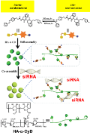
- light is converted to the light of shorter wavelength, which is absorbed by the arylazopyrazole. Resultant isomerization of this dye from the trans form to the cis form breaks down the β-CyD inclusion complex, and induces the decomposition of nanocomposites (blue balls) to release the siRNA. Figure 5




From a free electron gas to confined states: A mixed island of PTCDA and copper phthalocyanine on Ag(111)
Beilstein J. Nanotechnol. 2022, 13, 1572–1577, doi:10.3762/bjnano.13.131
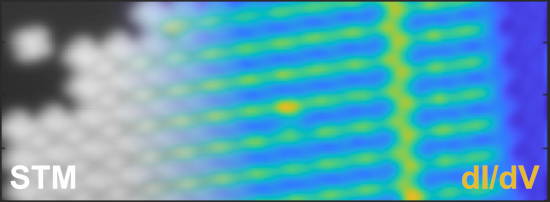
- low concentration as a dopant or at higher concentrations as a mixed layer [2]. Perylenetetracarboxylic dianhydride (PTCDA) is an organic molecule that has been investigated for its properties as an organic semiconductor and as a dye. It is straightforward to evaporate in vacuum and, at submonolayer


Facile preparation of Au- and BODIPY-grafted lipid nanoparticles for synergized photothermal therapy
Beilstein J. Nanotechnol. 2022, 13, 1432–1444, doi:10.3762/bjnano.13.118
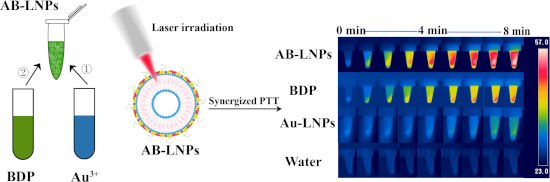
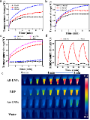
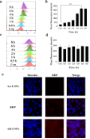
- platform to deliver both AuNPs and BODIPY dye for synergized PTT. To our knowledge, this is the first report about using LNPs as carriers for the co-delivery of gold nanoclusters and BODIPY, the first investigation of the synergistic thermal effects of gold nanoclusters and BODIPY, and the first




LED-light-activated photocatalytic performance of metal-free carbon-modified hexagonal boron nitride towards degradation of methylene blue and phenol
Beilstein J. Nanotechnol. 2022, 13, 1380–1392, doi:10.3762/bjnano.13.114
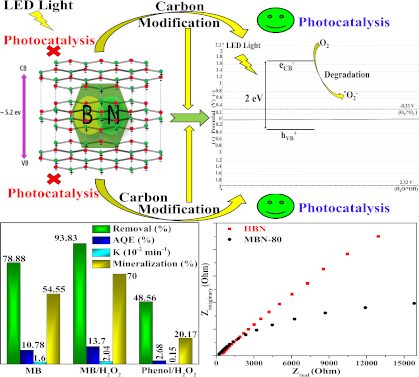
- 7b. The high removal rate towards MB could be ascribed to a better adsorption boosted through electrostatic interactions (cationic MB and negatively charged surface of MBN-80) and the synergy obtained through the photoactivity of MBN-80 and dye sensitization through MB moieties. The
- photosensitization of MB dye moieties generates additional photo-excited electrons which are transferred into the CB of MBN-80, resulting in enhanced charge carrier density and generation of •OH via the O2 reduction pathway, thus enhancing dye degradation. Conversely, the photocatalytic degradation of phenol showed
- the negatively charged MBN-80 and positively charged MB dye moieties) and that triggered the photocatalysis reaction. In the case of phenol, it contains a phenyl group (–C6H5) with a neutral charge and thus the interaction between this group and the photocatalyst is limited. Also, the phenol is not a


Recent trends in Bi-based nanomaterials: challenges, fabrication, enhancement techniques, and environmental applications
Beilstein J. Nanotechnol. 2022, 13, 1316–1336, doi:10.3762/bjnano.13.109
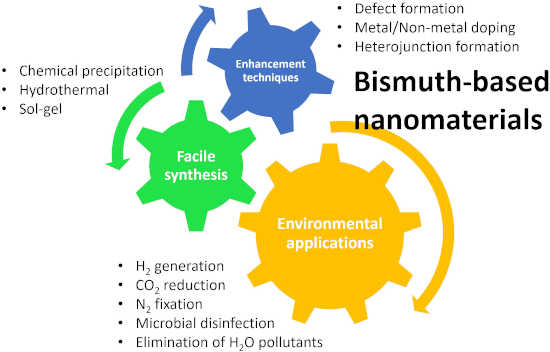
- obtained. They found that Bi5O7Br effectively converts molecular oxygen to superoxide radicals and hydroxyl radicals in visible light. Under UV–vis irradiation, Bi5O7Br showed a higher photocatalytic activity in the degradation of rhodamine B (RhB) dye than BiOBr. The addition of Bi5O7Br photocatalysis to
- increase in the overlap between Bi 6s and O 2p orbitals, a reduced charge transfer route, and strange floating features. In another approach, Huang et al. reported a one-step hydrothermal synthesis of a BiIO4/Bi2MoO6 hybrid photocatalyst for photodegradation of RhB dye [56]. Under visible-light irradiation
- ]. Without any additional agent, the fabricated heterojunction completely degraded a RhB dye solution within 20 min. BiVO4 nanorods photogenerated hydroxyl radicals rather than super oxides because of the more positive oxidation potential of BiVO4 (2.31 V). MoS2 sheets favored the photogeneration of




Microneedle-based ocular drug delivery systems – recent advances and challenges
Beilstein J. Nanotechnol. 2022, 13, 1167–1184, doi:10.3762/bjnano.13.98
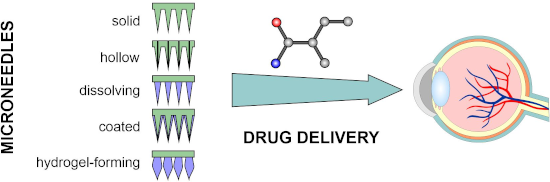
- patches, the total amount of released dye was close to 18%, whereas from flat patches only 1% was released after 24 h [180]. Li et al. fabricated PVP-based MNs for the ocular delivery of the insoluble drug brinzolamide, a carbonic anhydrase inhibitor applied in the treatment of glaucoma. The authors


Green synthesis of zinc oxide nanoparticles toward highly efficient photocatalysis and antibacterial application
Beilstein J. Nanotechnol. 2022, 13, 1108–1119, doi:10.3762/bjnano.13.94
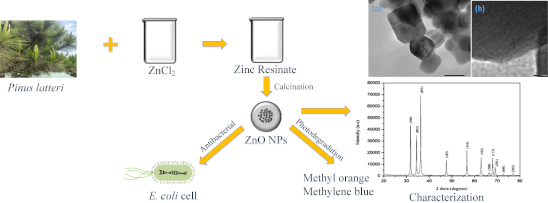
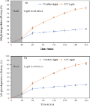
- of 10 °C/min. The zeta potential was measured by analyzing 0.1 g of ZnO in 10 mL of water using a Malvern ZetasizerPro. The solid UV–vis DRS was carried out using a JASCO V550 UV–vis spectrometer. Photocatalytic degradation reaction The photocatalytic degradation of a dye solution under visible and
- centrifuged at 6000 rpm to measure the dye concentrations. The dye concentration was analyzed by UV–vis spectroscopy (Hitachi U2900) with maximum adsorption wavelengths of MB and MO of 664 nm and 464 nm, respectively [29][30]. The degradation efficiency was calculated using Equation 3. where c0 is the initial
- dye concentration and ct is the dye concentration at a given reaction time. Determination of the antibacterial efficiency against E. coli The experiment was conducted using three different concentrations of ZnO NPs (1, 5, and 10 mg/mL) and two concentrations of E. coli (5·104 and 5·105 CFU/mL). After




Recent advances in green carbon dots (2015–2022): synthesis, metal ion sensing, and biological applications
Beilstein J. Nanotechnol. 2022, 13, 1068–1107, doi:10.3762/bjnano.13.93
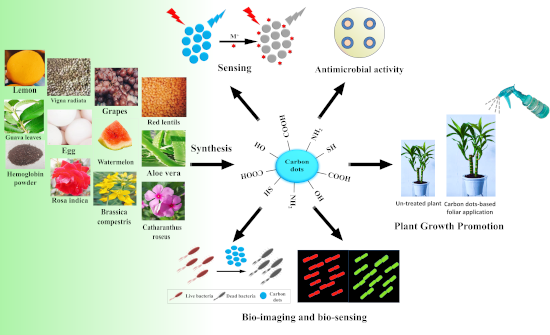
- to have excellent biocompatibility with cells [70]. Ramanarayanan and Swaminathan utilized guava leaves to prepare CDs, which were then utilized for the synthesis of a CD-TiO2 nanocomposite. The CD-TiO2 nanocomposite possesses good photocatalytic ability to degrade methylene blue dye [71]. White