Search results
Search for "electrostatic forces" in Full Text gives 96 result(s) in Beilstein Journal of Nanotechnology.
Review on nanoparticles and nanostructured materials: history, sources, toxicity and regulations
Beilstein J. Nanotechnol. 2018, 9, 1050–1074, doi:10.3762/bjnano.9.98

- attachment systems began 300 years ago and continues today. Electrostatic forces, sticking fluids, and microsuckers are the proposed reasons that explain the insect’s attachment mechanism [229]. Some of these theories have been rejected based on experimental data and combination of secretion-mediated


Tuning adhesion forces between functionalized gold colloidal nanoparticles and silicon AFM tips: role of ligands and capillary forces
Beilstein J. Nanotechnol. 2018, 9, 660–670, doi:10.3762/bjnano.9.61
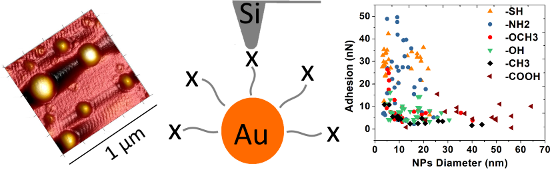
- , electrostatic forces, H-bonding and capillary forces are crucial to understand the dependence of adhesive force on the type of functional layer. First, the high adhesion values of –SH and –NH2 coated NPs are explainable by the high polarizability of the molecules. Hence, adhesion forces acting between


Periodic structures on liquid-phase smectic A, nematic and isotropic free surfaces
Beilstein J. Nanotechnol. 2018, 9, 342–352, doi:10.3762/bjnano.9.34
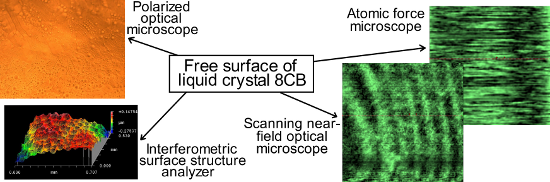
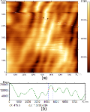
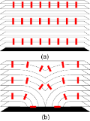
- liquid surface [16][17][18][19][20]. In the article [16], a case was considered where periodic stripe structures occur on the charged liquid helium surface as a result of competition between electrostatic forces and surface tension. Qualitatively, our problem is similar to this case and can be described









The nanofluidic confinement apparatus: studying confinement-dependent nanoparticle behavior and diffusion
Beilstein J. Nanotechnol. 2018, 9, 301–310, doi:10.3762/bjnano.9.30
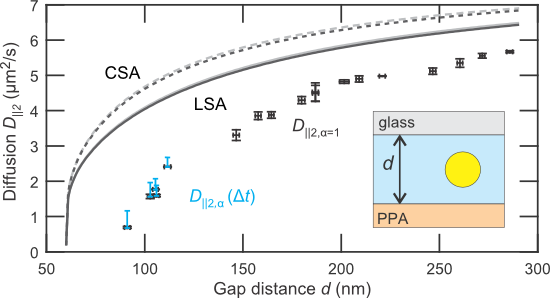
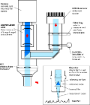
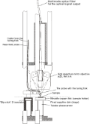
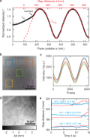
- have been performed using static surfaces and fixed geometries, which do not allow the degree of confinement to be varied in situ. Recently it was demonstrated that the gap-distance-dependent electrostatic forces can be exploited to achieve geometry-induced trapping and manipulation of charged



Review: Electrostatically actuated nanobeam-based nanoelectromechanical switches – materials solutions and operational conditions
Beilstein J. Nanotechnol. 2018, 9, 271–300, doi:10.3762/bjnano.9.29
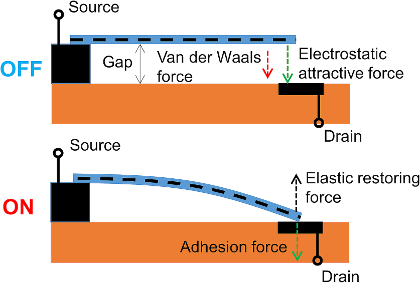
- thousand times larger than forces that are proportional to volume, making inertial forces negligible. At the nanoscale, van der Waals, capillary and electrostatic forces become the governing factors. It is important to note, that with the decrease of the size scale, breakdown of the predictions of


Anchoring of a dye precursor on NiO(001) studied by non-contact atomic force microscopy
Beilstein J. Nanotechnol. 2018, 9, 242–249, doi:10.3762/bjnano.9.26
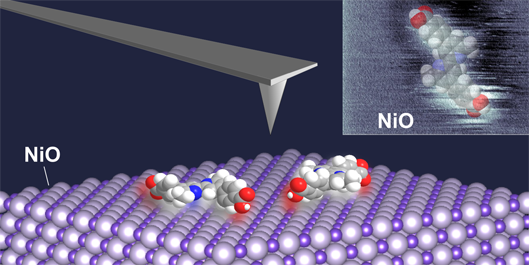
- recorded by Kelvin probe force microscopy (KPFM) [68]. The CPD arises from the work function difference between the tip and the substrate and is altered by surface charges or dipoles. The voltage needed to compensate for the electrostatic forces due to this potential difference is measured in KPFM. The CPD



Combined scanning probe electronic and thermal characterization of an indium arsenide nanowire
Beilstein J. Nanotechnol. 2018, 9, 129–136, doi:10.3762/bjnano.9.15
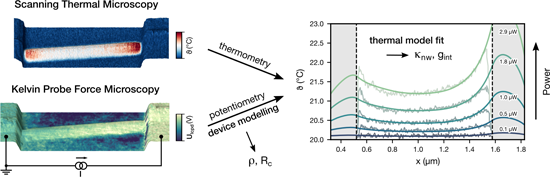
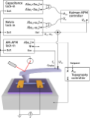
- -range electrostatic forces between the cantilever and sample structures, force-gradient sensitive detection is required [7][19]. In our setup, this is assured by direct demodulation of the sidebands that appear upon electrical modulation of the tip–sample electrostatic force [20]. Figure 2b shows the


Interface conditions of roughness-induced superoleophilic and superoleophobic surfaces immersed in hexadecane and ethylene glycol
Beilstein J. Nanotechnol. 2017, 8, 2504–2514, doi:10.3762/bjnano.8.250
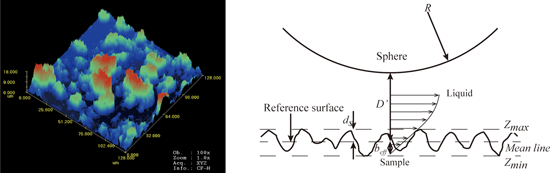
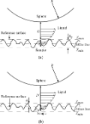
- colloidal AFM tip. Then the probe was driven towards the surface immersed in liquid at a certain driving velocity. By analyzing the force exerted on the probe, which mainly includes hydrodynamic forces, electrostatic forces, van der Waals force and Stokes force, the boundary slip can be calculated [12][18





A comparative study of the nanoscale and macroscale tribological attributes of alumina and stainless steel surfaces immersed in aqueous suspensions of positively or negatively charged nanodiamonds
Beilstein J. Nanotechnol. 2017, 8, 2045–2059, doi:10.3762/bjnano.8.205
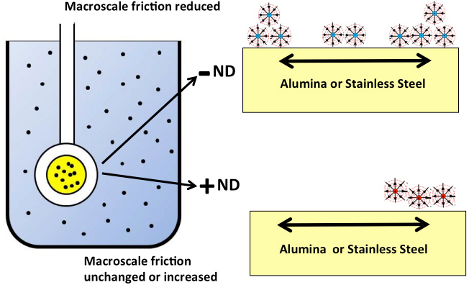
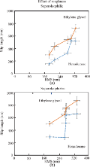
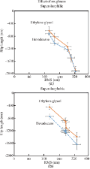
- electrostatic forces? As will be reported, beneficial tribological behaviors were observed for immersion of stainless steel or alumina samples in −ND suspensions, while either neutral (alumina) or detrimental (stainless steel) behaviors were observed for immersion in +ND suspensions. This yields an exceptional
- study employed an aqueous dispersion of positively charged NDs, the silica surface is expected to be charged negatively at normal pH (IEP = 3.9, [50]) providing the same short-range electrostatic forces responsible for the ND surface self-assembly. The EIP of SS304 surfaces, however, is somewhat acidic
- deposits on stainless steel and/or alumina surfaces that are both readily replenished by the surrounding suspensions and also glide through it with a relatively low resistance to shear, potentially because of the repulsive electrostatic forces between the individual particles. In summary, this study


Characterization of ferrite nanoparticles for preparation of biocomposites
Beilstein J. Nanotechnol. 2017, 8, 1257–1265, doi:10.3762/bjnano.8.127
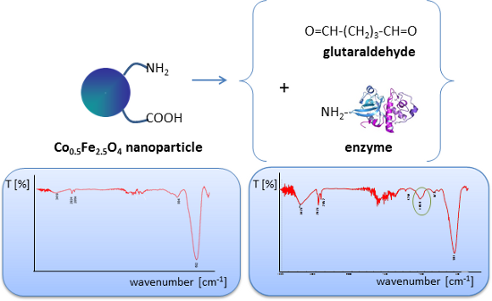
- set of particles. In particular, noncovalent interactions are the most important in terms of biological aspects [5]. A drawback of applying magnetic nanoparticles is that they possess a strong tendency to agglomerate due to not only van der Waals or electrostatic forces but also magnetic interactions



Analysis and modification of defective surface aggregates on PCDTBT:PCBM solar cell blends using combined Kelvin probe, conductive and bimodal atomic force microscopy
Beilstein J. Nanotechnol. 2017, 8, 579–589, doi:10.3762/bjnano.8.62
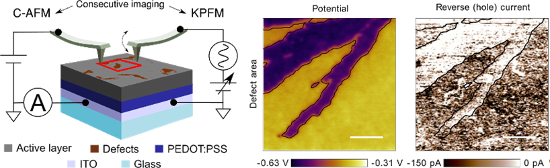
- tip and feature material. Although the source of the attractive forces is not well understood, it could be attributed to either electrostatic forces due to localized charges in the features or to electrophoresis of the material due to the electric field gradient. In Figure 3, a set of first- and last


Modelling of ‘sub-atomic’ contrast resulting from back-bonding on Si(111)-7×7
Beilstein J. Nanotechnol. 2016, 7, 937–945, doi:10.3762/bjnano.7.85
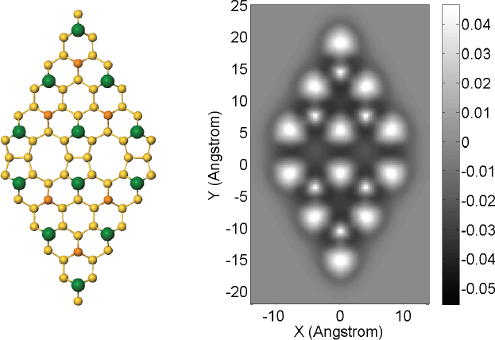
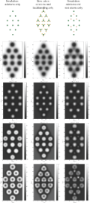
- model also incorporate the effect of electrostatics via introduction of the Hartree potential, which has been shown to have important consequences for the imaging of certain classes of molecules [15]. In our simulations the effect of the Hartree potential is not included, primarily as electrostatic
- forces are not expected to result in significant differences in contrast due to the small variation in electrostatic force over the different atoms of the Si(111)-7×7 unit cell [16]. In the simulations the probe particle is subject to forces from three sources: 1) a L-J-like interaction due to the tip


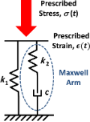
Nanoscale effects in the characterization of viscoelastic materials with atomic force microscopy: coupling of a quasi-three-dimensional standard linear solid model with in-plane surface interactions
Beilstein J. Nanotechnol. 2016, 7, 554–571, doi:10.3762/bjnano.7.49
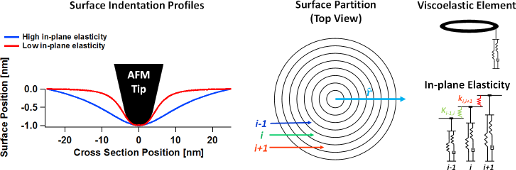
- [19]. Frequently, but not always, relatively large molecules are involved and their cohesive energy is governed by dispersion (van der Waals) and electrostatic forces, which are generally weaker than those generated by stretched covalent bonds or electrostatic interactions in ionic crystals, and which


Surface coating affects behavior of metallic nanoparticles in a biological environment
Beilstein J. Nanotechnol. 2016, 7, 246–262, doi:10.3762/bjnano.7.23
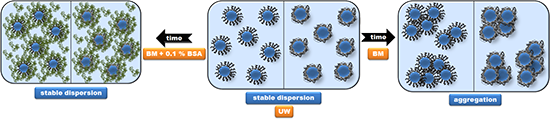
- provided an enhanced electrostatic repulsion against the agglomeration of metallic NPs in DMEM. The BSA has negative charges above its isoelectric point (pH 4.78) [59] and the electrostatic forces dominate over hydrophobic interactions. Accordingly, the attractive forces between the positively charged




Large area scanning probe microscope in ultra-high vacuum demonstrated for electrostatic force measurements on high-voltage devices
Beilstein J. Nanotechnol. 2015, 6, 2485–2497, doi:10.3762/bjnano.6.258
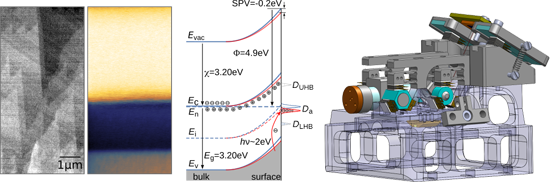
- materials), separated (e.g., electrostatic forces from magnetic forces), or be dynamically compensated (e.g., by tuning the bias voltage in Kelvin probe force microscopy (KPFM)) and measured together with the topological information. For all these properties various experimental approaches have been
- detection of electrostatic forces and the determination of local work function values was intensively discussed and models combining large scale influences with atomistic simulations have been developed [1][2][3][4]. As early as in the late 1980s H. Wickramasinghe proposed several SPM based methods for the
- VCPD to nullify the electrostatic force acting between them [9][36]. A very sensitive way to measure, separate, and compensate the electrostatic forces is the so-called amplitude modulated KPFM (AM-KPFM) which uses the second eigenmode of the cantilever [17][37]. By applying an ac voltage Vac to the


Kelvin probe force microscopy for local characterisation of active nanoelectronic devices
Beilstein J. Nanotechnol. 2015, 6, 2193–2206, doi:10.3762/bjnano.6.225
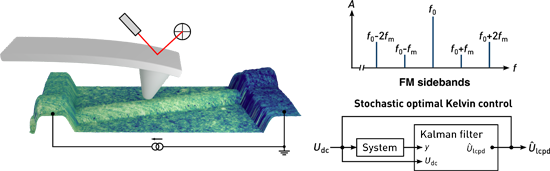
- established technique that allows for the mapping of local electrostatic potentials with an atomic force microscope (AFM) [1][2][3]. In contrast to electrostatic force microscopy (EFM), which measures merely the effect of electrostatic forces on the oscillation of the tip, a feedback loop nullifies the
- the main reason for the notoriously low lateral resolution and poor potential accuracy in this mode. When comparing AM and FM modes, one should note that in lift-mode AM-KFM the cantilever is not oscillating anymore when the electrostatic forces are nullified, whereas the mechanical oscillation


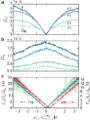
![[Graphic 33]](/bjnano/content/inline/2190-4286-6-225-i48.png?max-width=637&scale=1.18182) for different modulation amplitu...
for different modulation amplitu...




Electrospray deposition of organic molecules on bulk insulator surfaces
Beilstein J. Nanotechnol. 2015, 6, 1927–1934, doi:10.3762/bjnano.6.195
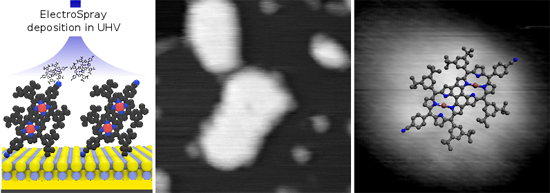
- distributed all over the surface and appear up to 3 nm high. However, no clear organization of the molecules was observed. Large electrostatic forces have been observed and measured via frequency shift versus voltage curves df(V) [40] after the deposition process. These could not be compensated during
- measurements by applying a bias voltage of up to ±10 V, which is the limit of the AFM system. These large electrostatic forces induced difficult scan conditions and we were not able to study the organization of the molecules in more detail. Indeed, surfaces charges of bulk insulator samples have already been
- studied in detail [41][42]. Due to cleavage many charges can be created resulting in large electrostatic forces. Sample preparation with soft annealing is well-established and leads to only a few remaining isolated charges [42]. Since the sample was prepared with such procedure before UHV-ESI deposition


PLGA nanoparticles as a platform for vitamin D-based cancer therapy
Beilstein J. Nanotechnol. 2015, 6, 1306–1318, doi:10.3762/bjnano.6.135
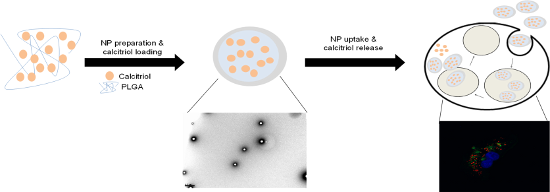
- electrostatic forces due to the PLGA carboxylate groups at the NP surface, and the surfactant behavior that also plays a crucial role in maintaining nanosuspension stabilization. During particle formation, the Pluronic®F127 is adsorbed onto the NP surface, providing steric and thermodynamic stabilization


Morphological and structural characterization of single-crystal ZnO nanorod arrays on flexible and non-flexible substrates
Beilstein J. Nanotechnol. 2015, 6, 720–725, doi:10.3762/bjnano.6.73
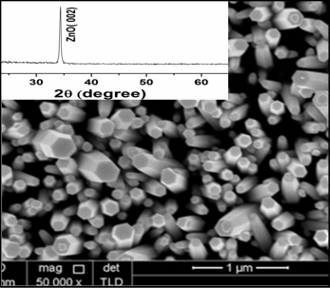
- active, while the E and TO are forbidden. Due to the long-range electrostatic forces, the phonons with A1 and E symmetry are polar and hence exhibit different frequencies for the TO and LO phonons. Every mode corresponds to a band in the Raman spectrum, with the A1 phonon vibration polarized parallel to


Boosting the local anodic oxidation of silicon through carbon nanofiber atomic force microscopy probes
Beilstein J. Nanotechnol. 2015, 6, 215–222, doi:10.3762/bjnano.6.20
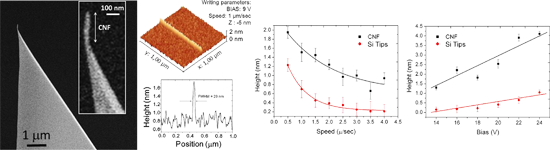
- –sample direct mechanical contact or long range interactions, such as based on van der Waals or electrostatic forces. Because of this, AFM-based SPL can be achieved through oxidation, indentation, as well as various other implementations such as dip-pen nanolithography [5]. Early works on AFM-based SPL


Kelvin probe force microscopy in liquid using electrochemical force microscopy
Beilstein J. Nanotechnol. 2015, 6, 201–214, doi:10.3762/bjnano.6.19
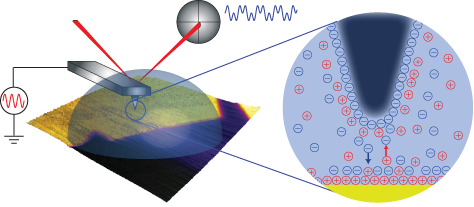
- a role in shifting the measured CPD of the Au surface outside of the bias range studied. In order to investigate the possibility that the CPD of Au was shifted in liquid, and to further investigate the dependence of electrostatic forces at larger biases, Aω and A2ω were probed under increasing bias


![[Graphic 6]](/bjnano/content/inline/2190-4286-6-19-i11.png?max-width=637&scale=1.18182) response collected 200 nm above a grounded Au electrode in (a, b, c) air, (d, e, f) decane an...
response collected 200 nm above a grounded Au electrode in (a, b, c) air, (d, e, f) decane an...


![[Graphic 22]](/bjnano/content/inline/2190-4286-6-19-i27.png?max-width=637&scale=1.18182) spectra [bias-on] collected 500 nm above HOPG in aqueous solutions of increasing salt concent...
spectra [bias-on] collected 500 nm above HOPG in aqueous solutions of increasing salt concent...

![[Graphic 25]](/bjnano/content/inline/2190-4286-6-19-i30.png?max-width=637&scale=1.18182) spectra [bias-on] collected 500 nm above (a) HOPG and (b) Au in milli-Q water (vertical color...
spectra [bias-on] collected 500 nm above (a) HOPG and (b) Au in milli-Q water (vertical color...

![[Graphic 27]](/bjnano/content/inline/2190-4286-6-19-i32.png?max-width=637&scale=1.18182) spectra [bias-on] recorded 500 nm above a HOPG/Au boundary in milli-Q water. T...
spectra [bias-on] recorded 500 nm above a HOPG/Au boundary in milli-Q water. T...

Intake of silica nanoparticles by giant lipid vesicles: influence of particle size and thermodynamic membrane state
Beilstein J. Nanotechnol. 2014, 5, 2468–2478, doi:10.3762/bjnano.5.256
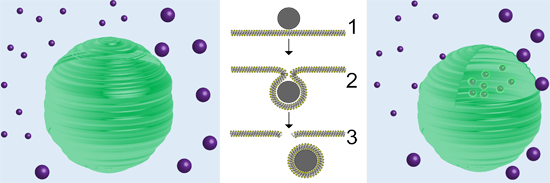
- realistic scenario are significantly stronger than those that are necessary for an uptake in our model system (see Figure 4). In the case of anionic or neutral particles, electrostatic forces will, of course, not be sufficient for an uptake. However, binding of proteins can provide strong adhesion


Aquatic versus terrestrial attachment: Water makes a difference
Beilstein J. Nanotechnol. 2014, 5, 2424–2439, doi:10.3762/bjnano.5.252
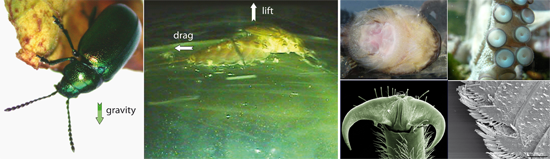
- substantial variability and we cannot calculate a reasonable attachment force for the whole animal from measurements of a single seta, tube foot or sucker. Adhesion A variety of different mechanisms contributes to adhesion: (i) mechanical interlocking on a very small scale, (ii) electrostatic forces, (iii


Liquid-phase exfoliated graphene: functionalization, characterization, and applications
Beilstein J. Nanotechnol. 2014, 5, 2328–2338, doi:10.3762/bjnano.5.242
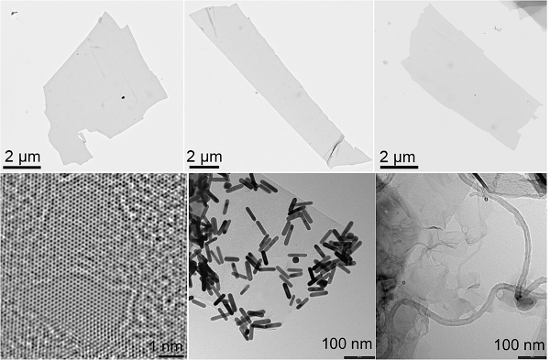
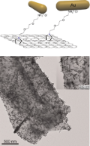
- the interplay of electrostatic forces and π-electron clouds on graphene. The proximity of the Ru4POM to the graphene surface in the arylation reaction leads to a tight immobilization. Imaging on graphene Finally, the optical properties of graphene for the high contrast imaging of the two previously




Sequence-dependent electrical response of ssDNA-decorated carbon nanotube, field-effect transistors to dopamine
Beilstein J. Nanotechnol. 2014, 5, 2113–2121, doi:10.3762/bjnano.5.220
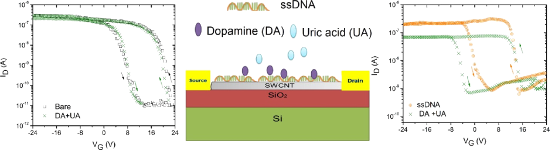
- electrostatic forces; thereby the neutral mixture fails to produce any effect on the SWCNT [23]. Thus, detecting DA in the presence of UA is a challenge because of the electrical neutrality of the mixture and the hydrophobic nature of the SWCNT. This discourages the attachment of polar molecules onto the
- could be because of strong interactions such as hydrogen bonding, or mutual association of the hydrophobic regions between DA and ssDNA, or weak electrostatic attractions. According to earlier reports [33], the electrostatic forces are the dominant forces of interaction between ssDNA and DA. Since DA is