Search results
Search for "exfoliation" in Full Text gives 114 result(s) in Beilstein Journal of Nanotechnology.
Outstanding chain-extension effect and high UV resistance of polybutylene succinate containing amino-acid-modified layered double hydroxides
Beilstein J. Nanotechnol. 2019, 10, 684–695, doi:10.3762/bjnano.10.68
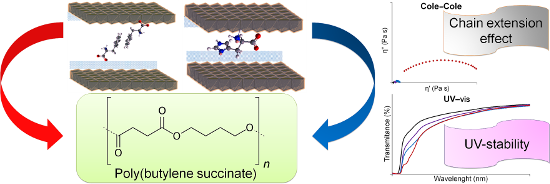
- filler structure can be explained by their lower crystallinity or by a partial exfoliation occurring during thermal processing. For PBS–LDH/HIS, there is an additional peak at 2θ = 18° that is difficult to assign. Its associated small full width at half maximum (FWHM) may be attributed to rather


Direct observation of the CVD growth of monolayer MoS2 using in situ optical spectroscopy
Beilstein J. Nanotechnol. 2019, 10, 557–564, doi:10.3762/bjnano.10.57
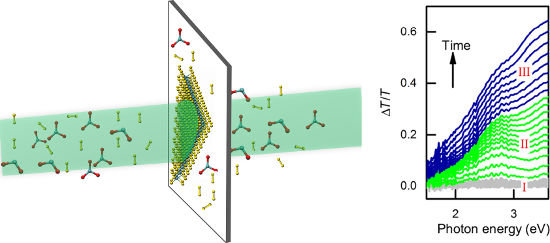
- synthesizing large-area 2D TMDCs have been reported, including mechanical exfoliation, sulphurization of metal thin films, mass transport, molecular beam epitaxy (MBE) and chemical vapor deposition (CVD) [6][7]. In particular, CVD is considered to be an attractive and very promising approach for large-scale


Mo-doped boron nitride monolayer as a promising single-atom electrocatalyst for CO2 conversion
Beilstein J. Nanotechnol. 2019, 10, 540–548, doi:10.3762/bjnano.10.55
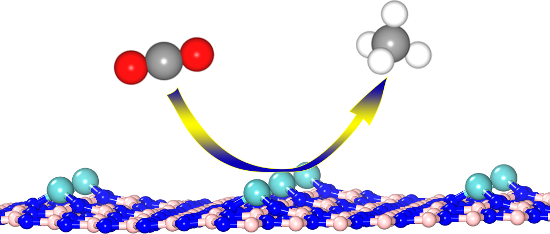
- refractory nature [11][35][36][37][38][39][40][41]. Moreover, BN nanomaterials have been used as superior substrates for doping various transition metals by electron beam irradiation [42] or solvent exfoliation [43] to form selected point defects, which are preferred to growing specific boron vacancies [42


Investigation of CVD graphene as-grown on Cu foil using simultaneous scanning tunneling/atomic force microscopy
Beilstein J. Nanotechnol. 2018, 9, 2953–2959, doi:10.3762/bjnano.9.274
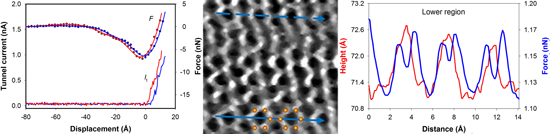
- would be useful in understanding the mechanisms of such interactions. Nowadays, a variety of methods are used to prepare graphene. Mechanical exfoliation of graphite facilitates obtaining micrometer-scale graphene layers on amorphous substrates such as silicon oxide [1]. Graphene monolayers have been


Layered calcium phenylphosphonate: a hybrid material for a new generation of nanofillers
Beilstein J. Nanotechnol. 2018, 9, 2906–2915, doi:10.3762/bjnano.9.269
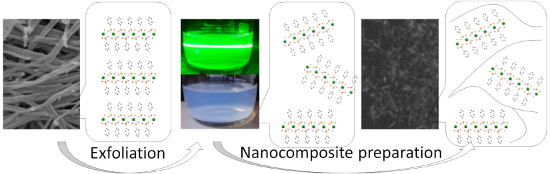
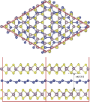
- presence of phenyl groups on the surface of the layers. In this paper, various CaPhP synthesis methods were studied with the aim of obtaining a product most suitable for its subsequent exfoliation. The liquid-based approach was used for the exfoliation. It was found that the most promising technique for
- the exfoliation of CaPhP in an amount sufficient for incorporation into polymers involved using propan-2-ol with a strong shear force generated in a high-shear disperser. The filler was tested both in its unexfoliated and exfoliated forms for the preparation of polymer composites, for which a low
- . The addition of the nanofiller was found to influence the composite properties – the exfoliated particles were found to have a higher impact on the properties of the prepared composites than the unexfoliated particles of the same loading Keywords: exfoliation; layered phenylphosphonate; nanomaterial


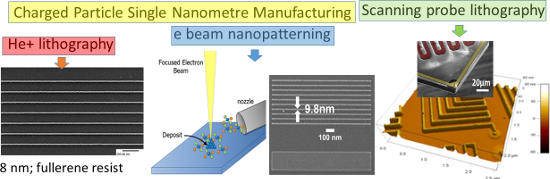
Charged particle single nanometre manufacturing
Beilstein J. Nanotechnol. 2018, 9, 2855–2882, doi:10.3762/bjnano.9.266


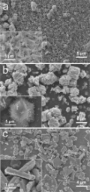
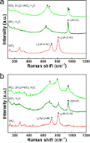
Nanostructure-induced performance degradation of WO3·nH2O for energy conversion and storage devices
Beilstein J. Nanotechnol. 2018, 9, 2845–2854, doi:10.3762/bjnano.9.265
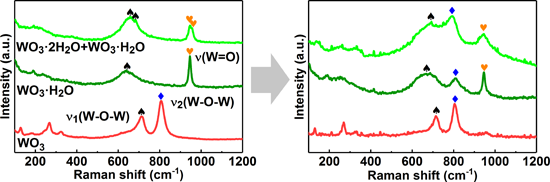
- layered transition metal oxides. Keywords: 2D layered oxides; interlayer water; van der Waals interaction; WO3·nH2O; Introduction Within the less than 20 years since the successful exfoliation of atomically thin graphene, 2D layered nanomaterials have been contributing greatly to the advances of


Metal-free catalysis based on nitrogen-doped carbon nanomaterials: a photoelectron spectroscopy point of view
Beilstein J. Nanotechnol. 2018, 9, 2015–2031, doi:10.3762/bjnano.9.191
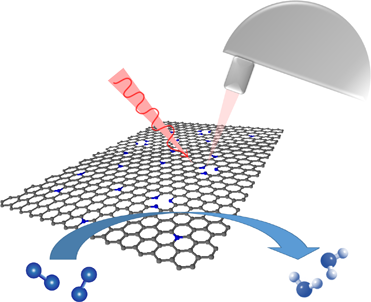
- [11][12], rather than their observation, which possibly should be dated back [13]. The second one was the report on exfoliation and characterization of graphene by Geim and Novoselov in 2004 [14]. The impact of these reports on the fundamental research on carbon nanomaterials triggered theoretical and


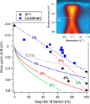


Improving the catalytic activity for hydrogen evolution of monolayered SnSe2(1−x)S2x by mechanical strain
Beilstein J. Nanotechnol. 2018, 9, 1820–1827, doi:10.3762/bjnano.9.173
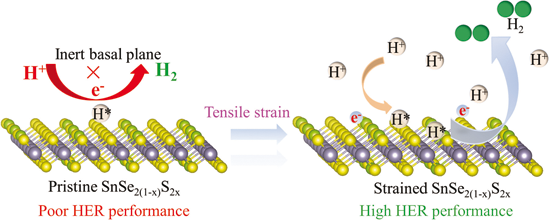
- synthesized by using traditional mechanical exfoliation techniques [24][25] because of the weak van der Waals (vdW) interactions between layers. These mono- and few-layer SnX2 (X = S, Se) compounds are expected to be widely used in the fields of water splitting [26], high-speed photodetection [27


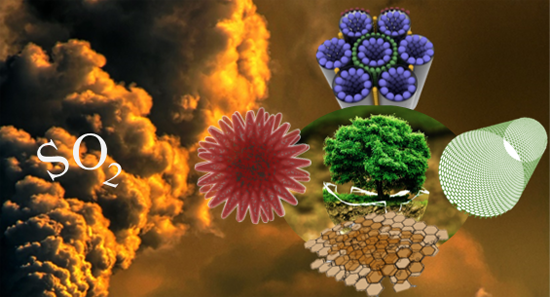
SO2 gas adsorption on carbon nanomaterials: a comparative study
Beilstein J. Nanotechnol. 2018, 9, 1782–1792, doi:10.3762/bjnano.9.169
- functionalities, which in turn increases the layer separation and turns the material hydrophilic. The subsequent exfoliation step separates the layers, thereby significantly increasing its accessible surface area leading to the formation of single- or few-layered GO. In our previous work, by XPS analysis, we have
- R1 Extra was obtained from Norit N.V., Holland, and the detailed properties have been described in [45][54]. GO was prepared by oxidizing graphite followed by exfoliation using a combination of ultrasound sonication followed by freeze–thaw cycles, described in detail in [12]. Graphite was purchased


Toward the use of CVD-grown MoS2 nanosheets as field-emission source
Beilstein J. Nanotechnol. 2018, 9, 1686–1694, doi:10.3762/bjnano.9.160
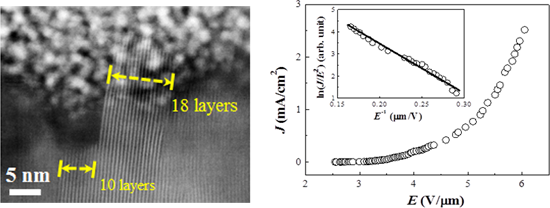
- ][16] and the number of layers [16]. Various methods have been used to synthesize vertically aligned MoS2 NSs: liquid-phase exfoliation [17], hydrothermal synthesis [8] or chemical vapor deposition (CVD) [15][17][18]. CVD is regarded as the most promising method to synthesize high-quality MoS2 with



Computational exploration of two-dimensional silicon diarsenide and germanium arsenide for photovoltaic applications
Beilstein J. Nanotechnol. 2018, 9, 1247–1253, doi:10.3762/bjnano.9.116
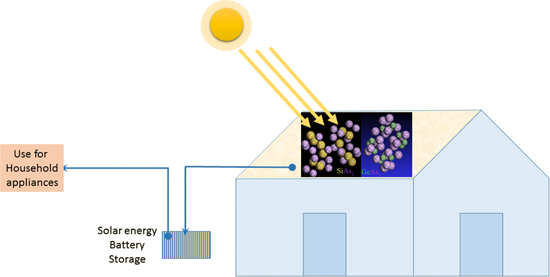
- , electronic and optical properties using density functional theory (DFT), hybrid functional and Bethe–Salpeter equation (BSE) approaches. We find that the exfoliation of single-layer SiAs2 and GeAs2 is highly feasible and in principle could be carried out experimentally by mechanical cleavage due to the
- and Pb [20][35] and are depicted in Figure 2c. According to this evaluation, the exfoliation of monolayer for these materials from their bulk forms is highly feasible. The band structures determined by HSE-Wannier calculations demonstrate that bulk, bilayer and monolayer structures of SiAs2 and GeAs2
- SiAs2 and GeAs2 as promising light harvesting semiconductor materials for solar cell applications. The extraction of a monolayer of these materials is likely to be feasible by mechanical exfoliation. Moreover, the calculated phonon spectrum reveals its high dynamical stability for both materials


An implementation of spin–orbit coupling for band structure calculations with Gaussian basis sets: Two-dimensional topological crystals of Sb and Bi
Beilstein J. Nanotechnol. 2018, 9, 1015–1023, doi:10.3762/bjnano.9.94
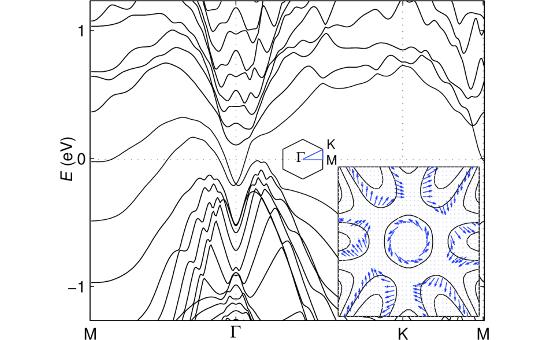
- those expectations closer to reality [33]. It was demonstrated that it is possible to isolate few or even single stable layers of antimonene, in ambient conditions. Moreover, new procedures such as liquid exfoliation and epitaxial growth methods were reported. Theoretical works on antimonene can be


Electro-optical interfacial effects on a graphene/π-conjugated organic semiconductor hybrid system
Beilstein J. Nanotechnol. 2018, 9, 963–974, doi:10.3762/bjnano.9.90
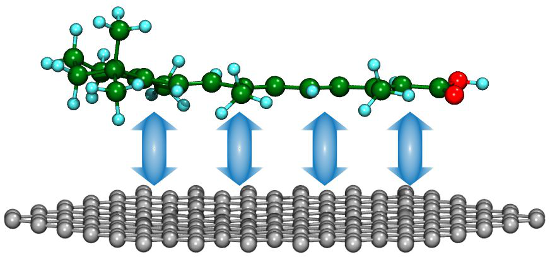
- ) from 0.2 mM and 2 mM tetrahydrofuran solution on a given substrate (monolayer graphene up to graphite microplates prepared via mechanical exfoliation of graphite flakes) [16]. According to recent literature, the expression “graphite microplate” is the accurate term to describe a flake with tens of




Facile synthesis of a ZnO–BiOI p–n nano-heterojunction with excellent visible-light photocatalytic activity
Beilstein J. Nanotechnol. 2018, 9, 789–800, doi:10.3762/bjnano.9.72
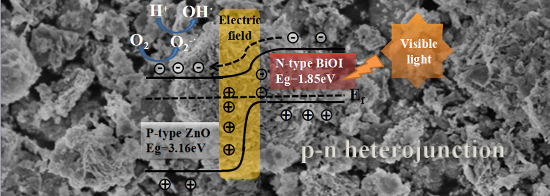
- size of BiOI decreases with increasing ZnO, which indicates that the existence of ZnO may impede the crystallization and lead to the exfoliation of BiOI [33]. Y. Tong [36] also reported the broadening and shifting of the (102) diffraction peak of ZnO/BiOI composite samples, which is never mentioned in


Perovskite-structured CaTiO3 coupled with g-C3N4 as a heterojunction photocatalyst for organic pollutant degradation
Beilstein J. Nanotechnol. 2018, 9, 671–685, doi:10.3762/bjnano.9.62
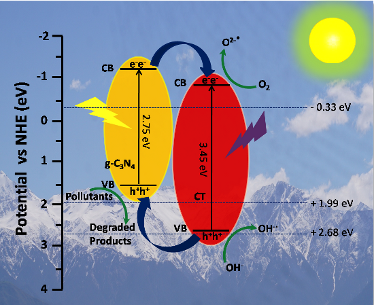
- CT flakes, the BET surface area of the resulting CTCN composite was enhanced to 50.7 m2g−1, which is larger in comparison to that of bare samples. This enhancement could be due to the exfoliation of g-C3N4 nanosheets and CT nanoflakes due to the ultrasonication process adopted in the synthesis of the


Sensing behavior of flower-shaped MoS2 nanoflakes: case study with methanol and xylene
Beilstein J. Nanotechnol. 2018, 9, 608–615, doi:10.3762/bjnano.9.57
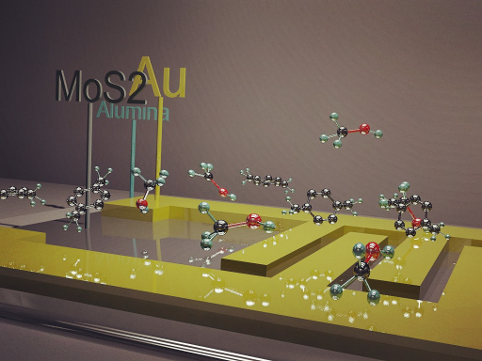
- methods have been applied to synthesize single or few-layered MoS2, including but not limited to mechanical cleavage, chemical exfoliation, hydrothermal synthesis and chemical vapor deposition [16][17][18][19][20][21][22][23]. The hydrothermal process is a scalable method to synthesize MoS2 nanosheets and


Blister formation during graphite surface oxidation by Hummers’ method
Beilstein J. Nanotechnol. 2018, 9, 407–414, doi:10.3762/bjnano.9.40
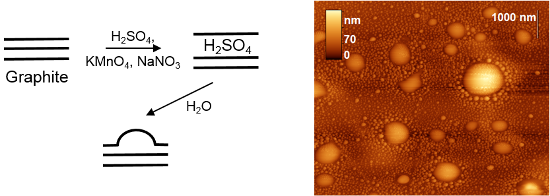
- hydrolysis [12]. The change of the shape of the 2D-peak at ≈2700 cm−1 (specifically, an increase in the intensity of the low-frequency part) may be explained by graphene exfoliation from the surface of HAPG [5][13][14]. Microscopic characterization of the surface changes Microstructure of the HAPG surface


Design of photonic microcavities in hexagonal boron nitride
Beilstein J. Nanotechnol. 2018, 9, 102–108, doi:10.3762/bjnano.9.12
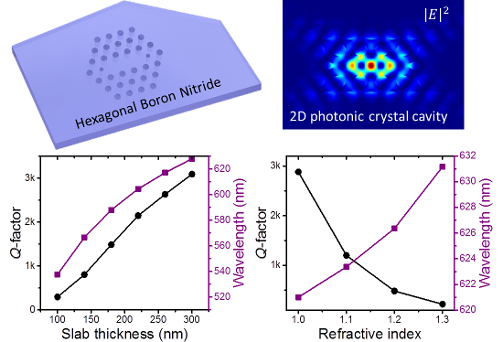
- for in our study by including both ordinary (nx = ny = 1.72) and extraordinary (n = 1.84) indices in the 3D FDTD method models. Figure 1a shows the shape and the size of typical hBN flakes prepared by scotch-tape exfoliation [9]. The lateral flake size varies from a few micrometers to few tens of
- effect of the thickness of the 2D photonic crystal slab as is shown in Figure 2b. The simulated slab thickness is varied up to 300 nm since that is a realistic thickness of typical hBN flakes prepared by the scotch tape exfoliation method. Thicker slabs exhibit stronger light confinement, which results


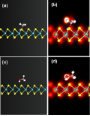
Ab initio study of adsorption and diffusion of lithium on transition metal dichalcogenide monolayers
Beilstein J. Nanotechnol. 2017, 8, 2711–2718, doi:10.3762/bjnano.8.270
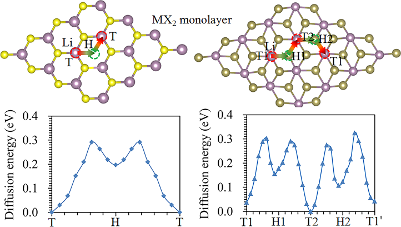
- for LIBs [2][3][4][5][6][7][8]. Two-dimensional transition metal dichalcogenides, MX2 (where M and X correspond to transition metal and chalcogen atoms, respectively), have been synthesized using different strategies, such as exfoliation [9][10], physical vapour deposition [11] and chemical vapour


Amplified cross-linking efficiency of self-assembled monolayers through targeted dissociative electron attachment for the production of carbon nanomembranes
Beilstein J. Nanotechnol. 2017, 8, 2562–2571, doi:10.3762/bjnano.8.256
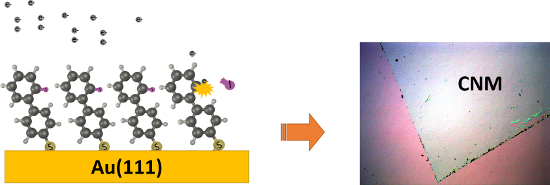
- Orion Plus HIM at 34.7 kV and with a blanker current of 0.3 pA at secondary-electron-detection mode. For a better resolution in the HIM, the samples were transferred to a Quantifoil R0.6/1 TEM grid with a mean hole diameter of 0.6 µm and an average hole–hole distance of 1 µm. For the exfoliation of the


Optical contrast and refractive index of natural van der Waals heterostructure nanosheets of franckeite
Beilstein J. Nanotechnol. 2017, 8, 2357–2362, doi:10.3762/bjnano.8.235
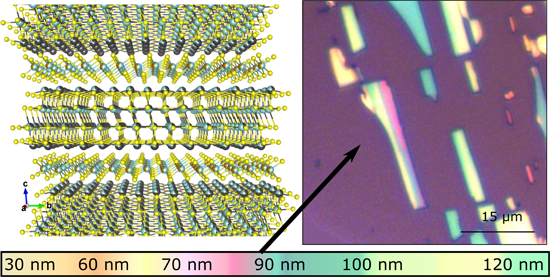
- visible spectrum through a fit of the acquired spectra to a model based on the Fresnel law. Keywords: complex refractive index; franckeite; optical contrast; optical identification; van der Waals heterostructure; Introduction Mechanical exfoliation is a very powerful technique to produce a large variety
- to identify ultrathin flakes and to determine their thickness. Optical microscopy based identification methods have proven to be very resourceful ways to find ultrathin flakes produced by mechanical exfoliation [2][3][4][5][6][7][8][9][10][11][12][13][14]. In fact, nowadays each time a new 2D
- adsorbates between the layers. Very recently Molina-Mendoza et al. demonstrated mechanical and liquid-phase exfoliation of franckeite down to 3–4 unit cells and they fabricated field-effect devices, near infrared photodetectors and PN junctions [15]. Also, Velický et al. isolated single unit cell nanosheets


A systematic study of the controlled generation of crystalline iron oxide nanoparticles on graphene using a chemical etching process
Beilstein J. Nanotechnol. 2017, 8, 2017–2025, doi:10.3762/bjnano.8.202
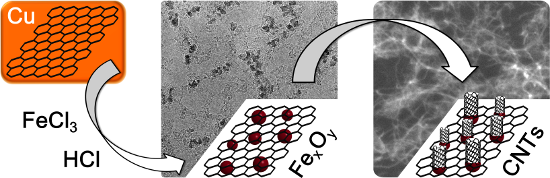
- ] and later demonstrated by Geim and Novoselov in 2004 using sophisticated and skillfull mechanical exfoliation of highly oriented pyrolytic graphite (HOPG) [5]. This seminal discovery enabled the research field of two-dimensional materials on a broader scope, leading to the dissemination of several top
- substrate [11][12][13]. A major challenge towards the usage of graphene is the isolation from this planar metal substrate [14][15][16]. Besides mechanical exfoliation [17][18] and electrochemical delamination [19][20][21], polymer-supported etching of the substrate is generally used to transfer CVD graphene


Bi-layer sandwich film for antibacterial catheters
Beilstein J. Nanotechnol. 2017, 8, 1982–2001, doi:10.3762/bjnano.8.199
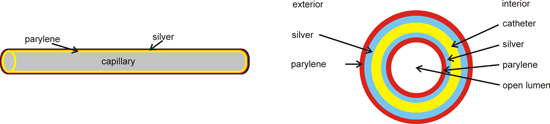
- be deposited electrolessly on a surface of an insulating material? and (2) How can the very different Young’s moduli be adapted in such a way that bending and torsion, which are inevitable during the implantation process or during usage, do not cause exfoliation of the silver film? The bendability of
- the polymer is larger by orders of magnitude than that of the coating. Therefore, a special design has to be applied to avoid cracks and exfoliation (Figure 5). Our designs are called “zebra stripe pattern” and “leopard skin”. In both cases, only fractions of the total area are coated. Here, we


Intercalation of Si between MoS2 layers
Beilstein J. Nanotechnol. 2017, 8, 1952–1960, doi:10.3762/bjnano.8.196
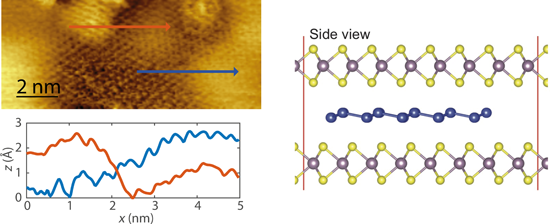
- exfoliation. Silicon was deposited on the MoS2 samples using a custom-built Si evaporator, which consists of a small piece of a Si wafer that can be heated resistively. The distance between substrate and evaporator is about 10 cm. The silicon was deposited at a rather low deposition rate of 0.8 nm·h−1. The