Search results
Search for "hierarchical" in Full Text gives 190 result(s) in Beilstein Journal of Nanotechnology.
Revealing the formation mechanism and band gap tuning of Sb2S3 nanoparticles
Beilstein J. Nanotechnol. 2021, 12, 1021–1033, doi:10.3762/bjnano.12.76
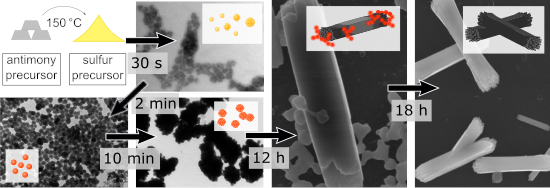
- to the expected stoichiometric ratio of Sb2S3. The reason for this possibly lies in the formation of an oxygen- or carbon-containing intermediate during the seeding process. Afterward, the type I nanoparticles aggregated into larger amorphous nanoparticles (type II) in a second hierarchical assembly
- the shape, but no individual type I nanoparticles could be identified anymore in TEM at this stage. Also, the type II nanoparticles appeared to have formed superordinate structures (type III). Such multistep hierarchical growth mechanisms have already been observed for different materials, such as
- 0 to the type I nanoparticles in addition to the one occurring from the type I to the type II nanoparticles. Thus, there was a double hierarchical assembly and subsequent merging process of the amorphous nanoparticles. It was not possible to isolate visible nanoparticles immediately after injection


Progress and innovation of nanostructured sulfur cathodes and metal-free anodes for room-temperature Na–S batteries
Beilstein J. Nanotechnol. 2021, 12, 995–1020, doi:10.3762/bjnano.12.75
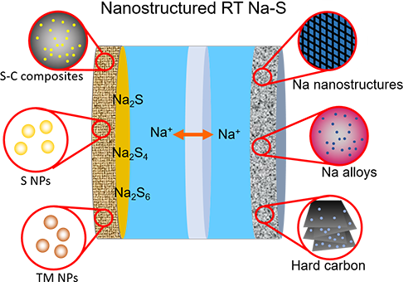
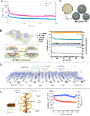
- significantly improves the cycling stability since the shuttle effect is minimized. For instance, a capacity of 300 mAh·g−1 after 1500 cycles at 1C and a Coulombic efficiency of 98% can be achieved (Figure 3A) [29]. Furthermore, hierarchical porous carbon structures have also shown promising performance as




Physical constraints lead to parallel evolution of micro- and nanostructures of animal adhesive pads: a review
Beilstein J. Nanotechnol. 2021, 12, 725–743, doi:10.3762/bjnano.12.57
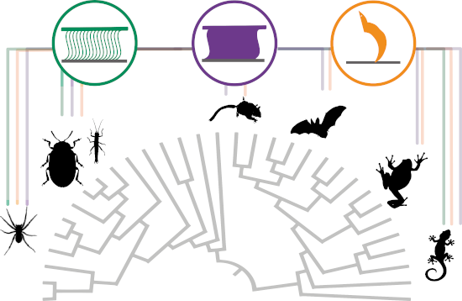
- convergent results. In the next subsections we discuss the following functional principles: (1) Adaptation to fractal substrate surfaces due to hierarchical organization and thin surface layer, (2) micro- and nanostructural surface pattern and contact splitting, (3) pad material (structure) that is soft
- under compression but strong under tension, (4) anisotropy in fibre orientation, and (5) presence of fluid in the contact area. Adaptation to fractal substrate surfaces due to hierarchical organization Hairs with high aspect ratios in the hairy systems and internal fibres/filaments of smooth systems


Solution combustion synthesis of a nanometer-scale Co3O4 anode material for Li-ion batteries
Beilstein J. Nanotechnol. 2021, 12, 424–431, doi:10.3762/bjnano.12.34
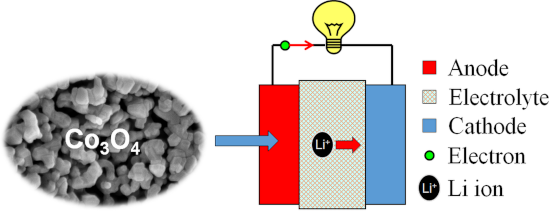
- been established that the electrochemical performance of Co3O4 materials is improved when they possess either small size or appropriate pore size distribution and morphologies, such as porous or hierarchical structures, or the combination of both these features [3][4]. So far, different syntheses have


Colloidal particle aggregation: mechanism of assembly studied via constructal theory modeling
Beilstein J. Nanotechnol. 2021, 12, 413–423, doi:10.3762/bjnano.12.33
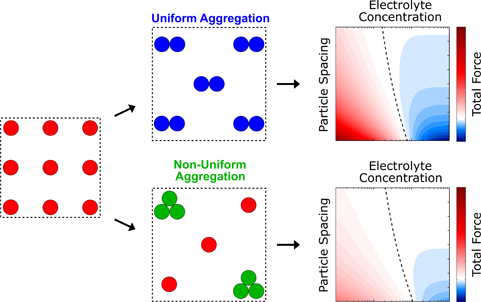
- that final equilibrium state. In concurrence with such constructal analyses, Bejan and Wagstaff showed that the natural coalescence of masses in space, with respect to attractive gravitational forces, will lead to a hierarchical distribution [11]. The internal tension of the system, which drives this


Nickel nanoparticle-decorated reduced graphene oxide/WO3 nanocomposite – a promising candidate for gas sensing
Beilstein J. Nanotechnol. 2021, 12, 343–353, doi:10.3762/bjnano.12.28
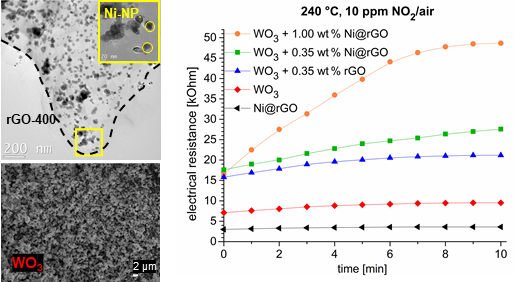
- composite create a hierarchical nanostructure and facilitate the diffusion of NO2 molecules, increasing the contacts and enhancing the chemisorption of the gas. rGO has large specific area and more active sites. Gas sensors of n-type semiconductors based on oxides exhibit resistance changes induced by


Intracranial recording in patients with aphasia using nanomaterial-based flexible electronics: promises and challenges
Beilstein J. Nanotechnol. 2021, 12, 330–342, doi:10.3762/bjnano.12.27
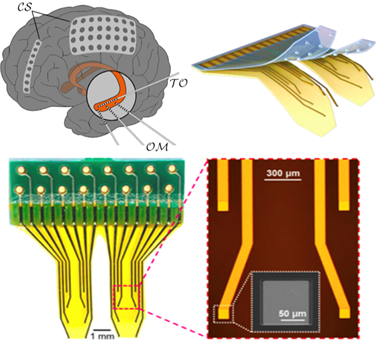
- but interconnected hierarchical networks [48]. iEEG to examine the neuronal representation of reading As mentioned previously, the ventral occipitotemporal (VOT) region is involved in visual word or orthographic processing [38][39], although whether this region plays specific roles in visual word


TiOx/Pt3Ti(111) surface-directed formation of electronically responsive supramolecular assemblies of tungsten oxide clusters
Beilstein J. Nanotechnol. 2021, 12, 203–212, doi:10.3762/bjnano.12.16
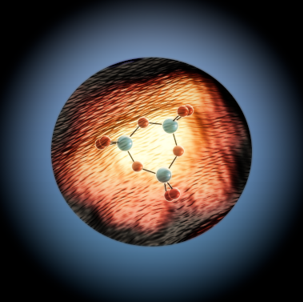
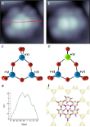
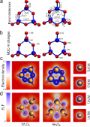
- titanium oxide layers grown on a Pt3Ti(111) surface. The given case study with the nanoscopic W3O9 clusters as the main components of tungsten trioxide vapor, which have been evidenced by mass spectrometric studies [9][10], showcases remarkable TiOx/Pt3Ti(111)-directed reactivity of W3O9 to hierarchical



Out-of-plane surface patterning by subsurface processing of polymer substrates with focused ion beams
Beilstein J. Nanotechnol. 2020, 11, 1693–1703, doi:10.3762/bjnano.11.151
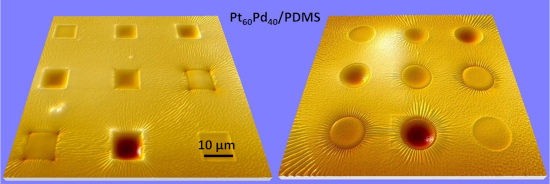
- . Thus, the subsurface processing can be exploited either as an editing tool or as one of the patterning steps in combination with different patterning processes for the fabrication of devices containing complex hierarchical structures composed of both nano- and micropatterns. Owing to the very small ion


Highly sensitive detection of estradiol by a SERS sensor based on TiO2 covered with gold nanoparticles
Beilstein J. Nanotechnol. 2020, 11, 1026–1035, doi:10.3762/bjnano.11.87
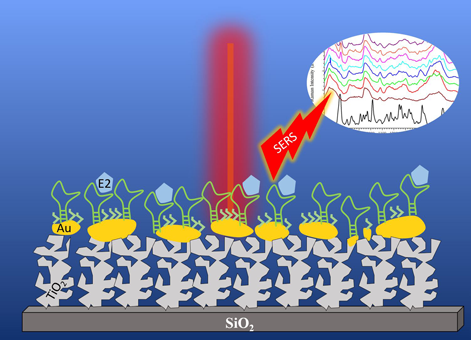
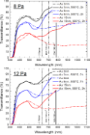
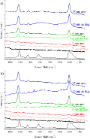
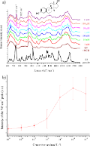
- of all the spectra. The spectra presented here are the average of four spectra taken at different locations of each sample. Results and Discussion Sample growth and structural characterization Morphology Nanostructured TiO2 films with hierarchical micrometer/nanometer-scale morphology and tuned



Identification of physicochemical properties that modulate nanoparticle aggregation in blood
Beilstein J. Nanotechnol. 2020, 11, 550–567, doi:10.3762/bjnano.11.44
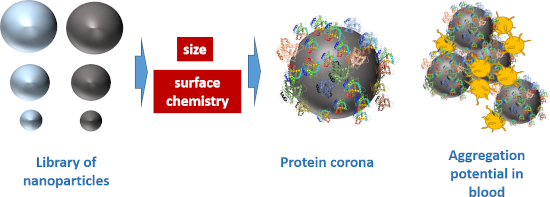
- generate the top abundance table, hierarchical clustering graph and numeric Venn diagrams. Preparation of blood and platelet-rich plasma (PRP) Access to human blood for the platelet aggregation study Blood collection for this study was approved by the Royal College of Surgeons in Ireland and Beaumont




Luminescent gold nanoclusters for bioimaging applications
Beilstein J. Nanotechnol. 2020, 11, 533–546, doi:10.3762/bjnano.11.42
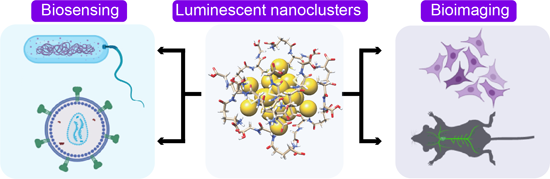
- similar to that of supramolecular complexes. Therefore, they are excellent building blocks to achieve the formation of hierarchical supracolloidal structures. However, there are substantial challenges as the interactions between the nanoclusters are close to the thermal fluctuation energy of the


Poly(1-vinylimidazole) polyplexes as novel therapeutic gene carriers for lung cancer therapy
Beilstein J. Nanotechnol. 2020, 11, 354–369, doi:10.3762/bjnano.11.26
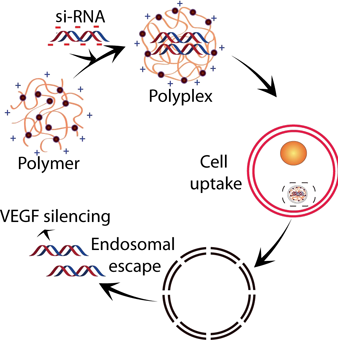
- compared with the control. Morphology of HUVECs cultured in serum-free medium after (A) 0 h, (B) 24 h, and (C) 48 h; (D) control (E, F) HUVECs after 4 h of treatment with PVI–siRNA complex (100 nM). (A): Hierarchical clustering obtained from the microarray analysis (49,372 genes). Each row represents


An advanced structural characterization of templated meso-macroporous carbon monoliths by small- and wide-angle scattering techniques
Beilstein J. Nanotechnol. 2020, 11, 310–322, doi:10.3762/bjnano.11.23
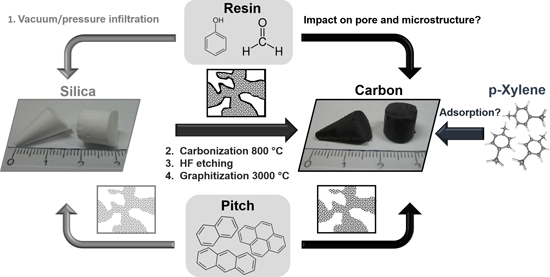
- create meso- or macropores into the carbon system templating approaches have become a routine strategy. One prominent attempt is hard-templating based on silica monoliths with a bimodal pore size distribution (meso- and macropores) and a hierarchical pore network [35][36][37][38]. The SiO2 solid is
- impregnated with a liquid or dissolved carbon precursor, and thus the carbonization of the precursors takes place within the pores. Template removal is typically performed with concentrated aqueous solutions of NaOH or HF. The hierarchical pore system and the bimodal distribution of pore sizes provide a high




High-performance asymmetric supercapacitor made of NiMoO4 nanorods@Co3O4 on a cellulose-based carbon aerogel
Beilstein J. Nanotechnol. 2020, 11, 240–251, doi:10.3762/bjnano.11.18
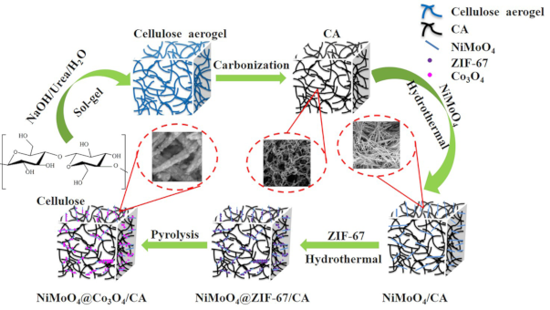
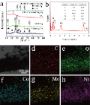
- new nanoporous material comprising NiMoO4 nanorods and Co3O4 nanoparticles derived from ZIF-67 supported by a cellulose-based carbon aerogel (CA) has been successfully synthesized using a two-step hydrothermal method. Due to its chemical composition, the large specific surface and the hierarchical
- 2000 cycles), indicating its wide applicability in energy storage. Finally, our results provide a general approach to the construction of CA and MOF-based composite materials with hierarchical porous structure for potential applications in supercapacitors. Keywords: carbon aerogel; hierarchically
- construction of an integrated hierarchical porous nanoarchitecture by combining two metal oxides is a brilliant way to greatly enhance the overall electrochemical performance owing to synergistic effects [20]. For example, Li et al. synthesized 3D hybrid Co3O4/NiMoO4 nanowire/nanosheet arrays on a carbon cloth




Advanced hybrid nanomaterials
Beilstein J. Nanotechnol. 2019, 10, 2563–2567, doi:10.3762/bjnano.10.247

- , polyaniline and hexaniobate: hierarchical architecture and high polaron formation” were explored for the promotion of synergistic effects expected at the nanoscale [23]. The resulting mixture between polyaniline chains with reduced graphene flakes and hexaniobate nanoscrolls may find application as coatings
Label-free highly sensitive probe detection with novel hierarchical SERS substrates fabricated by nanoindentation and chemical reaction methods
Beilstein J. Nanotechnol. 2019, 10, 2483–2496, doi:10.3762/bjnano.10.239
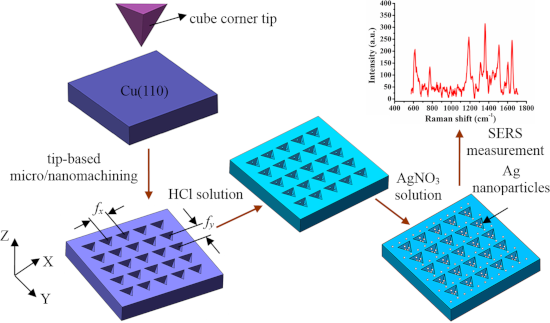
- surface-enhanced Raman scattering (SERS) substrates. Recently, in order to obtain a higher enhancement factor at a lower detection limit, hierarchical structures, including nanostructures and nanoparticles, appear to be viable SERS substrate candidates. Here we describe a novel method integrating the
- nanoindentation process and chemical redox reaction to machine a hierarchical SERS substrate. The micro/nanostructures are first formed on a Cu(110) plane and then Ag nanoparticles are generated on the structured copper surface. The effect of the indentation process parameters and the corrosion time in the AgNO3
- solution on the Raman intensities of the SERS substrate with hierarchical structures are experimentally studied. The intensity and distribution of the electric field of single and multiple Ag nanoparticles on the surface of a plane and with multiple micro/nanostructures are studied with COMSOL software


Ultrathin Ni1−xCoxS2 nanoflakes as high energy density electrode materials for asymmetric supercapacitors
Beilstein J. Nanotechnol. 2019, 10, 2207–2216, doi:10.3762/bjnano.10.213
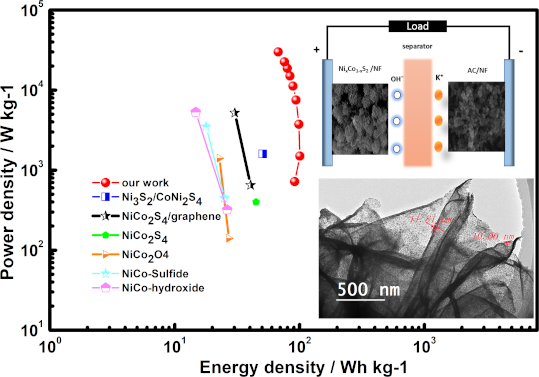
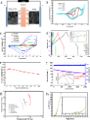
- preserved the hierarchical flower-like nanostructures of metal oxides. The material exhibited much higher specific capacitance and rate capability than the NiCo oxide counterparts. The results show that ternary nickel–cobalt sulfides indeed possess better intrinsic electrochemical properties than the
- the material can shorten the ion diffusion path lengths, overcoming the kinetics barrier of the faradaic redox reaction for most of the energy storage materials. The hierarchical nanostructure can provide abundant surface active sites for electrochemical reactions during the charge/discharge process
- method can also maintain the 3D hierarchical porous nanostructure of precursor materials. The as-prepared sulfide material exhibited improved electrochemical performance with a specific capacitance of 1066.8 F·g−1 (533.4 C·g−1) at 0.5 A·g−1 and a 63.4% capacitance retention at 20 A·g−1 and excellent


The importance of design in nanoarchitectonics: multifractality in MACE silicon nanowires
Beilstein J. Nanotechnol. 2019, 10, 2094–2102, doi:10.3762/bjnano.10.204
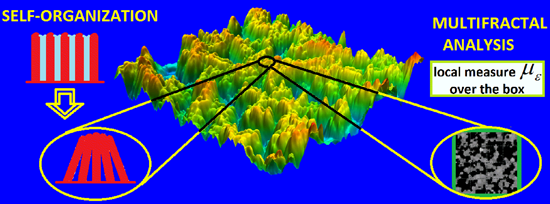
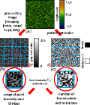
- surface tension of the fluid. Elastocapillary self-assembly of NWs is an extensively investigated versatile and scalable method to design complex and robust surface nanoarchitectures [18]. For tuning and selectivity of the design of NW assemblies other approaches should be considered [19]. In hierarchical




Synthesis of highly active ETS-10-based titanosilicate for heterogeneously catalyzed transesterification of triglycerides
Beilstein J. Nanotechnol. 2019, 10, 2039–2061, doi:10.3762/bjnano.10.200
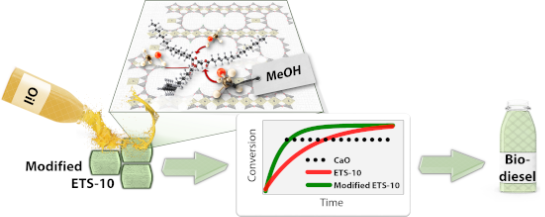
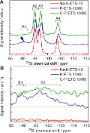
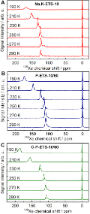
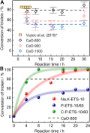
- prepare hierarchically structured ETS-10 crystals (i.e., containing interconnected micro- and mesopores). In general, the micropores of the hierarchical catalysts mostly contribute to the catalytic process, while the function of the larger mesopores is the promotion of the reactant supply and product
- macropores in titanosilicates The introduction of mesopores after the post-synthetic treatment into initially microporous material does not necessarily lead to the organization of micro- and mesopores in a hierarchical manner. A prominent example is the dealumination of the USY zeolite by steaming as
- (hierarchical) titanium silicalite-1. Despite the mesopores present in the treated sample, the conversion of methyl oleate decreased by ≈50%, which has been attributed to the decreased hydrophobicity after treatment. To address this effect directly, further studies including the measurement of water sorption








Review of advanced sensor devices employing nanoarchitectonics concepts
Beilstein J. Nanotechnol. 2019, 10, 2014–2030, doi:10.3762/bjnano.10.198
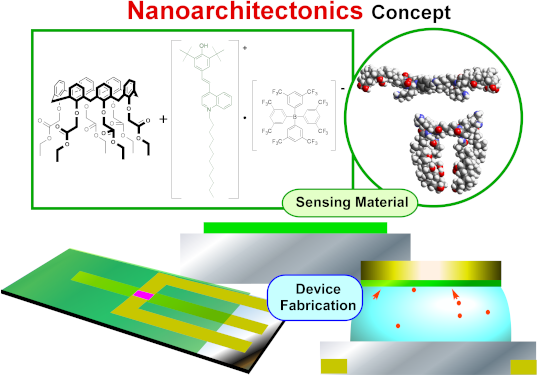
- ][71], biological investigation [72][73][74][75], and biomedical applications [76][77][78]. As compared with simple self-assembly processes, nanoarchitectonics is advantageous for architecting hierarchical structures and interfacing between materials and devices. In addition, the fabrication of sensor





Nanostructured and oriented metal–organic framework films enabling extreme surface wetting properties
Beilstein J. Nanotechnol. 2019, 10, 1994–2003, doi:10.3762/bjnano.10.196
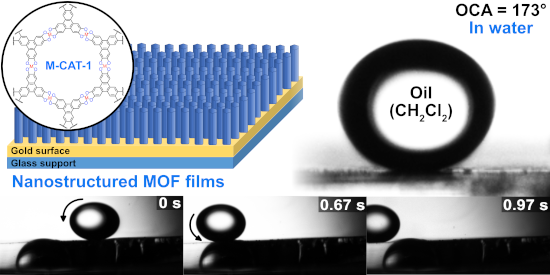
- -repellent designs and self-cleaning capabilities of their skin [10][11][12]. These intriguing superhydrophilic or superoleophobic surface characteristics are obtained by the combination of a precise chemical composition and hierarchical microstructuring of the surface [13][14][15][16]. Nowadays, modern


The influence of porosity on nanoparticle formation in hierarchical aluminophosphates
Beilstein J. Nanotechnol. 2019, 10, 1952–1957, doi:10.3762/bjnano.10.191
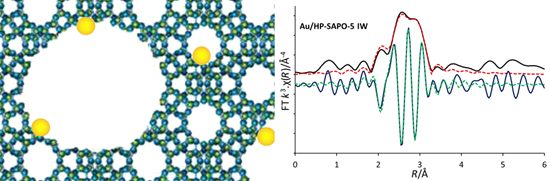
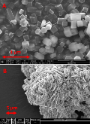
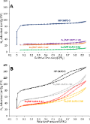
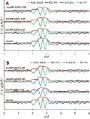
- deposited on a traditional microporous aluminophosphate, with an analogous hierarchical species, containing both micropores and mesopores, we explore the influence of this dual porosity on nanoparticle deposition. We show that the presence of mesopores has limited influence on the nanoparticle properties
- , but allows the system to maintain porosity after nanoparticle deposition. This will aid diffusion of reagents through the system, allowing continued access to the active sites in hierarchical systems, which offers significant potential in catalytic oxidation/reduction reactions. Keywords
- : aluminophosphate; catalysis; hierarchical catalysts; nanoparticles; porosity; Findings The controlled synthetic design of metallic nanoparticles has generated significant interest in recent decades due to their implementation in a range of fields, including medicine [1], optics [2] and catalysis [3]. Given the
Charge-transfer interactions between fullerenes and a mesoporous tetrathiafulvalene-based metal–organic framework
Beilstein J. Nanotechnol. 2019, 10, 1883–1893, doi:10.3762/bjnano.10.183
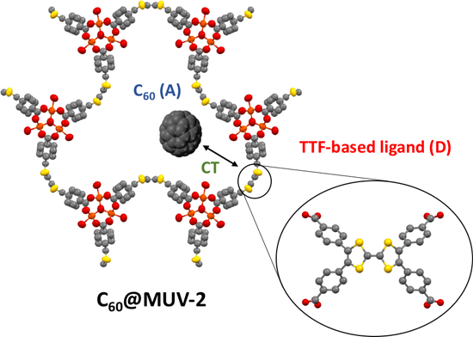
- have become an interesting new class of functional porous systems since they can incorporate additional electronic features to prepare new electrically conductive and redox-active MOFs [48][49][50][51]. Very recently, we have reported a hierarchical and highly stable TTF-based MOF, named MUV-2, which
- is based on the 6-connected trimeric cluster [Fe3(μ3O)(COO)6] as secondary building unit (SBU) and tetratopic tetrathiafulvalene-tetrabenzoate (TTFTB4−) ligands. This MOF shows a hierarchical structure with mesoporous channels of ≈3 nm and orthogonal microporous channels of ≈1 nm. In addition, it




Biocatalytic oligomerization-induced self-assembly of crystalline cellulose oligomers into nanoribbon networks assisted by organic solvents
Beilstein J. Nanotechnol. 2019, 10, 1778–1788, doi:10.3762/bjnano.10.173
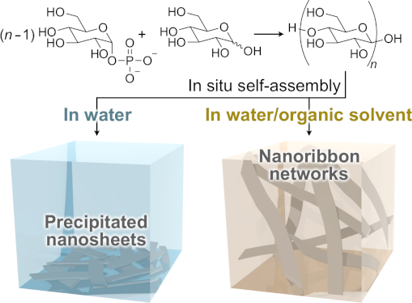
- nanoarchitectured crystalline oligosaccharide materials. However, the controlled self-assembly into organized hierarchical structures based on a simple method is still challenging. Herein, we demonstrate that the use of organic solvents as small-molecule additives allows for control of the oligomerization-induced
- self-assembly of cellulose oligomers into hierarchical nanoribbon network structures. In this study, we dealt with the cellodextrin phosphorylase-catalyzed oligomerization of phosphorylated glucose monomers from ᴅ-glucose primers, which produce precipitates of nanosheet-shaped crystals in aqueous