Search results
Search for "hysteresis" in Full Text gives 294 result(s) in Beilstein Journal of Nanotechnology. Showing first 200.
Controllable two- and three-state magnetization switching in single-layer epitaxial Pd1−xFex films and an epitaxial Pd0.92Fe0.08/Ag/Pd0.96Fe0.04 heterostructure
Beilstein J. Nanotechnol. 2022, 13, 334–343, doi:10.3762/bjnano.13.28
- throughout the core part of the sample supplied with the potential terminals. The magnetic hysteresis loops for the Pd0.92Fe0.08(20 nm)/Ag(20 nm)/Pd0.96Fe0.04(20 nm) heterostructure were obtained via vibrational sample magnetometry since the AMR measurement for this system is useless due to a short cut by
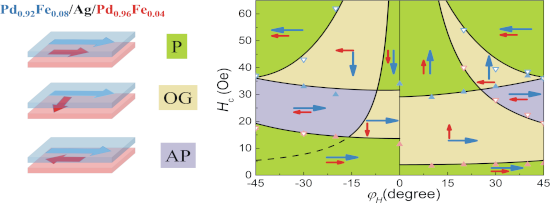
- shows magnetic hysteresis loops of the Pd0.92Fe0.08/Ag/Pd0.96Fe0.04 heterostructure for magnetic field angles of 40°, 30°, and −30° degrees relative to the [100] direction. For an angle of 40°, the minor loops show the switching sequence of P → OG → AP, for 30°, P → OG, and for −30°, P → AP. The
- analysis of the magnetic hysteresis loops at different angles of the applied magnetic field makes it possible to build a magnetic configuration diagram for this heterostructure (Figure 7a). As one can see, there are quite large regions of various stable P, OG, and AP states. An analysis of the angular


Investigation of a memory effect in a Au/(Ti–Cu)Ox-gradient thin film/TiAlV structure
Beilstein J. Nanotechnol. 2022, 13, 265–273, doi:10.3762/bjnano.13.21
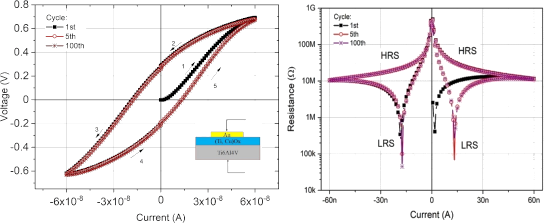
- coefficient during sputtering of the Cu target allowed us to obtain the designed gradient U-shape profile of the Cu concentration in the deposited thin film. Electrical measurements of the Au/(Ti–Cu)Ox/TiAlV structure showed the presence of nonpinched hysteresis loops in the voltage–current plane testifying a
- [2][21][39]. Some examples of resistive switching behavior were also found in structures based on nanowires [40] or nanotubes [25][40], where the resistive switching device is characterized by the presence of a pinched or nonpinched hysteresis loop in the I–V characteristics in the DC plane. Our
- distribution profile of copper are presented. Experimental electrical measurements performed using DC simulation showed wide nonpinched hysteresis loops, indicating bipolar resistive switching properties. Additionally, the so-called forming process of switching properties has been observed for the first cycle



Photothermal ablation of murine melanomas by Fe3O4 nanoparticle clusters
Beilstein J. Nanotechnol. 2022, 13, 255–264, doi:10.3762/bjnano.13.20
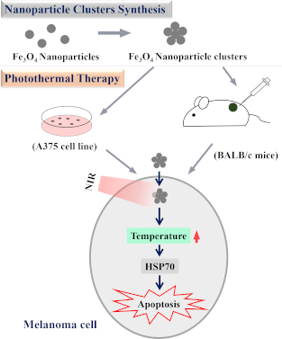
- ) Magnetic hysteresis curves of individual Fe3O4 nanoparticles as well as NPCs. The insert shows aggregation of NPCs dispersed in aqueous solution by a magnet. (d) DLS characterization of NPCs dispersed in cell culture medium. (e) DLS results of NPCs suspension after five heating/cooling cycles. Photothermal


Influence of magnetic domain walls on all-optical magnetic toggle switching in a ferrimagnetic GdFe film
Beilstein J. Nanotechnol. 2022, 13, 74–81, doi:10.3762/bjnano.13.5
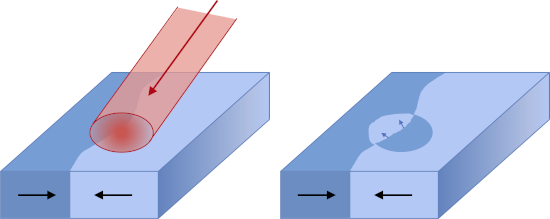
- (100 nm)/Si(100). Magnetic properties were characterized by superconducting quantum interference device vibrating sample magnetometry, which confirmed an out-of-plane easy axis of magnetization with rectangular hysteresis loops and a coercivity of about 5 mT at room temperature, see Supporting


Heating ability of elongated magnetic nanoparticles
Beilstein J. Nanotechnol. 2021, 12, 1404–1412, doi:10.3762/bjnano.12.104
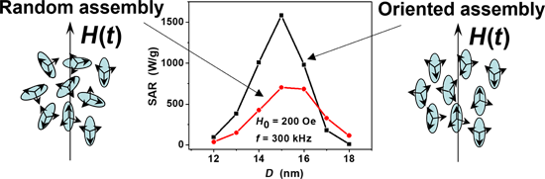
- .12.104 Abstract Low-frequency hysteresis loops and specific absorption rate (SAR) of various assemblies of elongated spheroidal magnetite nanoparticles have been calculated for a range of particle semiaxis ratios a/b = 1.0–3.0. The SAR of a dilute randomly oriented assembly of magnetite nanoparticles in
- perfect crystal structure and narrow size distribution, which makes them potential agents for magnetic hyperthermia [27][42]. In this work, by using the stochastic Landau–Lifshitz equation [43][44][45][46], we calculate low-frequency hysteresis loops and SAR of assemblies of elongated spheroidal magnetite
- hysteresis loops and SAR of assemblies of elongated magnetite nanoparticles is carried out by solving the stochastic Landau–Lifshitz equation, according to the same scheme that was used in our previous works [23][25]. Using this approach one can take into account both the thermal fluctuations of particle


Alteration of nanomechanical properties of pancreatic cancer cells through anticancer drug treatment revealed by atomic force microscopy
Beilstein J. Nanotechnol. 2021, 12, 1372–1379, doi:10.3762/bjnano.12.101
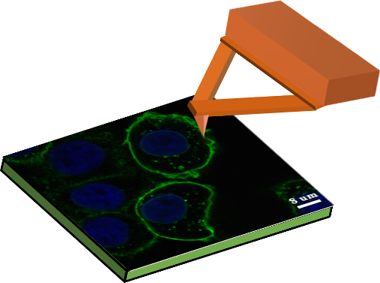
- mechanical energy during each trace–retrace cycle. The hysteresis in the force–distance curves between different types of cells indicates the energy dissipation. The dissipated energy can be calculated by the following formula, where W is the total amount of energy dissipation, and its value in the force
- indicates that pancreatic cancer softens pancreatic cells. Also, there is energy dissipation manifested as hysteresis in a cycle of force–distance curves in all four kinds of cells. The results (Supporting Information File 1, Table S2) show that the hysteresis in the force–displacement cycle of HPDE6-C7 is


Biocompatibility and cytotoxicity in vitro of surface-functionalized drug-loaded spinel ferrite nanoparticles
Beilstein J. Nanotechnol. 2021, 12, 1339–1364, doi:10.3762/bjnano.12.99
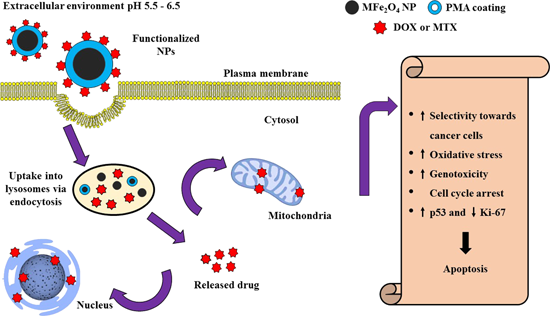
- physical property measurement system (PPMS) was used to evaluate magnetic properties of MFe2O4 NPs. Hysteresis loops were measured at room temperature upon an applied field of 2.0 T. The samples clearly showed ferromagnetic behavior with different saturation magnetization Ms (emu/g) and coercivity Hc (Oe





Two dynamic modes to streamline challenging atomic force microscopy measurements
Beilstein J. Nanotechnol. 2021, 12, 1226–1236, doi:10.3762/bjnano.12.90
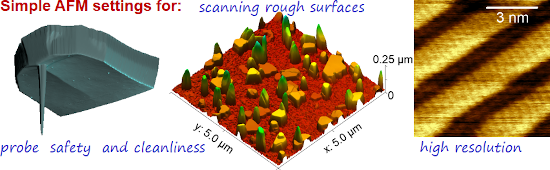
- from one regime to another is experimentally observed in the form of a sharp change in the phase of forced oscillations (Figure 1d). Hysteresis is often observed on the approach–retraction curve; switching of regimes occurs at different amplitudes depending on whether the probe approaches or retracts


In situ transport characterization of magnetic states in Nb/Co superconductor/ferromagnet heterostructures
Beilstein J. Nanotechnol. 2021, 12, 913–923, doi:10.3762/bjnano.12.68
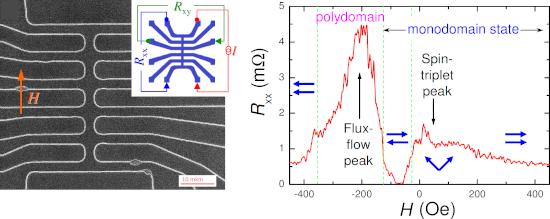
- by SQUID magnetometry in a field parallel to the film in the normal state at T > Tc. A significant hysteresis of M(H) reveals the in-plane anisotropy of Co films (albeit with a small coercive field, HC ≈ 30 Oe), consistent with earlier studies [44][45][46][47]. Figure 1c shows a numerical simulation
- out on the way back to the saturated state. The experiment is repeated with gradually varying Hr. Recently, it has been shown that FORC can be used for the analysis of magnetic states in S/F MLs [34]. Essentially, we have to search for the appearance of different types of hysteresis in the FORC
- response, which indicates switching into some specific metastable magnetic states. There are two mechanisms for the appearance of hysteresis in the MLs [34][37]. The major hysteresis is associated with switching in and out from the magnetostatically stable AP state. Multiple smaller ones are associated


The role of convolutional neural networks in scanning probe microscopy: a review
Beilstein J. Nanotechnol. 2021, 12, 878–901, doi:10.3762/bjnano.12.66
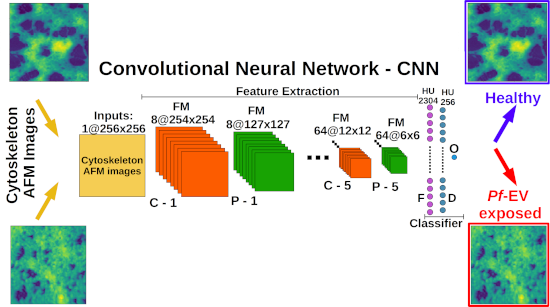
- , which has an inherently low signal due to damped response of the tip in contact with surface. In this case, the data is not surface mappings, but rather hysteresis loops in graphical format, which were “unfolded” by plotting the voltage response as function of the read voltage and writing voltage step







Boosting of photocatalytic hydrogen evolution via chlorine doping of polymeric carbon nitride
Beilstein J. Nanotechnol. 2021, 12, 473–484, doi:10.3762/bjnano.12.38
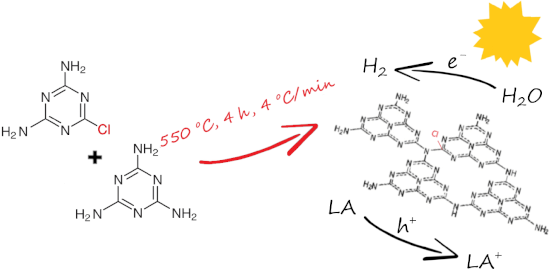
- 84.77% to 87.23%. The schematic representation of the as-synthesized material structure is shown in Figure 5. The porosity of polymeric carbon nitride and PCN doped with chlorine was tested by the N2 adsorption–desorption experiment. The typical IV isotherms with H3 hysteresis loops are observed in the
- samples, which is typical of mesoporous materials (Figure 6). The hysteresis loops, pore–size distribution curves, and average pore diameter for both samples are similar. The proportion of micropores is small and the samples contain mainly mesopores. The sample modified by chlorine presents a slightly


A stretchable triboelectric nanogenerator made of silver-coated glass microspheres for human motion energy harvesting and self-powered sensing applications
Beilstein J. Nanotechnol. 2021, 12, 402–412, doi:10.3762/bjnano.12.32
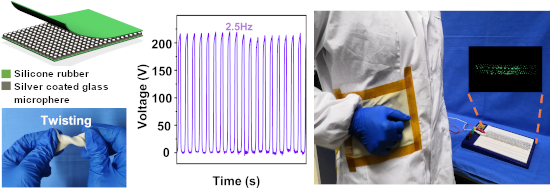
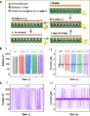
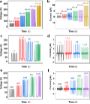
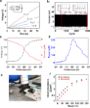
- increases linearly. When the S-TENG is further stretched, the slope of the curve falls again because the relative variation of the SCGM layer decreases. After releasing the strain, the resistance is recovered at 0.11 Ω/cm2 resulting from a hysteresis in the rearrangement of the SCGMs. Although the curves



The patterning toolbox FIB-o-mat: Exploiting the full potential of focused helium ions for nanofabrication
Beilstein J. Nanotechnol. 2021, 12, 304–318, doi:10.3762/bjnano.12.25
- domain pattern or in the hysteresis of the sample. Similar ion dose ranges are reported elsewhere for Co/Pt multilayer systems on SiO2 substrates [41]. Figure 5 shows images of the domain configuration in the multilayer irradiated with an ion dose of 30 ions/nm2. The gray-scale images encode purely


Free and partially encapsulated manganese ferrite nanoparticles in multiwall carbon nanotubes
Beilstein J. Nanotechnol. 2020, 11, 1891–1904, doi:10.3762/bjnano.11.170
- applied during work function measurements to separate the sample and analyzer spectral cutoffs. Hysteresis loops at 300, 77, and 4 K and zero-field cooling curves were recorded using a superconducting quantum interference device (SQUID). Mössbauer spectra were obtained for the powdered samples at 300 and
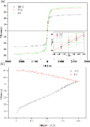
- particles, in addition to the sextets, is detected (Figure 1f). Hysteresis loops at 77 and 4 K display an increase in magnetization, compared to the hysteresis loop at 300 K, as a result of the decrease in thermal energy as the temperature decreases [20]. As the temperature decreases, the coercivity
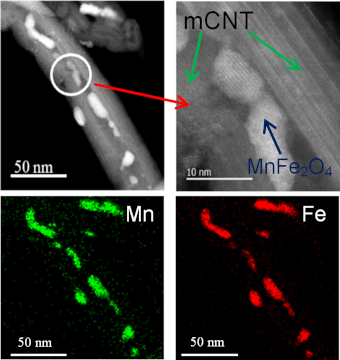
- ]. MnFe2O4/MWCNTs display ferrimagnetic behavior with very small hysteresis at room temperature (Figure 9). Hysteresis and magnetization increase with a decrease in temperature from 300 to 77 K and then to 4 K. The increase in magnetization with a decrease in temperature is a result of the decrease in




Unravelling the interfacial interaction in mesoporous SiO2@nickel phyllosilicate/TiO2 core–shell nanostructures for photocatalytic activity
Beilstein J. Nanotechnol. 2020, 11, 1834–1846, doi:10.3762/bjnano.11.165
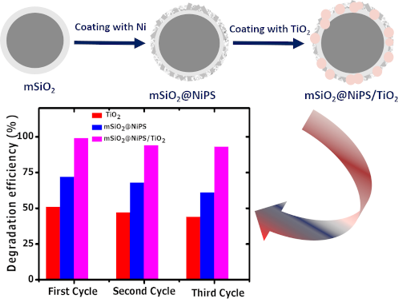
- type IV, demonstrating the presence of a mesoporous structure associated with capillary condensation [45][46]. The mSiO2 spheres exhibited a type-H2 hysteresis loop confined at 0.35 < P/P0 < 0.6, indicating the presence of randomly interconnected pore systems [47]. In contrast, the mSiO2@NiPS core
- –shell nanostructures showed a type-H1 hysteresis loop, implying the existence of agglomerates with cylindrical pores [45][48]. Similar to the mSiO2@NiPS composite, the mSiO2@NiPS/TiO2 exhibited a type-IV isotherm with a type-H1 hysteresis loop, illustrating the presence of mesopores with randomly


Selective detection of complex gas mixtures using point contacts: concept, method and tools
Beilstein J. Nanotechnol. 2020, 11, 1631–1643, doi:10.3762/bjnano.11.146
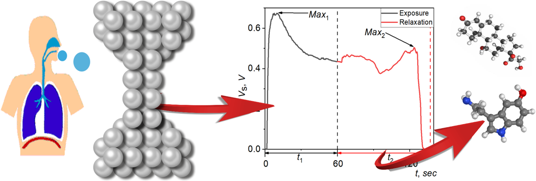
- –desorption processes on the active surface of the sensor are eventually reversible and are characterized by a significant hysteresis. This complex nature of the response unfolds broad prospects for identifying the specific metabolism of each patient. Therefore, using the sensor in medical diagnostics is an


![[Graphic 4]](/bjnano/content/inline/2190-4286-11-146-i8.svg?max-width=637&scale=1.18182) in th...
in th...

![[Graphic 7]](/bjnano/content/inline/2190-4286-11-146-i11.svg?max-width=637&scale=1.18182) in the...
in the...
Detecting stable adsorbates of (1S)-camphor on Cu(111) with Bayesian optimization
Beilstein J. Nanotechnol. 2020, 11, 1577–1589, doi:10.3762/bjnano.11.140
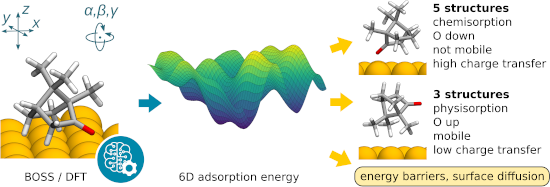
- been applied in detecting molecular conformers [25] and adsorbate structures [26][27], in identifying stable molecular compounds [28], and in discovering materials with low thermal hysteresis [29] or thermal conductivity [30]. Typically, previous studies have employed customized material-specific


On the frequency dependence of viscoelastic material characterization with intermittent-contact dynamic atomic force microscopy: avoiding mischaracterization across large frequency ranges
Beilstein J. Nanotechnol. 2020, 11, 1409–1418, doi:10.3762/bjnano.11.125
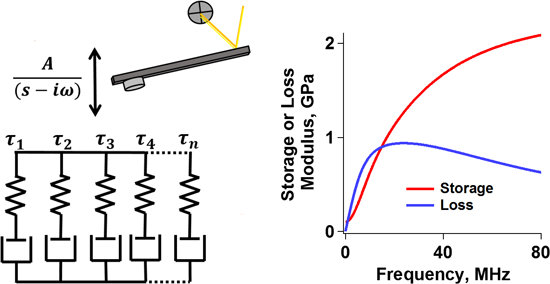
- considering situations where permanent and abrupt structural changes take place, such as those observed in plastic processes. Elastic materials are those for which the force–distance curve does not exhibit hysteresis, such that the work done by the probe on the material during the approach portion of the
- curve is recovered by the probe upon retraction, with the probe–sample forces being independent of the rate of deformation (in the ideal case) [15][16]. In contrast, during the characterization of viscoelastic materials, hysteresis is observed in the force–distance curve, as the material yields and does
- approximately doubles between 70 and 350 kHz, while a calculation with Equation 4 shows that its loss modulus increases by a factor of approximately 4.7 in the same frequency range. Additionally, material 1 now exhibits an obvious hysteresis loop, whereby the surface relaxes approximately 0.8 nm, leading to tip


Analysis of catalyst surface wetting: the early stage of epitaxial germanium nanowire growth
Beilstein J. Nanotechnol. 2020, 11, 1371–1380, doi:10.3762/bjnano.11.121
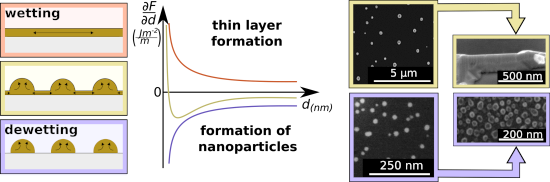
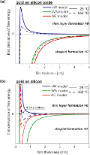
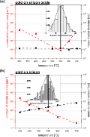
- surface has to be determined: However, this equation is only valid for equilibrium states on ideal surfaces. Defects on the substrate can lead to hysteresis effects that change the contact wetting angle [38]. Other surface effects, such as coarsening, ageing, or ripening can additionally lead to
- hysteresis effects, making the interpretation of the results even more complicated [39]. ii. The vW model: As mentioned before, the surface energy values are also connected with the polarizability of the system (i.e., with the Hamaker constants). In order to approximate the interfacial energy, it can be


Structure and electrochemical performance of electrospun-ordered porous carbon/graphene composite nanofibers
Beilstein J. Nanotechnol. 2020, 11, 1280–1290, doi:10.3762/bjnano.11.112
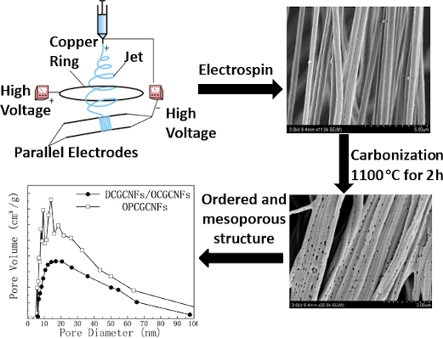
- their corresponding pore-size distribution (PSD) curves were obtained by using Barrett–Joyner–Halenda (BJH) analysis, as illustrated in Figure 4. The adsorption isotherms of DCGCNFs, OCGCNFs, and OPCGCNFs in Figure 4a showed a typical type IV behavior. There was a visible hysteresis loop between the
- adsorption and desorption nitrogen branches. In addition, the hysteresis loops in the P/P0 0.5–1.0 range demonstrated that the material had a significant mesoporous structure [38]. These porous structures are able to provide lower resistance channels and shorter transfer paths for ions in the electrolyte
- . This is due to the fact that large mesoporous holes are more suitable for rapid ion diffusion at a high-load current density. This way, the specific surface area generated by these pores is effectively utilized [39]. At relatively high pressure values (P/P0 > 0.5), there was an evident hysteresis loop


An atomic force microscope integrated with a helium ion microscope for correlative nanoscale characterization
Beilstein J. Nanotechnol. 2020, 11, 1272–1279, doi:10.3762/bjnano.11.111

- significant oscillations were seen. AFM images were processed in the software Gwyddion [54]. Pixels were squared to account for X–Y pixel size mismatch when necessary, the background was flattened and a conservative de-noising filter was applied. Finally, hysteresis correction was performed in MATLAB using


Proximity effect in [Nb(1.5 nm)/Fe(x)]10/Nb(50 nm) superconductor/ferromagnet heterostructures
Beilstein J. Nanotechnol. 2020, 11, 1254–1263, doi:10.3762/bjnano.11.109
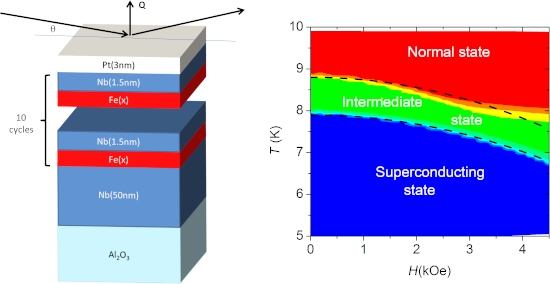
- pattern with coexisting Nb(100) and Nb(110) phases (Figure 3b). Magnetic properties SQUID measurements Figure 4a shows hysteresis loops measured on sample s3 at T = 300 K and T = 13 K. At room temperature the sample saturates to a magnetic moment msat = 12 μemu above a saturation field of only Hsat = 50
- and (b) sample s6. Dashed tilted lines show the direction of specular reflection. The color bars show the logarithmic intensity scale. SQUID data of the s3 sample. (a) Hysteresis loop measured at T = 300 K (red) and T = 13 K (black). (b) Temperature dependence of the magnetic moment measured at H


![[Graphic 13]](/bjnano/content/inline/2190-4286-11-109-i17.svg?max-width=637&scale=1.18182) ) substrate, (b) the Pt cap layer, and the Nb buffer layer grown at...
) substrate, (b) the Pt cap layer, and the Nb buffer layer grown at...


![[Graphic 16]](/bjnano/content/inline/2190-4286-11-109-i20.svg?max-width=637&scale=1.18182) (T) for the samples s4 (black) and s3 (red) in the vicinity of the superconducting transition m...
(T) for the samples s4 (black) and s3 (red) in the vicinity of the superconducting transition m...
Gas sorption porosimetry for the evaluation of hard carbons as anodes for Li- and Na-ion batteries
Beilstein J. Nanotechnol. 2020, 11, 1217–1229, doi:10.3762/bjnano.11.106
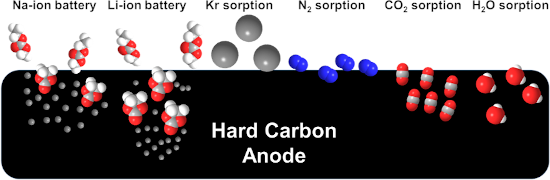
- carbon depends on the type of carbon. Both lithium and sodium are suggested to have two consecutive but very different charging mechanisms [17][19]. Characteristic charge–discharge curves of both SIBs and LIBs feature two regions, first, a sloping region having a hysteresis between charge and discharge


Applications of superparamagnetic iron oxide nanoparticles in drug and therapeutic delivery, and biotechnological advancements
Beilstein J. Nanotechnol. 2020, 11, 1092–1109, doi:10.3762/bjnano.11.94

- SPIONs smaller than 10 nm, by Néel and Brownian relaxation for SPIONs between 10 and 13 nm (mechanisms in superparamagnetic nanoparticles), and by hysteresis loss for larger SPIONs (mechanism of ferromagnetic nanoparticles) [139]. Hyperthermia potential and efficacy of SPIONs depend on their structure


Plant growth regulation by seed coating with films of alginate and auxin-intercalated layered double hydroxides
Beilstein J. Nanotechnol. 2020, 11, 1082–1091, doi:10.3762/bjnano.11.93
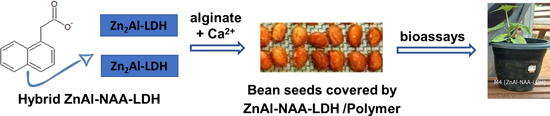
- 25.5 nm, respectively. The material shows a type-II isotherm, i.e., the graph is convex in relation to the relative pressure axis with no inflection point. Also, the material exhibits type-H1 hysteresis, a characteristic of porous materials with agglomerates, i.e., the particles are tightly aggregated