Search results
Search for "milling" in Full Text gives 137 result(s) in Beilstein Journal of Nanotechnology.
pH-Controlled fluorescence switching in water-dispersed polymer brushes grafted to modified boron nitride nanotubes for cellular imaging
Beilstein J. Nanotechnol. 2019, 10, 2428–2439, doi:10.3762/bjnano.10.233
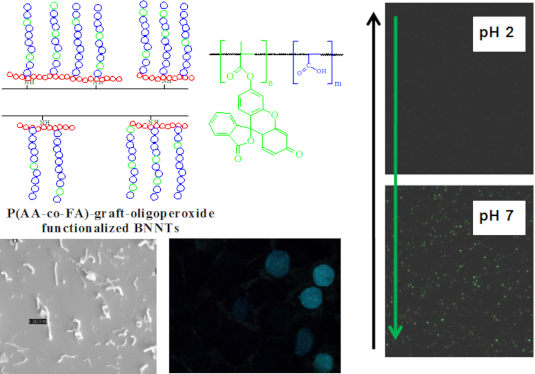
- irradiation [43], by mechanical milling [44] or with the iminoborane treatment [45]. The first step in covalent bonding of oligoperoxide to BNNT surfaces is to bind pyromellitic chloroanhydride moieties through available amino groups. The second step involves the grafting polymerization “from the surface” of



Preservation of rutin nanosuspensions without the use of preservatives
Beilstein J. Nanotechnol. 2019, 10, 1902–1913, doi:10.3762/bjnano.10.185
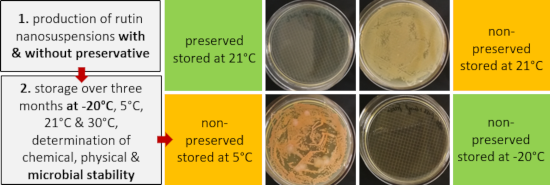
- are precipitation, wet milling, high-pressure homogenization or combinations of these methods [1][2][3][4]. Regardless of the process used, all these methods will yield nanosuspensions, i.e., nanocrystals dispersed in a liquid. As liquid formulations are not always a convenient dosage form for the


TiO2/GO-coated functional separator to suppress polysulfide migration in lithium–sulfur batteries
Beilstein J. Nanotechnol. 2019, 10, 1726–1736, doi:10.3762/bjnano.10.168
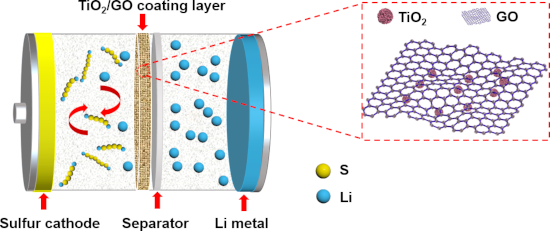
- TiO2/GO composites (90 wt %) and poly(vinylidene fluoride) (PVDF, 10 wt %) in ultrapure water and milling for 40 min. The as-prepared slurry was coated onto the separator and dried at 60 °C in a vacuum oven for 8 h. Then, the TiO2/GO-coated separator was sectioned in the form of circular discs with a


Nanoporous smartPearls for dermal application – Identification of optimal silica types and a scalable production process as prerequisites for marketed products
Beilstein J. Nanotechnol. 2019, 10, 1666–1678, doi:10.3762/bjnano.10.162
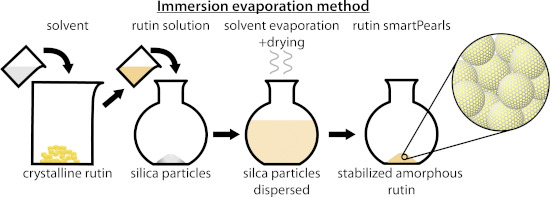
- scale by bead milling or high-pressure homogenization. Skin penetration studies showed that the smartPearls were actually superior to the nanocrystals [8][24][25]. However, the market introduction in final cosmetic products was blocked due to the lack of an industrial supplier of active agent-loaded
- smartPearls. To establish an industrial supply, an industrially feasible production method is required, which is the focus of this work. Silica particles can be loaded by co-milling [26][27], however, with this technique, a large portion of the active agents are not incorporated into the pores. Loading can be




Subsurface imaging of flexible circuits via contact resonance atomic force microscopy
Beilstein J. Nanotechnol. 2019, 10, 1636–1647, doi:10.3762/bjnano.10.159
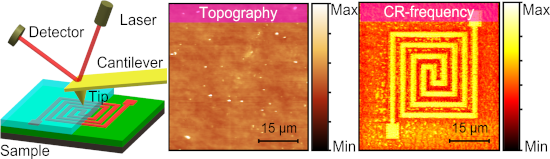
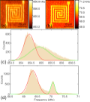
- 11 wt % PMMA in anisole solvent at 1500 rpm for 5 min, resulting in a thickness of approximately 3.5 µm. Then, a 300 nm thick Au film was sputtered on the PMMA substrate by using magnetron sputtering. The Au film was subsequently patterned by focused ion beam (FIB) milling (FEI, Helios NanoLab 650



Upcycling of polyurethane waste by mechanochemistry: synthesis of N-doped porous carbon materials for supercapacitor applications
Beilstein J. Nanotechnol. 2019, 10, 1618–1627, doi:10.3762/bjnano.10.157
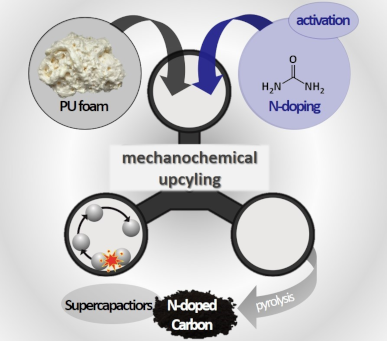
- inorganic chemistry [59][60][61][62]. Mechanochemical reactions are initiated and controlled by mechanical energy, for example provided by the collisions of milling balls in high-energy ball mills. The advantages of mechanochemistry are obvious. Syntheses can be conducted without solvents [63][64], and
- within short reaction times [59][65]. Also, the potential of mechanochemistry for upscaling has recently been discussed by Stolle and co-workers. An upscaling from the milligram scale to the multiple-gram scale has been shown to be feasible [66][67]. For the kilogram scale other milling techniques such
- optionally be added to further increase the nitrogen content. Pre-milling of the PU foam and the mechanochemical reaction of all components are carried out in a planetary ball mill. The received polymer mixture is carbonized to form a nitrogen-doped carbon material with a surface area of up to 2150 m2·g−1


Flexible freestanding MoS2-based composite paper for energy conversion and storage
Beilstein J. Nanotechnol. 2019, 10, 1488–1496, doi:10.3762/bjnano.10.147
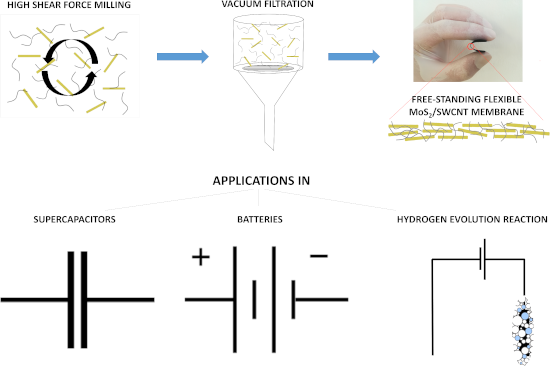
- flexible MoS2-based composite paper by high-energy shear force milling and simple vacuum filtration. This composite material combines high flexibility, mechanical strength and good chemical stability. Chronopotentiometric charge–discharge measurements were used to determine the capacitance of our paper
- the synthesis of a freestanding MoS2-based composite paper using a small addition of single-walled carbon nanotubes (SWCNTs) and shear-force milling in N-methyl-2-pyrrolidone (NMP). The paper was prepared simply by vacuum filtration of the slurry on top of a filter. The resulting material exhibits
- additional binders, conductive additives or a current collector. Results and Discussion Characterization of morphology, composition and mechanical properties The synthesized composite material based on MoS2 and SWCNTs was prepared by shear-force milling of MoS2 powder with SWCNTs. We then prepared a paper


Fabrication of phase masks from amorphous carbon thin films for electron-beam shaping
Beilstein J. Nanotechnol. 2019, 10, 1290–1302, doi:10.3762/bjnano.10.128
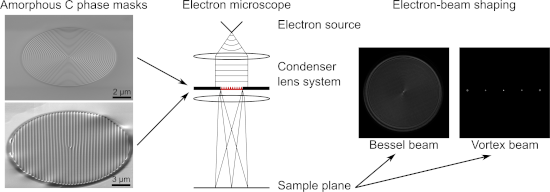
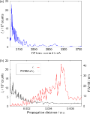
- , which induces unwanted scattering events. Results: Phase masks of conductive amorphous carbon (aC) were successfully fabricated with optical lithography and focused ion beam milling. Analysis by TEM shows the successful generation of Bessel and vortex beams. No charging or degradation of the aC phase
- structure without any (in-)elastic scattering events, i.e., the amplitude is only modified slightly. Experimentally, focused ion beam (FIB) milling or electron-beam lithography are used to engrave a well-defined thickness profile in an amorphous thin film thereby exploiting the direct proportionality
- different approaches that yielded reproducible results (Figure 2). For the first method an aC layer was evaporated on the back side of the wafer by PVD (Figure 2c). Afterwards, FIB milling with an intermediate current of 0.75 nA was used to remove Pt and SixNy in a circular area from the top side (Figure 2d



Glucose-derived carbon materials with tailored properties as electrocatalysts for the oxygen reduction reaction
Beilstein J. Nanotechnol. 2019, 10, 1089–1102, doi:10.3762/bjnano.10.109
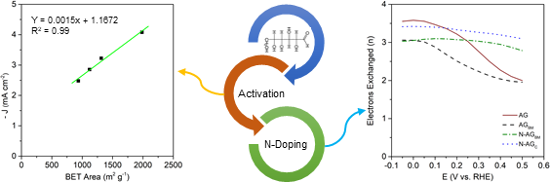
- were applied to modify the textural properties, while nitrogen functionalities were incorporated via different N-doping methodologies (ball milling and conventional methods) using melamine. A direct relationship between the microporosity of the activated carbons and the limiting current density was
- according to the doping method applied: ball milling appeared to originate preferentially quaternary and oxidized nitrogen groups, while the formation of pyridinic and pyrrolic groups was favoured by conventional doping. The onset potential was improved and the two-electron mechanism of the original
- contains nitrogen in its constitution [11][37], and by in situ methods in which nitrogen precursors are introduced during the hydrothermal carbonization [38]. An additional strategy that can be applied to biomass processing is ball milling, which has been proposed as a green, cheap and easy method to


Nanoscale optical and structural characterisation of silk
Beilstein J. Nanotechnol. 2019, 10, 922–929, doi:10.3762/bjnano.10.93
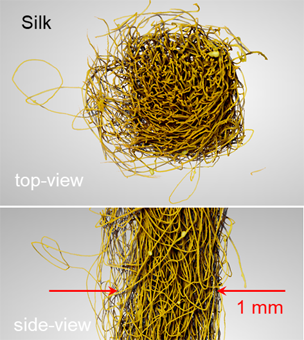
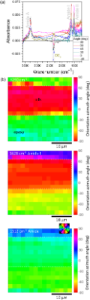
- modalities of sample preparation for nanoscale imaging include focused ion beam milling and microtome slicing. When the thickness of samples, especially soft biomaterials, is close to 100 nm the cutting tool might cause tear- and cut-induced strain below the surface. In turn, this can cause artifacts in the


Co-doped MnFe2O4 nanoparticles: magnetic anisotropy and interparticle interactions
Beilstein J. Nanotechnol. 2019, 10, 856–865, doi:10.3762/bjnano.10.86
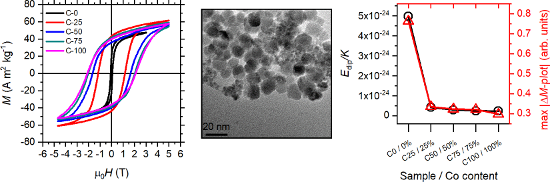
- , we investigate the structural and magnetic properties of ensembles of ferrite nanoparticles with formula Mn1−xCoxFe2O4, (0 ≤ x ≤ 1) prepared by a combined low-energy ball milling and self-combustion method. This simple and low cost synthesis approach (i.e., the synthesis is performed at a relatively
- (x = 0, 0.25, 0.5, 0.75, 1) were synthesized following a simple method based on solid-state ball milling and calcination of nitrate precursors and citric acid, discussed previously to prepare pure MnFe2O4 [22]. Manganese nitrate (Mn(NO3)2·4H2O, Merck, 99%), iron nitrate (Fe(NO3)3·9H2O, Merck, 99
- on the magnetic properties of Mn1−xCoxFe2O4 nanoparticles prepared by low-energy ball milling was investigated. Small effects are observed regarding the structure of the sample, while the average particle size and shape remain almost constant. All samples systematically show a lattice parameter


Enhancement in thermoelectric properties due to Ag nanoparticles incorporated in Bi2Te3 matrix
Beilstein J. Nanotechnol. 2019, 10, 634–643, doi:10.3762/bjnano.10.63
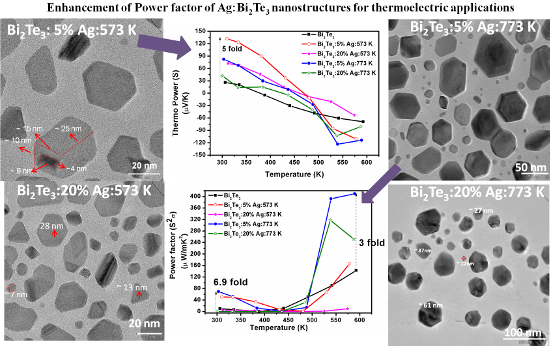
- method and the incorporation in Bi2Te3 synthesized by ball milling, which yielded a significant enhancement in power factor and ZT in Bi/Bi2Te3 due to the scattering of low-energy electrons by a barrier potential at the Bi–Bi2Te3 interface [15]. Improvement in TE properties has also been observed after



Sputtering of silicon nanopowders by an argon cluster ion beam
Beilstein J. Nanotechnol. 2019, 10, 135–143, doi:10.3762/bjnano.10.13
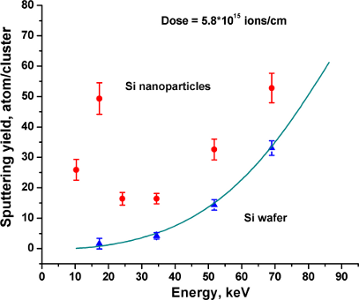
- and 17.3 keV irradiation (Figure 5b and 5c) the particles are no longer visible, and instead, large (larger than the nanoparticle size of 60 nm) morphological structures are presented. Therefore, it can be suggested that an effective milling of the top layer silicon particles occurs. The space between
- are not clear yet. At the energy of 17.3–34.5 keV the smoothing effect accompanied with the effective ion milling is appeared, which reduces the finite size effect and the sputtering rate. Further, at higher energy (up to 69 keV) the smoothing effect is retained. The dose dependence of the roughness





Layered calcium phenylphosphonate: a hybrid material for a new generation of nanofillers
Beilstein J. Nanotechnol. 2018, 9, 2906–2915, doi:10.3762/bjnano.9.269
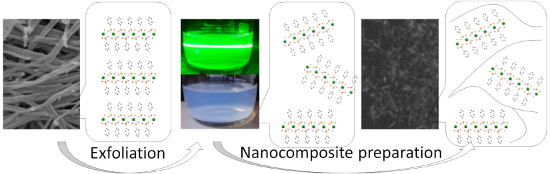
- well in the polymer matrix. The pristine calcium phenylphosphonate is able to form a stable and fine dispersion without visible agglomerates in the used CHS-EPOX 520 epoxy resin by a three roll milling, which is a standard polymer processing procedure in which high shear forces between rotating


Site-controlled formation of single Si nanocrystals in a buried SiO2 matrix using ion beam mixing
Beilstein J. Nanotechnol. 2018, 9, 2883–2892, doi:10.3762/bjnano.9.267
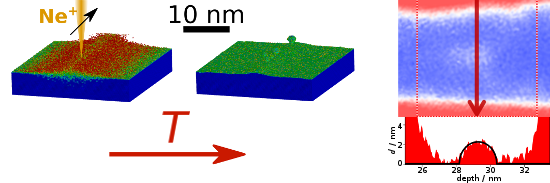
- , dimpling, and final Ar+ ion milling, as well as FIB (Zeiss NVision 40) milling including a lift-out process. EFTEM images were recorded with an FEI Titan 80-300 microscope using a 5 eV energy-selecting slit at an energy loss of 17 eV, which is the plasmon-loss peak of Si. This energy is preferable


Charged particle single nanometre manufacturing
Beilstein J. Nanotechnol. 2018, 9, 2855–2882, doi:10.3762/bjnano.9.266
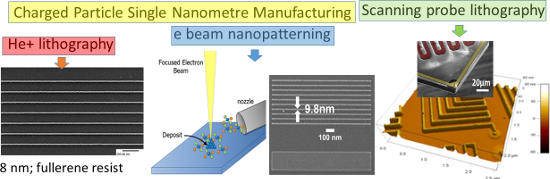
- , complementary to EBID in that it is top-down, with a significant advantage over ion milling due to the absence of sputtering. It therefore has wide applications, including use on samples that cannot withstand ion exposure, e.g., due to damage susceptibility. The first report of EBIE to our knowledge was in 1979


Low cost tips for tip-enhanced Raman spectroscopy fabricated by two-step electrochemical etching of 125 µm diameter gold wires
Beilstein J. Nanotechnol. 2018, 9, 2718–2729, doi:10.3762/bjnano.9.254
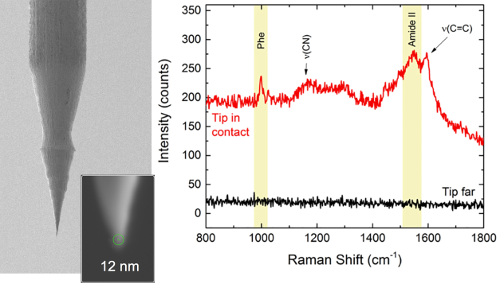
- deposition (EBID) and focused ion beam (FIB) milling [41][42][43] (see [30][44] for reviews). Fabrication methods capable of guaranteeing high reproducibility, cost-effectiveness and scalability to industrial production are, however, still not available at present. Metal vapor deposition on AFM tips is


Friction reduction through biologically inspired scale-like laser surface textures
Beilstein J. Nanotechnol. 2018, 9, 2561–2572, doi:10.3762/bjnano.9.238
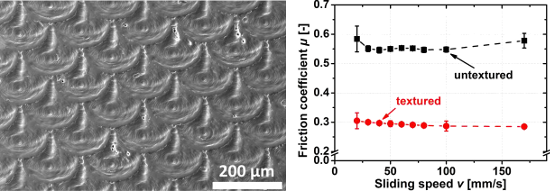
- the reason why laser surface texturing has replaced other surface texturing techniques over the last decades [10][15], with notable exceptions such as end milling [59]. Another aspect beckoning future research is the hardness of the scale-like structures created by laser texturing. In biological


Nanocellulose: Recent advances and its prospects in environmental remediation
Beilstein J. Nanotechnol. 2018, 9, 2479–2498, doi:10.3762/bjnano.9.232
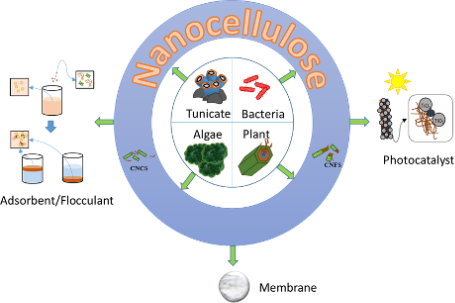
- produced via chemical pretreatment, mechanically disintegrated nanocellulose is clustered (agglomerated) with larger dimensions [66]. According to Park et al. [67], the chemical composition in wood-based CNF has an effect on the defibrillation efficiency in wet disk-milling, which improved defibrillation
- counter collision, ball milling, blending, cryocrushing, electrospinning, extrusion, grinding, homogenization, refining, steam explosion, ultrasonication, or a combination thereof. Chemical reaction Effective and energy-efficient nanocellulose preparation techniques are being pursued to sustain and meet


High-temperature magnetism and microstructure of a semiconducting ferromagnetic (GaSb)1−x(MnSb)x alloy
Beilstein J. Nanotechnol. 2018, 9, 2457–2465, doi:10.3762/bjnano.9.230
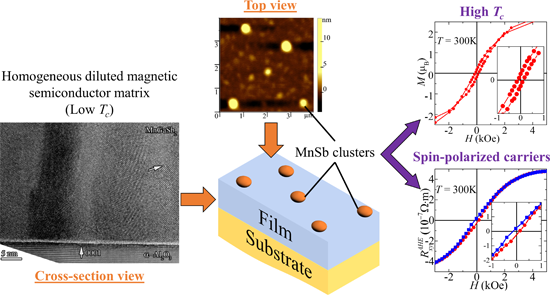
- samples demonstrated linear current–voltage characteristics down to sub-helium temperatures while sustaining high values of conductivity. The cross-section specimens for S/TEM studies were prepared by focus ion beam (FIB) milling in a Helios (FEI, US) SEM/FIB dual-beam system equipped with C and Pt gas
- injectors and a micromanipulator (Omniprobe, US). A 2 μm Pt layer was deposited on the surface of the sample prior to the cross-section preparation by FIB milling. Sections of approximately 8 × 5 μm2 area and 2 μm thickness were cut by 30 kV Ga+ ions, removed from the sample and then attached to the



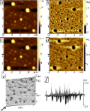
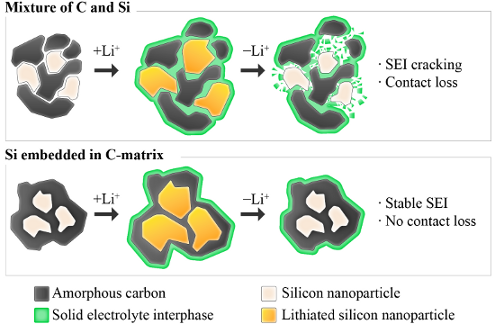
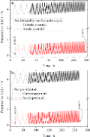
Hydrothermal-derived carbon as a stabilizing matrix for improved cycling performance of silicon-based anodes for lithium-ion full cells
Beilstein J. Nanotechnol. 2018, 9, 2381–2395, doi:10.3762/bjnano.9.223
- -sections were prepared by a focused ion beam (FIB) milling process using gallium ions extracted from a high brightness liquid metal ion source. Nitrogen adsorption experiments were performed on a 3Flex Physisorption device (Micromeritics GmbH) at the temperature of liquid nitrogen (−196 °C). Before the


Two-dimensional photonic crystals increasing vertical light emission from Si nanocrystal-rich thin layers
Beilstein J. Nanotechnol. 2018, 9, 2287–2296, doi:10.3762/bjnano.9.213
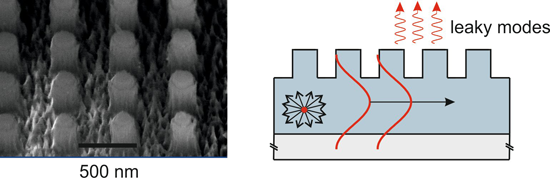
- with etching [14] or focused ion beam milling [15] are used to prepare photonic structures with well-defined dimensions on small areas. These approaches are therefore suitable for laboratory testings but not for practice. This issue was recently solved by developing large-scale production techniques

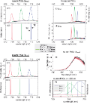


Dumbbell gold nanoparticle dimer antennas with advanced optical properties
Beilstein J. Nanotechnol. 2018, 9, 2188–2197, doi:10.3762/bjnano.9.205
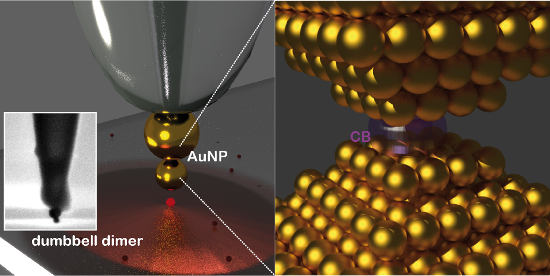
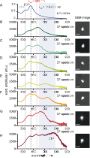
- approaches, which rely on, e.g., electron-beam lithography, ion milling and other techniques, are widely used, often tailoring gap structures explores common limitations in regard to their obtainable resolution and non-invasiveness. In contrast, common bottom-up approaches often rely on the specific




High-throughput synthesis of modified Fresnel zone plate arrays via ion beam lithography
Beilstein J. Nanotechnol. 2018, 9, 2049–2056, doi:10.3762/bjnano.9.194
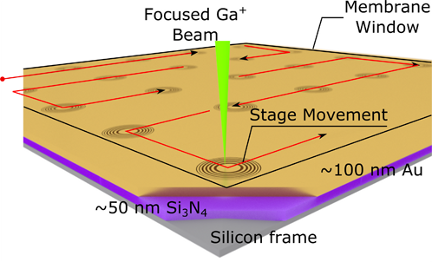
- writing/milling capability. IBL allows for rapid prototyping of high-resolution FZPs that can be used for high-resolution imaging at soft X-ray energies. Here, we discuss improvements in the process enabling us to write zones down to 15 nm in width, achieving an effective outermost zone width of 30 nm
- (SEM), focused ion beam (FIB) dual-beam instrument, installed with a lithography attachment (Please see the Experimental section for details). Several exposure, milling or patterning strategies can be adopted in an IBL process. A few such processing procedures relevant to present work are illustrated
- once and there will be no adjacent passes as opposed to MP-E or SP-E milling strategies. Therefore, the size of the feature to be written is defined by the ion beam spot size, the interaction volume of the ions within the material and the extent of the collateral damage of the beam tails and secondary


Defect formation in multiwalled carbon nanotubes under low-energy He and Ne ion irradiation
Beilstein J. Nanotechnol. 2018, 9, 1951–1963, doi:10.3762/bjnano.9.186
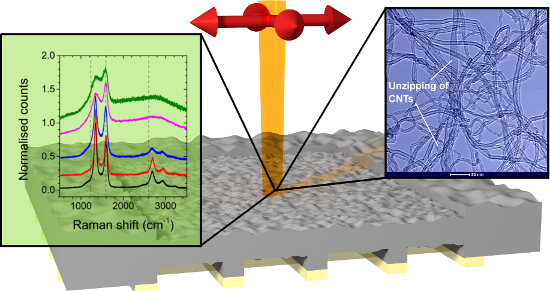
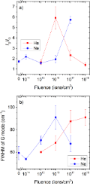
- total irradiation fluences of the MWCNT samples ranged from 1014 to 1018 ions/cm2. Beam position and primary ion fluence were controlled by the Fibics Nanopatterning and Visualisation Engine (NPVE) (http://www.fibics.com/). The FIBICS nano-patterning software allows for high-performance milling and ion