Search results
Search for "nanoclusters" in Full Text gives 97 result(s) in Beilstein Journal of Nanotechnology.
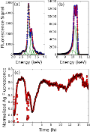
Enhancement of X-ray emission from nanocolloidal gold suspensions under double-pulse excitation
Beilstein J. Nanotechnol. 2018, 9, 2609–2617, doi:10.3762/bjnano.9.242
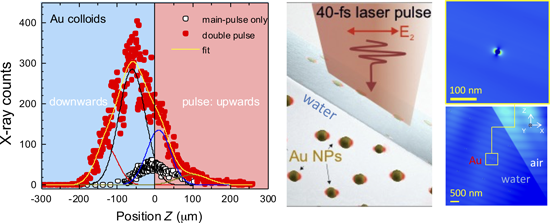
- -absorption efficiency and an enhanced generation of high-energy electrons from a highly ionized plasma with high electron temperature [10][11] under intense laser irradiation. For an efficient augmentation in X-ray intensity, femtosecond (fs)-laser excitation of metal nanoparticles and nanoclusters is of


Two-dimensional photonic crystals increasing vertical light emission from Si nanocrystal-rich thin layers
Beilstein J. Nanotechnol. 2018, 9, 2287–2296, doi:10.3762/bjnano.9.213
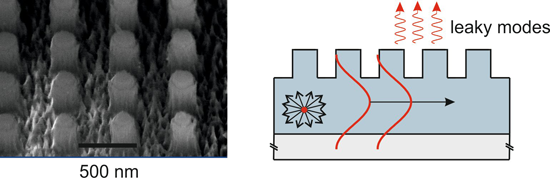
- have been performed alongside. Photonic crystal-based nanostructures were employed to enhance the electroluminescence of Si nanoclusters with a broad emission band in the near IR region [23] and also of the emission line of Er embedded in SiNCs at telecom wavelengths [24][25]. In 2013, we have shown



Recent highlights in nanoscale and mesoscale friction
Beilstein J. Nanotechnol. 2018, 9, 1995–2014, doi:10.3762/bjnano.9.190
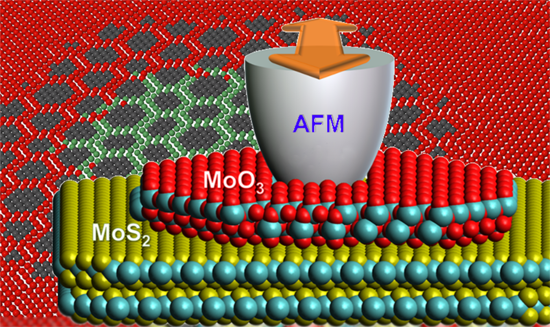
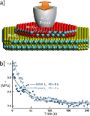
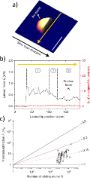
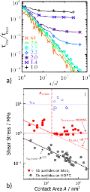
- -scale friction and mechanical control of specific single-asperity combinations, e.g., nanoclusters on layered materials, then scaling up to the meso/microscale of extended, occasionally lubricated, interfaces and driven trapped optical systems, and eventually up to the macroscale. Currently, this “hot


Green synthesis of fluorescent carbon dots from spices for in vitro imaging and tumour cell growth inhibition
Beilstein J. Nanotechnol. 2018, 9, 530–544, doi:10.3762/bjnano.9.51
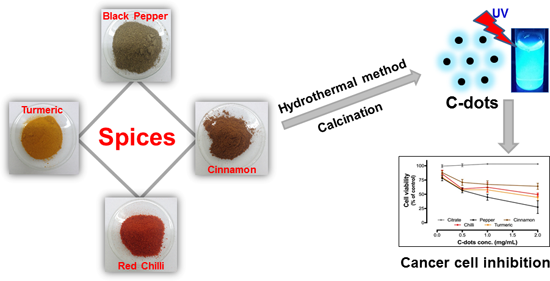
- months without any loss of their optical properties. Typically, C-dots exhibit an interesting excitation-dependent photoluminescence, entirely different from other luminescent materials such as semiconductor quantum dots, gold or silver nanoclusters. This luminescence is attributed to defect states of


Growth model and structure evolution of Ag layers deposited on Ge films
Beilstein J. Nanotechnol. 2018, 9, 66–76, doi:10.3762/bjnano.9.9
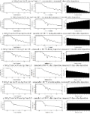
- measurements immediately after the deposition process as well as 10 days later. The results are presented in Figure 8. There are two characteristic bands in the Raman spectra. The band centered at 270 cm−1 most likely originates from the confined optical phonon in ultra-small germanium nanoclusters, while the
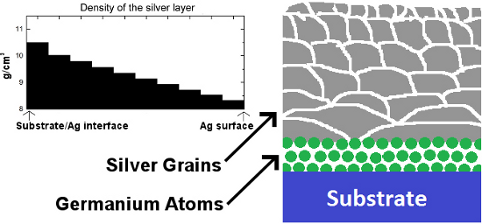
- grown on Ge wetting films before (left) and after (right) the segregation process occurs. Large Ag grains (gray) seeded with Ge nanoclusters (green) are present at the SiO2/Ge/Ag interface, and their size decreases with increasing distance from the substrate. Imaginary part of permittivity for 35 nm






CdSe nanorod/TiO2 nanoparticle heterojunctions with enhanced solar- and visible-light photocatalytic activity
Beilstein J. Nanotechnol. 2017, 8, 2741–2752, doi:10.3762/bjnano.8.273
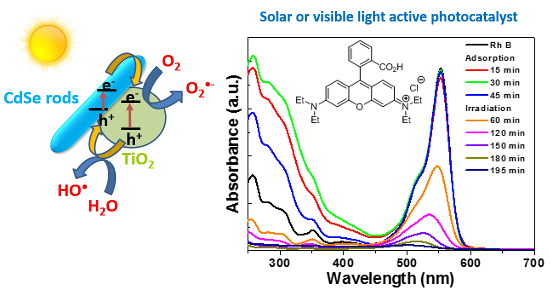
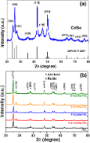
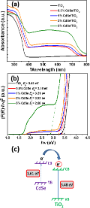
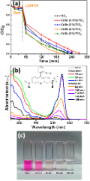
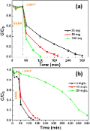
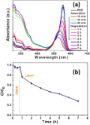
- eV) and its band energies are located at relatively low potential. Despite the large number of reports describing the sensitization of TiO2 (used in the form of spherical particles, films, wires, tubes, etc.) with CdSe nanocrystals (generally quantum dots or spherical nanoclusters) [9][10][11][12][13






The role of ligands in coinage-metal nanoparticles for electronics
Beilstein J. Nanotechnol. 2017, 8, 2625–2639, doi:10.3762/bjnano.8.263
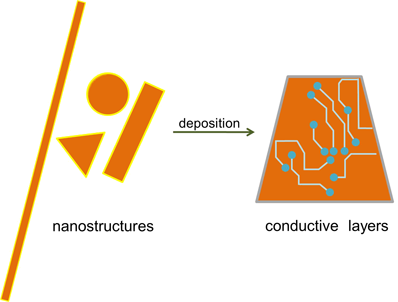
- ]. In electron hopping charge carriers are activated thermally and the probability of hopping depends on the distance of the nearest unoccupied electronic state in the conduction band [53][57]. Murray et al. showed that electron hopping conductivities in films of gold nanoclusters stabilized by arene


Evaluating the toxicity of TiO2-based nanoparticles to Chinese hamster ovary cells and Escherichia coli: a complementary experimental and computational approach
Beilstein J. Nanotechnol. 2017, 8, 2171–2180, doi:10.3762/bjnano.8.216
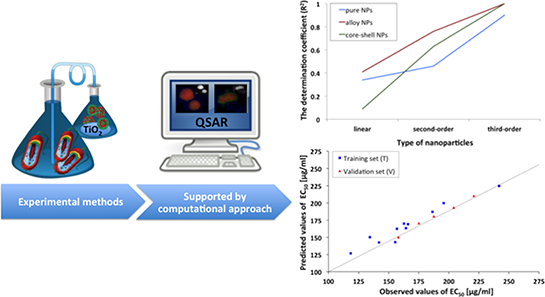
- (Fe/N-co-doped) TiO2 nanocomposite particles were detectably cytotoxic [22]. More complex nanostructures of TiO2 bilayer nanosheets doped with bismuth tungstate (Bi2WO6) nanoclusters demonstrated enhanced antimicrobial activity towards E. coli: the bacteria population continuously decreased with the


Bright fluorescent silica-nanoparticle probes for high-resolution STED and confocal microscopy
Beilstein J. Nanotechnol. 2017, 8, 1283–1296, doi:10.3762/bjnano.8.130
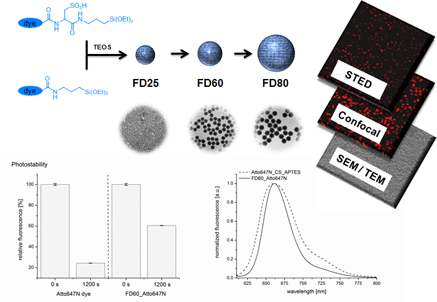
- low tendency to agglomerate, which makes them suitable for biological nanoparticle uptake experiments. Not only allows the presented synthesis method for the embedding of different kinds of fluorophores (proteins, quantum dots or metallic nanoclusters), but the method also provide the option to gain


Nanoantenna-assisted plasmonic enhancement of IR absorption of vibrational modes of organic molecules
Beilstein J. Nanotechnol. 2017, 8, 975–981, doi:10.3762/bjnano.8.99
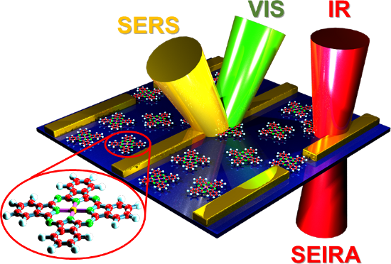
- can be explained by the resonant SERS effect, as the energy of the local surface plasmon resonance (LSPR) of nanoclusters is located in the red spectral region, which is in resonance with the excitation energy. In the case of nanoantennas, the energy of longitudinal LSPR modes polarized along the



Graphene functionalised by laser-ablated V2O5 for a highly sensitive NH3 sensor
Beilstein J. Nanotechnol. 2017, 8, 571–578, doi:10.3762/bjnano.8.61
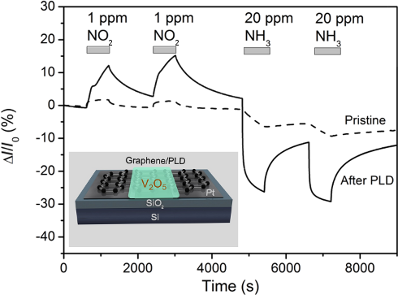
- chemical bonding in platinum–graphene systems were observed when Pt nanoclusters were chemically bonded to point defects of graphene sheets. Furthermore, the adsorption of an O2 molecule onto a platinum nanocluster which was chemically bound to graphene resulted in a large influence on the charge density


Formation and shape-control of hierarchical cobalt nanostructures using quaternary ammonium salts in aqueous media
Beilstein J. Nanotechnol. 2017, 8, 494–505, doi:10.3762/bjnano.8.53
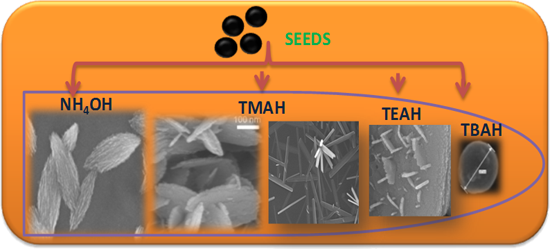
- and hence the regime is dominated by stochastic aggregation due to Brownian motion. The stochastic aggregation results in the formation of nanoclusters with larger size than at “zero time” possessing an increased magnetic moment. Figure 3d gives an impression of how the edge (thickness) and the
- to the adsorption of TMAH, resulting in a disc-like aggregation. The assembly of these intermediate nanoclusters happens through continuous rotation and interactions of the primary particles. The translation and rotation occur until the primary particles find a suitable atomic site with compatible
- . It is speculated that the growth and consolidation of these intermediate clusters happens due to minimization of magnetic anisotropic energy to achieve a stable crystal configuration. The nanoclusters observed in FEGSEM micrographs (Figure 3i) show the coexistence of small discs and larger nanoplates


Influence of hydrofluoric acid treatment on electroless deposition of Au clusters
Beilstein J. Nanotechnol. 2017, 8, 183–189, doi:10.3762/bjnano.8.19
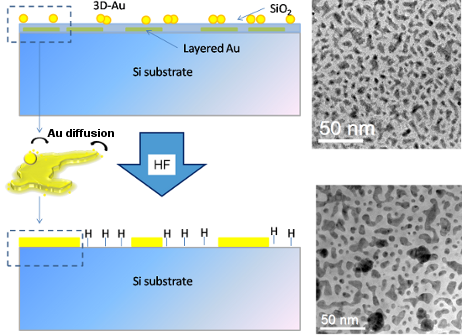
- excellent at scattering and absorbing visible light [6][7][8]. For these reasons, they have found an interesting application in the field of metal–semiconductor hybrid structures for solar energy conversion [9][10]. Among the different adopted methods to deposit Au nanoclusters on a substrate, electroless
- surface discontinuities. HF postdeposition treatment So far we have shown the influence of a DHF pretreatment on the subsequent Au deposition regarding the shape and morphology of the nanoclusters. We now consider what happens if the DHF treatment is performed after the gold deposition. There are many


Obtaining and doping of InAs-QD/GaAs(001) nanostructures by ion beam sputtering
Beilstein J. Nanotechnol. 2017, 8, 12–20, doi:10.3762/bjnano.8.2
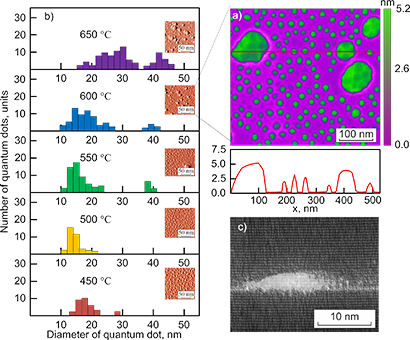
- [26] were studied. Above-mentioned publication [22] was the first experimental work in which we investigated the ion-beam crystallization of InAs quantum dots onto GaAs substrates. The growth conditions of the crystallization process were not optimized, so the produced InAs nanoclusters had planar


Straightforward and robust synthesis of monodisperse surface-functionalized gold nanoclusters
Beilstein J. Nanotechnol. 2016, 7, 1278–1283, doi:10.3762/bjnano.7.118
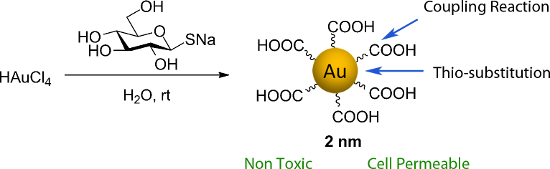
- , 14195 Berlin, Germany Helmholtz Centre Potsdam GFZ German Research Centre for Geosciences, Sec. 4.3, Telegrafenberg, 14473 Potsdam, Germany 10.3762/bjnano.7.118 Abstract Gold nanoclusters are small (1–3 nm) nanoparticles with a high surface area that are useful for biomedical studies and drug delivery
- . The synthesis of small, surface-functionalized gold nanoclusters is greatly dependent on the reaction conditions. Here, we describe a straightforward, efficient and robust room temperature one-pot synthesis of 2 nm gold nanoclusters using thioglucose as a reducing and stabilizing agent, which was
- discovered by serendipity. The resultant monodisperse gold nanoclusters are more stable than those generated using some other common methods. The carboxylic acid contained in the stabilizing agent on the cluster surface serves as anchor for nanocluster functionalization. Alternatively, the addition of thiols


Time-dependent growth of crystalline Au0-nanoparticles in cyanobacteria as self-reproducing bioreactors: 2. Anabaena cylindrica
Beilstein J. Nanotechnol. 2016, 7, 312–327, doi:10.3762/bjnano.7.30
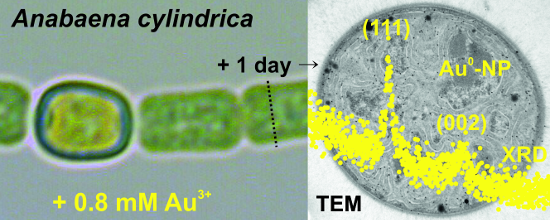
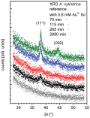
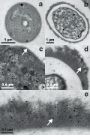
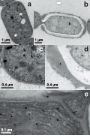
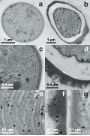
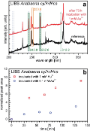
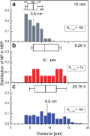
- nanocluster development [46][47][48] of various metals, e.g., palladium, gold and silver [46]. Although UV–vis spectroscopy based methods have been developed to determine the size of nanoparticles resp. nanoclusters in solution [47][48]. UV–vis spectroscopy was also tested for the type of system used here in



Case studies on the formation of chalcogenide self-assembled monolayers on surfaces and dissociative processes
Beilstein J. Nanotechnol. 2016, 7, 263–277, doi:10.3762/bjnano.7.24
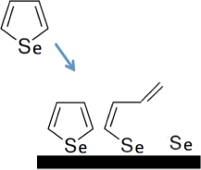
- these results, one sees that on Au (which is considered to be nonreactive), thiophene and its various derivatives undergo S–C bond scission. The catalytic activity and electron transfer processes for Au have been extensively investigated in recent years and are shown to be quite large on nanoclusters


Surface coating affects behavior of metallic nanoparticles in a biological environment
Beilstein J. Nanotechnol. 2016, 7, 246–262, doi:10.3762/bjnano.7.23
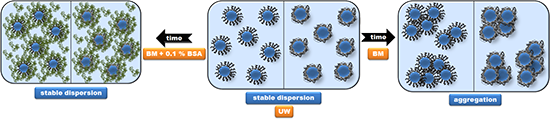
- ; protein interaction; silver; surface coating; Introduction Functional nanomaterials, including nanoparticles, nanocrystals, and nanoclusters, are promising tools for new medicinal applications, particularly for clinical use in disease diagnosis and treatment [1][2]. However, only a few nanomaterials are




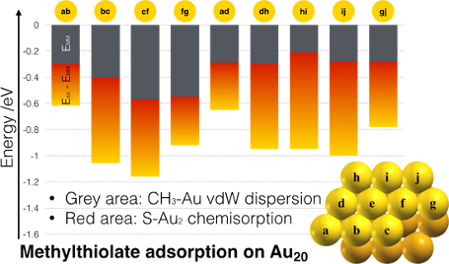
Surface-site reactivity in small-molecule adsorption: A theoretical study of thiol binding on multi-coordinated gold clusters
Beilstein J. Nanotechnol. 2016, 7, 53–61, doi:10.3762/bjnano.7.6
- effects on the catalytic oxidation on Pt and Au nanoclusters, seeking to elucidate the experimentally observed dependence of catalytic activity on nanoparticle size and shape. A recent experimental study by Mostafa et al. [49] convincingly argued that the catalytic activity of Pt nanoparticles for the


Two step formation of metal aggregates by surface X-ray radiolysis under Langmuir monolayers: 2D followed by 3D growth
Beilstein J. Nanotechnol. 2015, 6, 2406–2411, doi:10.3762/bjnano.6.247
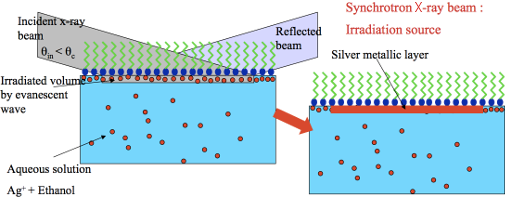
- , results in a second growth regime of silver nanocrystals. Here the formation of the oriented thin layer is followed by the appearance of a 3D powder of silver clusters. Keywords: GIXD; Langmuir monolayers; silver clusters; TXRF; X-ray radiolysis; Introduction Formation of metal nanoclusters and


Surface-enhanced Raman scattering by colloidal CdSe nanocrystal submonolayers fabricated by the Langmuir–Blodgett technique
Beilstein J. Nanotechnol. 2015, 6, 2388–2395, doi:10.3762/bjnano.6.245
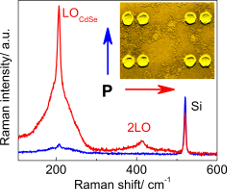
- 10.3762/bjnano.6.245 Abstract We present the results of an investigation of surface-enhanced Raman scattering (SERS) by optical phonons in colloidal CdSe nanocrystals (NCs) homogeneously deposited on both arrays of Au nanoclusters and Au dimers using the Langmuir–Blodgett technique. The coverage of the
- axis was 20. The SERS signal intensity was also investigated as a function of the distance between nanoclusters in a dimer. Here the maximal SERS enhancement was observed for the minimal distance studied (about 10 nm), confirming the formation of SERS “hot spots”. Keywords: CdSe nanocrystals; dimers
- ; localized surface plasmon resonance; metal nanoclusters; phonons; surface-enhanced Raman spectroscopy; Introduction Since its observation in 1974 [1], surface-enhanced Raman scattering (SERS) has become a powerful technique for detecting and studying ultra-low quantities of organic and biological


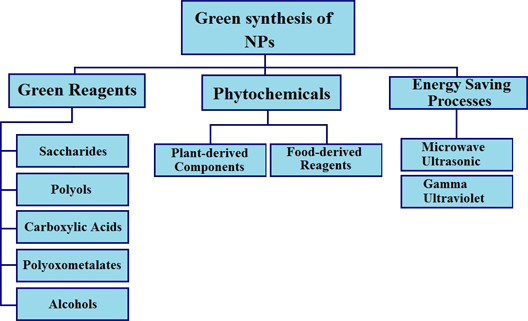
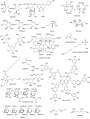
Green and energy-efficient methods for the production of metallic nanoparticles
Beilstein J. Nanotechnol. 2015, 6, 2354–2376, doi:10.3762/bjnano.6.243


Optimized design of a nanostructured SPCE-based multipurpose biosensing platform formed by ferrocene-tethered electrochemically-deposited cauliflower-shaped gold nanoparticles
Beilstein J. Nanotechnol. 2015, 6, 1840–1852, doi:10.3762/bjnano.6.187
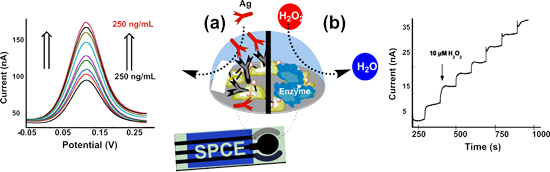
- nanostructured SPCE (5 cycles); SEM images of the modified carbon electrodes showing the presence of cauliflower-like gold nanoparticles obtained after: (d) 5 CV cycles, (e) 10 CV cycles, (f) 15 CV cycles and (g) 20 CV cycles. Inset: magnification of gold nanoclusters showing the sizes of the individual
- honey and recovery percentages after successive additions of both analytes. Supporting Information The Supporting Information features the statistical distribution of gold nanoclusters in dependance of the number of cyclic scans and supplementary electrochemical experiments (I–t transient curve


The Kirkendall effect and nanoscience: hollow nanospheres and nanotubes
Beilstein J. Nanotechnol. 2015, 6, 1348–1361, doi:10.3762/bjnano.6.139
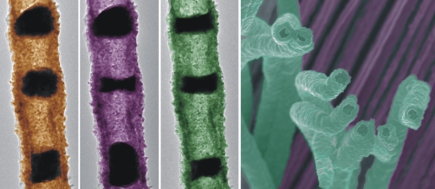
- pressure inside the oxide shell and the annealing temperature. Niu et al. [48] have also remarked that in addition to the conversion mechanisms previously described, for some nanoparticles, bismuth nanoclusters can be formed on the outer surface of the particle (Figure 7d). They assumed that the defects
- the process into an: (a) asymmetric shell, (b, c) isotropic shell or (d) oxide shell decorated with bismuth nanoclusters. The data show that bismuth behaves like a liquid with frequent changes in the morphology of the nanodroplets inside the oxide shell. Scale bar: 50 nm. Figure adapted with



Heterometal nanoparticles from Ru-based molecular clusters covalently anchored onto functionalized carbon nanotubes and nanofibers
Beilstein J. Nanotechnol. 2015, 6, 1287–1297, doi:10.3762/bjnano.6.133
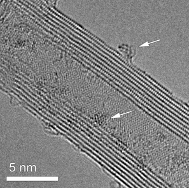
- , (b) an amorphous layer can be seen around the nanoparticles at higher magnification. HAADF-STEM image of Ru–Pt/MWNT derived from Ru5PtC(CO)14(COD) (4). STEM-EDX of individual nanoclusters. (a) HAADF-STEM image of a nanotube with metal clusters. The spectra were collected from point 1 (larger