


Search results
Search for "phonon" in Full Text gives 201 result(s) in Beilstein Journal of Nanotechnology. Showing first 200.
Impact of electron–phonon coupling on electron transport through T-shaped arrangements of quantum dots in the Kondo regime
Beilstein J. Nanotechnol. 2021, 12, 1209–1225, doi:10.3762/bjnano.12.89
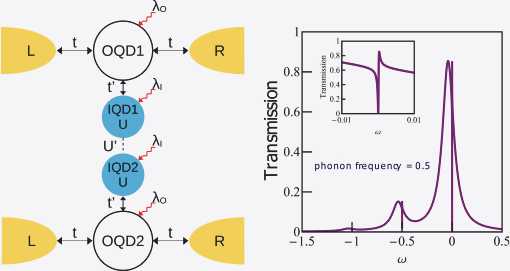
- strength of electron–phonon interaction, the system is occupied by a different number of electrons that effectively interact with each other repulsively or attractively. This leads, together with the interference effects, to different spin or charge Fano–Kondo effects. Keywords: Fano effect; Kondo effect
- ultrafast sensors, actuators, and signal processing components. Of special interest are molecular systems because molecules due to their softness easily deform during tunneling processes, giving rise to excitation of local phonon modes. The polaronic transport through molecular systems has been recently
- studied in a number of papers [39][40][41][42][43][44]. Due to participation of localized phonons in single electron tunneling the phonon side bands appear in the spectral function of the dot. Interestingly, similar effects have been also observed in the rigid structures of semiconductor quantum dots


First-principles study of the structural, optoelectronic and thermophysical properties of the π-SnSe for thermoelectric applications
Beilstein J. Nanotechnol. 2021, 12, 1101–1114, doi:10.3762/bjnano.12.82
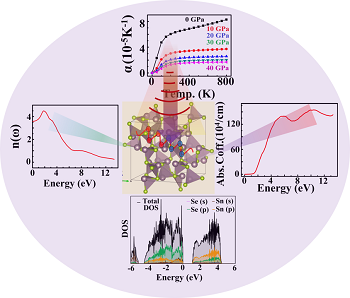
- from Figure 6a that for a fixed pressure, the CV curve grows sharply up to 300 K then the value of CV gradually raises. Afterward, at a higher temperature range, the CV curve keeps a continuing pace and tends to reach the Dulong–Petit limit, revealing that at a high-temperature range all the phonon
- large entropy impact which accelerates the phonon–phonon scattering process. The total thermal conductivity (κtot) for the π-SnSe alloy is also plotted and presented in Figure 9c. It can be noted that initially, by the increase in temperature, κtot decreases and reaches its minimum value of 1.089 W·m−1


A review of defect engineering, ion implantation, and nanofabrication using the helium ion microscope
Beilstein J. Nanotechnol. 2021, 12, 633–664, doi:10.3762/bjnano.12.52
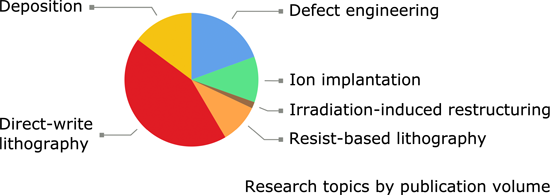
- phonon scattering effect from the few point defects introduced. For higher doses above ca. 2 × 10¹⁶ ions/cm2, complete amorphization of the material occurred, although it was noted that the overall morphology of the structure was unaffected. This ability to locally tune the thermal conductivity by


Properties of graphene deposited on GaN nanowires: influence of nanowire roughness, self-induced nanogating and defects
Beilstein J. Nanotechnol. 2021, 12, 566–577, doi:10.3762/bjnano.12.47
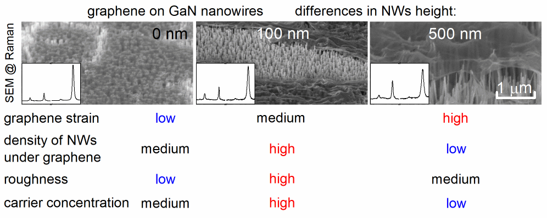
- a deep understanding of the phenomena occurring on such interface. One of the most common experimental techniques for studying properties of graphene is Raman spectroscopy [10]. Non-invasive measurements of inelastic light scattering give an insight into the phonon structure of graphene. The
- of strain, and the value of 2D band energy for unstrained graphene was reported to be 2677.6 cm−1 [14]. Positive values of Δε correspond to tensile strain while negative values correspond to compressive strain. The Grüneisen parameter determines the change rate of a given phonon frequency in a
- equal to 1583.5 cm–1 [14]. The sensitivity of the G band energy on the carrier concentration is caused by the presence of a Kohn anomaly near the Γ point in the phonon band structure of graphene [15]. Consequently, the G band energy significantly increases with an increasing concentration of both




Local stiffness and work function variations of hexagonal boron nitride on Cu(111)
Beilstein J. Nanotechnol. 2021, 12, 559–565, doi:10.3762/bjnano.12.46
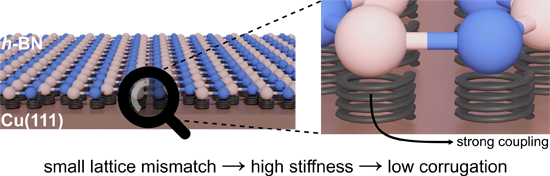
- for graphene and MoS2-based electronics utilising the small lattice mismatch, the large optical phonon modes, and particularly the large bandgap [3][4][5][6][7][8][9][10]. Furthermore, when grown on metal substrates h-BN can be used as a nanoscale template for atoms, molecules, and nanostructures with


ZnO and MXenes as electrode materials for supercapacitor devices
Beilstein J. Nanotechnol. 2021, 12, 49–57, doi:10.3762/bjnano.12.4
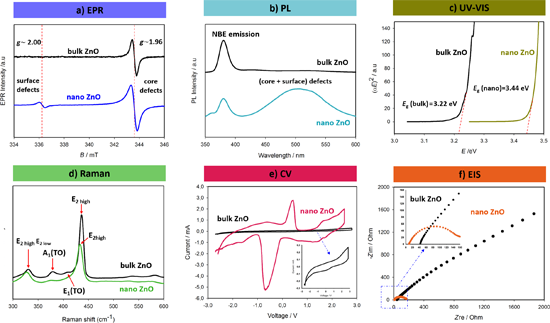
- , which is expected due to the quantum confinement effect [13]. Another crucially important optical characterization technique for the investigation of defects is Raman spectroscopy. The phonon vibration modes are highly sensitive to the existence of point defects, which are reflected in distinct spectral
Kondo effects in small-bandgap carbon nanotube quantum dots
Beilstein J. Nanotechnol. 2020, 11, 1873–1890, doi:10.3762/bjnano.11.169
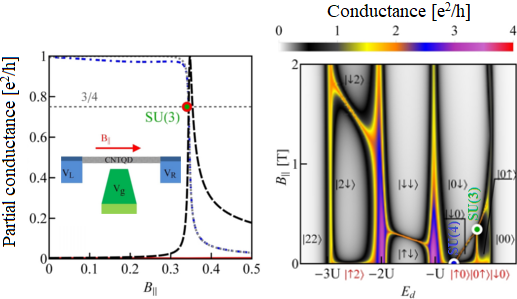
- associated with the given resonances. At this point it should be mentioned that one should look at the high-temperature results in Figure 6b with some caution, in particular, at those that concern the thermopower. Inelastic processes, for example, these resulting from electron–phonon interaction are
- neglected in our calculations, which is justified at extremely low temperatures. At higher temperatures, however, they may play a role [75][76]. Some justification for the neglect of electron–phonon coupling is that, as shown in [77][78][79][80], the electron–phonon mean free path in nanoscale carbon tubes
- and ribbons is tens of micrometers even at room temperature. It has been also shown that the phonon contribution to the thermopower of quantum dots is greatly suppressed [81]. The Landauer-type formulas we use strictly apply only to elastic transport. The electron part of the thermopower is very



![[Graphic 37]](/bjnano/content/inline/2190-4286-11-169-i52.svg?max-width=637&scale=1.18182) as a functio...
as a functio...


Selective detection of complex gas mixtures using point contacts: concept, method and tools
Beilstein J. Nanotechnol. 2020, 11, 1631–1643, doi:10.3762/bjnano.11.146
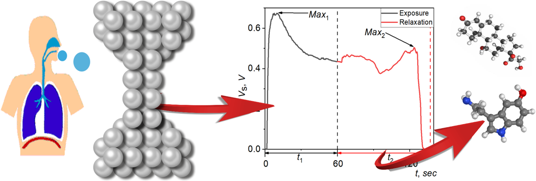
- are excited and transition to a nonequilibrium state. Then, the electrons gradually relax as they interact with quantum quasiparticle excitations and other objects. This process is fundamental for Yanson spectroscopy of electron–phonon interactions [30] and is responsible for the unique properties of
- quasiparticle excitations using point contacts. This was clearly demonstrated for the first time by Yanson while studying electron–phonon interactions in metals [60]. When a current flows through Yanson point contacts, a unique condition for the manifestation of the quantum properties of these objects arises
- manifestation of the energy parameters of this interaction in the electrical characteristics of the point contacts. Due to this phenomenon, the spectrum of the electron–phonon interaction in metals [5], superconductors [8][61], and even in more complex compounds such as organic conductors [62] can be easily


![[Graphic 4]](/bjnano/content/inline/2190-4286-11-146-i8.svg?max-width=637&scale=1.18182) in th...
in th...

![[Graphic 7]](/bjnano/content/inline/2190-4286-11-146-i11.svg?max-width=637&scale=1.18182) in the...
in the...
High-responsivity hybrid α-Ag2S/Si photodetector prepared by pulsed laser ablation in liquid
Beilstein J. Nanotechnol. 2020, 11, 1596–1607, doi:10.3762/bjnano.11.142
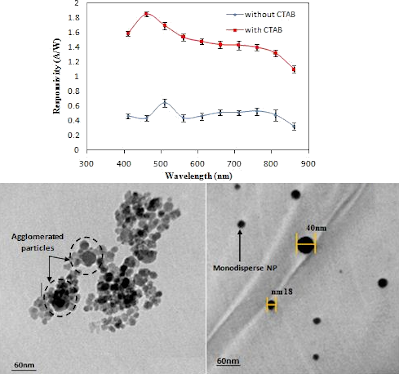
- with a monoclinic structure and that crystallinity of the nanoparticles was improved after adding CTAB. Raman studies revealed the presence of peaks related to Ag–S bonds (Ag modes) and the longitudinal optical phonon 2LO mode. Scanning electron microscopy investigations confirmed the production of
- reported data [24]. Figure 4 shows the Raman spectra of Ag2S NPs synthesized in Tu solution with and without CTAB. Four vibration modes were assigned to Ag2S. The peaks at 45 and 65 cm−1 are related to Ag–S bonds (Ag modes) [25]. The third peak at 480 cm−1 was indexed to the longitudinal optical phonon 2LO
- –S bonds and the second-order longitudinal optical phonon 2LO mode; their intensity increased when CTAB was added to Tu. FTIR data revealed the presence of a Ag–S bond located at 510 cm−1. The electrical properties of the Ag2S/Si heterojunction were significantly enhanced after the addition of CTAB




Optically and electrically driven nanoantennas
Beilstein J. Nanotechnol. 2020, 11, 1542–1545, doi:10.3762/bjnano.11.136

- of their optical phonon response. High local field enhancement is likewise required in TERS experiments, where a tip with a hotspot located at its apex is scanned across a sample surface. The performance of a TERS measurement is closely related to the quality of the tip [46]. Therefore, researchers
Nonadiabatic superconductivity in a Li-intercalated hexagonal boron nitride bilayer
Beilstein J. Nanotechnol. 2020, 11, 1178–1189, doi:10.3762/bjnano.11.102
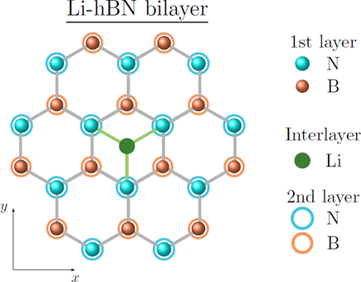
- of electron–phonon interaction cannot be omitted. This is evidenced by the very high value of the ratio λωD/εF ≈ 0.46, where λ is the electron–phonon coupling constant, ωD is the Debye frequency, and εF represents the Fermi energy. Due to nonadiabatic effects, the phonon–induced superconducting state
- percent. Keywords: critical temperature; electron–phonon interaction; Li-hBN bilayer; Li-intercalated hexagonal boron nitride (Li-hBN); nonadiabatic superconductivity; vertex corrections; Introduction Low-dimensional systems such as graphene [1][2][3][4][5], silicene [6], borophene [7][8], and
- bilayer [49]. The obtained result for Li-hBN is explained by the relatively high value of the electronic density of states at the Fermi level and the significant contribution to the pairing interaction from the inter-layer electron–phonon coupling [41]. This is due to the formation of characteristic bonds


![[Graphic 34]](/bjnano/content/inline/2190-4286-11-102-i54.svg?max-width=637&scale=1.18182) for Li-hBN. The results were obta...
for Li-hBN. The results were obta...
Revealing the local crystallinity of single silicon core–shell nanowires using tip-enhanced Raman spectroscopy
Beilstein J. Nanotechnol. 2020, 11, 1147–1156, doi:10.3762/bjnano.11.99
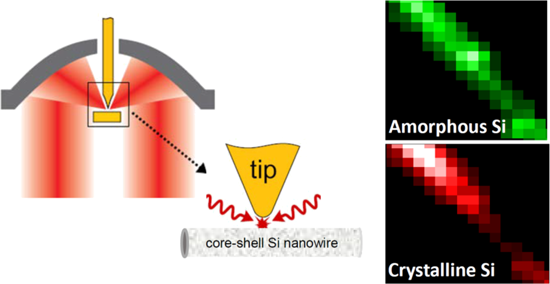
- structure and phases of silicon by measuring its Raman peaks along a silicon wire prepared under high pressure. They found a shift of the transverse optical (TO) phonon peak along the wire, which could be attributed to a non-uniform growth of the nanowire and different crystalline phases. Agbo et al. showed
- , Figure 5d, and Figure S1b in Supporting Information File 1). Beeman et al. [22] suggested to use the root mean square bond-angle distortion ΔΘ to evaluate the crystalline and amorphous fractions of Si, which can be calculated using the full width half maximum (FWHM, in cm−1) of the one-phonon Raman peak


Photothermally active nanoparticles as a promising tool for eliminating bacteria and biofilms
Beilstein J. Nanotechnol. 2020, 11, 1134–1146, doi:10.3762/bjnano.11.98
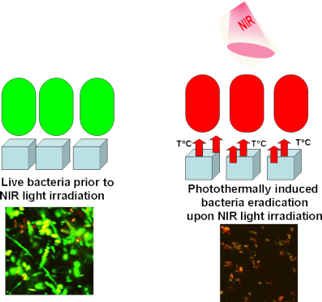
- photothermal effect under NIR laser irradiation. Carbon nanotubes are another valuable class of nanomaterials. They have high photothermal efficiency under NIR irradiation which excites the longitudinal phonon resonance along the nanotube. The resonance peaks can be tuned by changing the tube length [86


Monolayers of MoS2 on Ag(111) as decoupling layers for organic molecules: resolution of electronic and vibronic states of TCNQ
Beilstein J. Nanotechnol. 2020, 11, 1062–1071, doi:10.3762/bjnano.11.91
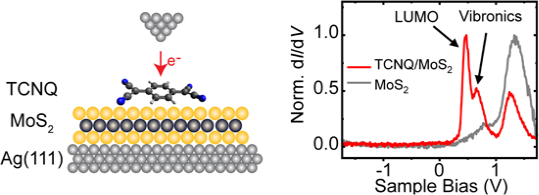
- the modes with strong electron–phonon coupling. Keywords: decoupling layer; molybdenum disulfide (MoS2); scanning tunneling microscopy, tetracyanoquinodimethane (TCNQ); vibronic states; Introduction When molecules are adsorbed on metal surfaces, their electronic states are strongly perturbed by


Band tail state related photoluminescence and photoresponse of ZnMgO solid solution nanostructured films
Beilstein J. Nanotechnol. 2020, 11, 899–910, doi:10.3762/bjnano.11.75
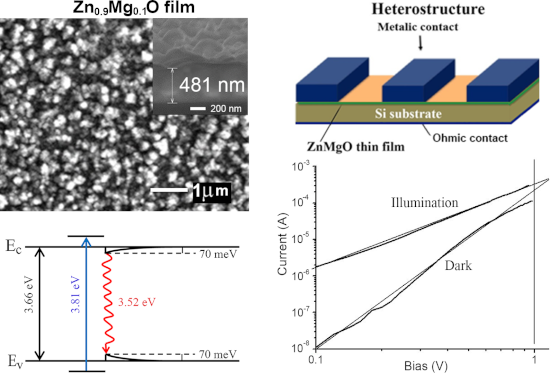
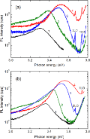
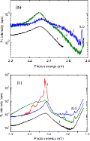
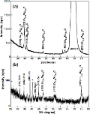
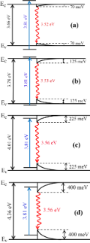
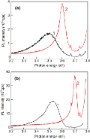
- PL bands at lower photon energies represent the LO-phonon replicas of the AX and D0X bands at 3.29–3.31 eV, and the 2LO-phonon replicas at 3.22–3.24 eV. The PL band at 3.359 eV in films comes also from the recombination of D0X excitons in ZnO crystallites, while the PL bands at 3.324 eV, 3.267 eV and

A Josephson junction based on a highly disordered superconductor/low-resistivity normal metal bilayer
Beilstein J. Nanotechnol. 2020, 11, 858–865, doi:10.3762/bjnano.11.71
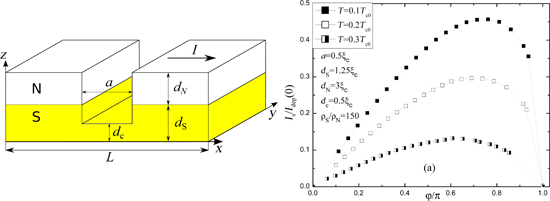
- equation where Tc0 is the critical temperature of the single S layer. We assume that Δ is nonzero only in the S layer because of the absence of attractive phonon-mediated electron–electron coupling in the N layer. Equation 1 and Equation 2 are supplemented by the Kupriyanov–Lukichev boundary conditions [16
- ) model [24][25] for the SN-S-SN junction. We suppose that electron temperature Te = T + δTe and phonon temperature Tp = T + δTp are close to the substrate temperature, δTe, δTp ≪ T and do not vary along the thickness. In the N layer the proximity-induced gap (minigap) is small, and, due to the inverse
- ) is the ratio between electron and phonon heat capacity at T = Tc0 and τ0 determines the strength of electron–phonon inelastic scattering in the S and the N layer (see Equations 4 and 6 in [25]). For τ0 we use the smallest time for S and N materials due to the assumably good transfer of electrons


Epitaxial growth and superconducting properties of thin-film PdFe/VN and VN/PdFe bilayers on MgO(001) substrates
Beilstein J. Nanotechnol. 2020, 11, 807–813, doi:10.3762/bjnano.11.65
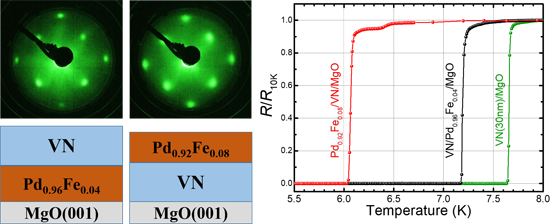
- R(T) behavior of VN/MgO(011) samples in [42], which was explained by a change in the electron/phonon scattering amplitude upon the structural phase transition from cubic to tetragonal at Ts = 250 K. Below 50 K the R(T) dependence saturates approaching the residual resistance originating, in general


Light–matter interactions in two-dimensional layered WSe2 for gauging evolution of phonon dynamics
Beilstein J. Nanotechnol. 2020, 11, 782–797, doi:10.3762/bjnano.11.63
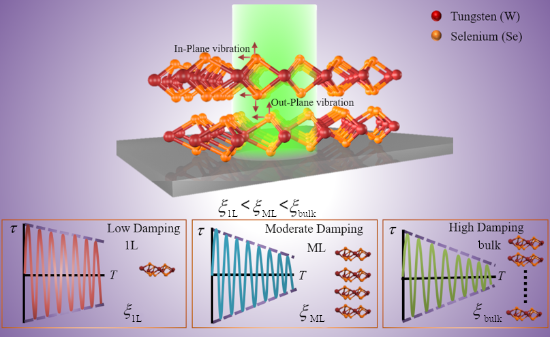
- of Electrical and Computer Engineering, University of Texas, El Paso, TX 79968, United States 10.3762/bjnano.11.63 Abstract Phonon dynamics is explored in mechanically exfoliated two-dimensional WSe2 using temperature-dependent and laser-power-dependent Raman and photoluminescence (PL) spectroscopy
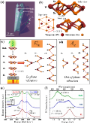
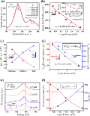
- . From this analysis, phonon lifetime in the Raman active modes and phonon concentration, as correlated to the energy parameter E0, were calculated as a function of the laser power, P, and substrate temperature, T. For monolayer WSe2, from the power dependence it was determined that the phonon lifetime
- for the in-plane vibrational mode was twice that of the out-of-plane vibrational mode for P in the range from 0.308 mW up to 3.35 mW. On the other hand, the corresponding relationship for the temperature analysis showed that the phonon lifetime for the in-plane vibrational mode lies within 1.42× to
Hexagonal boron nitride: a review of the emerging material platform for single-photon sources and the spin–photon interface
Beilstein J. Nanotechnol. 2020, 11, 740–769, doi:10.3762/bjnano.11.61
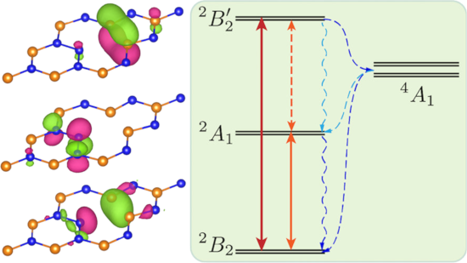
- criteria to benchmark the performance of a solid-state SPS to be considered suitable for applications in quantum technology [7][8][80]. These include the following: photo-stable emission without blinking or photo-bleaching; narrow bandwidth with most of the emission in the zero phonon line (ZPL), which is
- criteria for spin–photon-phonon entanglement distribution are high electron spin coherence time T2 (approaching T2 spin-lattice relaxation time) and strain and electrical control of the spin transition and optical transition resonances. The key requirements can be restrictive depending on the applications
- photons exciting electrons to a higher energy level in an atom. This photo-excitation is then followed by various relaxation processes. During these relaxation processes, other photons can be re-irradiated. One interesting parameter is the zero-phonon line (ZPL), which is the difference between the lowest




Soybean-derived blue photoluminescent carbon dots
Beilstein J. Nanotechnol. 2020, 11, 606–619, doi:10.3762/bjnano.11.48
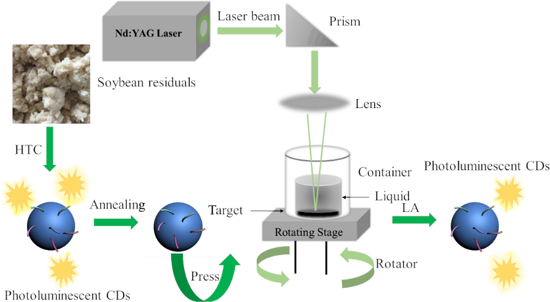
- phonon,
is the phonon energy, and k is the Boltzmann constant. It is evident that increasing temperature leads to the decrease of the energy gap. The CDs become conductive at temperatures larger than the critical temperture and lose the PL charactersistic, as demonstrated by the annealed-CDs due to


Electrochemically derived functionalized graphene for bulk production of hydrogen peroxide
Beilstein J. Nanotechnol. 2020, 11, 432–442, doi:10.3762/bjnano.11.34
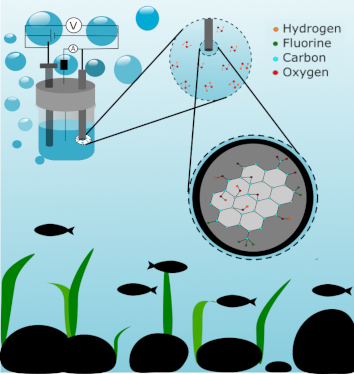
- experiment. The important Raman peaks are marked in the figure and the shoulder peak in “G” is due to the additional single phonon intra-valley scattering process (named as D’) which is due to the presence of defects. However, the FTIR spectrum (see Figure S4b) shows evidence for the formation of OH


High dynamic resistance elements based on a Josephson junction array
Beilstein J. Nanotechnol. 2020, 11, 417–420, doi:10.3762/bjnano.11.32
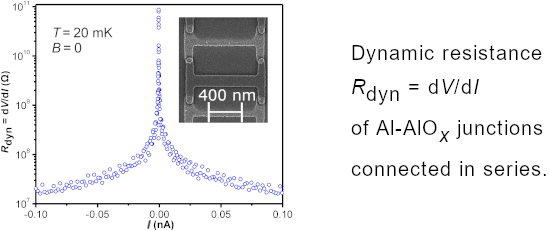
- fluctuations. The absence of dissipation makes such elements very useful for experimental studies of mesoscopic scale objects at ultralow temperature applications, where even a very small amount of Johnson noise may overheat electrons above the phonon bath. However, the non-linearity of a SIS junction I–V

Nonequilibrium Kondo effect in a graphene-coupled quantum dot in the presence of a magnetic field
Beilstein J. Nanotechnol. 2020, 11, 225–239, doi:10.3762/bjnano.11.17
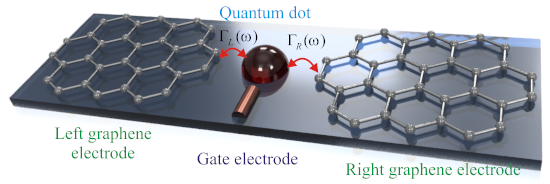
- for the gapped graphene electrodes within the massless gap scenario. The systems present a high heat-to-electricity conversion efficiency at low temperature, for which the phonon contribution can be neglected [38][39]. The analytical approaches to Kondo physics of magnetic impurities in graphene


Size effects of graphene nanoplatelets on the properties of high-density polyethylene nanocomposites: morphological, thermal, electrical, and mechanical characterization
Beilstein J. Nanotechnol. 2020, 11, 167–179, doi:10.3762/bjnano.11.14
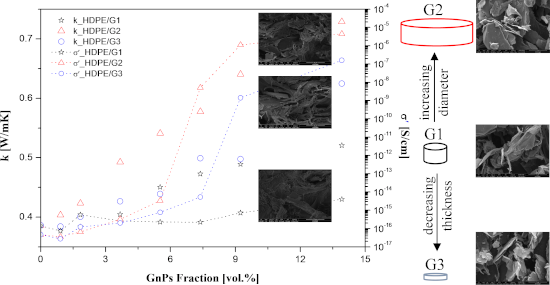
- phonon transfer between the HDPE matrix and the GnPs fillers [21][34][35]. Furthermore, GnPs with larger lateral size showed a larger enhancement of the thermal conductivity. A similar lateral-size effect of GnPs was also observed in earlier studies [13][18][21]. One reason was that the fillers could
- more easily contact each other to create a more conductive network within the nanocomposites, resulting in a higher thermal conductivity [13][21][36]. Another reason was that a small lateral size increased phonon scattering at the matrix-bonded interface, resulting in a lower thermal conductivity of
- enhancement. The thermal conductivity of the nanocomposites with a larger lateral size could be further increased by forming a more effective thermal conductive pathway and reducing phonon scattering at the matrix/filler interface. In addition, to obtain the same thermal conductivity enhancement, larger



Recent progress in perovskite solar cells: the perovskite layer
Beilstein J. Nanotechnol. 2020, 11, 51–60, doi:10.3762/bjnano.11.5

- the mobility, the lifetime and the vertical diffusion length of the charge carriers in the 2/3D perovskite. Figure 4h–k indicates that the 2D/3D perovskite (x = 0.03) has a better crystallinity than the pure 3D material because of its clearer crystal lattice phonon features. These factors greatly





