


Search results
Search for "photocatalysts" in Full Text gives 129 result(s) in Beilstein Journal of Nanotechnology.
A highly efficient porous rod-like Ce-doped ZnO photocatalyst for the degradation of dye contaminants in water
Beilstein J. Nanotechnol. 2019, 10, 1157–1165, doi:10.3762/bjnano.10.115
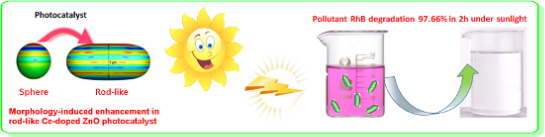
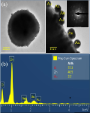
- a sunlight simulator. The results showed that ZnO doped with 3% Ce exhibits the highest RhB degradation rate. To understand the crystal structure, elemental state, surface morphology and chemical composition, the photocatalysts were characterized by X-ray diffraction (XRD), X-ray photoelectron
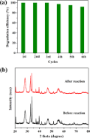
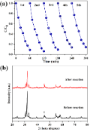
- repeatability of CZO-4, recycling experiments were carried out at optimized conditions (concentration of RhB = 10 mg/L, catalyst dosage = 0.7 g/L, pH 9 and temperature = 50 °C). The photocatalysts were recycled after washing, centrifugation and vacuum drying at 75 °C for 1 h. The results given in Figure 2
- test tube. The suspension was stirred in darkness for 30 min before the initial absorbance was measured. The degradation rate was calculated after 2 h of exposure to sunlight. The design and results are listed in Table 1. Characterization of photocatalysts The XRD patterns of ZnO and CZO-4 were


Photoactive nanoarchitectures based on clays incorporating TiO2 and ZnO nanoparticles
Beilstein J. Nanotechnol. 2019, 10, 1140–1156, doi:10.3762/bjnano.10.114
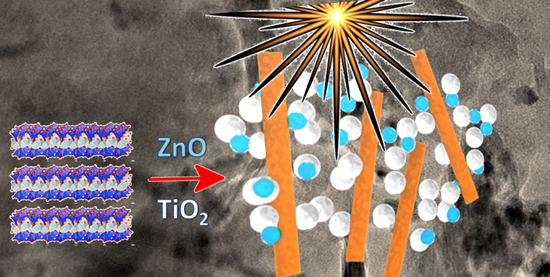
- ; nanoarchitectures; photocatalysts; titanium dioxide; zinc dioxide; Review Introduction: immobilization of nanoscale TiO2 and ZnO on clay minerals Nanoarchitectonics is a term coined by Japan's National Institute for Materials Science (NIMS), which refers to the nanoscale design of complex materials through a deep
- are more efficient as photocatalysts than the corresponding bulk TiO2 and ZnO powders when they are present as NPs. This fact could be simply explained by the fact that the smaller particles normally have a larger surface-to-volume ratio. Many studies have focused on the photocatalytic activities of
- the “Web of Science” (WoS) [21] around 10,000 papers have been published in the last decade in connection with the topic of TiO2 NPs used as photocatalysts, indicating the high interest in the use of these materials for this type of applications. In fact, titanium dioxide (anatase phase) can be



Synthesis of novel C-doped g-C3N4 nanosheets coupled with CdIn2S4 for enhanced photocatalytic hydrogen evolution
Beilstein J. Nanotechnol. 2019, 10, 912–921, doi:10.3762/bjnano.10.92
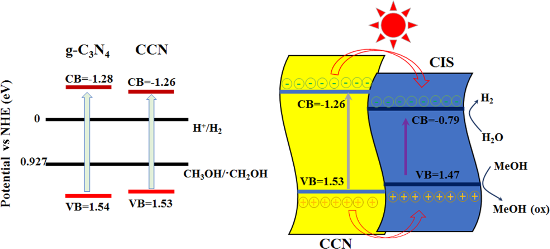
- effective strategy, the combination of C-doping with nanocomposite semiconductors, is presented in this work. C-doped g-C3N4 (CCN) was prepared by supramolecular self-assembly and subsequently a number of CdIn2S4/CCN composite photocatalysts were designed and fabricated though in situ decoration of CdIn2S4
- μmol h−1 g−1). In addition, the hybrid photocatalysts display good recycling stability under visible-light irradiation. This research may provide promising information for the preparation of more efficient multifunctional hybrid photocatalysts with excellent stability in fine chemical engineering
- transfer nanochannels [5]. The as-prepared g-C3N4 nanosheet@ZnIn2S4 nanoleaf structure displays an enhanced photocatalytic activity for H2 production without the addition of a Pt co-catalyst. As visible-light-active photocatalysts, ternary metal sulfide (e.g., ZnIn2S4 and CdIn2S4) have attracted great


Electronic properties of several two dimensional halides from ab initio calculations
Beilstein J. Nanotechnol. 2019, 10, 823–832, doi:10.3762/bjnano.10.82
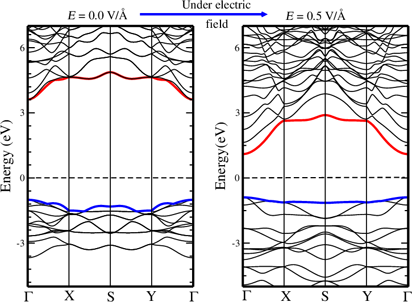
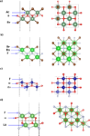
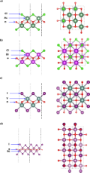
- is an active research field [14][15][16]. A family of layered materials that attracted interest over the past few years are halides. For instance, BiOX (with X = Cl, Br and I) compounds are known to be promising photocatalysts [17][18][19]. In this context, Sharma et al. [20] have studied the


Deposition of metal particles onto semiconductor nanorods using an ionic liquid
Beilstein J. Nanotechnol. 2019, 10, 718–724, doi:10.3762/bjnano.10.71
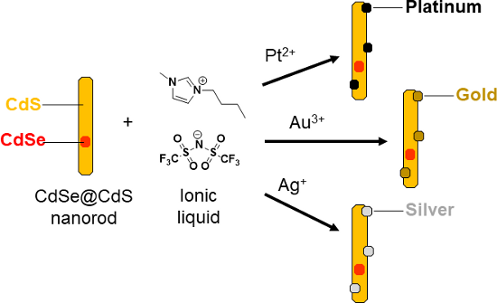
- using the methods reported here. Keywords: catalyst; ionic liquid; methylene blue; platinum; semiconductor nanorod; Introduction Core@shell semiconductor nanorods with attached noble metal particles have been widely studied as photocatalysts, and any improvement on the synthesis of these materials has
- dye degradation for the catalyst prepared using the ionic liquid compared to the catalyst prepared in toluene. These heterostructured nanorod photocatalysts bleach methylene blue by donating electrons from platinum cocatalyst sites to the dye [36]. Thus, the enhanced catalytic activity of samples


Ceria/polymer nanocontainers for high-performance encapsulation of fluorophores
Beilstein J. Nanotechnol. 2019, 10, 522–530, doi:10.3762/bjnano.10.53
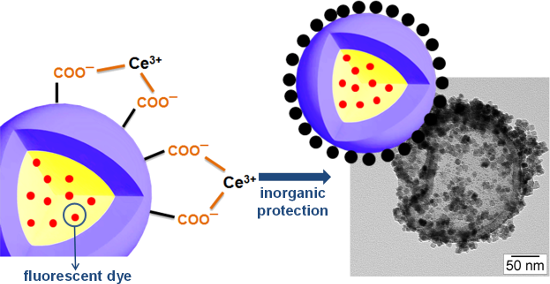
- film at the oil–water interface [32] or rose bengal embedded in a microcapsule shell [33] can also be used to protect the encapsulated dye from molecular oxygen. Incorporating oxygen-scavenging materials such as WO3 photocatalysts loaded with Pt [34], phosphonate coatings [35], organophosphates [36] or


Reduced graphene oxide supported C3N4 nanoflakes and quantum dots as metal-free catalysts for visible light assisted CO2 reduction
Beilstein J. Nanotechnol. 2019, 10, 448–458, doi:10.3762/bjnano.10.44
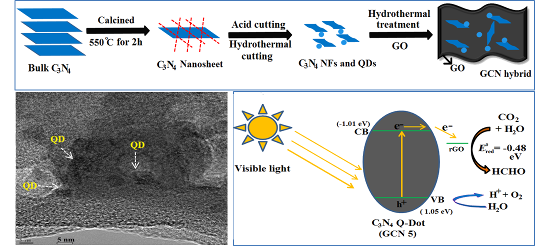
- , and CH3OH is one of the sustainable ways to address the issues of both global warming and the energy crisis [1][2][3][4][5][6]. So far, a variety of semiconductor photocatalysts, such as ZnO, TiO2, WO3, and CdS have been developed for the photoreduction of CO2 [7][8][9][10]. However, poor separation
- -5: a) survey spectrum, and high-resolution b) C 1s, c) N 1s and d) O 1s spectra. Fourier transform infrared spectra of the prepared g-C3N4, CN nanoflakes and quantum dots, and GCN-5 photocatalysts. TEM images of the a) CN-5, b) GCN-5, c) CN-10, d) GCN-10, e) CN-20 and GCN-20 nanoflakes and quantum
- rate of HCHO in the presence of different GCN photocatalysts. Apparent yield of HCHO in the presence of the various photocatalysts. Photostability of the GCN-5 sample against the production of HCHO. Possible photoreduction mechanism of CO2 to HCHO in the presence of the GCN-5 catalyst sample under






Zn/F-doped tin oxide nanoparticles synthesized by laser pyrolysis: structural and optical properties
Beilstein J. Nanotechnol. 2019, 10, 9–21, doi:10.3762/bjnano.10.2
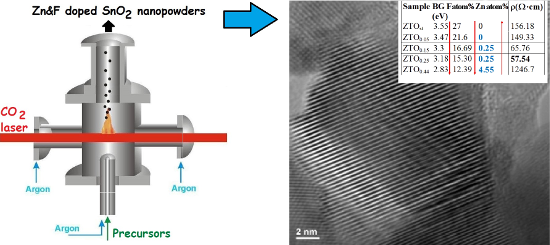
- ], photocatalysts for rhodamine 6G dye degradation in aqueous solution [27] and were proposed as a thermal UV sensor for high-radiation environments [4]. Moreover, the ZTO materials were also employed as volatile organic compound (VOC) (such as methanol, ethanol or acetone vapors) sensors [28], as an anode for Li
- -ion microbatteries [29], as photocatalysts for brilliant green dye degradation in solution under solar light [30] and even as a component for supercapacitors [31]. The in situ synthesis of SnO2-based nanoparticles co-doped with F and Zn is demonstrated in this work. For this purpose we use the



Graphene-enhanced metal oxide gas sensors at room temperature: a review
Beilstein J. Nanotechnol. 2018, 9, 2832–2844, doi:10.3762/bjnano.9.264
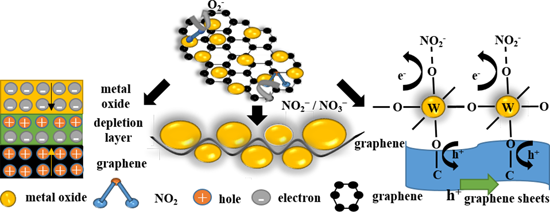
- ], graphene has been widely used in various fields such as photocatalysts, lithium battery electrodes, supercapacitors, gas sensors and electronic devices [2][3][4] due to its high specific surface area (2630 m2/g) and high carrier mobility at room temperature [5]. The electrical properties of graphene are



Nanocellulose: Recent advances and its prospects in environmental remediation
Beilstein J. Nanotechnol. 2018, 9, 2479–2498, doi:10.3762/bjnano.9.232
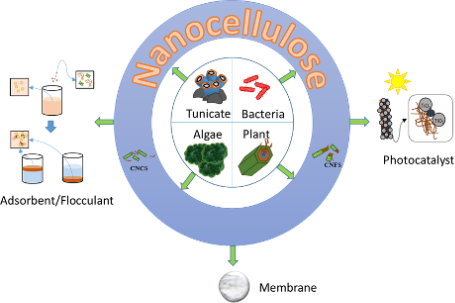
- -based composites as adsorbents, photocatalysts, flocculants, and membranes in the field of environmental remediation will be reviewed. Nanocellulose-based adsorbents Wastewater purification using cellulose-based adsorbents materials has been developed as an alternative to the energy intensive and
- toxicology) for some cases, further optimization and improvement must be made. Furthermore, the fabrication of nanocellulose-based adsorbents is mostly established based on CNF, and limited when it comes to CNC. Nanocellulose-based photocatalysts Recently, numerous inorganic-organic hybrid-based
- nanostructured composites have emerged as new types of photocatalysts with remarkable optical, electrical, mechanical, and thermal properties. The gravitation from petrochemical-based feedstock to environmentally friendly biomaterials such as cellulose-based materials is making headway for a cleaner and more


Hierarchical heterostructures of Bi2MoO6 microflowers decorated with Ag2CO3 nanoparticles for efficient visible-light-driven photocatalytic removal of toxic pollutants
Beilstein J. Nanotechnol. 2018, 9, 2297–2305, doi:10.3762/bjnano.9.214
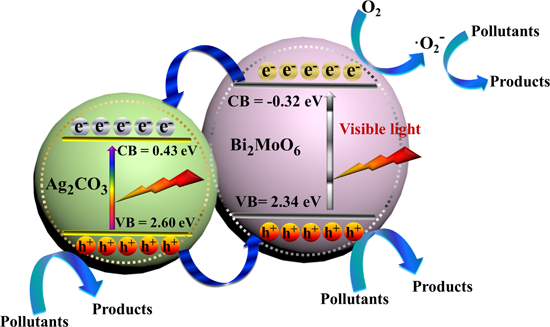
- Treatment and Control in Textile Industry, College of Environmental Science and Engineering, Donghua University, Shanghai 201620, China 10.3762/bjnano.9.214 Abstract Developing highly active and durable visible-light-driven photocatalysts for the degradation of toxic pollutants is of vital significance
- environmental remediation [3][4][5][6]. Crucial to photocatalysis is to obtain high-performance photocatalysts [7][8]. Obtaining excellent photocatalysts that can be excited by visible light (43% of the solar energy spectrum) is very important for practical applications [9][10][11][12][13][14]. Bi2MoO6 has been
- obstacle, various methods have been developed, including doping [20][21] and the construction of heterojunctions [22][23][24][25][26][27][28][29][30][31][32][33]. Particularly, the combination of Bi2MoO6 with other semiconductors to construct heterojunction photocatalysts leads to an enhanced activity of




Localized photodeposition of catalysts using nanophotonic resonances in silicon photocathodes
Beilstein J. Nanotechnol. 2018, 9, 2097–2105, doi:10.3762/bjnano.9.198
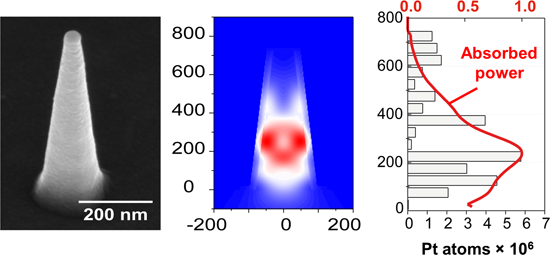
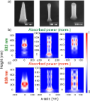
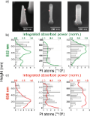
- –Lambert law have been obtained, in contrast to previous related work on silicon microwires [32][33]. Our results provide the first step for rationally designed catalyst positioning using the underlying resonant properties of nanoscale photocatalysts, tunable simply by altering the shape, size or


Controllable one-pot synthesis of uniform colloidal TiO2 particles in a mixed solvent solution for photocatalysis
Beilstein J. Nanotechnol. 2018, 9, 1715–1727, doi:10.3762/bjnano.9.163
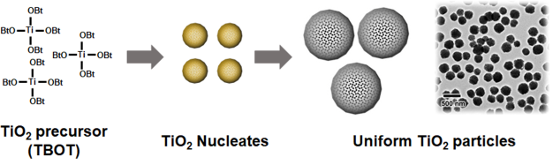
- well as the crystalline properties and performance enhancement of TiO2 photocatalysts calcined at different temperatures. Keywords: mixed solvent; one-pot synthesis; photocatalysts; rhodamine B degradation; sol–gel synthesis; spherical TiO2 particles; Introduction Titanium dioxide (TiO2) is a widely
- Honda and Fujishima [12]. Over the past decade, there have been many attempts to fabricate highly active TiO2-based photocatalysts for enhanced photocatalytic efficiency [13][14][15][16][17]. It is well-known that photocatalysis over a semiconductor photocatalyst occurs in the following sequential steps
- synthesize TiO2 photocatalysts with controlled crystallinity while maintaining a high surface area. Since many photocatalysis reactions are a liquid phase reaction, a well-dispersible colloidal TiO2 nanostructure should be one of the most ideal forms. In order to maximize the active surface area as well as




Sulfur-, nitrogen- and platinum-doped titania thin films with high catalytic efficiency under visible-light illumination
Beilstein J. Nanotechnol. 2018, 9, 1629–1640, doi:10.3762/bjnano.9.155
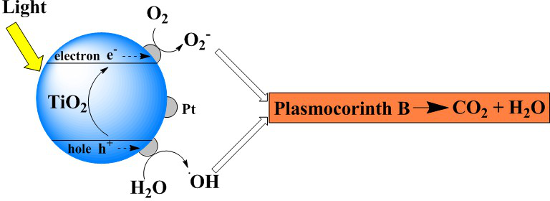
- of Novi Sad, Faculty of Technology, Bulevar cara Lazara 1, 21000 Novi Sad, Serbia 10.3762/bjnano.9.155 Abstract Titanium dioxide photocatalysts have received a lot of attention during the past decades due to their ability to degrade various organic pollutants to CO2 and H2O, which makes them
- performed for sample S3. First-order rate constant for plasmocorinth B degradation for selected photocatalysts synthesized in this work. Sample labels, types and amounts of added dopants, thermal treatment temperatures and calculated crystallite sizes for different samples. BET specific surface area and


Sheet-on-belt branched TiO2(B)/rGO powders with enhanced photocatalytic activity
Beilstein J. Nanotechnol. 2018, 9, 1550–1557, doi:10.3762/bjnano.9.146
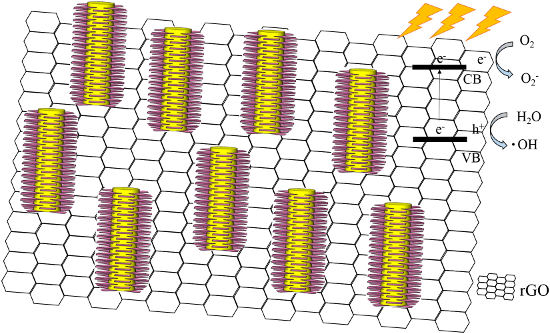
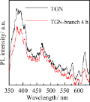
- all three photocatalysts. The TGN-branch 4 h sample demonstrated enhanced photocatalytic performance as compared to TiO2 nanobelts and the TGN sample. Figure S3 in Supporting Information File 1 shows the photodegradation curves in the presence of TGN and TGN-branches with different deposition times
- under UV light illumination for up to 5 cycles. The slightly decreased efficiency can be attributed to the catalyst loss during the centrifugation process after each cycle. The reaction rate constants were normalized with the corresponding specific surface area of the photocatalysts to see whether or


Cr(VI) remediation from aqueous environment through modified-TiO2-mediated photocatalytic reduction
Beilstein J. Nanotechnol. 2018, 9, 1448–1470, doi:10.3762/bjnano.9.137
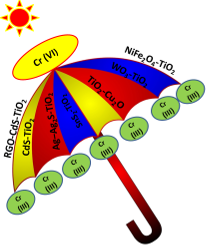
- practical applications in remediation of Cr(VI) from wastewater were addressed in the Conclusion section as well. The future perspectives of the field presented in this review are focused on the development of whole-solar-spectrum responsive, TiO2-coupled photocatalysts which provide efficient
- visible-light irradiation. The authors have also reported that •CO2− radicals (produced by the reaction of hVB+ with HCO2NH4) and eCB− are responsible for the reduction of 4-nitroaniline to p-phenylenediamine over CdS/TiO2 photocatalysts [56]. Photodegradation of pollutants The principle of photocatalysis
- conditions, low cost, high efficiency and reusability. It uses renewable and pollution-free solar energy and produces minimal secondary waste without using toxic chemicals that follow the rules of green chemistry [59][60][61]. Various semiconductor photocatalysts such as CdS, ZnO, WO3, SnO2, and TiO2 have



Ag2WO4 nanorods decorated with AgI nanoparticles: Novel and efficient visible-light-driven photocatalysts for the degradation of water pollutants
Beilstein J. Nanotechnol. 2018, 9, 1308–1316, doi:10.3762/bjnano.9.123
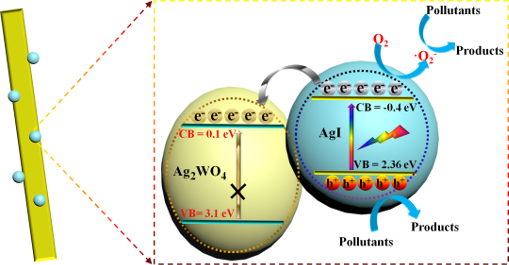
- Abstract To develop efficient and stable visible-light-driven (VLD) photocatalysts for pollutant degradation, we synthesized novel heterojunction photocatalysts comprised of AgI nanoparticle-decorated Ag2WO4 nanorods via a facile method. Various characterization techniques, including XRD, SEM, TEM, EDX
- photocatalytic performance. Keywords: AgI/Ag2WO4; nanocomposites; photocatalysis; visible light; Introduction The development of high-performance novel photocatalysts for the degradation of pollutants has received great interest due to the worsening of environmental pollution [1][2][3][4][5][6][7][8][9][10][11
- ]. However, achieving high efficiency for photocatalytic conversion under natural sunlight irradiation is still a great challenge because many catalysts only respond to ultraviolet (UV) light [5][12]. Exploring photocatalysts that can be driven by visible light, which comprises 43% of solar energy, is




Noble metal-modified titania with visible-light activity for the decomposition of microorganisms
Beilstein J. Nanotechnol. 2018, 9, 829–841, doi:10.3762/bjnano.9.77
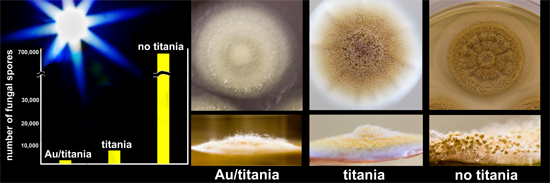
- Wuhan, China Graduate School of Environmental Science, N10 W5, 060-0810 Sapporo, Japan Institute of Inorganic Technology and Environment Engineering, West Pomeranian University of Technology, Szczecin, Pulaskiego 10, 70-322 Szczecin, Poland 10.3762/bjnano.9.77 Abstract Commercial titania photocatalysts
- and sporulation by gold-modified titania. Although, the growth of fungi was hardly inhibited through disc diffusion (inhibition zones around discs), it indicates that gold does not penetrate into the media, and thus, a good stability of plasmonic photocatalysts has been confirmed. In summary, it was
- found that silver-modified titania showed superior antibacterial activity, whereas gold-modified samples were very active against fungi, suggesting that bimetallic photocatalysts containing both gold and silver should exhibit excellent antimicrobial properties. Keywords: antifungal properties


Facile synthesis of a ZnO–BiOI p–n nano-heterojunction with excellent visible-light photocatalytic activity
Beilstein J. Nanotechnol. 2018, 9, 789–800, doi:10.3762/bjnano.9.72
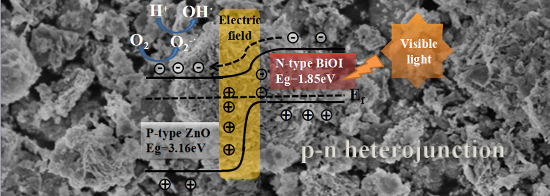
- the most widely exploited by taking advantage of their long-term stability and environmental non-toxicity, in addition to providing a low-cost alternative to the n-type semiconductor photocatalysts [14][15][16]. However, further application of these metal oxides is usually significantly limited by the
- becoming a key focus area for the design of novel and multifunctional materials in the field of photocatalysis. To date, unremitting efforts have been devoted to improving the photocatalysis efficiency [26][27][28][29]. Furthermore, coupling n-type semiconductor photocatalysts to p-type to form p–n
- photocatalysts which showed higher activity than single-phase BiOI or TiO2 and 50% BiOI possessed the best performance [32]. Jiang and co-workers used a chemical bath to produce ZnO/BiOI heterostructures. By tuning the ratio of Zn/Bi, they could rationally control the morphology, constituents and optical


Surface-plasmon-enhanced ultraviolet emission of Au-decorated ZnO structures for gas sensing and photocatalytic devices
Beilstein J. Nanotechnol. 2018, 9, 771–779, doi:10.3762/bjnano.9.70
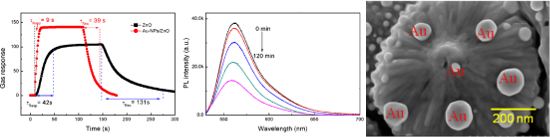
- target gases [14][15][16]. In another research strategy to obtain high photocatalytic performance materials, ZnO, a wide-band gap semiconductor (Eg > 3 eV), can also be used as a suitable material for photocatalysts based on the particular plasmonic characteristics of the nanostructures. Herein, it was
- are expected to serve as a potential photocatalysts with highly effective performance. For instance, plasmonic Au NP/vertically aligned ZnO nanorod structures were proposed for water splitting, solar cells, and environmental remediation [17][18][19]. Ag/ZnO nanohybrid structures were synthesized and
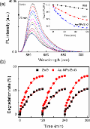
- solution in the presence of these photocatalysts under visible-light irradiation were investigated. The results are shown in Figure 5a and Figures S2 and S3 (Supporting Information File 1). The changes in the PL spectra during photodegradation indicated that the PL peak position of RhB (561.5 nm) decreases




Perovskite-structured CaTiO3 coupled with g-C3N4 as a heterojunction photocatalyst for organic pollutant degradation
Beilstein J. Nanotechnol. 2018, 9, 671–685, doi:10.3762/bjnano.9.62
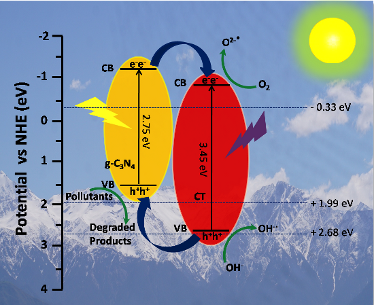
- potential towards utilization of solar energy [1][2][3]. Therefore, extensive efforts have been made for the design and synthesis of highly efficient and stable photocatalyst systems over the past few decades [4][5][6][7]. Hence, the development of such photocatalysts with high stability and good activity
- their recombination rate [12][13]. The 2D–2D heterojunctions exhibit larger face-to-face contact area as compared with the line-to-face contact (1D–2D) and point-to-face contact (0D–2D) photocatalysts, which is responsible for their enhanced photocatalytic activity [14]. It is worth mentioning here that
- activity is limited to UV excitation only [35]. Recently, our group has reported a novel RGO–N–CaTiO3 (RGO-NCT) bifunctional photocatalyst which comprises both adsorption and photocatalytic properties [36]. The photocatalytic activity of RGO-NCT photocatalysts was evaluated by studying the degradation of


Mechanistic insights into plasmonic photocatalysts in utilizing visible light
Beilstein J. Nanotechnol. 2018, 9, 628–648, doi:10.3762/bjnano.9.59
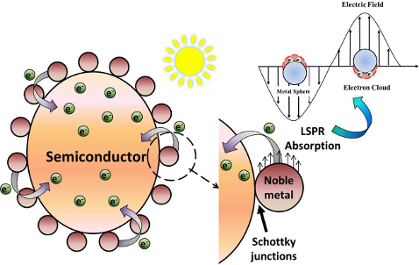
- sustainable photocatalysts that can collectively harvest visible light. However, the bottleneck in utilising the low energy photons has led to the discovery of plasmonic photocatalysts. The presence of noble metal on the plasmonic photocatalyst enables the harvesting of visible light through the unique
- that can be of value to the society through sustainable development derived through energy available for all for diverse applications. We have comprehensively prepared this review to specifically focus on fundamental insights into plasmonic photocatalysts, various synthesis routes, together with their
- strengths and weaknesses, and the interaction of the plasmonic photocatalyst with pollutants as well as the role of active radical generation and identification. The review ends with a pinnacle insight into future perspectives regarding realistic applications of plasmonic photocatalysts. Keywords





Fabrication and photoactivity of ionic liquid–TiO2 structures for efficient visible-light-induced photocatalytic decomposition of organic pollutants in aqueous phase
Beilstein J. Nanotechnol. 2018, 9, 580–590, doi:10.3762/bjnano.9.54
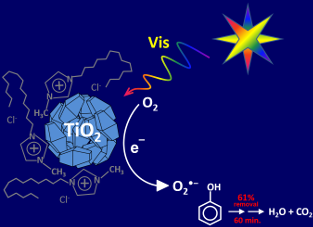
- achieve visible-light-activated photocatalysts. Another, actually surprising, way to improve the efficiency of solar-driven photocatalysis appeared in an application of ionic liquids (ILs) for TiO2 preparation [12][13][14]. Sometimes referred to as “solvents of the future”, ILs have induced a large and
- photocatalysts [12][13][36][37][38]. Interestingly, in all mentioned publications [12][13][36][37][38] the same ionic liquid, 1-butyl-3-methylimidazolium tetrafluoroborate ([BMIM][BF4]), was used. However, the proposed mechanisms were different. The photoactivity enhancement under visible-light irradiation was
- photocatalysts [38]. The only exception is our previous work [14], where three ILs composed of 1-butyl-3-methylimidazolium cation [BMIM] and bromide, hexafluorophosphate [PF6] and octylsulphate [OctSO4] anions were used. In contrast to [BMIM][BF4], the improved TiO2 photoactivity under visible-light irradiation




Influence of the preparation method on the photocatalytic activity of Nd-modified TiO2
Beilstein J. Nanotechnol. 2018, 9, 447–459, doi:10.3762/bjnano.9.43
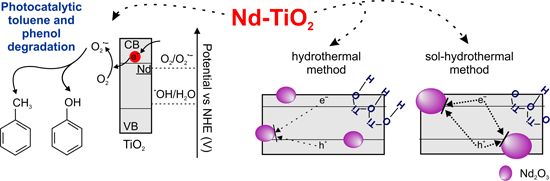
- Poznan, 60-780 Poznan, Poland Institute of Physical Chemistry, Polish Academy of Sciences,01-224 Warsaw, Poland Institute for Catalysis, Hokkaido University, Sapporo 001-0021, Japan 10.3762/bjnano.9.43 Abstract Nd-modified TiO2 photocatalysts have been obtained via hydrothermal (HT) and sol–hydrothermal
- TiO2, which leads to enhanced surface adsorption properties of TiO2 and indirectly increases the photocatalytic activity of the photocatalysts [13][14]. Moreover, it has been reported that the presence of RE ions slowed down the rate of the charge-carrier recombination processes [15]. Besides, RE ions
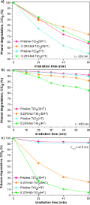
- . The Nd-modified TiO2 photocatalysts have been prepared using two different preparation routes, namely hydrothermal and sol–hydrothermal methods. The surface properties of these photocatalysts have been correlated with the preparation method as well as with the photoactivity in two model reactions




Facile synthesis of ZnFe2O4 photocatalysts for decolourization of organic dyes under solar irradiation
Beilstein J. Nanotechnol. 2018, 9, 436–446, doi:10.3762/bjnano.9.42
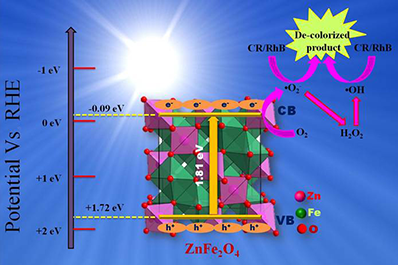
- the scientific community. To exploit solar light more efficiently, photocatalysts with narrow band gap (e.g., ZnSnO3 [2], Bi2WO6 [3], Ce(MoO4)2 [4] and ZnFe2O4 [5]) have been used, for absorbance of solar light in the visible region. Among ternary metal oxides, transition metal ferrites have drawn a
- 750 UV–vis spectrophotometer. Figure 14 shows the spectral changes after degradation for 60 min. Utilizing the Beer–Lambert law, the degradation was found to be 60% for ZFO-500. Conclusion ZnFe2O4 photocatalysts were successively fabricated by a facile solution-combustion method. XRD showed the





