Search results
Search for "transition metal" in Full Text gives 244 result(s) in Beilstein Journal of Nanotechnology. Showing first 200.
Optimizing PMMA solutions to suppress contamination in the transfer of CVD graphene for batch production
Beilstein J. Nanotechnol. 2022, 13, 796–806, doi:10.3762/bjnano.13.70
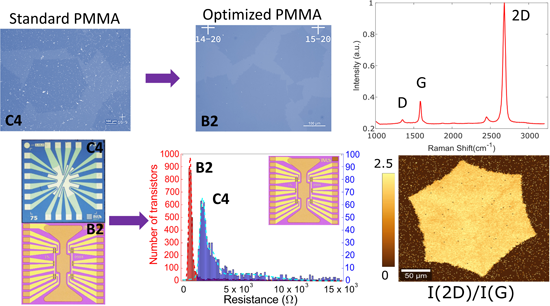
- . Keywords: 2D materials; graphene transfer process; large-scale fabrication; microelectronics; poly(methyl methacrylate); Introduction Graphene and two-dimensional (2D) transition metal dichalcogenides (TMDCs) have been the focus of an intense research effort aimed at developing a new class of innovative




Revealing local structural properties of an atomically thin MoSe2 surface using optical microscopy
Beilstein J. Nanotechnol. 2022, 13, 572–581, doi:10.3762/bjnano.13.49
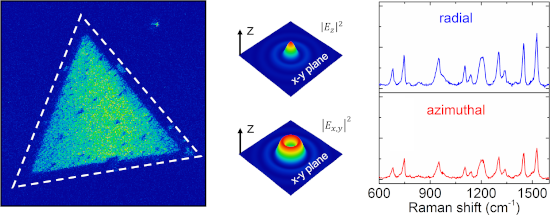
- with the SHG and photoluminescence optical images, indicating the relationship between local structure and optical properties of the MoSe2 flake. These results contribute to understand the impacts of local structural properties on the Raman enhancement at the surface of the 2D transition-metal
- fascinating optical and electronic properties [1]. In particular, the optical absorption, direct bandgap, and broken inversion symmetry of 2D transition-metal dichalcogenide (2D-TMDC) monolayers make these materials promising candidates for light-emitting diodes, photodetectors, field-effect transistors


Influence of thickness and morphology of MoS2 on the performance of counter electrodes in dye-sensitized solar cells
Beilstein J. Nanotechnol. 2022, 13, 528–537, doi:10.3762/bjnano.13.44
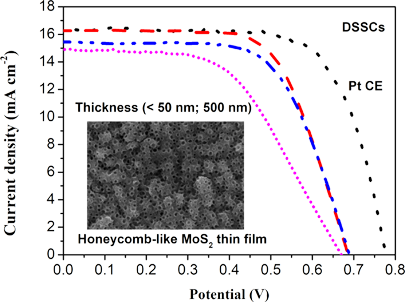
- DSSCs, which has led researchers to explore efficient cathode materials for DSSCs beyond platinum. To date, Pt replacement materials are divided into three categories, namely carbonaceous materials [2][3][4][5], conductive polymers [5], and transition metal compounds [6][7][8]. Transition metal


A non-enzymatic electrochemical hydrogen peroxide sensor based on copper oxide nanostructures
Beilstein J. Nanotechnol. 2022, 13, 424–436, doi:10.3762/bjnano.13.35
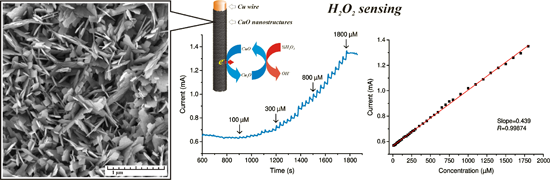
- ]. Nanostructured materials are widely used as the working surface of the electrode [47][48][49]. The most common are transition metal nanoparticles [33][37][50][51][52][53][54], carbon nanotubes [8], metal oxides [55][56][57][58][59][60][61][62][63][64], graphene [32][33], and ordered mesoporous carbon [38][65][66





Coordination-assembled myricetin nanoarchitectonics for sustainably scavenging free radicals
Beilstein J. Nanotechnol. 2022, 13, 284–291, doi:10.3762/bjnano.13.23
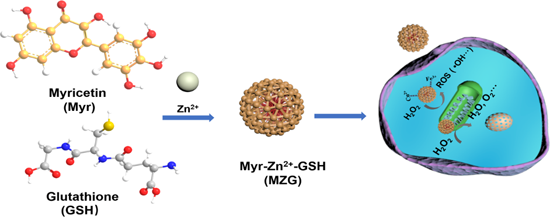
- attention because of its high antioxidant, anti-inflammatory, antimicrobial, and anticancer efficacy. Especially regarding antioxidation, Myr is capable of not only chelating intracellular transition metal ions for removing reactive oxygen species, but also of activating antioxidant enzymes and related
- not only chelating intracellular transition metal ions for removing reactive oxygen species (ROS) [20], but also of activating antioxidant enzymes and the AMPK/NRF2 signal pathway [21], yielding sustainable scavenging of radicals. Myr can inherently increase body resistance to carcinogens, viruses


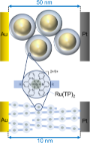
Impact of device design on the electronic and optoelectronic properties of integrated Ru-terpyridine complexes
Beilstein J. Nanotechnol. 2022, 13, 219–229, doi:10.3762/bjnano.13.16
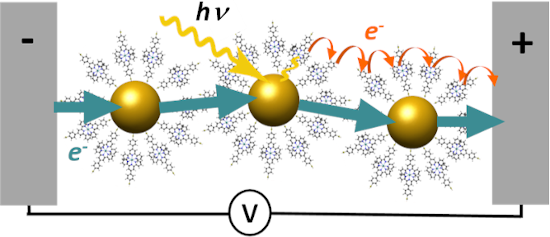
- metallo-supramolecular wires are promising candidates as electronic and luminochromic materials, which are also useful in a variety of other applications [1][2][3]. They are available with different transition metal centers and numerous chelating ligands. The ligands may be designed to promote the wire
- growth, to include additional functionalities or to form bridges to biomolecules [4][5]. Common ligands, particularly suitable for the metallo-supramolecular wire growth and exhibiting high binding constants to a broad range of transition metal ions, are often based on 2,2′:6′,2″-terpyridine (TP) motives
- [5][6][7]. TP complexes, themselves or as hybrid materials with (semi)conducting species, are redox-active and, thus, enable applications in nanoelectronics and catalysis [8][9][10]. Among the suitable transition metal centers, Ru is highly attractive since Ru(TP)2-complexes show intense metal-to


Low-energy electron interaction and focused electron beam-induced deposition of molybdenum hexacarbonyl (Mo(CO)6)
Beilstein J. Nanotechnol. 2022, 13, 182–191, doi:10.3762/bjnano.13.13
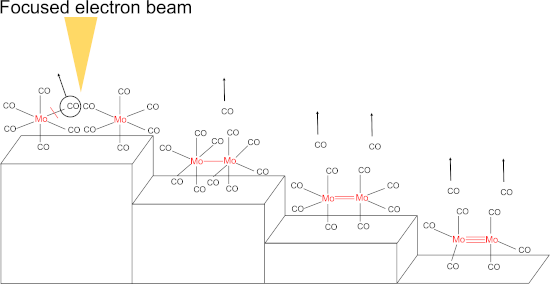
- potential [44] for the molybdenum core electrons was used, including the D3(BJ) dispersion correction by Grimme and co-workers [45][46]. The PBE0 functional was chosen as it has been reported to be among the best performers in thermochemical studies on transition metal compounds [47][48][49]. Harmonic


Theoretical understanding of electronic and mechanical properties of 1T′ transition metal dichalcogenide crystals
Beilstein J. Nanotechnol. 2022, 13, 160–171, doi:10.3762/bjnano.13.11
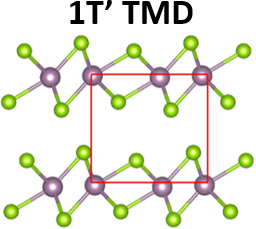
- /bjnano.13.11 Abstract Transition metal dichalcogenides (TMDs) with a 1T′ layer structure have recently received intense interest due to their outstanding physical and chemical properties. While the physicochemical behaviors of 1T′ TMD monolayers have been widely investigated, the corresponding properties
- ′ polytype; anisotropy; density functional theory; layered transition metal dichalcogenide crystals; shear modulus; Young’s modulus; Introduction Layered transition metal dichalcogenides (TMDs) have received increasing attention as important and versatile materials for new applications in different sectors
- from catalysis to energy storage and electronic devices [1][2][3][4][5][6]. Generally, each TMD layer can be described as a sandwich type of structure (X–TM–X), where TM and X are transition metal cations (e.g., Mo and W) and chalcogen anions (e.g., S and Se). Individual layers are bound via



Influence of magnetic domain walls on all-optical magnetic toggle switching in a ferrimagnetic GdFe film
Beilstein J. Nanotechnol. 2022, 13, 74–81, doi:10.3762/bjnano.13.5
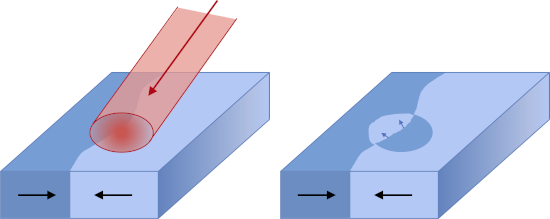
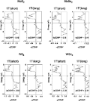
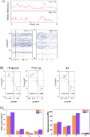
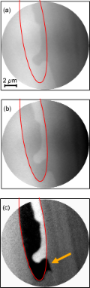
- different sample [21]. Our results show that laser-induced domain-wall motion can occur together with all-optical switching and can contribute to local non-deterministic behavior in the toggle switching. Experimental The sample was a Gd26Fe74 rare-earth–transition-metal (RE–TM) alloy film with 15 nm


Sputtering onto liquids: a critical review
Beilstein J. Nanotechnol. 2022, 13, 10–53, doi:10.3762/bjnano.13.2
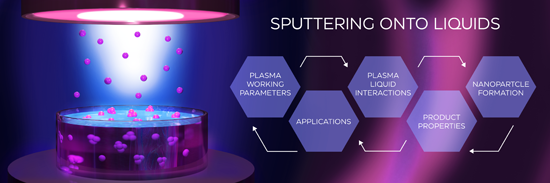
- sols and analogous systems, for example, AgCl, BaSO4, and TiO2 NPs [85][91]. The main problem of generalizing the La Mer mechanism to other systems is that homogeneous nucleation does not always take place in a supersaturated solution [89]. For example, transition-metal NPs can nucleate and grow from
- small iridium (Ir) NPs [89]. Yet, it has been shown later by Finke’s group and other research teams that it might be successfully adapted to quantitatively study the formation of Au [98][99][100][101], Ag [102][103][104], and other transition metal NPs [77][105][106]. The interested reader can find more






Chemical vapor deposition of germanium-rich CrGex nanowires
Beilstein J. Nanotechnol. 2021, 12, 1365–1371, doi:10.3762/bjnano.12.100
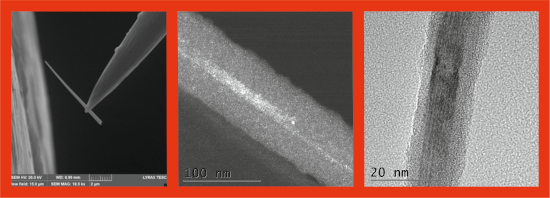
- [6]. In another theoretical work, a Cr@Ge10 nanocluster was shown to be a candidate for a transition metal-doped magnetic superatom [7], which behaves as if it was one atom. Unique magnetic properties have been found in diluted magnetic semiconductor (DMS) alloys [8]. Silicon and/or germanium are a



Progress and innovation of nanostructured sulfur cathodes and metal-free anodes for room-temperature Na–S batteries
Beilstein J. Nanotechnol. 2021, 12, 995–1020, doi:10.3762/bjnano.12.75
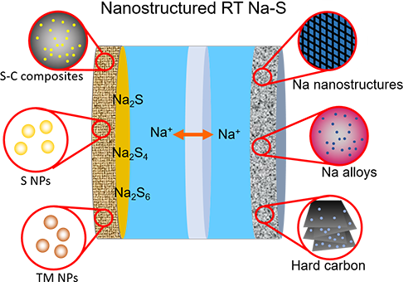
- compared with transition-metal compounds in lithium-ion batteries [11]. Consequently, sodium–sulfur (Na–S) batteries have attracted renewed attention over the last decade due to their low cost and comparable chemistry with Li–S and LiB batteries, which would facilitate the large-scale production of Na–S
- collector. As a result, the sodium polysulfide/MWCNT fabric cathode delivers a discharge capacity of 400 mAh·g−1 after 30 cycles. Transition metal nanoparticles as polysulfide sequestrants and electrocatalysts As discussed above, hollow and porous carbonaceous structures, and in particular nitrogen or
- ]. Therefore, the shuttle effect often cannot be avoided. In order to solve this limitation, transition metal nanoparticles (NPs) or compounds are incorporated in the cathode. The metallic species is bonded to the carbon skeleton creating a dipole, which leads to dipole–dipole interactions with the




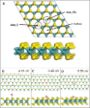
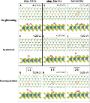
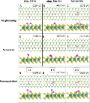
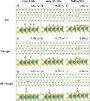
Prediction of Co and Ru nanocluster morphology on 2D MoS2 from interaction energies
Beilstein J. Nanotechnol. 2021, 12, 704–724, doi:10.3762/bjnano.12.56
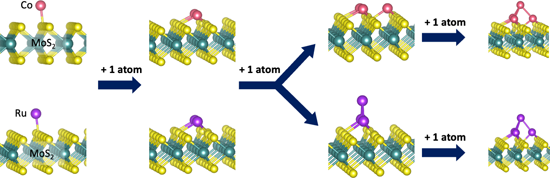
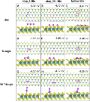
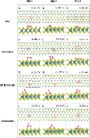
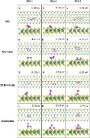
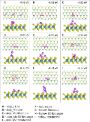
- is a naturally occurring transition metal dichalcogenide (TMD) and one of the most frequently studied 2D materials. Unlike graphene, MoS2 is a semiconductor, which gives it an increased number of possible applications [11][29]. Our previous first principles study [28] of the interaction of Cu species



A review of defect engineering, ion implantation, and nanofabrication using the helium ion microscope
Beilstein J. Nanotechnol. 2021, 12, 633–664, doi:10.3762/bjnano.12.52
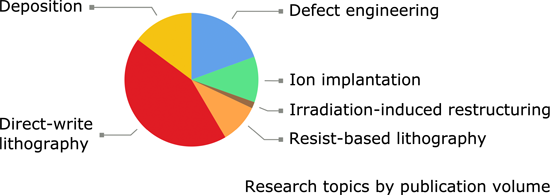
- ]. Various 2D transition metal dichalcogenides have also been the subject of conductivity-tuning studies in the HIM. For example, Fox et al. showed that site-selective helium ion irradiation, introducing point defects and local disorder, transformed targeted regions of a supported pristine few-layer MoS2
- ]. In addition, density functional theory has been used to model the effect of ion-induced defects on the electronic band structure of various 2D transition metal dichalcogenides [26][30][36], and band-excitation Kelvin probe microscopy has been used to probe the resulting changes in the local work
- regions around the intended structures (note, the graphene was not milled away) [62]. Tuning of the resonant behavior of the nanostructures was demonstrated by adjusting the irradiation dose. Closely related to the electronic property tuning of 2D transition metal dichalcogenides described earlier


Interface interaction of transition metal phthalocyanines with strontium titanate (100)
Beilstein J. Nanotechnol. 2021, 12, 485–496, doi:10.3762/bjnano.12.39
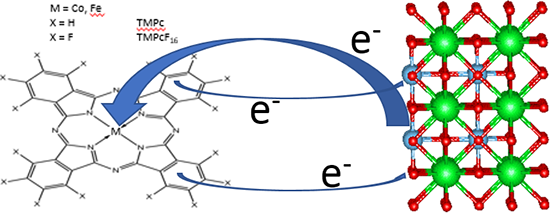
- transfer with the oxide substrate was observed, involving both the macrocycle and the central metal atom. For molecules of the first monolayer, an electron transfer to the central metal atom is concluded from transition metal 2p core level photoemission spectra. The number of interacting molecules in the
- at interfaces; strontium titanate; transition metal phthalocyanines; Introduction Interfaces between organic semiconductors and oxides are of increasing fundamental interest. Such interfaces determine key properties of a broad variety of electronic devices. Common examples are dye-sensitized solar
- general chemical structure of the chosen molecules is shown in Figure 1c. The electronic properties of transition metal phthalocyanines (TMPcs) can be widely chemically modified at both the central metal atom and the macrocycle. This chemical tunability allows for a broad variation of electronic


Reconstruction of a 2D layer of KBr on Ir(111) and electromechanical alteration by graphene
Beilstein J. Nanotechnol. 2021, 12, 432–439, doi:10.3762/bjnano.12.35
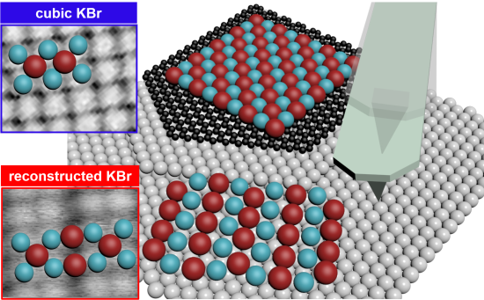
- , resulting in quasi free-standing graphene layers [18]. Alkali halide layers are frequently used as decoupling layers in surface science [19][20][21][22]. They are reported to form single- or double-layer islands with a typical cubic structure on single-crystalline transition metal surfaces [23][24


Solution combustion synthesis of a nanometer-scale Co3O4 anode material for Li-ion batteries
Beilstein J. Nanotechnol. 2021, 12, 424–431, doi:10.3762/bjnano.12.34
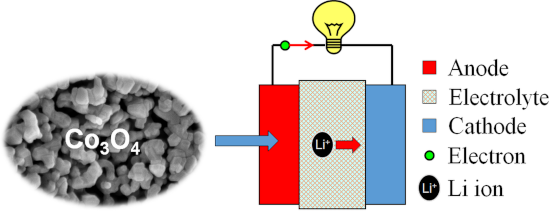
- current densities between 50 and 5000 mA·g−1. Keywords: anode material; cobalt oxide; lithium-ion battery; solution combustion synthesis; transition metal oxide; Introduction Recently, a considerable research effort regarding new anode materials has been made because the traditional carbonaceous anodes
- potential next-generation anodes. Among them, transition metal oxides (TMOs) have attracted particular attention because their capacities are significantly greater than those of carbonaceous electrode materials. Also, most of the TMOs are relatively inexpensive and easily accessible due to their high
- the formation of composite materials consisting of Co3O4 and different materials, including carbon-based materials, such as graphene [7][8], carbon nanotubes [9], carbon coatings [10], dictyophora indusiata-derived carbon [11], or other transition metal oxides [12]. This approach usually leads to a


Spontaneous shape transition of MnxGe1−x islands to long nanowires
Beilstein J. Nanotechnol. 2021, 12, 366–374, doi:10.3762/bjnano.12.30
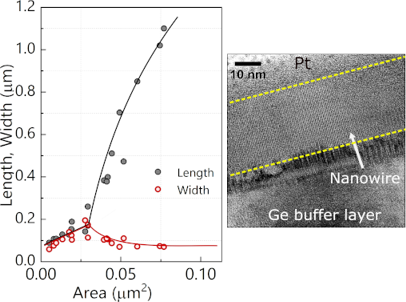
- high Curie temperature is necessary. Mn–Ge alloys epitaxially grown on Ge substrates have been shown to be promising candidates for such spintronic systems [11][12][13]. Transition metal germanides that have sharp interfaces and a tunable Schottky barrier, in particular, can advantageously replace


Nickel nanoparticle-decorated reduced graphene oxide/WO3 nanocomposite – a promising candidate for gas sensing
Beilstein J. Nanotechnol. 2021, 12, 343–353, doi:10.3762/bjnano.12.28
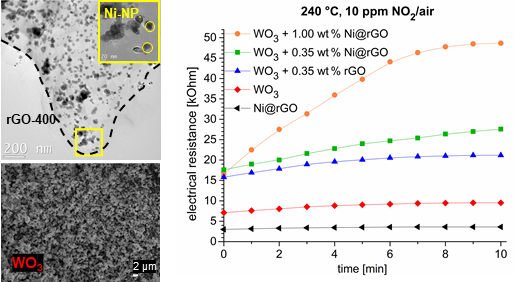
- performance of MOS@rGO can further be improved by either chemical doping or by combination with a transition metal as ternary component [38]. Iron oxide-doped WO3 films showed improved NO2 sensing at room temperature, when adding a layer of 16 nm p-type rGO on the metal oxide film [39]. Nickel-doped SnO2


Extended iron phthalocyanine islands self-assembled on a Ge(001):H surface
Beilstein J. Nanotechnol. 2021, 12, 232–241, doi:10.3762/bjnano.12.19
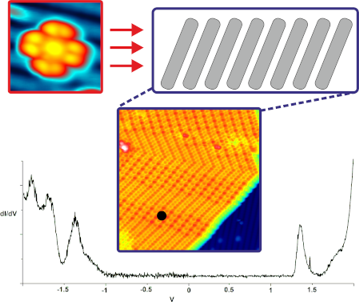
- molecular wetting layers [15] and two-dimensional materials, such as graphene [16][17], hBN [11][18], or even organic layers [19]. Recently, it has been proposed that a monolayer of transition metal dichalcogenides, for example, MoS2, may play a similar role [4][20][21]. Similarly, it has been reported that
TiOx/Pt3Ti(111) surface-directed formation of electronically responsive supramolecular assemblies of tungsten oxide clusters
Beilstein J. Nanotechnol. 2021, 12, 203–212, doi:10.3762/bjnano.12.16
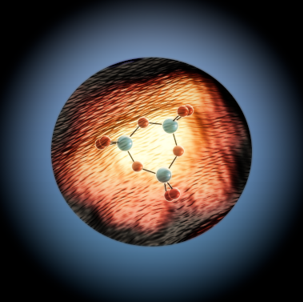
- of electronic devices appealing for the implementation in conceptually new data storage cells [1]. Specifically, resistive memories [2] based on the change of the electrical properties of a transition metal oxide thin layer, integrated in a simple electrode setup as a function of an externally
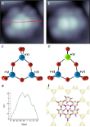
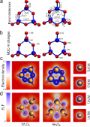
- W3O8 should also lead to an increased local interaction with the transition metal oxide layer, which might play a role in the new assembly arrangement. We have observed stronger interaction of both clusters with a simpler TiO2 surface, in which O atoms from the cluster interact with Ti atoms of the



ZnO and MXenes as electrode materials for supercapacitor devices
Beilstein J. Nanotechnol. 2021, 12, 49–57, doi:10.3762/bjnano.12.4
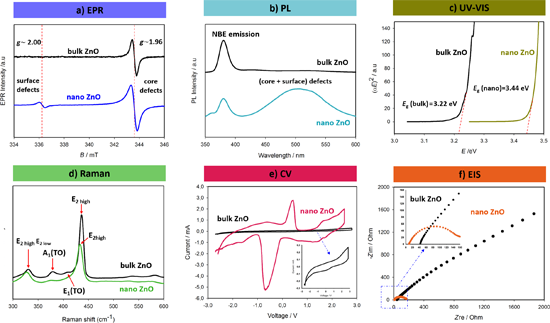
- large family of hexagonal layered ternary transition-metal carbides, carbonitrides, and nitrides with the formula: Mn+1AXn where M denotes a transition metal (Sc, Ti, V, Cr, Zr, Nb, Mo, Hf, or Ta), A denotes a group-13 or group-14 element (Al, Si, P, S, Ga, Ge, As, Cd, Ln, Sn, Tl, or Pb), and X denotes
Self-standing heterostructured NiCx-NiFe-NC/biochar as a highly efficient cathode for lithium–oxygen batteries
Beilstein J. Nanotechnol. 2020, 11, 1809–1821, doi:10.3762/bjnano.11.163
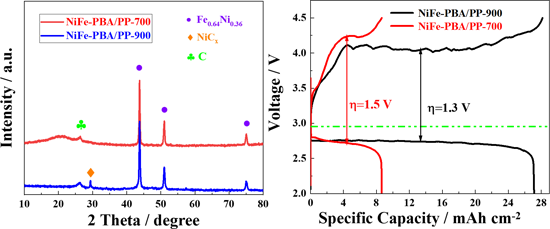
- fairly high ORR and OER activities. Significant progress has been made in the development of alternative ORR and OER catalysts, such as transition metal oxides [16][17][18], heteroatom-doped carbons [19][20], and transition metal nitrides and carbides [21][22][23]. Due to their surface physicochemical
- properties (similar to PGMs), high durability, and high electrical conductivity, transition metal carbides have recently become an active research topic. As such, they have been intensively studied as promising alternatives to PGM catalysts in the development of alternative ORR and OER catalysts [24][25
- ]. The hybridization between the d-orbital of the transition metal and s- and p-orbitals of carbon effectively stretch the d-band structure of the transition metal. This results in a similar d-band of PGMs, which makes these metal carbides promising candidates to replace PGM-based ORR and OER catalysts






Nanomechanics of few-layer materials: do individual layers slide upon folding?
Beilstein J. Nanotechnol. 2020, 11, 1801–1808, doi:10.3762/bjnano.11.162
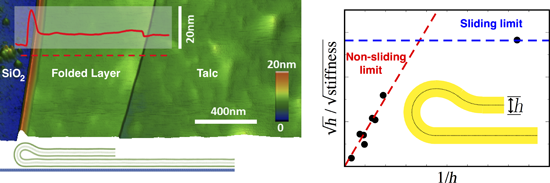
- methods; atomic force microscopy (AFM); molecular dynamics (MD); Raman spectroscopy; nanostructured materials; Introduction Layered materials such as graphite, talc, and transition metal dichalcogenides (TMDs), held together by strong covalent bonds within layers and relatively weak van der Waals
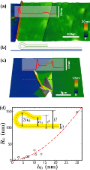

![[Graphic 5]](/bjnano/content/inline/2190-4286-11-162-i8.svg?max-width=637&scale=1.18182) =
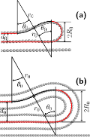
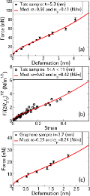
= ![[Graphic 6]](/bjnano/content/inline/2190-4286-11-162-i9.svg?max-width=637&scale=1.18182) as a function of 1/h for the nine measured talc samples. h is a directly measured ...
as a function of 1/h for the nine measured talc samples. h is a directly measured ...
Adsorption and self-assembly of porphyrins on ultrathin CoO films on Ir(100)
Beilstein J. Nanotechnol. 2020, 11, 1516–1524, doi:10.3762/bjnano.11.134
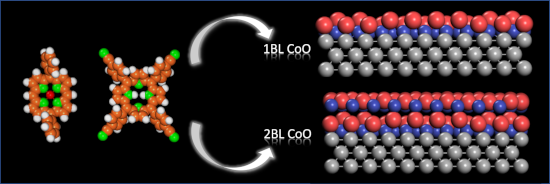
- islands on the 2BL film. The findings demonstrate the guiding effect of the cobalt oxide films of different thickness and the effect of functional surface anchoring. Keywords: adsorption energy; molecular rotors; porphyrins; self-assembly; transition metal oxides; Introduction Due to their variability