


Search results
Search for "van der Waals" in Full Text gives 369 result(s) in Beilstein Journal of Nanotechnology. Showing first 200.
Assessing phytotoxicity and tolerance levels of ZnO nanoparticles on Raphanus sativus: implications for widespread adoptions
Beilstein J. Nanotechnol. 2024, 15, 115–125, doi:10.3762/bjnano.15.11
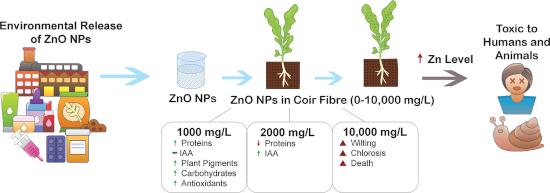
- microvoids in the liquid. This exerted a shear force on NP agglomerates, effectively overcoming the van der Waals force that holds them together [56]. The effect of ZnO NPs on soluble protein and IAA contents Plants grown in coir medium treated with 10,000 mg/L did not survive. Therefore, protein and IAA


Fluorescent bioinspired albumin/polydopamine nanoparticles and their interactions with Escherichia coli cells
Beilstein J. Nanotechnol. 2023, 14, 1208–1224, doi:10.3762/bjnano.14.100
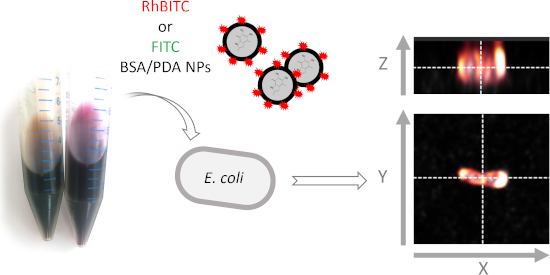
- , the high ionic strength of 150 mM NaCl decreased long-range effect and intensity of electrostatic interactions compared to the other solvents, thus favoring other types of interactions (such as attractive van der Waals interactions) and, therefore, aggregation. Second, the increase in salt



Isolation of cubic Si3P4 in the form of nanocrystals
Beilstein J. Nanotechnol. 2023, 14, 971–979, doi:10.3762/bjnano.14.80
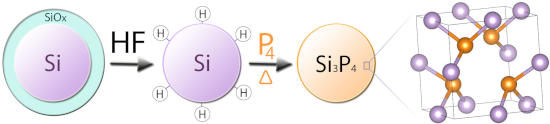
- credited to a significant contribution of van der Waals interactions in the studied structure (The P–P distance in the vacancy was 3.22 Å, which is lower than the doubled van der Waals radius of phosphorus [35]). Slight shifts of frequencies are not uncommon for DFT calculations in such cases even when


Antibody-conjugated nanoparticles for target-specific drug delivery of chemotherapeutics
Beilstein J. Nanotechnol. 2023, 14, 912–926, doi:10.3762/bjnano.14.75
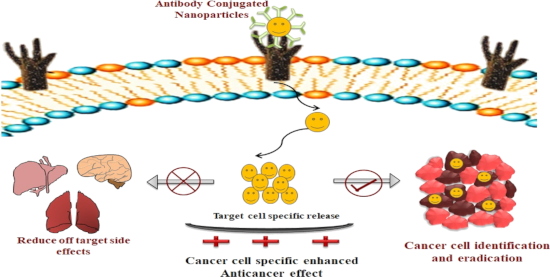
- , which includes physical adsorption and electrostatic binding (Figure 3) [38]. Physical adsorption consists of either non-covalent weak hydrophobic or electrostatic hydrogen bonding, or attractive van der Waals interaction between antibodies and NPs [39]. Ionic binding, in contrast, involves an



Biomimetics on the micro- and nanoscale – The 25th anniversary of the lotus effect
Beilstein J. Nanotechnol. 2023, 14, 850–856, doi:10.3762/bjnano.14.69

- nanostructures on the legs of cribellate spiders”. Here the challenge is to handle nanofibres which naturally stick to surfaces due to the van der Waals energy of surface interaction. Spiders which regularly process nanofibres into silk have evolved a structure on the surface of their hind legs to which the


The microstrain-accompanied structural phase transition from h-MoO3 to α-MoO3 investigated by in situ X-ray diffraction
Beilstein J. Nanotechnol. 2023, 14, 692–700, doi:10.3762/bjnano.14.55
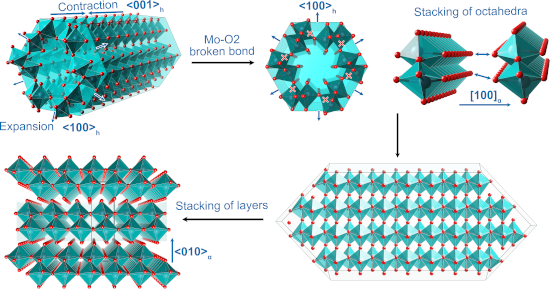
- octahedron layers in the ⟨100⟩α direction. The octahedron layers are bonded by van der Waals interactions in the ⟨010⟩α direction, crystalizing into the α-MoO3 structure. Keywords: microstrain; molybdenum oxide; phase transition; thermal expansion; Introduction Molybdenum exhibits oxidation states ranging
- tunnel ruptures the Mo–O2 bonds, forming individual MoO6 octahedron zigzag chains that share corners to generate octahedron layers. The octahedron layers are bonded by van der Waals interaction, crystalizing into the α-MoO3 structure. Results and Discussion Features of the phase transition from h-MoO3 to
- definition of the octahedra tunnel diameter by Lunk [24], the shortest O…O distance between diagonally located O atoms is 5.7053 Å. After subtracting the twofold van der Waals radius of O (1.52 Å), the diameter of the octahedra tunnel at 375 °C is 2.6653 Å, which is consistent with values given by Lunk (2.5


Metal-organic framework-based nanomaterials as opto-electrochemical sensors for the detection of antibiotics and hormones: A review
Beilstein J. Nanotechnol. 2023, 14, 631–673, doi:10.3762/bjnano.14.52
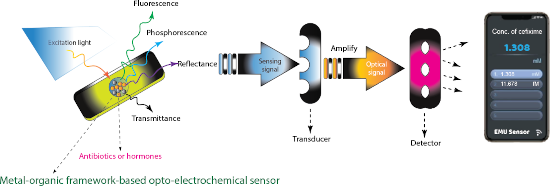
- redox reaction during the electron deactivation process. For effective quenching, a complex driven by either hydrophobic, van der Waals, or π–π-stacking interactions is generated between the electron donor and the electron acceptor with a separation on a sub-nanometre length scale. The complexation of


Suspension feeding in Copepoda (Crustacea) – a numerical model of setae acting in concert
Beilstein J. Nanotechnol. 2023, 14, 603–615, doi:10.3762/bjnano.14.50
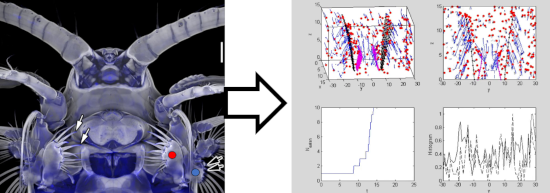
- microscope [19][20][21][22][23][24][25][26][27][28]. In this context, setae morphology and mesh size of the filtering structure and the surface chemistry and forces (e.g., van der Waals forces) of feeding structures and particles are of high importance, especially when the particles are of smaller diameter
- elastic ends of the short setae near the mouth opening. In particular, the adhesion by van der Waals attraction becomes possible at such scales. This part of the interaction must also be included in the model, namely in a form of potential interaction between the setae (or their tips) and the food
- – exp(−a(r – rvdW)))2, where rvdW is the position of the minimum of the van der Waals potential. The combined influence of all forces mentioned above leads to a typical dynamic scenario, which has been recorded in the movie in Supporting Information File 1. It reproduces quite realistically the behavior


Liquid phase exfoliation of talc: effect of the medium on flake size and shape
Beilstein J. Nanotechnol. 2023, 14, 68–78, doi:10.3762/bjnano.14.8
- flexural rigidity is about three times that of graphene but it can be bent to small curvatures without fracturing. These properties make nanoscale talc a promising candidate for the application [14][15][18] as reinforcement for polymers and other composites, including biocompatible materials, and van der
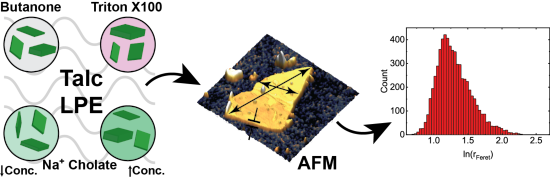
- Waals heterostructures. Being able to scale the production is a crucial step to realizing applications at an industrial level. We present the results of liquid-phase exfoliation of talc using different liquid media, namely sodium cholate aqueous solution (6 mg/mL and 1 mg/mL), Triton X-100 aqueous



Single-step extraction of small-diameter single-walled carbon nanotubes in the presence of riboflavin
Beilstein J. Nanotechnol. 2022, 13, 1564–1571, doi:10.3762/bjnano.13.130
- SWCNTs led to the upscaling of nanotube synthesis from laboratory reactors to cutting-edge manufacturing all over the world. Usually, raw SWCNTs consist of highly bundled structures due to strong van der Waals interactions between nanotubes, which alter and deteriorate their outstanding intrinsic
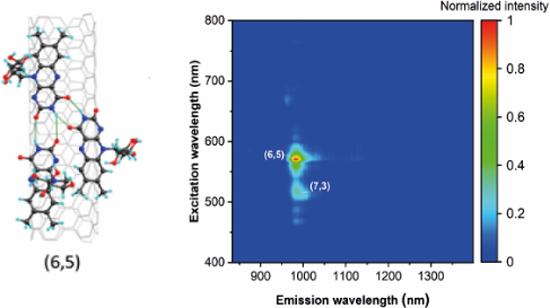
- adjacent riboflavin molecules (Figure 5b). As the riboflavin–dextran complex was relaxed, the binding energy between the riboflavin assembly and the dextran molecule was calculated. It was found that in the case of dextran in the top position (Figure 5a), weak van der Waals interactions do not depend
- intermolecular interactions negligible. The geometry of the structures was optimized until residual forces became less than 0.04 eV/Å. Grimme interatomic interaction was taken into account to describe the van der Waals-type of bonding [36]. The real-space mesh cutoff was set to 175 Ry, while calculations were


Facile preparation of Au- and BODIPY-grafted lipid nanoparticles for synergized photothermal therapy
Beilstein J. Nanotechnol. 2022, 13, 1432–1444, doi:10.3762/bjnano.13.118
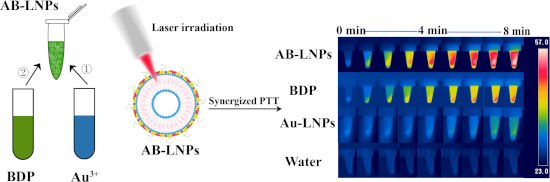
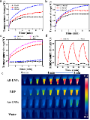
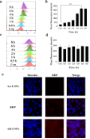
- delivery systems through van der Waals forces, hydrogen bonds, π–π stacking, or electrostatic or hydrophobic interactions [24]. Several BODIPYs have been reported to be loaded into liposomes for cancer therapy [25]. Therefore, we speculated that BODIPY can be associated with our previously reported




Straight roads into nowhere – obvious and not-so-obvious biological models for ferrophobic surfaces
Beilstein J. Nanotechnol. 2022, 13, 1345–1360, doi:10.3762/bjnano.13.111
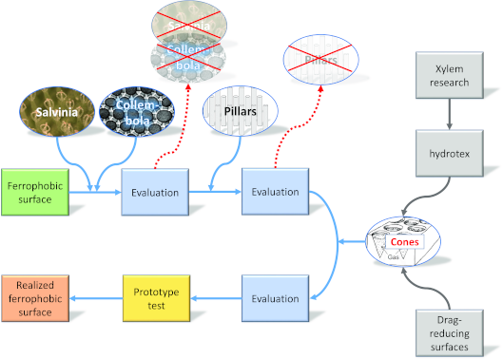
- basic principles [40]: (i) transpiration, occurring in the leaves, providing the driving force for the water flow to overcome gravity and (ii) the cohesion of water, provided by van der Waals forces between the water molecules. The conduits consist of the cell walls of the dead xylem cells. The water
- molecules flowing inside them are connected to each other and to the conduit walls by cohesion generated by van der Waals forces. The conduits are interconnected by pores, termed “pits”, which allow water to enter and leave the conduits on the way upwards (see Figure 4). In this way, a three-dimensional
- weak van der Waals forces, whose range is at most 100 nm [41]. It is, therefore, prone to become unstable upon perturbations, particularly upon the entry of small air bubbles (by, for instance, damage such as broken twigs). If large enough, these perturbations initiate a process termed “air seeding


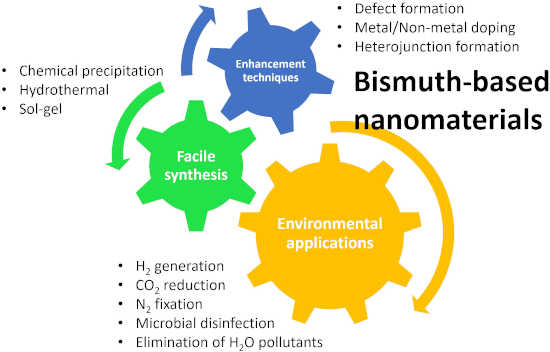
Recent trends in Bi-based nanomaterials: challenges, fabrication, enhancement techniques, and environmental applications
Beilstein J. Nanotechnol. 2022, 13, 1316–1336, doi:10.3762/bjnano.13.109
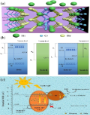
- are just van der Waals forces, which are weak [46]. Metal oxides such as TiO2 only have the O 2p orbital in their VB. In contrast , Bi-based oxide materials have an electronic structure in which O 2p and Bi 6s orbitals are paired in the VB. The bandgap of the semiconductor may be reduced to 3.0 eV




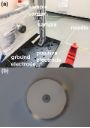
Laser-processed antiadhesive bionic combs for handling nanofibers inspired by nanostructures on the legs of cribellate spiders
Beilstein J. Nanotechnol. 2022, 13, 1268–1283, doi:10.3762/bjnano.13.105
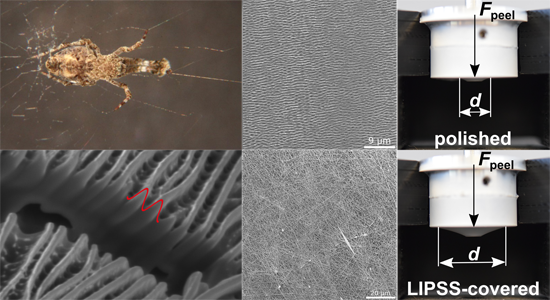
- product in the form of a random network of fibers, referred to as nonwoven fabric, the stickiness of the freshly produced and thus fragile nanofiber nonwoven remains a problem. This is mainly because nanofibers strongly adhere to any surface because of van der Waals forces. In nature, there are animals
- because nanofibers strongly adhere to any surface due to van der Waals forces [9]. For a cylindrical fiber with radius R interacting with the plane surface of a semi-infinite body, the energy per unit length due to van der Waals interaction is given as [9]: with the Hamaker constant AH, which is according
- to [9]: Here, the mass densities (ρ1 and ρ2) of the interacting bodies and the London coefficient c, which describes the particle–particle interaction, are multiplied. The van der Waals energy UvdW of the fiber obtained due to the interaction is the integral of the above interaction function µ over






Studies of probe tip materials by atomic force microscopy: a review
Beilstein J. Nanotechnol. 2022, 13, 1256–1267, doi:10.3762/bjnano.13.104
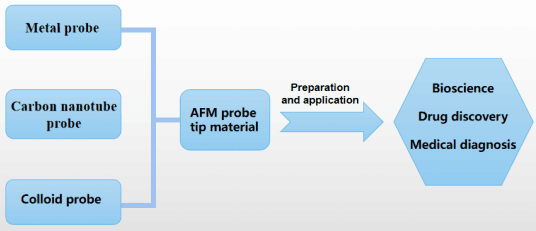
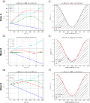
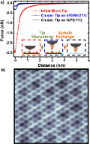
- shown to be removed one by one from the sample surface by tip indentation of the scanning tunneling microscope (STM). The probing of the interaction forces by AFM and thus the analysis of van der Waals (vdW) forces can provide valuable information on the evolution of the tip size. Carbon nanotube probes
- ][24]. Jiménez-Sánchez et al. [25] studied the extraction of Ir clusters from graphene (by indentation) on the surface of Rh(111) to fabricate AFM sharp nano-tips, i.e., with weak van der Waals interactions. Experiments were performed under ultrahigh pressure and low temperature (5 K) conditions using
- individual SWNT tip can be imaged stably with high-resolution images. Therefore, this tip type can have deeper applications in the nano field. However, due to large van der Waals forces, multiple carbon nanotubes tend to attach to AFM probes. Based on the above approach, a simple method was proposed to
Role of titanium and organic precursors in molecular layer deposition of “titanicone” hybrid materials
Beilstein J. Nanotechnol. 2022, 13, 1240–1255, doi:10.3762/bjnano.13.103
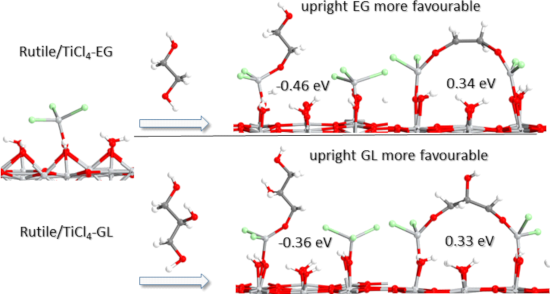
- TiCl4 on the hydroxylated surface, EHCl is the total energy of a free HCl molecule released as by-product, EEG is the total energy of the EG molecule and is the total energy of TiCl3-terminated hydroxylated surface. In computing the energies in Equation 1 and Equation 2, we also employ van der Waals


Design of surface nanostructures for chirality sensing based on quartz crystal microbalance
Beilstein J. Nanotechnol. 2022, 13, 1201–1219, doi:10.3762/bjnano.13.100
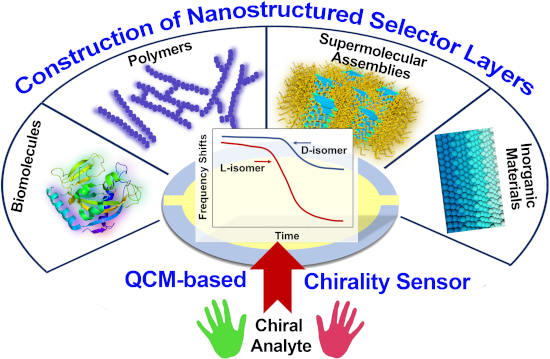
- based on noncovalent interactions, including hydrogen bonding, metal coordination, van der Waals forces, π–π interaction, and electrostatic interaction. Moreover, the structural “fitting” effect may also have distinct adsorption behaviors for enantiomers. Therefore, the design of effective chiral
- structures formed by noncovalent intermolecular/intramolecular interactions of hydrogen bonds, electrostatic, van der Waals, and hydrophobic interactions [52][53][54]. As the construction concept is inspired by natural systems for molecular recognition, supermolecular-based nanostructures have attracted


A cantilever-based, ultrahigh-vacuum, low-temperature scanning probe instrument for multidimensional scanning force microscopy
Beilstein J. Nanotechnol. 2022, 13, 1120–1140, doi:10.3762/bjnano.13.95
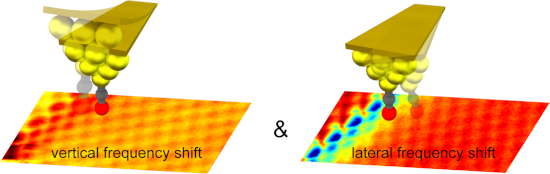
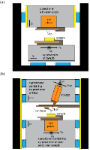
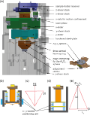
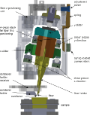
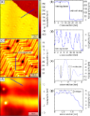
- responsible for the loss of energy from a specific cantilever oscillation mode), because Qsupport ∝ 1/t3 [62]. The measurement of magnetic, electric, or van der Waals forces is, thus, best done with thin cantilevers. These cantilevers typically have resonance frequencies of a few tens of kilohertz (comparable
- sensitivity is also useful for mapping other small forces, such as weak electrostatic, van der Waals, or Casimir forces, highlighting the advantages arising from using cantilevers with optimized force constant for a particular type of tip–sample interaction. At 6.4 K the total noise of the MFM cantilever is





Influence of water contamination on the sputtering of silicon with low-energy argon ions investigated by molecular dynamics simulations
Beilstein J. Nanotechnol. 2022, 13, 986–1003, doi:10.3762/bjnano.13.86
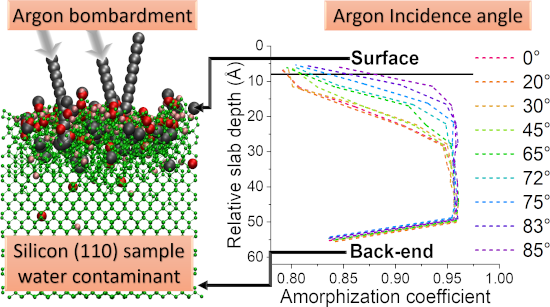
- van der Waals and Coulombic interactions in the energy calculation, resulting in a sum of partial energies [38]. The ReaxFF force field was developed by van Duin et al. [34] for the Si–C–O–H system, and for all simulations described in this paper, ReaxFFSiOCH(2019) is used. To reproduce the
- pseudopotentials describing core electrons of the different elements. Van der Waals contributions are included using the Tkatchenko–Scheffler method [47]. A plane wave cut-off of 500 eV is used and k-points are automatically generated. The self-consistent calculation is performed using a Davidson block iteration
- °. Comparison between samples after irradiation with an incident beam at 100 eV and 85° for (a) the pristine sample and (b) the contaminated sample, where the silicon atoms are in the compact representation (yellow). The oxygen (red) and hydrogen (white) atoms are represented with their van der Waals




Bioselectivity of silk protein-based materials and their bio-inspired applications
Beilstein J. Nanotechnol. 2022, 13, 902–921, doi:10.3762/bjnano.13.81
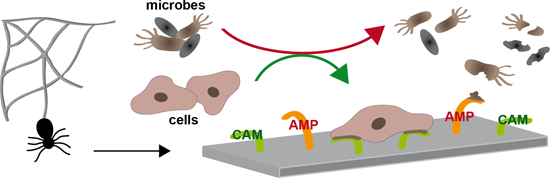
- interactions (e.g., van der Waals forces), and adhesive chemistry of biopolymers (various types of glues) [5]. On the level of tissues, multiple cell types work together to perform complex tasks, based on their hierarchical arrangement governing the exchange of information between different cell types. To
- adhesion at contact angles between 60° and 80° [66]. The contrary material property of highly hydrophilic surfaces also effectively reduces protein and, subsequently, microbial adhesion. A theoretical study analysed the contribution to either adhesion or repellency of steric repulsion, van der Waals
- attraction, and hydrophobic interaction free energies of surface-bound hydrophilic polyethylene oxide (PEO) polymer [67]. Greater surface density and chain length of terminally attached PEO chains were reported to correlate to a lower van der Waals attractive component. In turn, steric repulsion of the


Self-assembly of C60 on a ZnTPP/Fe(001)–p(1 × 1)O substrate: observation of a quasi-freestanding C60 monolayer
Beilstein J. Nanotechnol. 2022, 13, 857–864, doi:10.3762/bjnano.13.76
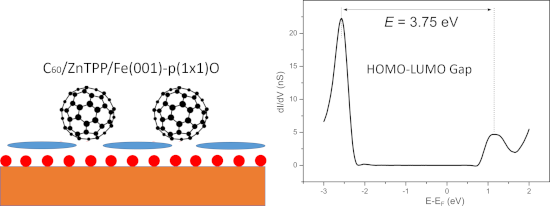
- relevant charge transfer between the overlayer and the substrate occurs. In contrast, a low Ea is characteristic of physisorbed molecules, for which the adsorption is mediated by the weak van der Waals interaction with the substrate. Chemisorption is the typical scenario for molecules stabilized on


Optimizing PMMA solutions to suppress contamination in the transfer of CVD graphene for batch production
Beilstein J. Nanotechnol. 2022, 13, 796–806, doi:10.3762/bjnano.13.70
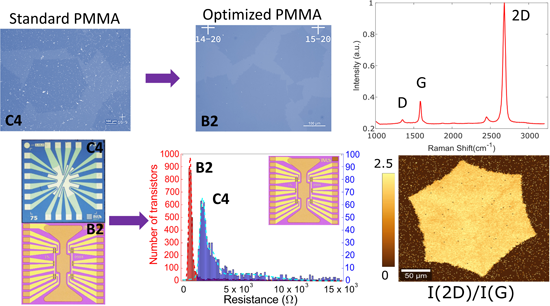
- depolymerize due to strong van der Waals and London attractive forces among the long polymer chains [13]. It must also be considered that thermal treatments can often be counterproductive as they intensify polymerization, harden the PMMA residues, and complicate the removal. Therefore, the way toward clean




Recent advances in nanoarchitectures of monocrystalline coordination polymers through confined assembly
Beilstein J. Nanotechnol. 2022, 13, 763–777, doi:10.3762/bjnano.13.67
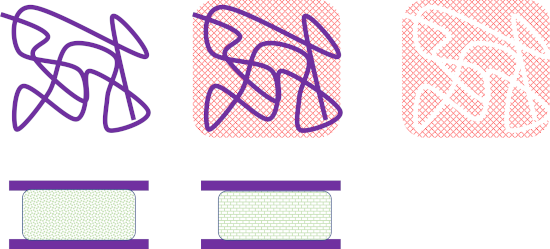
- function is quite attractive because this function is versatile even for nanoparticles. Electrodes of sodium-ion batteries can be fabricated by using the Ni–CN–Ni colloids as glue. The contribution to the adhesion strength among 2D coordination polymers was generally considered to be van der Waals forces
- [147]. However, the adhesion strength varied over time, sometimes reaching values even close to 100 N·cm−2, which is higher than to be expected from van der Waals forces. The non-uniform deposition of Ni–CN–Ni nanosheets caused by Marangoni flow was an important reason for the unstable value of the




Design and selection of peptides to block the SARS-CoV-2 receptor binding domain by molecular docking
Beilstein J. Nanotechnol. 2022, 13, 699–711, doi:10.3762/bjnano.13.62
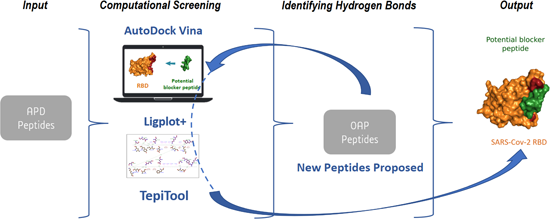
- of the most commonly used programs [16][17][21]. ADV provides theoretical information about hydrophobic interactions, electrostatic interactions, hydrogen bonds, and van der Waals interactions. It can also predict the binding pose and binding affinity [20]. Considering these important features, ADV
- solvation potentials are neglected, while van der Waals potential, the nondirectional hydrogen bond term, the hydrophobic term, and a conformational entropy penalty are considered) [20][21]. It can be observed that the binding energy values (Table 1 and Table 2) are significantly lower than the binding



Reliable fabrication of transparent conducting films by cascade centrifugation and Langmuir–Blodgett deposition of electrochemically exfoliated graphene
Beilstein J. Nanotechnol. 2022, 13, 666–674, doi:10.3762/bjnano.13.58
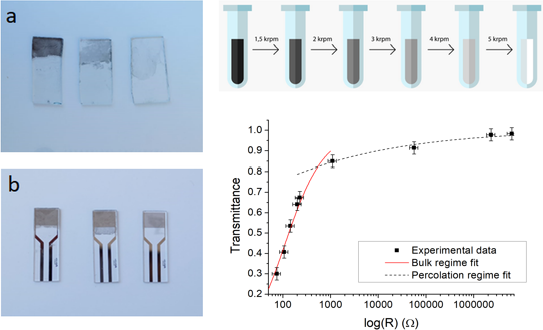
- break van der Waals forces, leading to exfoliation [20]. Electrochemical exfoliation offers an alternative to LPE that is both scalable and widely available. It has been used to make graphene for various applications, including energy storage [21][22]. Both ultrasound-assisted LPE and electrochemical





