


Search results
Search for "vapor deposition" in Full Text gives 293 result(s) in Beilstein Journal of Nanotechnology. Showing first 200.
Revealing local structural properties of an atomically thin MoSe2 surface using optical microscopy
Beilstein J. Nanotechnol. 2022, 13, 572–581, doi:10.3762/bjnano.13.49
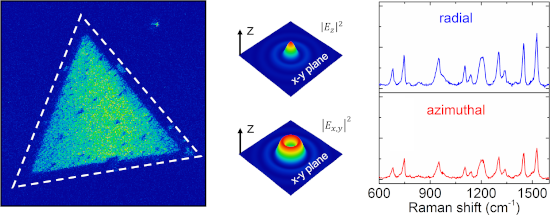
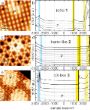
- CuPc as a Raman probe, because CuPc exhibits a large Raman scattering cross section and an extremely weak photoluminescence signal. A thin film of 5 nm of CuPc was deposited on the triangular MoSe2 flakes through thermal vapor deposition. Figure 1a shows a bright-field optical image of CuPc/MoSe2. From
- characterization of CuPc molecules on MoSe2 flakes The MoSe2 flakes were received from SixCarbon Technology (Shenzhen), synthesized on a SiO2/Si substrate using chemical vapor deposition. An ultra-thin film of CuPc with a thickness of 5 nm is deposited on the MoSe2 samples by vacuum thermal deposition. At a


Electrostatic pull-in application in flexible devices: A review
Beilstein J. Nanotechnol. 2022, 13, 390–403, doi:10.3762/bjnano.13.32
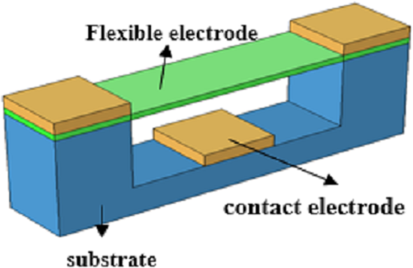
- vertically on the substrate. The vertically aligned MWCNTs were prepared by various methods, such as the constriction of CNT growth by nanoscale pockets and DC plasma-enhanced chemical vapor deposition (PECVD), as shown in Figure 2c. Using the vertically aligned CNT switches provides a high density for


Tin dioxide nanomaterial-based photocatalysts for nitrogen oxide oxidation: a review
Beilstein J. Nanotechnol. 2022, 13, 96–113, doi:10.3762/bjnano.13.7
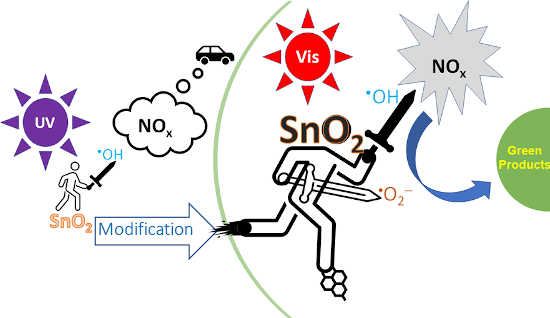
- materials, preferably using two redox sites; (3) synthesizing other morphologies of SnO2 such as nanorods, nanotubes, or 3D structures to increase the specific surface area of the catalyst; (4) upscaling the syntheses and using other synthesis approaches such as sol–gel or chemical vapor deposition to form


Sputtering onto liquids: a critical review
Beilstein J. Nanotechnol. 2022, 13, 10–53, doi:10.3762/bjnano.13.2
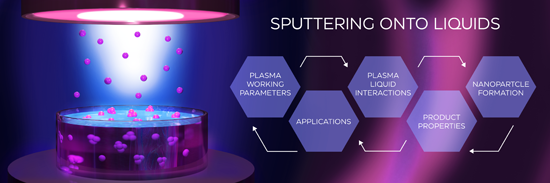
- , Czech Republic 10.3762/bjnano.13.2 Abstract Sputter deposition of atoms onto liquid substrates aims at producing colloidal dispersions of small monodisperse ultrapure nanoparticles (NPs). Since sputtering onto liquids combines the advantages of the physical vapor deposition technique and classical
- (Figure 1). In 1974, Yatsuya et al. used a liquid as a substrate during a physical vapor deposition (PVD) experiment. They thermally evaporated metals in vacuum onto silicon oil for NP production [9]. After the pioneering experiments of Yatsuya et al., depositions onto liquids were not mentioned in
- . These chemical methods can be divided into two major techniques, namely chemical vapor deposition (CVD) with liquid-phase synthesis and colloidal synthesis. In general, the colloidal synthesis of NPs is highly acclaimed due to its versatility [16]. So-called bio-assisted methods, biosynthesis, or green






Chemical vapor deposition of germanium-rich CrGex nanowires
Beilstein J. Nanotechnol. 2021, 12, 1365–1371, doi:10.3762/bjnano.12.100
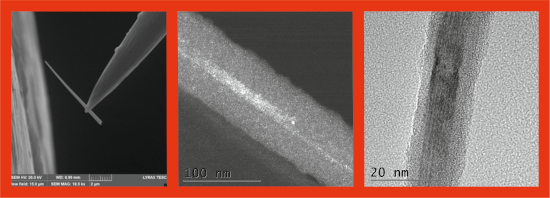
- Sciences, Chaberská 1014/57, 182 51 Prague 8, Czech Republic 10.3762/bjnano.12.100 Abstract Chemical vapor deposition was applied to synthetize nanostructured deposits containing several sorts of nanoobjects (i.e., nanoballs, irregular particles, and nanowires). Analytical techniques, that is, high
- . Keywords: chemical vapor deposition; chromium germanide; nanostructured materials; nanowire; resistivity; Introduction Metal silicides and germanides belong to an extensively studied group of materials offering a wide variety of properties to meet various requirements in battery, optical, and electronic
- effort to prepare a Cr/Ge deposit in a nanostructured form. Using chemical vapor deposition (CVD), we succeeded to synthesize deposits containing CrGex NWs. Their structure was elucidated and measurements of individual NWs were carried out to determine their electrical resistivity. Results and Discussion



Irradiation-driven molecular dynamics simulation of the FEBID process for Pt(PF3)4
Beilstein J. Nanotechnol. 2021, 12, 1151–1172, doi:10.3762/bjnano.12.86
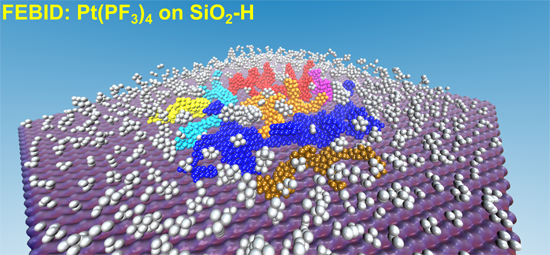
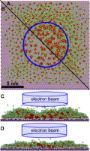
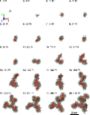
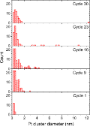
- working chamber. Nowadays, FEBID permits the fabrication of nanostructures with sizes down to a few nanometers, which is similar to the size of the incident electron beam [7]. To date, FEBID mainly relies on precursor molecules developed for chemical vapor deposition (CVD), a process mainly governed by








Assessment of the optical and electrical properties of light-emitting diodes containing carbon-based nanostructures and plasmonic nanoparticles: a review
Beilstein J. Nanotechnol. 2021, 12, 1078–1092, doi:10.3762/bjnano.12.80
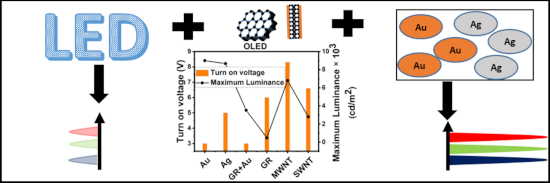
- -roll techniques and chemical vapor deposition, both industrially viable techniques, are capable of producing 30 inch wafers of graphene, thereby demonstrating the viable upscaling of its production [41]. Other carbon-based nanomaterials such as SWNT have also been employed as current-spreading layers


Revealing the formation mechanism and band gap tuning of Sb2S3 nanoparticles
Beilstein J. Nanotechnol. 2021, 12, 1021–1033, doi:10.3762/bjnano.12.76
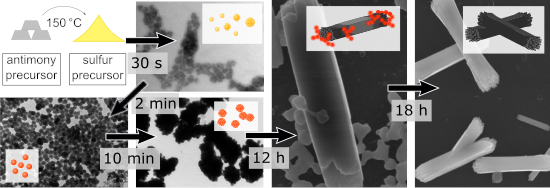
- -black, crystalline form, known as the mineral stibnite [7][8]. Sb2S3 nanomaterials with a diverse morphology and a broad distribution of band gap values were synthesized by solvothermal [9], hydrothermal [10], and sonochemical [11] approaches, as well as by chemical bath [12] and chemical vapor
- deposition [13] methods. Up to now, the syntheses of Sb2S3 nanomaterials lack sufficient control of the growth conditions. The result are nanoparticles of which the size, shape, and crystallinity can only be tuned to a limited extent. However, for several applications, such as electronic circuits [14], it is


Molecular assemblies on surfaces: towards physical and electronic decoupling of organic molecules
Beilstein J. Nanotechnol. 2021, 12, 950–956, doi:10.3762/bjnano.12.71

- physical and electronic decoupling have been developed in view of fundamental studies as well as application in devices. Ultrathin semiconducting or insulating decoupling layers can be epitaxially grown as mono- and multilayers on many metallic substrates by either physical or chemical vapor deposition
9.1% efficient zinc oxide/silicon solar cells on a 50 μm thick Si absorber
Beilstein J. Nanotechnol. 2021, 12, 766–774, doi:10.3762/bjnano.12.60
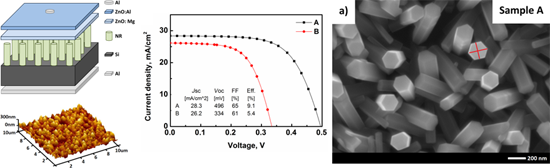
- environmentally friendly solar cells are cells based on zinc oxide (ZnO). ZnO thin films can be obtained using many technologies, including molecular beam epitaxy, RF magnetron sputtering, pulsed laser deposition, chemical vapor deposition, and atomic layer deposition (ALD) [3]. ALD attracts the attention of many


Recent progress in actuation technologies of micro/nanorobots
Beilstein J. Nanotechnol. 2021, 12, 756–765, doi:10.3762/bjnano.12.59
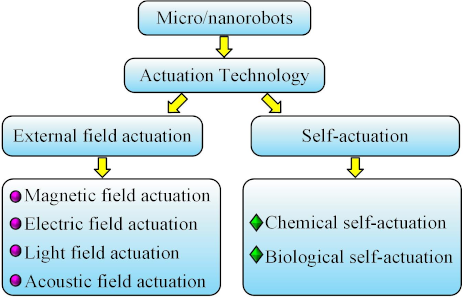
- actuated by an electric mechanism decomposing H2O2. Xu used a chemical vapor deposition method to obtain a large number of helical molecular chains and studied the motion behavior related to the number of rotations. With increasing number of rotations, the micro/nanorobot may counter greater resistance
- during motion. In addition, the study also found that the concentration of H2O2 and the distribution of platinum may also affect the movement. Although chemical vapor deposition offers a high yield, the oxide produced during chemical vapor deposition reduces the effective controllability, which is a new


Spontaneous shape transition of MnxGe1−x islands to long nanowires
Beilstein J. Nanotechnol. 2021, 12, 366–374, doi:10.3762/bjnano.12.30
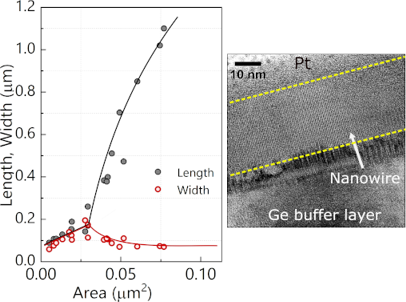
- obtained via chemical methods [28][29] or via vapor–solid–liquid (VLS) and, less frequently, vapor–solid–solid (VSS) mechanisms. A metallic droplet (liquid or solid) acts as a catalyst, in chemical vapor deposition (CVD), or as a seed, in molecular beam epitaxy (MBE), for the NW growth [7][30][31]. By


The patterning toolbox FIB-o-mat: Exploiting the full potential of focused helium ions for nanofabrication
Beilstein J. Nanotechnol. 2021, 12, 304–318, doi:10.3762/bjnano.12.25
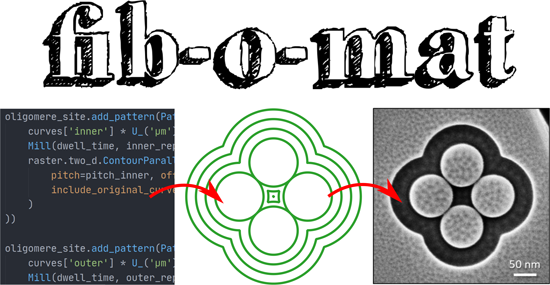
- combination with a thermal stability up to 2600 K [50], renders graphene an exciting candidate for room-temperature bolometry [51]. Single-layer graphene was grown by chemical vapor deposition onto a multicrystalline copper foil using methane as precursor gas at 1035 °C. For the transfer process, the graphene


Paper-based triboelectric nanogenerators and their applications: a review
Beilstein J. Nanotechnol. 2021, 12, 151–171, doi:10.3762/bjnano.12.12
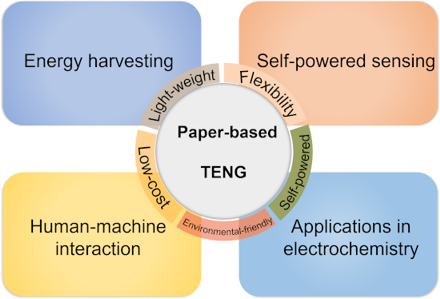
- by stencil-assisted vapor deposition [103]. The arrays of small holes with various shapes and distributions are drilled on the stencil via laser cutting, and a layer of copper with thickness of 100 nm is deposited onto the electrode via physical vapor deposition. By combining the stencil-assisted






A review on the green and sustainable synthesis of silver nanoparticles and one-dimensional silver nanostructures
Beilstein J. Nanotechnol. 2021, 12, 102–136, doi:10.3762/bjnano.12.9
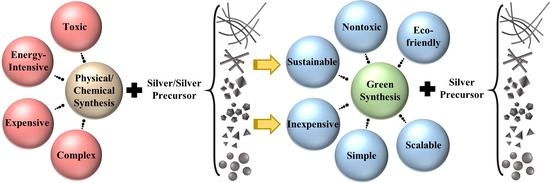
- processes [143][144][145][146], conventional chemical reduction [147][148][149][150][151], reverse micelle [152][153][154], co-precipitation [155], chemical vapor deposition [156][157][158], solvothermal [159][160][161], and electrochemical reduction [162][163][164][165]. Chemical synthesis methods are
- deposition process. Chemical vapor deposition (CVD) and atomic layer deposition (ALD) are among other chemical methods for nanoparticle synthesis. CVD is a method that allows production of nanoparticles on a substrate [241]. The process consists of three steps. First, the addition of a volatile precursor in
- concentration inside the reverse micelles [235]. AOT-microemulsions have been the most common microemulsions for the preparation of micelles [152]. However, this method may result in the synthesis of AgNPs with weak surface plasmon characteristics due to a broad surface plasmon band [152]. 2.2.3 Chemical vapor


Fusion of purple membranes triggered by immobilization on carbon nanomembranes
Beilstein J. Nanotechnol. 2021, 12, 93–101, doi:10.3762/bjnano.12.8
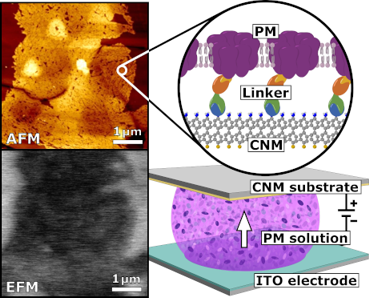
- reflection absorption spectroscopy (IRRAS). Experimental Preparation of SAMs and CNMs NBPT was purchased from Taros Chemicals (Dortmund, Germany). Thermally evaporated Au films (300 nm) on mica supports (Georg Albert physical vapor deposition coatings) were used as substrates for the SAM preparation


Towards 3D self-assembled rolled multiwall carbon nanotube structures by spontaneous peel off
Beilstein J. Nanotechnol. 2020, 11, 1865–1872, doi:10.3762/bjnano.11.168
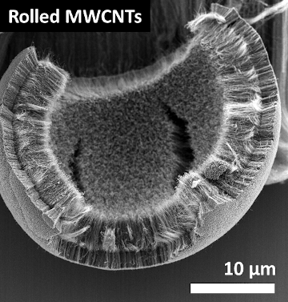
- nanotube forests. The multiwall carbon nanotube structures are comprised of nitrogen-doped and undoped sections, and are obtained via a detailed peel off and roll mechanism. These results open new doors for the development of increasingly complex nanostructures. Keywords: chemical vapor deposition
- change within CNTs and to optimize the formation of complex CNT structures, the possibility to couple aerosol-assisted chemical vapor deposition (AACVD) [20] and chemical vapor deposition (CVD) was explored [16]. For detailed synthesis and characterization protocols, including control experiments, please



Piezotronic effect in AlGaN/AlN/GaN heterojunction nanowires used as a flexible strain sensor
Beilstein J. Nanotechnol. 2020, 11, 1847–1853, doi:10.3762/bjnano.11.166
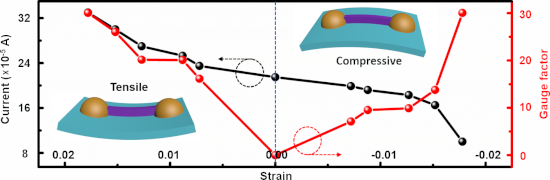
- structures used in this study were synthesized by metal-organic chemical vapor deposition (MOCVD), as shown in Figure 1a. First, 1 μm of an unintentionally doped GaN layer was deposited onto a sapphire substrate. Then, 500 nm of n-type GaN, as a current-spreading layer, was deposited to increase the lateral


Out-of-plane surface patterning by subsurface processing of polymer substrates with focused ion beams
Beilstein J. Nanotechnol. 2020, 11, 1693–1703, doi:10.3762/bjnano.11.151
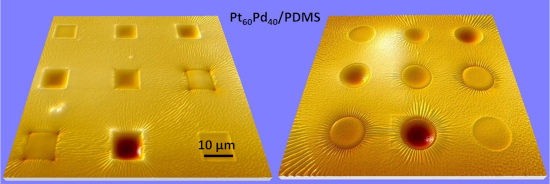
- -assisted chemical etching and ion-beam-assisted chemical vapor deposition [1][2][3]. All these methods are based on processes that either add or remove atoms on the surface or in the subsurface atomic layers. The ion beams deposit their energy and, therefore, affect the structure and properties of
- damage in polymer materials. The Pt60Pd40 alloy films were deposited by DC sputtering as described in [4], in a Cressington 208HR sputter apparatus. The Au films were deposited with an e-beam in a Cryofox Explorer 600 physical vapor deposition system. We have been using very thin metal films (5 and 15 nm


The influence of an interfacial hBN layer on the fluorescence of an organic molecule
Beilstein J. Nanotechnol. 2020, 11, 1663–1684, doi:10.3762/bjnano.11.149
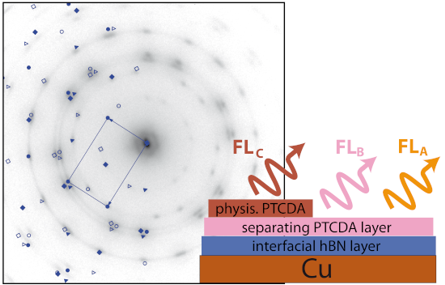
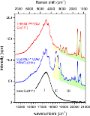
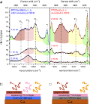
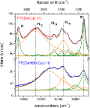
- directly on metal substrates by chemical vapor deposition [2]. This is, for example, exploited when a 2DM interfacial layer is inserted between the metallic electrode and a functional organic layer of an organic electronic device, such as an organic light emitting diode [3]. The purpose of the interfacial





Optically and electrically driven nanoantennas
Beilstein J. Nanotechnol. 2020, 11, 1542–1545, doi:10.3762/bjnano.11.136
- deposition [41], or on dense silver island films created by pulsed laser deposition [42] or physical vapor deposition [43]. In [44], individual plasmonic nanotags are prepared by coating gold nanoparticle clusters with Raman reporters. This work explores the minimum number of tags required for obtaining a
Self-assembly and spectroscopic fingerprints of photoactive pyrenyl tectons on hBN/Cu(111)
Beilstein J. Nanotechnol. 2020, 11, 1470–1483, doi:10.3762/bjnano.11.130
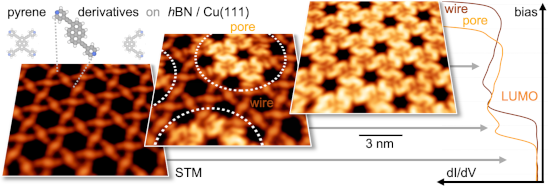
- was cleaned by repeated Ar+ sputtering cycles at an energy of 800–1000 eV, followed by annealing at 1070 K. Monolayer hBN was grown via chemical vapor deposition using borazine ((HBNH)3, Katchem spol s.r.o, www.katchem.cz), following a protocol described previously [25]. Subsequently, a submonolayer




Antimicrobial metal-based nanoparticles: a review on their synthesis, types and antimicrobial action
Beilstein J. Nanotechnol. 2020, 11, 1450–1469, doi:10.3762/bjnano.11.129
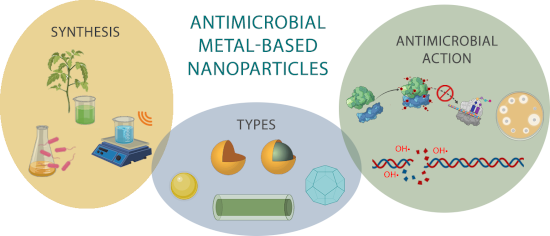
- , chemical vapor deposition, electrochemical anodization method, hydrolysis, hydrothermal method, precipitation–hydrothermal method, reverse micellar route, sol–gel method, solution-based synthesis, solvothermal synthesis, and the sonochemical method. The most relevant ones, along with the typical resulting
- nm were synthesized [42]. The chemical vapor deposition method is a technique in which the substrate is exposed to one or more volatile precursors, which react to and/or decompose on the substrate surface to produce the desired thin film deposit. For example, Zhao et al. [44] obtained graphene
- -wrapped Ag nanowires using the chemical vapor deposition method in order to investigate their broad-spectrum and robust antimicrobial properties. The cryochemical synthesis method includes a simultaneous evaporation of a metallic and a volatile component (e.g., an organic monomer), followed by co


One-step synthesis of carbon-supported electrocatalysts
Beilstein J. Nanotechnol. 2020, 11, 1419–1431, doi:10.3762/bjnano.11.126

- Abstract Cost-efficiency, durability, and reliability of catalysts, as well as their operational lifetime, are the main challenges in chemical energy conversion. Here, we present a novel, one-step approach for the synthesis of Pt/C hybrid material by plasma-enhanced chemical vapor deposition (PE-CVD). The
- acetylacetonate precursors. Keywords: electrocatalyst; fuel cells; hybrid nanomaterial; long-term stability; nanoparticle embedding; one-step synthesis; plasma-enhanced chemical vapor deposition (PE-CVD); Introduction The global fuel cell market reached a value of $4.5 billion USD in 2018 and is projected to
- only addresses the above-discussed challenges but also represents a reproducible method, which in principle is scalable, for the production of carbon-supported electrocatalysts developed on the basis of a previously reported process [17]. An inductively coupled plasma-enhanced chemical vapor deposition


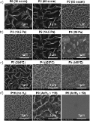


Effect of localized helium ion irradiation on the performance of synthetic monolayer MoS2 field-effect transistors
Beilstein J. Nanotechnol. 2020, 11, 1329–1335, doi:10.3762/bjnano.11.117
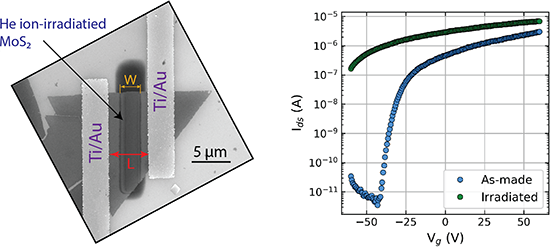
- demonstrated impressive on/off ratios (approx. 107) in field-effect transistors (FETs), while maintaining carrier mobilities that may be adequate for commercial applications [1][2]. At the same time, advances in chemical vapor deposition (CVD) techniques have allowed for the reliable millimeter-scale synthesis





