Search results
Search for "XPS" in Full Text gives 399 result(s) in Beilstein Journal of Nanotechnology. Showing first 200.
Rapid fabrication of MgO@g-C3N4 heterojunctions for photocatalytic nitric oxide removal
Beilstein J. Nanotechnol. 2022, 13, 1141–1154, doi:10.3762/bjnano.13.96
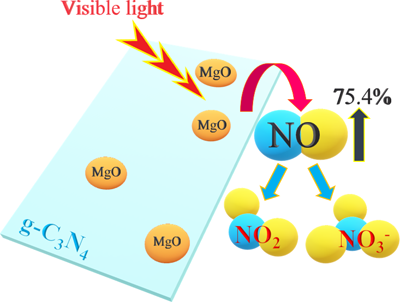
- (HR-XPS). The photoluminescence (PL) spectra of the materials was carried out in the form of fluorescence analysis with an excitation wavelength range of 200–900 nm. Finally, the photocatalytic mechanism was determined by trapping tests and ESR measurements. Photocatalytic performance The
- observe in Figure 7c,d. However, the shape of MgO is complicated to determine by TEM and HR-TEM (Figure 7a,b). These results prove the presence of MgO in the compound. Chemical state analysis XPS and HR-XPS have been employed to determine the chemical states of the materials. XPS survey scans of g-C3N4
- , and O KLL levels are observed at 46, 304, 555, and 978 eV, respectively [58][59]. The HR-XPS of the C 1s level are shown in Figure 8b. The peak at 283 eV was assigned to the C–C coordination in MgO, and the peak at 287 eV was assigned to N–C=N bonds of g-C3N4. The latter peak only appears in g-C3N4





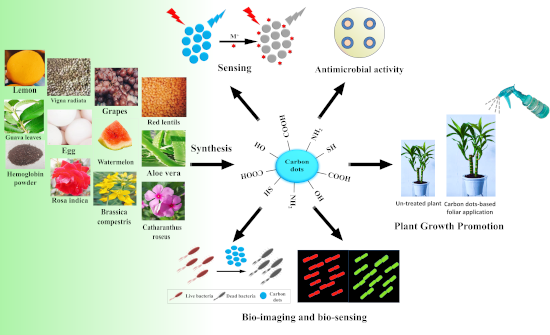
Recent advances in green carbon dots (2015–2022): synthesis, metal ion sensing, and biological applications
Beilstein J. Nanotechnol. 2022, 13, 1068–1107, doi:10.3762/bjnano.13.93
- cerasifera fruit was used to synthesize highly luminescent CDs via a hydrothermal method. The reaction temperature and time used were 200 °C and 20 h, respectively. Characterization techniques such as TEM, FTIR, and XPS were used to study the CDs which were almost spherical and had high nitrogen content [49
- the electronic structure of CDs, N,S-CDs have drawn more interest in recent years. Li et al. reported a simple and economical one-pot hydrothermal carbonization route to prepare N,S-CDs by using ginkgo leaves as a natural precursor. XPS results demonstrated that the reported CDs were having elemental
- Dunaliella salina was used to prepared low-cost N,P-CDs without any external agent. The algal biomass consists of amino acids and proteins, and XPS revealed that the CDs contain pyrrolic nitrogen and phosphate groups showing that these molecules were doped into the lattice of N,P-CDs [109]. Using banana peel




Spindle-like MIL101(Fe) decorated with Bi2O3 nanoparticles for enhanced degradation of chlortetracycline under visible-light irradiation
Beilstein J. Nanotechnol. 2022, 13, 1038–1050, doi:10.3762/bjnano.13.91
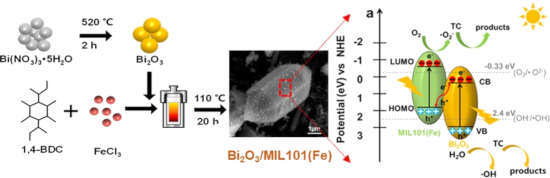
- , FEI-quanta 200, Japan Electronics, Japan), transmission electron microscopy (TEM, FEI-Tecnai F20, USA) and high-resolution transmission electron microscopy (HRTEM, JEOL 2100F, Japan). The element valence and chemical composition was investigated using X-ray photoelectron spectroscopy (XPS, Axis ultra
- photocatalytic activity of the Bi2O3/MIL101(Fe) composite. X-ray photoelectron spectroscopy was performed to explore the elemental compositions and the surface chemical states of BOM-20 and the results are presented in Figure 4. The XPS survey spectrum (Figure 4a) indicates the existence of Fe, Bi, O, and C in
- photocatalytic mechanism, the band structure was measured by UV–vis DRS and valence band X-ray photoelectron spectroscopy (VB-XPS). UV–vis DRS spectra and the bandgap (Eg) of Bi2O3 and MIL101(Fe) were discussed in Figure 5a, and the obtained bandgap of Bi2O3 and MIL101(Fe) are 2.78 and 2.75 eV, respectively


Electrocatalytic oxygen reduction activity of AgCoCu oxides on reduced graphene oxide in alkaline media
Beilstein J. Nanotechnol. 2022, 13, 1020–1029, doi:10.3762/bjnano.13.89
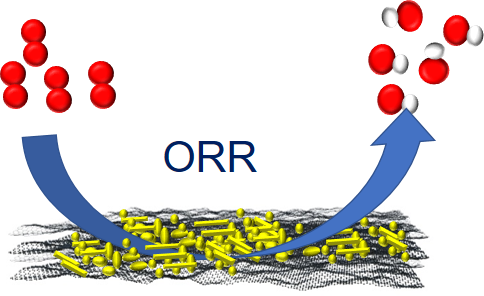
- electrochemical active surface area (ECSA) of 66.92 m2·g−1 and a mass activity of 40.55 mA·mg−1. We investigated bonding nature, composition, and morphology of the ACC-2 sample using XPS and TEM. The material is electrochemically stable up to 10,000 potential cycles, highlighting the durability of the


Theoretical investigations of oxygen vacancy effects in nickel-doped zirconia from ab initio XANES spectroscopy at the oxygen K-edge
Beilstein J. Nanotechnol. 2022, 13, 975–985, doi:10.3762/bjnano.13.85
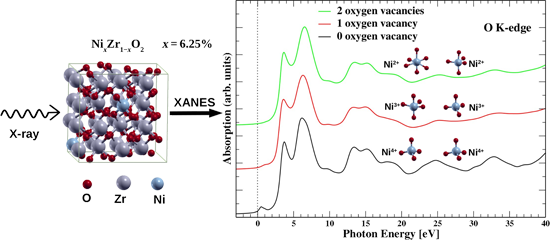
- photoelectron spectroscopy (XPS) [26], XANES spectra [27], and synchrotron radiation measurements [4], where it was suggested that for every two dopant atoms of Fe in zirconia, one single O vacancy is created. It is, thus, expected that in similarity to the effect of Fe doping in zirconia, substitutional Ni in


Temperature and chemical effects on the interfacial energy between a Ga–In–Sn eutectic liquid alloy and nanoscopic asperities
Beilstein J. Nanotechnol. 2022, 13, 817–827, doi:10.3762/bjnano.13.72
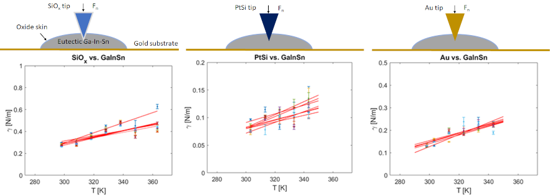
- liquid sample by fitting the function to our experimental data. The chemical composition of the eutectic Ga–In–Sn liquid alloy sample was determined by photoelectronic X-ray spectroscopy (XPS) before and after heating in air at 100 °C for 3 h. The spectrograms were recorded with a K-alpha+ XPS system
- affected our measurements. Figure 6 and Table 3 show XPS results obtained on a drop of Ga–In–Sn eutectic liquid before and after heating in air at 100 °C for 3 h. The choice of this duration roughly corresponds to the time necessary to complete a series of AFM measurements. Figure 6 and Table 3 show that
- 1s orbital of carbon. We attribute these contributions (CO32−, C–C/C–H, and C–O) to contamination from the ambient. As mentioned above, we performed the XPS measurements on these liquid samples without prior Ar+-ion sputtering or further heating inside the vacuum chamber of the XPS instrument. Given



Optimizing PMMA solutions to suppress contamination in the transfer of CVD graphene for batch production
Beilstein J. Nanotechnol. 2022, 13, 796–806, doi:10.3762/bjnano.13.70
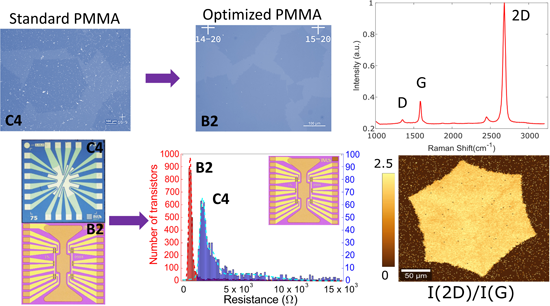
- cycles, while PMMA-15k promoted depolymerization, which allowed for a complete removal of PMMA residues without the need for any post-treatment. An XPS analysis confirmed the cleanness of the optimized process. We validated the impact of the optimized PMMA solution on the mass fabrication of arrays of
- surface roughness of ca. 2.8 nm. The low roughness obtained with B2 PMMA can be also related to a minimal occurrence of nanometer-scale PMMA residues. XPS was employed to analyze the graphene samples transferred using C4 and B2 PMMA (Figure 4). Figure 4a shows the chemical structure of the PMMA molecule
- crystals were transferred using PMMA with different AMWs and weight percentages in anisole. Repeated transfer cycles among water baths revealed, as expected, that PMMA with higher AMW and weight percentage allowed for a better mechanical support to graphene. Optical microscopy, Raman spectroscopy, and XPS




Hierarchical Bi2WO6/TiO2-nanotube composites derived from natural cellulose for visible-light photocatalytic treatment of pollutants
Beilstein J. Nanotechnol. 2022, 13, 745–762, doi:10.3762/bjnano.13.66
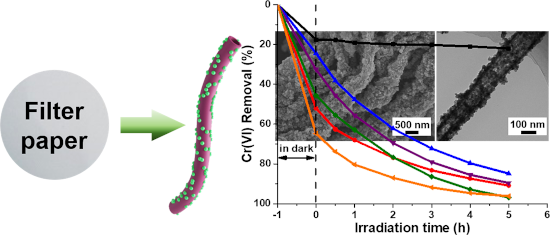
- (FTIR) spectra of the samples were recorded on the Nicolet iS10 spectrometer. The X-ray photoelectron spectroscopy (XPS) experiment was performed on the Thermo Scientific ESCALAB 250Xi spectrometer equipped with an Al Kα X-ray source at an energy value of 1486.6 eV. The XPS spectra were calibrated by
- composite nanotube, demonstrating the effective formation of heterostructures in between Bi2WO6 and TiO2 phases in the Bi2WO6/TiO2-NT nanocomposite. As shown in Supporting Information File 1, Figure S3, the XPS survey spectrum of the 70%−Bi2WO6/TiO2-NT nanocomposite only displays the signals of Ti, O, Bi
- , and W. The high-resolution XPS spectrum of the Bi 4f region (Figure 5a) shows two peaks at 164.1 and 158.8 eV, which are indexed to the binding energies of Bi 4f5/2 and Bi 4f7/2, respectively, proving the existence of Bi(III) in Bi2WO6 [44]. The high-resolution XPS spectrum of the W 4f region (Figure


A nonenzymatic reduced graphene oxide-based nanosensor for parathion
Beilstein J. Nanotechnol. 2022, 13, 730–744, doi:10.3762/bjnano.13.65
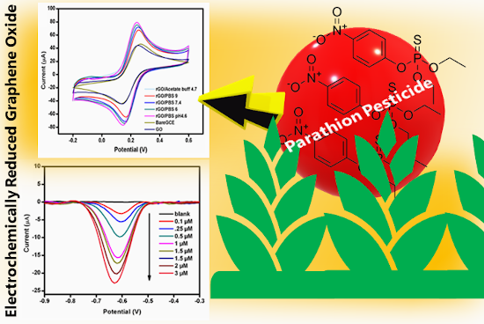
- spectra of the samples were recorded in the 1000–3500 cm−1 region with a resolution of 1 cm−1 using a Renishaw via a Reflex micro-Raman spectrometer with an argon ion (514.6 nm) laser. The X-ray photoemission spectroscopy (XPS) data were obtained from a PHI 5000 Versa probe II scanning XPS microprobe
- GO. Figure 2 represents the deconvoluted C 1s and O 1s XPS spectra of GO (Figure 2A and Figure 2B) and modified ERGO (Figure 2C and Figure 2D) electrodes. An asymmetric peak centered on ≈284.8 eV appeared due to the graphitic nature of GO and ERGO (Figure 2A and Figure 2B). Four different carbon
- nonenzymatic electrochemical nanosensor based on ERGO for rapid detection of PT. The electrochemical parameters were optimized to achieve the highest performance of the ERGO-modified electrode, and the structure was characterized by Raman, XRD, XPS, TEM, FESEM, and EIS techniques. Square-wave voltammetry was


Nanoarchitectonics of the cathode to improve the reversibility of Li–O2 batteries
Beilstein J. Nanotechnol. 2022, 13, 689–698, doi:10.3762/bjnano.13.61
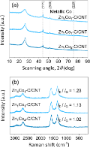
- /CNT composites was further investigated by using X-ray photoelectron spectroscopy (XPS), as shown in Figure 4. The XPS spectra were carefully deconvoluted, based on the excitation of C 1s at the binding energy of 284.5 eV. According to the Co 2p spectra collected from the ZnxCoy–C/CNT composites
- microstructures of the materials. Powder XRD (PANalytical, Empyrean) and Raman spectroscopy (inVia Raman microscopes, Ar ion laser, 514 nm) were employed to analyze the structures. Their surface chemistry was investigated by XPS (Thermo Scientific, Sigma Probe), while their surface area and porosity were
- insets in the bottom row are the corresponding selected area diffraction (SAED) patterns. XPS spectra of ZnxCoy–C/CNT composites: (a) Co 2p and (b) Zn 2p. (a) Electrical conductivity, (b) N2 sorption isotherms, (c) Dollimore–Heal desorption pore size distributions, and (d) TGA curves of ZnxCoy–C/CNT



Investigation of electron-induced cross-linking of self-assembled monolayers by scanning tunneling microscopy
Beilstein J. Nanotechnol. 2022, 13, 462–471, doi:10.3762/bjnano.13.39
- separation [36][37][38][39][40][41][42]. The interactions between aromatic SAMs and electrons have been studied by X-ray photoelectron spectroscopy (XPS), near-edge X-ray-absorption fine-structure (NEXAFS) technique [43][44][45][46][47][48][49], infrared spectroscopy [43][50][51][52], high-resolution


Tubular glassy carbon microneedles with fullerene-like tips for biomedical applications
Beilstein J. Nanotechnol. 2022, 13, 455–461, doi:10.3762/bjnano.13.38
- characterization techniques such as XPS and TEM. Recently, V. Uskoković [30] has pointed out that although glassy carbons have seen numerous application in the last fifty years, biomedical applications have been sporadic. I. Schreiver et al. [31] have shown that allergic reactions can be triggered by nickel and


Investigation of a memory effect in a Au/(Ti–Cu)Ox-gradient thin film/TiAlV structure
Beilstein J. Nanotechnol. 2022, 13, 265–273, doi:10.3762/bjnano.13.21
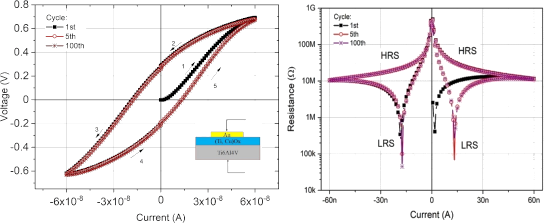
- also investigated to show the gradient distribution of Ti and Cu as a function of the thin film depth. X-ray photoelectron spectroscopy (XPS) studies were performed to determine the chemical state of titanium and copper on the surface of the mixed oxide thin films. A Specs XR-50 X-ray non-monochromatic
- energies of the spectra were referred to the Fermi level (EF) determined from a cleaned reference Au sample. Measurement results were analyzed with the aid of CasaXPS software. In the case of XPS and UPS measurements, the results were averaged over a certain surface area, that is, the beam diameter was
- transitions using the Tauc method. Structure and elemental composition Surface properties The oxidation state of copper on the surface of (Ti0.48Cu0.52)Ox thin film was analyzed with the XPS Cu 2p core level spectrum (Figure 6). The Cu 2p core level has split spin–orbit components with ΔBE of 19.8 eV and an



Relationship between corrosion and nanoscale friction on a metallic glass
Beilstein J. Nanotechnol. 2022, 13, 236–244, doi:10.3762/bjnano.13.18
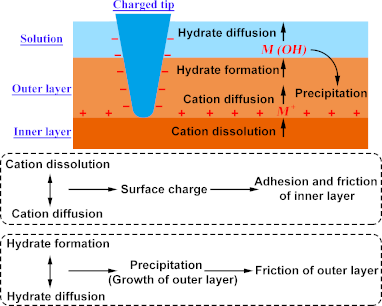
- outer layer after polarization [21], they did not show a clear distinction of the top of the outer layer after immersion. Maurice et al. [32] found that the thickness of the outer layers on stainless steel surfaces is similar during immersion and after polarization (0.5–0.7 nm) using XPS analysis


Impact of device design on the electronic and optoelectronic properties of integrated Ru-terpyridine complexes
Beilstein J. Nanotechnol. 2022, 13, 219–229, doi:10.3762/bjnano.13.16
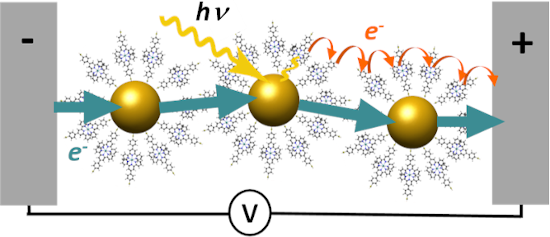
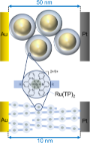
- -SAc)–AuNPs, with an average size of 12.9 ± 1.6 nm (Supporting Information File 1, Figure S2). Ru(TP)2-complex wire growth For the tracking of the Ru(TP)2-complex wire formation via XPS measurements mica substrates of 8 × 4 mm2 covered by a 200 nm Au(111) layer were used. In a first step the substrates
- . Instrumentation X-ray photoelectron spectroscopy (XPS) measurements were conducted with a PHI5000 VersaProbe II using monochromatic Al Kα radiation (1.486 keV). Survey scans (187.5 eV pass energy, 0.8 eV/step) and core level spectra (23.5 eV pass energy, 0.1 eV/step) of the elements C 1s, N 1s, O 1s, S 1s, Ru 3d
- were monitored by XPS measurements. The step-by-step formation of the Ru(TP)2-complex wires was conducted starting with the assembly of MPTP on Au substrates, corresponding to samples (i) (Figure 1). Then the substrates were incubated in a Ru-PF6 solution, leading to the formation of the Ru-MPTP half


Low-energy electron interaction and focused electron beam-induced deposition of molybdenum hexacarbonyl (Mo(CO)6)
Beilstein J. Nanotechnol. 2022, 13, 182–191, doi:10.3762/bjnano.13.13
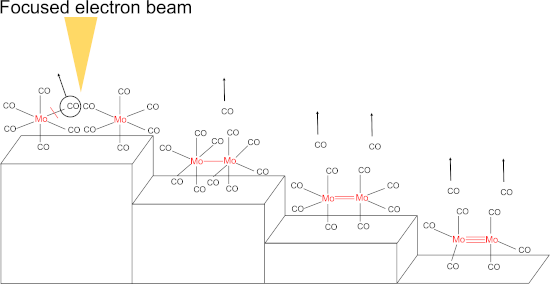
- rapidly with increased electron dose and was already insignificant above 1 × 10¹⁷ e−/cm2. An XPS analysis of the remaining deposit revealed an average loss of two CO groups from the W(CO)6 adsorbate at about 7 × 10¹⁶ e−/cm2, but above that dose the dominating pathway becomes electron-induced CO


Tin dioxide nanomaterial-based photocatalysts for nitrogen oxide oxidation: a review
Beilstein J. Nanotechnol. 2022, 13, 96–113, doi:10.3762/bjnano.13.7
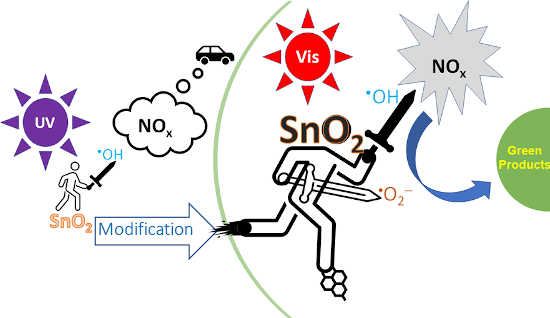
- reports still proposed its photocatalytic behaviors partly based on •O2− species via the combination of experimental physicochemical analyses, such as electron spin resonance (ESR) spectroscopy, active species trapping experiments, valence band X-ray photoelectron spectroscopy (XPS), and diffuse
- •O2− radicals played a primary role in the photocatalytic NO oxidation. Additionally, using photoluminescence (PL) spectroscopy, XPS, active species trapping tests, and ESR spectroscopy, the authors studied the photoinduced charge migration and trapping. They proposed the band structure of the SnO2
- photocatalytic oxidation ability of SnO2. Ultraviolet–visible absorption spectra (a) and corresponding bandgaps of SQDs (b). Figure 3 was reprinted from [46], Materials Letters, vol. 221, by Babu, B.; Neelakanta Reddy, I.; Yoo, K.; Kim, D.; Shim, J. “Bandgap tuning and XPS study of SnO2 quantum dots”, pages 211


Sputtering onto liquids: a critical review
Beilstein J. Nanotechnol. 2022, 13, 10–53, doi:10.3762/bjnano.13.2







Chemical vapor deposition of germanium-rich CrGex nanowires
Beilstein J. Nanotechnol. 2021, 12, 1365–1371, doi:10.3762/bjnano.12.100
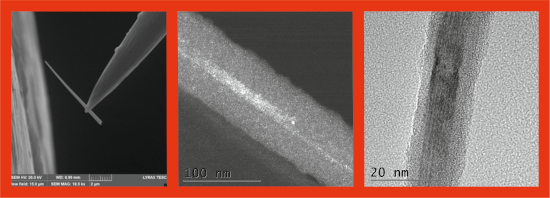
- multiplet peaks at higher binding energies associated with elemental Cr/germanide (CrGex) and multiplet splitting of the Cr(III) oxide species [13], respectively (Figure 4b). We were not able to separate elemental Cr and CrGex subpeaks as the XPS shift of a metal (chromium)/germanium in metal (chromium
- first part of the furnace. The Cr(acac)3 vapor in a continuous flow (3 sccm) of germane (GeH4) at 250 Pa was transported to the second part of the furnace where pyrolysis took place at 500 °C over molybdenum substrates. X-ray photoelectron spectrometry (XPS, Kratos ESCA 3400 with a base pressure below



Plasmon-enhanced photoluminescence from TiO2 and TeO2 thin films doped by Eu3+ for optoelectronic applications
Beilstein J. Nanotechnol. 2021, 12, 1271–1278, doi:10.3762/bjnano.12.94
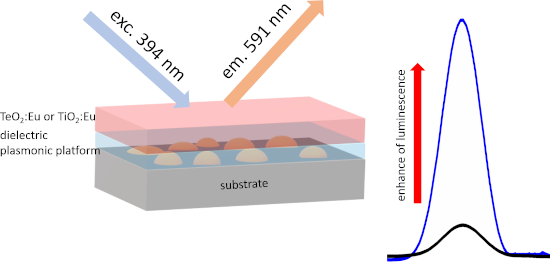
- investigated by SEM and TEM, while the composition of oxides film was analyzed by XPS. Luminescence properties were studied on the basis of excitation and emission spectra. The experiments show that the additional dielectric layer enhances the luminescence intensity. Such structures could be potential
- spectroscopy (XPS). Measurement was performed using Omicron Nanotechnology equipment at room temperature and under ultrahigh vacuum conditions, at a pressure below 1.1 × 10⁻⁶ Pa. A Mg Kα X-ray source was operated at 15 kV and 300 W. XPS analysis were performed using CASA XPS software package with Shirley
- decrease of transmittance at 350 nm is caused by absorption of glass substrate and can be noticed for other samples as well. TiO2:Eu-based structures The chemical composition of the luminescent titanium dioxide doped with europium was examined using XPS. The spectra of Ti 2p and Eu 4d core level electrons


The effect of cobalt on morphology, structure, and ORR activity of electrospun carbon fibre mats in aqueous alkaline environments
Beilstein J. Nanotechnol. 2021, 12, 1173–1186, doi:10.3762/bjnano.12.87
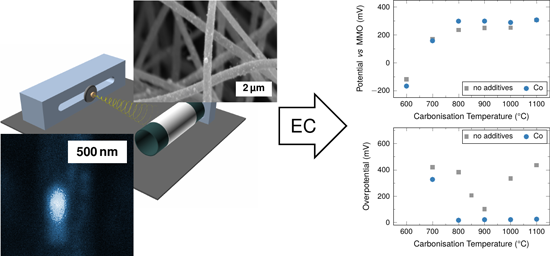
- electron microscopy (SEM), energy-dispersive X-ray spectroscopy (EDX), X-ray diffraction (XRD), X-ray photoelectron spectroscopy (XPS), Raman spectroscopy, elemental analysis, and inductively coupled plasma optical emission spectrometry (ICP-OES). In addition, the fibres were analysed in terms of their
- , samples of 1 cm2 were cut from the fibre mats and fixed on a silicon crystal in a rotating sample holder. The scan range was limited to 10° to 80°, scanned with a step width of 0.01°. X-ray photoelectron spectroscopy (XPS) was performed with a Phi5000 VersaProbe II (ULVAC-Phi Inc., USA). Spectra were
- recorded with a resolution of 0.1 eV using Al Kα radiation (1.486 keV) at 50 W and a spot size of 200 μm. Fitting the cobalt XPS spectra follows the suggestions from Biesinger et al. [24] based on the complex multiplet structure of cobalt [25]. Based on these reports the Co 2p range was examined in detail


Irradiation-driven molecular dynamics simulation of the FEBID process for Pt(PF3)4
Beilstein J. Nanotechnol. 2021, 12, 1151–1172, doi:10.3762/bjnano.12.86
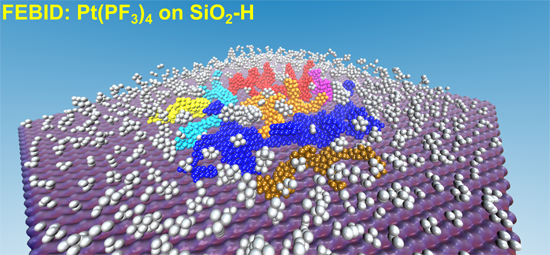
- influence the rate of precursor molecule fragmentation. The chosen value of the deposited energy can be verified by comparing the dependence of surface coverage of precursor elements on the electron dose with the experimental data measured by means of X-ray photoelectron spectroscopy (XPS). Electron energy






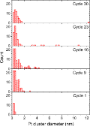


Progress and innovation of nanostructured sulfur cathodes and metal-free anodes for room-temperature Na–S batteries
Beilstein J. Nanotechnol. 2021, 12, 995–1020, doi:10.3762/bjnano.12.75
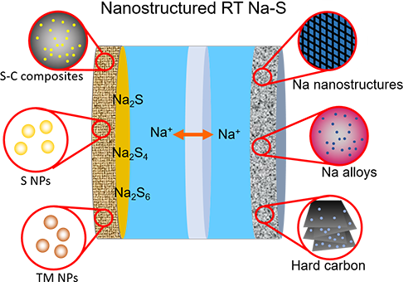
- , polysulfides are converted to polythionate [O3S2–(S)x−2–S2O3] complexes bound to the electrode surface, which inhibits the shuttle effect [12]. A similar electrochemical mechanism has been reported by Kumar et al. [51] based on XPS analyses. The results show that the interaction between MnO2 and long-chain




Impact of GaAs(100) surface preparation on EQE of AZO/Al2O3/p-GaAs photovoltaic structures
Beilstein J. Nanotechnol. 2021, 12, 578–592, doi:10.3762/bjnano.12.48
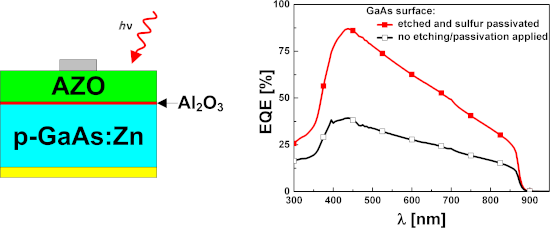
- ) and scanning electron microscopy (SEM) examinations were conducted to obtain structural details of the devices. X-ray photoelectron spectroscopy (XPS) with depth profiling was used to examine interface structure and changes in the elemental content and chemical bonds. The photoluminescence (PL
- characteristics were collected under standard test conditions (STC) using a PET solar simulator, model #SS100AAA. UV–vis absorbance and reflectance measurements were conducted with the use of a Varian Cary 5000 spectrophotometer equipped with a DRA 2500 integrating sphere accessory. The XPS measurements were
- 2p and Zn, Ga and As 3d spin–orbit doublets were measured. The spectra were analyzed using the commercial CASA XPS software package (Casa Software Ltd, version 2.3.17) with Shirley background. The spectra were fitted with a mixed Gaussian–Lorentzian (GL(30)) function. The depth profiling was




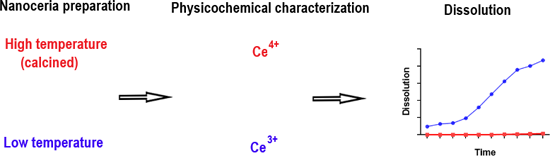
The preparation temperature influences the physicochemical nature and activity of nanoceria
Beilstein J. Nanotechnol. 2021, 12, 525–540, doi:10.3762/bjnano.12.43
- reported to be uncoated [24]. However, it was found that its surface had organic contaminations, shown by thermogravimetric analysis (<0.7 % of the material [7]). Further investigation with XPS, which has an information depth between 3 and 10 nm, indicated 80% carbon atoms on the surface. Photoelectron