Search results
Search for "adhesive" in Full Text gives 247 result(s) in Beilstein Journal of Nanotechnology. Showing first 200.
A review on the green and sustainable synthesis of silver nanoparticles and one-dimensional silver nanostructures
Beilstein J. Nanotechnol. 2021, 12, 102–136, doi:10.3762/bjnano.12.9
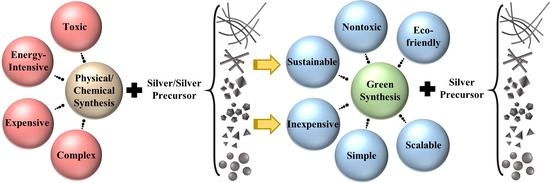
- amorphous calcium phosphate particles for enhanced adhesive applications [124]. The spray pyrolysis process requires using an atomizer, a tube furnace, a reaction tube, a collection filter, and a vacuum pump [124]. This method is also often used for production of metal powders and demonstrates less


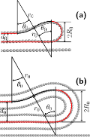
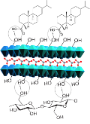
Nanomechanics of few-layer materials: do individual layers slide upon folding?
Beilstein J. Nanotechnol. 2020, 11, 1801–1808, doi:10.3762/bjnano.11.162
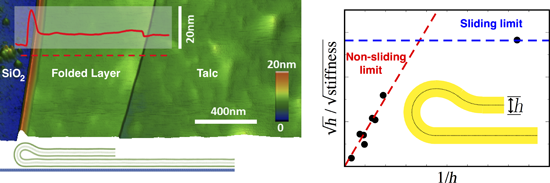
- interlayer interactions, have been the primary source of 2D materials [1]. These 2D materials exhibit unusual behavior associated regarding their flexural and adhesive properties [2][3][4][5][6][7][8]. For instance, self-assembled folded flaps and nanoribbons of graphene form by spontaneous folding, sliding
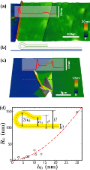

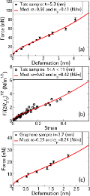
![[Graphic 5]](/bjnano/content/inline/2190-4286-11-162-i8.svg?max-width=637&scale=1.18182) =
= ![[Graphic 6]](/bjnano/content/inline/2190-4286-11-162-i9.svg?max-width=637&scale=1.18182) as a function of 1/h for the nine measured talc samples. h is a directly measured ...
as a function of 1/h for the nine measured talc samples. h is a directly measured ...
Gram-scale synthesis of splat-shaped Ag–TiO2 nanocomposites for enhanced antimicrobial properties
Beilstein J. Nanotechnol. 2020, 11, 1119–1125, doi:10.3762/bjnano.11.96
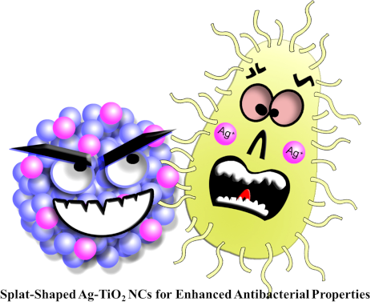
- reproduction rate, such as virus, fungi and bacteria, has an influence on the human health and environment. However, it is a challenge to find remedies against these bacteria to control the permanent adhesive reaction. The Food and Drug Administration (FDA) has approved some potential antibacterial agents


Plant growth regulation by seed coating with films of alginate and auxin-intercalated layered double hydroxides
Beilstein J. Nanotechnol. 2020, 11, 1082–1091, doi:10.3762/bjnano.11.93
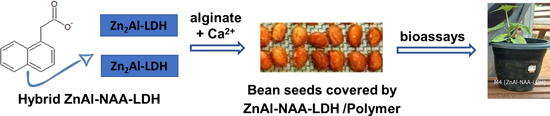
- samples was analyzed by SEM using a Carl Zeiss scanning microscope, model EVO 50. The sample was supported on the sample holder by dispersion of the powder on conductive double-sided adhesive tape. The samples were gold-coated before the measurements using a Sputter BAL-TEC, MED 0.50. Mass-coupled thermal

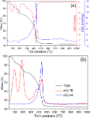


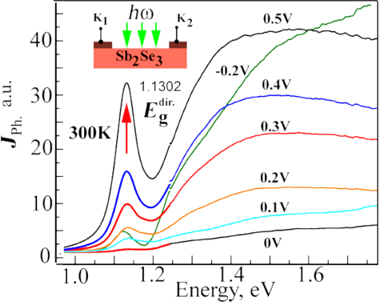
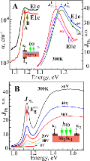
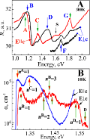
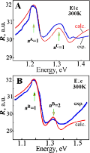
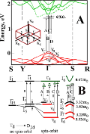
Excitonic and electronic transitions in Me–Sb2Se3 structures
Beilstein J. Nanotechnol. 2020, 11, 1045–1053, doi:10.3762/bjnano.11.89
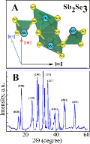
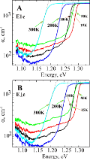
- μm) could also be obtained from the crystal with the aid of adhesive tape. X-ray diffraction was performed in order to verify the quality of the crystalline sheets and their spatial crystalline groups. Optical transmission and reflection spectra were obtained on a double-grating spectrometer SDL-1


Key for crossing the BBB with nanoparticles: the rational design
Beilstein J. Nanotechnol. 2020, 11, 866–883, doi:10.3762/bjnano.11.72
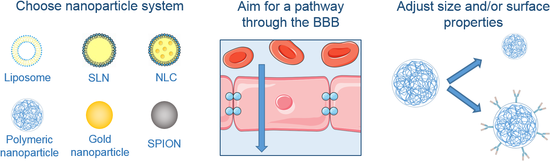
- proteins that can interact with nanoparticles and drastically hinder their diffusion [137]. By densely coating 40 nm and 100 nm fluorescent polystyrene nanoparticles with PEG, the nanoparticles were able to diffuse through the brain ECS of live mice, thanks to PEG limiting the adhesive interactions between


Integrated photonics multi-waveguide devices for optical trapping and Raman spectroscopy: design, fabrication and performance demonstration
Beilstein J. Nanotechnol. 2020, 11, 829–842, doi:10.3762/bjnano.11.68
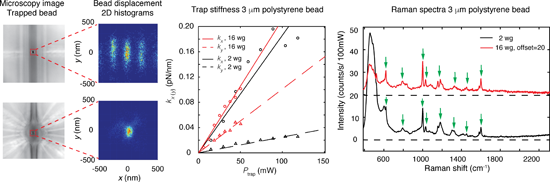
- microbath. After dicing of the wafer, a millimeter-scale macrobath is created on each chip by placing a 100 µm thick imaging spacer (Biolink Relink 1300) with a 4.0 mm hole. The adhesion strength of the top and bottom surface of the image spacer are different. The weaker adhesive is affixed to the chip to
- enable its residue-free removal, facilitating device reusability. The stronger adhesive is used to seal the macrobath, which serves as supply volume for the microbath. The sample fluid is then introduced such that after filling a convex meniscus bulges out above the macrobath. Finally, the sample volume


Quantitative determination of the interaction potential between two surfaces using frequency-modulated atomic force microscopy
Beilstein J. Nanotechnol. 2020, 11, 729–739, doi:10.3762/bjnano.11.60
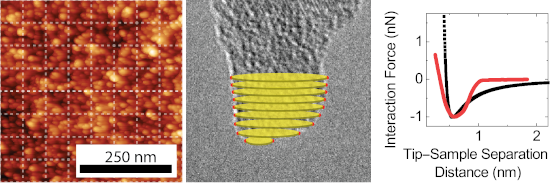
- , Pittsburgh, PA 15621, USA Department of Mechanical Engineering and Applied Mechanics, University of Pennsylvania, 220 S. 33rd Street, Philadelphia, Pennsylvania 19104, USA 10.3762/bjnano.11.60 Abstract The interaction potential between two surfaces determines the adhesive and repulsive forces between them
- , require coatings to prevent sticking of the mirrors due to relatively high adhesive forces [3]. Therefore, there has been considerable research into surface modification (e.g., lubricants [7][8][9], surface functionalization [10][11], and surface texturing [12][13][14]) in order to mitigate the impact of
- matching these F(z) curves to a set of LJ F(z) curves generated for the specific tip apex shape, as described in the following section. Determination of work and range of adhesion using in situ TEM adhesive experiments The method that will be discussed to determine LJ parameters from dynamic FM-AFM


Effect of Ag loading position on the photocatalytic performance of TiO2 nanocolumn arrays
Beilstein J. Nanotechnol. 2020, 11, 717–728, doi:10.3762/bjnano.11.59
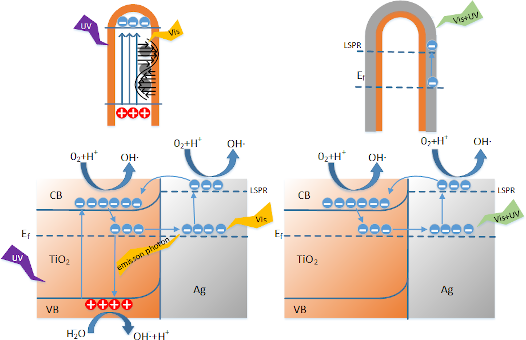
- deposition pressure of 10−4 Pa, an evaporation source current of 44 A, and an evaporation rate of 0.08 nm/s. The sample was then transferred onto a crystal adhesive, and the AAO was removed by immersing the sample in 0.2 M NaOH solution for 2 h to obtain the Ag–TiO2 array. For the preparation process of Ag
- -coated TiO2 nanocolumns (ACT), the Ag deposition was performed after removal of the AAO template as follows. The sample deposited with TiO2 was supported onto crystal adhesive and then immersed in 0.2 M NaOH solution to remove residual Al and AAO. Then, the sample was cleaned, dried, and placed in a
- adhesive substrate. The high-resolution spectra of Ag, Ti, and O are shown in Figure 5b, 5c, and 5d, respectively. In the spectrum of O 1s (Figure 5b), the characteristic peak is observed at 531.8 eV. The shape of this peak is symmetrical, which is indicative of the presence of one distinct O species in


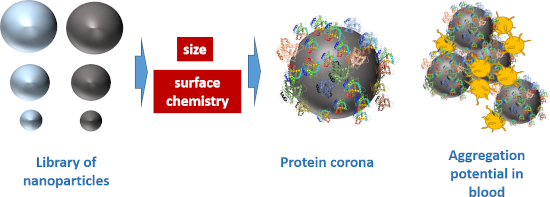
Identification of physicochemical properties that modulate nanoparticle aggregation in blood
Beilstein J. Nanotechnol. 2020, 11, 550–567, doi:10.3762/bjnano.11.44
- microscopy (SEM), using a Zeiss Evo 50XVP (Assing) instrument. CNPs and SNPs suspensions were diluted up to 0.05 mg/mL in ultrapure water. A volume of 20 μL of the diluted suspensions was mounted on aluminium stubs using double-sided adhesive carbon tape and silicon wafers. The samples were dried overnight
- mobilize intracellular Ca2+, which instigates platelet shape change, degranulation, and up-regulation of the adhesive function of another platelet surface receptor, integrin αIIbβ3 [35]. The active conformation of αIIbβ3 integrin can then bind fibrinogen, VWF and fibronectin with high affinity, allowing




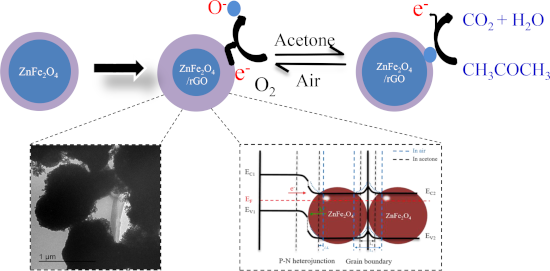
Synthesis and acetone sensing properties of ZnFe2O4/rGO gas sensors
Beilstein J. Nanotechnol. 2019, 10, 2516–2526, doi:10.3762/bjnano.10.242
- obtained percentage is higher than theoretically predicted, which may be due to a contamination arising from the carbon-containing electrically conductive adhesive or another source of carbon in the sample stage or on the sample surface. Still, the actual quantities derived by EDX are basically consistent




Integration of sharp silicon nitride tips into high-speed SU8 cantilevers in a batch fabrication process
Beilstein J. Nanotechnol. 2019, 10, 2357–2363, doi:10.3762/bjnano.10.226
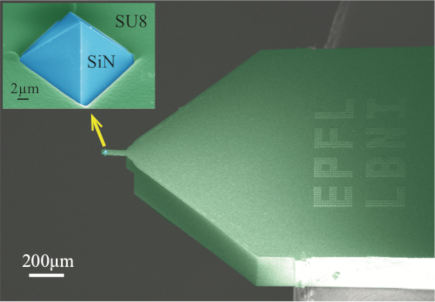
- that all of the imaging parameters are set correctly, tip wear can still occur due to abrasive wear, fracture and adhesive wear [39][40]. The presented cantilevers have proven a good tip sharpness, and provide the well-established wear-resistance of silicon nitride tips, supplemented with their good


Design of a nanostructured mucoadhesive system containing curcumin for buccal application: from physicochemical to biological aspects
Beilstein J. Nanotechnol. 2019, 10, 2304–2328, doi:10.3762/bjnano.10.222
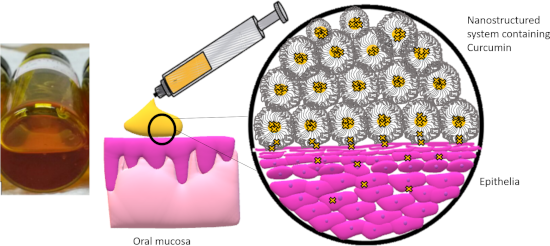
- . Higher flow resistance evidences strong adhesive interactions between preparations and mucosa. The amount of adhered gel is calculated in an indirect method. Thus the formulation eluted with buffer in a beaker containing Tween 80 and the drug in the formulation was quantified by chromatographic methods


Nontoxic pyrite iron sulfide nanocrystals as second electron acceptor in PTB7:PC71BM-based organic photovoltaic cells
Beilstein J. Nanotechnol. 2019, 10, 2238–2250, doi:10.3762/bjnano.10.216
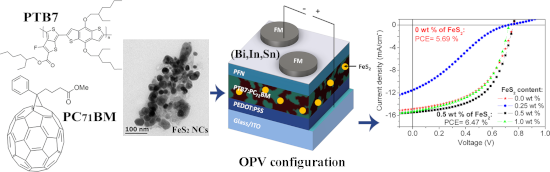
- by drop casting. Mechanically cut Pt–Ir wires were used as STM tips. Before the deposition of each film, HOPG substrates were cleaved by using the adhesive tape technique to obtain an atomically clean surface. Cyclic voltammetry (CV) measurements were carried out using a PARSTAT 2273 potentiostat in


Use of data processing for rapid detection of the prostate-specific antigen biomarker using immunomagnetic sandwich-type sensors
Beilstein J. Nanotechnol. 2019, 10, 2171–2181, doi:10.3762/bjnano.10.210
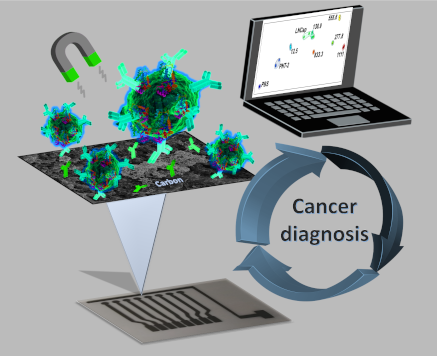
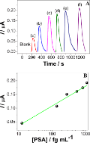
- microfluidic cell was set up, and the electrodes were insulated using a polystyrene card with double-sided adhesive. The double-sided tape was used to delimit the electroactive area, which was fixed on the reference electrode under the arrangement of working electrodes and the auxiliary electrode. Also, the


BergaCare SmartLipids: commercial lipophilic active concentrates for improved performance of dermal products
Beilstein J. Nanotechnol. 2019, 10, 2152–2162, doi:10.3762/bjnano.10.208
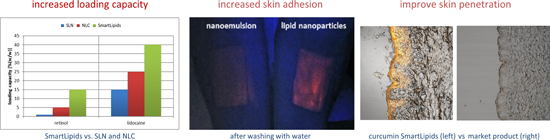
- room temperature (25°C, lower), [10]. Left: Nile red-labeled lipid nanoparticle suspension (right arm) and nanoemulsion (left arm) applied to human forearm directly after application. Right: Both arms after washing under flowing water with rubbing. The lipid nanoparticles are highly adhesive and mostly


Nanoporous smartPearls for dermal application – Identification of optimal silica types and a scalable production process as prerequisites for marketed products
Beilstein J. Nanotechnol. 2019, 10, 1666–1678, doi:10.3762/bjnano.10.162
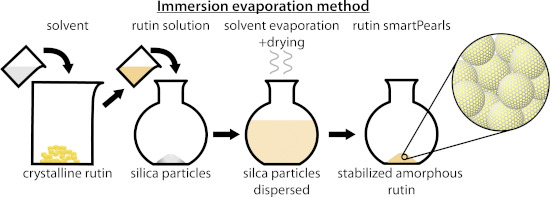
- of 25 nm), showed neither agglomeration nor film formation. It is known that silica particles become more adhesive with decreasing size, which is easily explainable by powder technology. With decreasing particle size, the surface and contact area increase, thus promoting particle–particle interaction




Nanoscale spatial mapping of mechanical properties through dynamic atomic force microscopy
Beilstein J. Nanotechnol. 2019, 10, 1332–1347, doi:10.3762/bjnano.10.132
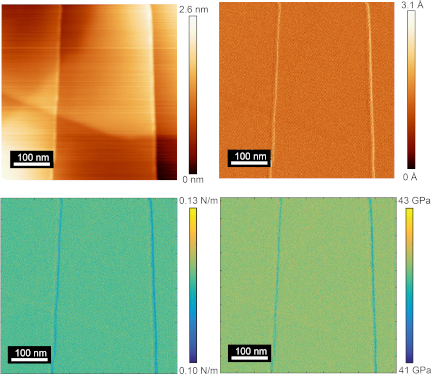
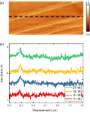
- into two contributions: the applied compressive and adhesive forces exerted when the tip is in contact with the surface as measured by the static bending of the cantilever, and the oscillatory perturbations of the excited cantilever. For the oscillatory perturbation, the drive force exerted on the
- by a number of factors, including the applied normal force. The total normal force exerted by the tip on the surface can be thought of as a combination of the applied normal force and the contact geometry, as this will influence the adhesive contribution to the total normal force. More specifically
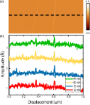
- , given that the material systems are constant, the shape of the tip apex will then determine the adhesive interaction between the tip and sample. This section will examine the influence of the applied normal force on the measurement of the elastic modulus of the steps in comparison with the terraces of




Multicomponent bionanocomposites based on clay nanoarchitectures for electrochemical devices
Beilstein J. Nanotechnol. 2019, 10, 1303–1315, doi:10.3762/bjnano.10.129
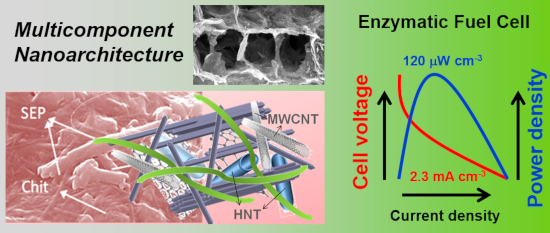
- found for the sample with a higher content of chitosan (72%), suggesting a synergic effect of both clays as reinforcing fillers of the polymer and as adhesive agent, which is required to improve the mechanical properties of the designed samples [50][51]. The obtained compression modulus is comparable to



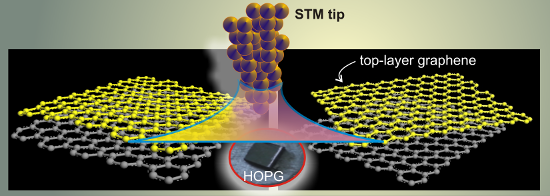
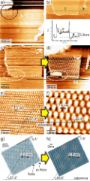
Capillary force-induced superlattice variation atop a nanometer-wide graphene flake and its moiré origin studied by STM
Beilstein J. Nanotechnol. 2019, 10, 804–810, doi:10.3762/bjnano.10.80
- called the adhesive force occurring for small values of s, where s is the separation between the plane and the sphere. In the case of a sphere–sphere geometry, with radii of curvatures of the spherical bodies on either sides being R1 and R2, the radius R can be replaced by an effective radius R* = R1R2


Polydopamine-coated Au nanorods for targeted fluorescent cell imaging and photothermal therapy
Beilstein J. Nanotechnol. 2019, 10, 794–803, doi:10.3762/bjnano.10.79
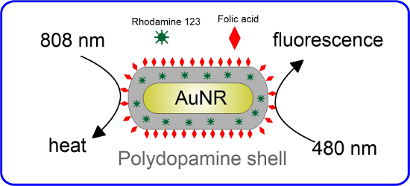
- tunable shell thickness. The most popular coatings such as mesoporous silica, PEG and polyelectrolyte shells do not meet the above quality criteria. In 2007 Messersmith et al. reported the mussel-inspired adhesive polydopamine (PDA) multifunctional coating for various materials including nanoparticles [25


Towards rare-earth-free white light-emitting diode devices based on the combination of dicyanomethylene and pyranine as organic dyes supported on zinc single-layered hydroxide
Beilstein J. Nanotechnol. 2019, 10, 760–770, doi:10.3762/bjnano.10.75
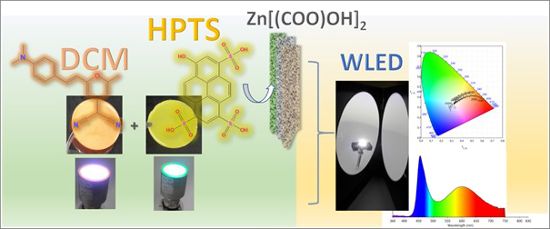
- kV and using an Everhart–Thornley secondary-electron detector. Prior to observation, the sample was attached to adhesive carbon and then coated with Au. The X-ray diffraction (XRD) pattern of Zn-SLH was recorded with a Philips Xpert Pro diffractometer operating with Cu Kα1 radiation (λ = 1.5406 Å) in


Features and advantages of flexible silicon nanowires for SERS applications
Beilstein J. Nanotechnol. 2019, 10, 725–734, doi:10.3762/bjnano.10.72

- by the water surface tension through adhesive forces [40] and during drying, the strong surface tension moves the SiNWs towards each other creating twisted and irregular SiNWs bundles. For the long sputtering times (when the SiNWs are completely covered with Ag), adhesion and surface tension are not


Topochemical engineering of composite hybrid fibers using layered double hydroxides and abietic acid
Beilstein J. Nanotechnol. 2019, 10, 589–605, doi:10.3762/bjnano.10.60
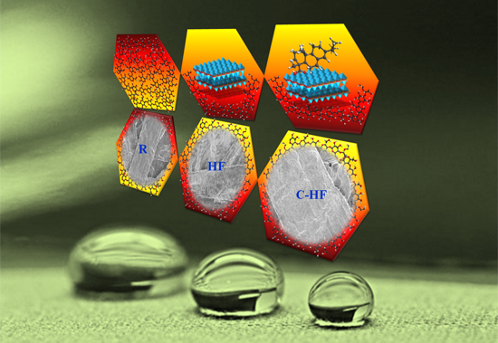
- inter-fiber bonding and reduces the tensile strength. However, this weakening of inter-fiber bonding was overcome by modifying hybrid fibers with AA. AA was self-assembled on LDH binding sites via hydrogen bonding (Mn+–OH…OHOC–CHn–). Then the adhesive action of AA on the fiber surface increased the




Mechanical and thermodynamic properties of Aβ42, Aβ40, and α-synuclein fibrils: a coarse-grained method to complement experimental studies
Beilstein J. Nanotechnol. 2019, 10, 500–513, doi:10.3762/bjnano.10.51
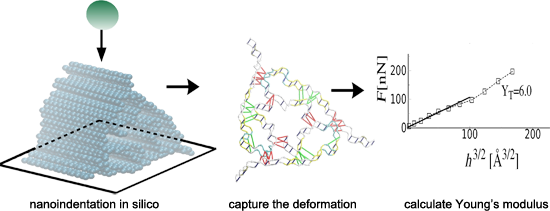
- experiment at the nanoscale where the influence of the indenter could be neglected. Depending on the type of forces between the indenter and the biomaterial, we might describe the process by non-adhesive [12] or adhesive contact mechanics theories [58][59]. Here, we suggest our particle-based CG method as a