Search results
Search for "cantilever" in Full Text gives 315 result(s) in Beilstein Journal of Nanotechnology. Showing first 200.
Quantitative determination of the interaction potential between two surfaces using frequency-modulated atomic force microscopy
Beilstein J. Nanotechnol. 2020, 11, 729–739, doi:10.3762/bjnano.11.60
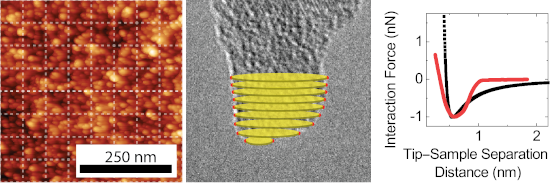
- laterally relative to the sample. A piezoactuator acting in the z-direction brings the probe closer or further from the sample. Due to non-linear tip–sample interaction forces, the resonance frequency of the oscillating cantilever will shift. This shift can be used as a feedback signal to measure the sample
- topography, among other parameters. In order to determine the interaction force behavior as a function of the separation distance, we measured the frequency shift of the oscillating cantilever as a function of the separation distance (Δf–d curves) between a silicon AFM probe and a diamond sample. An
- analytical relationship between the resonance frequency shift and the tip–sample interaction force in FM-AFM was first derived by Giessibl [42] and is seen in the following equation: In Equation 1, Δf represents the change in the primary flexural resonance frequency of the cantilever near the surface, fres


Stochastic excitation for high-resolution atomic force acoustic microscopy imaging: a system theory approach
Beilstein J. Nanotechnol. 2020, 11, 703–716, doi:10.3762/bjnano.11.58
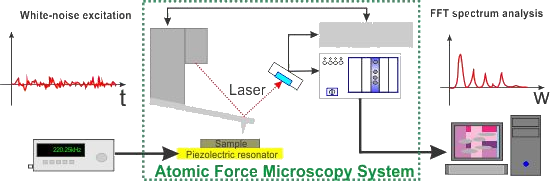
- frequency resolution, with less computational cost and at a faster speed than other similar techniques. This technique is referred to as stochastic atomic force acoustic microscopy (S-AFAM), and the frequency shifts of the free resonance frequencies of an AFM cantilever are used to determine the mechanical
- nanotechnology [3] because it offers a non-destructive alternative for measuring mechanical properties at the nanoscale using the small size of the cantilever tip with a radius of 5–50 nm. There are two kinds of conventional AFM methods for the measurement of mechanical properties [4][5], i.e., the measurement
- of force–displacement curves or of contact resonance frequencies. The techniques based on force–displacement curves are ideal when the stiffness of the cantilever and the sample are similar. The techniques based on contact resonance frequencies are appropriate when the stiffness of the sample


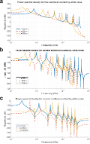

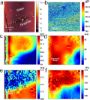
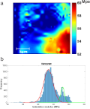
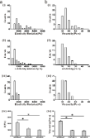
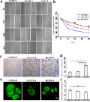
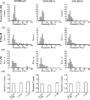
Examination of the relationship between viscoelastic properties and the invasion of ovarian cancer cells by atomic force microscopy
Beilstein J. Nanotechnol. 2020, 11, 568–582, doi:10.3762/bjnano.11.45
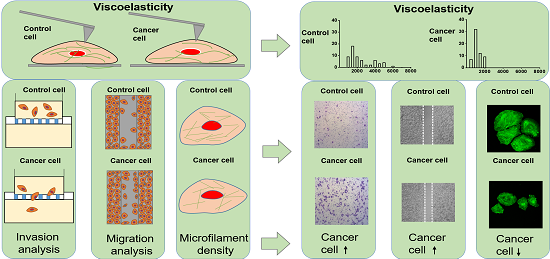
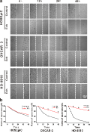
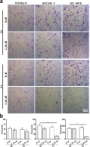
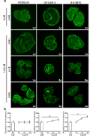
- . Force–distance curve-based AFM measurements were carried out to calculate the optical photodiode deflection sensitivity and the cantilever spring constant was verified by the thermal noise method before experiments. MLCT cantilevers (Bruker, USA) made of silicon nitride with approximate spring constant


Current measurements in the intermittent-contact mode of atomic force microscopy using the Fourier method: a feasibility analysis
Beilstein J. Nanotechnol. 2020, 11, 453–465, doi:10.3762/bjnano.11.37
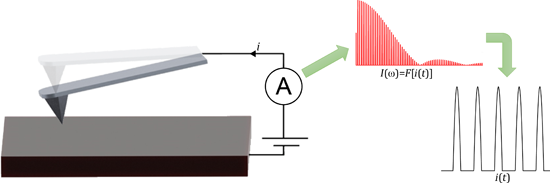
- approaches. Conductivity, in particular, is mapped using the contact-mode method. However, this modality can be destructive to delicate samples, since it involves continuously dragging the cantilever tip on the surface during the raster scan, while a constant tip–sample force is applied. In this paper we
- discuss a possible approach to develop an intermittent-contact conductive AFM mode based on Fourier analysis, whereby the measured current response consists of higher harmonics of the cantilever oscillation frequency. Such an approach may enable the characterization of soft samples with less damage than
- cantilever oscillation, can be a less destructive technique [16][19][20], and this could be advantageous also for performing current measurements on such samples. Additionally, scanning tunnelling microscopy (STM) applications may also benefit from current measurements during which the tip oscillates above




Atomic-resolution imaging of rutile TiO2(110)-(1 × 2) reconstructed surface by non-contact atomic force microscopy
Beilstein J. Nanotechnol. 2020, 11, 443–449, doi:10.3762/bjnano.11.35
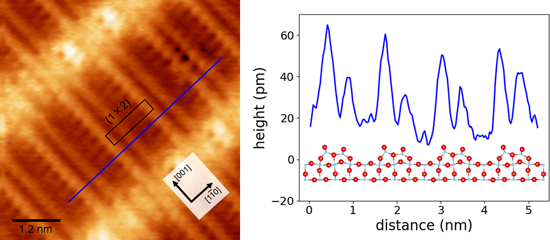
- performed using Pt-coated Si cantilevers (Budget Sensors, ElectriTAP190G). All cantilevers were cleaned by Ar+ sputtering (0.6 keV, Ar partial pressure of 1.0 × 10⁻⁵ Pa, ion current of 0.05 µA, 5 min) before scanning. STM imaging was performed in constant-current mode without cantilever oscillation. NC-AFM
- feedback control was applied in frequency-modulation mode [30] with constant amplitude oscillation. The cantilever deflection was detected using an optical interferometer [31]. Since the electrostatic force due to the contact potential difference (CPD) between the tip and sample prevents high-resolution NC
- 10 pA, respectively. (a) STM and (b) NC-AFM images of a rutile TiO2(110)-(1 × 2) reconstructed surface. (c, d) Height profiles along black (STM) and blue (NC-AFM) lines in the images. The STM and NC-AFM images were obtained using a Pt-coated Si cantilever with a resonance frequency of f0 = 154.1 kHz


Implementation of data-cube pump–probe KPFM on organic solar cells
Beilstein J. Nanotechnol. 2020, 11, 323–337, doi:10.3762/bjnano.11.24
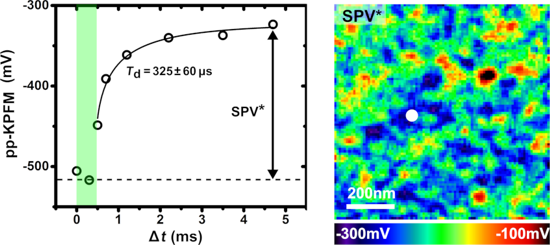
- –acceptor blends with sub-ms time resolution [1]. Subsequent works have shown that sub-μs time resolution can be achieved by acquiring the full information on the cantilever oscillation, leading to the development of fast trEFM [2] and general-mode KPFM [3]. Contrary to feedback-free electrostatic methods
- ][14] and nanocrystal-based [15] solar cells. However, there are some disadvantages to using this technique. First, at specific frequencies, the excitation signal used to generate charge carriers can interfere [16] with the cantilever oscillation or the ac voltage applied for the detection of the CPD
- be taken into account, which renders the interpretation of IM-KPFM data even more difficult. Upon illumination, the capacitive junction formed by the cantilever tip and the conducting substrate onto which the organic layer is deposited is indeed reduced due to photogenerated carriers [19]. As a first




Nonclassical dynamic modeling of nano/microparticles during nanomanipulation processes
Beilstein J. Nanotechnol. 2020, 11, 147–166, doi:10.3762/bjnano.11.13
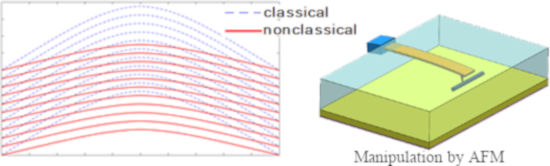
- cantilever frequencies to contact stiffness and investigated the variation of sensitivity with cantilever slope [3][4]. Shi and Zhao examined the contact models at the nanoscale and compared Derjaguin–Muller–Toporov (DMT), Johnson–Kendall–Roberts–Sperling (JKRS) and Maugis–Dugdale (MD) models with the Hertz
- model. They studied the effect of dimensionless load and the transition parameter on the contact area. They emphasized the importance of the MD model that covers a large area of AFM surveys [5]. Owing to the importance of the AFM cantilever spring constant and its use in calculation of the rupture force
- of protein bonds and Young’s modulus of nanoparticles, Clifford and Seah determined the AFM cantilever normal spring constant [6]. Korayem and Zakeri studied the effects of different parameters on the times and forces in a 2D manipulation. Using their proposed algorithm, the location of the







A review of demodulation techniques for multifrequency atomic force microscopy
Beilstein J. Nanotechnol. 2020, 11, 76–91, doi:10.3762/bjnano.11.8

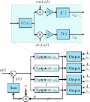
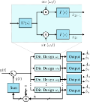
- sensing the interaction between a sharp microcantilever probe and the sample [2]. Initial operation was in constant-force contact-mode, where a static deflection is maintained through a constant contact force [3]. In dynamic imaging modes [4], the cantilever is driven at, or near, a resonance frequency
- , which establishes the requirement for demodulation in AFM. In intermittent-contact constant-amplitude AFM [5], a constant cantilever oscillation amplitude is maintained by feeding back the demodulated fundamental amplitude of the deflection signal. The imaging of delicate biological samples [6][7][8] is
- particularly suited to intermittent-contact AFM [9] when tip–sample contact is gentle. Environmental damping has a large effect on the quality factor (Q) of the cantilever. Values can range from as low as Q ≈ 1 in liquid [10], up to Q ≈ 10,000 in ultra-high vacuum [11]. This affects the mechanical bandwidth of


The effect of heat treatment on the morphology and mobility of Au nanoparticles
Beilstein J. Nanotechnol. 2020, 11, 61–67, doi:10.3762/bjnano.11.6
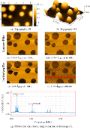
- manipulation of the NPs was performed with a Bruker Multimode 8 AFM in the PeakForce quantitative nanoscale mechanical characteriztion (PeakForce QNM) mode using a rectangular AFM cantilever (Bruker, RTESPA-300, k = 40 N/m) with a resonance frequency of around 300 kHz. Prior to each manipulation, the samples
- calculated with the following equation [20]: where k is the cantilever spring constant, f0 is the resonance frequency of the cantilever, Aset is the setpoint amplitude, Apiezo is the drive amplitude, θ is the phase signal and Q is the quality factor of the AFM cantilever. The dissipated power was used as a
- measure of the mobility of the NPs. The calibration of the cantilevers was performed by the thermal tuning method. The oscillation amplitudes ranged from 0.05 to 0.6 V with a sensitivity of 25 to 31 nm/V. The sensitivity was measured individually for each cantilever by means of damping the AFM tip against


The different ways to chitosan/hyaluronic acid nanoparticles: templated vs direct complexation. Influence of particle preparation on morphology, cell uptake and silencing efficiency
Beilstein J. Nanotechnol. 2019, 10, 2594–2608, doi:10.3762/bjnano.10.250
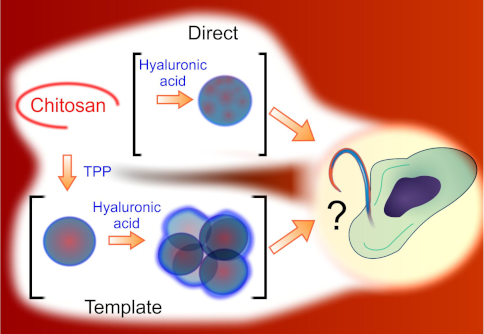
- , Abingdon, UK) equipped with an OTESPA-R3 cantilever (Bruker, Camarillo, CA, USA) was used to acquire AFM images in air at room temperature in tapping mode. Igor-Pro AFM software (Oxford Instrument, UK) was used to analyse the images. Nuclease protection assay. The protection effect against nuclease



Evaluation of click chemistry microarrays for immunosensing of alpha-fetoprotein (AFP)
Beilstein J. Nanotechnol. 2019, 10, 2505–2515, doi:10.3762/bjnano.10.241
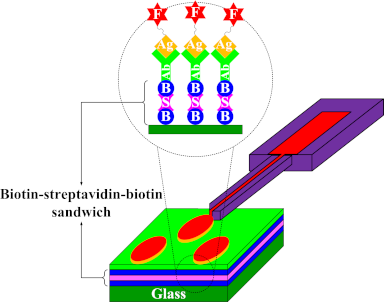
- was spotted onto them via microchannel cantilever spotting (µCS). Based on the fluorescence measurements, the optimal microarray design was found and its sensitivity was determined. Keywords: alpha-fetoprotein (AFP); cancer biomarker; click chemistry; fluorescent immunosensor; hepatocellular
- fabricated by microchannel cantilever spotting (μCS). Here, patterns are written with fluorescently labeled AFP (as antigen) on the surfaces modified with anti-AFP (as antibody). In different studies, many selective biosensors have been developed based on antigen–antibody interactions [22][30][31][33][34][35


Abrupt elastic-to-plastic transition in pentagonal nanowires under bending
Beilstein J. Nanotechnol. 2019, 10, 2468–2476, doi:10.3762/bjnano.10.237
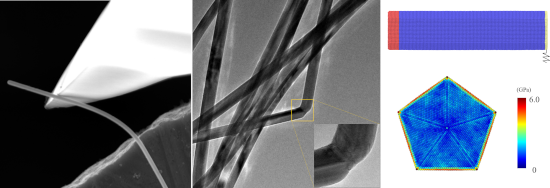
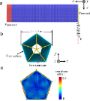
- in cantilever beam configuration inside a scanning electron microscope. We demonstrated an unusual, abrupt elastic-to-plastic transition, observed as a sudden change of the NW profile from smooth arc-shaped to angled knee-like during the bending in the narrow range of bending angles. In contrast to
- NWs were studied both theoretically and experimentally in different configurations, including uniaxial loading (tensile and compression tests) [24][25], three-point bending [26][27], cantilever beam bending [28][29] and nanoindentation [30]. Several interesting phenomena were reported that can be
- curved pathways for electromagnetic radiation. Any crack or other discontinuities that are introduced by bending can prevent plasmon propagation in the NW [19]. Pure bending conditions are realized in the cantilever beam bending configuration where the NW is fixed at one end and the free end is pushed by



Mobility of charge carriers in self-assembled monolayers
Beilstein J. Nanotechnol. 2019, 10, 2449–2458, doi:10.3762/bjnano.10.235
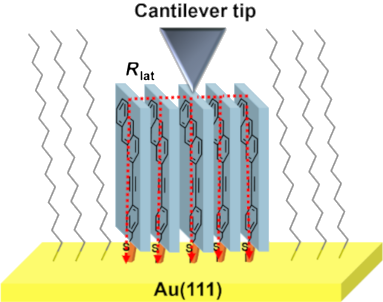
- . Then, the process of nanografting was performed in the contact mode (cantilever type: NSC-18/Cr-Au, spring const. 2.8 N/m, µmasch, NanoAndMore GmbH) with an increased force (setpoint: −0.66 V) of the tip on the surface. During the scanning process (scan rate: 5 Hz, number of lines: 512), the targeted


Integration of sharp silicon nitride tips into high-speed SU8 cantilevers in a batch fabrication process
Beilstein J. Nanotechnol. 2019, 10, 2357–2363, doi:10.3762/bjnano.10.226
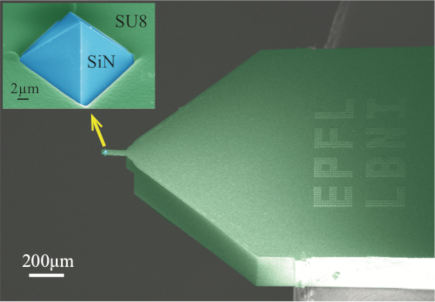
- cantilever made out of a polymer material do not meet the requirements for tip sharpness and durability. Combining the high imaging bandwidth of polymer cantilevers with making sharp and wear-resistant tips is essential for a future adoption of polymer cantilevers in routine AFM use. In this work, we have
- any photo-processable polymer cantilever. Keywords: Atomic force microscopy (AFM); durability; imaging speed; polymer cantilever; silicon nitride tip; Introduction Atomic force microscopy (AFM) cantilevers have been developed for numerous applications since the invention of scanning probe microscopy
- (SPM) [1]. Quality and accuracy of an AFM image strongly depend on the tip geometry since the image topography is the convolution of the surface topography and the cantilever tip geometry [2]. More precisely, the resulting images suffer from the effect of dilation [3]. AFM images with tip artefacts are


Atomic force acoustic microscopy reveals the influence of substrate stiffness and topography on cell behavior
Beilstein J. Nanotechnol. 2019, 10, 2329–2337, doi:10.3762/bjnano.10.223
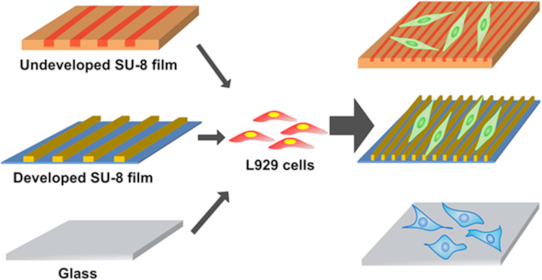
- biomechanical studies [21]. Atomic force acoustic microscopy (AFAM) is a technique based on AFM for nondestructive imaging. This technique operates on a dynamic mode in which the AFM cantilever vibrates upon ultrasound excitation. Accordingly, AFAM shows the ability to measure nanomechanical properties and is
- the sample holder was used to generate ultrasound waves propagating into the sample. An AFM tapping probe (Tap300Al-G, BudgetSensors) was used in all imaging experiments. A lock-in amplifier (SR830DSP, Stanford Research Systems, USA) was employed to analyze the cantilever oscillation signals. When the
- probe tip scanned across the specimen surface, acoustic and morphological images were acquired simultaneously. The deflections of the cantilever represent the morphological information, and the vibrations of the cantilever correspond to the acoustic signals. By employing a suitable mechanical model to


Nontoxic pyrite iron sulfide nanocrystals as second electron acceptor in PTB7:PC71BM-based organic photovoltaic cells
Beilstein J. Nanotechnol. 2019, 10, 2238–2250, doi:10.3762/bjnano.10.216
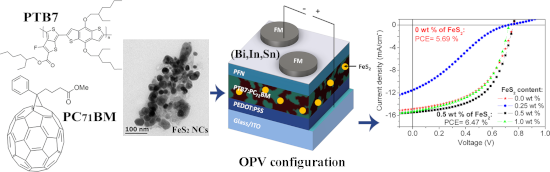
- active layer thickness was measured by AFM (Easyscan2 from Nanosurf) in contact mode employing cantilever tips with the aluminum reflective coating (ContAl-G) from BudgetSensors. The AFM roughness images were acquired in dynamic force mode (using PPP-NCLAu from NanoSensors), because it shows better


Synthesis and potent cytotoxic activity of a novel diosgenin derivative and its phytosomes against lung cancer cells
Beilstein J. Nanotechnol. 2019, 10, 1933–1942, doi:10.3762/bjnano.10.189
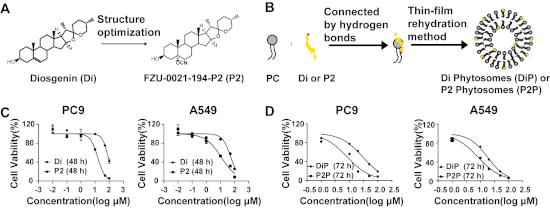
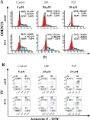
- under ambient conditions with a silicon cantilever with L = 115 μm, W = 25 μm, and T = 605 nm. For TEM measurements, the DiP and P2P were diluted with ddH2O to a concentration of 10 μg/mL. 8.5 μL of the dispersion was dripped on the copper grid and dried in air overnight before imaging. Cell cultures



Subsurface imaging of flexible circuits via contact resonance atomic force microscopy
Beilstein J. Nanotechnol. 2019, 10, 1636–1647, doi:10.3762/bjnano.10.159
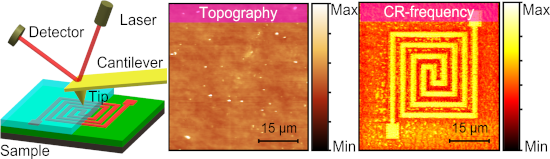
- sample properties was systematically investigated by combining experimental results with theoretical analysis from finite element simulations. The results show that imaging with a softer cantilever and a lower eigenmode will improve the subsurface contrast. The experimental results and theoretical
- microscopy where the sample is ultrasonically excited at a specified frequency and the amplitude and phase of the cantilever are recorded [13][14]. After that, the theoretical analysis of the cantilever vibration with the tip contacting the sample surface was intensively investigated, including the influence
- of tip position on the cantilever, lateral forces and cantilever tilt [14][15][16]. Since the contact resonance is sensitive to the sample’s local mechanical properties, CR-AFM has been employed for characterization of elastic and viscoelastic properties [17][18][19][20]. In addition, mechanically



Kelvin probe force microscopy work function characterization of transition metal oxide crystals under ongoing reduction and oxidation
Beilstein J. Nanotechnol. 2019, 10, 1596–1607, doi:10.3762/bjnano.10.155
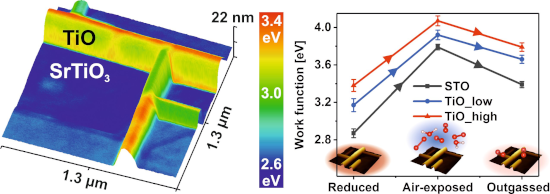
- behavior, with the correct CPD values measured when TiO nanowires are separated by more than 40 nm. This stands in perfect agreement with the real tip radius of 15 nm, which was measured for the same cantilever in high-resolution SEM (see Figure 4d insets). Here, the use of uniformly PtIr-coated tips
- noncontact mode measurements (with a Kelvin loop) using the very same tip, maintaining oscillations at the higher harmonics of the fundamental frequency (≈75 kHz). Hence, in order to record current and CPD maps from the very same sample area, KPFM measurements were first performed with the soft cantilever
- actual PtSi cantilever used in the experiments with a tip radius of 15 nm. Characterization of the SrTiO3(100) surface by KPFM. a) Topography of a TiO/SrTiO3 structure (Δf = −20 Hz), b) corresponding work function map from KPFM, c) work function histogram from the selected area in b), d) and e


Development of a new hybrid approach combining AFM and SEM for the nanoparticle dimensional metrology
Beilstein J. Nanotechnol. 2019, 10, 1523–1536, doi:10.3762/bjnano.10.150
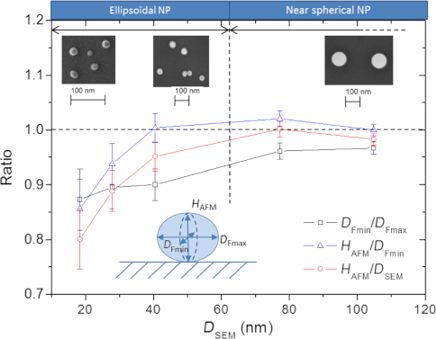
- measurands defined for both techniques are distinct. AFM is a technique used for mapping physical properties at the nanoscale. The measuring principle is based on the detection of the interaction (attractive or repulsive forces) between a sharp tip attached to the end of a flexible cantilever and a sample
- (tapping) mode is more commonly used. It consists in oscillating the cantilever near its resonant frequency and maintaining a constant amplitude during the scan. However, regardless of the used mode, and due to tip convolution, the obtained image is a function of tip shape and tip radius (estimated to be
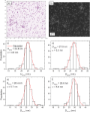
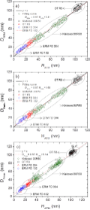
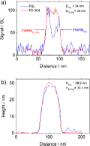
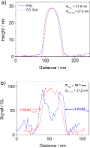
- %, respectively. The AFM measurements were carried out with a Veeco Nanoman V equipped with an accurate three-axis scanner operating under closed-loop control (hybrid XYZ-scanner with a range of 90 µm × 90 µm × 8 µm). All measurements were performed in air using tapping mode and OTESPA-R3 probes. The cantilever




Nanoscale spatial mapping of mechanical properties through dynamic atomic force microscopy
Beilstein J. Nanotechnol. 2019, 10, 1332–1347, doi:10.3762/bjnano.10.132
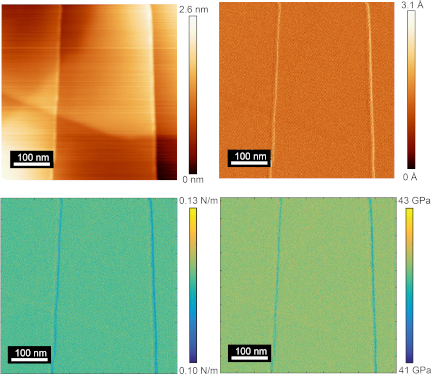
- cantilever are associated to the elastic modulus through a straight forward calculation [13]. In CR mode, the mechanical properties can be extracted by pressing the tip into the surface and oscillating the cantilever at a frequency corresponding to the contact resonance, which corresponds to the mechanical
- resonance of the cantilever and tip in contact with the sample surface. In this mode, the variation in the amplitude and shifts in the contact resonance frequency during scanning are recorded. While the obtained shift in the contact resonance frequency can be converted into a quantitative map of mechanical
- contaminants on the surface when measuring the mechanical properties of atomic-sized defects [15][16][17]. Furthermore, the high quality factor of the AFM cantilever that is achieved under UHV conditions can be very beneficial in dynamic AFM modes, as the Q-factor is inversely proportional to the force




Imaging the surface potential at the steps on the rutile TiO2(110) surface by Kelvin probe force microscopy
Beilstein J. Nanotechnol. 2019, 10, 1228–1236, doi:10.3762/bjnano.10.122
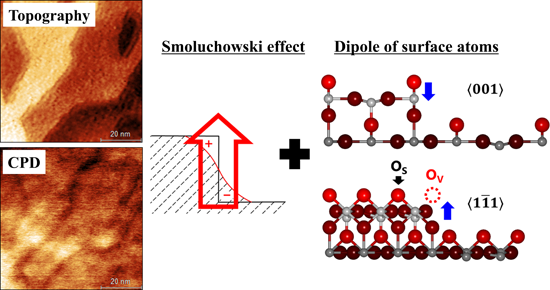
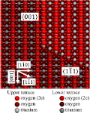
- out with a custom-built ultrahigh-vacuum noncontact atomic force microscopy (NC-AFM) system operated at a temperature of 78 K with a base pressure below 4 × 10⁻¹¹ mbar. The NC-AFM system was operated in the frequency-modulation mode [44] with a constant cantilever oscillation amplitude (5 Å). The
- cantilever deflection was measured using an optical beam deflection method [45]. The images were obtained using a commercial Ir-coated Si cantilever (NANOSENSORS) with a resonant frequency of 804 kHz and 808 kHz and a spring constant of 1500 N/m. Before the experiments, the tip was cleaned by Ar+ sputtering
- Waals force is dominant and the contribution of the force from the tip apex becomes weak and the force from the rest of the cantilever becomes significant. Therefore, the observed height of step was smaller than that of the real one. Before the experiments, we verified that the distance calibration of
![[Graphic 16]](/bjnano/content/inline/2190-4286-10-122-i16.svg?max-width=637&scale=1.18182) and
and ![[Graphic 17]](/bjnano/content/inline/2190-4286-10-122-i17.svg?max-width=637&scale=1.18182) .
.

![[Graphic 38]](/bjnano/content/inline/2190-4286-10-122-i38.svg?max-width=637&scale=1.18182) and
and ![[Graphic 39]](/bjnano/content/inline/2190-4286-10-122-i39.svg?max-width=637&scale=1.18182) steps. (a) Topographic image...
steps. (a) Topographic image...


![[Graphic 72]](/bjnano/content/inline/2190-4286-10-122-i72.svg?max-width=637&scale=1.18182) , b)
, b) ![[Graphic 73]](/bjnano/content/inline/2190-4286-10-122-i73.svg?max-width=637&scale=1.18182) , c) reduced
, c) reduced ![[Graphic 74]](/bjnano/content/inline/2190-4286-10-122-i74.svg?max-width=637&scale=1.18182) , and d)
, and d) ![[Graphic 75]](/bjnano/content/inline/2190-4286-10-122-i75.svg?max-width=637&scale=1.18182) steps. B...
steps. B...
Influence of dielectric layer thickness and roughness on topographic effects in magnetic force microscopy
Beilstein J. Nanotechnol. 2019, 10, 1056–1064, doi:10.3762/bjnano.10.106
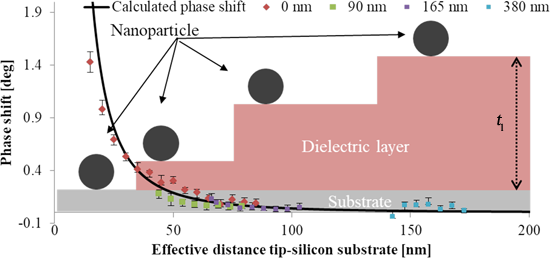
- nanoparticle diameter) resulting in a positive phase shift: with A being the effective capacitive area, z the lift height, d the nanoparticle diameter, VCPD the contact potential difference between tip and substrate, Q the quality factor, k the spring constant of the cantilever, and ε0 the dielectric constant
- magnetized sphere [20][22][23]: where Q is the quality factor of the cantilever, k is the spring constant, µ0 is the vacuum permeability, mp is the magnetic moment of the nanoparticle, mtip is the magnetic moment of the tip, and a is the distance between the two dipoles and is shown schematically in Figure 5




![[Graphic 2]](/bjnano/content/inline/2190-4286-10-106-i7.svg?max-width=637&scale=1.18182) ; black line) and measured phase shift for single nanoparticles with 10 ± 2 nm diameter...
; black line) and measured phase shift for single nanoparticles with 10 ± 2 nm diameter...


Outstanding chain-extension effect and high UV resistance of polybutylene succinate containing amino-acid-modified layered double hydroxides
Beilstein J. Nanotechnol. 2019, 10, 684–695, doi:10.3762/bjnano.10.68
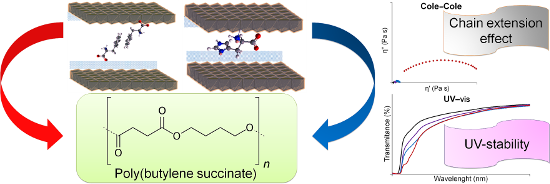
- monitored automatically against frequency. The dynamic mechanical thermal properties were measured using a Rheometric Scientific DMTA IV dynamic mechanic thermoanalysis (DMTA) instrument with a dual cantilever testing geometry. Test samples were prepared by injection moulding at 140 °C using a Minimix


Review of time-resolved non-contact electrostatic force microscopy techniques with applications to ionic transport measurements
Beilstein J. Nanotechnol. 2019, 10, 617–633, doi:10.3762/bjnano.10.62
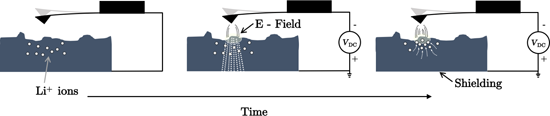
- period of the cantilever and compare and contrast it with those previously established. Keywords: atomic force microscopy; electrostatic force microscopy; ionic transport; lithium ion batteries; nanotechnology; Introduction Since the inception of the atomic force microscope (AFM) a variety of
- potential applied across the sample; the movement of mobile ions leads to a change in the tip–sample capacitance and, thus, to a change in the electrostatic force acting on the cantilever probe tip. The electrostatic tip–sample force is proportional to the capacitance gradient ∂C/∂z times the square of the
- used frequency-modulated AFM configuration, the resonance frequency of an oscillating cantilever is measured while the probe tip interacts with a surface [24]. The interactions are purely electrostatic – in other words, the tip and sample form a capacitor. The oscillation of the cantilever can