Search results
Search for "cathode" in Full Text gives 169 result(s) in Beilstein Journal of Nanotechnology.
The nanoscaled metal-organic framework ICR-2 as a carrier of porphyrins for photodynamic therapy
Beilstein J. Nanotechnol. 2018, 9, 2960–2967, doi:10.3762/bjnano.9.275
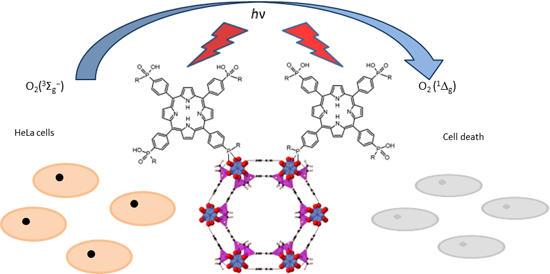
- ]. UV–vis absorption spectra of the dispersions were recorded on a Perkin Elmer Lambda 35 spectrometer. High-resolution transmission electron microscopy (TEM) was carried out on a JEOL JEM 3010 microscope operated at 300 kV (LaB6 cathode, point resolution 1.7 Å) with an Oxford Instruments Energy


Charged particle single nanometre manufacturing
Beilstein J. Nanotechnol. 2018, 9, 2855–2882, doi:10.3762/bjnano.9.266
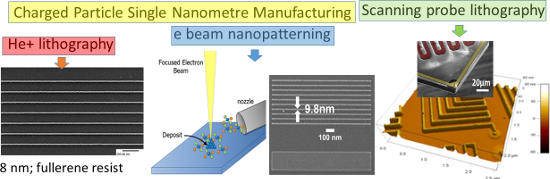
- electron beams from a thermionic cathode in the cathode ray tube pioneered by Braun in 1897 [1], followed by the first practical scanning transmission electron microscope (STEM) built in Berlin by von Ardenne in 1939 [2]. The first commercial SEM was built by Ruska’s team at Siemens in 1939 [3


Low cost tips for tip-enhanced Raman spectroscopy fabricated by two-step electrochemical etching of 125 µm diameter gold wires
Beilstein J. Nanotechnol. 2018, 9, 2718–2729, doi:10.3762/bjnano.9.254
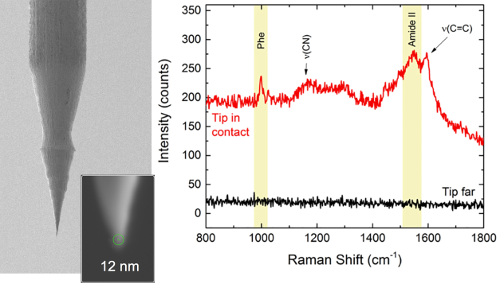
- , temper hard) shaped to form a ring of 10 mm diameter, acting as the cathode. A micrometric translator is used to manipulate the gold wire during the immersion and extraction from the solution. The gold wire is placed at the center of the ring-shaped cathode (Figure 1c) and oriented orthogonal to the


Hydrothermal-derived carbon as a stabilizing matrix for improved cycling performance of silicon-based anodes for lithium-ion full cells
Beilstein J. Nanotechnol. 2018, 9, 2381–2395, doi:10.3762/bjnano.9.223
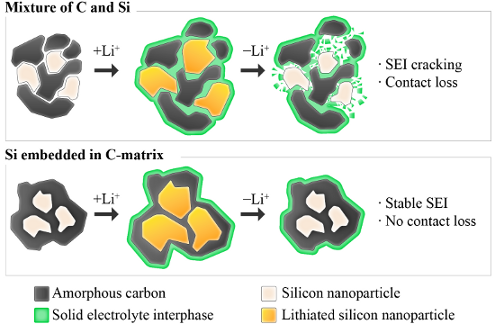
- promising Si/C composite is also studied in a LIB full cell vs a NMC-111 cathode; such a configuration is very seldom reported in the literature. More specifically, the influence of electrochemical prelithiation on the cycling performance in this full cell set-up is studied and compared to non-prelithiated
- . For example, they maintain a high specific capacity (372 mAh g−1) compared to cathode materials, high electrochemical stability in suitable electrolytes, a low operation potential (0.2 V vs Li/Li+), low voltage hysteresis, low cost, and are environmentally friendly [7][8]. Nonetheless, alternative
- Li/Li+). Therefore, high cell voltages can be achieved using appropriate cathode materials [10][12][14]. Based on energy density calculations, it was reported that the total specific capacity can significantly be increased on the cell level by the application of high capacity anode materials


Spin-coated planar Sb2S3 hybrid solar cells approaching 5% efficiency
Beilstein J. Nanotechnol. 2018, 9, 2114–2124, doi:10.3762/bjnano.9.200
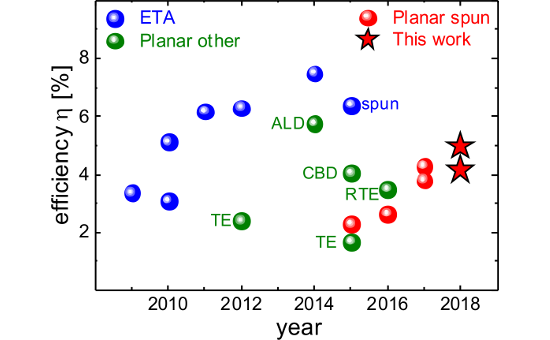
- MoOx forms a tunneling junction with the HTM is typical for organic solar cells in an n-i-p configuration. The cell area was 0.16 cm2. Layer and device characterization: The scanning electron microscope was a Zeiss (Leo) Gemini 1550 with Shottky field-emission cathode and an in-lens detector. The


A scanning probe microscopy study of nanostructured TiO2/poly(3-hexylthiophene) hybrid heterojunctions for photovoltaic applications
Beilstein J. Nanotechnol. 2018, 9, 2087–2096, doi:10.3762/bjnano.9.197
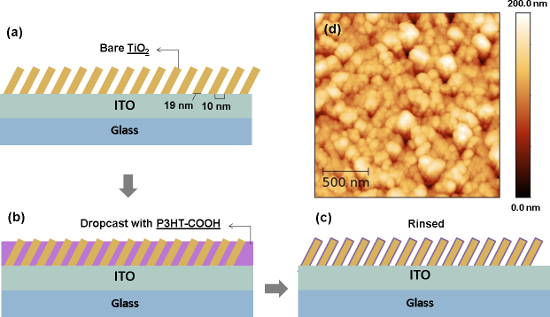
- vertically aligned nanostructuration of TiO2 also makes this system attractive, since it ensures direct percolation paths for the photogenerated electrons from the donor–acceptor interface to the cathode, while providing a simple, controlled and ordered architecture. Furthermore, studies are available in
- bias, while fixing the growth temperature to 450 °C and the tilt angle between the substrate and the cathode axis to 60°. Anatase TiO2 layers with a 200 nm thick nanocolumnar morphology have been deposited on 85 nm-thick ITO-coated glass substrates (Naranjo B.V., sheet resistance of 15 Ω·sq). The


Metal-free catalysis based on nitrogen-doped carbon nanomaterials: a photoelectron spectroscopy point of view
Beilstein J. Nanotechnol. 2018, 9, 2015–2031, doi:10.3762/bjnano.9.191
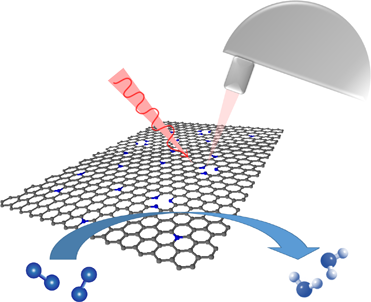
- splitting of water to molecular hydrogen via hydrogen and oxygen evolution reaction (HER and OER, respectively) are fundamental working mechanisms at the cathode of fuel cells, metal–air batteries and dye-sensitized solar cells [2]. However, the current working catalysts are based on expensive metals, such
- studies on the oxidation of oxalic acid on charcoal containing nitrogen and iron [7]. In 1966, activated carbon, heated at high temperatures in the presence of ammonia, was used in the cathode of a fuel cell showing an enhanced activity for the electrochemical reduction of oxygen [8]. However, a metal
- introduction of nitrogen into various carbon-based cathode catalysts for the polymer electrolyte fuel cell (PEFC) [105]. Different preparation methods were used: nitrogen doping using ammonia resulted in high amounts of pyridinic N, while using pyrolysis of nitrogen-containing precursors the amount of




Synthesis of rare-earth metal and rare-earth metal-fluoride nanoparticles in ionic liquids and propylene carbonate
Beilstein J. Nanotechnol. 2018, 9, 1881–1894, doi:10.3762/bjnano.9.180
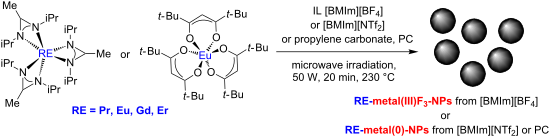
- ]. For EuF3, no oxygen peak was seen in the XPS analysis. Therefore, SAED and PXRD data in combination with HR-XPS exclude any contamination of the REF3-NPs with metal(III) oxides. Metal fluorides are used, for example, as cathode materials in lithium-ion batteries [6]. The lithium-ion battery is one of


Direct AFM-based nanoscale mapping and tomography of open-circuit voltages for photovoltaics
Beilstein J. Nanotechnol. 2018, 9, 1802–1808, doi:10.3762/bjnano.9.171
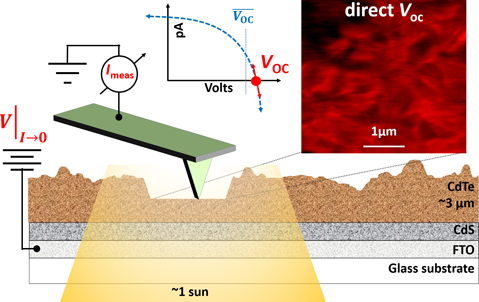
- from below through an underlying transparent conducting anode and substrate (FTO/glass). Local currents are detected from above by the AFM probe serving as a positionable cathode. The local photovoltaic properties can vary widely for the heterogeneous microstructure compared to the mean (macroscopic


Toward the use of CVD-grown MoS2 nanosheets as field-emission source
Beilstein J. Nanotechnol. 2018, 9, 1686–1694, doi:10.3762/bjnano.9.160
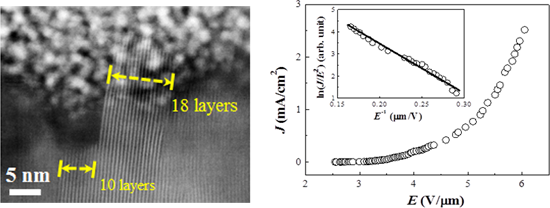
- displays, X-ray sources and cold-cathode electron sources [2]. 1D and 2D materials such as carbon nanotubes [3], ZnO nanorods [1], LaB6 nanowires [2], SnS2 nanosheets (NSs) [4], vertically aligned graphene [5], WS2 nanotubes [6], MoSe2 nanosheets [7], and MoS2 NSs [8][9][10] are potential field-emitter
- deposited on the FTO glass substrate served as electron-emission cathode and another piece of conductive FTO glass was used as anode. The distance between the cathode and anode was fixed at 220 µm by using thin glass spacers. The FE current (I) versus the applied voltage (V) was measured using an
- SEM (Figure 5c) and Raman spectroscopy (not shown as it is identical to the as-grown NSs). It was thus confirmed that they are of similar quality to that of as-grown NSs. The Fowler–Nordheim (F–N) equation [28] was modified for a cathode with nanometric field emitters as follows: E = U/d, where U is



Nitrogen-doped carbon nanotubes coated with zinc oxide nanoparticles as sulfur encapsulator for high-performance lithium/sulfur batteries
Beilstein J. Nanotechnol. 2018, 9, 1677–1685, doi:10.3762/bjnano.9.159
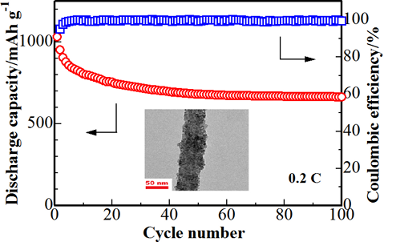
- carbon nanotubes coated with zinc oxide nanoparticles (ZnO@NCNT) were prepared via a sol–gel route as sulfur encapsulator for lithium/sulfur (Li/S) batteries. The electrochemical properties of the S/ZnO@NCNT composite cathode were evaluated in Li/S batteries. It delivered an initial capacity of 1032
- mAh·g−1 at a charge/discharge rate of 0.2C and maintained a reversible capacity of 665 mAh·g−1 after 100 cycles. The coulombic efficiency of the cathode remains unchanged above 99%, showing stable cycling performance. X-ray photoelectron spectroscopy analysis confirmed the formation of S–Zn and S–O
- providing pathways for ion and electron transport. The as-prepared S/ZnO@NCNT composite is a promising cathode material for Li/S batteries. Keywords: batteries; nanocomposites; sol–gel processes; sulfur; zinc oxide (ZnO); Introduction Due to its high theoretical specific capacity of 1672 mAh·g−1 and


Nanoscale electrochemical response of lithium-ion cathodes: a combined study using C-AFM and SIMS
Beilstein J. Nanotechnol. 2018, 9, 1623–1628, doi:10.3762/bjnano.9.154
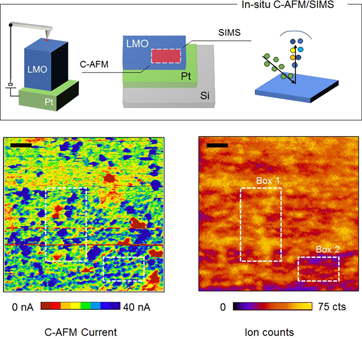
- cathode materials, structural, electrical and chemical information must be probed at the nanoscale and in the same area, to identify the ionic processes occurring inside each individual layer and understand the impact on the entire battery cell. In this work, we pursue this objective by using two well
- chemical information. First, we demonstrate the capability of a biased AFM tip to perform field-induced ionic migration in thin (cathode) films and its diagnosis through the observation of the local resistance change. The latter is ascribed to the internal rearrangement of Li-ions under the effect of a
- generally a solid and dense material while crystalline conductive oxides are used for the anode and cathode. As a solid electrolyte is significantly safer compared to its flammable organic liquid counterparts, its use does represent a clear advantage [2]. Moreover, the presence of crystalline ordering in


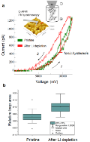
Light extraction efficiency enhancement of flip-chip blue light-emitting diodes by anodic aluminum oxide
Beilstein J. Nanotechnol. 2018, 9, 1602–1612, doi:10.3762/bjnano.9.152
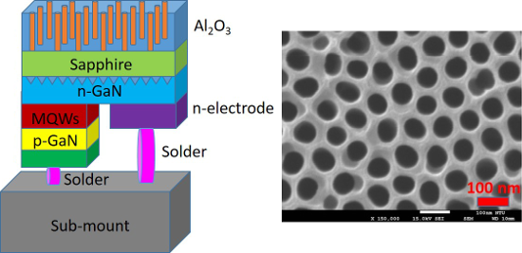
- platinum sheet was used as the cathode. The electrolysis experiment was conducted under 40 V with an electrolysis time of 45 min. Then, the system was placed in a mixed solution of 6 wt % phosphoric acid and 1.5 wt % chromic acid, and the first pore-widening process (1 h) and the second electrolysis


Photoluminescence of CdSe/ZnS quantum dots in nematic liquid crystals in electric fields
Beilstein J. Nanotechnol. 2018, 9, 1544–1549, doi:10.3762/bjnano.9.145
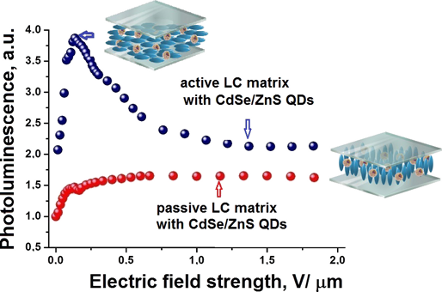
- of two quartz substrates with a fixed gap of about 33 μm. Both substrates were coated by cathode sputtering with transparent conductive electrodes based on indium tin oxide. Orienting layers of rubbed polyimide and chromolane were used to obtain a planar or vertical orientation of the LC molecules

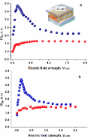


Optical near-field mapping of plasmonic nanostructures prepared by nanosphere lithography
Beilstein J. Nanotechnol. 2018, 9, 1536–1543, doi:10.3762/bjnano.9.144
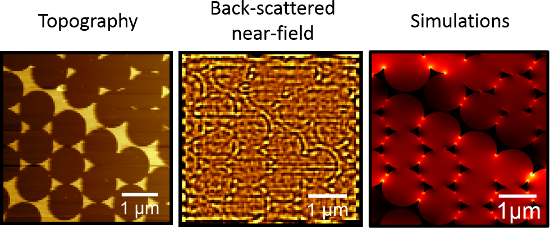
- thick gold wire (Goodfellow, Purity 99.99+ Annealed) was immersed to a depth of ≈1 mm in a 37% hydrochloric acid (HCl) solution (anode) in the center of a gold ring (cathode). A pulsed voltage (30 µs, 3 kHz frequency) of 7.5 V peak to peak and a +0.5 V offset was applied to the tip. The etched tip was




Electrodeposition of reduced graphene oxide with chitosan based on the coordination deposition method
Beilstein J. Nanotechnol. 2018, 9, 1200–1210, doi:10.3762/bjnano.9.111
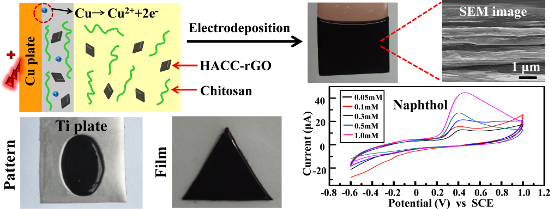
- incredible potential in the area of lab-on-a-chip devices, biofuel cells and implantable devices [9]. Aminopolysaccharide chitosan is one of the most widely used materials for electrodeposition. Due to its pH-responsive film-forming properties, chitosan can be electrodeposited as a stable film on the cathode
- in many fields. However, during the cathodic electrodeposition, H2 bubbles may be introduced in the deposited chitosan film due to the electrochemical reactions on the cathode, which can produce surface defects that will affect applications of the deposited film. In contrast, we carried out the
- . Then, the electrodeposition was conducted using a programmable DC power supply (IT6123, TW). Both the cathode and the anode were partially immersed into the deposition solution, and then a DC voltage of 1.2 V was applied. After a given electrodeposition time (e.g., 9 min), the anode was disconnected


P3HT:PCBM blend films phase diagram on the base of variable-temperature spectroscopic ellipsometry
Beilstein J. Nanotechnol. 2018, 9, 1108–1115, doi:10.3762/bjnano.9.102
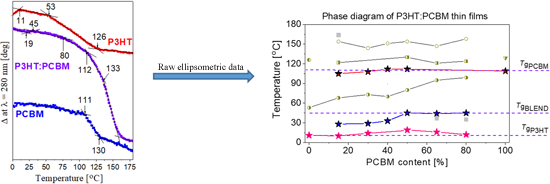
- ][2][3]. Their properties are widely reported in literature [4][5][6][7][8][9][10][11][12]. Usually the OPV devices are constructed as sandwich structures with active layers located between cathode and anode. The most extensively studied and characterized OPV devices are bulk solar cells, with the


Review: Electrostatically actuated nanobeam-based nanoelectromechanical switches – materials solutions and operational conditions
Beilstein J. Nanotechnol. 2018, 9, 271–300, doi:10.3762/bjnano.9.29
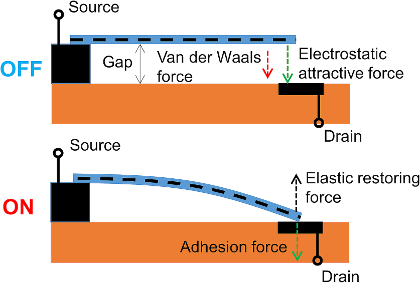
- contact results in an increase of the electrostatic field between them, especially at their highest asperities [105], where the electrostatic field achieves high enough (≈108 V/m) values to induce FN electron emission from the electrode (cathode). This process causes a temperature increase of the other


Synthesis and characterization of electrospun molybdenum dioxide–carbon nanofibers as sulfur matrix additives for rechargeable lithium–sulfur battery applications
Beilstein J. Nanotechnol. 2018, 9, 262–270, doi:10.3762/bjnano.9.28
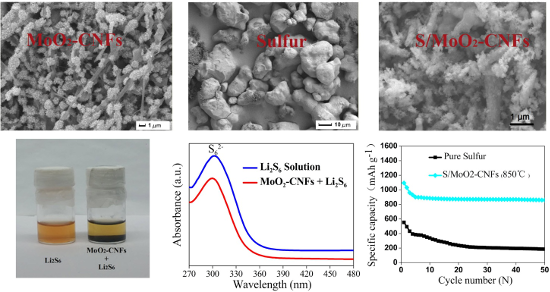
- Ruiyuan Zhuang Shanshan Yao Maoxiang Jing Xiangqian Shen Jun Xiang Tianbao Li Kesong Xiao Shibiao Qin Institute for Advanced Materials, College of Materials Science and Engineering, Jiangsu University, Zhenjiang, 212013, P. R. China Hunan Engineering Laboratory of Power Battery Cathode Materials
- caused by dissolved polysulfide molecules [1]. All of these issues still pose a challenge to overcome for the production of reversible, stable, and efficient sulfur cathodes. The currently proposed approaches to solve these issues include sulfur-based cathode modification, electrolyte modification and
- electrochemical performance than a pristine sulfur cathode. Results and Discussion Characterization of MoO2–CNFs X-ray diffraction (XRD) patterns of the as-prepared composite fibers calcined at various temperatures are presented in Figure 1a. Well-defined features appeared for the samples heated at 550 °C due to


Anchoring of a dye precursor on NiO(001) studied by non-contact atomic force microscopy
Beilstein J. Nanotechnol. 2018, 9, 242–249, doi:10.3762/bjnano.9.26
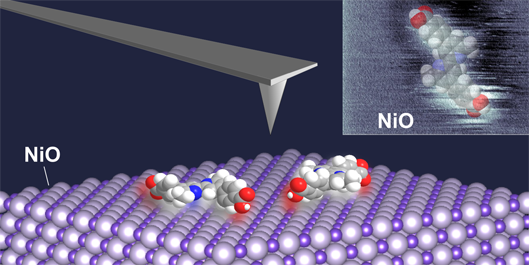
- fundamental studies including those at the molecular or sub-molecular scale [6][7][8][9][10][11][12][13][14]. In contrast, the synthesis and characterization of p-type wide band gap metal oxide materials and especially the fabrication and analysis of p-type DSSCs with a photoactive cathode, are less commonly



Bombyx mori silk/titania/gold hybrid materials for photocatalytic water splitting: combining renewable raw materials with clean fuels
Beilstein J. Nanotechnol. 2018, 9, 187–204, doi:10.3762/bjnano.9.21
- TEM with a LaB6 cathode operated at 120 kV. High resolution transmission electron microscopy (HRTEM) was done using an aberration corrected Titan 80-300 (FEI, Eindhoven, The Netherlands) with field emission gun, operated at 300 kV. Scanning transmission electron microscopy (STEM) and chemical analysis




Synthesis of metal-fluoride nanoparticles supported on thermally reduced graphite oxide
Beilstein J. Nanotechnol. 2017, 8, 2474–2483, doi:10.3762/bjnano.8.247
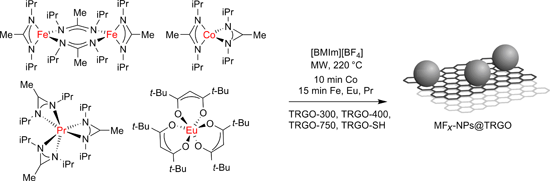
- the MFx-NPs. Electrochemical investigations of the FeF2-NPs@TRGO as cathode material for lithium-ion batteries were evaluated by galvanostatic charge/discharge profiles. The results indicate that the FeF2-NPs@TRGO as cathode material can present a specific capacity of 500 mAh/g at a current density of
- heterogeneous nanocatalysts [55][56]. Transition-metal-fluoride nanoparticles are applied, for example, as cathode materials in lithium-ion batteries for vehicles and other mobile devices [57]. In this field, the modification of lithium–transition-metal electrodes is a very important issue to improve the
- source for the formation of FeF3 NPs and their stabilization medium [84]. Iron fluorides were recognized as promising cathode materials for lithium-ion batteries due to the higher energy density compared to current cathode materials. Iron fluorides can undergo a conversion reaction delivering a


Comparing postdeposition reactions of electrons and radicals with Pt nanostructures created by focused electron beam induced deposition
Beilstein J. Nanotechnol. 2017, 8, 2410–2424, doi:10.3762/bjnano.8.240
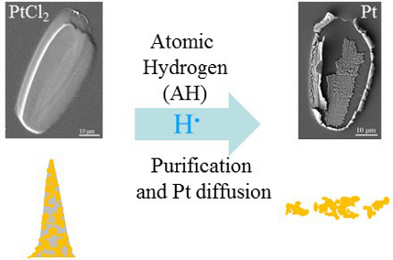
- identified and imaged by SEM. All of the effects of electrons and atomic hydrogen reported in this study were independent of the substrate on which the deposits were created. Deposits generated in the Auger system were imaged and analyzed ex situ using a cold-cathode field-emission SEM (JEOL 6700F, LEI




A comparative study of the nanoscale and macroscale tribological attributes of alumina and stainless steel surfaces immersed in aqueous suspensions of positively or negatively charged nanodiamonds
Beilstein J. Nanotechnol. 2017, 8, 2045–2059, doi:10.3762/bjnano.8.205
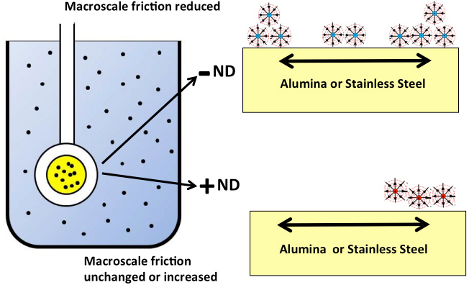
- and the sample was then immersed into 4 wt % oxalic acid solution maintained at 0 °C. A cathode was placed in the bath and an electric potential of 40 V was applied between the anode and the cathode. Anodization was halted at 3 min yielding an approximately 100 nm thick Al2O3 layer. After the


Growth and characterization of textured well-faceted ZnO on planar Si(100), planar Si(111), and textured Si(100) substrates for solar cell applications
Beilstein J. Nanotechnol. 2017, 8, 1939–1945, doi:10.3762/bjnano.8.194
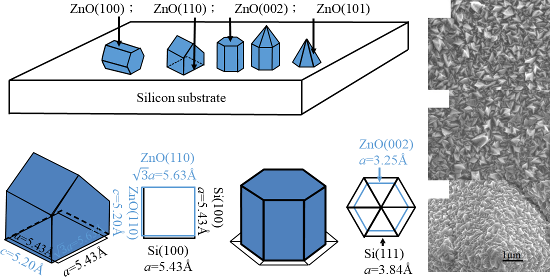
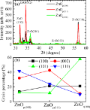
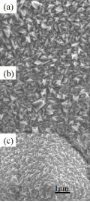
- (LPCVD) were analyzed by X-ray diffraction (XRD), scanning electron microscopy (SEM), atomic force microscopy (AFM), and cathode luminescence (CL) measurements. The results show that ZnO grown on planar Si(100), planar Si(111), and textured Si(100) substrates favor the growth of ZnO(110) ridge-like, ZnO
- . Keywords: atomic force microscopy; cathode luminescence; scanning electron microscopy; silicon solar cells; transparent conducting oxide; X-ray diffraction; ZnO; Introduction Transparent conductive oxides (TCOs), with both high electrical conductivity and optical transparency, could be used as a
- by LPCVD. These three samples are characterized and analyzed by X-ray diffraction (XRD), scanning electron microscopy (SEM), atomic force microscopy (AFM), and cathode luminescence (CL) measurements. The grain structure, average grain size, and associated strains are shown to agree well with the



![[Graphic 2]](/bjnano/content/inline/2190-4286-8-194-i4.png?max-width=637&scale=1.18182) × lattice constant a) by 5.20 Å (l...
× lattice constant a) by 5.20 Å (l...