


Search results
Search for "corrosion" in Full Text gives 137 result(s) in Beilstein Journal of Nanotechnology.
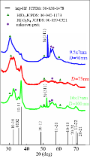
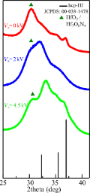
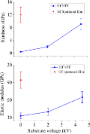
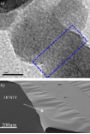
Synthesis of hafnium nanoparticles and hafnium nanoparticle films by gas condensation and energetic deposition
Beilstein J. Nanotechnol. 2018, 9, 1868–1880, doi:10.3762/bjnano.9.179

- cross section in neutron absorption [32]. Hafnium alloys are used in medical applications because they are biocompatible and exhibit high corrosion resistance as well as in aerospace technology because it can increase the mechanical strength of materials [33]. Furthermore, because of its high dielectric






Quantitative comparison of wideband low-latency phase-locked loop circuit designs for high-speed frequency modulation atomic force microscopy
Beilstein J. Nanotechnol. 2018, 9, 1844–1855, doi:10.3762/bjnano.9.176
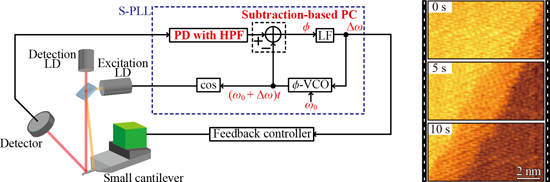
- atomistic mechanisms of various interfacial phenomena, including thin-film formation, crystal growth and dissolution, metal corrosion, and catalytic reactions in vacuum and in liquids. This problem could be solved by enhancing the FM-AFM operation speed. The development of high-speed FM-AFM requires



Cr(VI) remediation from aqueous environment through modified-TiO2-mediated photocatalytic reduction
Beilstein J. Nanotechnol. 2018, 9, 1448–1470, doi:10.3762/bjnano.9.137
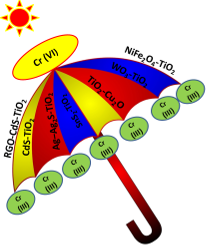
- pH. It is evident from Figure 1 that HCrO4− and Cr2O72− are the stable Cr(VI) species between pH 1.0 and 6.0 whereas CrO42− predominates above pH 6.0 [6]. Cr(VI) compounds are corrosion inhibitors and are toxic and are thus mostly used in different industrial processes such as metal plating, leather



Cyclodextrin inhibits zinc corrosion by destabilizing point defect formation in the oxide layer
Beilstein J. Nanotechnol. 2018, 9, 936–944, doi:10.3762/bjnano.9.86
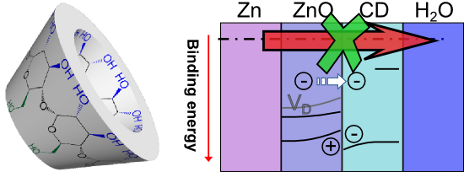
- , 7491 Trondheim, Norway 10.3762/bjnano.9.86 Abstract Corrosion inhibitors are added in low concentrations to corrosive solutions for reducing the corrosion rate of a metallic material. Their mechanism of action is typically the blocking of free metal surface by adsorption, thus slowing down dissolution
- . This work uses electrochemical impedance spectroscopy to show the cyclic oligosaccharide β-cyclodextrin (β-CD) to inhibit corrosion of zinc in 0.1M chloride with an inhibition efficiency of up to 85%. Only a monomolecular adsorption layer of β-CD is present on the surface of the oxide covered metal
- interface, closely resembling the energy level alignment in an n–p junction. The energy level shift is too large to permit further electron transfer through the layer, inhibiting corrosion. Adsorption hence changes the defect density in the protecting ZnO layer. This mechanism of corrosion inhibition shows


Facile chemical routes to mesoporous silver substrates for SERS analysis
Beilstein J. Nanotechnol. 2018, 9, 880–889, doi:10.3762/bjnano.9.82
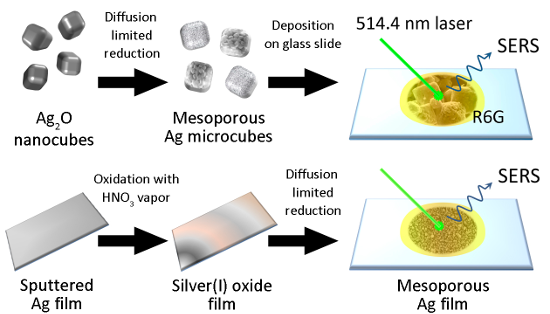
- due to the low redox potential of most of the metals, leading to fast oxidation or corrosion of metal sponges in ambient conditions. The oxidation stability of noble metals makes them more reliable as functional materials and thus materials such as porous silver, gold and platinum can be kept for a


Engineering of oriented carbon nanotubes in composite materials
Beilstein J. Nanotechnol. 2018, 9, 415–435, doi:10.3762/bjnano.9.41
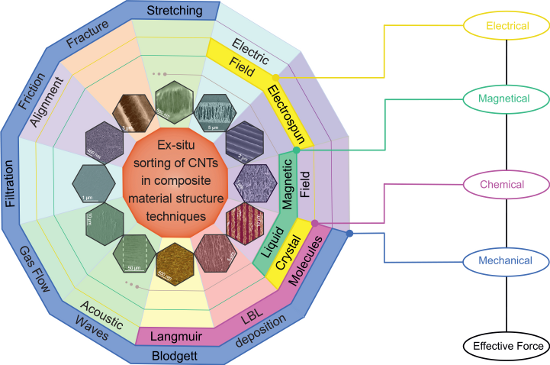
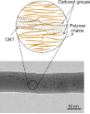
- of the surface. In practice, this feature is used to study corrosion, cleanness, uniformity, roughness, adhesion, friction, size, etc. AFM, like SEM and TEM, is a suitable technique to characterize the alignment of CNTs, especially horizontal alignment; for instance, when the CNTs grow horizontally








Review: Electrostatically actuated nanobeam-based nanoelectromechanical switches – materials solutions and operational conditions
Beilstein J. Nanotechnol. 2018, 9, 271–300, doi:10.3762/bjnano.9.29
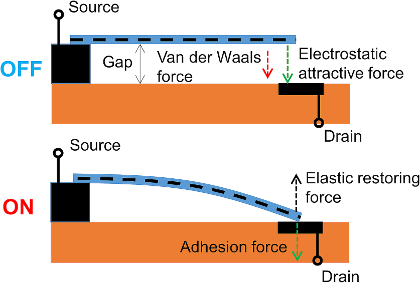
- contact when switching to the on state [70]. Silicon carbide: Silicon carbide (SiC), well-known for its resistance to corrosion, has been widely explored for harsh environment applications where traditional semiconductor materials fail. In addition, it has tribological characteristics superior to those of
- singular switching events [23]. Ceramics Titanium and tungsten nitride ceramics: Titanium nitride (TiN) has a low electrical resistivity that is comparable to some metals, high stiffness (Young’s modulus of 427–590 GPa) and high hardness, high melting temperature (2930 °C), high corrosion resistance [140


Growth model and structure evolution of Ag layers deposited on Ge films
Beilstein J. Nanotechnol. 2018, 9, 66–76, doi:10.3762/bjnano.9.9
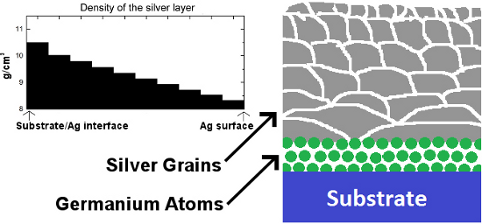
- transmission spectra. Two months after deposition, the slope of the silver layer density profile derived from the XRR spectra was found to be inverted due to the completed segregation process, and the optical transmission spectra increased uniformly due to the roughened surfaces, corrosion of silver and
- atoms present in the Ag grain boundaries are individual atoms or small clusters, Raman spectra of Ge wetted, 20 nm thick Ag layers were recorded immediately after deposition as well as 10 days later. To avoid corrosion, all samples were capped with a 3 nm thick LiF overlayer, except the ones measured
- visible even though the transparency of 20 nm thick Ag layer at these wavenumbers is extremely low (considering the fact that the laser wavelength is 532 nm). After 10 days of storing the sample in pressure below 10−3 Torr to reduce corrosion, the segregation is profound enough to noticeably influence the








Ta2N3 nanocrystals grown in Al2O3 thin layers
Beilstein J. Nanotechnol. 2017, 8, 2162–2170, doi:10.3762/bjnano.8.215
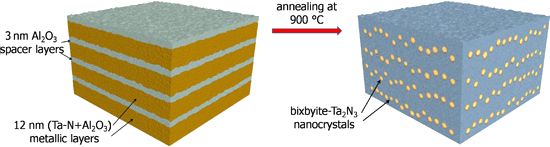
- longer wavelengths, high temperature durability, chemical stability, corrosion resistance, low cost or mechanical hardness, there is an increasing interest in various alternative materials that could optimize the device performance for specific plasmonic applications [8][9][10]. One promising group of



In situ controlled rapid growth of novel high activity TiB2/(TiB2–TiN) hierarchical/heterostructured nanocomposites
Beilstein J. Nanotechnol. 2017, 8, 2116–2125, doi:10.3762/bjnano.8.211
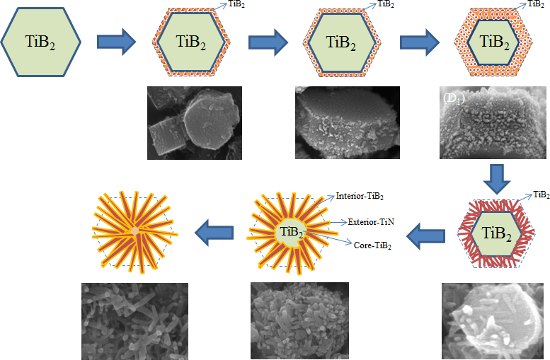
- stability, as well as excellent electrical and thermal conductivity [4][5][6]. On the other hand, titanium nitride (TiN) has some attractive properties, such as high hardness, low electrical resistivity, excellent wear and corrosion resistance [1][2][7]. Therefore, it is expected that these unique


A comparative study of the nanoscale and macroscale tribological attributes of alumina and stainless steel surfaces immersed in aqueous suspensions of positively or negatively charged nanodiamonds
Beilstein J. Nanotechnol. 2017, 8, 2045–2059, doi:10.3762/bjnano.8.205
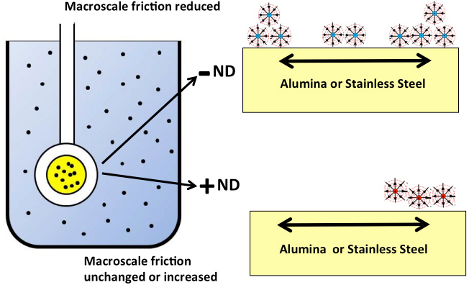
- aluminum, the surface-exposed aluminum metal is readily oxidized to Al2O3 under ambient air. This surface layer of alumina is protecting the rest of metal from a further corrosion. In our experiments, the electrodes were additionally anodized for 3 min. This procedure is expected to yield approximately 50


Systematic control of α-Fe2O3 crystal growth direction for improved electrochemical performance of lithium-ion battery anodes
Beilstein J. Nanotechnol. 2017, 8, 2032–2044, doi:10.3762/bjnano.8.204
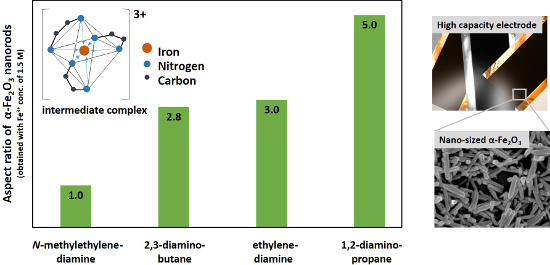
- . Among them, α-Fe2O3 (hematite) has attracted more and more attention due to its non-toxicity, high corrosion resistance, low processing costs, and especially, for its high theoretical gravimetric lithium-ion storage capacity of 1007 mAh g−1. However, α-Fe2O3 interacts with lithium ions via a conversion


Bi-layer sandwich film for antibacterial catheters
Beilstein J. Nanotechnol. 2017, 8, 1982–2001, doi:10.3762/bjnano.8.199
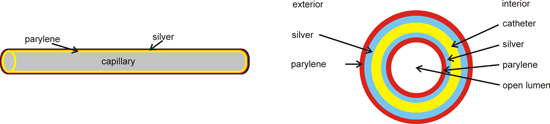
- silver from unintended corrosion. Second, it must ensure a certain release rate of the reagent Ag+, which is below the toxic level but sufficiently high to fight bacteria, germs and fungi successfully. The minimum inhibitory concentration (MIC) must be exceeded. For this purpose, the coating must be


α-Silicene as oxidation-resistant ultra-thin coating material
Beilstein J. Nanotechnol. 2017, 8, 1808–1814, doi:10.3762/bjnano.8.182
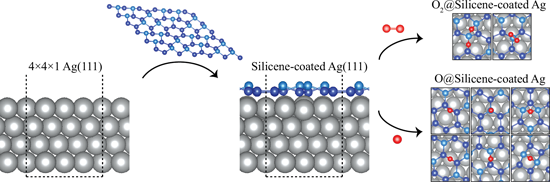
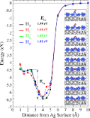
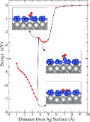
- for all application areas. As a well-known mechanism of electrochemical corrosion, the formation of rust is an un-solicited reaction between a metal and oxygen. For that reason, protection of surfaces from oxygen has become an important field. Although macroscale and microscale coatings have been used
- are needed to be understood in detail. Due to its extraordinary structural and electrical properties, graphene as 2D material has garnered huge interest in nearly all science branches [3][4]. Because of the high impermeability, graphene has also been thought as a corrosion-protection barrier [5][6][7
- ]. Kirkland et al. investigated the electrochemical response of graphene-coated metal surfaces and found that graphene causes reduction in the corrosion rate [8]. In addition, Topsakal et al. showed that graphene is a suitable coating material to protect surfaces from oxidation by performing DFT-based


Two-dimensional carbon-based nanocomposites for photocatalytic energy generation and environmental remediation applications
Beilstein J. Nanotechnol. 2017, 8, 1571–1600, doi:10.3762/bjnano.8.159


Atomic structure of Mg-based metallic glass investigated with neutron diffraction, reverse Monte Carlo modeling and electron microscopy
Beilstein J. Nanotechnol. 2017, 8, 1174–1182, doi:10.3762/bjnano.8.119
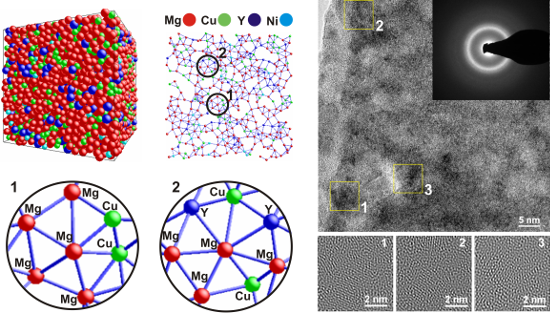
- values stated for crystalline Mg2Cu phase. The nanometer scale diffraction from selected areas in an amorphous matrix of Mg60Cu30Y10 glass used in [27] allows the interplanar spacing to be determined, which comes from the Mg2Cu clusters. What is more, the corrosion resistance of amorphous materials is
- related to the atomic structure. The lowest corrosion current density was detected for Mg60Cu30Y10 metallic glass, which has the lowest value of the first coordination shell radius from all R values determined for Mg65Cu20Y10Zn5 and Mg65Cu20Y10Ni5 alloys [28]. The ND structure factor S(Q) determined from





Fully scalable one-pot method for the production of phosphonic graphene derivatives
Beilstein J. Nanotechnol. 2017, 8, 1094–1103, doi:10.3762/bjnano.8.111
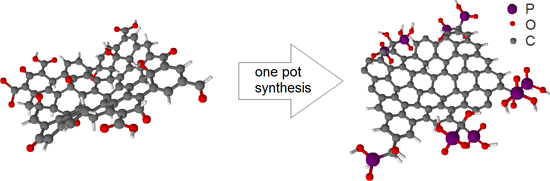
- wastewater. As can be seen, only a few examples of graphene derivatives functionalized with phosphonic acid can be found in the literature. The synthesis of phosphonic and bisphosphonic acids, which are widely used as detergents, pharmaceuticals (mainly for osteoporosis treatment), corrosion inhibitors


Treatment of fly ash from power plants using thermal plasma
Beilstein J. Nanotechnol. 2017, 8, 1043–1048, doi:10.3762/bjnano.8.105
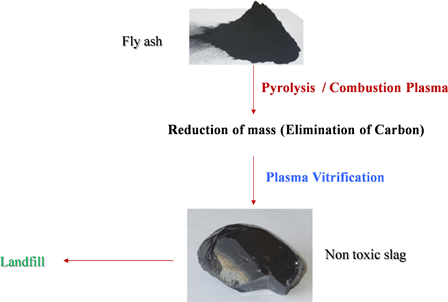
- alkaline earth metals (Ba, Ca, and Mg). These metals are added to the fuel oils for the suppression of soot or for corrosion control [2][3]. This fly ash is toxic because it contains a high percentage of heavy metals, such as V and Ni. Furthermore, the landfill of fly ash is expensive and causes several



Synthesis of graphene–transition metal oxide hybrid nanoparticles and their application in various fields
Beilstein J. Nanotechnol. 2017, 8, 688–714, doi:10.3762/bjnano.8.74
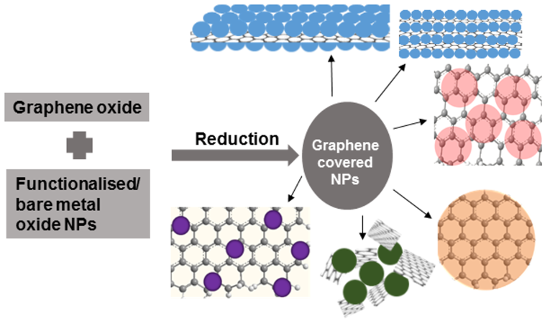
- its susceptibility to oxidative environments. In the last few decades, the synthesis of transition metal oxide (TMO) NPs has attracted much attention, providing the advantages of controlled shape, size, crystallinity and functionality, as well as being ecologically benign, corrosion resistance, easily


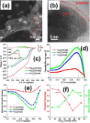


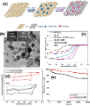


Diffusion and surface alloying of gradient nanostructured metals
Beilstein J. Nanotechnol. 2017, 8, 547–560, doi:10.3762/bjnano.8.59
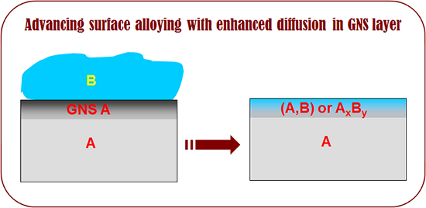
- works have been carried out on advancing surface alloying techniques of metals with a preformed nanostructured surface layer. The advantages are distinct, for example, improving surface properties such as wear and corrosion resistance with higher energy/time efficiency, reducing work-piece distortion
- -temperature processes: Surface alloying processes, such as nitriding and aluminizing, have been achieved on various engineering metals with a GNS surface layer at temperatures much lower than the conventional processing temperatures, and properties such as resistance to wear and corrosion were significantly
- [94][95], which is used as an important material in human body implantation. After immersion in the H2O2 solution for 24 h at room temperature, crystallized titania with the nanoporous structure was synthesized on the GNS Ti plate, while only interfacial corrosion was observed on the CG sample. By




A new approach to grain boundary engineering for nanocrystalline materials
Beilstein J. Nanotechnol. 2016, 7, 1829–1849, doi:10.3762/bjnano.7.176
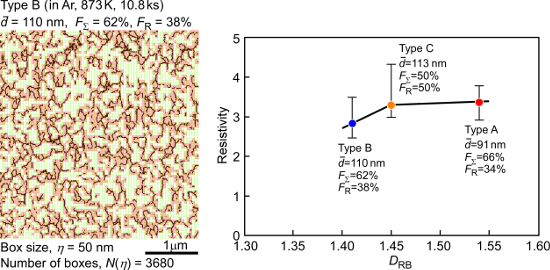
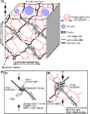
- materials. In recent years, the control of brittle fracture [37][38], creep deformation [39][40][41], fatigue fracture [42][43][44][45], corrosion [46][47][48][49] and stress corrosion cracking [40][41][50][51] have been successfully achieved by applying the concept of GBE based on the control of GBCD and
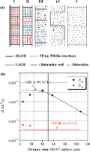
- improvement of corrosion resistance in existing stainless steels, as a typical engineering metallic material with enhanced corrosion resistance. This kind of GBE has been originally attempted by us quite recently and provided us important clues to future development of GBE. First, let us explain the basic
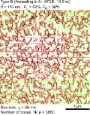
- boundary network, as seen from Figure 12. The longer percolation path composed of intergranular corrosion susceptive, random boundaries is characterized by the higher fractal dimension of MRBC. This finding has provided us with experimental evidence that the fractal dimension for MRBC, DR is useful as a










Properties of Ni and Ni–Fe nanowires electrochemically deposited into a porous alumina template
Beilstein J. Nanotechnol. 2016, 7, 1709–1717, doi:10.3762/bjnano.7.163
- instruments). Preventers (Na2SO4, CuSO4) were added to decrease corrosion activity of the electrolyte. This is particularly important during long-term deposition experiments. The concentration and pH value of each solution are shown in Table 1. All experiments were performed at room temperature (22 ± 2 °C


In situ characterization of hydrogen absorption in nanoporous palladium produced by dealloying
Beilstein J. Nanotechnol. 2016, 7, 1197–1201, doi:10.3762/bjnano.7.110
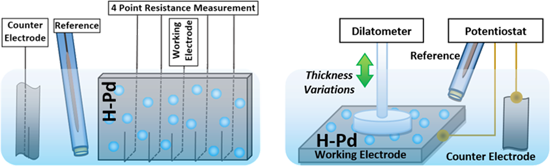
- and catalysis [2]. One attractive method to produce nanostructured metals with macroscopic dimensions is dealloying, an (electro-)chemical process, which removes the less noble component from an alloy by selective etching [3]. Nanoporous palladium (np-Pd) produced by free corrosion [4] as well as
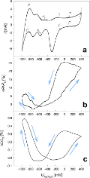
- extraordinarily strong actuation properties were reported quite recently for nanoporous Pd produced by free corrosion [4], the dilatometric measurements were extended to higher hydrogen concentrations by employing different charging parameters (Table 1). Before each loading experiment, the sample was activated by
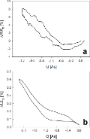
- as the relative sensitivity of actuator response to hydrogen loading of recently investigated nanoporous palladium produced by free corrosion of an Al–Pd master alloy [4]. While the maximum hydrogen solubilities show a strong variation with the charging parameters, such as the chosen electrolyte and

Orientation of FePt nanoparticles on top of a-SiO2/Si(001), MgO(001) and sapphire(0001): effect of thermal treatments and influence of substrate and particle size
Beilstein J. Nanotechnol. 2016, 7, 591–604, doi:10.3762/bjnano.7.52
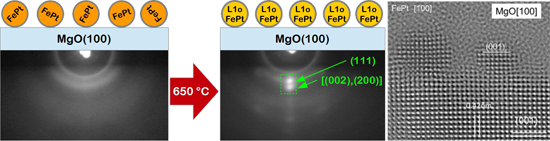
- material results from its thermal stability, its corrosion resistance and the possibility to tune its electronic properties [6][7]. Both of the appealing properties, the catalytic as well as the magnetic, hinge on the chemically ordered L10 phase of FePt close to equiatomic composition [6][8]. Though this


In situ observation of deformation processes in nanocrystalline face-centered cubic metals
Beilstein J. Nanotechnol. 2016, 7, 572–580, doi:10.3762/bjnano.7.50
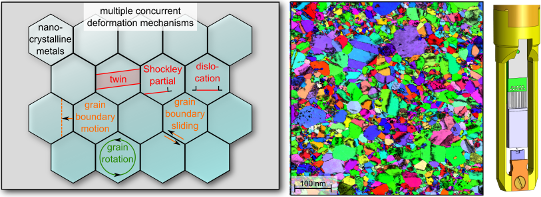
- materials [24], radiation-resistant materials for nuclear reactors [25], applications for wear and corrosion protection [6][26] and for flexible electrical components [27]. Beside simulations [12][13][14][17][28][29], only few experimental methods are capable to measure in situ structural signatures of the





